Japan Sustainable Farm Packaging Market Size & Growth Rate
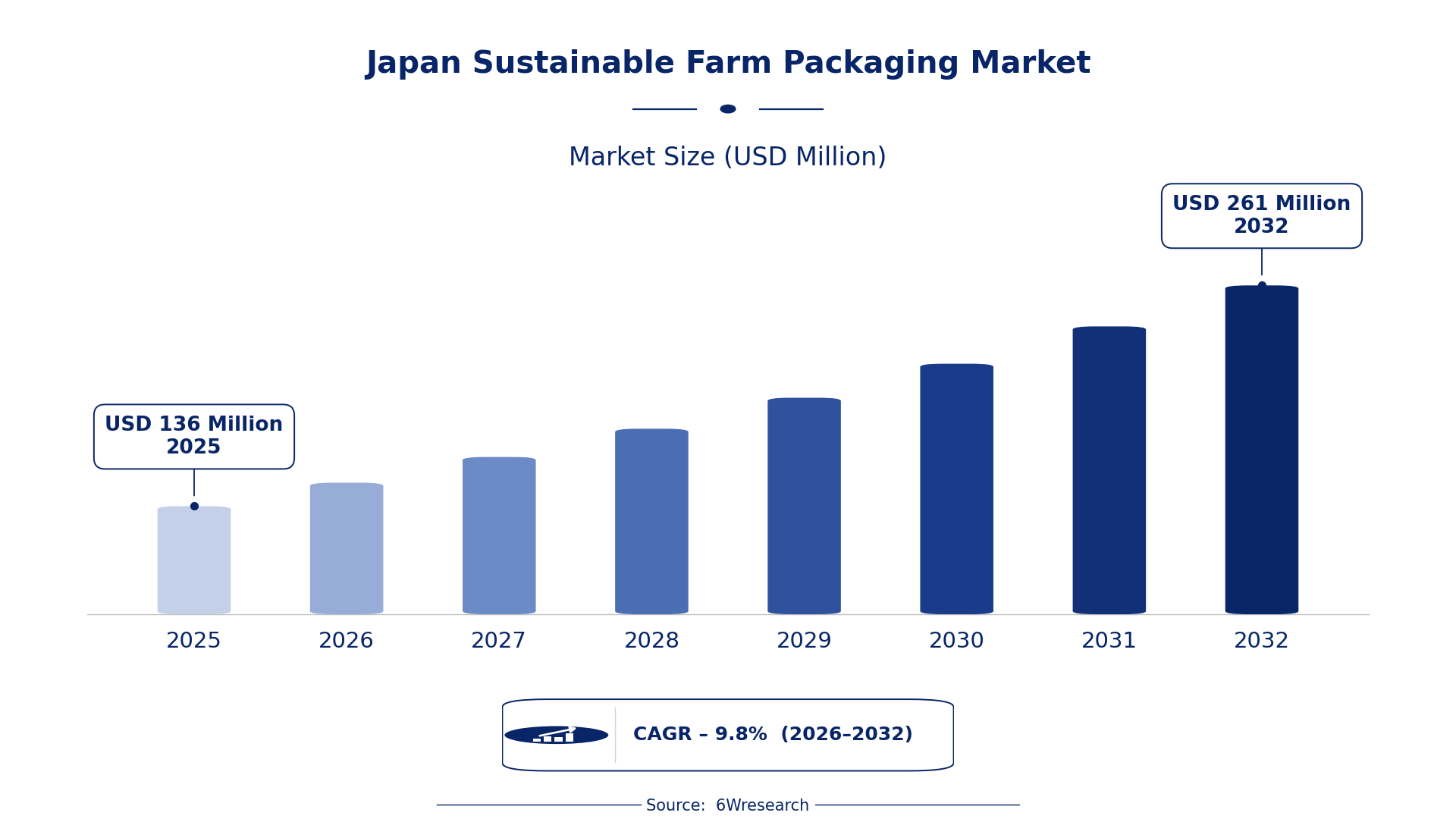
According to 6Wresearch internal database and industry insights, the Japan Sustainable Farm Packaging Market was valued at USD 136 Million in 2025 and is projected to reach USD 261 Million by 2032, growing at a CAGR of approximately 9.8% during 2026–2032.
Japan Sustainable Farm Packaging Market Highlights
| Report Metric | Details |
| Report Name | Japan Sustainable Farm Packaging Market (2026-2032) |
| Market Size 2025 | USD 136 Million |
| Market Size 2032 | USD 261 Million |
| Absolute Growth 2025–2032 | USD 125 Million |
| CAGR 2026–2032 | 9.8% |
| Peak Annual Growth | 10.6% in 2032 |
| Forecast Period | 2026–2032 |
| Historical Data | 2022–2025 |
| Base Year | 2025 |
| Leading Packaging Material, 2025 | Jute Sacks (39% share) |
| Leading Biodegradability, 2025 | Natural Fiber (47% share) |
| Leading Produce Type, 2025 | Potatoes (49% share) |
| Leading End User, 2025 | Organic Farmers (39% share) |
| Fastest-Growing Packaging Material | Compostable Trays (13.6% CAGR) |
| Fastest-Growing Biodegradability | Sugarcane Bagasse (13.3% CAGR) |
| Fastest-Growing Produce Type | Berries (14.6% CAGR) |
| Fastest-Growing End User | Exporters (12.8% CAGR) |
| Growing Sector | Exporters |
| Key End Users | Organic Farmers, Exporters, Wholesalers, Logistics Firms |
Japan Sustainable Farm Packaging Market Year-wise Growth Rate and Key Drivers (2022–2032)
This graph illustrates the annual growth rates of the market from 2022 to 2032, highlighting a steady upward trajectory and projected market expansion over the forecast period.
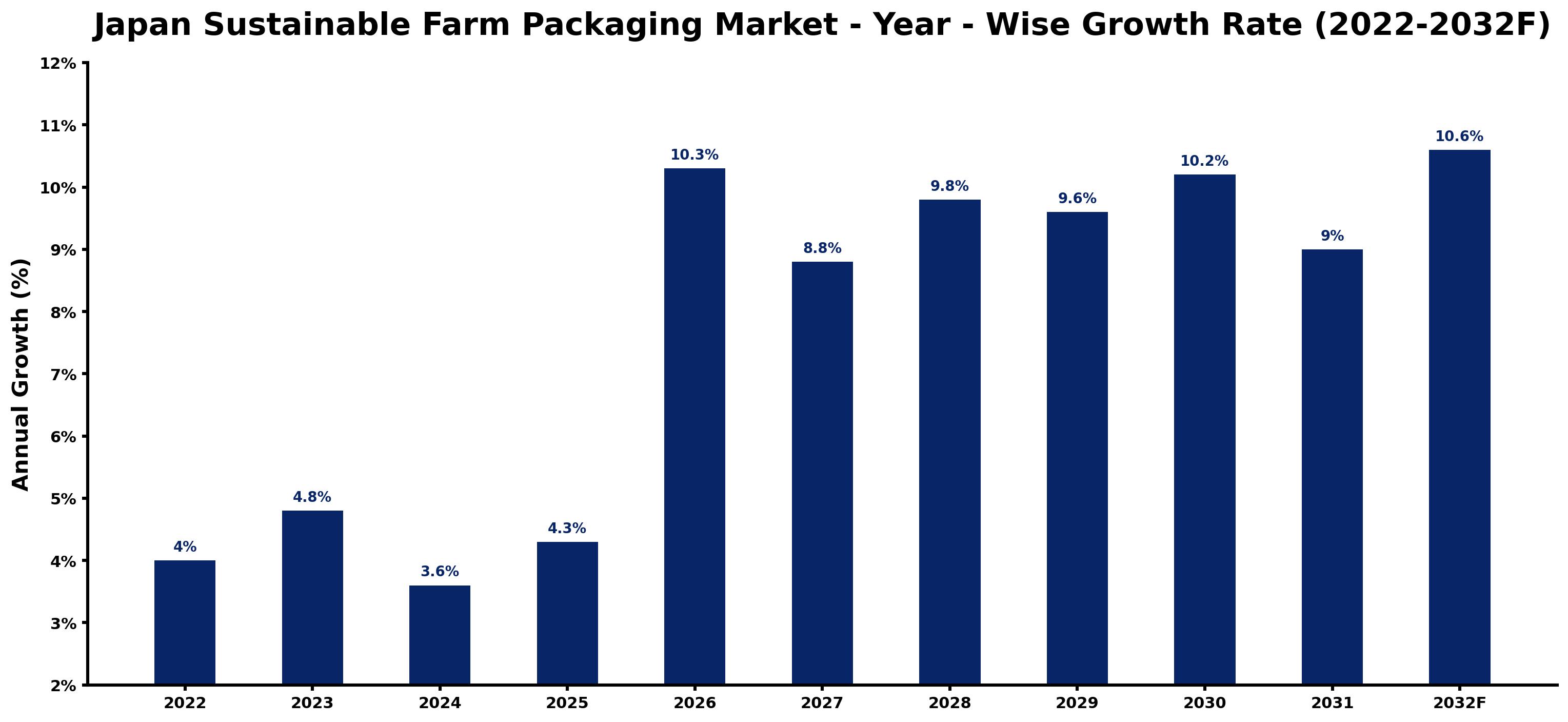
The yearly estimates that follow link every growth rate to its principal driver, so readers can see why the pace changed in each period.
| Year | Estimated Annual Growth (%) | Market Rationale |
| 2022 | 4.0 | The market showed steady growth, reflecting ongoing interest in eco-friendly solutions. |
| 2023 | 4.8 | Demand for sustainable packaging increased due to heightened consumer awareness and preferences. |
| 2024 | 3.6 | Growth slowed as market saturation began to affect new customer acquisition. |
| 2025 | 4.3 | The market rebounded with renewed interest from organic farmers seeking sustainable options. |
| 2026 | 10.3 | Demand surged as more exporters adopted eco-friendly packaging for international shipping. |
| 2027 | 8.8 | Growth slowed slightly as competition intensified among packaging suppliers. |
| 2028 | 9.8 | Interest in sustainable options rose again, driven by consumer trends in urban areas. |
| 2029 | 9.6 | Growth slowed as the market matured, but demand remained strong among key buyers. |
| 2030 | 10.2 | Sustainable packaging adoption accelerated as government targets for biodegradable materials approached. |
| 2031 | 9.0 | Growth slowed as the market stabilised, reflecting a mature phase of development. |
| 2032 | 10.6 | Demand peaked as the government achieved its target for biodegradable packaging. |
Note: Market size estimations and growth projections presented in this report are based on 6Wresearch's proprietary forecasting methodology, utilizing the latest available industry data, government publications, and primary research inputs.
Japan Sustainable Farm Packaging Market Synopsis
Sustainable farm packaging utilises eco-friendly materials such as jute, corn starch, and sugarcane bagasse to package agricultural products. The Japan Sustainable Farm Packaging Market is growing due to the increasing number of organic farmers, now estimated at around 200,000, alongside government initiatives that promote biodegradable packaging, aiming for 30% of packaging to be biodegradable by 2030.
Market Dynamics Impact Analysis (2026–2032)
| Factor | Type | Impact | Primary Segment Affected |
| Rising consumer awareness of sustainable practices | Driver | High | Natural Fiber |
| Increased exports of organic vegetables | Driver | High | Reusable Crates |
| Growing demand for biodegradable packaging solutions | Opportunity | High | Sugarcane Bagasse |
| Expansion of urban markets adopting compostable trays | Opportunity | Medium | Compostable Trays |
| Competition from traditional packaging materials | Restraint | High | HDPE/PP |
| Limited consumer awareness in rural areas | Restraint | Medium | Jute Sacks |
| High initial costs of sustainable packaging materials | Challenge | High | Corn-Starch Bags |
| Supply chain disruptions affecting material availability | Challenge | Medium | Biodegradable |
Evaluation of Drivers in Japan Sustainable Farm Packaging Market (2026–2032)
Demand rests on the following drivers, each shown with the segment it touches most.
| Drivers | Primary Segment Affected | Why It Matters (Evidence) |
| Increased organic farming practices | Natural Fiber | Approximately 200,000 farmers are adopting sustainable practices, boosting demand for eco-friendly packaging. |
| Rising exports of organic vegetables | Reusable Crates | Annual organic vegetable exports reached 1 billion yen, increasing the need for sustainable packaging. |
| Government initiatives promoting eco-friendly materials | Sugarcane Bagasse | The Plastic Resource Circulation Act aims for 30% biodegradable packaging by 2030, driving demand. |
| Urban consumer preferences for sustainable products | Compostable Trays | Adoption is rising in urban markets, reflecting a shift towards eco-friendly packaging. |
| Growing awareness of environmental impacts | Corn-Starch Bags | Consumer awareness of sustainable packaging is at 65% in urban areas, increasing purchases. |
Most of the extra volume comes from the increasing number of organic farmers adopting sustainable practices, which has led to a rise in demand for eco-friendly packaging solutions. Annual exports of organic vegetables reached 1 billion yen, creating a strong need for sustainable materials. Urban consumers are increasingly preferring compostable trays, reflecting a growing awareness of environmental impacts. This trend is supported by consumer awareness of sustainable packaging, now at 65% in urban areas, leading to higher purchases of eco-friendly materials.
Evaluation of Restraints in Japan Sustainable Farm Packaging Market
The main factors holding the market back are set out below.
| Market Restraint | Primary Segment Affected | Why It Matters (Evidence) |
| High costs associated with sustainable packaging materials | Corn-Starch Bags | Initial costs deter some farmers from switching to sustainable options, limiting market growth. |
| Competition from traditional packaging solutions | HDPE/PP | Established materials remain cheaper and more accessible, affecting the market share of sustainable options. |
| Lack of consumer awareness in rural regions | Jute Sacks | Limited knowledge of sustainable benefits hinders adoption among farmers outside urban areas. |
| Supply chain issues affecting material availability | Biodegradable | Disruptions can delay production and delivery of sustainable packaging, impacting market growth. |
| Regulatory hurdles for new materials | Compostable Trays | Compliance with standards can slow the introduction of new packaging solutions. |
Japan Sustainable Farm Packaging Market Challenges
High training costs for organic farmers impede the adoption of sustainable packaging techniques, impacting around 200,000 farmers. Stringent compliance with ISO 14001 standards imposes regulatory burdens, leading to increased certification expenses for producers. Limited access to sustainable materials like jute and sugarcane bagasse disrupts supply chains, causing delays in packaging for exports valued at 1 billion yen annually. Rising costs of eco-friendly packaging materials squeeze profit margins for wholesalers in Osaka, compelling them to raise prices for consumers.
Trends in the Japan Sustainable Farm Packaging Market
Four trends stand out in the Japan Sustainable Farm Packaging Market.
- Shift towards Compostable Packaging: Since 2023, urban markets in Tokyo have increasingly embraced compostable trays, with a notable surge in consumer preference for eco-friendly options. This trend reflects a growing demand for sustainable solutions in metropolitan areas, where awareness is high.
- Emergence of Sugarcane Bagasse: In 2023, sugarcane bagasse packaging gained traction in the Kyushu region, propelled by its biodegradable properties. This shift indicates a move towards utilising waste materials for sustainable packaging, appealing to environmentally conscious consumers.
- Increasing Use of Reusable Crates: In 2023, wholesalers in Osaka have popularised reusable crates, demonstrating a commitment to sustainability. This trend supports the reduction of single-use packaging, aligning with broader environmental goals.
- Growth of Natural Fiber Packaging: Since 2023, natural fiber packaging has been widely adopted, particularly in Hokkaido for potato packaging. This shift highlights the agricultural sector's response to sustainability demands, enhancing product appeal.
Investment Opportunities in the Japan Sustainable Farm Packaging Market
The openings below show where demand in the Japan Sustainable Farm Packaging Market is visible and how suppliers can enter.
- Kyushu Region's Sugarcane Producers: With the demand for biodegradable packaging on the rise, sugarcane producers in Kyushu can expand their operations. The region's production capacity can meet the need for sustainable materials, particularly as the market targets 30% biodegradable packaging by 2030.
- Organic Farmers in Hokkaido: Organic farmers in Hokkaido are increasingly pursuing sustainable packaging solutions. The market's growth presents an opportunity for suppliers to collaborate with local farmers to meet this demand.
- Urban Wholesalers in Tokyo: Urban wholesalers in Tokyo are seeking eco-friendly packaging options to satisfy consumer preferences. The market's growth presents an opportunity for suppliers to deliver sustainable solutions tailored to this buyer group.
- Exporters Nationwide: Exporters are under pressure to adopt sustainable packaging to comply with international standards. With organic vegetable exports reaching 1 billion yen, suppliers can concentrate on providing compliant packaging solutions.
Government Initiatives in the Japan Sustainable Farm Packaging Market
The Green Packaging Initiative launched in 2023 aims to encourage the use of eco-friendly materials in packaging. This initiative builds on the Food Sanitation Act amendments from 2018, which established standards for food packaging safety and hygiene, promoting sustainable practices in the industry.
The Plastic Resource Circulation Act, implemented in 2021, supports the reduction and recycling of plastics while promoting alternatives like biodegradable materials. The Ministry of the Environment and the Ministry of Economy, Trade and Industry oversee the implementation of this act, ensuring compliance and encouraging sustainable practices among producers.
Future Insight of the Japan Sustainable Farm Packaging Market
Urban markets will increasingly demand compostable trays and sugarcane bagasse as consumer preferences evolve. By 2032, the government’s goal for 30% of packaging to be biodegradable will create new opportunities for suppliers. The Ministry of Agriculture, Forestry and Fisheries will likely expand support programmes, encouraging innovation in sustainable materials. Enhanced collaboration between producers and packaging suppliers will streamline distribution channels, improving efficiency in the agricultural sector.
Market Segmentation Analysis
Japan Sustainable Farm Packaging Market report covers a detailed analysis of the following market segments:
By Packaging Material – Jute Sacks Lead, Compostable Trays Expected to Grow Fastest
According to Saurav Kr Singh, Senior Research Analyst at 6Wresearch, in 2025, Jute Sacks led the packaging material split with a 39% share. Jute sacks lead the market due to their durability and are extensively used by farmers, especially in Hokkaido for packaging potatoes. This material's reliability ensures a consistent supply chain for agricultural products, appealing to various buyers. The quickest growth will come from Compostable Trays, forecast to expand at a CAGR of 13.6% between 2026 and 2032. The swift uptake of compostable trays in urban markets, particularly in Tokyo, is fuelled by rising consumer preferences for environmentally friendly packaging. Their design allows for easy disposal and composting, which resonates with eco-conscious consumers. Suppliers must prioritise the availability of compostable trays to align with the increasing demand in urban markets.
By Biodegradability – Natural Fiber Leads, Sugarcane Bagasse Expected to Grow Fastest
Natural Fiber accounted for 47% of the market by biodegradability in 2025. Natural fiber materials hold the largest share due to their widespread use in various sustainable packaging solutions, which resonate with the initiatives from the Ministry of Agriculture, Forestry and Fisheries. Their versatility makes them a preferred choice among organic farmers across Japan. Over 2026–2032, Sugarcane Bagasse is expected to post the fastest growth, at a CAGR of 13.3%. Sugarcane bagasse is experiencing rapid growth as it is sourced from agricultural waste, making it an attractive option for sustainable packaging. This aligns with the government's goal for 30% of packaging to be biodegradable by 2030, further accelerating its uptake. Suppliers should prioritise sugarcane bagasse packaging to meet increasing regulatory expectations.
By Produce Type – Potatoes Lead, Berries Expected to Grow Fastest
With 49% of produce type revenue in 2025, Potatoes was the largest category. Potatoes are the leading produce type packaged in sustainable materials, reflecting their significant presence in the market and the preference of farmers for eco-friendly solutions. Their importance in the agricultural landscape underscores the demand for sustainable packaging alternatives. Berries are projected to grow fastest, at a CAGR of 14.6% during 2026–2032. Berries are gaining momentum as they are increasingly packaged in compostable trays, enhancing freshness and appealing to health-conscious consumers. This trend indicates a broader movement towards sustainable practices in the fruit sector. Suppliers should concentrate on creating compostable packaging solutions tailored for berries to leverage this growing segment.
By End User – Organic Farmers Lead, Exporters Expected to Grow Fastest
Organic Farmers took 39% of end user revenue in 2025, more than any other category. Organic farmers represent the largest user group of sustainable packaging solutions, as they are committed to eco-friendly practices and often seek materials that align with their values. Their substantial population of around 200,000 farmers drives consistent demand for sustainable options. Exporters are set to record the highest CAGR in this split, 12.8% over 2026–2032. Exporters are the fastest-growing segment, as they require sustainable packaging for international shipping to meet global market standards. This need is amplified by the rising exports of organic vegetables, which have reached 1 billion yen annually. Suppliers must focus on developing packaging solutions that cater specifically to the needs of exporters to capitalise on this growth.
Key Attractiveness of the Report
- 10 Years of Market Numbers
- Historical Data Starting from 2022 to 2025
- Base Year 2025
- Forecast Data until 2032
- Key Performance Indicators Impacting the Market
- Major Upcoming Developments and Projects
Key Highlights of the Report:
- Japan Sustainable Farm Packaging Market Outlook
- Market Size of Japan Sustainable Farm Packaging Market, 2025
- Forecast of Japan Sustainable Farm Packaging Market, 2032
- Historical Data and Forecast of Japan Sustainable Farm Packaging Revenues & Volume for the Period 2022-2032F
- Japan Sustainable Farm Packaging Market Trend Evolution
- Japan Sustainable Farm Packaging Market Drivers and Challenges
- Japan Sustainable Farm Packaging Price Trends
- Japan Sustainable Farm Packaging Porter's Five Forces
- Japan Sustainable Farm Packaging Industry Life Cycle
- Historical Data and Forecast of Japan Sustainable Farm Packaging Market Revenues & Volume By Packaging Material for the Period 2022-2032F
- Historical Data and Forecast of Japan Sustainable Farm Packaging Market Revenues & Volume By Jute Sacks for the Period 2022-2032F
- Historical Data and Forecast of Japan Sustainable Farm Packaging Market Revenues & Volume By Compostable Trays for the Period 2022-2032F
- Historical Data and Forecast of Japan Sustainable Farm Packaging Market Revenues & Volume By Corn-Starch Bags for the Period 2022-2032F
- Historical Data and Forecast of Japan Sustainable Farm Packaging Market Revenues & Volume By Reusable Crates for the Period 2022-2032F
- Historical Data and Forecast of Japan Sustainable Farm Packaging Market Revenues & Volume By Biodegradability for the Period 2022-2032F
- Historical Data and Forecast of Japan Sustainable Farm Packaging Market Revenues & Volume By Natural Fiber for the Period 2022-2032F
- Historical Data and Forecast of Japan Sustainable Farm Packaging Market Revenues & Volume By Sugarcane Bagasse for the Period 2022-2032F
- Historical Data and Forecast of Japan Sustainable Farm Packaging Market Revenues & Volume By Biodegradable for the Period 2022-2032F
- Historical Data and Forecast of Japan Sustainable Farm Packaging Market Revenues & Volume By HDPE/PP for the Period 2022-2032F
- Historical Data and Forecast of Japan Sustainable Farm Packaging Market Revenues & Volume By Produce Type for the Period 2022-2032F
- Historical Data and Forecast of Japan Sustainable Farm Packaging Market Revenues & Volume By Potatoes, Onions for the Period 2022-2032F
- Historical Data and Forecast of Japan Sustainable Farm Packaging Market Revenues & Volume By Berries, Tomatoes for the Period 2022-2032F
- Historical Data and Forecast of Japan Sustainable Farm Packaging Market Revenues & Volume By Leafy Greens for the Period 2022-2032F
- Historical Data and Forecast of Japan Sustainable Farm Packaging Market Revenues & Volume By Mixed Vegetables for the Period 2022-2032F
- Historical Data and Forecast of Japan Sustainable Farm Packaging Market Revenues & Volume By End User for the Period 2022-2032F
- Historical Data and Forecast of Japan Sustainable Farm Packaging Market Revenues & Volume By Organic Farmers for the Period 2022-2032F
- Historical Data and Forecast of Japan Sustainable Farm Packaging Market Revenues & Volume By Exporters for the Period 2022-2032F
- Historical Data and Forecast of Japan Sustainable Farm Packaging Market Revenues & Volume By Wholesalers for the Period 2022-2032F
- Historical Data and Forecast of Japan Sustainable Farm Packaging Market Revenues & Volume By Logistics Firms for the Period 2022-2032F
- Japan Sustainable Farm Packaging Import Export Trade Statistics
- Market Opportunity Assessment By Packaging Material
- Market Opportunity Assessment By Biodegradability
- Market Opportunity Assessment By Produce Type
- Market Opportunity Assessment By End User
- Japan Sustainable Farm Packaging Top Companies Market Share
- Japan Sustainable Farm Packaging Competitive Benchmarking By Technical and Operational Parameters
- Japan Sustainable Farm Packaging Company Profiles
- Japan Sustainable Farm Packaging Key Strategic Recommendations
Market Covered
The following segment groups are covered in the report.
By Packaging Material
- Jute Sacks
- Compostable Trays
- Corn-Starch Bags
- Reusable Crates
By Biodegradability
- Natural Fiber
- Sugarcane Bagasse
- Biodegradable
- HDPE/PP
By Produce Type
- Potatoes
- Onions
- Berries
- Tomatoes
- Leafy Greens
- Mixed Vegetables
By End User
- Organic Farmers
- Exporters
- Wholesalers
- Logistics Firms































