Japan Sustainable Fashion Market Size & Growth Rate
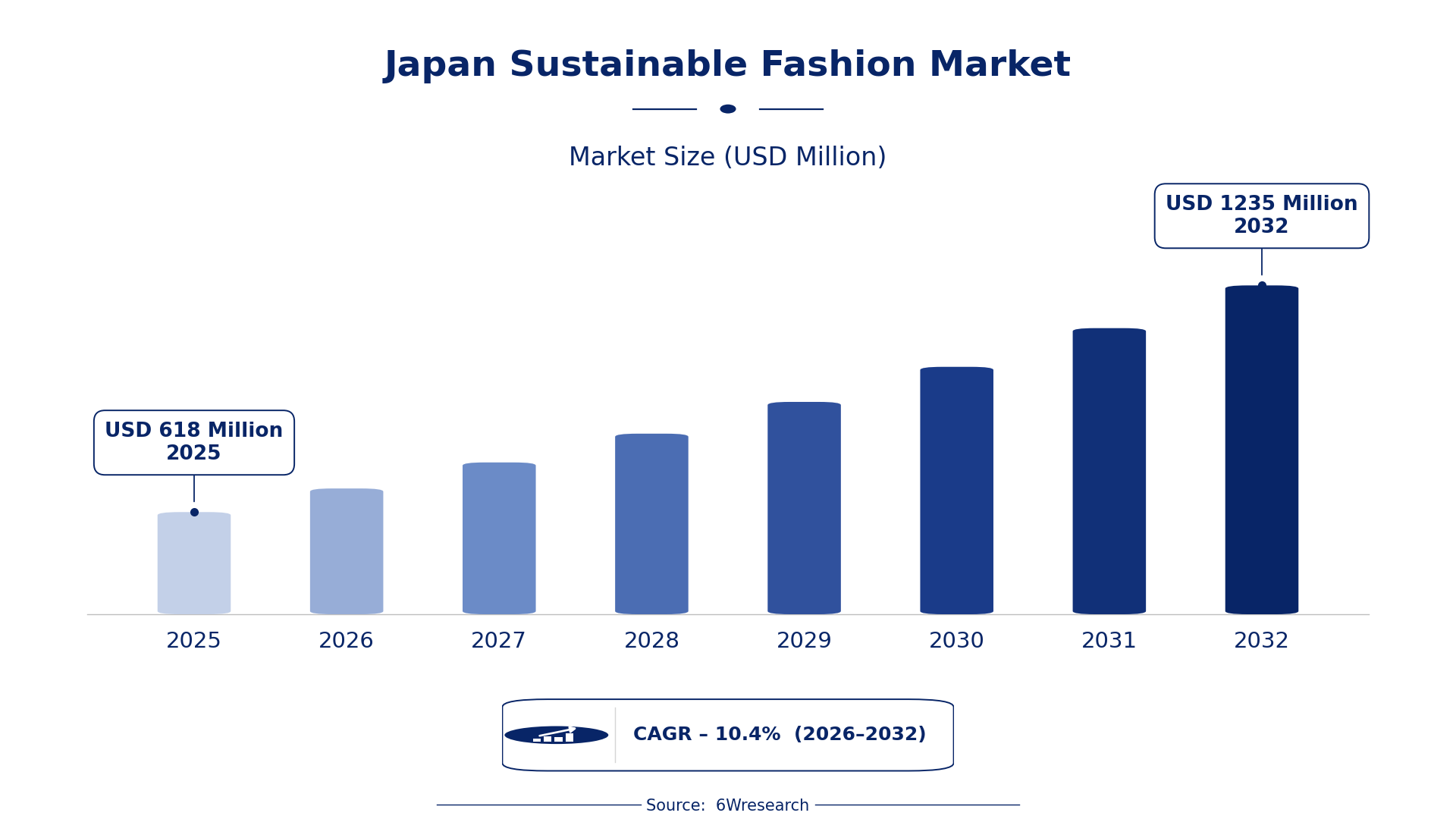
According to 6Wresearch internal database and industry insights, the Japan Sustainable Fashion Market was valued at USD 618 Million in 2025 and is projected to reach USD 1,235 Million by 2032, growing at a CAGR of approximately 10.4% during 2026–2032.
Japan Sustainable Fashion Market Highlights
| Report Metric | Details |
| Report Name | Japan Sustainable Fashion Market (2026-2032) |
| Market Size 2025 | USD 618 Million |
| Market Size 2032 | USD 1,235 Million |
| Absolute Growth 2025–2032 | USD 617 Million |
| CAGR 2026–2032 | 10.4% |
| Peak Annual Growth | 11.4% in 2028 |
| Forecast Period | 2026–2032 |
| Historical Data | 2022–2025 |
| Base Year | 2025 |
| Leading Fashion Type, 2025 | Eco Casual Wear (51% share) |
| Leading Material Used, 2025 | Organic Cotton (35% share) |
| Leading Sustainability Metric, 2025 | Water Usage Reduction (39% share) |
| Leading End User, 2025 | Apparel Brands (54% share) |
| Fastest-Growing Fashion Type | Recycled Fashion (14.8% CAGR) |
| Fastest-Growing Material Used | Pineapple Leather (14.6% CAGR) |
| Fastest-Growing Sustainability Metric | Waste Reduction (13.1% CAGR) |
| Fastest-Growing End User | Conscious Retailers (13.0% CAGR) |
| Growing Sector | Conscious Retailers |
| Key End Users | Apparel Brands, Conscious Retailers, Designer Boutiques, Footwear Brands |
Japan Sustainable Fashion Market Year-wise Growth Rate and Key Drivers (2022–2032)
This graph illustrates the annual growth rates of the market from 2022 to 2032, highlighting a steady upward trajectory and projected market expansion over the forecast period.
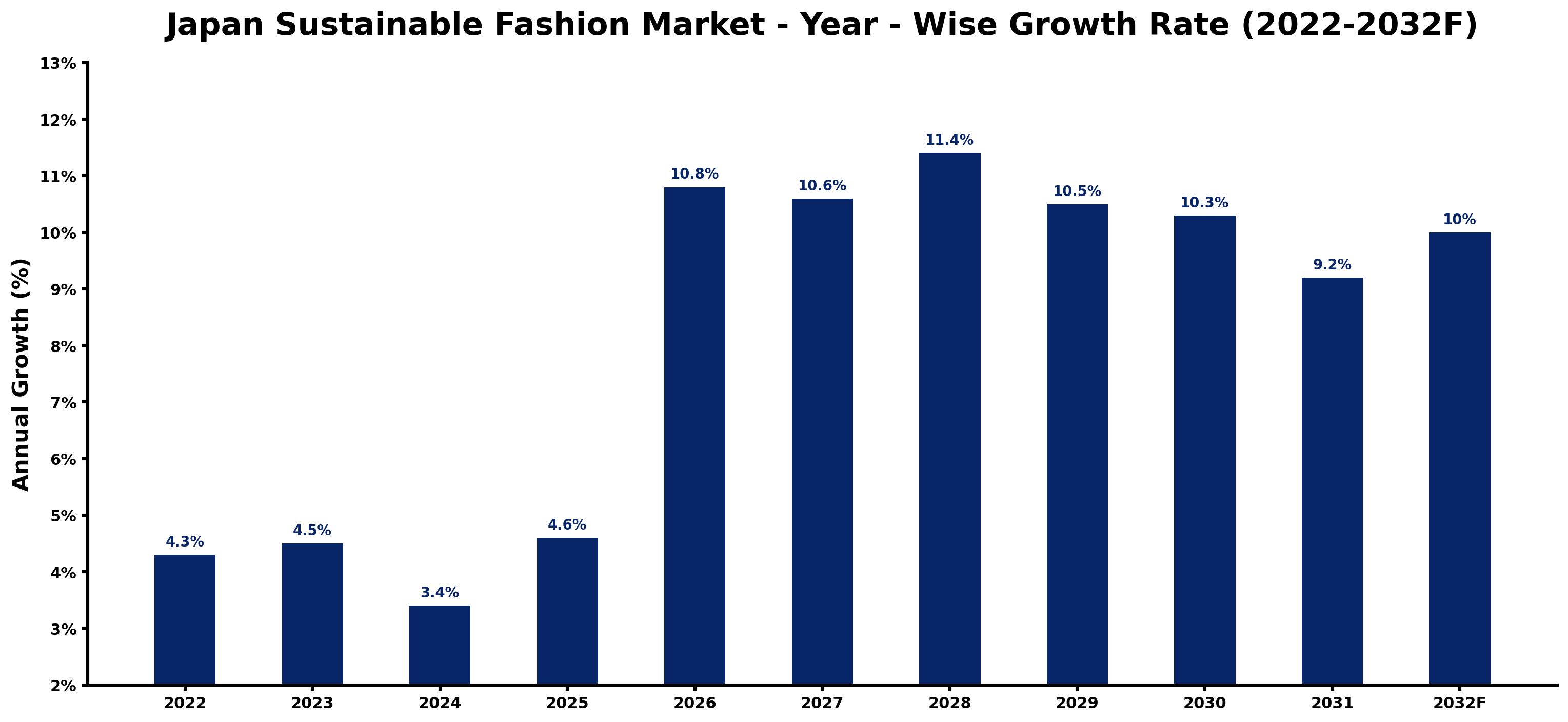
The table below sets out the estimated growth rate for each year and the main factor behind it.
| Year | Estimated Annual Growth (%) | Market Rationale |
| 2022 | 4.3 | The market experienced steady growth driven by increasing consumer awareness. |
| 2023 | 4.5 | Demand accelerated as more consumers opted for eco-friendly fashion choices. |
| 2024 | 3.4 | Growth slowed slightly as market saturation began to affect new purchases. |
| 2025 | 4.6 | Consumer interest surged with the introduction of new sustainable collections. |
| 2026 | 10.8 | The market is set to expand rapidly as investments in sustainable practices rise. |
| 2027 | 10.6 | Growth will moderate as competition intensifies among sustainable brands. |
| 2028 | 11.4 | A peak in growth is anticipated as sustainability becomes mainstream in fashion. |
| 2029 | 10.5 | The market will continue to grow, albeit at a slower pace as maturity sets in. |
| 2030 | 10.3 | Growth will further slow as the market stabilises and consumer choices diversify. |
| 2031 | 9.2 | The market is projected to grow steadily as awareness of sustainable practices remains high. |
| 2032 | 10.0 | Demand will rise again as new sustainable innovations capture consumer interest. |
Note: Market size estimations and growth projections presented in this report are based on 6Wresearch's proprietary forecasting methodology, utilizing the latest available industry data, government publications, and primary research inputs.
Japan Sustainable Fashion Market Synopsis
Sustainable fashion includes clothing and accessories made from eco-friendly materials and ethical production practices, focusing on reducing waste and promoting fair trade. The Japan Sustainable Fashion Market is expanding, driven by strong domestic demand from environmentally aware consumers. In 2023, 30% of Japanese consumers reported purchasing sustainable fashion items, while government initiatives supporting sustainable textile innovation are further boosting this growth. Events like Tokyo Fashion Week highlight the trend, showcasing dedicated segments for sustainable fashion.
Market Dynamics Impact Analysis (2026–2032)
| Factor | Type | Impact | Primary Segment Affected |
| Increasing consumer awareness of environmental issues | Driver | High | Eco Casual Wear |
| Government initiatives supporting sustainable practices | Driver | High | Organic Cotton |
| Rising interest in ethical luxury products | Opportunity | Medium | Ethical Luxury Wear |
| Growth of eco-conscious retail spaces in urban areas | Opportunity | Medium | Conscious Retailers |
| Limited availability of sustainable materials | Restraint | High | Recycled Fashion |
| Higher production costs associated with sustainable practices | Restraint | High | Vegan Shoes & Bags |
| Competition from fast fashion brands | Challenge | High | Apparel Brands |
| Consumer hesitation regarding price points of sustainable fashion | Challenge | Medium | Designer Boutiques |
Evaluation of Drivers in Japan Sustainable Fashion Market (2026–2032)
The factors lifting demand, and the evidence behind each, are summarised below.
| Drivers | Primary Segment Affected | Why It Matters (Evidence) |
| Growing consumer demand for eco-friendly products | Eco Casual Wear | In 2023, 30% of Japanese consumers reported purchasing sustainable fashion items, driving brands to increase their offerings. |
| Supportive government policies for sustainable textiles | Organic Cotton | The government launched a program in 2023 to support sustainable textile innovation, encouraging more brands to adopt eco-friendly materials. |
| Expansion of ethical luxury market | Ethical Luxury Wear | In 2023, high-end consumers increasingly sought sustainable options, leading to a rise in luxury brands offering eco-conscious collections. |
| Emergence of eco-conscious retail spaces | Conscious Retailers | Tokyo is a major hub for sustainable fashion, hosting numerous eco-conscious boutiques that attract environmentally aware shoppers. |
| Innovation in sustainable materials | Recycled Fashion | The Japan Textile Federation promotes eco-friendly materials, driving demand for recycled fashion products among consumers. |
Behind the steady rise in orders sits a growing consumer preference for eco-friendly clothing. In 2023, 30% of Japanese consumers reported purchasing sustainable fashion items, reflecting a shift in buying habits. Urban areas are seeing a rise in eco-conscious boutiques that attract environmentally aware shoppers, further driving demand. The promotion of recycled materials by industry associations encourages consumers to choose sustainable options, boosting sales across the market.
Evaluation of Restraints in Japan Sustainable Fashion Market
These are the pressures that could keep growth below its potential.
| Market Restraint | Primary Segment Affected | Why It Matters (Evidence) |
| Limited access to sustainable materials | Recycled Fashion | The availability of eco-friendly materials is often restricted, hindering production capabilities for brands. |
| Higher production costs for sustainable fashion | Vegan Shoes & Bags | Sustainable practices often lead to increased costs, making products less competitive against fast fashion alternatives. |
| Consumer price sensitivity towards sustainable products | Apparel Brands | Many consumers hesitate to pay premium prices for sustainable options, affecting overall sales. |
| Competition from established fast fashion brands | Designer Boutiques | Fast fashion brands dominate the market, making it difficult for sustainable brands to gain market share. |
| Slow adoption of sustainable practices by traditional retailers | Conscious Retailers | Many retailers are reluctant to shift towards sustainable practices, limiting the growth of eco-friendly product lines. |
Japan Sustainable Fashion Market Challenges
Buyers encounter higher costs due to fierce competition among eco-conscious brands, which raises retail prices and limits affordable options. Supply chain issues arise as eco-friendly materials are often sourced from specific regions, causing delays in production and inconsistent availability for manufacturers. Implementing ethical practices can inflate production costs by 20%, straining smaller brands striving to meet consumer demand. Skills shortages in sustainable textile innovation impede market development, leaving producers without access to advanced techniques necessary for growth.
Trends in the Japan Sustainable Fashion Market
Several trends are reshaping the Japan Sustainable Fashion Market; the most important are set out below.
- Eco-Products 2023 Exhibition Highlighting Innovations: The Eco-Products 2023 exhibition displayed numerous sustainable fashion innovations, drawing attention from industry stakeholders. This event showcased the rising interest in eco-friendly materials, with over 200 exhibitors participating.
- Tokyo Fashion Week's Sustainable Segment: Tokyo Fashion Week has launched a dedicated segment for sustainable fashion, featuring designs and eco-friendly materials. This initiative reflects the growing significance of sustainability in the fashion industry, with over 30 brands participating.
- Rise of Eco-Conscious Boutiques: Urban areas in Japan are seeing an increase in eco-conscious boutiques that focus on sustainable fashion. In 2023, Tokyo alone hosted over 50 such boutiques, catering to a growing consumer base seeking ethical options.
- Consumer Preference Shift towards Ethical Luxury: A notable shift is occurring among consumers towards ethical luxury products, with many seeking sustainable options. This trend is clear as sales of ethical luxury items rose by 15% in 2023.
Investment Opportunities in the Japan Sustainable Fashion Market
The opportunities below stand out in the Japan Sustainable Fashion Market for new entrants and existing suppliers.
- Partnerships with Eco-Conscious Retailers: Collaborating with eco-conscious retailers in urban areas can expand market reach. In 2023, the demand for sustainable products surged, presenting a timely opportunity for brands to partner with retailers focused on eco-friendly offerings.
- Investment in Sustainable Material Production: Investing in local production facilities for sustainable materials is timely. The growing demand for eco-friendly textiles, with a 30% increase in consumer purchases, supports this opportunity for manufacturers.
- Expansion into Ethical Luxury Market: Targeting the ethical luxury market presents a promising opportunity. With high-end consumers increasingly seeking sustainable options, brands can capture this segment by offering unique, eco-friendly luxury items.
- Development of Innovative Sustainable Collections: Creating innovative sustainable collections is essential to meet rising consumer expectations. The increasing focus on sustainability among Japanese consumers, with 30% purchasing eco-friendly items, highlights this opportunity.
Government Initiatives in the Japan Sustainable Fashion Market
The Waste Management and Public Cleansing Act (1970) mandates the proper treatment and disposal of industrial and municipal waste, impacting producers by enforcing sustainable waste practices. The Plastic Resource Circulation Act (2021) promotes the reduction, reuse, and recycling of plastics, encouraging brands to adopt eco-friendly packaging solutions and materials.
The Ministry of Environment oversees the implementation of sustainable fashion guidelines, ensuring compliance with eco-friendly practices. The Japan Textile Federation supports initiatives that promote sustainable materials, providing funding for projects that align with environmental standards.
Future Insight of the Japan Sustainable Fashion Market
Government initiatives will drive transformation in Japan's sustainable fashion market by 2032, encouraging the adoption of eco-friendly materials and practices. The Japan Sustainable Fashion Alliance will boost collaboration among brands, increasing ethical visibility and consumer trust. Consumer engagement will expand, with 30% of Japanese consumers already purchasing sustainable fashion items, reflecting a shift towards conscious buying. Enhanced guidelines under the JIS will ensure suppliers adhere to higher environmental standards, improving overall market integrity.
Market Segmentation Analysis
Japan Sustainable Fashion Market report covers a detailed analysis of the following market segments:
By Fashion Type – Eco Casual Wear Leads, Recycled Fashion Expected to Grow Fastest
According to Saurav Kr Singh, Senior Research Analyst at 6Wresearch, Eco Casual Wear took 51% of fashion type revenue in 2025, more than any other category. Eco Casual Wear holds the largest share as it is widely adopted for everyday clothing, appealing to environmentally aware consumers. This segment's popularity is particularly evident in Tokyo, where numerous eco-conscious boutiques showcase such products. Recycled Fashion is set to record the highest CAGR in this split, 14.8% over 2026–2032. Recycled Fashion is experiencing rapid growth due to increasing consumer awareness about waste reduction, with 30% of Japanese consumers purchasing sustainable fashion items in 2023. This trend will likely continue as more brands incorporate recycled materials into their offerings. Suppliers should focus on expanding their recycled product lines to meet rising consumer demand.
By Material Used – Organic Cotton Leads, Pineapple Leather Expected to Grow Fastest
Organic Cotton accounted for 35% of the market by material used in 2025. Organic Cotton is the leading material due to its crucial role in sustainable apparel production, accounting for 10% of total cotton used in Japan's fashion industry. Its widespread adoption among apparel brands highlights its importance in eco-friendly practices. Pineapple Leather is projected to grow fastest, at a CAGR of 14.6% during 2026–2032. Pineapple Leather is growing quickly as an alternative material, appealing to consumers seeking sustainable options. Its unique properties and potential for broader adoption are driving interest among brands looking to diversify their material offerings. Buyers should consider sourcing products made from innovative materials like Pineapple Leather to stay ahead of market trends.
By Sustainability Metric – Water Usage Reduction Leads, Waste Reduction Expected to Grow Fastest
The largest sustainability metric category in 2025 was Water Usage Reduction, at 39% of revenue. Water Usage Reduction is a key focus for sustainable brands, as it significantly minimises environmental impact during production processes. This metric is increasingly prioritised by consumers, influencing purchasing decisions in the market. Over 2026–2032, Waste Reduction is expected to post the fastest growth, at a CAGR of 13.1%. Waste Reduction is gaining traction as brands strive to minimise their environmental footprints, aligning with consumer expectations for responsible practices. The growing number of initiatives promoting waste minimisation in the industry underscores this metric's importance. Suppliers must prioritise waste reduction strategies to align with consumer preferences and regulatory guidelines.
By End User – Apparel Brands Lead, Conscious Retailers Expected to Grow Fastest
In 2025, Apparel Brands led the end user split with a 54% share. Apparel Brands dominate the market as primary users of sustainable fashion products, driving demand for eco-friendly materials and practices. Their commitment to sustainability is reflected in the increasing number of collections featuring sustainable options. The quickest growth will come from Conscious Retailers, forecast to expand at a CAGR of 13.0% between 2026 and 2032. Conscious Retailers are rapidly expanding as they focus on offering eco-friendly products, catering to a growing consumer base that prioritises sustainability. Their rise indicates changing retail dynamics towards more responsible sourcing. Retailers should enhance their sustainable product offerings to attract the environmentally conscious consumer segment.
Key Attractiveness of the Report
- 10 Years of Market Numbers
- Historical Data Starting from 2022 to 2025
- Base Year 2025
- Forecast Data until 2032
- Key Performance Indicators Impacting the Market
- Major Upcoming Developments and Projects
Key Highlights of the Report:
- Japan Sustainable Fashion Market Outlook
- Market Size of Japan Sustainable Fashion Market, 2025
- Forecast of Japan Sustainable Fashion Market, 2032
- Historical Data and Forecast of Japan Sustainable Fashion Revenues & Volume for the Period 2022-2032F
- Japan Sustainable Fashion Market Trend Evolution
- Japan Sustainable Fashion Market Drivers and Challenges
- Japan Sustainable Fashion Price Trends
- Japan Sustainable Fashion Porter's Five Forces
- Japan Sustainable Fashion Industry Life Cycle
- Historical Data and Forecast of Japan Sustainable Fashion Market Revenues & Volume By Fashion Type for the Period 2022-2032F
- Historical Data and Forecast of Japan Sustainable Fashion Market Revenues & Volume By Eco Casual Wear for the Period 2022-2032F
- Historical Data and Forecast of Japan Sustainable Fashion Market Revenues & Volume By Ethical Luxury Wear for the Period 2022-2032F
- Historical Data and Forecast of Japan Sustainable Fashion Market Revenues & Volume By Recycled Fashion for the Period 2022-2032F
- Historical Data and Forecast of Japan Sustainable Fashion Market Revenues & Volume By Vegan Shoes & Bags for the Period 2022-2032F
- Historical Data and Forecast of Japan Sustainable Fashion Market Revenues & Volume By Material Used for the Period 2022-2032F
- Historical Data and Forecast of Japan Sustainable Fashion Market Revenues & Volume By Organic Cotton for the Period 2022-2032F
- Historical Data and Forecast of Japan Sustainable Fashion Market Revenues & Volume By Peace Silk/Wool for the Period 2022-2032F
- Historical Data and Forecast of Japan Sustainable Fashion Market Revenues & Volume By PET, Denim for the Period 2022-2032F
- Historical Data and Forecast of Japan Sustainable Fashion Market Revenues & Volume By Pineapple Leather for the Period 2022-2032F
- Historical Data and Forecast of Japan Sustainable Fashion Market Revenues & Volume By Sustainability Metric for the Period 2022-2032F
- Historical Data and Forecast of Japan Sustainable Fashion Market Revenues & Volume By Water Usage Reduction for the Period 2022-2032F
- Historical Data and Forecast of Japan Sustainable Fashion Market Revenues & Volume By Fair Trade for the Period 2022-2032F
- Historical Data and Forecast of Japan Sustainable Fashion Market Revenues & Volume By Waste Reduction for the Period 2022-2032F
- Historical Data and Forecast of Japan Sustainable Fashion Market Revenues & Volume By Animal-Free Production for the Period 2022-2032F
- Historical Data and Forecast of Japan Sustainable Fashion Market Revenues & Volume By End User for the Period 2022-2032F
- Historical Data and Forecast of Japan Sustainable Fashion Market Revenues & Volume By Apparel Brands for the Period 2022-2032F
- Historical Data and Forecast of Japan Sustainable Fashion Market Revenues & Volume By Designer Boutiques for the Period 2022-2032F
- Historical Data and Forecast of Japan Sustainable Fashion Market Revenues & Volume By Conscious Retailers for the Period 2022-2032F
- Historical Data and Forecast of Japan Sustainable Fashion Market Revenues & Volume By Footwear Brands for the Period 2022-2032F
- Japan Sustainable Fashion Import Export Trade Statistics
- Market Opportunity Assessment By Fashion Type
- Market Opportunity Assessment By Material Used
- Market Opportunity Assessment By Sustainability Metric
- Market Opportunity Assessment By End User
- Japan Sustainable Fashion Top Companies Market Share
- Japan Sustainable Fashion Competitive Benchmarking By Technical and Operational Parameters
- Japan Sustainable Fashion Company Profiles
- Japan Sustainable Fashion Key Strategic Recommendations
Market Covered
The report covers the following segments.
By Fashion Type
- Eco Casual Wear
- Ethical Luxury Wear
- Recycled Fashion
- Vegan Shoes & Bags
By Material Used
- Organic Cotton
- Peace Silk/Wool
- PET
- Denim
- Pineapple Leather
By Sustainability Metric
- Water Usage Reduction
- Fair Trade
- Waste Reduction
- Animal-Free Production
By End User
- Apparel Brands
- Designer Boutiques
- Conscious Retailers
- Footwear Brands































