Japan Sustainable Feminine Hygiene Market Size & Growth Rate

According to 6Wresearch internal database and industry insights, the Japan Sustainable Feminine Hygiene Market was valued at USD 284 Million in 2025 and is projected to reach USD 435 Million by 2032, growing at a CAGR of approximately 6.3% during 2026–2032.
Japan Sustainable Feminine Hygiene Market Highlights
| Report Metric | Details |
| Report Name | Japan Sustainable Feminine Hygiene Market (2026-2032) |
| Market Size 2025 | USD 284 Million |
| Market Size 2032 | USD 435 Million |
| Absolute Growth 2025–2032 | USD 151 Million |
| CAGR 2026–2032 | 6.3% |
| Peak Annual Growth | 6.8% in 2026 |
| Forecast Period | 2026–2032 |
| Historical Data | 2022–2025 |
| Base Year | 2025 |
| Leading Product Type, 2025 | Organic Cotton Pads (43% share) |
| Leading Material Type, 2025 | Biodegradable Cotton (51% share) |
| Leading Disposal Method, 2025 | Compostable (44% share) |
| Leading End User, 2025 | Retail Chains (50% share) |
| Fastest-Growing Product Type | Period Underwear (9.2% CAGR) |
| Fastest-Growing Disposal Method | Reusable (5+ yrs) (9.4% CAGR) |
| Fastest-Growing End User | Zero-Waste Shoppers (8.6% CAGR) |
| Growing Sector | Zero-Waste Shoppers |
| Key End Users | Retail Chains, Zero-Waste Shoppers, Sustainable Brands, Organic Hygiene Brands |
Japan Sustainable Feminine Hygiene Market Year-wise Growth Rate and Key Drivers (2022–2032)
This graph illustrates the annual growth rates of the market from 2022 to 2032, highlighting a steady upward trajectory and projected market expansion over the forecast period.
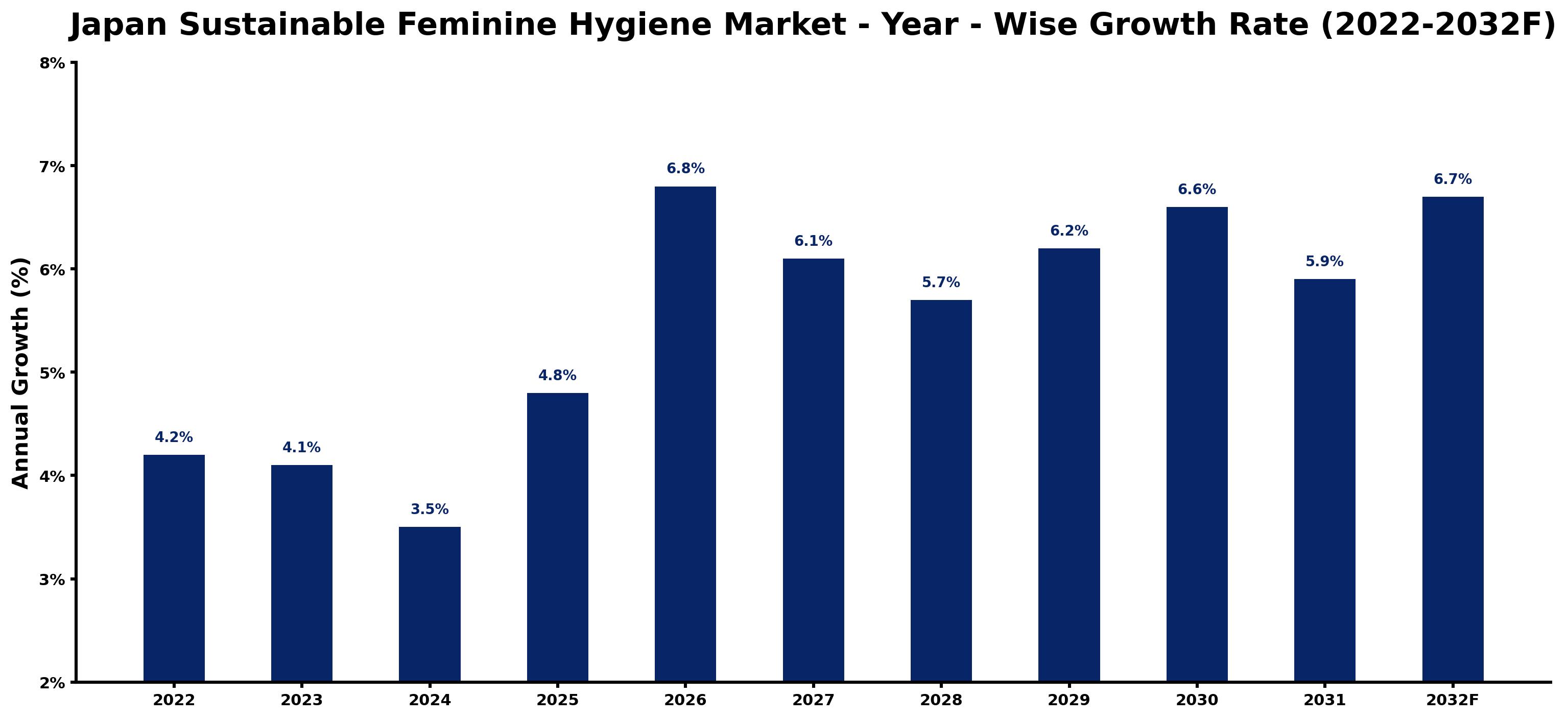
The table below sets out the estimated growth rate for each year and the main factor behind it.
| Year | Estimated Annual Growth (%) | Market Rationale |
| 2022 | 4.2 | The market experienced steady growth, driven by rising awareness of sustainable products. |
| 2023 | 4.1 | Consumer interest in eco-friendly options continued, but growth slowed slightly compared to the previous year. |
| 2024 | 3.5 | Demand for sustainable feminine hygiene products remained strong, but growth is expected to slow further as market maturity sets in. |
| 2025 | 4.8 | Growth is projected to accelerate as more consumers adopt organic cotton pads due to increased environmental awareness. |
| 2026 | 6.8 | The market is expected to peak with heightened demand for sustainable products, spurred by government initiatives and consumer education. |
| 2027 | 6.1 | Growth is projected to slow as the market stabilises after rapid expansion in the previous year. |
| 2028 | 5.7 | Demand is expected to continue growing, albeit at a slower pace, as consumers seek sustainable alternatives. |
| 2029 | 6.2 | The market is projected to see renewed interest, with a rise in purchases of reusable menstrual cups and period underwear. |
| 2030 | 6.6 | Growth is expected to remain strong, driven by increasing availability of sustainable options in retail chains. |
| 2031 | 5.9 | The market is projected to experience a moderate slowdown as consumer habits begin to stabilise. |
| 2032 | 6.7 | Demand is expected to rise again, supported by ongoing environmental campaigns and new product launches. |
Note: Market size estimations and growth projections presented in this report are based on 6Wresearch's proprietary forecasting methodology, utilizing the latest available industry data, government publications, and primary research inputs.
Japan Sustainable Feminine Hygiene Market Synopsis
Sustainable feminine hygiene products are designed to minimise environmental impact while providing effective menstrual care. The Japan Sustainable Feminine Hygiene Market is driven by increasing awareness of environmental issues and a shift towards sustainable consumer habits. Key factors include government initiatives promoting eco-friendly products and rising demand from urban consumers seeking alternatives to traditional hygiene options.
Market Dynamics Impact Analysis (2026–2032)
| Factor | Type | Impact | Primary Segment Affected |
| Increasing awareness of environmental issues drives demand for sustainable feminine hygiene products. | Driver | High | Organic Cotton Pads |
| Government campaigns promoting eco-friendly menstrual products create new market opportunities. | Driver | High | Reusable Menstrual Cups |
| Rising consumer interest in zero-waste lifestyles opens avenues for innovative product offerings. | Opportunity | Medium | Period Underwear |
| Retail chains expanding their sustainable product lines create a growing market for eco-friendly options. | Opportunity | High | Biodegradable Cotton |
| Higher production costs for sustainable materials can limit market growth. | Restraint | High | Bioplastic Tampons |
| Limited consumer awareness in rural areas may hinder broader market adoption. | Restraint | Medium | Compostable |
| Supply chain disruptions can affect the availability of sustainable materials. | Challenge | High | Medical Grade Silicone |
| Competition from traditional hygiene products may slow the adoption of sustainable options. | Challenge | Medium | Bamboo/Cotton Blend |
Evaluation of Drivers in Japan Sustainable Feminine Hygiene Market (2026–2032)
These are the developments adding the most demand over the forecast period.
| Drivers | Primary Segment Affected | Why It Matters (Evidence) |
| Growing urban population increasingly seeks sustainable products. | Organic Cotton Pads | Japan's population of approximately 126 million is becoming more environmentally conscious. |
| Government initiatives promote eco-friendly menstrual products. | Reusable Menstrual Cups | In 2023, a campaign was launched to encourage the use of sustainable hygiene products. |
| Retail chains are expanding their offerings of organic and reusable products. | Period Underwear | Retail chains are responding to consumer demand for sustainable options. |
| Increased collaboration with local artisans diversifies product offerings. | Biodegradable Cotton | Sustainable brands are partnering with artisans to create eco-friendly menstrual products. |
| Rising awareness of waste reduction among consumers boosts demand. | Compostable | The average consumer is becoming increasingly aware of the environmental impact of menstrual products. |
Buyers are adding capacity as urban populations grow, with approximately 126 million people in Japan increasingly seeking sustainable options. Collaborations with local artisans are diversifying product offerings, particularly in biodegradable cotton. As awareness of waste reduction rises, consumers are increasingly choosing compostable products, reflecting a shift in purchasing behaviour.
Evaluation of Restraints in Japan Sustainable Feminine Hygiene Market
Several factors work against faster growth; the main ones are summarised below.
| Market Restraint | Primary Segment Affected | Why It Matters (Evidence) |
| Higher production costs for sustainable materials limit market growth. | Bioplastic Tampons | Production costs for sustainable materials can be higher than traditional options. |
| Limited consumer awareness in rural areas may hinder broader market adoption. | Compostable | Rural consumers may lack access to information on sustainable hygiene products. |
| Supply chain disruptions affect the availability of sustainable materials. | Medical Grade Silicone | Supply chain issues can delay product launches and affect inventory levels. |
| Competition from traditional hygiene products slows adoption of sustainable options. | Bamboo/Cotton Blend | Traditional products often dominate the market, making it challenging for new entrants. |
| Consumer price sensitivity may deter purchases of premium sustainable products. | Organic Cotton Pads | Higher prices for sustainable options can limit their appeal to budget-conscious consumers. |
Japan Sustainable Feminine Hygiene Market Challenges
Japan's regulatory environment creates hurdles for new sustainable feminine hygiene products, leading to approval delays that restrict options for buyers. Sourcing organic materials often results in a 20% increase in production costs for suppliers, impacting their pricing strategies. Competition from well-established traditional products limits consumer willingness to switch, thereby slowing market penetration for new entrants. Urban consumers enjoy better access to sustainable products, while rural areas face significant shortages, which restricts overall market growth and limits choices for potential buyers.
Trends in the Japan Sustainable Feminine Hygiene Market
Several trends are reshaping the Japan Sustainable Feminine Hygiene Market; the most important are set out below.
- Shift towards Reusable Products: A noticeable shift towards reusable menstrual products is occurring in Japan, with period underwear projected to grow by 9.2% by 2032. This trend reflects changing consumer preferences for sustainability and waste reduction.
- Increase in Eco-Friendly Certifications: The introduction of a new standard for sustainable product certification in 2023 encourages manufacturers to adopt eco-friendly practices. This standard aims to build consumer trust and product transparency, driving sales in the market.
- Rise of Zero-Waste Initiatives: Government initiatives are promoting sustainable practices, leading to a 15% increase in zero-waste stores in 2022. This trend is influencing consumer behaviour towards more sustainable purchasing decisions.
- Growth of Organic Cotton Products: Organic cotton pads are gaining popularity among eco-conscious consumers, particularly in urban areas. This segment is expected to grow as more retailers stock these products in response to consumer demand.
Investment Opportunities in the Japan Sustainable Feminine Hygiene Market
Where to invest in the Japan Sustainable Feminine Hygiene Market: the main openings are set out below.
- Supply of Biodegradable Materials: There is an opportunity to supply biodegradable materials for feminine hygiene products, as government programs incentivise development. The Ministry of the Environment supports initiatives that promote sustainable alternatives, creating a market for suppliers.
- Partnerships with Retail Chains: Forming partnerships with retail chains can facilitate entry into the market for sustainable feminine hygiene products. Retailers are increasingly seeking eco-friendly options to meet consumer demand, providing a pathway for new entrants.
- Expansion of Zero-Waste Stores: Investing in zero-waste stores can tap into the growing consumer base of eco-conscious shoppers. The increase in zero-waste stores in urban areas indicates a rising demand for sustainable products.
- Development of Unique Products: Investing in the development of unique sustainable feminine hygiene products can capture market share. Retail chains are looking for distinct offerings to attract zero-waste shoppers, presenting an opportunity for suppliers.
Government Initiatives in the Japan Sustainable Feminine Hygiene Market
The Plastic Resource Circulation Act, introduced in 2021, promotes the reduction, reuse, and recycling of plastics, adding to the Waste Management and Public Cleansing Act. This law encourages manufacturers to develop biodegradable alternatives, impacting the production of sustainable feminine hygiene products. The Ministry of the Environment supports initiatives for reducing plastic waste, which aligns with the growth of eco-friendly menstrual products.
Retail chains are utilising the Plastic Resource Circulation Act to expand their product offerings. By aligning with this regulation, they can promote eco-friendly menstrual products, appealing to a growing demographic of environmentally conscious consumers. This alignment is expected to increase the availability of sustainable options in the market.
Future Insight of the Japan Sustainable Feminine Hygiene Market
The introduction of eco-friendly manufacturing facilities will transform the market for sustainable feminine hygiene products by 2032. Government initiatives promoting biodegradable materials will drive innovation and expand product lines. As environmental awareness grows, the market for reusable menstrual cups is projected to expand significantly, with a 15% increase in consumer adoption expected by 2032. Collaborations between local artisans and sustainable brands will diversify offerings, catering to the preferences of eco-conscious consumers.
Market Segmentation Analysis
Japan Sustainable Feminine Hygiene Market report covers a detailed analysis of the following market segments:
By Product Type – Organic Cotton Pads Lead, Period Underwear Expected to Grow Fastest
According to Saurav Kr Singh, Senior Research Analyst at 6Wresearch, Organic Cotton Pads held 43% of the Japan Sustainable Feminine Hygiene Market by product type in 2025. Organic cotton pads maintain the largest market share due to their direct application in menstrual hygiene and alignment with sustainability trends. Their appeal is particularly strong in urban areas where environmentally conscious consumers actively seek out these eco-friendly options. Period Underwear is projected to grow fastest, at a CAGR of 9.2% during 2026–2032. Period underwear is rapidly gaining traction as it presents a sustainable alternative to traditional menstrual products, appealing to the growing awareness of environmental issues among consumers. The increased stocking of these items by retailers reflects a notable rise in consumer interest. Suppliers should prioritise expanding their range of period underwear to capitalise on the increasing market demand.
By Material Type – Biodegradable Cotton Leads and Records the Fastest Growth
With 51% of material type revenue in 2025, Biodegradable Cotton was the largest category. Biodegradable cotton leads the market as it is widely used in various sustainable feminine hygiene products, aligning with consumer demand for eco-friendly materials. Its versatility and support from trade associations further solidify its position. Biodegradable Cotton is also forecast to expand faster than any other category, at a CAGR of 7.5% over 2026–2032. The growth of biodegradable cotton is propelled by its increasing adoption across multiple product types, supported by government initiatives promoting sustainable materials. This trend will likely continue as consumer awareness rises. Suppliers must ensure their product lines incorporate biodegradable cotton to remain competitive in the market.
By Disposal Method – Compostable Leads, Reusable (5+ yrs) Expected to Grow Fastest
The largest disposal method category in 2025 was Compostable, at 44% of revenue. Compostable products hold the largest share in the disposal method segment as they align with eco-friendly disposal practices, appealing to environmentally conscious consumers. Their compatibility with government initiatives aimed at reducing plastic waste further strengthens their market position. Reusable (5+ yrs) is set to record the highest CAGR in this split, 9.4% over 2026–2032. The reusable product segment is experiencing rapid growth due to its design for longevity of over five years, which resonates with zero-waste shoppers. This trend indicates a broader shift towards sustainable menstrual care solutions that prioritise environmental impact. Suppliers should expand their range of compostable and reusable products to cater to the increasing demand for sustainable disposal options.
By End User – Retail Chains Lead, Zero-Waste Shoppers Expected to Grow Fastest
Retail Chains accounted for 50% of the market by end user in 2025. Retail chains lead the end user segment as they serve as the primary distribution channel for sustainable feminine hygiene products, effectively meeting the demands of eco-conscious consumers. Their commitment to stocking organic and reusable options significantly influences market trends. Over 2026–2032, Zero-Waste Shoppers are expected to post the fastest growth, at a CAGR of 8.6%. Zero-waste shoppers represent the fastest-growing demographic, actively seeking sustainable products and driving retailers to adjust their inventories. This trend highlights a notable change in consumer behaviour towards prioritising sustainability in their purchasing decisions. Retailers must diversify their product offerings to better attract zero-waste shoppers and align with evolving consumer preferences.
Key Attractiveness of the Report
- 10 Years of Market Numbers
- Historical Data Starting from 2022 to 2025
- Base Year 2025
- Forecast Data until 2032
- Key Performance Indicators Impacting the Market
- Major Upcoming Developments and Projects
Key Highlights of the Report:
- Japan Sustainable Feminine Hygiene Market Outlook
- Market Size of Japan Sustainable Feminine Hygiene Market, 2025
- Forecast of Japan Sustainable Feminine Hygiene Market, 2032
- Historical Data and Forecast of Japan Sustainable Feminine Hygiene Revenues & Volume for the Period 2022-2032F
- Japan Sustainable Feminine Hygiene Market Trend Evolution
- Japan Sustainable Feminine Hygiene Market Drivers and Challenges
- Japan Sustainable Feminine Hygiene Price Trends
- Japan Sustainable Feminine Hygiene Porter's Five Forces
- Japan Sustainable Feminine Hygiene Industry Life Cycle
- Historical Data and Forecast of Japan Sustainable Feminine Hygiene Market Revenues & Volume By Product Type for the Period 2022-2032F
- Historical Data and Forecast of Japan Sustainable Feminine Hygiene Market Revenues & Volume By Organic Cotton Pads for the Period 2022-2032F
- Historical Data and Forecast of Japan Sustainable Feminine Hygiene Market Revenues & Volume By Reusable Menstrual Cups for the Period 2022-2032F
- Historical Data and Forecast of Japan Sustainable Feminine Hygiene Market Revenues & Volume By Period Underwear for the Period 2022-2032F
- Historical Data and Forecast of Japan Sustainable Feminine Hygiene Market Revenues & Volume By Bioplastic Tampons for the Period 2022-2032F
- Historical Data and Forecast of Japan Sustainable Feminine Hygiene Market Revenues & Volume By Material Type for the Period 2022-2032F
- Historical Data and Forecast of Japan Sustainable Feminine Hygiene Market Revenues & Volume By Biodegradable Cotton for the Period 2022-2032F
- Historical Data and Forecast of Japan Sustainable Feminine Hygiene Market Revenues & Volume By Medical Grade Silicone for the Period 2022-2032F
- Historical Data and Forecast of Japan Sustainable Feminine Hygiene Market Revenues & Volume By Bamboo/Cotton Blend for the Period 2022-2032F
- Historical Data and Forecast of Japan Sustainable Feminine Hygiene Market Revenues & Volume By PLA Applicators for the Period 2022-2032F
- Historical Data and Forecast of Japan Sustainable Feminine Hygiene Market Revenues & Volume By Disposal Method for the Period 2022-2032F
- Historical Data and Forecast of Japan Sustainable Feminine Hygiene Market Revenues & Volume By Compostable for the Period 2022-2032F
- Historical Data and Forecast of Japan Sustainable Feminine Hygiene Market Revenues & Volume By Reusable (5+ yrs) for the Period 2022-2032F
- Historical Data and Forecast of Japan Sustainable Feminine Hygiene Market Revenues & Volume By Washable for the Period 2022-2032F
- Historical Data and Forecast of Japan Sustainable Feminine Hygiene Market Revenues & Volume By Flushable/Biodegradable for the Period 2022-2032F
- Historical Data and Forecast of Japan Sustainable Feminine Hygiene Market Revenues & Volume By End User for the Period 2022-2032F
- Historical Data and Forecast of Japan Sustainable Feminine Hygiene Market Revenues & Volume By Retail Chains for the Period 2022-2032F
- Historical Data and Forecast of Japan Sustainable Feminine Hygiene Market Revenues & Volume By Zero-Waste Shoppers for the Period 2022-2032F
- Historical Data and Forecast of Japan Sustainable Feminine Hygiene Market Revenues & Volume By Sustainable Brands for the Period 2022-2032F
- Historical Data and Forecast of Japan Sustainable Feminine Hygiene Market Revenues & Volume By Organic Hygiene Brands for the Period 2022-2032F
- Japan Sustainable Feminine Hygiene Import Export Trade Statistics
- Market Opportunity Assessment By Product Type
- Market Opportunity Assessment By Material Type
- Market Opportunity Assessment By Disposal Method
- Market Opportunity Assessment By End User
- Japan Sustainable Feminine Hygiene Top Companies Market Share
- Japan Sustainable Feminine Hygiene Competitive Benchmarking By Technical and Operational Parameters
- Japan Sustainable Feminine Hygiene Company Profiles
- Japan Sustainable Feminine Hygiene Key Strategic Recommendations
Market Covered
Coverage by segment is as follows.
By Product Type
- Organic Cotton Pads
- Reusable Menstrual Cups
- Period Underwear
- Bioplastic Tampons
By Material Type
- Biodegradable Cotton
- Medical Grade Silicone
- Bamboo/Cotton Blend
- PLA Applicators
By Disposal Method
- Compostable
- Reusable (5+ yrs)
- Washable
- Flushable/Biodegradable
By End User
- Retail Chains
- Zero-Waste Shoppers
- Sustainable Brands
- Organic Hygiene Brands































