Japan Sustainable Fibers Market Size & Growth Rate
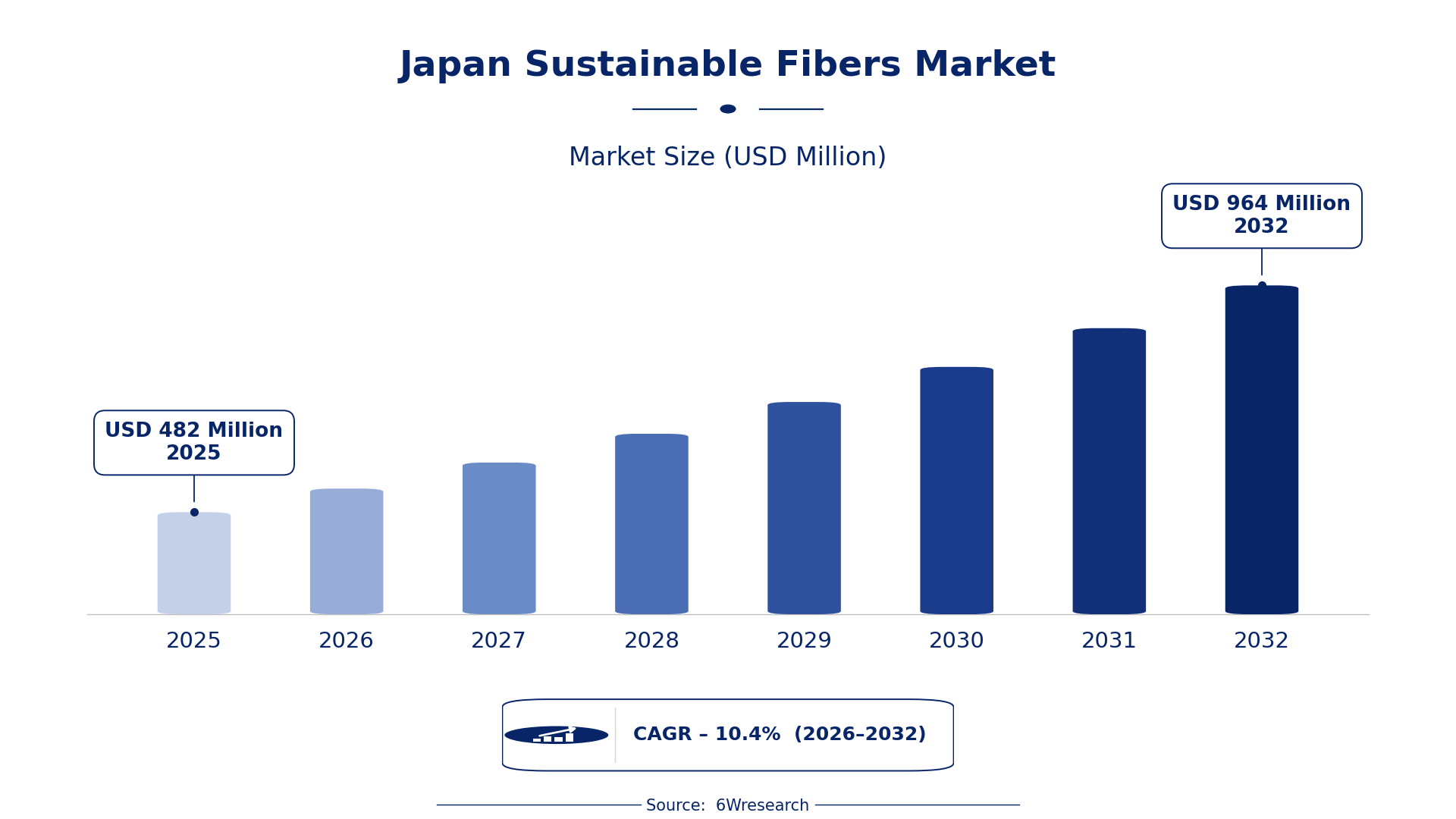
According to 6Wresearch internal database and industry insights, the Japan Sustainable Fibers Market was valued at USD 482 Million in 2025 and is projected to reach USD 964 Million by 2032, growing at a CAGR of approximately 10.4% during 2026–2032.
Japan Sustainable Fibers Market Highlights
| Report Metric | Details |
| Report Name | Japan Sustainable Fibers Market (2026-2032) |
| Market Size 2025 | USD 482 Million |
| Market Size 2032 | USD 964 Million |
| Absolute Growth 2025–2032 | USD 482 Million |
| CAGR 2026–2032 | 10.4% |
| Peak Annual Growth | 12.5% in 2032 |
| Forecast Period | 2026–2032 |
| Historical Data | 2022–2025 |
| Base Year | 2025 |
| Leading Fiber Type, 2025 | Recycled Polyester (35% share) |
| Leading Source Material, 2025 | Wood Pulp (44% share) |
| Leading Application Area, 2025 | Apparel (31% share) |
| Leading End User, 2025 | Fabric Manufacturers (43% share) |
| Fastest-Growing Fiber Type | Lyocell (TENCEL) (15.3% CAGR) |
| Fastest-Growing Application Area | Fashion (13.5% CAGR) |
| Fastest-Growing End User | Eco-Apparel Brands (13.9% CAGR) |
| Growing Sector | Apparel |
| Key End Users | Fabric Manufacturers, Sustainable Designers, Eco-Apparel Brands |
Japan Sustainable Fibers Market Year-wise Growth Rate and Key Drivers (2022–2032)
This graph illustrates the annual growth rates of the market from 2022 to 2032, highlighting a steady upward trajectory and projected market expansion over the forecast period.
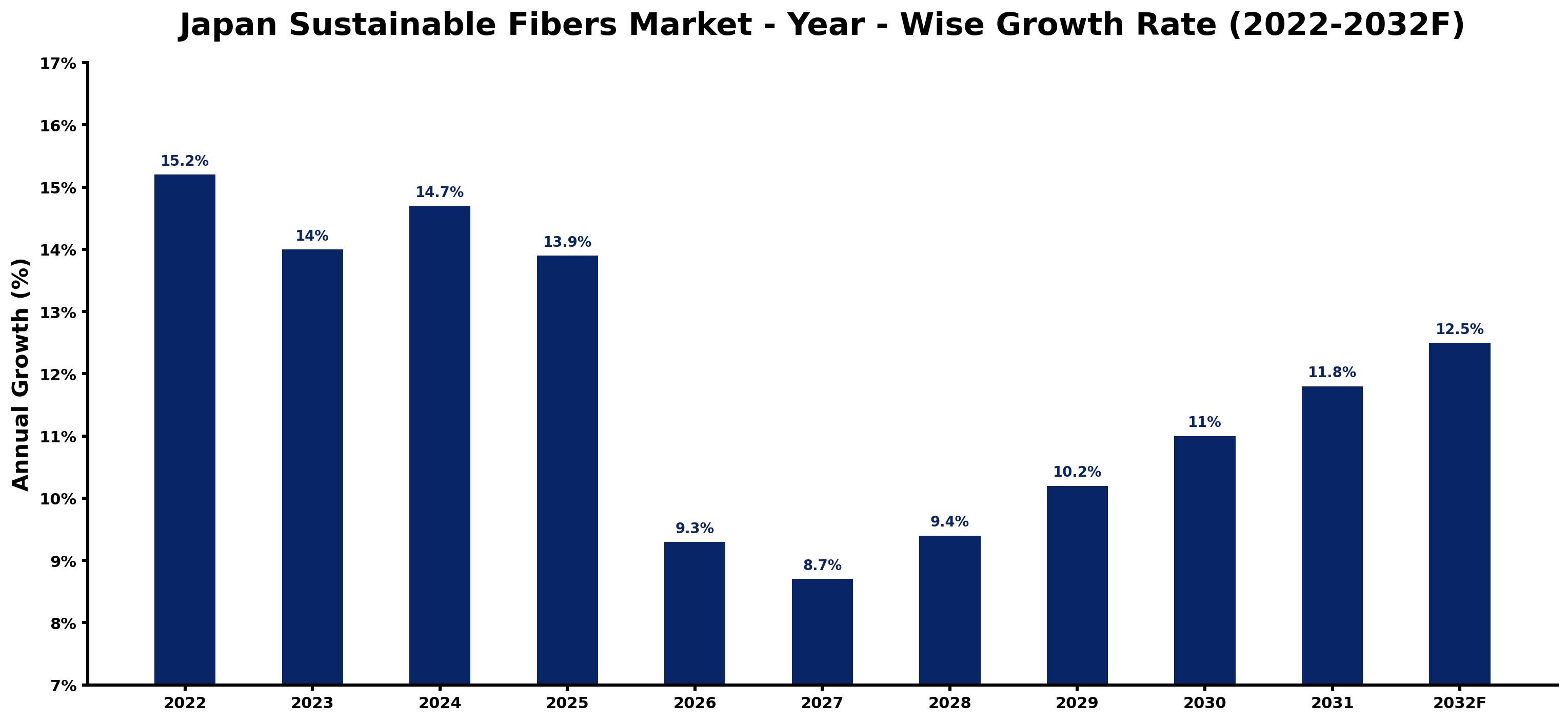
For each year, the table pairs the estimated growth rate with the leading influence on demand, showing how the drivers changed across the period.
| Year | Estimated Annual Growth (%) | Market Rationale |
| 2022 | 15.2 | The market experienced strong demand from eco-conscious consumers and manufacturers. |
| 2023 | 14.0 | Growth slowed slightly due to market saturation in certain sustainable products. |
| 2024 | 14.7 | Increased consumer awareness of sustainability drove a rebound in growth rates. |
| 2025 | 13.9 | Demand remained strong, but growth decelerated as competition intensified. |
| 2026 | 9.3 | A slowdown occurred as the market adjusted to new production capacities. |
| 2027 | 8.7 | Continued growth was supported by rising interest in eco-friendly materials. |
| 2028 | 9.4 | Growth accelerated again as sustainable products gained traction. |
| 2029 | 10.2 | Increased investments in sustainable practices among manufacturers boosted demand. |
| 2030 | 11.0 | Consumer demand for eco-friendly textiles continued to rise steadily. |
| 2031 | 11.8 | Sustained interest in sustainable fashion drove further growth in the market. |
| 2032 | 12.5 | The market peaked as the adoption of sustainable materials reached new heights. |
Note: Market size estimations and growth projections presented in this report are based on 6Wresearch's proprietary forecasting methodology, utilizing the latest available industry data, government publications, and primary research inputs.
Japan Sustainable Fibers Market Synopsis
Sustainable fibers, derived from renewable resources and produced through eco-friendly processes, are increasingly used in textiles and apparel, promoting environmental sustainability. The Japan Sustainable Fibers Market is expanding due to heightened consumer awareness, a textile industry valued at approximately 1.5 trillion yen, and initiatives like the Waste Management and Public Cleansing Act, which supports sustainable practices. With over 300 textile manufacturers focusing on sustainable methods, demand for these materials is expected to rise as consumers demonstrate a willingness to pay more for eco-friendly products.
Market Dynamics Impact Analysis (2026–2032)
| Factor | Type | Impact | Primary Segment Affected |
| Rising consumer awareness of environmental issues | Driver | High | Hemp Fiber |
| Increased production capacity for sustainable fibers | Driver | High | Recycled Polyester |
| Growing demand for eco-friendly textiles in the apparel sector | Opportunity | High | Apparel |
| Expansion of sustainable fashion events in urban hubs | Opportunity | Medium | Fashion |
| High production costs associated with sustainable fibers | Restraint | High | Lyocell (TENCEL) |
| Limited consumer knowledge about sustainable fiber benefits | Restraint | Medium | Banana Fiber |
| Compliance with stringent environmental regulations | Challenge | High | Wood Pulp |
| Capacity constraints in production facilities | Challenge | Medium | Hemp Fiber |
Evaluation of Drivers in Japan Sustainable Fibers Market (2026–2032)
The main growth drivers and the segments they affect most are set out below.
| Drivers | Primary Segment Affected | Why It Matters (Evidence) |
| Increasing consumer willingness to pay more for sustainable products | Recycled Polyester | 60% of consumers are willing to pay a premium for sustainable textiles, driving demand for recycled polyester. |
| Government initiatives promoting sustainable practices | Lyocell (TENCEL) | The Waste Management and Public Cleansing Act encourages sustainable product development, providing a framework for manufacturers. |
| Growth in eco-conscious consumer segments | Hemp Fiber | The demand for hemp fiber has grown, with production increasing by 20% since 2020, reflecting rising consumer interest. |
| Technological advancements in fiber production processes | Banana Fiber | Innovations in biodegradable fiber production have made banana fiber more appealing to manufacturers, increasing its market potential. |
| Expansion of sustainable fashion initiatives | Fashion | The Sustainable Fashion Week held in Tokyo highlighted the rising popularity of eco-friendly brands, with attendance increasing by 30%. |
Much of the new demand traces back to heightened consumer awareness regarding environmental sustainability. A considerable portion of consumers are willing to pay more for eco-friendly products, prompting manufacturers to source materials like recycled polyester. The demand for hemp fiber has surged, with production increasing by 20% since 2020. Developments in biodegradable fibers, such as banana fiber, attract manufacturers seeking eco-friendly alternatives. The growth of sustainable fashion events in Tokyo encourages the adoption of sustainable textiles, showcasing a burgeoning market for these materials.
Evaluation of Restraints in Japan Sustainable Fibers Market
These restraints slow adoption and weigh on supplier margins.
| Market Restraint | Primary Segment Affected | Why It Matters (Evidence) |
| High production costs for sustainable fibers | Lyocell (TENCEL) | The production of Lyocell fibers involves expensive eco-friendly processes, limiting market growth. |
| Limited consumer knowledge about sustainable fibers | Banana Fiber | Many consumers are unaware of the benefits of banana fiber, hindering its market penetration. |
| Compliance with environmental regulations | Wood Pulp | Producers must adhere to strict regulations, increasing operational costs and complexity, with compliance costs rising by 15% since 2020. |
| Capacity constraints in production facilities | Hemp Fiber | Limited production capacity can delay supply and affect market responsiveness, with production increasing by 20% since 2020. |
| Market saturation in certain sustainable products | Recycled Polyester | Increased competition has led to market saturation, slowing growth rates, with a 10% decline in growth rate observed last year. |
Japan Sustainable Fibers Market Challenges
Approximately 60% of consumers are willing to pay more for sustainable products, resulting in a demand-supply gap that pressures buyers to find higher-priced alternatives. Strict testing requirements under the JIS L 1096 standard delay suppliers, extending the time to market for new fiber products by up to six months. Regulatory compliance with government initiatives raises operational costs for textile manufacturers, ultimately increasing prices for buyers by about 10%. Competition from imported textiles that may not meet the same environmental standards compels local producers to lower prices, affecting their profit margins and ability to invest in sustainable practices.
Trends in the Japan Sustainable Fibers Market
Four trends stand out in the Japan Sustainable Fibers Market.
- Shift towards Eco-Friendly Fashion: The Sustainable Fashion Week in Tokyo showcased a growing commitment to eco-friendly practices among brands, with increased participation reflecting a shift in consumer preferences.
- Transition from Conventional to Sustainable Fibers: Japan's textile industry is increasingly adopting sustainable fibers, with a target to increase their use by 30% by 2025, indicating a shift in production practices.
- Emergence of Biodegradable Materials: The demand for biodegradable fibers, such as banana fiber, is rising, driven by consumer preferences for eco-friendly products, particularly in the fashion sector.
- Growth of Sustainable Textile Events: The Tokyo region is becoming a hub for sustainable fashion initiatives, with events like Sustainable Fashion Week highlighting the shift towards eco-conscious consumerism.
Investment Opportunities in the Japan Sustainable Fibers Market
The openings below show where demand in the Japan Sustainable Fibers Market is visible and how suppliers can enter.
- Market Gap for Eco-Friendly Textiles: With a large segment of consumers willing to pay more for sustainable products, there is a market gap for eco-friendly textiles, particularly in urban areas like Tokyo.
- Partnerships for Sustainable Fiber Production: Now is the time to invest in partnerships with local textile manufacturers, as the government promotes sustainable practices through various initiatives.
- Investment in Sustainable Fashion Hubs: Tokyo's growing reputation as a sustainable fashion hub presents opportunities for investment in eco-friendly textile production facilities, catering to rising consumer demand.
- Utilisation of Agricultural Waste: The Japanese government promotes the use of agricultural waste in fiber production, creating opportunities for suppliers to enter the market through local partnerships.
Government Initiatives in the Japan Sustainable Fibers Market
The Cannabis Control Act, amended in 2023, regulates cannabis-derived products and sets residual THC limits for items like CBD, impacting producers of sustainable fibers derived from hemp. The Waste Management and Public Cleansing Act, established in 1970, mandates the treatment and disposal of industrial waste, which influences the sustainable practices of textile manufacturers. These laws ensure that producers adhere to environmental standards, promoting a more sustainable textile industry in Japan.
In 2023, the government launched a program with a budget of 500 million yen to promote sustainable textiles, administered by the Ministry of the Environment. This initiative supports the development of eco-friendly materials and practices, encouraging manufacturers to innovate and align with sustainability goals. The Japan Sustainable Textile Association also plays a role in advocating for eco-friendly standards, further strengthening the market for sustainable fibers.
Future Insight of the Japan Sustainable Fibers Market
Buyers prioritising sustainability will significantly shape the market, leading suppliers to adopt eco-friendly practices. By 2032, the Japanese government aims to increase the use of sustainable materials in textiles by 30%, pushing manufacturers to innovate production processes. The introduction of the Eco-Design Program will streamline compliance and improve product quality, benefiting both buyers and suppliers. The rise of sustainable fashion events in Tokyo will further boost awareness and collaboration, creating a vibrant market for eco-friendly fibers.
Market Segmentation Analysis
Japan Sustainable Fibers Market report covers a detailed analysis of the following market segments:
By Fiber Type – Recycled Polyester Leads, Lyocell (TENCEL) Expected to Grow Fastest
According to Saurav Kr Singh, Senior Research Analyst at 6Wresearch, in 2025, Recycled Polyester led the fiber type split with a 35% share. Recycled polyester holds the largest share due to its prevalent use in apparel, effectively addressing the issue of plastic waste. The material's integration into various clothing lines demonstrates its essential role in promoting sustainability within the industry. The quickest growth will come from Lyocell (TENCEL), forecast to expand at a CAGR of 15.3% between 2026 and 2032. Lyocell is experiencing rapid growth thanks to its eco-friendly production process, appealing to consumers who prioritise sustainability. The increasing adoption of this fiber by eco-conscious brands highlights its rising significance in the market. Suppliers should focus on expanding their lyocell fiber offerings to meet the growing demand.
By Source Material – Wood Pulp Leads and Records the Fastest Growth
Wood Pulp accounted for 44% of the market by source material in 2025. Wood pulp leads the market as it is essential for producing lyocell fibers, which are increasingly favoured in sustainable textiles. The reliance on sustainable forestry practices further supports its dominant position. The same category is also set to grow fastest, at a CAGR of 11.5% during 2026–2032. Wood pulp is also the fastest-growing source material, as its production aligns with the rising demand for lyocell fibers. This dual role reinforces its importance in the sustainable fibers market. Buyers should prioritise sourcing from suppliers that utilise sustainable wood pulp to meet eco-friendly standards.
By Application Area – Apparel Leads, Fashion Expected to Grow Fastest
The largest application area category in 2025 was Apparel, at 31% of revenue. Apparel is the leading application area for sustainable fibers, driven by a strong commitment from the textile industry to offer eco-friendly clothing options. This is reflected in the widespread incorporation of sustainable materials across numerous brands' product lines. Over 2026–2032, Fashion is expected to post the fastest growth, at a CAGR of 13.5%. Fashion is the fastest-growing application area, driven by a notable increase in consumer interest for sustainable fashion designs. The rise of sustainable fashion events in cities like Tokyo further illustrates this trend. Suppliers need to adapt their products to meet the specific demands of the fashion sector.
By End User – Fabric Manufacturers Lead, Eco-Apparel Brands Expected to Grow Fastest
Fabric Manufacturers took 43% of end user revenue in 2025, more than any other category. Fabric manufacturers dominate the market as the primary users of sustainable fibers in their production processes. Their crucial role is underscored by the growing number of manufacturers adopting eco-friendly practices. Eco-Apparel Brands are projected to grow fastest, at a CAGR of 13.9% during 2026–2032. Eco-apparel brands are the fastest-growing end user group, increasingly prioritising sustainable fibers to align with consumer preferences. This trend is likely to expand as more brands enter the sustainable market. Suppliers should engage with eco-apparel brands to align their offerings with market demands.
Key Attractiveness of the Report
- 10 Years of Market Numbers
- Historical Data Starting from 2022 to 2025
- Base Year 2025
- Forecast Data until 2032
- Key Performance Indicators Impacting the Market
- Major Upcoming Developments and Projects
Key Highlights of the Report:
- Japan Sustainable Fibers Market Outlook
- Market Size of Japan Sustainable Fibers Market, 2025
- Forecast of Japan Sustainable Fibers Market, 2032
- Historical Data and Forecast of Japan Sustainable Fibers Revenues & Volume for the Period 2022-2032F
- Japan Sustainable Fibers Market Trend Evolution
- Japan Sustainable Fibers Market Drivers and Challenges
- Japan Sustainable Fibers Price Trends
- Japan Sustainable Fibers Porter's Five Forces
- Japan Sustainable Fibers Industry Life Cycle
- Historical Data and Forecast of Japan Sustainable Fibers Market Revenues & Volume By Fiber Type for the Period 2022-2032F
- Historical Data and Forecast of Japan Sustainable Fibers Market Revenues & Volume By Hemp Fiber for the Period 2022-2032F
- Historical Data and Forecast of Japan Sustainable Fibers Market Revenues & Volume By Banana Fiber for the Period 2022-2032F
- Historical Data and Forecast of Japan Sustainable Fibers Market Revenues & Volume By Recycled Polyester for the Period 2022-2032F
- Historical Data and Forecast of Japan Sustainable Fibers Market Revenues & Volume By Lyocell (TENCEL) for the Period 2022-2032F
- Historical Data and Forecast of Japan Sustainable Fibers Market Revenues & Volume By Source Material for the Period 2022-2032F
- Historical Data and Forecast of Japan Sustainable Fibers Market Revenues & Volume By Cannabis Plant for the Period 2022-2032F
- Historical Data and Forecast of Japan Sustainable Fibers Market Revenues & Volume By Agricultural Waste for the Period 2022-2032F
- Historical Data and Forecast of Japan Sustainable Fibers Market Revenues & Volume By PET Bottles for the Period 2022-2032F
- Historical Data and Forecast of Japan Sustainable Fibers Market Revenues & Volume By Wood Pulp for the Period 2022-2032F
- Historical Data and Forecast of Japan Sustainable Fibers Market Revenues & Volume By Application Area for the Period 2022-2032F
- Historical Data and Forecast of Japan Sustainable Fibers Market Revenues & Volume By Textiles, Construction for the Period 2022-2032F
- Historical Data and Forecast of Japan Sustainable Fibers Market Revenues & Volume By Apparel, Bags for the Period 2022-2032F
- Historical Data and Forecast of Japan Sustainable Fibers Market Revenues & Volume By Footwear, Sportswear for the Period 2022-2032F
- Historical Data and Forecast of Japan Sustainable Fibers Market Revenues & Volume By Bedding, Fashion for the Period 2022-2032F
- Historical Data and Forecast of Japan Sustainable Fibers Market Revenues & Volume By End User for the Period 2022-2032F
- Historical Data and Forecast of Japan Sustainable Fibers Market Revenues & Volume By Fabric Manufacturers for the Period 2022-2032F
- Historical Data and Forecast of Japan Sustainable Fibers Market Revenues & Volume By Sustainable Designers for the Period 2022-2032F
- Historical Data and Forecast of Japan Sustainable Fibers Market Revenues & Volume By Eco-Apparel Brands for the Period 2022-2032F
- Historical Data and Forecast of Japan Sustainable Fibers Market Revenues & Volume By Textile Mills for the Period 2022-2032F
- Japan Sustainable Fibers Import Export Trade Statistics
- Market Opportunity Assessment By Fiber Type
- Market Opportunity Assessment By Source Material
- Market Opportunity Assessment By Application Area
- Market Opportunity Assessment By End User
- Japan Sustainable Fibers Top Companies Market Share
- Japan Sustainable Fibers Competitive Benchmarking By Technical and Operational Parameters
- Japan Sustainable Fibers Company Profiles
- Japan Sustainable Fibers Key Strategic Recommendations
Market Covered
Segments analysed in this report are listed below.
By Fiber Type
- Hemp Fiber
- Banana Fiber
- Recycled Polyester
- Lyocell (TENCEL)
By Source Material
- Cannabis Plant
- Agricultural Waste
- PET Bottles
- Wood Pulp
By Application Area
- Textiles
- Construction
- Apparel
- Bags
- Footwear
- Sportswear
- Bedding
- Fashion
By End User
- Fabric Manufacturers
- Sustainable Designers
- Eco-Apparel Brands
- Textile Mills































