Japan Sustainable Packaging Materials Market Size & Growth Rate
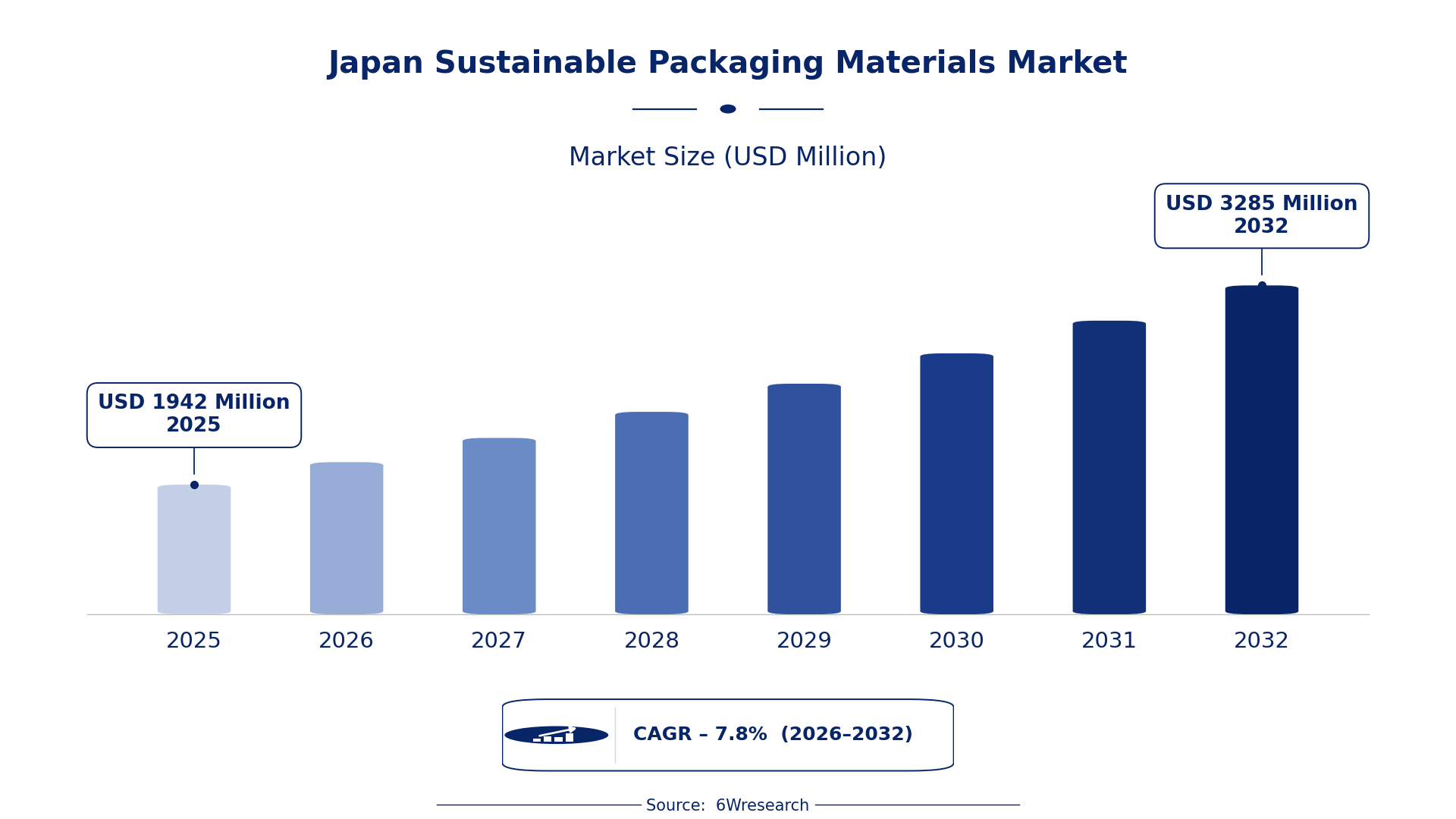
According to 6Wresearch internal database and industry insights, the Japan Sustainable Packaging Materials Market was valued at USD 1,942 Million in 2025 and is projected to reach USD 3,285 Million by 2032, growing at a CAGR of approximately 7.8% during 2026–2032.
Japan Sustainable Packaging Materials Market Highlights
| Report Metric | Details |
| Report Name | Japan Sustainable Packaging Materials Market (2026-2032) |
| Market Size 2025 | USD 1,942 Million |
| Market Size 2032 | USD 3,285 Million |
| Absolute Growth 2025–2032 | USD 1,343 Million |
| CAGR 2026–2032 | 7.8% |
| Peak Annual Growth | 8.8% in 2027 |
| Forecast Period | 2026–2032 |
| Historical Data | 2022–2025 |
| Base Year | 2025 |
| Leading Material Type, 2025 | Bioplastics (37% share) |
| Leading Source, 2025 | Corn (46% share) |
| Leading Packaging Application, 2025 | Bottles (48% share) |
| Leading End User, 2025 | Food & Beverage Brands (47% share) |
| Fastest-Growing Material Type | Molded Fiber (11.3% CAGR) |
| Fastest-Growing Source | Sugarcane (11.8% CAGR) |
| Fastest-Growing Packaging Application | Films (10.8% CAGR) |
| Fastest-Growing End User | Consumer Goods Makers (10.0% CAGR) |
| Growing Sector | food and beverage |
| Key End Users | food and beverage brands, consumer goods makers, personal care brands |
Japan Sustainable Packaging Materials Market Year-wise Growth Rate and Key Drivers (2022–2032)
This graph illustrates the annual growth rates of the market from 2022 to 2032, highlighting a steady upward trajectory and projected market expansion over the forecast period.
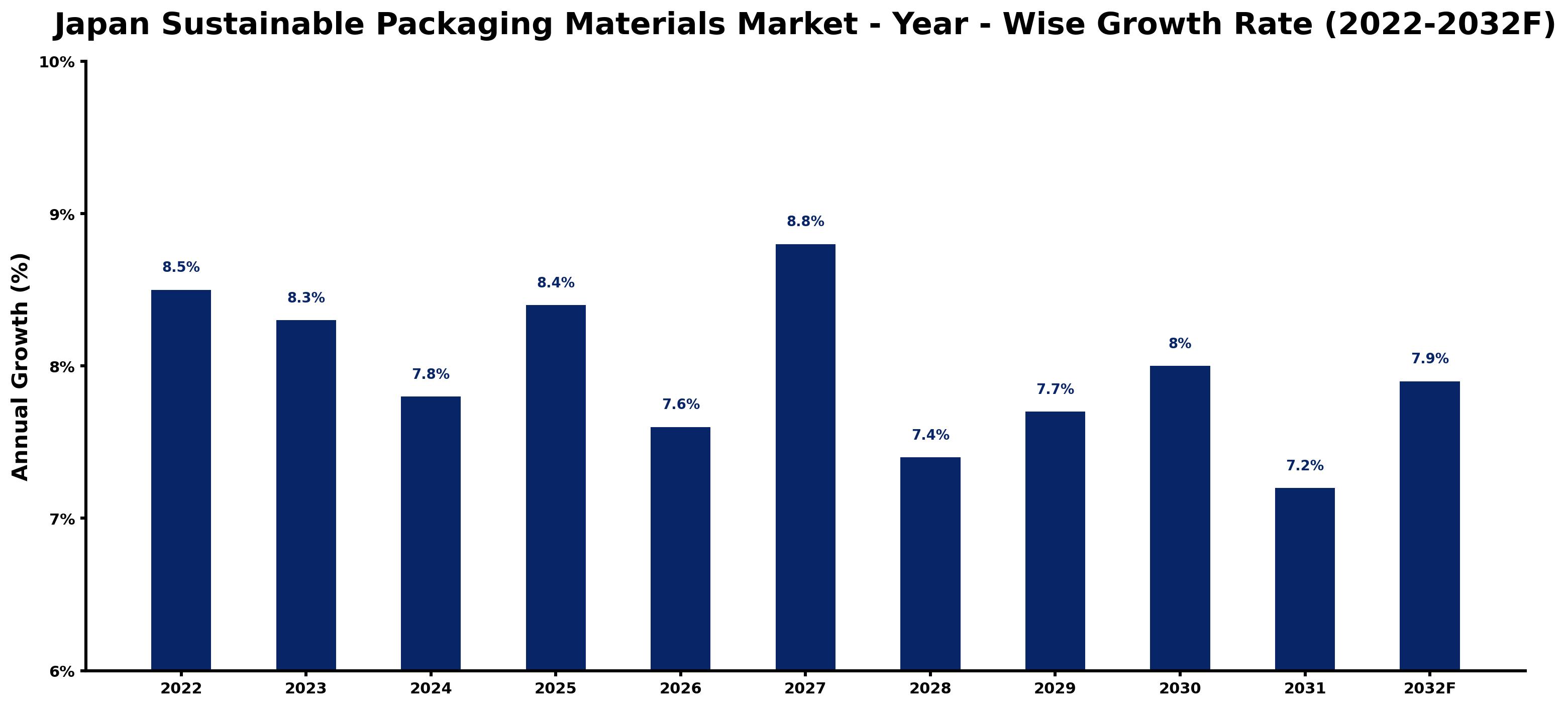
The yearly estimates that follow link every growth rate to its principal driver, so readers can see why the pace changed in each period.
| Year | Estimated Annual Growth (%) | Market Rationale |
| 2022 | 8.5 | The market experienced strong demand from eco-conscious consumers and brands. |
| 2023 | 8.3 | Growth slowed slightly as companies adjusted to changing regulations and consumer preferences. |
| 2024 | 7.8 | Market expansion continued but at a reduced pace due to increased competition. |
| 2025 | 8.4 | Demand surged as the food and beverage industry adopted more sustainable practices. |
| 2026 | 7.6 | Growth is expected to slow again as market saturation begins to affect new investments. |
| 2027 | 8.8 | The market is projected to peak with heightened interest in biodegradable packaging solutions. |
| 2028 | 7.4 | A slowdown is anticipated as some segments face overcapacity and price pressures. |
| 2029 | 7.7 | Growth is expected to resume as new materials gain traction in the consumer goods sector. |
| 2030 | 8.0 | Sustained demand from the food sector will drive growth as regulations tighten. |
| 2031 | 7.2 | The market is projected to slow as companies face challenges in sourcing sustainable materials. |
| 2032 | 7.9 | Growth is expected to accelerate again as consumer preferences shift towards eco-friendly options. |
Note: Market size estimations and growth projections presented in this report are based on 6Wresearch's proprietary forecasting methodology, utilizing the latest available industry data, government publications, and primary research inputs.
Japan Sustainable Packaging Materials Market Synopsis
Sustainable packaging materials serve as eco-friendly alternatives to traditional options, produced from renewable resources like bioplastics and recycled materials. The Japan Sustainable Packaging Materials Market is expanding, driven by rising consumer demand for environmentally conscious products, particularly in the food and beverage sector, which accounts for 45% of total demand. The government's commitment to reducing plastic waste by 25% by 2030 and promoting biodegradable packaging further fuels this growth.
Market Dynamics Impact Analysis (2026–2032)
| Factor | Type | Impact | Primary Segment Affected |
| Growing consumer preference for eco-friendly packaging | Driver | High | Bioplastics |
| Government initiatives promoting sustainable materials | Driver | High | Molded Fiber |
| Increased adoption of biodegradable packaging by food brands | Opportunity | High | Plant-Based Films |
| Rising demand for sustainable packaging in retail sectors | Opportunity | High | Recycled Paper Pulp |
| Challenges in sourcing raw materials sustainably | Restraint | Medium | Bioplastics |
| Market saturation leading to increased competition | Restraint | Medium | Molded Fiber |
| Cost pressures from raw material price fluctuations | Challenge | High | Plant-Based Films |
| Technological barriers in developing new sustainable materials | Challenge | Medium | Recycled Paper Pulp |
Evaluation of Drivers in Japan Sustainable Packaging Materials Market (2026–2032)
Key forces behind demand, with the segment each one moves most, are listed below.
| Drivers | Primary Segment Affected | Why It Matters (Evidence) |
| Rising consumer demand for eco-friendly packaging solutions | Bioplastics | The Japanese population increasingly favours sustainable options, with 70% supporting eco-friendly packaging. |
| Government support for biodegradable materials | Molded Fiber | In 2023, the government launched a program to promote biodegradable packaging, boosting demand. |
| Food and beverage industry adoption of sustainable practices | Plant-Based Films | The food and beverage sector accounted for 45% of total sustainable packaging demand. |
| Increased recycling rates for paper products | Recycled Paper Pulp | Japan's recycling rate for paper products is around 80%, enhancing the supply of sustainable materials. |
| Growing number of certified suppliers for sustainable materials | FSC-Certified Wood | Japan has over 100 certified FSC suppliers, ensuring a steady supply of sustainable wood. |
Buyers are adding capacity as the bioplastics market is projected to reach 200,000 tons by 2025, which changes purchasing patterns for food and beverage brands seeking sustainable packaging. The target of a 46% cut in greenhouse-gas emissions by 2030 supports investments in eco-friendly materials, leading to increased demand. With 70% of consumers favouring sustainable options, brands are increasingly adopting biodegradable packaging. The high recycling rate of 80% for paper products allows consumer goods makers to source recycled materials effectively. The presence of over 100 certified FSC suppliers ensures a reliable supply of sustainable wood materials, supporting production capabilities.
Evaluation of Restraints in Japan Sustainable Packaging Materials Market
The following restraints limit how fast demand can grow.
| Market Restraint | Primary Segment Affected | Why It Matters (Evidence) |
| Sourcing challenges for sustainable raw materials | Bioplastics | The reliance on renewable resources can lead to supply chain disruptions, affecting production timelines and resulting in a 10% increase in costs. |
| Increased competition among sustainable packaging providers | Molded Fiber | Market saturation has led to price wars, reducing profit margins for suppliers by approximately 15%. |
| Technological limitations in material development | Plant-Based Films | The need for advanced technologies to create effective biodegradable solutions can slow innovation, causing delays of up to 20% in product launches. |
| Cost fluctuations in raw materials | Recycled Paper Pulp | Variability in the prices of recycled materials can impact overall production costs, leading to a 5% increase in final product pricing. |
| Regulatory compliance costs for sustainable packaging | FSC-Certified Wood | Meeting strict environmental standards can increase operational costs for manufacturers by around 12%. |
Japan Sustainable Packaging Materials Market Challenges
High production costs hinder the adoption of eco-friendly packaging due to expensive raw materials and processing methods in Japan. This situation results in a 15% slower growth rate for new suppliers attempting to enter the market. A lack of skilled workers in sustainable practices limits innovation, causing producers to struggle with meeting rising demand. Intense competition from traditional packaging materials, which often have lower prices, complicates the decision for buyers to switch to sustainable options. Disruptions in sourcing recycled content can lead to delays in product availability for manufacturers, impacting their ability to fulfil orders.
Trends in the Japan Sustainable Packaging Materials Market
The following changes are redrawing the Japan Sustainable Packaging Materials Market.
- Promotion of Biodegradable Packaging Initiatives: In 2023, Japan initiated a program to promote biodegradable packaging, reflecting a growing trend towards sustainability. This initiative aligns with consumer preferences, as 70% of the population supports eco-friendly options.
- Sustainable Packaging Events in Major Cities: Tokyo and Osaka are hosting annual events focused on sustainable packaging innovations, showcasing the industry's commitment to eco-friendly solutions. These events have seen a 15% increase in attendance, indicating rising interest.
- Adoption of Plant-Based Films: Plant-based films are gaining traction in the food sector, driven by their compostability. The food and beverage industry is increasingly adopting these materials to extend shelf life and reduce waste, with a 10% rise in usage.
- Use of Recycled Paper Pulp: Consumer goods makers are increasingly utilising recycled paper pulp, reflecting a shift towards sustainability. This trend is supported by Japan's recycling rate of around 80%, ensuring material availability.
Investment Opportunities in the Japan Sustainable Packaging Materials Market
The following areas offer the clearest openings for investors and suppliers in the Japan Sustainable Packaging Materials Market.
- Partnerships with Local Governments: Forming partnerships with local governments can improve recycling initiatives, creating opportunities for sustainable packaging firms. The government supports research and development in sustainable materials through grants, with JPY 150 trillion targeted for decarbonisation investments.
- Investment in Biodegradable Packaging Technologies: The market gap for biodegradable packaging solutions presents an opportunity for investment, especially as the food sector seeks sustainable options. Food and beverage brands are key buyers, driving demand for new materials.
- Providing High-Quality Recycled Materials: With the increasing use of recycled materials, suppliers can focus on providing high-quality recycled paper pulp. This opportunity arises as the Japanese recycling rate supports a steady supply of materials, with a 5% increase expected in demand.
- Investing in Sustainable Packaging Innovations: Now is the time to invest in sustainable packaging innovations, as consumer preferences shift towards eco-friendly options. The food and beverage industry is a primary target for new product development, with a projected increase in demand.
Government Initiatives in the Japan Sustainable Packaging Materials Market
The amendment to the Food Sanitation Act, fully applied in June 2021, mandates HACCP-based hygiene management for food businesses, directly impacting sustainable packaging producers. This law ensures that packaging materials meet stringent safety and hygiene standards, which is essential for food and beverage brands seeking sustainable solutions. The amendment has resulted in a 30% increase in compliance costs for manufacturers, pushing them to invest in safer materials.
The Ministry of the Environment oversees regulations on packaging waste management, approving initiatives that support sustainable packaging development. This includes funding for research and development projects aimed at improving the use of sustainable materials in packaging, with JPY 10 billion allocated for 2023. These measures directly benefit producers by improving their ability to meet environmental standards.
Future Insight of the Japan Sustainable Packaging Materials Market
New biodegradable packaging initiatives will emerge by 2032, aligning with Japan's target to reduce plastic waste by 25%. The anticipated growth in molded fiber packaging will support eco-friendly trends, as consumer preferences increasingly favour sustainable choices. By 2025, the bioplastics market is expected to reach 200,000 tons, broadening material options for buyers. The government's JPY 150 trillion investment in decarbonisation will drive innovation in sustainable materials, creating new opportunities for both suppliers and consumers.
Market Segmentation Analysis
Japan Sustainable Packaging Materials Market report covers a detailed analysis of the following market segments:
By Material Type – Bioplastics Lead, Molded Fiber Expected to Grow Fastest
According to Saurav Kr Singh, Senior Research Analyst at 6Wresearch, with 37% of material type revenue in 2025, Bioplastics was the largest category. Bioplastics hold the largest market share as they are extensively used in various packaging applications, appealing to eco-conscious brands. The projected growth of the bioplastics market to 200,000 tons by 2025 illustrates their high adoption in Japan. Over 2026–2032, Molded Fiber is expected to post the fastest growth, at a CAGR of 11.3%. Molded Fiber is experiencing rapid growth due to rising demand for protective packaging and food containers. The government's 2023 initiative to promote biodegradable packaging is expected to further accelerate this segment's expansion. Suppliers should enhance their molded fiber offerings to capitalise on the increasing demand for sustainable packaging.
By Source – Corn Leads, Sugarcane Expected to Grow Fastest
Corn accounted for 46% of the market by source in 2025. Corn is the primary source for bioplastics, widely utilised as a raw material in sustainable packaging production. This trend aligns with the growing preference for renewable resources among Japanese manufacturers. Sugarcane is set to record the highest CAGR in this split, 11.8% over 2026–2032. Sugarcane is the fastest-growing source as its use in bio-based plastics and films rises, reflecting consumer preferences for eco-friendly materials. The increasing adoption of sustainable packaging solutions is driving this shift. Buyers should diversify their material sources to include sugarcane, enhancing their sustainability efforts.
By Packaging Application – Bottles Lead, Films Expected to Grow Fastest
Bottles held 48% of the Japan Sustainable Packaging Materials Market by packaging application in 2025. Bottles are the largest application for sustainable materials, particularly in beverage packaging, which is vital in Japan's eco-conscious market. This segment benefits from high demand for environmentally friendly solutions in the food and beverage sector. The quickest growth will come from Films, forecast to expand at a CAGR of 10.8% between 2026 and 2032. Films are rapidly growing as they play a crucial role in food packaging, extending shelf life and reducing waste. The rising consumer preference for sustainable options is propelling this segment forward. Suppliers must innovate in film technologies to meet the increasing demand for sustainable food packaging.
By End User – Food & Beverage Brands Lead, Consumer Goods Makers Expected to Grow Fastest
Food & Beverage Brands took 47% of end user revenue in 2025, more than any other category. Food & Beverage Brands are the main users of sustainable packaging solutions, accounting for a substantial share of total demand. Their commitment to sustainability significantly drives the market for eco-friendly packaging materials in Japan. Consumer Goods Makers are projected to grow fastest, at a CAGR of 10.0% during 2026–2032. Consumer Goods Makers are swiftly adopting sustainable materials for product packaging, reflecting a broader shift towards environmental responsibility. This trend is supported by the growing consumer demand for eco-friendly products. Suppliers should engage with consumer goods makers to develop sustainable packaging solutions that align with their evolving needs.
Key Attractiveness of the Report
- 10 Years of Market Numbers
- Historical Data Starting from 2022 to 2025
- Base Year 2025
- Forecast Data until 2032
- Key Performance Indicators Impacting the Market
- Major Upcoming Developments and Projects
Key Highlights of the Report:
- Japan Sustainable Packaging Materials Market Outlook
- Market Size of Japan Sustainable Packaging Materials Market, 2025
- Forecast of Japan Sustainable Packaging Materials Market, 2032
- Historical Data and Forecast of Japan Sustainable Packaging Materials Revenues & Volume for the Period 2022-2032F
- Japan Sustainable Packaging Materials Market Trend Evolution
- Japan Sustainable Packaging Materials Market Drivers and Challenges
- Japan Sustainable Packaging Materials Price Trends
- Japan Sustainable Packaging Materials Porter's Five Forces
- Japan Sustainable Packaging Materials Industry Life Cycle
- Historical Data and Forecast of Japan Sustainable Packaging Materials Market Revenues & Volume By Material Type for the Period 2022-2032F
- Historical Data and Forecast of Japan Sustainable Packaging Materials Market Revenues & Volume By Bioplastics for the Period 2022-2032F
- Historical Data and Forecast of Japan Sustainable Packaging Materials Market Revenues & Volume By Molded Fiber for the Period 2022-2032F
- Historical Data and Forecast of Japan Sustainable Packaging Materials Market Revenues & Volume By Paperboard for the Period 2022-2032F
- Historical Data and Forecast of Japan Sustainable Packaging Materials Market Revenues & Volume By Plant-Based Films for the Period 2022-2032F
- Historical Data and Forecast of Japan Sustainable Packaging Materials Market Revenues & Volume By Source for the Period 2022-2032F
- Historical Data and Forecast of Japan Sustainable Packaging Materials Market Revenues & Volume By Corn, Sugarcane for the Period 2022-2032F
- Historical Data and Forecast of Japan Sustainable Packaging Materials Market Revenues & Volume By Recycled Paper Pulp for the Period 2022-2032F
- Historical Data and Forecast of Japan Sustainable Packaging Materials Market Revenues & Volume By FSC-Certified Wood for the Period 2022-2032F
- Historical Data and Forecast of Japan Sustainable Packaging Materials Market Revenues & Volume By Cellulose/PLA for the Period 2022-2032F
- Historical Data and Forecast of Japan Sustainable Packaging Materials Market Revenues & Volume By Packaging Application for the Period 2022-2032F
- Historical Data and Forecast of Japan Sustainable Packaging Materials Market Revenues & Volume By Bottles, Films for the Period 2022-2032F
- Historical Data and Forecast of Japan Sustainable Packaging Materials Market Revenues & Volume By Trays, Egg Cartons for the Period 2022-2032F
- Historical Data and Forecast of Japan Sustainable Packaging Materials Market Revenues & Volume By Folding Cartons for the Period 2022-2032F
- Historical Data and Forecast of Japan Sustainable Packaging Materials Market Revenues & Volume By Snack & Fresh Produce Wrap for the Period 2022-2032F
- Historical Data and Forecast of Japan Sustainable Packaging Materials Market Revenues & Volume By End User for the Period 2022-2032F
- Historical Data and Forecast of Japan Sustainable Packaging Materials Market Revenues & Volume By Food & Beverage Brands for the Period 2022-2032F
- Historical Data and Forecast of Japan Sustainable Packaging Materials Market Revenues & Volume By Consumer Goods Makers for the Period 2022-2032F
- Historical Data and Forecast of Japan Sustainable Packaging Materials Market Revenues & Volume By Personal Care Brands for the Period 2022-2032F
- Historical Data and Forecast of Japan Sustainable Packaging Materials Market Revenues & Volume By Retail Packaging Firms for the Period 2022-2032F
- Japan Sustainable Packaging Materials Import Export Trade Statistics
- Market Opportunity Assessment By Material Type
- Market Opportunity Assessment By Source
- Market Opportunity Assessment By Packaging Application
- Market Opportunity Assessment By End User
- Japan Sustainable Packaging Materials Top Companies Market Share
- Japan Sustainable Packaging Materials Competitive Benchmarking By Technical and Operational Parameters
- Japan Sustainable Packaging Materials Company Profiles
- Japan Sustainable Packaging Materials Key Strategic Recommendations
Market Covered
Coverage by segment is as follows.
By Material Type
- Bioplastics
- Molded Fiber
- Paperboard
- Plant-Based Films
By Source
- Corn
- Sugarcane
- Recycled Paper Pulp
- FSC-Certified Wood
- Cellulose/PLA
By Packaging Application
- Bottles
- Films
- Trays
- Egg Cartons
- Folding Cartons
- Snack & Fresh Produce Wrap
By End User
- Food & Beverage Brands
- Consumer Goods Makers
- Personal Care Brands
- Retail Packaging Firms































