Japan Sustainable Protein Market Size & Growth Rate
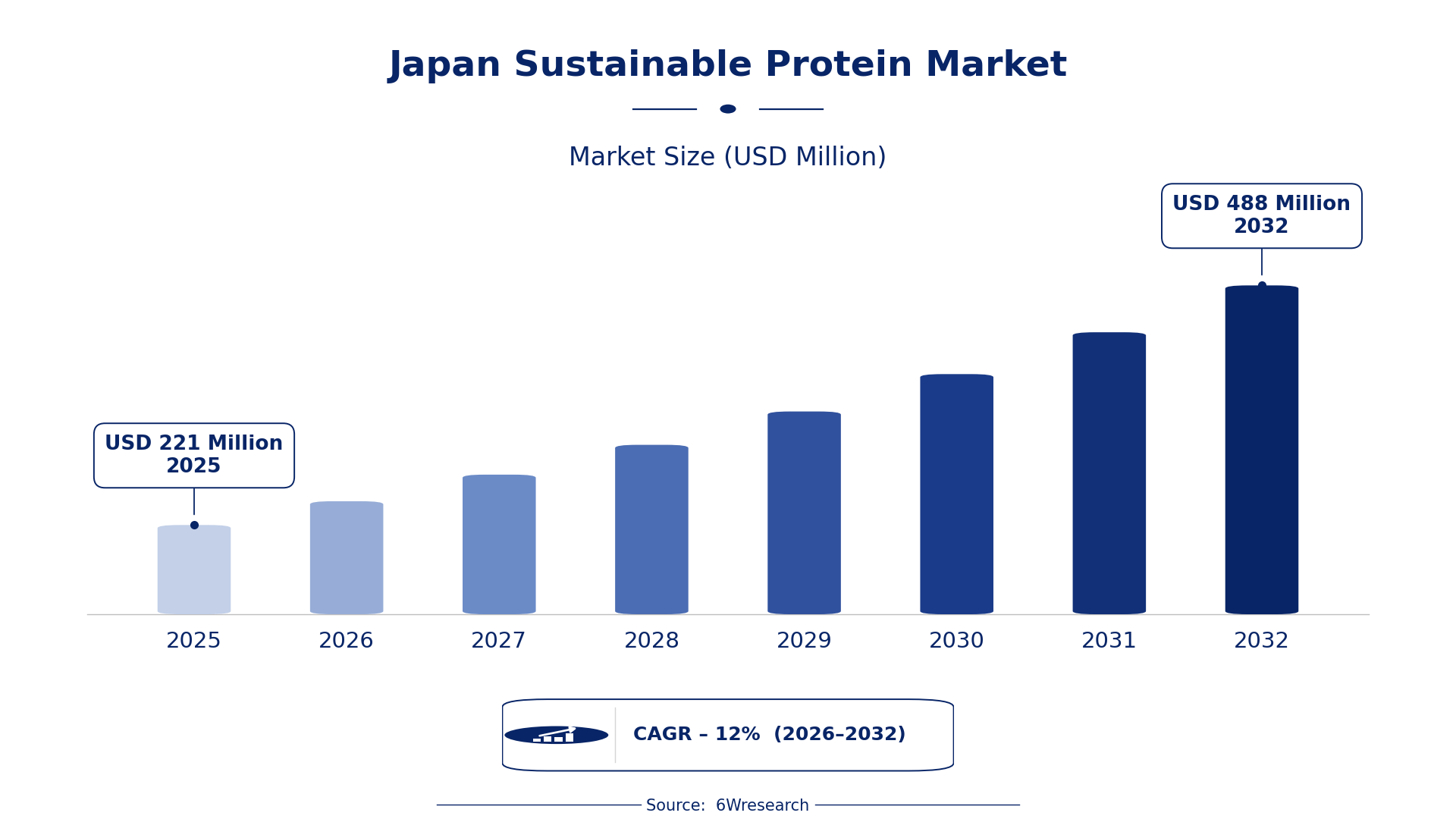
According to 6Wresearch internal database and industry insights, the Japan Sustainable Protein Market was valued at USD 221 Million in 2025 and is projected to reach USD 488 Million by 2032, growing at a CAGR of approximately 12% during 2026–2032.
Japan Sustainable Protein Market Highlights
| Report Metric | Details |
| Report Name | Japan Sustainable Protein Market (2026-2032) |
| Market Size 2025 | USD 221 Million |
| Market Size 2032 | USD 488 Million |
| Absolute Growth 2025–2032 | USD 267 Million |
| CAGR 2026–2032 | 12% |
| Peak Annual Growth | 12.9% in 2032 |
| Forecast Period | 2026–2032 |
| Historical Data | 2022–2025 |
| Base Year | 2025 |
| Leading Protein Type, 2025 | Plant-Based Proteins (51% share) |
| Leading Source Material, 2025 | Soy (32% share) |
| Leading Application Sector, 2025 | Meat Alternatives (38% share) |
| Leading End User, 2025 | Food Tech Companies (51% share) |
| Fastest-Growing Protein Type | Insect-Based Proteins (17.1% CAGR) |
| Fastest-Growing Source Material | Crickets/Black Soldier Fly (17.8% CAGR) |
| Fastest-Growing Application Sector | Pet & Animal Feed (15.7% CAGR) |
| Fastest-Growing End User | Clean Meat Startups (15.5% CAGR) |
| Growing Sector | Pet & Animal Feed |
| Key End Users | Food Tech Companies, Feed Manufacturers, Wellness Brands, Clean Meat Startups |
Japan Sustainable Protein Market Year-wise Growth Rate and Key Drivers (2022–2032)
This graph illustrates the annual growth rates of the market from 2022 to 2032, highlighting a steady upward trajectory and projected market expansion over the forecast period.
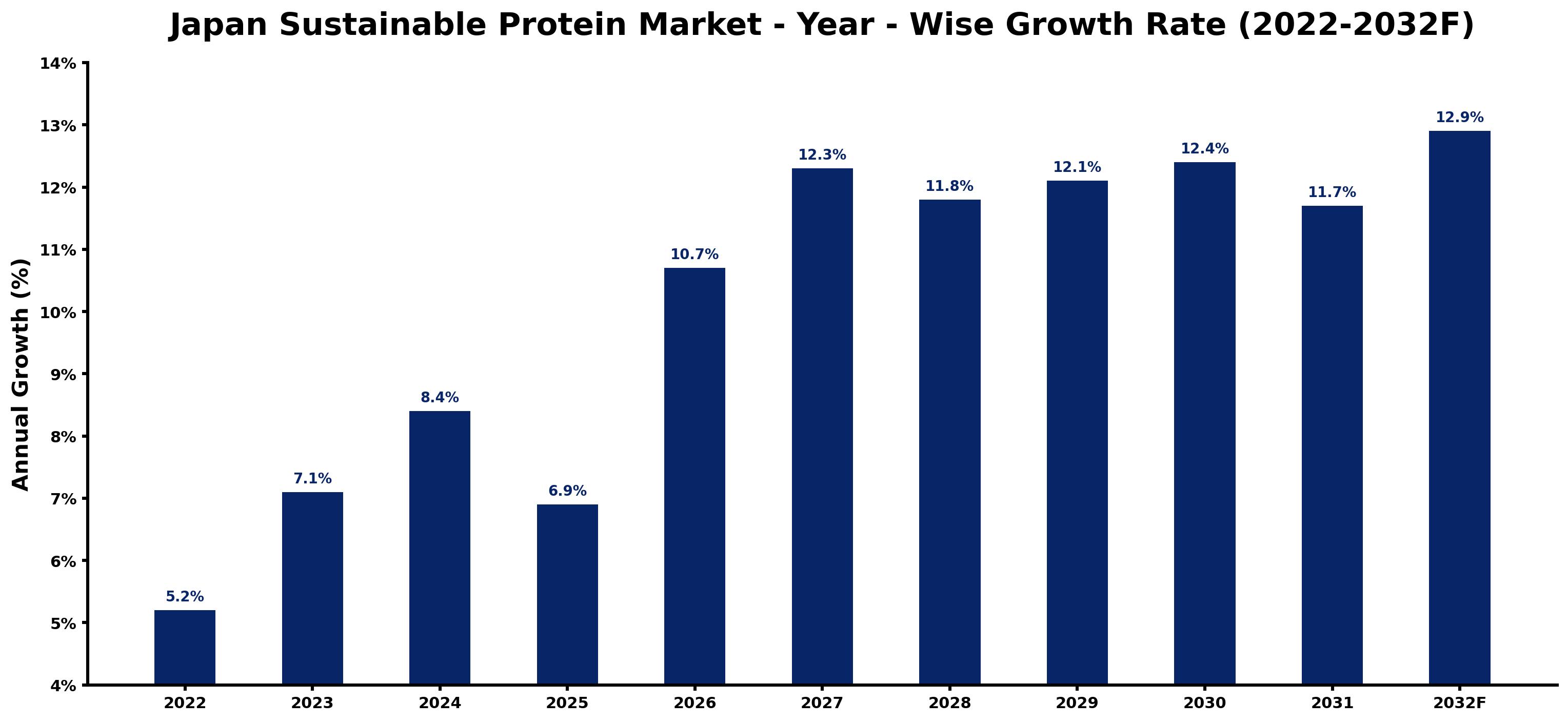
The yearly estimates that follow link every growth rate to its principal driver, so readers can see why the pace changed in each period.
| Year | Estimated Annual Growth (%) | Market Rationale |
| 2022 | 5.2 | The market showed steady growth due to rising consumer interest in health and sustainability. |
| 2023 | 7.1 | Increased awareness of environmental issues drove faster growth in sustainable protein demand. |
| 2024 | 8.4 | The introduction of new plant-based products contributed to higher market growth rates. |
| 2025 | 6.9 | Growth slowed as the market adjusted to increased competition and consumer preferences. |
| 2026 | 10.7 | Investment in food tech innovation is expected to spark renewed interest and demand for sustainable proteins. |
| 2027 | 12.3 | The expanding feed industry will begin integrating more sustainable protein sources into formulations. |
| 2028 | 11.8 | Market growth is projected to slow slightly as consumers become more selective about protein sources. |
| 2029 | 12.1 | Demand is expected to accelerate again as new products enter the market and capture consumer interest. |
| 2030 | 12.4 | Growing awareness of climate change impacts will further boost the sustainable protein sector. |
| 2031 | 11.7 | A slight slowdown is anticipated as market saturation begins to affect growth rates. |
| 2032 | 12.9 | The market is projected to peak with advancements in cultivated meat technologies driving sales. |
Note: Market size estimations and growth projections presented in this report are based on 6Wresearch's proprietary forecasting methodology, utilizing the latest available industry data, government publications, and primary research inputs.
Japan Sustainable Protein Market Synopsis
Sustainable protein encompasses various sources such as plant-based, insect, algae, and cultivated meat, produced with minimal environmental impact. In Japan, the Tokyo region has become a hub for food tech innovation, highlighted by the rise of sustainable protein startups. The market is expanding due to increasing consumer interest in health and wellness, along with government initiatives aimed at reducing greenhouse gas emissions by 46% by 2030, which promotes sustainable food sources. In 2023, plant-based protein sales rose, reflecting changing consumer preferences.
Market Dynamics Impact Analysis (2026–2032)
| Factor | Type | Impact | Primary Segment Affected |
| Rising consumer interest in health and wellness drives demand for sustainable protein products. | Driver | High | Plant-Based Proteins |
| Investment in food tech innovation is creating new sustainable protein products. | Driver | High | Insect-Based Proteins |
| The feed industry is increasingly integrating sustainable proteins to meet consumer demand. | Opportunity | High | Pet & Animal Feed |
| Growing acceptance of insect protein in animal feed presents new market opportunities. | Opportunity | Medium | Insect-Based Proteins |
| Consumer preferences are shifting rapidly, making it challenging for producers to keep up. | Restraint | High | Cultivated Meat |
| Competition among sustainable protein sources is intensifying, impacting pricing strategies. | Restraint | Medium | Plant-Based Proteins |
| High production costs for cultivated meat limit widespread adoption and market penetration. | Challenge | High | Cultivated Meat |
| Regulatory hurdles for novel food products can delay market entry for new proteins. | Challenge | Medium | Insect-Based Proteins |
Evaluation of Drivers in Japan Sustainable Protein Market (2026–2032)
Key forces behind demand, with the segment each one moves most, are listed below.
| Drivers | Primary Segment Affected | Why It Matters (Evidence) |
| Increased consumer awareness of health benefits from sustainable proteins. | Plant-Based Proteins | Sales of plant-based protein products have surged, reflecting changing consumer preferences. |
| Investment in research for alternative proteins is expanding product offerings. | Insect-Based Proteins | Support for alternative protein research boosts innovation and product variety. |
| Growing demand for sustainable animal feed is driving protein sourcing changes. | Pet & Animal Feed | The feed industry is projected to incorporate more sustainable protein sources by 2025. |
| Rising health consciousness among consumers is increasing demand for health-focused products. | Nutraceuticals | The average Japanese consumer's interest in wellness drives sales of health-focused products. |
| Government targets for greenhouse gas reduction are promoting sustainable food sources. | Cultivated Meat | The Japanese government's 2030 emissions reduction target encourages investment in alternative proteins. |
Several shifts outside the market lift sales. The average Japanese consumer is increasingly interested in health and wellness, driving demand for various protein sources. In 2023, support for alternative protein research led to increased product offerings. The feed industry is expected to incorporate more sustainable protein sources by 2025, reflecting a shift in sourcing strategies. The target to reduce greenhouse gas emissions by 46% by 2030 promotes sustainable food sources, creating a favourable environment for growth.
Evaluation of Restraints in Japan Sustainable Protein Market
The main factors holding the market back are set out below.
| Market Restraint | Primary Segment Affected | Why It Matters (Evidence) |
| High production costs for cultivated meat limit widespread adoption. | Cultivated Meat | Costs associated with lab-grown meat production can deter investment and slow market growth. |
| Intense competition among sustainable protein sources affects pricing strategies. | Plant-Based Proteins | Producers face pressure to lower prices, impacting profitability in a crowded market. |
| Rapidly changing consumer preferences can lead to product obsolescence. | Insect-Based Proteins | Producers must continuously innovate to meet shifting consumer demands, which can be costly. |
| Regulatory hurdles for novel food products can delay market entry. | Insect-Based Proteins | Approval processes for new protein sources can extend timelines and increase costs. |
| Limited consumer awareness of insect protein benefits hinders market growth. | Insect-Based Proteins | Consumer reluctance to accept insect-based options can restrict market expansion. |
Japan Sustainable Protein Market Challenges
Japan's population of approximately 126 million faces delays in accessing cultivated meat due to stringent regulations from the Japanese Food Safety Agency, which hinders producers from entering this growing market. High land prices inflate production costs for sustainable protein sources, raising expenses for importers and leading to increased prices for buyers. Established meat producers leverage economies of scale, creating stiff competition that challenges sustainable protein suppliers in gaining market share. A shortage of skilled workers in the sustainable protein sector restricts innovation, delaying product development for producers aiming to meet consumer health demands.
Trends in the Japan Sustainable Protein Market
The following changes are redrawing the Japan Sustainable Protein Market.
- Shift in Focus to Plant-Based Proteins: The Tokyo region is experiencing a shift towards plant-based proteins, with sales increasing. In 2023, plant-based protein sales rose by 25%, reflecting changing consumer preferences.
- Rise of Insect Protein in Animal Feed: Insect protein is gaining traction in the Japanese feed market, with growing acceptance among feed manufacturers. By 2025, insect protein is projected to constitute 15% of the feed market.
- Emergence of Clean Meat Startups: The year 2023 marked the emergence of clean meat startups in Japan, focusing on lab-grown alternatives. This sector is anticipated to grow rapidly, with investments projected to reach USD 50 million by 2025.
- Increased Investment in Food Tech: Investment in food tech innovation is on the rise, particularly in sustainable protein startups. In 2023, funding for food tech in Japan reached USD 100 million, supporting new product development.
Investment Opportunities in the Japan Sustainable Protein Market
Several openings in the Japan Sustainable Protein Market merit attention from investors.
- Gap in Sustainable Protein Supply: With the feed industry projected to incorporate more sustainable proteins by 2025, there is a gap in supply. Feed manufacturers represent a key buyer group for sustainable proteins, creating opportunities for suppliers.
- Expansion of Plant-Based Protein Products: The growing interest in health and wellness among consumers presents opportunities to supply plant-based protein products. Food tech companies are actively seeking solutions to meet this demand.
- Partnerships with Clean Meat Startups: The clean meat sector is expanding, and partnerships with startups can facilitate market entry. This is an opportune time for investors to engage with companies in this space.
- Timing for Nutraceuticals Investment: As the average Japanese consumer becomes more health-conscious, the demand for nutraceuticals is rising. This trend offers opportunities for suppliers to invest in health-focused protein products.
Government Initiatives in the Japan Sustainable Protein Market
The Food Recycling Law, enacted in 2000, mandates food businesses to reduce waste and recycle it into feed, fertiliser, and energy. This law encourages the adoption of alternative protein sources, benefiting sustainable protein producers by promoting environmentally friendly practices. The law has led to a 30% reduction in food waste since its implementation, creating a more sustainable food industry.
The Japanese Food Safety Agency oversees regulations for novel food products, including cultivated meat. It approves safety assessments and funding for research initiatives, ensuring that new protein sources meet safety standards. In 2023, the agency approved 15 new alternative protein products, enhancing market access for innovative solutions.
Future Insight of the Japan Sustainable Protein Market
Research programmes focused on alternative proteins will improve local production capabilities by 2032. The feed industry is expected to incorporate sustainable protein sources, transforming sourcing practices and benefiting suppliers. The Tokyo region's vibrant food tech ecosystem will continue to spawn startups, offering diverse options for buyers and intensifying market competition. Cultivated meat technologies will gain traction, aligning with the government's target to reduce greenhouse gas emissions by 46% by 2030.
Market Segmentation Analysis
Japan Sustainable Protein Market report covers a detailed analysis of the following market segments:
By Protein Type – Plant-Based Proteins Lead, Insect-Based Proteins Expected to Grow Fastest
According to Saurav Kr Singh, Senior Research Analyst at 6Wresearch, in 2025, Plant-Based Proteins led the protein type split with a 51% share. Plant-based proteins dominate the market due to their widespread use in meat alternatives and health-oriented products. The increasing health awareness among Japanese consumers has resulted in a substantial rise in sales, solidifying this segment's position. Insect-Based Proteins are projected to grow fastest, at a CAGR of 17.1% during 2026–2032. Insect-based proteins are experiencing rapid growth as they gain acceptance in animal feed and food technology. The feed industry in Japan is expected to integrate more sustainable protein sources by 2025, significantly contributing to this segment's expansion. Suppliers should focus on enhancing insect protein offerings to capitalise on this growing market.
By Source Material – Soy Leads, Crickets/Black Soldier Fly Expected to Grow Fastest
The largest source material category in 2025 was Soy, at 32% of revenue. Soy is the leading source material for sustainable protein, widely recognised for its role in plant-based protein products. Its established presence in the market makes it the preferred choice among food manufacturers in Japan. Crickets/Black Soldier Fly is set to record the highest CAGR in this split, 17.8% over 2026–2032. Crickets and black soldier fly are emerging as the fastest-growing sources due to their increasing use in animal feed. The growing acceptance of these insects reflects a shift towards more sustainable feed options in the industry. Buyers should consider diversifying their protein sources to include crickets and black soldier fly as they become more mainstream.
By Application Sector – Meat Alternatives Lead, Pet & Animal Feed Expected to Grow Fastest
Meat Alternatives held 38% of the Japan Sustainable Protein Market by application sector in 2025. The meat alternatives sector is the largest, driven by increasing consumer demand for plant-based options that align with health and sustainability priorities. Government initiatives aimed at promoting sustainable food sources further bolster this expanding market segment. The quickest growth will come from Pet & Animal Feed, forecast to expand at a CAGR of 15.7% between 2026 and 2032. Pet and animal feed is the fastest-growing application sector, fuelled by a strong market for sustainable protein sources. The industry's transition towards incorporating more sustainable options reflects evolving consumer preferences and demand. Suppliers should explore opportunities in the pet and animal feed sector to meet the rising demand for sustainable protein.
By End User – Food Tech Companies Lead, Clean Meat Startups Expected to Grow Fastest
With 51% of end user revenue in 2025, Food Tech Companies was the largest category. Food tech companies are the main end users of sustainable protein, playing a crucial role in product development within this sector. Their dedication to health and sustainability aligns with the growing consumer interest in alternative protein sources. Over 2026–2032, Clean Meat Startups are expected to post the fastest growth, at a CAGR of 15.5%. Clean meat startups are the fastest-growing end user segment, driven by advancements in cultivated meat technologies. The Clean Meat Initiative Japan is encouraging innovation, positioning these startups as key players in the market. Investors should target clean meat startups as they are poised to shape the future of sustainable protein development.
Key Attractiveness of the Report
- 10 Years of Market Numbers
- Historical Data Starting from 2022 to 2025
- Base Year 2025
- Forecast Data until 2032
- Key Performance Indicators Impacting the Market
- Major Upcoming Developments and Projects
Key Highlights of the Report:
- Japan Sustainable Protein Market Outlook
- Market Size of Japan Sustainable Protein Market, 2025
- Forecast of Japan Sustainable Protein Market, 2032
- Historical Data and Forecast of Japan Sustainable Protein Revenues & Volume for the Period 2022-2032F
- Japan Sustainable Protein Market Trend Evolution
- Japan Sustainable Protein Market Drivers and Challenges
- Japan Sustainable Protein Price Trends
- Japan Sustainable Protein Porter's Five Forces
- Japan Sustainable Protein Industry Life Cycle
- Historical Data and Forecast of Japan Sustainable Protein Market Revenues & Volume By Protein Type for the Period 2022-2032F
- Historical Data and Forecast of Japan Sustainable Protein Market Revenues & Volume By Plant-Based Proteins for the Period 2022-2032F
- Historical Data and Forecast of Japan Sustainable Protein Market Revenues & Volume By Insect-Based Proteins for the Period 2022-2032F
- Historical Data and Forecast of Japan Sustainable Protein Market Revenues & Volume By Algae-Based Proteins for the Period 2022-2032F
- Historical Data and Forecast of Japan Sustainable Protein Market Revenues & Volume By Cultivated Meat for the Period 2022-2032F
- Historical Data and Forecast of Japan Sustainable Protein Market Revenues & Volume By Source Material for the Period 2022-2032F
- Historical Data and Forecast of Japan Sustainable Protein Market Revenues & Volume By Soy, Pea, Chickpea for the Period 2022-2032F
- Historical Data and Forecast of Japan Sustainable Protein Market Revenues & Volume By Crickets/Black Soldier Fly for the Period 2022-2032F
- Historical Data and Forecast of Japan Sustainable Protein Market Revenues & Volume By Spirulina/Chlorella for the Period 2022-2032F
- Historical Data and Forecast of Japan Sustainable Protein Market Revenues & Volume By Lab-Grown Animal Cells for the Period 2022-2032F
- Historical Data and Forecast of Japan Sustainable Protein Market Revenues & Volume By Application Sector for the Period 2022-2032F
- Historical Data and Forecast of Japan Sustainable Protein Market Revenues & Volume By Meat Alternatives for the Period 2022-2032F
- Historical Data and Forecast of Japan Sustainable Protein Market Revenues & Volume By Pet & Animal Feed for the Period 2022-2032F
- Historical Data and Forecast of Japan Sustainable Protein Market Revenues & Volume By Nutraceuticals for the Period 2022-2032F
- Historical Data and Forecast of Japan Sustainable Protein Market Revenues & Volume By Alternative Meats for the Period 2022-2032F
- Historical Data and Forecast of Japan Sustainable Protein Market Revenues & Volume By End User for the Period 2022-2032F
- Historical Data and Forecast of Japan Sustainable Protein Market Revenues & Volume By Food Tech Companies for the Period 2022-2032F
- Historical Data and Forecast of Japan Sustainable Protein Market Revenues & Volume By Feed Manufacturers for the Period 2022-2032F
- Historical Data and Forecast of Japan Sustainable Protein Market Revenues & Volume By Wellness Brands for the Period 2022-2032F
- Historical Data and Forecast of Japan Sustainable Protein Market Revenues & Volume By Clean Meat Startups for the Period 2022-2032F
- Japan Sustainable Protein Import Export Trade Statistics
- Market Opportunity Assessment By Protein Type
- Market Opportunity Assessment By Source Material
- Market Opportunity Assessment By Application Sector
- Market Opportunity Assessment By End User
- Japan Sustainable Protein Top Companies Market Share
- Japan Sustainable Protein Competitive Benchmarking By Technical and Operational Parameters
- Japan Sustainable Protein Company Profiles
- Japan Sustainable Protein Key Strategic Recommendations
Market Covered
The study includes the following segmentation.
By Protein Type
- Plant-Based Proteins
- Insect-Based Proteins
- Algae-Based Proteins
- Cultivated Meat
By Source Material
- Soy
- Pea
- Chickpea
- Crickets/Black Soldier Fly
- Spirulina/Chlorella
- Lab-Grown Animal Cells
By Application Sector
- Meat Alternatives
- Pet & Animal Feed
- Nutraceuticals
- Alternative Meats
By End User
- Food Tech Companies
- Feed Manufacturers
- Wellness Brands
- Clean Meat Startups































