Japan Synthetic Blood Market Size & Growth Rate
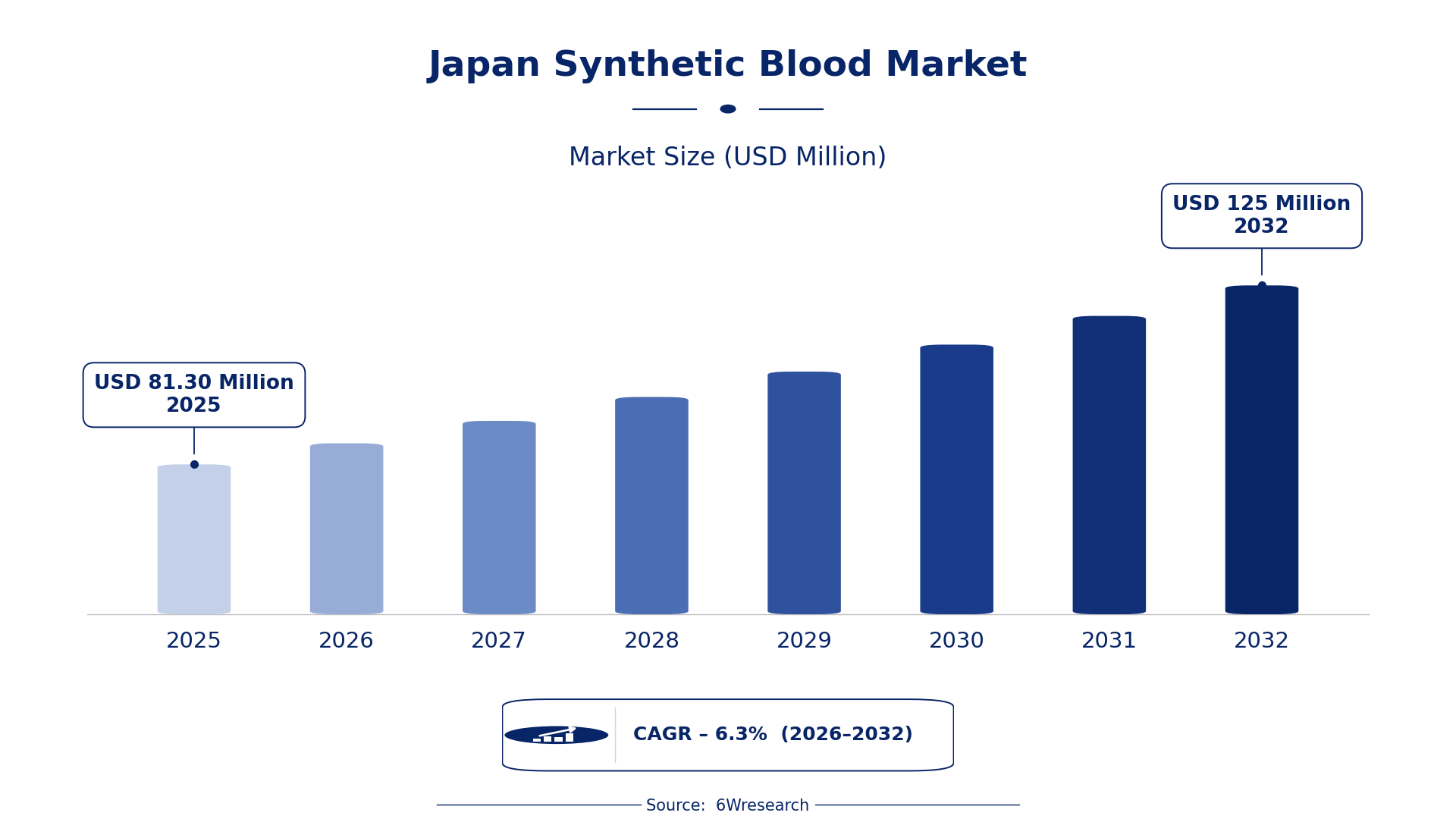
According to 6Wresearch internal database and industry insights, the Japan Synthetic Blood Market was valued at USD 81.30 Million in 2025 and is projected to reach USD 125 Million by 2032, growing at a CAGR of approximately 6.3% during 2026–2032.
Japan Synthetic Blood Market Highlights
| Report Metric | Details |
| Report Name | Japan Synthetic Blood Market (2026-2032) |
| Market Size 2025 | USD 81.30 Million |
| Market Size 2032 | USD 125 Million |
| Absolute Growth 2025–2032 | USD 43.70 Million |
| CAGR 2026–2032 | 6.3% |
| Peak Annual Growth | 7.1% in 2028 |
| Forecast Period | 2026–2032 |
| Historical Data | 2022–2025 |
| Base Year | 2025 |
| Leading Product Type, 2025 | Hemoglobin-Based (40% share) |
| Leading Oxygen Carrier Type, 2025 | HBOC (39% share) |
| Leading Application Segment, 2025 | Trauma & Surgery (43% share) |
| Leading End User, 2025 | Emergency Clinics (41% share) |
| Fastest-Growing Product Type | Perfluorocarbon-Based (9.2% CAGR) |
| Fastest-Growing Oxygen Carrier Type | PFC Emulsions (9.5% CAGR) |
| Fastest-Growing Application Segment | ICU/Organ Transplants (8.8% CAGR) |
| Fastest-Growing End User | Critical Care Units (8.1% CAGR) |
| Growing Sector | Emergency Medical Care |
| Key End Users | Emergency Clinics, Military Healthcare, Critical Care Units, Trauma Centres |
Japan Synthetic Blood Market Year-wise Growth Rate and Key Drivers (2022–2032)
This graph illustrates the annual growth rates of the market from 2022 to 2032, highlighting a steady upward trajectory and projected market expansion over the forecast period.
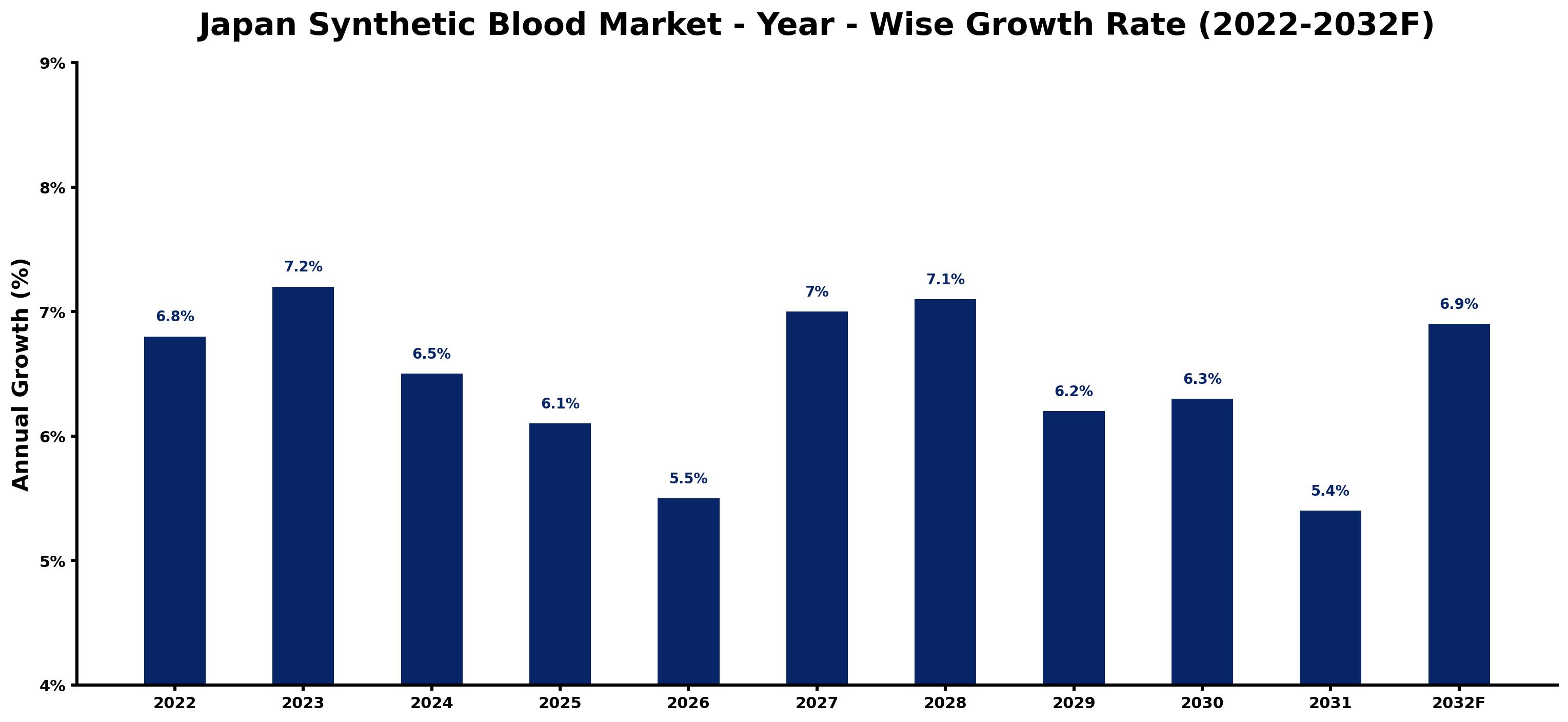
Year by year, the estimates below pair each growth rate with the development that shaped it.
| Year | Estimated Annual Growth (%) | Market Rationale |
| 2022 | 6.8 | The market was characterised by steady demand from emergency clinics and military applications. |
| 2023 | 7.2 | A surge in research initiatives and military testing contributed to faster growth. |
| 2024 | 6.5 | Growth slowed as the market adjusted to increased competition and product offerings. |
| 2025 | 6.1 | A further slowdown occurred as the market stabilised after rapid advancements. |
| 2026 | 5.5 | The market is expected to experience a slowdown as demand begins to normalise after previous peaks. |
| 2027 | 7.0 | Growth is projected to rebound as military applications expand and research funding increases. |
| 2028 | 7.1 | Demand is anticipated to accelerate due to advancements in synthetic blood technologies and applications. |
| 2029 | 6.2 | The market is expected to slow again as growth stabilises after reaching new heights. |
| 2030 | 6.3 | An increase in critical care unit adoption of synthetic blood products will drive growth. |
| 2031 | 5.4 | Growth is projected to slow as the market faces saturation in certain application areas. |
| 2032 | 6.9 | Demand is expected to rise again as new applications in trauma care emerge. |
Note: Market size estimations and growth projections presented in this report are based on 6Wresearch's proprietary forecasting methodology, utilizing the latest available industry data, government publications, and primary research inputs.
Japan Synthetic Blood Market Synopsis
Synthetic blood mimics the oxygen-carrying function of natural blood, made from hemoglobin-based or perfluorocarbon-based compounds. Its primary applications include trauma care, surgical procedures, and military uses. The Japan Synthetic Blood Market is expanding due to increased demand from emergency clinics, military applications, and ongoing research initiatives, including a program initiated by the Ministry of Health in 2023 to support synthetic blood research and development. This growth is driven by the need for alternatives to traditional blood products, with over 1 million units demanded annually.
Market Dynamics Impact Analysis (2026–2032)
| Factor | Type | Impact | Primary Segment Affected |
| Growing military applications for disaster relief operations are increasing demand for synthetic blood products. | Driver | High | Military & Disaster Relief |
| The increasing number of emergency clinics utilising synthetic blood products drives market growth. | Driver | High | Emergency Clinics |
| The ongoing research in synthetic blood technologies presents opportunities for innovation and investment. | Opportunity | High | Artificial RBCs |
| The rising demand for alternatives to traditional blood products creates a gap in the market. | Opportunity | High | Trauma & Surgery |
| Regulatory challenges in testing and approval processes can delay product availability. | Restraint | Medium | Hemoglobin-Based |
| Limited awareness and acceptance of synthetic blood among healthcare professionals can hinder growth. | Restraint | Medium | Perfluorocarbon-Based |
| High development costs for synthetic blood products can restrict market entry for new players. | Challenge | High | HBOC |
| Technological challenges in producing effective synthetic blood can slow down advancements. | Challenge | Medium | PFC Emulsions |
Evaluation of Drivers in Japan Synthetic Blood Market (2026–2032)
Demand rests on the following drivers, each shown with the segment it touches most.
| Drivers | Primary Segment Affected | Why It Matters (Evidence) |
| Increased military testing of synthetic blood products is driving demand. | Military & Disaster Relief | Military applications require effective blood substitutes for disaster relief operations, leading to higher purchases. |
| The expansion of emergency clinics is boosting the need for synthetic blood. | Emergency Clinics | With over 200 clinics using synthetic blood, demand for these products is steadily rising. |
| Ongoing research funding is accelerating synthetic blood technologies. | Artificial RBCs | Research initiatives funded by government grants are accelerating product development and adoption. |
| The annual demand for blood products exceeding 1 million units highlights the need for alternatives. | Trauma & Surgery | This substantial demand encourages healthcare providers to seek synthetic blood solutions. |
| The JIS Z 2806 standard ensures quality and safety, promoting market growth. | Perfluorocarbon-Based | Compliance with this standard increases confidence among buyers, driving higher sales. |
Orders keep climbing as military applications for synthetic blood expand, with ongoing testing in disaster relief operations. The annual demand for blood products in Japan exceeds 1 million units, prompting healthcare providers to seek alternatives. Over 200 emergency clinics are utilising synthetic blood, supported by ongoing research funding that drives product development. The JIS Z 2806 standard ensures product quality, increasing buyer confidence and driving sales. Research funding is accelerating the development of artificial red blood cells, further boosting demand in critical care settings.
Evaluation of Restraints in Japan Synthetic Blood Market
These are the pressures that could keep growth below its potential.
| Market Restraint | Primary Segment Affected | Why It Matters (Evidence) |
| Regulatory hurdles in testing and approval processes can slow market entry. | Hemoglobin-Based | Strict regulations can delay the introduction of new synthetic blood products, impacting availability. |
| Limited awareness among healthcare professionals can restrict market growth. | Perfluorocarbon-Based | Healthcare providers may hesitate to adopt synthetic blood due to unfamiliarity with its benefits. |
| High development costs can deter new entrants into the synthetic blood market. | HBOC | The financial burden of developing synthetic blood products can limit competition. |
| Technological challenges in production can hinder advancements in synthetic blood. | PFC Emulsions | Complex manufacturing processes may slow the development of effective synthetic blood solutions. |
| Market saturation in certain applications can limit growth opportunities. | Trauma & Surgery | As traditional blood products remain prevalent, the market for synthetic alternatives may face constraints. |
Japan Synthetic Blood Market Challenges
Synthetic blood technology struggles with underdevelopment, primarily due to insufficient funding for research. This limitation hampers producers who rely on innovation, resulting in delayed product availability. Buyers face escalating costs as the annual demand for blood products surpasses 1 million units, forcing them to pay higher prices when alternatives are limited. Supply chain disruptions arise from reliance on specific raw materials, causing production delays that affect hospitals needing timely access to these critical solutions. Regulatory hurdles complicate the approval process, extending timelines for suppliers trying to introduce new synthetic blood options.
Trends in the Japan Synthetic Blood Market
Buyers and suppliers in the Japan Synthetic Blood Market are adjusting to the following trends.
- Shift from Traditional Blood Products to Synthetic Alternatives: Tokyo is experiencing a shift towards synthetic blood products as hospitals seek alternatives to traditional blood. The annual demand for blood products exceeds 1 million units, indicating a growing market for synthetic solutions.
- Increase in Military Testing of Synthetic Blood: The Ministry of Health has initiated a program to enhance synthetic blood research, resulting in increased military testing. This initiative aims to improve disaster response capabilities, reflecting a growing recognition of synthetic blood's potential.
- Growing Research in Synthetic Blood Technologies: Since 2023, synthetic blood has been included in the curriculum of 15 major medical universities in Japan. This educational focus is expected to foster innovation and increase acceptance of synthetic blood in medical practice.
- Expansion of Emergency Clinic Utilisation: Emergency clinics across Japan are increasingly utilising synthetic blood products, with over 200 clinics adopting these solutions. This trend highlights the need for effective alternatives in urgent medical care.
Investment Opportunities in the Japan Synthetic Blood Market
The following opportunities in the Japan Synthetic Blood Market pair current demand with a clear way in.
- Rising Demand for Synthetic Blood Alternatives: With the annual demand for blood products exceeding 1 million units, there is a clear opportunity to invest in synthetic blood technologies. Emergency clinics are actively seeking alternatives to traditional blood products.
- Government Funding for Synthetic Blood Research: The ¥500 million grant allocated in 2023 for synthetic blood research presents an opportunity for investment. Collaborating with research institutions can facilitate entry into this growing market.
- Expansion in Military Applications: The increasing military focus on synthetic blood for disaster relief operations creates a timely investment opportunity. Engaging with military healthcare providers can open new avenues for market entry.
- Innovations in Critical Care Units: The approximately 1,500 critical care units in Japan represent a growing market for synthetic blood products. Suppliers can establish partnerships with hospitals to meet the rising demand.
Government Initiatives in the Japan Synthetic Blood Market
The Long-Term Care Insurance Act (1997, in force 2000) provides funding for nursing care and support services, influencing the healthcare sector's approach to synthetic blood. Additionally, the Economic Security Promotion Act (2022) supports supply-chain resilience for critical products, ensuring availability and safety in synthetic blood production.
Healthcare providers benefit from the ¥500 million grant allocated in 2023 for synthetic blood research to support product development. The Japan Society of Blood Transfusion plays a key role in promoting advancements in synthetic blood technologies, ensuring that producers meet safety and quality standards.
Future Insight of the Japan Synthetic Blood Market
Hospitals will increasingly adopt synthetic blood technologies by 2032, driven by advancements in research programmes and government initiatives. Approximately 200 emergency clinics will benefit from enhanced product availability, ensuring timely access for patients. New quality standards under JIS Z 2806 will ensure safer products, fostering confidence among healthcare providers. Military applications will expand, creating additional opportunities for suppliers and enhancing disaster relief capabilities.
Market Segmentation Analysis
Japan Synthetic Blood Market report covers a detailed analysis of the following market segments:
By Product Type – Hemoglobin-Based Leads, Perfluorocarbon-Based Expected to Grow Fastest
According to Saurav Kr Singh, Senior Research Analyst at 6Wresearch, Hemoglobin-Based accounted for 40% of the market by product type in 2025. Hemoglobin-based synthetic blood products hold the largest share due to their extensive use in trauma care and surgical procedures, particularly in emergency clinics. These products are essential for oxygen transport in over 200 emergency clinics across Japan, ensuring their continued demand. Over 2026–2032, Perfluorocarbon-Based is expected to post the fastest growth, at a CAGR of 9.2%. The perfluorocarbon-based segment is experiencing rapid growth as it is increasingly applied in critical care settings, where oxygen delivery is paramount. This growth is further supported by a government grant of ¥500 million allocated for synthetic blood research in 2023, indicating strong investment in this area. Suppliers should focus on enhancing their offerings in perfluorocarbon-based products to capitalise on this growing demand.
By Oxygen Carrier Type – HBOC Leads, PFC Emulsions Expected to Grow Fastest
HBOC held 39% of the Japan Synthetic Blood Market by oxygen carrier type in 2025. HBOC products dominate the market as they are widely used in emergency clinics for effective blood loss management. Their established presence in these facilities ensures a steady demand for HBOC products, particularly in trauma situations. The quickest growth will come from PFC Emulsions, forecast to expand at a CAGR of 9.5% between 2026 and 2032. PFC emulsions are witnessing the fastest growth due to their application in military and disaster relief scenarios where rapid oxygen delivery is essential. This segment's expansion is likely to be accelerated by increased military funding for advanced medical technologies. Buyers in the military sector should consider investing in PFC emulsions to improve their operational readiness and medical response capabilities.
By Application Segment – Trauma & Surgery Leads, ICU/Organ Transplants Expected to Grow Fastest
Trauma & Surgery took 43% of application segment revenue in 2025, more than any other category. The trauma and surgery application segment leads the market as it is critical for emergency medical responses, ensuring timely care for patients in urgent situations. This segment's importance is underscored by the high annual demand for blood products in Japan, exceeding 1 million units, which highlights the necessity for effective solutions. ICU/Organ Transplants are projected to grow fastest, at a CAGR of 8.8% during 2026–2032. ICU and organ transplant applications are growing rapidly, driven by the need for effective organ preservation and patient care in critical situations. The increasing number of critical care units in Japan, approximately 1,500, is a key factor in this growth, indicating a rising focus on advanced medical technologies. Healthcare providers should prioritise advancements in synthetic blood applications for ICU and organ transplant scenarios to enhance patient outcomes.
By End User – Emergency Clinics Lead, Critical Care Units Expected to Grow Fastest
The largest end user category in 2025 was Emergency Clinics, at 41% of revenue. Emergency clinics represent the largest end-user segment as they frequently require synthetic blood for urgent care situations. Their critical role in managing trauma cases solidifies their position as the primary consumers of synthetic blood products. Critical Care Units are set to record the highest CAGR in this split, 8.1% over 2026–2032. Critical care units are experiencing the fastest growth due to their integral role in patient management, particularly in intensive care settings. The increasing utilisation of advanced medical technologies in these units is propelling this segment forward. Suppliers must ensure that their products meet the specific needs of critical care units to capture this expanding market.
Key Attractiveness of the Report
- 10 Years of Market Numbers
- Historical Data Starting from 2022 to 2025
- Base Year 2025
- Forecast Data until 2032
- Key Performance Indicators Impacting the Market
- Major Upcoming Developments and Projects
Key Highlights of the Report:
- Japan Synthetic Blood Market Outlook
- Market Size of Japan Synthetic Blood Market, 2025
- Forecast of Japan Synthetic Blood Market, 2032
- Historical Data and Forecast of Japan Synthetic Blood Revenues & Volume for the Period 2022-2032F
- Japan Synthetic Blood Market Trend Evolution
- Japan Synthetic Blood Market Drivers and Challenges
- Japan Synthetic Blood Price Trends
- Japan Synthetic Blood Porter's Five Forces
- Japan Synthetic Blood Industry Life Cycle
- Historical Data and Forecast of Japan Synthetic Blood Market Revenues & Volume By Product Type for the Period 2022-2032F
- Historical Data and Forecast of Japan Synthetic Blood Market Revenues & Volume By Hemoglobin-Based for the Period 2022-2032F
- Historical Data and Forecast of Japan Synthetic Blood Market Revenues & Volume By Perfluorocarbon-Based for the Period 2022-2032F
- Historical Data and Forecast of Japan Synthetic Blood Market Revenues & Volume By Artificial RBCs for the Period 2022-2032F
- Historical Data and Forecast of Japan Synthetic Blood Market Revenues & Volume By Universal Synthetic Blood for the Period 2022-2032F
- Historical Data and Forecast of Japan Synthetic Blood Market Revenues & Volume By Oxygen Carrier Type for the Period 2022-2032F
- Historical Data and Forecast of Japan Synthetic Blood Market Revenues & Volume By HBOC for the Period 2022-2032F
- Historical Data and Forecast of Japan Synthetic Blood Market Revenues & Volume By PFC Emulsions for the Period 2022-2032F
- Historical Data and Forecast of Japan Synthetic Blood Market Revenues & Volume By Encapsulated Hemoglobin for the Period 2022-2032F
- Historical Data and Forecast of Japan Synthetic Blood Market Revenues & Volume By Oxygen Nanocarriers for the Period 2022-2032F
- Historical Data and Forecast of Japan Synthetic Blood Market Revenues & Volume By Application Segment for the Period 2022-2032F
- Historical Data and Forecast of Japan Synthetic Blood Market Revenues & Volume By Trauma & Surgery for the Period 2022-2032F
- Historical Data and Forecast of Japan Synthetic Blood Market Revenues & Volume By Military & Disaster Relief for the Period 2022-2032F
- Historical Data and Forecast of Japan Synthetic Blood Market Revenues & Volume By ICU/Organ Transplants for the Period 2022-2032F
- Historical Data and Forecast of Japan Synthetic Blood Market Revenues & Volume By Cross-Type Transfusion for the Period 2022-2032F
- Historical Data and Forecast of Japan Synthetic Blood Market Revenues & Volume By End User for the Period 2022-2032F
- Historical Data and Forecast of Japan Synthetic Blood Market Revenues & Volume By Emergency Clinics for the Period 2022-2032F
- Historical Data and Forecast of Japan Synthetic Blood Market Revenues & Volume By Field Hospitals for the Period 2022-2032F
- Historical Data and Forecast of Japan Synthetic Blood Market Revenues & Volume By Critical Care Units for the Period 2022-2032F
- Historical Data and Forecast of Japan Synthetic Blood Market Revenues & Volume By Blood Banks for the Period 2022-2032F
- Japan Synthetic Blood Import Export Trade Statistics
- Market Opportunity Assessment By Product Type
- Market Opportunity Assessment By Oxygen Carrier Type
- Market Opportunity Assessment By Application Segment
- Market Opportunity Assessment By End User
- Japan Synthetic Blood Top Companies Market Share
- Japan Synthetic Blood Competitive Benchmarking By Technical and Operational Parameters
- Japan Synthetic Blood Company Profiles
- Japan Synthetic Blood Key Strategic Recommendations
Market Covered
The study includes the following segmentation.
By Product Type
- Hemoglobin-Based
- Perfluorocarbon-Based
- Artificial RBCs
- Universal Synthetic Blood
By Oxygen Carrier Type
- HBOC
- PFC Emulsions
- Encapsulated Hemoglobin
- Oxygen Nanocarriers
By Application Segment
- Trauma & Surgery
- Military & Disaster Relief
- ICU/Organ Transplants
- Cross-Type Transfusion
By End User
- Emergency Clinics
- Field Hospitals
- Critical Care Units
- Blood Banks































