Japan Systemic Mycoses Market Size & Growth Rate
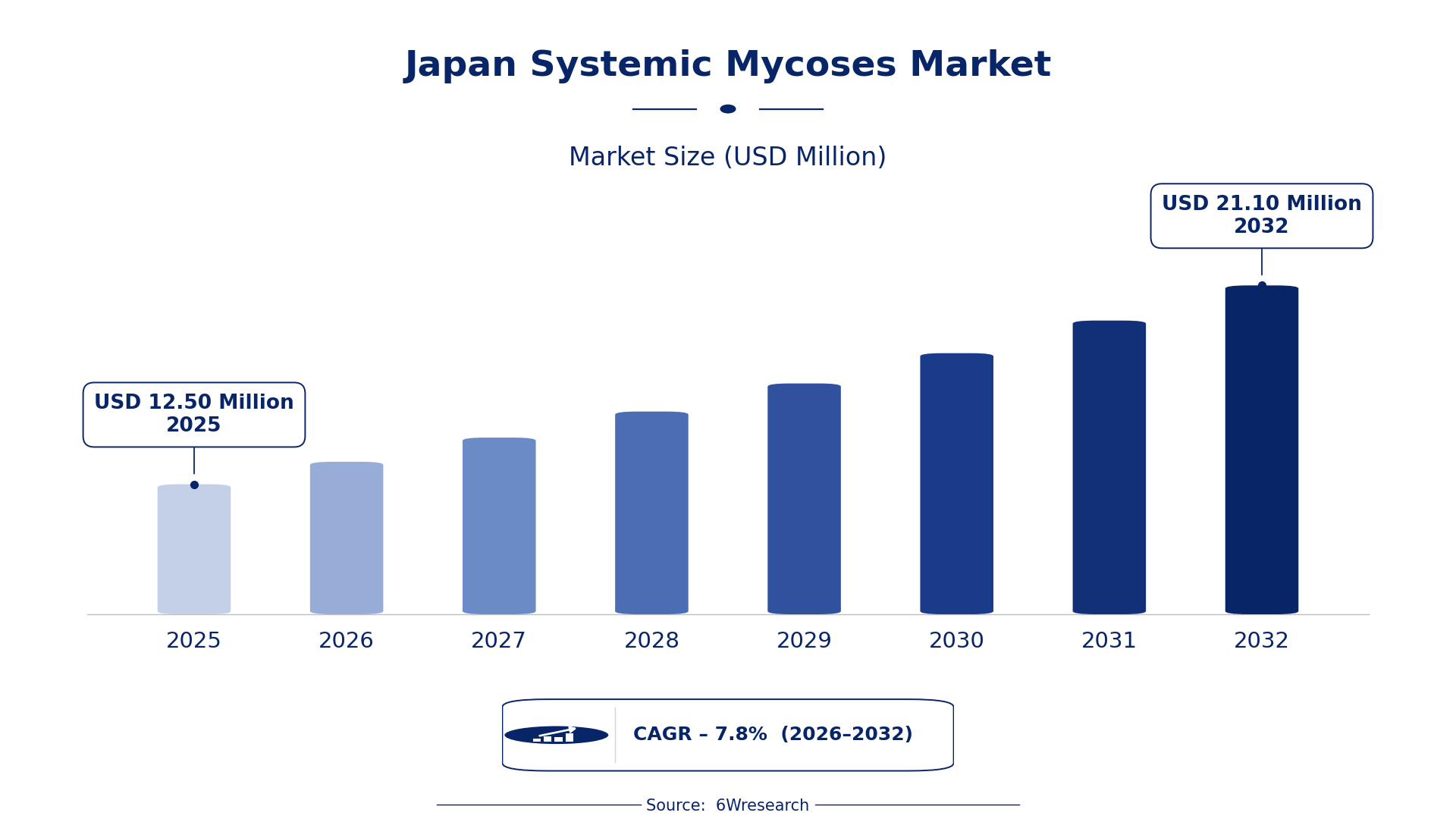
According to 6Wresearch internal database and industry insights, the Japan Systemic Mycoses Market was valued at USD 12.50 Million in 2025 and is projected to reach USD 21.10 Million by 2032, growing at a CAGR of approximately 7.8% during 2026–2032.
Japan Systemic Mycoses Market Highlights
| Report Metric | Details |
| Report Name | Japan Systemic Mycoses Market (2026-2032) |
| Market Size 2025 | USD 12.50 Million |
| Market Size 2032 | USD 21.10 Million |
| Absolute Growth 2025–2032 | USD 8.60 Million |
| CAGR 2026–2032 | 7.8% |
| Peak Annual Growth | 8.2% in 2028 |
| Forecast Period | 2026–2032 |
| Historical Data | 2022–2025 |
| Base Year | 2025 |
| Leading Systemic Mycoses, 2025 | Antifungal Injections (53% share) |
| Leading Product Type, 2025 | Amphotericin B (46% share) |
| Leading Antifungal Type, 2025 | Polyenes (40% share) |
| Leading Distribution Channel, 2025 | Hospital Pharmacies (42% share) |
| Leading End User Industry, 2025 | Infectious Disease Units (41% share) |
| Fastest-Growing Systemic Mycoses | Oral Antifungals (10.6% CAGR) |
| Fastest-Growing Product Type | Itraconazole (10.8% CAGR) |
| Fastest-Growing Antifungal Type | Azoles (10.9% CAGR) |
| Fastest-Growing Distribution Channel | Online Pharmacies (10.0% CAGR) |
| Fastest-Growing End User Industry | Outpatient Clinics (9.8% CAGR) |
| Growing Sector | Infectious Disease Treatment |
| Key End Users | Hospitals, Pediatric Facilities, Infectious Disease Units, Outpatient Clinics |
Japan Systemic Mycoses Market Year-wise Growth Rate and Key Drivers (2022–2032)
This graph illustrates the annual growth rates of the market from 2022 to 2032, highlighting a steady upward trajectory and projected market expansion over the forecast period.
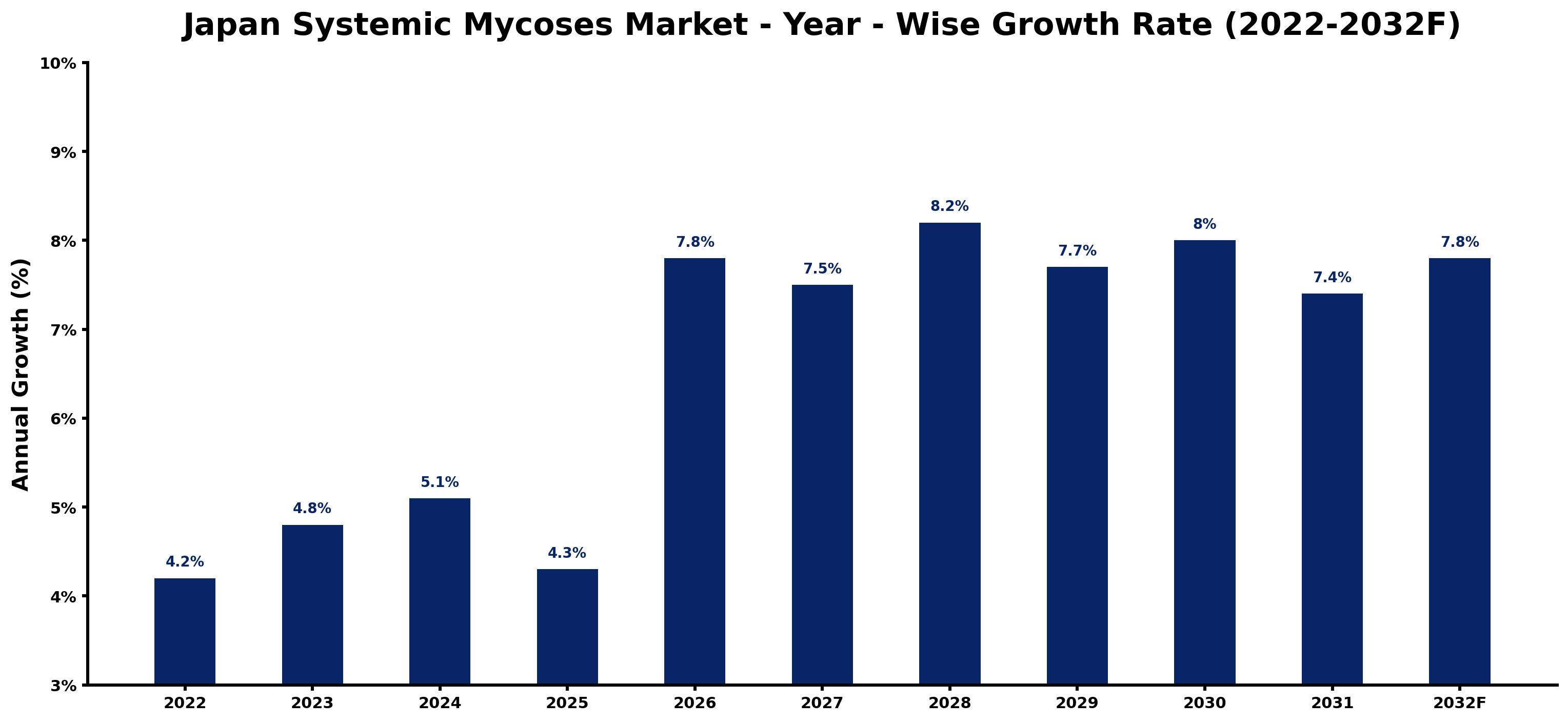
The following figures match every annual growth estimate with the main market development of that year, giving the reasoning behind each rise or slowdown.
| Year | Estimated Annual Growth (%) | Market Rationale |
| 2022 | 4.2 | The market showed steady growth, driven by a high incidence of systemic mycoses. |
| 2023 | 4.8 | Demand increased as healthcare providers recognised the importance of antifungal treatments. |
| 2024 | 5.1 | Growth accelerated due to hospitals implementing new antifungal protocols and guidelines. |
| 2025 | 4.3 | A slight slowdown occurred as market adjustments took place after previous rapid growth. |
| 2026 | 7.8 | Demand is expected to surge with increased healthcare expenditure and investment in antifungal research. |
| 2027 | 7.5 | Growth is projected to moderate slightly as market conditions stabilise after the previous peak. |
| 2028 | 8.2 | The market is expected to peak with heightened demand from oncology hospitals facing fungal infections. |
| 2029 | 7.7 | Growth is projected to slow as the market adjusts to the peak demand levels seen in 2028. |
| 2030 | 8.0 | A resurgence in demand is expected due to improved treatment protocols and drug availability. |
| 2031 | 7.4 | Growth is projected to decelerate as the market begins to stabilise after consistent increases. |
| 2032 | 7.8 | The market is projected to grow as new antifungal therapies are introduced. |
Note: Market size estimations and growth projections presented in this report are based on 6Wresearch's proprietary forecasting methodology, utilizing the latest available industry data, government publications, and primary research inputs.
Japan Systemic Mycoses Market Synopsis
Systemic mycoses are severe fungal infections requiring systemic antifungal treatments, primarily made using agents like azoles and polyenes. The Japan Systemic Mycoses Market is growing due to increased healthcare expenditure, which reached approximately 42 trillion JPY in 2023, and the rising prevalence of infections among immunocompromised patients. Infectious disease units in major hospitals are equipped with advanced antifungal therapies, driving demand for effective treatments across the healthcare sector.
Market Dynamics Impact Analysis (2026–2032)
| Factor | Type | Impact | Primary Segment Affected |
| Increased healthcare expenditure | Driver | High | Antifungal Injections |
| Growing prevalence of fungal infections | Driver | High | Antifungal Injections |
| Expansion of online pharmacies | Opportunity | Medium | Online Pharmacies |
| Rising demand for pediatric antifungals | Opportunity | Medium | Pediatric Antifungals |
| Regulatory hurdles in drug approval | Restraint | High | Antifungal Injections |
| Limited awareness of antifungal stewardship | Restraint | Medium | Antifungal Injections |
| Challenges in drug supply chain management | Challenge | High | Antifungal Injections |
| Competition from alternative treatments | Challenge | Medium | Antifungal Injections |
Evaluation of Drivers in Japan Systemic Mycoses Market (2026–2032)
Below are the drivers that matter most for revenue growth, with supporting evidence.
| Drivers | Primary Segment Affected | Why It Matters (Evidence) |
| Increased healthcare spending | Antifungal Injections | Japan's healthcare expenditure reached approximately 42 trillion JPY in 2023, boosting demand for antifungal treatments. |
| Rising incidence of fungal infections | Antifungal Injections | The National Cancer Center reported high rates of fungal infections among oncology patients, increasing treatment needs. |
| Adoption of advanced antifungal therapies | Infectious Disease Units | Infectious disease units in major hospitals are equipped with advanced therapies, improving treatment capabilities. |
| Growing awareness of antifungal protocols | Antifungal Injections | The Japanese Society of Chemotherapy sets guidelines that promote effective antifungal use in hospitals. |
| Expansion of pediatric antifungal protocols | Pediatric Antifungals | Pediatric hospitals are increasingly adopting specialized antifungal protocols to improve treatment outcomes. |
The strongest pull on demand comes from increased healthcare spending, with Japan's healthcare expenditure reaching approximately 42 trillion JPY in 2023. This financial commitment enables hospitals to procure advanced antifungal therapies, particularly in infectious disease units, which are vital for treating systemic mycoses. High incidence rates of fungal infections, especially among oncology patients, further drive demand for effective treatments. The guidelines from the Japanese Society of Chemotherapy promote awareness and the use of antifungal protocols in hospitals. Pediatric hospitals are focusing on improving safety and efficacy in treating children, leading to greater adoption of specialized antifungal protocols.
Evaluation of Restraints in Japan Systemic Mycoses Market
The key brakes on demand, and where they bite hardest, are shown below.
| Market Restraint | Primary Segment Affected | Why It Matters (Evidence) |
| Regulatory hurdles in drug approval | Antifungal Injections | The Ministry of Health, Labour and Welfare oversees strict drug approval processes, delaying access to new antifungal treatments. |
| Limited awareness of antifungal stewardship | Antifungal Injections | Many healthcare providers lack training in antifungal stewardship, impacting treatment effectiveness and patient outcomes. |
| Supply chain management issues | Antifungal Injections | Challenges in the supply chain can lead to shortages of critical antifungal medications, affecting patient care. |
| Competition from alternative treatments | Antifungal Injections | The emergence of alternative therapies may divert attention and resources away from established antifungal treatments. |
| High costs of advanced therapies | Antifungal Injections | The costs associated with advanced antifungal therapies can limit access for some healthcare facilities. |
Japan Systemic Mycoses Market Challenges
Buyers encounter limited access to antifungal treatments, especially in rural areas where healthcare facilities lack resources. This results in delayed patient care, affecting health outcomes for immunocompromised individuals who need prompt treatment. Technology adoption is slow, as many hospitals struggle to integrate advanced antifungal therapies, leading to outdated treatment protocols that can prolong recovery times. Rising treatment costs, driven by increased demand, strain hospital budgets, forcing them to prioritise essential medications over newer, potentially more effective options, which can delay access for patients.
Trends in the Japan Systemic Mycoses Market
Four trends stand out in the Japan Systemic Mycoses Market.
- Shift towards Advanced Antifungal Therapies: Infectious disease units are increasingly adopting advanced antifungal therapies. In 2023, the National Cancer Center reported a rise in the use of these therapies, improving patient outcomes.
- Growing Adoption of Pediatric Antifungal Protocols: Pediatric hospitals are implementing specialized antifungal protocols to ensure safety and efficacy. In 2023, these protocols saw increased adoption, reflecting a commitment to improving care for children.
- Expansion of Online Pharmacy Channels: Online pharmacies are emerging as a vital distribution channel for antifungal medications. With a projected growth rate of 15% in 2024, they improve patient access to necessary treatments.
- Increased Focus on Antifungal Stewardship: The government launched a new initiative in 2023 to improve antifungal stewardship in hospitals. This initiative aims to enhance the effectiveness of antifungal treatments and reduce resistance.
Investment Opportunities in the Japan Systemic Mycoses Market
Where to invest in the Japan Systemic Mycoses Market: the main openings are set out below.
- Gap in Pediatric Antifungal Treatments: With a rising demand for pediatric antifungals, hospitals are seeking specialized products. Collaborating with pediatric hospitals can facilitate market entry and address this gap.
- Investment in Online Pharmacy Infrastructure: The online pharmacy sector is projected to grow by 15% in 2024, presenting an opportunity for investment. Partnering with online platforms can improve distribution capabilities.
- Need for Advanced Antifungal Therapies: The increasing incidence of fungal infections creates a demand for advanced treatments. Engaging with infectious disease units can help meet this urgent need.
- Expansion of Antifungal Research Funding: With the government's focus on antifungal stewardship, funding for research is expected to rise. Collaborating with research institutions can create new treatment options.
Government Initiatives in the Japan Systemic Mycoses Market
The Ministry of Health, Labour and Welfare's NHI drug price standard, revised regularly, sets reimbursement prices for antifungal drugs, ensuring affordability for healthcare providers. This measure complements existing regulations and improves access to necessary treatments for patients. The revised standards aim to increase the availability of effective antifungal therapies, benefiting both healthcare providers and patients.
The PMDA reviews pharmaceuticals and medical devices, ensuring safety and efficacy. It plays a crucial role in approving antifungal drugs, while AMED funds medical research and development, supporting advancements in antifungal therapies. These efforts aim to improve treatment options for systemic mycoses patients.
Future Insight of the Japan Systemic Mycoses Market
Emerging diagnostic technologies will enhance the identification of systemic mycoses, significantly improving patient outcomes by 2032. Antifungal stewardship initiatives will become standard in hospitals, promoting the effective use of existing therapies. Research collaborations will yield new antifungal agents tailored to combat resistant strains, addressing a critical need in treatment. With healthcare expenditure projected to rise, hospitals will increasingly invest in advanced treatment protocols, ensuring better management of systemic mycoses.
Market Segmentation Analysis
Japan Systemic Mycoses Market report covers a detailed analysis of the following market segments:
By Systemic Mycoses – Antifungal Injections Lead, Oral Antifungals Expected to Grow Fastest
According to Saurav Kr Singh, Senior Research Analyst at 6Wresearch, in 2025, Antifungal Injections led the systemic mycoses split with a 53% share. Antifungal injections dominate the market due to their critical role in treating severe infections, particularly for patients with weakened immune systems. The National Cancer Center highlights a high incidence of fungal infections, underscoring the necessity of these treatments. Oral Antifungals are projected to grow fastest, at a CAGR of 10.6% during 2026–2032. Oral antifungals are rapidly gaining traction as they are increasingly prescribed for less severe systemic infections, which enhances patient accessibility. Their convenience and ease of administration are key factors driving this growth in outpatient settings. Suppliers should prioritise the availability of oral antifungals to align with the rising patient demand.
By Product Type – Amphotericin B Leads, Itraconazole Expected to Grow Fastest
Amphotericin B accounted for 46% of the market by product type in 2025. Amphotericin B holds the largest market share as it is the go-to treatment for severe fungal infections, particularly in critical care scenarios. Its proven efficacy makes it a trusted option among healthcare professionals in Japan. Itraconazole is set to record the highest CAGR in this split, 10.8% over 2026–2032. Itraconazole is experiencing the fastest growth due to its wide-ranging effectiveness against various systemic mycoses, appealing to a diverse patient demographic. Its rising adoption in outpatient settings significantly fuels this trend. Buyers will gain from a broader selection of antifungal options, including both Amphotericin B and Itraconazole.
By Antifungal Type – Polyenes Lead, Azoles Expected to Grow Fastest
Polyenes held 40% of the Japan Systemic Mycoses Market by antifungal type in 2025. Polyenes are essential for treating serious fungal infections, which is reflected in their leading market share. Their effectiveness in critical care scenarios makes them a staple in antifungal therapy protocols. Over 2026–2032, Azoles are expected to post the fastest growth, at a CAGR of 10.9%. Azoles are growing rapidly as they are commonly prescribed for systemic infections, offering a broader treatment option for healthcare providers. Their ease of use and effectiveness in outpatient settings are key growth factors. Suppliers should ensure a steady supply of both Polyenes and Azoles to cater to diverse treatment needs.
By Distribution Channel – Hospital Pharmacies Lead, Online Pharmacies Expected to Grow Fastest
With 42% of distribution channel revenue in 2025, Hospital Pharmacies was the largest category. Hospital pharmacies are the primary distribution channel for antifungals, ensuring timely access to essential treatments for patients. Their established systems are crucial for meeting the urgent needs of those with systemic mycoses. The quickest growth will come from Online Pharmacies, forecast to expand at a CAGR of 10.0% between 2026 and 2032. Online pharmacies are rapidly emerging as the fastest-growing channel, improving patient access to antifungal medications. The anticipated 15% growth in 2024 indicates a shift towards more convenient purchasing methods for patients. Suppliers must adapt their strategies to leverage the increasing significance of online pharmacies in reaching a broader patient audience.
By End User Industry – Infectious Disease Units Lead, Outpatient Clinics Expected to Grow Fastest
The largest end user industry category in 2025 was Infectious Disease Units, at 41% of revenue. Infectious disease units lead the market as they provide specialised care for systemic infections, essential for effective treatment. Their focus on managing complex cases creates a strong demand for antifungal therapies. Outpatient Clinics are projected to grow fastest, at a CAGR of 9.8% during 2026–2032. Outpatient clinics are expanding quickly as they are common venues for antifungal prescriptions, catering to patients with less severe infections. Their growing role in primary care is a significant factor in this rapid growth. Healthcare providers should enhance collaborations with outpatient clinics to ensure effective treatment pathways for patients.
Key Attractiveness of the Report
- 10 Years of Market Numbers
- Historical Data Starting from 2022 to 2025
- Base Year 2025
- Forecast Data until 2032
- Key Performance Indicators Impacting the Market
- Major Upcoming Developments and Projects
Key Highlights of the Report:
- Japan Systemic Mycoses Market Outlook
- Market Size of Japan Systemic Mycoses Market, 2025
- Forecast of Japan Systemic Mycoses Market, 2032
- Historical Data and Forecast of Japan Systemic Mycoses Revenues & Volume for the Period 2022-2032F
- Japan Systemic Mycoses Market Trend Evolution
- Japan Systemic Mycoses Market Drivers and Challenges
- Japan Systemic Mycoses Price Trends
- Japan Systemic Mycoses Porter's Five Forces
- Japan Systemic Mycoses Industry Life Cycle
- Historical Data and Forecast of Japan Systemic Mycoses Market Revenues & Volume By Systemic Mycoses for the Period 2022-2032F
- Historical Data and Forecast of Japan Systemic Mycoses Market Revenues & Volume By Antifungal Injections for the Period 2022-2032F
- Historical Data and Forecast of Japan Systemic Mycoses Market Revenues & Volume By Oral Antifungals for the Period 2022-2032F
- Historical Data and Forecast of Japan Systemic Mycoses Market Revenues & Volume By Combination Therapy for the Period 2022-2032F
- Historical Data and Forecast of Japan Systemic Mycoses Market Revenues & Volume By Pediatric Antifungals for the Period 2022-2032F
- Historical Data and Forecast of Japan Systemic Mycoses Market Revenues & Volume By Product Type for the Period 2022-2032F
- Historical Data and Forecast of Japan Systemic Mycoses Market Revenues & Volume By Amphotericin B for the Period 2022-2032F
- Historical Data and Forecast of Japan Systemic Mycoses Market Revenues & Volume By Itraconazole for the Period 2022-2032F
- Historical Data and Forecast of Japan Systemic Mycoses Market Revenues & Volume By Dual Drug Regimen for the Period 2022-2032F
- Historical Data and Forecast of Japan Systemic Mycoses Market Revenues & Volume By Suspension Drugs for the Period 2022-2032F
- Historical Data and Forecast of Japan Systemic Mycoses Market Revenues & Volume By Antifungal Type for the Period 2022-2032F
- Historical Data and Forecast of Japan Systemic Mycoses Market Revenues & Volume By Polyenes for the Period 2022-2032F
- Historical Data and Forecast of Japan Systemic Mycoses Market Revenues & Volume By Azoles for the Period 2022-2032F
- Historical Data and Forecast of Japan Systemic Mycoses Market Revenues & Volume By Echinocandins + Azoles for the Period 2022-2032F
- Historical Data and Forecast of Japan Systemic Mycoses Market Revenues & Volume By Triazoles for the Period 2022-2032F
- Historical Data and Forecast of Japan Systemic Mycoses Market Revenues & Volume By Distribution Channel for the Period 2022-2032F
- Historical Data and Forecast of Japan Systemic Mycoses Market Revenues & Volume By Hospital Pharmacies for the Period 2022-2032F
- Historical Data and Forecast of Japan Systemic Mycoses Market Revenues & Volume By Online Pharmacies for the Period 2022-2032F
- Historical Data and Forecast of Japan Systemic Mycoses Market Revenues & Volume By Specialty Clinics for the Period 2022-2032F
- Historical Data and Forecast of Japan Systemic Mycoses Market Revenues & Volume By Retail Pharmacies for the Period 2022-2032F
- Historical Data and Forecast of Japan Systemic Mycoses Market Revenues & Volume By End User Industry for the Period 2022-2032F
- Historical Data and Forecast of Japan Systemic Mycoses Market Revenues & Volume By Infectious Disease Units for the Period 2022-2032F
- Historical Data and Forecast of Japan Systemic Mycoses Market Revenues & Volume By Outpatient Clinics for the Period 2022-2032F
- Historical Data and Forecast of Japan Systemic Mycoses Market Revenues & Volume By Oncology Hospitals for the Period 2022-2032F
- Historical Data and Forecast of Japan Systemic Mycoses Market Revenues & Volume By Pediatric Hospitals for the Period 2022-2032F
- Japan Systemic Mycoses Import Export Trade Statistics
- Market Opportunity Assessment By Systemic Mycoses
- Market Opportunity Assessment By Product Type
- Market Opportunity Assessment By Antifungal Type
- Market Opportunity Assessment By Distribution Channel
- Market Opportunity Assessment By End User Industry
- Japan Systemic Mycoses Top Companies Market Share
- Japan Systemic Mycoses Competitive Benchmarking By Technical and Operational Parameters
- Japan Systemic Mycoses Company Profiles
- Japan Systemic Mycoses Key Strategic Recommendations
Market Covered
The study includes the following segmentation.
By Systemic Mycoses
- Antifungal Injections
- Oral Antifungals
- Combination Therapy
- Pediatric Antifungals
By Product Type
- Amphotericin B
- Itraconazole
- Dual Drug Regimen
- Suspension Drugs
By Antifungal Type
- Polyenes
- Azoles
- Echinocandins + Azoles
- Triazoles
By Distribution Channel
- Hospital Pharmacies
- Online Pharmacies
- Specialty Clinics
- Retail Pharmacies
By End User Industry
- Infectious Disease Units
- Outpatient Clinics
- Oncology Hospitals
- Pediatric Hospitals































