Japan Targeted Cancer Therapies Market Size & Growth Rate
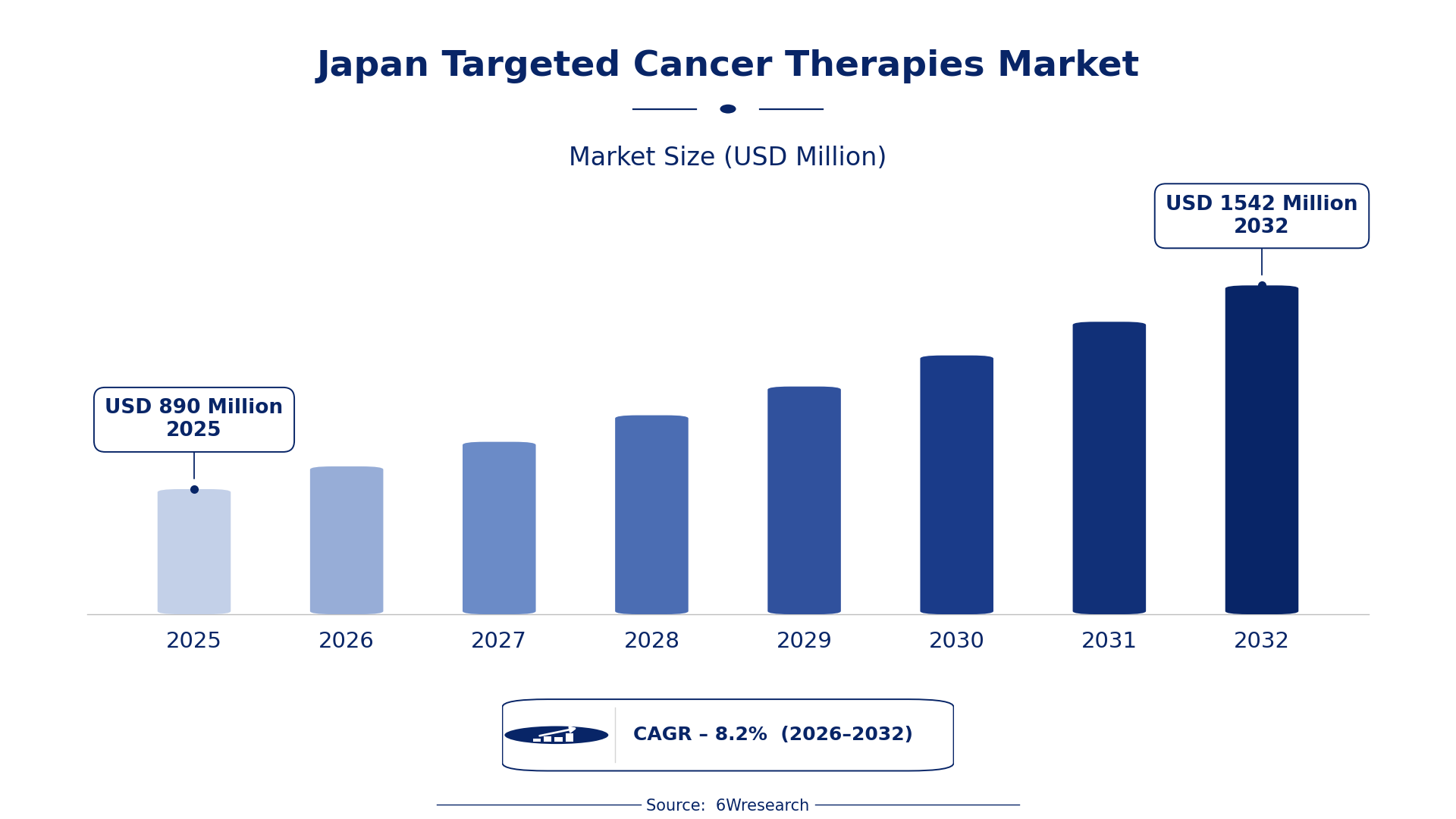
According to 6Wresearch internal database and industry insights, the Japan Targeted Cancer Therapies Market was valued at USD 890 Million in 2025 and is projected to reach USD 1,542 Million by 2032, growing at a CAGR of approximately 8.2% during 2026–2032.
Japan Targeted Cancer Therapies Market Highlights
| Report Metric | Details |
| Report Name | Japan Targeted Cancer Therapies Market (2026-2032) |
| Market Size 2025 | USD 890 Million |
| Market Size 2032 | USD 1,542 Million |
| Absolute Growth 2025–2032 | USD 652 Million |
| CAGR 2026–2032 | 8.2% |
| Peak Annual Growth | 9.1% in 2026 |
| Forecast Period | 2026–2032 |
| Historical Data | 2022–2025 |
| Base Year | 2025 |
| Leading Therapy Type, 2025 | Monoclonal Antibodies (38% share) |
| Leading Target Biomarker, 2025 | HER2/EGFR (37% share) |
| Leading Administration Route, 2025 | Intravenous (46% share) |
| Leading End User, 2025 | Oncology Clinics (40% share) |
| Fastest-Growing Therapy Type | Tyrosine Kinase Inhibitors (11.2% CAGR) |
| Fastest-Growing Target Biomarker | BCR-ABL/VEGFR (11.0% CAGR) |
| Fastest-Growing Administration Route | Oral (10.6% CAGR) |
| Fastest-Growing End User | Hospitals (10.7% CAGR) |
| Growing Sector | Oncology |
| Key End Users | Oncology Clinics, Hospitals, Specialty Hospitals, Cancer Research Centers |
Japan Targeted Cancer Therapies Market Year-wise Growth Rate and Key Drivers (2022–2032)
This graph illustrates the annual growth rates of the market from 2022 to 2032, highlighting a steady upward trajectory and projected market expansion over the forecast period.
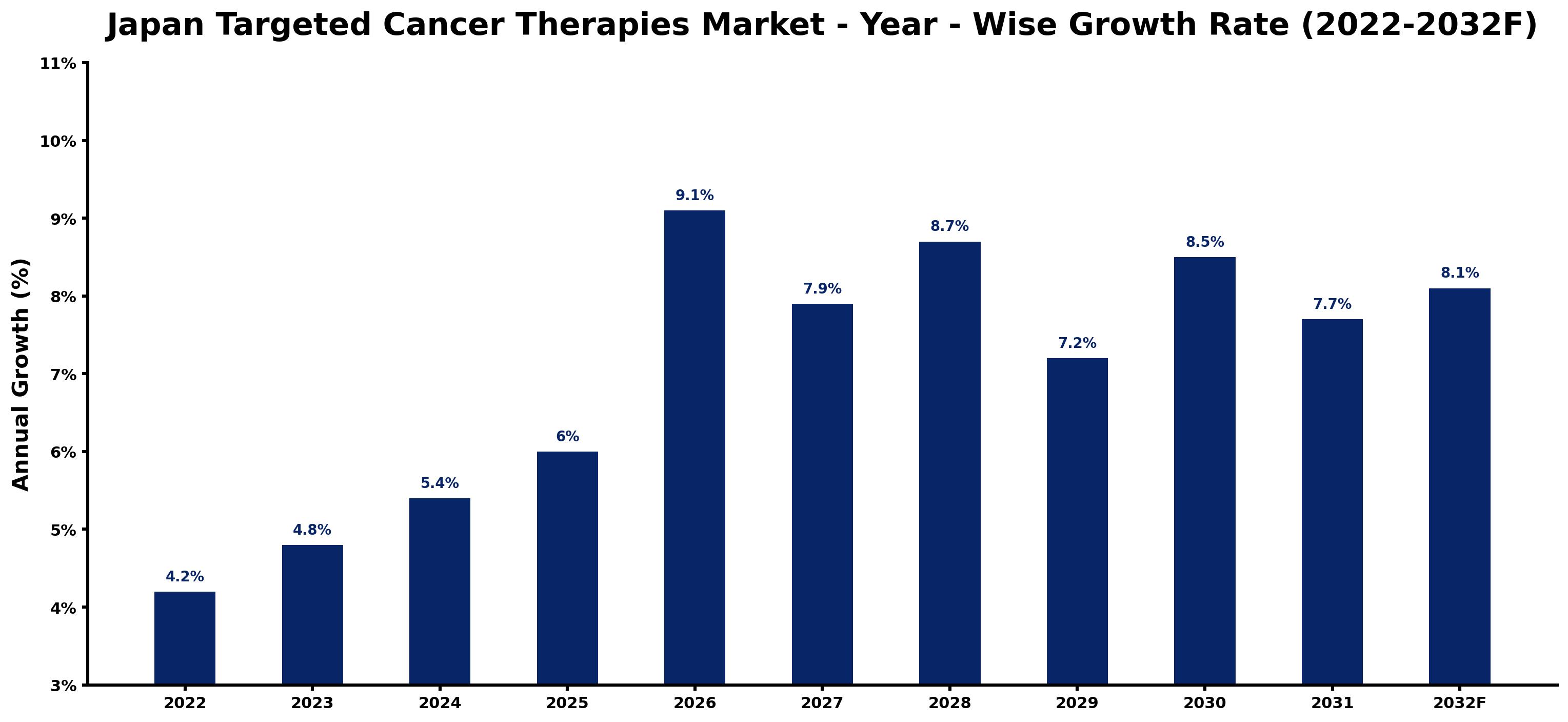
Annual growth estimates for each year appear below with the principal reason behind them, explaining the shifts that set the pace of the market.
| Year | Estimated Annual Growth (%) | Market Rationale |
| 2022 | 4.2 | The market showed steady growth as the patient population remained high. |
| 2023 | 4.8 | Demand increased due to advancements in targeted therapies and research. |
| 2024 | 5.4 | The introduction of new treatment protocols further boosted market activity. |
| 2025 | 6.0 | Growth accelerated as more oncology clinics adopted advanced therapies. |
| 2026 | 9.1 | The market peaked as therapies gained regulatory approval. |
| 2027 | 7.9 | Growth slowed slightly as the market began to stabilise after the peak. |
| 2028 | 8.7 | Demand rose again as hospitals expanded their oncology services. |
| 2029 | 7.2 | The market experienced a slowdown as competition intensified among providers. |
| 2030 | 8.5 | Growth picked up as funding for cancer research increased. |
| 2031 | 7.7 | The market continued to grow but at a slower rate due to market saturation. |
| 2032 | 8.1 | Demand is expected to rise as new therapies enter the market. |
Note: Market size estimations and growth projections presented in this report are based on 6Wresearch's proprietary forecasting methodology, utilizing the latest available industry data, government publications, and primary research inputs.
Japan Targeted Cancer Therapies Market Synopsis
Targeted cancer therapies are advanced treatments that specifically attack cancer cells while sparing normal cells, derived from biological sources like monoclonal antibodies. These therapies are primarily used in oncology to treat various cancers, including breast and lung cancer. The Japan Targeted Cancer Therapies Market is expanding due to a substantial cancer patient population, ongoing research, and increasing healthcare investments. In 2023, the Ministry of Health allocated ¥10 billion for cancer research, indicating strong governmental support for therapies, which drives further demand from healthcare providers.
Market Dynamics Impact Analysis (2026–2032)
| Factor | Type | Impact | Primary Segment Affected |
| Growing patient population drives demand for advanced cancer treatments. | Driver | High | Monoclonal Antibodies |
| Increased research funding enhances the development of new therapies. | Driver | High | Tyrosine Kinase Inhibitors |
| Rising cancer awareness leads to higher patient engagement in treatment options. | Opportunity | High | Immunotherapies |
| Expansion of oncology clinics increases access to targeted therapies. | Opportunity | Medium | Oncology Clinics |
| High treatment costs limit access for some patients. | Restraint | High | Hormonal Therapies |
| Stringent regulatory approvals can delay new therapies entering the market. | Restraint | Medium | Immunotherapies |
| Cost of advanced therapies can deter hospitals from adopting new treatments. | Challenge | High | Oncology Clinics |
| Intense competition among providers may lead to price wars, affecting margins. | Challenge | Medium | Hospitals |
Evaluation of Drivers in Japan Targeted Cancer Therapies Market (2026–2032)
Below are the drivers that matter most for revenue growth, with supporting evidence.
| Drivers | Primary Segment Affected | Why It Matters (Evidence) |
| High cancer patient population drives demand for targeted therapies. | Monoclonal Antibodies | Japan's cancer patient population is approximately 1 million as of 2023. |
| Increased funding for cancer research supports new treatment development. | Tyrosine Kinase Inhibitors | The Ministry of Health allocated ¥10 billion for cancer research in 2023. |
| Growing adoption of immunotherapies boosts market demand. | Immunotherapies | Immunotherapy usage has increased by 15% in the past year in Japan. |
| Expansion of oncology clinics improves access to treatments. | Oncology Clinics | The Tokyo region has the highest concentration of oncology clinics. |
| Rising awareness of cancer treatments drives patient engagement. | Hormonal Therapies | The Japan Cancer Society promotes awareness and research funding. |
Purchasing is picking up as Japan's cancer patient population reaches approximately 1 million, leading to increased demand for targeted therapies. The allocation of ¥10 billion for cancer research in 2023 supports the development of new treatments, particularly in oncology clinics. Immunotherapy usage has surged by 15% over the last year, reflecting a growing acceptance of these advanced therapies. The Tokyo region's high concentration of oncology clinics improves patient access to effective treatments. Increased awareness from the Japan Cancer Society further engages patients in exploring their treatment options.
Evaluation of Restraints in Japan Targeted Cancer Therapies Market
The table below lists the restraints and the evidence behind each.
| Market Restraint | Primary Segment Affected | Why It Matters (Evidence) |
| High treatment costs limit patient access to therapies. | Hormonal Therapies | The average treatment cost for targeted therapies can exceed ¥1 million per patient. |
| Regulatory delays hinder the introduction of new therapies. | Immunotherapies | Regulatory approvals for new cancer drugs typically take 6-12 months. |
| Limited reimbursement for certain therapies affects adoption rates. | Monoclonal Antibodies | The NHI drug price standard sets reimbursement prices that can restrict access. |
| Market saturation leads to intense competition among providers. | Tyrosine Kinase Inhibitors | The number of hospitals providing oncology services is over 1,200. |
| Complex approval processes can slow down innovation in treatments. | Immunotherapies | The PMD Act regulates the approval and quality of pharmaceuticals. |
Japan Targeted Cancer Therapies Market Challenges
Buyers experience delays due to the lengthy regulatory approval processes for new therapies, which can take 6-12 months, hindering timely access to treatments. Producers face high costs associated with developing targeted therapies, as the average treatment can exceed ¥1 million per patient, limiting their ability to invest in innovation. Technology constraints impact the advancement of new treatment options, as substantial funding is required for research, straining smaller clinics. Supply chain issues affect over 1,200 hospitals providing oncology services, potentially delaying critical treatments and increasing pressure on healthcare providers.
Trends in the Japan Targeted Cancer Therapies Market
These developments are changing demand patterns in the Japan Targeted Cancer Therapies Market.
- Shift towards Immunotherapy: The increasing use of immunotherapies is transforming cancer treatment protocols in Japan, with a 15% rise in usage over the past year. This trend is reflected in oncology clinics, where these therapies are becoming standard practice.
- Expansion of Oncology Clinics in Tokyo: Tokyo is experiencing a surge in the establishment of oncology clinics, enhancing patient access to targeted therapies. The region's high concentration of such facilities supports the growing demand for advanced cancer treatments.
- Growing Preference for Oral Administration: Oral administration of targeted therapies is gaining traction, with a projected CAGR of 10.6% for this route. This shift is particularly beneficial for patients seeking convenience in treatment regimens.
- Increased Research Funding for Cancer Treatments: The Japanese government has significantly increased funding for cancer research, allocating ¥10 billion in 2023. This investment is driving innovation and the development of new targeted therapies.
Investment Opportunities in the Japan Targeted Cancer Therapies Market
Several openings in the Japan Targeted Cancer Therapies Market merit attention from investors.
- Osaka's Advanced Cancer Research Facilities: Osaka is known for its advanced cancer research facilities, presenting opportunities for investment in therapies. With cancer research funding among the highest in Asia, suppliers can enter through local partnerships.
- Supply of Monoclonal Antibodies: The market gap for monoclonal antibodies is significant, with a projected growth rate. Suppliers can engage with oncology clinics to meet the rising demand for these therapies.
- Investment in Oral Therapies: With a growing preference for oral administration, there is a substantial opportunity to invest in oral targeted therapies. Engaging with hospitals will be essential for market entry.
- Expansion of Specialty Hospitals: The increase in specialty hospitals focusing on advanced cancer care creates a demand for targeted therapies. Suppliers should consider partnerships with these facilities to enhance distribution.
Government Initiatives in the Japan Targeted Cancer Therapies Market
The NHI drug price standard, revised regularly, sets reimbursement prices for targeted therapies, ensuring that healthcare providers can afford to offer these treatments. This measure complements the Medical Care Act of 1948, which establishes standards for hospitals and clinics, including staffing and facilities, thereby improving the overall quality of cancer care in Japan.
Buyers, particularly oncology clinics, benefit from the PMD Act, which regulates the approval of new therapies. This law ensures that treatments are available to patients in a timely manner, promoting access to the latest advancements in cancer care.
Future Insight of the Japan Targeted Cancer Therapies Market
By 2032, increased funding for cancer research will drive advancements in targeted therapies, with the Ministry of Health expected to allocate ¥10 billion for innovative treatments. The National Cancer Center will likely enhance its research initiatives, leading to the development of more effective therapies. Collaboration between advanced research facilities in Osaka and Tokyo will accelerate the introduction of new treatment options. As the Cancer Control Act aims to reduce mortality by 30% by 2030, healthcare providers will adopt a broader range of treatment strategies.
Market Segmentation Analysis
Japan Targeted Cancer Therapies Market report covers a detailed analysis of the following market segments:
By Therapy Type – Monoclonal Antibodies Lead, Tyrosine Kinase Inhibitors Expected to Grow Fastest
According to Saurav Kr Singh, Senior Research Analyst at 6Wresearch, with 38% of therapy type revenue in 2025, Monoclonal Antibodies was the largest category. Monoclonal antibodies dominate the market due to their broad application in treating various cancers, particularly in oncology clinics. Their proven effectiveness and support from the National Cancer Center in Japan have established them as a preferred option among healthcare providers. Over 2026–2032, Tyrosine Kinase Inhibitors are expected to post the fastest growth, at a CAGR of 11.2%. Tyrosine kinase inhibitors are rapidly gaining traction as they are essential for treating chronic myeloid leukemia, a prevalent cancer type in Japan. The increasing incidence of this condition is driving demand, ensuring that their market share will continue to grow. Suppliers should prioritise the development of tyrosine kinase inhibitors to align with the rising demand in the market.
By Target Biomarker – HER2/EGFR Leads, BCR-ABL/VEGFR Expected to Grow Fastest
The largest target biomarker category in 2025 was HER2/EGFR, at 37% of revenue. HER2/EGFR biomarkers dominate the market as they are specifically targeted in therapies for prevalent cancers such as breast and lung cancer in Japan. The guidelines set by the Japanese Society of Medical Oncology underscore the importance of these biomarkers, driving their widespread adoption in treatment protocols. BCR-ABL/VEGFR is set to record the highest CAGR in this split, 11.0% over 2026–2032. BCR-ABL/VEGFR biomarkers are rapidly gaining traction due to their critical role in treating specific types of leukemia. The increasing incidence of these cancers is driving the demand for therapies that target these particular biomarkers, indicating a shift in treatment focus. Buyers should prioritise therapies that target BCR-ABL/VEGFR to align with emerging treatment trends.
By Administration Route – Intravenous Leads, Oral Expected to Grow Fastest
Intravenous accounted for 46% of the market by administration route in 2025. Intravenous administration is the leading method for delivering targeted therapies, particularly in oncology clinics where immediate therapeutic effects are critical. This approach is preferred for its reliability in ensuring precise dosage and effective absorption of treatments. The quickest growth will come from Oral, forecast to expand at a CAGR of 10.6% between 2026 and 2032. Oral administration is experiencing swift growth due to its convenience for patients, allowing for easier self-administration. The growing preference for patient-centric treatment options is significantly shaping this trend, indicating a move towards more accessible therapies. Suppliers should focus on creating more oral formulations to meet the increasing demand for convenient treatment options.
By End User – Oncology Clinics Lead, Hospitals Expected to Grow Fastest
In 2025, Oncology Clinics led the end user split with a 40% share. Oncology clinics are the primary users of targeted therapies, specialising in cancer treatment and possessing the requisite expertise. The high density of these clinics, especially in regions like Tokyo, reinforces their dominant position in the market. Hospitals are projected to grow fastest, at a CAGR of 10.7% during 2026–2032. Hospitals are witnessing the fastest growth as they serve as key facilities for comprehensive cancer treatment. The rising number of cancer patients seeking care in hospitals is propelling this growth, underscoring the demand for targeted therapies in these environments. Suppliers should strengthen collaborations with hospitals to capitalise on the growing need for targeted therapies.
Key Attractiveness of the Report
- 10 Years of Market Numbers
- Historical Data Starting from 2022 to 2025
- Base Year 2025
- Forecast Data until 2032
- Key Performance Indicators Impacting the Market
- Major Upcoming Developments and Projects
Key Highlights of the Report:
- Japan Targeted Cancer Therapies Market Outlook
- Market Size of Japan Targeted Cancer Therapies Market, 2025
- Forecast of Japan Targeted Cancer Therapies Market, 2032
- Historical Data and Forecast of Japan Targeted Cancer Therapies Revenues & Volume for the Period 2022-2032F
- Japan Targeted Cancer Therapies Market Trend Evolution
- Japan Targeted Cancer Therapies Market Drivers and Challenges
- Japan Targeted Cancer Therapies Price Trends
- Japan Targeted Cancer Therapies Porter's Five Forces
- Japan Targeted Cancer Therapies Industry Life Cycle
- Historical Data and Forecast of Japan Targeted Cancer Therapies Market Revenues & Volume By Therapy Type for the Period 2022-2032F
- Historical Data and Forecast of Japan Targeted Cancer Therapies Market Revenues & Volume By Monoclonal Antibodies for the Period 2022-2032F
- Historical Data and Forecast of Japan Targeted Cancer Therapies Market Revenues & Volume By Tyrosine Kinase Inhibitors for the Period 2022-2032F
- Historical Data and Forecast of Japan Targeted Cancer Therapies Market Revenues & Volume By Hormonal Therapies for the Period 2022-2032F
- Historical Data and Forecast of Japan Targeted Cancer Therapies Market Revenues & Volume By Immunotherapies for the Period 2022-2032F
- Historical Data and Forecast of Japan Targeted Cancer Therapies Market Revenues & Volume By Target Biomarker for the Period 2022-2032F
- Historical Data and Forecast of Japan Targeted Cancer Therapies Market Revenues & Volume By HER2/EGFR for the Period 2022-2032F
- Historical Data and Forecast of Japan Targeted Cancer Therapies Market Revenues & Volume By BCR-ABL/VEGFR for the Period 2022-2032F
- Historical Data and Forecast of Japan Targeted Cancer Therapies Market Revenues & Volume By Estrogen/Testosterone for the Period 2022-2032F
- Historical Data and Forecast of Japan Targeted Cancer Therapies Market Revenues & Volume By PD-1/CTLA-4 for the Period 2022-2032F
- Historical Data and Forecast of Japan Targeted Cancer Therapies Market Revenues & Volume By Administration Route for the Period 2022-2032F
- Historical Data and Forecast of Japan Targeted Cancer Therapies Market Revenues & Volume By Intravenous for the Period 2022-2032F
- Historical Data and Forecast of Japan Targeted Cancer Therapies Market Revenues & Volume By Oral for the Period 2022-2032F
- Historical Data and Forecast of Japan Targeted Cancer Therapies Market Revenues & Volume By Oral/Injection for the Period 2022-2032F
- Historical Data and Forecast of Japan Targeted Cancer Therapies Market Revenues & Volume By IV/Subcutaneous for the Period 2022-2032F
- Historical Data and Forecast of Japan Targeted Cancer Therapies Market Revenues & Volume By End User for the Period 2022-2032F
- Historical Data and Forecast of Japan Targeted Cancer Therapies Market Revenues & Volume By Oncology Clinics for the Period 2022-2032F
- Historical Data and Forecast of Japan Targeted Cancer Therapies Market Revenues & Volume By Hospitals for the Period 2022-2032F
- Historical Data and Forecast of Japan Targeted Cancer Therapies Market Revenues & Volume By Specialty Hospitals for the Period 2022-2032F
- Historical Data and Forecast of Japan Targeted Cancer Therapies Market Revenues & Volume By Cancer Research Centers for the Period 2022-2032F
- Japan Targeted Cancer Therapies Import Export Trade Statistics
- Market Opportunity Assessment By Therapy Type
- Market Opportunity Assessment By Target Biomarker
- Market Opportunity Assessment By Administration Route
- Market Opportunity Assessment By End User
- Japan Targeted Cancer Therapies Top Companies Market Share
- Japan Targeted Cancer Therapies Competitive Benchmarking By Technical and Operational Parameters
- Japan Targeted Cancer Therapies Company Profiles
- Japan Targeted Cancer Therapies Key Strategic Recommendations
Market Covered
The following segment groups are covered in the report.
By Therapy Type
- Monoclonal Antibodies
- Tyrosine Kinase Inhibitors
- Hormonal Therapies
- Immunotherapies
By Target Biomarker
- HER2/EGFR
- BCR-ABL/VEGFR
- Estrogen/Testosterone
- PD-1/CTLA-4
By Administration Route
- Intravenous
- Oral
- Oral/Injection
- IV/Subcutaneous
By End User
- Oncology Clinics
- Hospitals
- Specialty Hospitals
- Cancer Research Centers































