Japan Targeted Oncology Drugs Market Size & Growth Rate
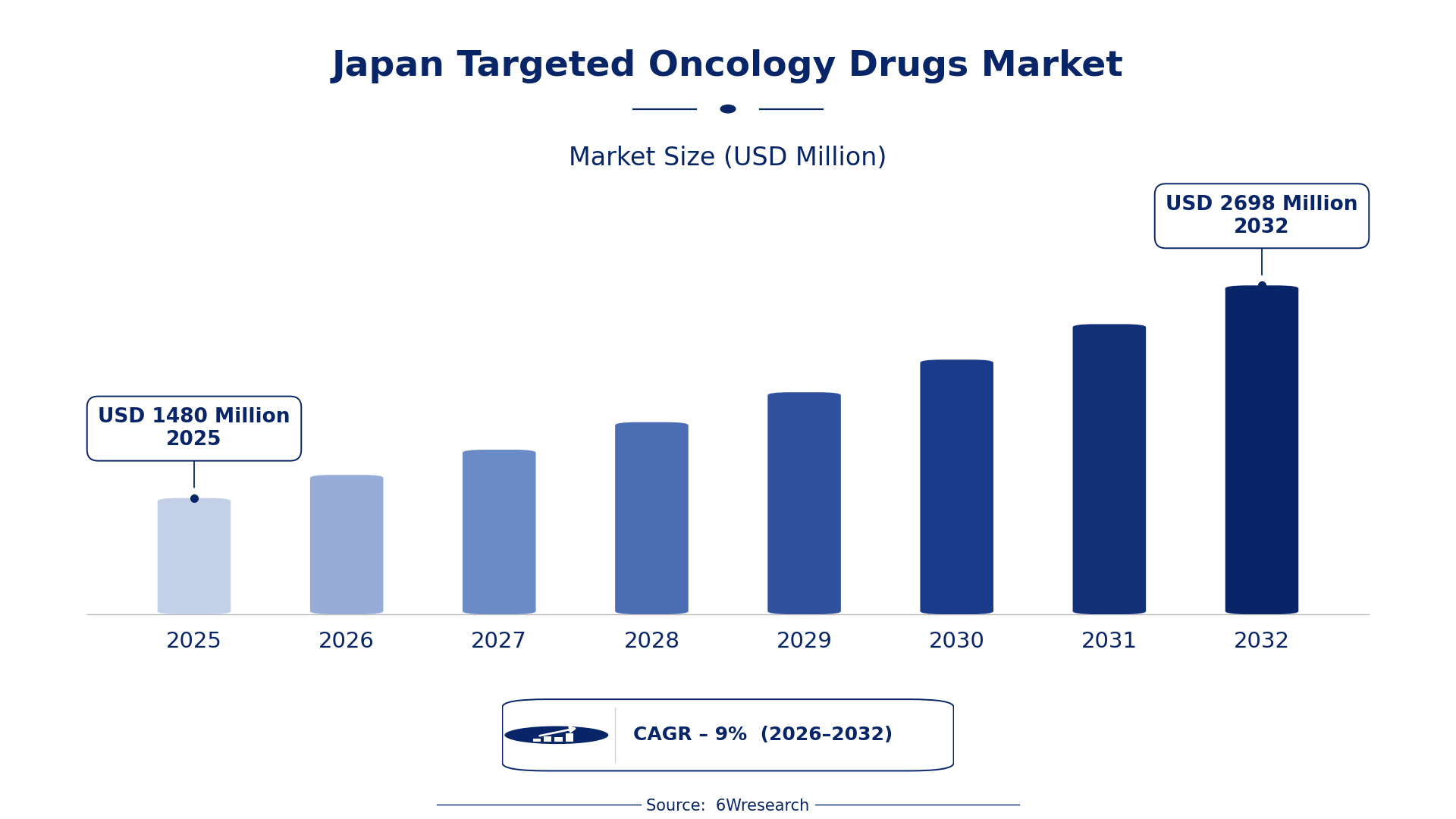
According to 6Wresearch internal database and industry insights, the Japan Targeted Oncology Drugs Market was valued at USD 1,480 Million in 2025 and is projected to reach USD 2,698 Million by 2032, growing at a CAGR of approximately 9% during 2026–2032.
Japan Targeted Oncology Drugs Market Highlights
| Report Metric | Details |
| Report Name | Japan Targeted Oncology Drugs Market (2026-2032) |
| Market Size 2025 | USD 1,480 Million |
| Market Size 2032 | USD 2,698 Million |
| Absolute Growth 2025–2032 | USD 1,218 Million |
| CAGR 2026–2032 | 9% |
| Peak Annual Growth | 10.0% in 2028 |
| Forecast Period | 2026–2032 |
| Historical Data | 2022–2025 |
| Base Year | 2025 |
| Leading Drug Type, 2025 | ALK Inhibitors (46% share) |
| Leading Cancer Indication, 2025 | Lung Cancer (37% share) |
| Leading Mechanism of Action, 2025 | Kinase Blocker (45% share) |
| Leading End User, 2025 | Oncology Centers (52% share) |
| Fastest-Growing Drug Type | BRAF Inhibitors (12.3% CAGR) |
| Fastest-Growing Cancer Indication | Melanoma (11.9% CAGR) |
| Fastest-Growing Mechanism of Action | Gene Mutation Inhibitor (11.7% CAGR) |
| Fastest-Growing End User | Cancer Hospitals (11.8% CAGR) |
| Growing Sector | oncology |
| Key End Users | Oncology Centers, Cancer Hospitals, Specialty Clinics, Clinical Oncology Labs |
Japan Targeted Oncology Drugs Market Year-wise Growth Rate and Key Drivers (2022–2032)
This graph illustrates the annual growth rates of the market from 2022 to 2032, highlighting a steady upward trajectory and projected market expansion over the forecast period.
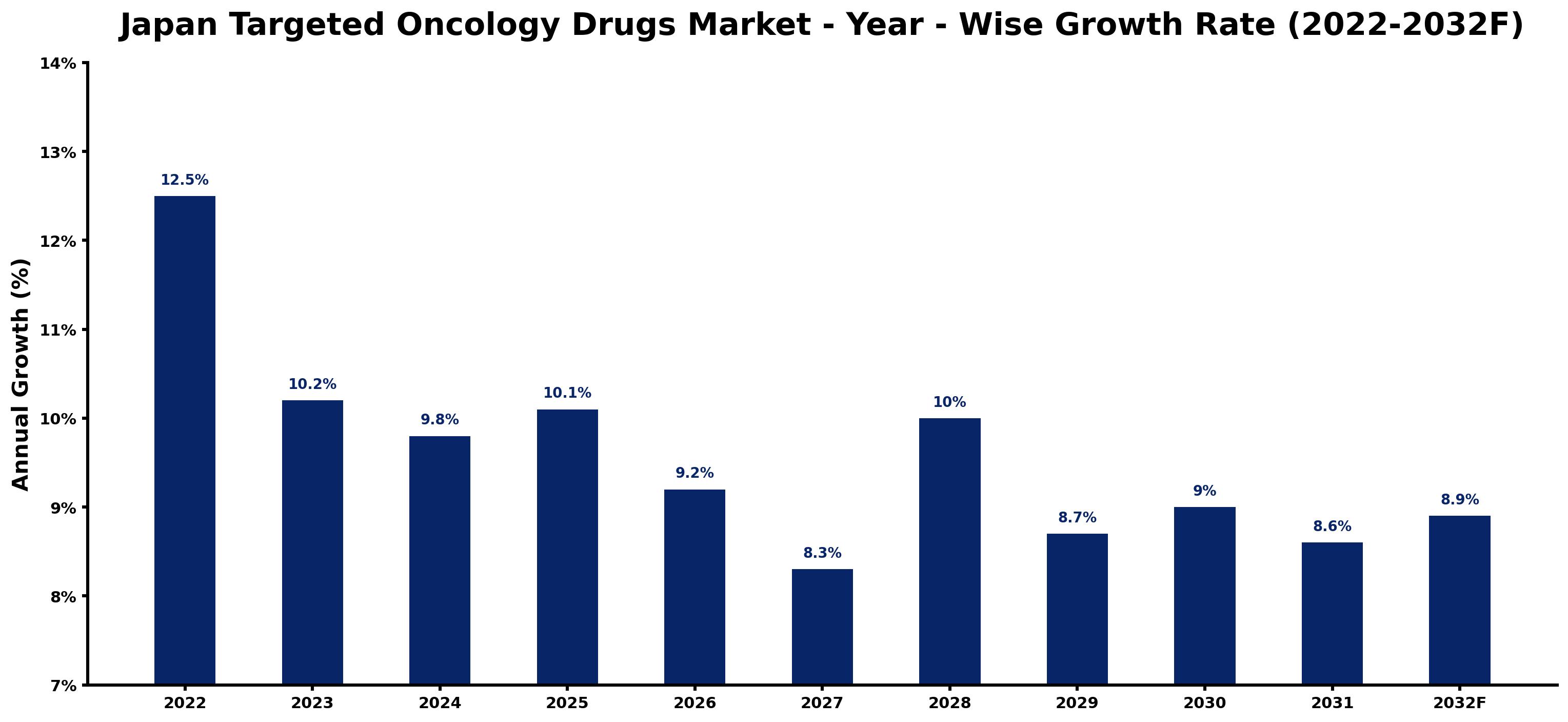
Year by year, the estimates below pair each growth rate with the development that shaped it.
| Year | Estimated Annual Growth (%) | Market Rationale |
| 2022 | 12.5 | The market experienced strong demand due to increased cancer cases and advanced therapies. |
| 2023 | 10.2 | Demand growth slowed as the market adjusted to new health insurance policies for targeted therapies. |
| 2024 | 9.8 | The market continued to grow, but at a slower pace as it matured and competition increased. |
| 2025 | 10.1 | Growth accelerated as healthcare providers expanded their offerings of targeted oncology drugs. |
| 2026 | 9.2 | Market growth is projected to slow again as competition intensifies and pricing pressures emerge. |
| 2027 | 8.3 | The market is expected to continue growing, albeit at a reduced rate due to saturation in some segments. |
| 2028 | 10.0 | A peak in growth is anticipated as new therapies gain approval and market acceptance. |
| 2029 | 8.7 | The market will experience a slowdown as the introduction of new drugs becomes less frequent. |
| 2030 | 9.0 | Growth is projected to pick up again as healthcare providers focus on effective treatment options. |
| 2031 | 8.6 | The market is expected to see a slight slowdown as competition evolves. |
| 2032 | 8.9 | Growth is anticipated to resume as new technologies and treatment modalities are introduced. |
Note: Market size estimations and growth projections presented in this report are based on 6Wresearch's proprietary forecasting methodology, utilizing the latest available industry data, government publications, and primary research inputs.
Japan Targeted Oncology Drugs Market Synopsis
Targeted oncology drugs are advanced therapeutics designed to specifically target cancer cells based on genetic and molecular characteristics. In Japan, the Japan Targeted Oncology Drugs Market is expanding due to the rising incidence of cancer, advancements in precision medicine, and supportive health insurance policies that improve accessibility to these therapies. The introduction of a new health insurance policy in 2023 has broadened coverage for targeted therapies, further stimulating market growth. Collaboration between healthcare providers and research institutions is also driving the demand for these treatments, ensuring that patients have access to the latest advancements in oncology.
Market Dynamics Impact Analysis (2026–2032)
| Factor | Type | Impact | Primary Segment Affected |
| Increasing cancer incidence drives demand for targeted therapies. | Driver | High | Lung Cancer |
| Advancements in precision medicine create new treatment opportunities. | Driver | High | BRAF Inhibitors |
| Growing number of oncology centers enhances access to targeted therapies. | Opportunity | High | Oncology Centers |
| Rising public and private funding for cancer research supports innovation. | Opportunity | High | Clinical Oncology Labs |
| High costs of targeted therapies limit access for some patients. | Restraint | High | HER2 Inhibitors |
| Regulatory approval processes can delay the introduction of new drugs. | Restraint | Medium | PARP Inhibitors |
| Intense competition among drug manufacturers pressures pricing. | Challenge | High | Kinase Blocker |
| Limited awareness among healthcare providers about new therapies affects adoption. | Challenge | Medium | Gene Mutation Inhibitor |
Evaluation of Drivers in Japan Targeted Oncology Drugs Market (2026–2032)
The main growth drivers and the segments they affect most are set out below.
| Drivers | Primary Segment Affected | Why It Matters (Evidence) |
| Rising cancer cases increase demand for targeted therapies. | Lung Cancer | In 2022, approximately 1 million new cancer cases were reported in Japan, prompting healthcare providers to seek effective treatments. |
| Advancements in genetic profiling improve treatment options. | BRAF Inhibitors | Research in the Tokyo area is leading to new therapies for melanoma, enhancing treatment options. |
| Supportive health insurance policies improve accessibility. | HER2 Inhibitors | The introduction of a new health insurance policy in 2023 expanded coverage for targeted therapies. |
| Growing investment in cancer research drives innovation. | Clinical Oncology Labs | The Japanese government allocated ¥10 billion for cancer research in 2023, supporting new therapeutic developments. |
| Increased collaboration with universities accelerates clinical trials. | PARP Inhibitors | Clinical trials for targeted therapies are often conducted in collaboration with universities, facilitating faster approvals. |
Much of the new demand traces back to the rising incidence of cancer, with approximately 1 million new cases reported in 2022. This surge prompts healthcare providers to seek effective treatments, particularly in the Tokyo area, known for its oncology research.
Evaluation of Restraints in Japan Targeted Oncology Drugs Market
The table below lists the restraints and the evidence behind each.
| Market Restraint | Primary Segment Affected | Why It Matters (Evidence) |
| High costs of targeted therapies limit patient access. | HER2 Inhibitors | The average patient wait time for targeted therapy approval is around 6 months, which can deter timely treatment. |
| Regulatory approval processes can delay market entry. | PARP Inhibitors | The Ministry of Health, Labour and Welfare oversees drug approvals, which can extend timelines for new therapies. |
| Intense competition pressures pricing strategies. | Kinase Blocker | As more manufacturers enter the market, pricing becomes a critical factor affecting profitability. |
| Limited awareness among providers affects therapy adoption. | Gene Mutation Inhibitor | Healthcare providers may not be fully informed about the latest targeted therapies, impacting patient treatment options. |
| Market saturation in some segments slows growth. | Lung Cancer | As treatment options expand, the market may experience slower growth rates due to increased competition. |
Japan Targeted Oncology Drugs Market Challenges
A key obstacle in the targeted oncology drugs market is the fierce competition among producers, which compresses profit margins and can lead to reduced investment in research for suppliers. Regulatory challenges from the Ministry of Health, Labour and Welfare can prolong drug approval times, with patients facing an average wait of 6 months before accessing therapies. Buyers experience rising costs due to the new health insurance policy, which may leave certain targeted therapies uncovered, leading to increased out-of-pocket expenses for patients. Supply chain complications arise as clinical trials frequently depend on collaborations with universities, potentially delaying the introduction of new drugs.
Trends in the Japan Targeted Oncology Drugs Market
The following changes are redrawing the Japan Targeted Oncology Drugs Market.
- Shift from Traditional to Targeted Therapies: Since 2023, Japan has seen a shift towards targeted therapies in oncology, particularly with the introduction of new health insurance policies. This shift is reflected in the increasing use of HER2 inhibitors in breast cancer treatment, which are now widely adopted across the country.
- Emergence of Gene Mutation Inhibitors: Beginning in 2026, Gene Mutation Inhibitors are gaining traction in Japan, driven by advancements in precision medicine. The National Cancer Center Japan is focusing on research in this area, improving treatment options for patients with specific genetic profiles.
- Increased Funding for Cancer Research: In 2023, the Japanese government allocated ¥10 billion for cancer research, reflecting a commitment to advancing oncology treatments. This funding supports clinical trials and the development of new therapies, creating a more competitive market.
- Expansion of Oncology Centers: The number of oncology centers in Japan has been steadily increasing, particularly in urban areas like Tokyo. This expansion is improving patient access to targeted therapies, contributing to the overall growth of the targeted oncology drugs market.
Investment Opportunities in the Japan Targeted Oncology Drugs Market
The opportunities below stand out in the Japan Targeted Oncology Drugs Market for new entrants and existing suppliers.
- Oncology Centers Expanding Services: Oncology centers are increasingly seeking advanced targeted therapies to improve treatment offerings. With approximately 125 million people in Japan, the demand for effective cancer treatments is growing, presenting opportunities for suppliers to partner with these centers.
- Investment in Clinical Research Facilities: The Tokyo area is a major hub for oncology research, making it an ideal location for investment in clinical research facilities. With government funding of ¥10 billion in 2023, there is a clear opportunity for collaboration and development in this sector.
- Growing Demand for BRAF Inhibitors: As melanoma cases rise, the demand for BRAF inhibitors is expected to increase. Suppliers can capitalise on this trend by focusing on partnerships with cancer hospitals that are expanding their treatment options.
- Entry into Gene Mutation Inhibitor Market: With the rise of precision medicine, there is an opportunity to invest in gene mutation inhibitors. Collaborating with clinical oncology labs can facilitate entry into this growing market, especially as awareness increases.
Government Initiatives in the Japan Targeted Oncology Drugs Market
The NHI drug price standard, revised regularly, establishes reimbursement prices for oncology drugs, ensuring that targeted therapies are accessible to patients. The PMD Act regulates the approval and quality of pharmaceuticals, including targeted therapies, ensuring safety and efficacy in the market. These measures support the availability of effective treatments for patients, allowing healthcare providers to offer the latest advancements in oncology.
The Pharmaceuticals and Medical Devices Agency (PMDA) reviews pharmaceuticals and medical devices, including oncology drugs, while the Japan Agency for Medical Research and Development (AMED) funds medical research. Together, they play a critical role in the approval and funding of therapies, supporting the development of targeted oncology drugs and ensuring that treatments reach the market efficiently.
Future Insight of the Japan Targeted Oncology Drugs Market
Advancements in genetic profiling technology will significantly alter demand for targeted oncology drugs by 2032, enabling more precise treatment strategies. New regulatory frameworks for clinical trials will streamline the approval process, reducing patient wait times. Increased funding for cancer research, with ¥10 billion allocated in 2023, will accelerate the creation of therapeutics. As the Tokyo area strengthens its role as a premier research hub, suppliers will benefit from closer partnerships with academic institutions.
Market Segmentation Analysis
Japan Targeted Oncology Drugs Market report covers a detailed analysis of the following market segments:
By Drug Type – ALK Inhibitors Lead, BRAF Inhibitors Expected to Grow Fastest
According to Saurav Kr Singh, Senior Research Analyst at 6Wresearch, ALK Inhibitors held 46% of the Japan Targeted Oncology Drugs Market by drug type in 2025. ALK Inhibitors hold the largest share as they are specifically tailored for lung cancer treatment, which is highly prevalent in Japan. Their widespread use in oncology centers reinforces their dominant position in the targeted oncology drugs market. BRAF Inhibitors are set to record the highest CAGR in this split, 12.3% over 2026–2032. BRAF Inhibitors are witnessing rapid growth due to the increasing incidence of melanoma, prompting a shift towards targeted therapies. Enhanced awareness and diagnostic advancements are expected to fuel further demand for these drugs. Suppliers must concentrate on developing BRAF Inhibitors to align with the growing need for melanoma treatments.
By Cancer Indication – Lung Cancer Leads, Melanoma Expected to Grow Fastest
Lung Cancer took 37% of cancer indication revenue in 2025, more than any other category. Lung Cancer is the leading indication for targeted therapies, with a substantial number of new cases reported annually in Japan. The focus on lung cancer by healthcare providers and ongoing clinical research solidifies its dominant position in the market. The quickest growth will come from Melanoma, forecast to expand at a CAGR of 11.9% between 2026 and 2032. Melanoma is the fastest-growing indication as targeted treatments become more prevalent, driven by advancements in diagnosis and treatment protocols. This surge reflects a broader trend towards precision medicine in oncology. Buyers must stay informed about the latest advancements in melanoma treatments to ensure access to effective therapies.
By Mechanism of Action – Kinase Blocker Leads, Gene Mutation Inhibitor Expected to Grow Fastest
With 45% of mechanism of action revenue in 2025, Kinase Blocker was the largest category. Kinase Blockers are the leading mechanism of action as they are widely used in targeted therapies, providing effective treatment options for various cancers. Their established role in oncology makes them a preferred choice among healthcare providers. Gene Mutation Inhibitor is projected to grow fastest, at a CAGR of 11.7% during 2026–2032. Gene Mutation Inhibitors are growing rapidly as they are essential for precision medicine, allowing for tailored treatments based on genetic profiles. This trend is expected to expand as more genetic testing becomes available. Suppliers should invest in developing Gene Mutation Inhibitors to meet the rising demand for precision oncology solutions.
By End User – Oncology Centers Lead, Cancer Hospitals Expected to Grow Fastest
The largest end user category in 2025 was Oncology Centers, at 52% of revenue. Oncology Centers lead the market as they are the main providers of targeted oncology drugs, delivering specialised care for cancer patients. Their expertise and dedicated facilities for administering these therapies solidify their prominent role in the industry. Over 2026–2032, Cancer Hospitals are expected to post the fastest growth, at a CAGR of 11.8%. Cancer Hospitals are growing the fastest as they increasingly adopt advanced cancer therapeutics to improve patient outcomes. The trend towards incorporating targeted therapies into hospital protocols is driving this rapid expansion. Suppliers should prioritise establishing strong partnerships with Cancer Hospitals to enhance the distribution of targeted oncology drugs.
Key Attractiveness of the Report
- 10 Years of Market Numbers
- Historical Data Starting from 2022 to 2025
- Base Year 2025
- Forecast Data until 2032
- Key Performance Indicators Impacting the Market
- Major Upcoming Developments and Projects
Key Highlights of the Report:
- Japan Targeted Oncology Drugs Market Outlook
- Market Size of Japan Targeted Oncology Drugs Market, 2025
- Forecast of Japan Targeted Oncology Drugs Market, 2032
- Historical Data and Forecast of Japan Targeted Oncology Drugs Revenues & Volume for the Period 2022-2032F
- Japan Targeted Oncology Drugs Market Trend Evolution
- Japan Targeted Oncology Drugs Market Drivers and Challenges
- Japan Targeted Oncology Drugs Price Trends
- Japan Targeted Oncology Drugs Porter's Five Forces
- Japan Targeted Oncology Drugs Industry Life Cycle
- Historical Data and Forecast of Japan Targeted Oncology Drugs Market Revenues & Volume By Drug Type for the Period 2022-2032F
- Historical Data and Forecast of Japan Targeted Oncology Drugs Market Revenues & Volume By ALK Inhibitors for the Period 2022-2032F
- Historical Data and Forecast of Japan Targeted Oncology Drugs Market Revenues & Volume By BRAF Inhibitors for the Period 2022-2032F
- Historical Data and Forecast of Japan Targeted Oncology Drugs Market Revenues & Volume By HER2 Inhibitors for the Period 2022-2032F
- Historical Data and Forecast of Japan Targeted Oncology Drugs Market Revenues & Volume By PARP Inhibitors for the Period 2022-2032F
- Historical Data and Forecast of Japan Targeted Oncology Drugs Market Revenues & Volume By Cancer Indication for the Period 2022-2032F
- Historical Data and Forecast of Japan Targeted Oncology Drugs Market Revenues & Volume By Lung Cancer for the Period 2022-2032F
- Historical Data and Forecast of Japan Targeted Oncology Drugs Market Revenues & Volume By Melanoma for the Period 2022-2032F
- Historical Data and Forecast of Japan Targeted Oncology Drugs Market Revenues & Volume By Breast Cancer for the Period 2022-2032F
- Historical Data and Forecast of Japan Targeted Oncology Drugs Market Revenues & Volume By Ovarian/Prostate Cancer for the Period 2022-2032F
- Historical Data and Forecast of Japan Targeted Oncology Drugs Market Revenues & Volume By Mechanism of Action for the Period 2022-2032F
- Historical Data and Forecast of Japan Targeted Oncology Drugs Market Revenues & Volume By Kinase Blocker for the Period 2022-2032F
- Historical Data and Forecast of Japan Targeted Oncology Drugs Market Revenues & Volume By Gene Mutation Inhibitor for the Period 2022-2032F
- Historical Data and Forecast of Japan Targeted Oncology Drugs Market Revenues & Volume By Receptor Blocker for the Period 2022-2032F
- Historical Data and Forecast of Japan Targeted Oncology Drugs Market Revenues & Volume By DNA Repair Inhibition for the Period 2022-2032F
- Historical Data and Forecast of Japan Targeted Oncology Drugs Market Revenues & Volume By End User for the Period 2022-2032F
- Historical Data and Forecast of Japan Targeted Oncology Drugs Market Revenues & Volume By Oncology Centers for the Period 2022-2032F
- Historical Data and Forecast of Japan Targeted Oncology Drugs Market Revenues & Volume By Cancer Hospitals for the Period 2022-2032F
- Historical Data and Forecast of Japan Targeted Oncology Drugs Market Revenues & Volume By Specialty Clinics for the Period 2022-2032F
- Historical Data and Forecast of Japan Targeted Oncology Drugs Market Revenues & Volume By Clinical Oncology Labs for the Period 2022-2032F
- Japan Targeted Oncology Drugs Import Export Trade Statistics
- Market Opportunity Assessment By Drug Type
- Market Opportunity Assessment By Cancer Indication
- Market Opportunity Assessment By Mechanism of Action
- Market Opportunity Assessment By End User
- Japan Targeted Oncology Drugs Top Companies Market Share
- Japan Targeted Oncology Drugs Competitive Benchmarking By Technical and Operational Parameters
- Japan Targeted Oncology Drugs Company Profiles
- Japan Targeted Oncology Drugs Key Strategic Recommendations
Market Covered
The following segment groups are covered in the report.
By Drug Type
- ALK Inhibitors
- BRAF Inhibitors
- HER2 Inhibitors
- PARP Inhibitors
By Cancer Indication
- Lung Cancer
- Melanoma
- Breast Cancer
- Ovarian/Prostate Cancer
By Mechanism of Action
- Kinase Blocker
- Gene Mutation Inhibitor
- Receptor Blocker
- DNA Repair Inhibition
By End User
- Oncology Centers
- Cancer Hospitals
- Specialty Clinics
- Clinical Oncology Labs































