Japan Targeted Therapy Market Size & Growth Rate
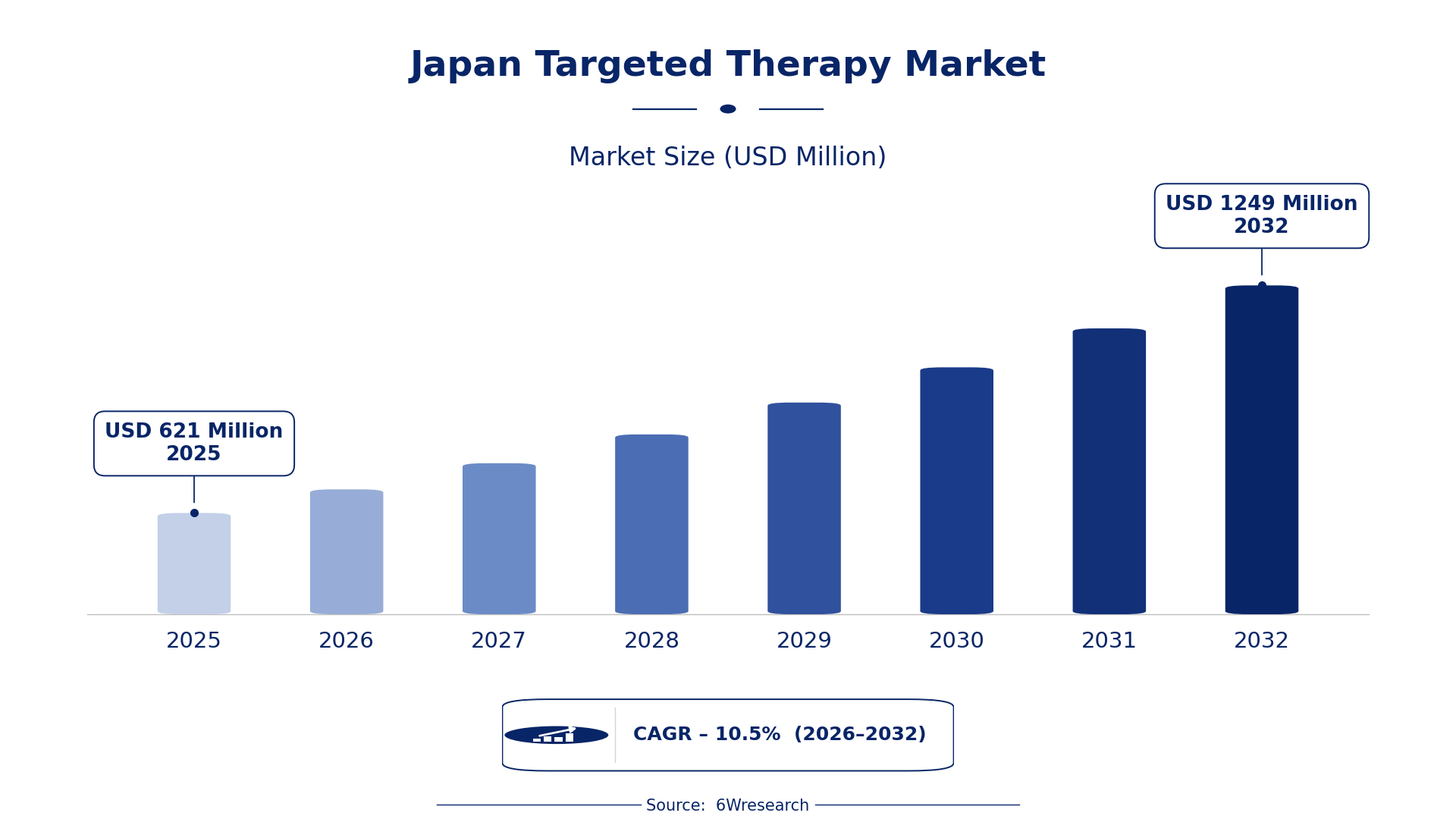
According to 6Wresearch internal database and industry insights, the Japan Targeted Therapy Market was valued at USD 621 Million in 2025 and is projected to reach USD 1,249 Million by 2032, growing at a CAGR of approximately 10.5% during 2026–2032.
Japan Targeted Therapy Market Highlights
| Report Metric | Details |
| Report Name | Japan Targeted Therapy Market (2026-2032) |
| Market Size 2025 | USD 621 Million |
| Market Size 2032 | USD 1,249 Million |
| Absolute Growth 2025–2032 | USD 628 Million |
| CAGR 2026–2032 | 10.5% |
| Peak Annual Growth | 11.6% in 2028 |
| Forecast Period | 2026–2032 |
| Historical Data | 2022–2025 |
| Base Year | 2025 |
| Leading Therapy Type, 2025 | Small Molecule Drugs (46% share) |
| Leading Disease Indication, 2025 | Oncology (40% share) |
| Leading Delivery Mode, 2025 | Oral (49% share) |
| Leading End User, 2025 | Hospitals (32% share) |
| Fastest-Growing Therapy Type | Biologic Therapies (14.1% CAGR) |
| Fastest-Growing Disease Indication | Autoimmune Diseases (14.3% CAGR) |
| Fastest-Growing Delivery Mode | Injection/IV (13.7% CAGR) |
| Fastest-Growing End User | Specialty Clinics (13.9% CAGR) |
| Growing Sector | Specialty Clinics |
| Key End Users | Hospitals, Specialty Clinics, Research Hospitals, Biotech Companies |
Japan Targeted Therapy Market Year-wise Growth Rate and Key Drivers (2022–2032)
This graph illustrates the annual growth rates of the market from 2022 to 2032, highlighting a steady upward trajectory and projected market expansion over the forecast period.
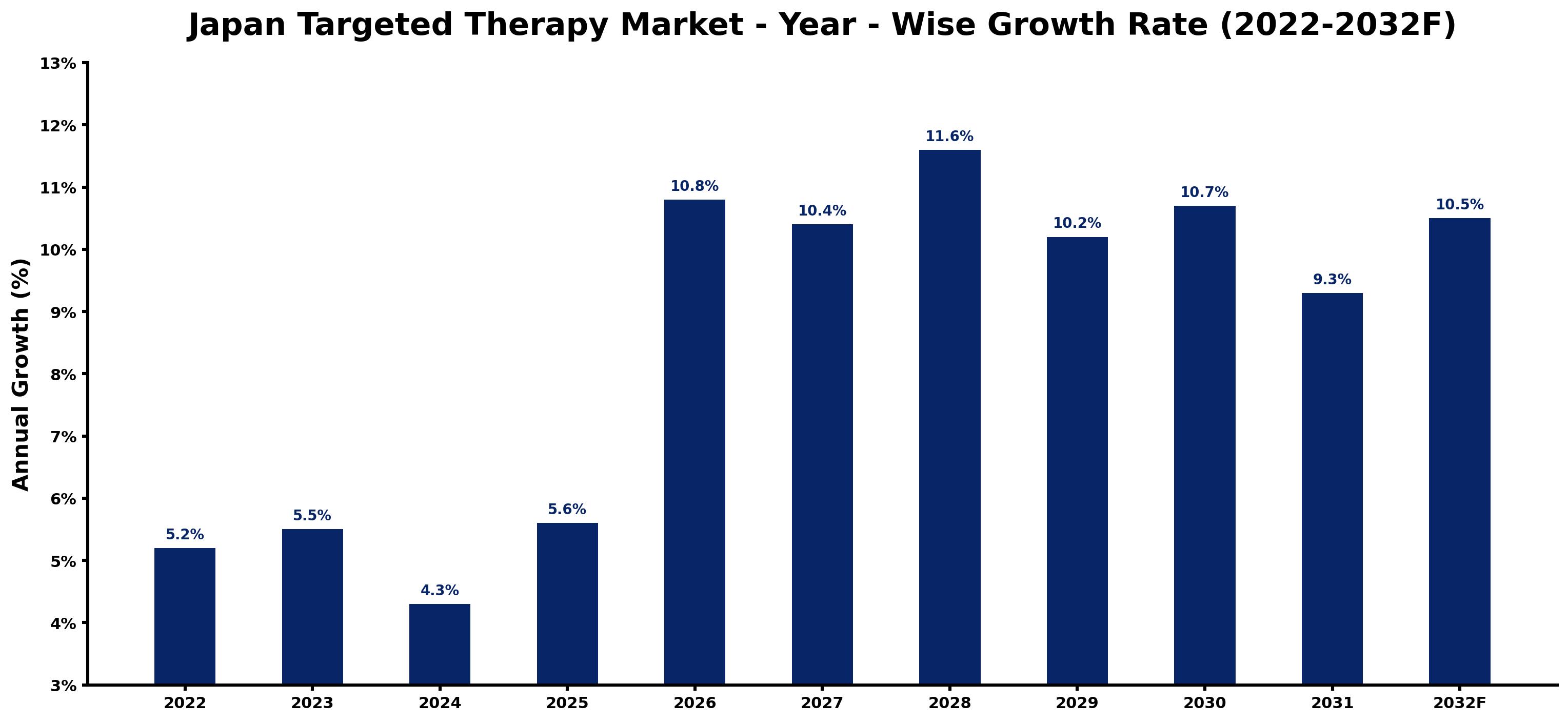
Annual growth estimates for each year appear below with the principal reason behind them, explaining the shifts that set the pace of the market.
| Year | Estimated Annual Growth (%) | Market Rationale |
| 2022 | 5.2 | The market exhibited steady growth, driven by increasing cancer prevalence and treatment advancements. |
| 2023 | 5.5 | Growth accelerated due to heightened demand for targeted therapies among healthcare providers. |
| 2024 | 4.3 | The market experienced a slowdown as competition intensified and pricing pressures emerged. |
| 2025 | 5.6 | Growth rebounded as hospitals expanded their oncology services and adopted new therapies. |
| 2026 | 10.8 | Demand is expected to surge as the adoption of biologic therapies gains momentum in clinical settings. |
| 2027 | 10.4 | Growth is projected to slow slightly as market saturation begins to influence purchasing decisions. |
| 2028 | 11.6 | The market is expected to peak with investments in personalized medicine initiatives. |
| 2029 | 10.2 | Growth will decelerate as the market adjusts to the influx of new therapies. |
| 2030 | 10.7 | An increase in funding for cancer research is projected to support a rebound in market growth. |
| 2031 | 9.3 | The market is expected to experience a slowdown as regulatory changes impact therapy approvals. |
| 2032 | 10.5 | Growth will resume as advancements in RNA-based therapies capture market interest. |
Note: Market size estimations and growth projections presented in this report are based on 6Wresearch's proprietary forecasting methodology, utilizing the latest available industry data, government publications, and primary research inputs.
Japan Targeted Therapy Market Synopsis
Targeted therapy is a treatment method that specifically identifies and attacks cancer cells while sparing healthy ones. In Japan, this market is propelled by an aging population, with approximately 1.5 million cancer patients in 2022. The Japan Targeted Therapy Market is growing due to rising investments in personalised medicine, the domestic biotech sector, and the expansion of oncology services in over 1,200 hospitals across the country. Government initiatives, such as the 'Health and Medical Strategy' program, further support this growth by promoting new treatment options.
Market Dynamics Impact Analysis (2026–2032)
| Factor | Type | Impact | Primary Segment Affected |
| Increasing cancer prevalence drives demand for targeted therapies. | Driver | High | Oncology |
| Growing adoption of biologic therapies enhances treatment options for autoimmune diseases. | Driver | High | Biologic Therapies |
| Emerging RNA-based therapies present new treatment avenues for genetic disorders. | Opportunity | Medium | RNA-Based Therapies |
| The Tokyo metropolitan area is becoming a hub for biotech innovation and research. | Opportunity | Medium | Biotech Companies |
| Regulatory hurdles can delay the introduction of new therapies to the market. | Restraint | High | Biologic Therapies |
| High costs associated with advanced therapies can limit access for some patients. | Restraint | Medium | Oncology |
| Talent shortages in biotech can hinder research and development efforts. | Challenge | High | Biotech Companies |
| Intense competition among therapy providers can drive down profit margins. | Challenge | Medium | Specialty Clinics |
Evaluation of Drivers in Japan Targeted Therapy Market (2026–2032)
The factors lifting demand, and the evidence behind each, are summarised below.
| Drivers | Primary Segment Affected | Why It Matters (Evidence) |
| Rising cancer incidence increases the need for effective treatments. | Oncology | In 2022, there were 1.5 million cancer patients, driving hospitals to seek targeted therapies. |
| Adoption of biologic therapies is expanding treatment options for autoimmune diseases. | Biologic Therapies | With around 1.5 million cases of autoimmune diseases, demand for effective therapies is increasing. |
| Investment in cancer research initiatives boosts the development of new therapies. | Biotech Companies | The Japanese government allocated $1 billion for cancer research initiatives in 2023, enhancing innovation. |
| Production capabilities support the growth of targeted therapies. | Small Molecule Drugs | Japan has a biotech sector with over 500 companies involved in drug development, ensuring supply. |
| Growing awareness of personalized medicine drives demand for tailored therapies. | RNA-Based Therapies | Research hospitals are increasingly adopting RNA-based therapies for genetic disorders, expanding treatment options. |
Several shifts outside the market lift sales. The rising cancer incidence, with 1.5 million patients in 2022, drives hospitals to seek targeted therapies. Investment in cancer research, supported by $1 billion allocated in 2023, boosts the development of new therapies. The biotech sector, with over 500 companies, supports production capabilities for targeted treatments. Increased awareness of personalized medicine encourages hospitals to adopt tailored therapies, further increasing demand for innovative solutions.
Evaluation of Restraints in Japan Targeted Therapy Market
These restraints slow adoption and weigh on supplier margins.
| Market Restraint | Primary Segment Affected | Why It Matters (Evidence) |
| Regulatory hurdles can delay the introduction of new therapies to the market. | Biologic Therapies | Compliance with the Pharmaceuticals and Medical Devices Act can prolong approval timelines, impacting availability for patients. |
| High costs associated with advanced therapies can limit access for some patients. | Oncology | The financial burden of targeted therapies can restrict treatment options for low-income patients, affecting their health outcomes. |
| Limited availability of specialized talent in biotech can hinder innovation. | Biotech Companies | A shortage of skilled professionals can slow down research and development processes, delaying new therapies. |
| Intense competition among therapy providers can drive down profit margins. | Specialty Clinics | Price wars in the market can lead to reduced profitability for smaller clinics, affecting their sustainability. |
| Market saturation may lead to slower growth as competition intensifies. | Small Molecule Drugs | An influx of new therapies can create challenges in differentiating offerings, limiting growth potential. |
Japan Targeted Therapy Market Challenges
In 2023, 1.5 million cancer patients in Japan face treatment delays due to intense competition among over 500 biotech companies, which can extend approval times for new therapies by several months. Supply chain disruptions arise from reliance on specific raw materials, causing production delays that can push lead times for hospitals back by up to three months. Rising costs linked to advanced biotechnology processes inflate the price of targeted treatments, compelling healthcare providers to allocate additional budget for procurement. Shortages in specialised oncology training hinder the effective implementation of new treatment options, limiting access for patients in need.
Trends in the Japan Targeted Therapy Market
These developments are changing demand patterns in the Japan Targeted Therapy Market.
- Emergence of RNA-Based Therapies: Research hospitals in Japan are increasingly adopting RNA-based therapies for genetic disorders. This shift is evidenced by a growing number of clinical trials focused on RNA treatments, with substantial investments supporting this trend, reflecting a commitment to advancing treatment options.
- Growing Focus on Biologic Therapies: The adoption of biologic therapies is gaining traction in Japan, particularly for autoimmune diseases. With around 1.5 million cases reported, healthcare providers are prioritising biologics to improve patient outcomes, aligning with the increasing demand for effective treatments.
- Expansion of Oncology Services: Hospitals across Japan are expanding their oncology services to meet rising demand. With over 1,200 hospitals providing oncology services, the focus on targeted therapies is set to grow, enhancing patient care and treatment accessibility.
- Shift from Traditional to Personalized Medicine: In Japan, the healthcare sector is increasingly adopting personalised medicine approaches, particularly in oncology. The launch of the 'Health and Medical Strategy' program in 2023 aims to improve tailored treatment options, reflecting a shift towards more individualised care.
Investment Opportunities in the Japan Targeted Therapy Market
Below are the investment opportunities with the strongest case in the Japan Targeted Therapy Market.
- Investment in Personalized Medicine: With the Japanese government allocating $1 billion for cancer research initiatives, there is an opportunity to invest in personalised medicine solutions. Hospitals are the primary buyers seeking effective therapies to improve patient care and treatment outcomes.
- Growth in RNA-Based Therapies: The increasing adoption of RNA-based therapies presents a timely opportunity for investment. Research hospitals are actively exploring these therapies, indicating a need for suppliers to provide effective RNA solutions that cater to patient needs.
- Expansion of Biologic Therapies: The rising prevalence of autoimmune diseases creates a pressing need for biologic therapies. Specialty clinics are key buyers looking for advanced treatment options to cater to their patient populations, presenting an investment opportunity.
- Development of Small Molecule Drugs: The biotech sector in Japan supports the development of small molecule drugs. With over 500 companies involved, there is a clear opportunity for investment in this area to meet market demands and improve treatment options.
Government Initiatives in the Japan Targeted Therapy Market
The regulatory framework governing targeted therapies in Japan is shaped by several key laws. The Pharmaceuticals and Medical Devices Act, enacted in 2014, governs the approval and monitoring of therapies, ensuring safety and efficacy. Additionally, the PRTR Law (1999) mandates businesses to report chemical substances, which impacts production processes. The Chemical Substances Control Law (1973) requires evaluation of new substances, influencing the development and introduction of therapies in the market.
Government initiatives support healthcare providers in adopting targeted therapies. The Ministry of Health, Labour and Welfare oversees regulations, while the PMDA reviews pharmaceuticals for safety. The allocation of $1 billion for cancer research initiatives in 2023 aids hospitals in adopting effective therapies, ultimately improving patient outcomes and expanding treatment options.
Future Insight of the Japan Targeted Therapy Market
A shift towards personalised medicine is expected by 2032, driven by government initiatives that encourage tailored treatment protocols. Increased funding for cancer research will lead to the development of a wider array of treatment options, improving patient outcomes. Advancements in RNA-based therapies will prompt suppliers to adjust their production processes to meet updated standards. Enhanced collaboration between research institutions and biotech firms will accelerate the introduction of new targeted therapies into the healthcare system.
Market Segmentation Analysis
Japan Targeted Therapy Market report covers a detailed analysis of the following market segments:
By Therapy Type – Small Molecule Drugs Lead, Biologic Therapies Expected to Grow Fastest
According to Saurav Kr Singh, Senior Research Analyst at 6Wresearch, in 2025, Small Molecule Drugs led the therapy type split with a 46% share. Small molecule drugs dominate the market due to their widespread use in oncology treatments, with a substantial installed base across over 1,200 hospitals. These therapies are often the first-line treatment for various cancers, making them essential in the healthcare system. The quickest growth will come from Biologic Therapies, forecast to expand at a CAGR of 14.1% between 2026 and 2032. Biologic therapies are experiencing rapid growth driven by increasing adoption in treating autoimmune diseases, with a prevalence of approximately 1.5 million cases in Japan. This surge is supported by government initiatives promoting personalized medicine in cancer treatment. Suppliers should focus on expanding their biologic therapy offerings to meet the growing demand in autoimmune disease treatment.
By Disease Indication – Oncology Leads, Autoimmune Diseases Expected to Grow Fastest
Oncology took 40% of disease indication revenue in 2025, more than any other category. Oncology holds the largest share due to the high number of 1.5 million cancer patients in Japan who depend on targeted therapies for effective treatment. The Japanese government supports oncology advancements through initiatives like the 'Health and Medical Strategy' program, ensuring ongoing investment in this area. Autoimmune Diseases are set to record the highest CAGR in this split, 14.3% over 2026–2032. The autoimmune diseases segment is experiencing rapid growth as healthcare providers respond to the rising prevalence of approximately 1.5 million cases in Japan. This surge is driving demand for targeted therapies that specifically address these conditions, leading to increased adoption rates. Suppliers must adapt to the growing focus on autoimmune therapies to meet the evolving needs of healthcare providers.
By Delivery Mode – Oral Leads, Injection/IV Expected to Grow Fastest
With 49% of delivery mode revenue in 2025, Oral was the largest category. Oral delivery methods hold the largest share as they provide a convenient and patient-friendly option for administering targeted therapies. This method is preferred by patients due to its ease of use and compliance. Injection/IV is projected to grow fastest, at a CAGR of 13.7% during 2026–2032. Injection and IV delivery modes are growing rapidly, particularly for therapies requiring immediate effect or higher bioavailability. The standardisation of these methods in many therapies is contributing to their increasing adoption. Suppliers must ensure their products are available in both oral and injection/IV forms to cater to diverse patient preferences.
By End User – Hospitals Lead, Specialty Clinics Expected to Grow Fastest
Hospitals accounted for 32% of the market by end user in 2025. Hospitals hold the largest share of the end-user segment, primarily due to their extensive infrastructure and established patient care systems. With over 1,200 hospitals providing oncology services, they are pivotal in delivering targeted therapies to the growing cancer patient population. Over 2026–2032, Specialty Clinics are expected to post the fastest growth, at a CAGR of 13.9%. Specialty clinics are experiencing rapid growth as they focus on specific diseases, allowing for more tailored and efficient implementation of targeted therapies. This niche focus enables them to adopt new treatment modalities faster than larger healthcare facilities, further driving their expansion. This trend suggests that suppliers should consider partnerships with specialty clinics to enhance distribution and accessibility of targeted therapies.
Key Attractiveness of the Report
- 10 Years of Market Numbers
- Historical Data Starting from 2022 to 2025
- Base Year 2025
- Forecast Data until 2032
- Key Performance Indicators Impacting the Market
- Major Upcoming Developments and Projects
Key Highlights of the Report:
- Japan Targeted Therapy Market Outlook
- Market Size of Japan Targeted Therapy Market, 2025
- Forecast of Japan Targeted Therapy Market, 2032
- Historical Data and Forecast of Japan Targeted Therapy Revenues & Volume for the Period 2022-2032F
- Japan Targeted Therapy Market Trend Evolution
- Japan Targeted Therapy Market Drivers and Challenges
- Japan Targeted Therapy Price Trends
- Japan Targeted Therapy Porter's Five Forces
- Japan Targeted Therapy Industry Life Cycle
- Historical Data and Forecast of Japan Targeted Therapy Market Revenues & Volume By Therapy Type for the Period 2022-2032F
- Historical Data and Forecast of Japan Targeted Therapy Market Revenues & Volume By Small Molecule Drugs for the Period 2022-2032F
- Historical Data and Forecast of Japan Targeted Therapy Market Revenues & Volume By Biologic Therapies for the Period 2022-2032F
- Historical Data and Forecast of Japan Targeted Therapy Market Revenues & Volume By RNA-Based Therapies for the Period 2022-2032F
- Historical Data and Forecast of Japan Targeted Therapy Market Revenues & Volume By Peptide Therapies for the Period 2022-2032F
- Historical Data and Forecast of Japan Targeted Therapy Market Revenues & Volume By Disease Indication for the Period 2022-2032F
- Historical Data and Forecast of Japan Targeted Therapy Market Revenues & Volume By Oncology for the Period 2022-2032F
- Historical Data and Forecast of Japan Targeted Therapy Market Revenues & Volume By Autoimmune Diseases for the Period 2022-2032F
- Historical Data and Forecast of Japan Targeted Therapy Market Revenues & Volume By Genetic Disorders for the Period 2022-2032F
- Historical Data and Forecast of Japan Targeted Therapy Market Revenues & Volume By Hormonal Disorders for the Period 2022-2032F
- Historical Data and Forecast of Japan Targeted Therapy Market Revenues & Volume By Delivery Mode for the Period 2022-2032F
- Historical Data and Forecast of Japan Targeted Therapy Market Revenues & Volume By Oral for the Period 2022-2032F
- Historical Data and Forecast of Japan Targeted Therapy Market Revenues & Volume By Injection/IV for the Period 2022-2032F
- Historical Data and Forecast of Japan Targeted Therapy Market Revenues & Volume By Nucleic Acid Delivery for the Period 2022-2032F
- Historical Data and Forecast of Japan Targeted Therapy Market Revenues & Volume By Nasal/Sublingual for the Period 2022-2032F
- Historical Data and Forecast of Japan Targeted Therapy Market Revenues & Volume By End User for the Period 2022-2032F
- Historical Data and Forecast of Japan Targeted Therapy Market Revenues & Volume By Hospitals for the Period 2022-2032F
- Historical Data and Forecast of Japan Targeted Therapy Market Revenues & Volume By Specialty Clinics for the Period 2022-2032F
- Historical Data and Forecast of Japan Targeted Therapy Market Revenues & Volume By Research Hospitals for the Period 2022-2032F
- Historical Data and Forecast of Japan Targeted Therapy Market Revenues & Volume By Biotech Companies for the Period 2022-2032F
- Japan Targeted Therapy Import Export Trade Statistics
- Market Opportunity Assessment By Therapy Type
- Market Opportunity Assessment By Disease Indication
- Market Opportunity Assessment By Delivery Mode
- Market Opportunity Assessment By End User
- Japan Targeted Therapy Top Companies Market Share
- Japan Targeted Therapy Competitive Benchmarking By Technical and Operational Parameters
- Japan Targeted Therapy Company Profiles
- Japan Targeted Therapy Key Strategic Recommendations
Market Covered
Coverage by segment is as follows.
By Therapy Type
- Small Molecule Drugs
- Biologic Therapies
- RNA-Based Therapies
- Peptide Therapies
By Disease Indication
- Oncology
- Autoimmune Diseases
- Genetic Disorders
- Hormonal Disorders
By Delivery Mode
- Oral
- Injection/IV
- Nucleic Acid Delivery
- Nasal/Sublingual
By End User
- Hospitals
- Specialty Clinics
- Research Hospitals
- Biotech Companies































