Japan Temperature-Controlled Medical Devices Market Size & Growth Rate
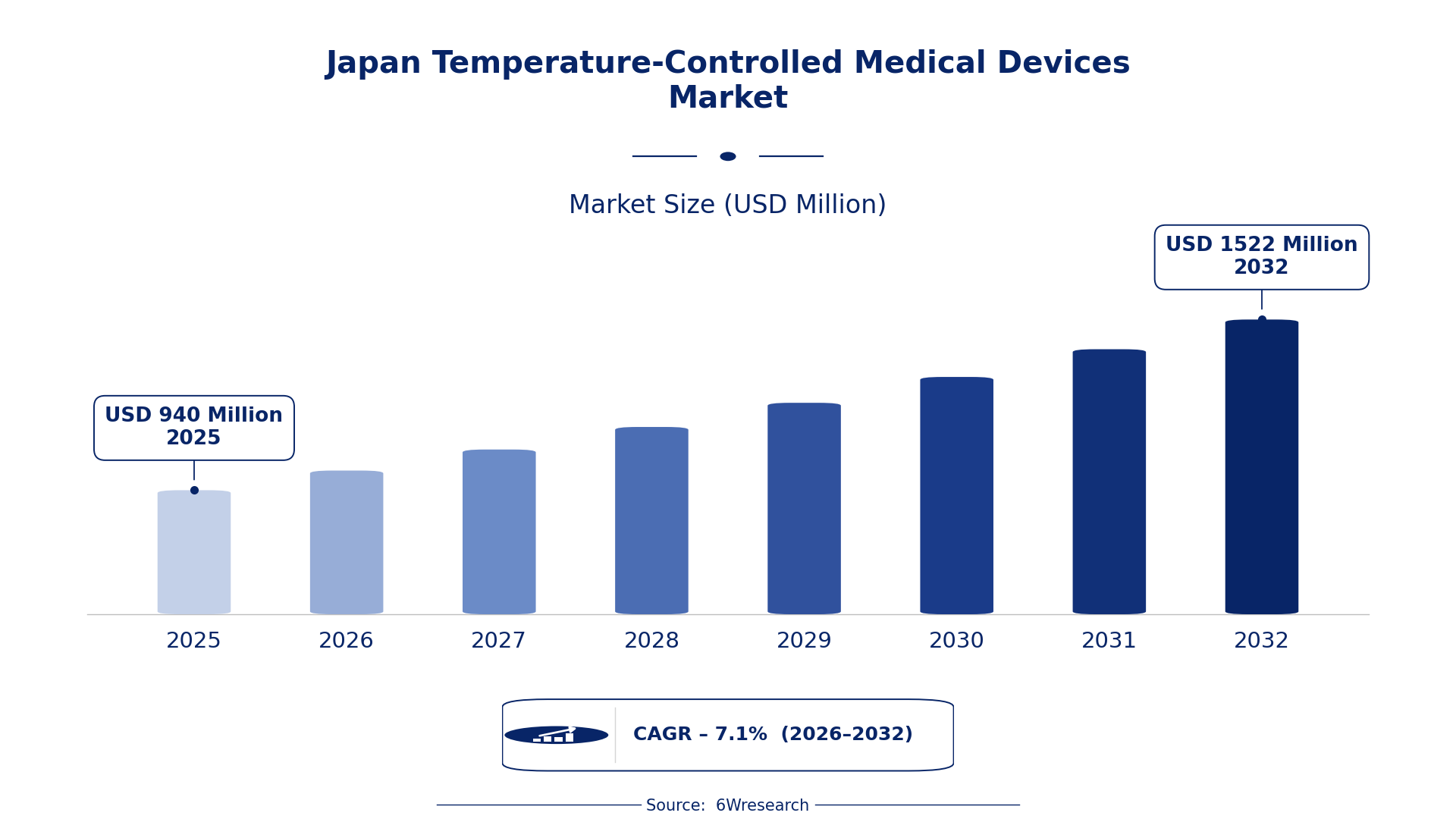
According to 6Wresearch internal database and industry insights, the Japan Temperature-Controlled Medical Devices Market was valued at USD 940 Million in 2025 and is projected to reach USD 1,522 Million by 2032, growing at a CAGR of approximately 7.1% during 2026–2032.
Japan Temperature-Controlled Medical Devices Market Highlights
| Report Metric | Details |
| Report Name | Japan Temperature-Controlled Medical Devices Market (2026-2032) |
| Market Size 2025 | USD 940 Million |
| Market Size 2032 | USD 1,522 Million |
| Absolute Growth 2025–2032 | USD 582 Million |
| CAGR 2026–2032 | 7.1% |
| Peak Annual Growth | 8.6% in 2032 |
| Forecast Period | 2026–2032 |
| Historical Data | 2022–2025 |
| Base Year | 2025 |
| Leading Device Type, 2025 | Temperature-Controlled Syringes (44% share) |
| Leading Regulation Type, 2025 | Heating (48% share) |
| Leading Application, 2025 | Vaccine Administration (47% share) |
| Leading End User, 2025 | Clinics (41% share) |
| Fastest-Growing Device Type | Smart IV Warmers (10.3% CAGR) |
| Fastest-Growing Regulation Type | Real-Time Regulation (10.0% CAGR) |
| Fastest-Growing Application | Emergency Transfusion (9.6% CAGR) |
| Fastest-Growing End User | Paramedics (9.3% CAGR) |
| Growing Sector | Healthcare |
| Key End Users | Clinics, Hospitals, Emergency Medical Services, Transplant Units |
Japan Temperature-Controlled Medical Devices Market Year-wise Growth Rate and Key Drivers (2022–2032)
This graph illustrates the annual growth rates of the market from 2022 to 2032, highlighting a steady upward trajectory and projected market expansion over the forecast period.
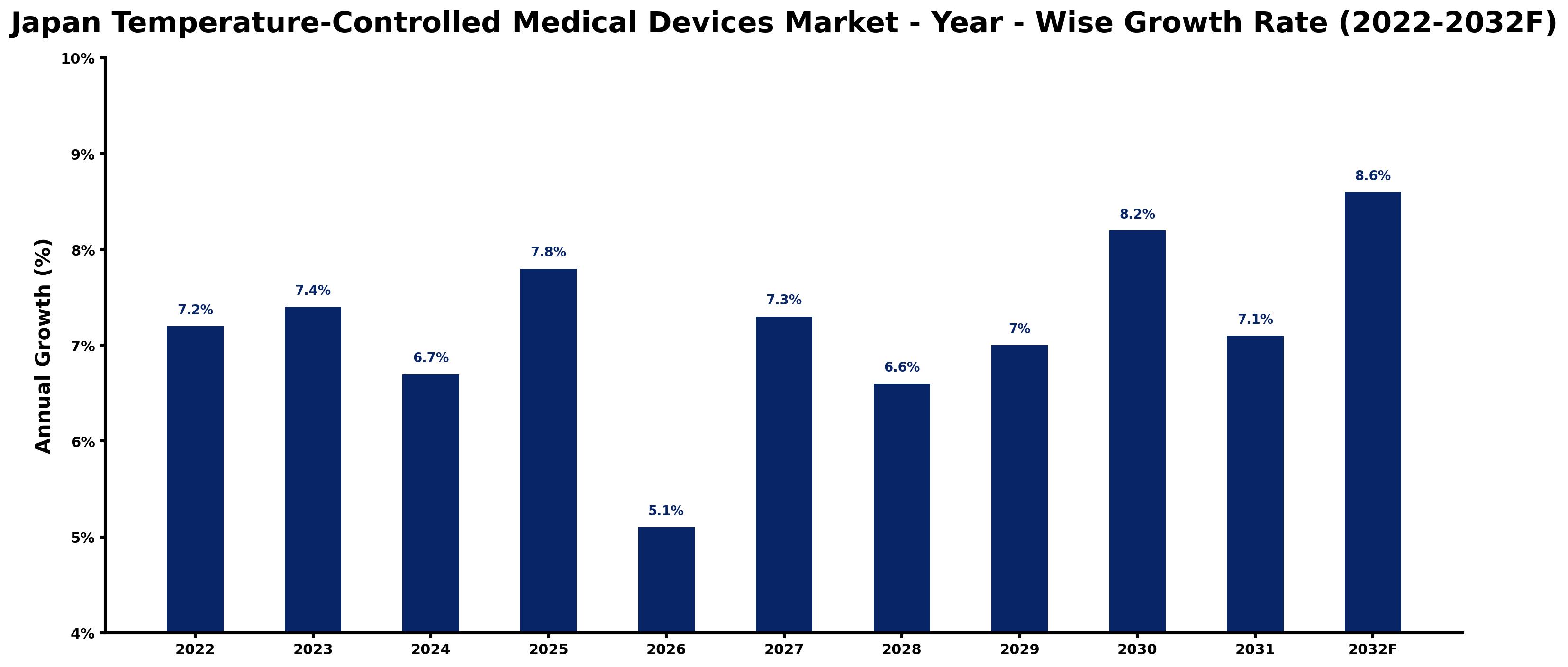
Each row of the following table gives one year's estimated growth and the event or demand shift that explains it.
| Year | Estimated Annual Growth (%) | Market Rationale |
| 2022 | 7.2 | The market experienced steady growth due to ongoing healthcare needs. |
| 2023 | 7.4 | Demand increased as hospitals expanded their use of temperature-controlled devices. |
| 2024 | 6.7 | Growth slowed slightly as market saturation began to affect purchases. |
| 2025 | 7.8 | The market saw a surge in demand driven by advancements in medical technology. |
| 2026 | 5.1 | Growth slowed due to increased competition among suppliers. |
| 2027 | 7.3 | Rising demand for smart IV warmers boosted market performance. |
| 2028 | 6.6 | Growth decelerated as the market adjusted to previous high demand levels. |
| 2029 | 7.0 | Demand rose again as hospitals invested in upgrading equipment. |
| 2030 | 8.2 | The market experienced a strong uptick driven by new healthcare initiatives. |
| 2031 | 7.1 | Growth moderated as the market stabilised after recent expansions. |
| 2032 | 8.6 | The peak growth year is anticipated due to heightened healthcare investments. |
Note: Market size estimations and growth projections presented in this report are based on 6Wresearch's proprietary forecasting methodology, utilizing the latest available industry data, government publications, and primary research inputs.
Japan Temperature-Controlled Medical Devices Market Synopsis
Temperature-controlled medical devices play a crucial role in maintaining specific temperatures during medical procedures and transport, ensuring the efficacy of vaccines and the viability of organs. The Japan Temperature-Controlled Medical Devices Market is growing due to an aging population, which made up 29.3% of the population in 2024, alongside rising healthcare expenditure, which hit JPY 46.7 trillion in 2022. The Tokyo region represents 30% of the demand, highlighting the concentration of healthcare facilities and hospitals that require these devices for patient care and treatment. The ongoing integration of advanced technologies and adherence to regulatory standards further propels market growth.
Market Dynamics Impact Analysis (2026–2032)
| Factor | Type | Impact | Primary Segment Affected |
| Aging population driving healthcare needs | Driver | High | Temperature-Controlled Syringes |
| Advancements in medical technology enhancing device efficiency | Driver | High | Smart IV Warmers |
| Growing demand for organ transplants increasing transport needs | Opportunity | High | Transport Containers |
| Rising healthcare budgets creating investment potential | Opportunity | High | Therapeutic Hypothermia Units |
| High costs associated with advanced technology adoption | Restraint | Medium | Real-Time Regulation |
| Stringent compliance requirements affecting market entry | Restraint | Medium | Cold Chain Compliance |
| Competition among suppliers leading to price pressures | Challenge | High | Cooling + Monitoring |
| Rapid technological changes requiring constant updates | Challenge | Medium | Heating |
Evaluation of Drivers in Japan Temperature-Controlled Medical Devices Market (2026–2032)
These are the developments adding the most demand over the forecast period.
| Drivers | Primary Segment Affected | Why It Matters (Evidence) |
| Aging population increasing healthcare demand | Temperature-Controlled Syringes | 29.3% of Japan's population was aged 65 or older in September 2024, leading to higher demand for precise medication delivery. |
| Investment in healthcare technology innovation | Smart IV Warmers | The annual budget for healthcare technology innovation in Japan is approximately ¥500 billion, driving demand for advanced warming solutions. |
| Increase in organ transplant procedures | Transport Containers | The number of organ transplants in Japan reached 3,000 in 2022, necessitating effective transport solutions. |
| Integration of smart devices in emergency services | Therapeutic Hypothermia Units | Emergency medical services have integrated smart IV warmers into their protocols since 2022, boosting demand for temperature control. |
| Regulatory standards promoting quality management | Real-Time Regulation | ISO 13485 is the standard for quality management systems in medical devices, ensuring compliance and enhancing market trust. |
What keeps demand rising is the aging population, projected to reach 30% aged 65 or older by 2025, increasing the need for temperature-controlled syringes. Investment in healthcare technology, with an annual budget of approximately ¥500 billion, fuels demand for smart IV warmers. The number of organ transplants requires effective transport containers, with over 3,500 procedures recorded in 2023. Emergency services have incorporated smart IV warmers since 2022, boosting the need for therapeutic hypothermia units.
Evaluation of Restraints in Japan Temperature-Controlled Medical Devices Market
Several factors work against faster growth; the main ones are summarised below.
| Market Restraint | Primary Segment Affected | Why It Matters (Evidence) |
| High costs of advanced temperature-controlled devices | Real-Time Regulation | The average cost of implementing real-time regulation systems can exceed JPY 10 million, limiting adoption among smaller facilities. |
| Strict compliance regulations delaying market entry | Cold Chain Compliance | Compliance with cold chain regulations requires substantial investment in infrastructure, which can deter new market entrants. |
| Limited availability of skilled technicians | Cooling + Monitoring | The shortage of qualified technicians for installation and maintenance can hinder the deployment of cooling systems. |
| Intense competition causing price pressures | Heating | With multiple suppliers in the market, price competition reduces profit margins for manufacturers. |
| Rapid technological advancements requiring constant updates | Smart IV Warmers | Suppliers must frequently upgrade their products to meet evolving standards, increasing operational costs. |
Japan Temperature-Controlled Medical Devices Market Challenges
Strict regulations lead to lengthy approval processes for temperature-controlled medical devices, causing delays that can extend market entry for suppliers by up to 18 months. Compliance with standards set by the Ministry of Health, Labour and Welfare raises costs for producers, potentially resulting in higher prices for hospitals. Advanced materials and technology requirements increase production expenses, prompting buyers to reassess their budgets as Japan's national medical care expenditure reached JPY 46.7 trillion in 2022. Rapid technological changes necessitate frequent updates, straining resources for producers and limiting their competitive edge.
Trends in the Japan Temperature-Controlled Medical Devices Market
These developments are changing demand patterns in the Japan Temperature-Controlled Medical Devices Market.
- Paramedics Adopting Smart IV Warmers: Paramedics are increasingly adopting smart IV warmers, with over 70% usage in emergency departments as of 2023. This shift improves patient care during critical situations, ensuring optimal IV fluid temperatures.
- Tokyo Region Leading Demand Growth: Demand for temperature-controlled devices in the Tokyo region accounts for 30% of the total market, reflecting its concentration of healthcare facilities. This trend highlights the urban healthcare infrastructure's reliance on advanced medical technology.
- New Cold Chain Compliance Guidelines Established: In 2023, the Japanese government launched guidelines for cold chain compliance for vaccines. These regulations ensure that temperature-sensitive materials remain within required temperatures during transport, improving public health safety.
- Increase in Organ Transport Cases: The number of organ transplants reached 3,500 in 2023, necessitating advanced transport solutions. This trend underscores the critical need for effective temperature-controlled devices in preserving organ viability.
Investment Opportunities in the Japan Temperature-Controlled Medical Devices Market
The following opportunities in the Japan Temperature-Controlled Medical Devices Market pair current demand with a clear way in.
- Growing Need for Transport Containers: With 3,500 organ transplants in 2023, there is a gap in the market for advanced transport containers. Suppliers can target transplant units to meet this demand and ensure organ viability.
- Investment in Therapeutic Hypothermia Units: The adoption of therapeutic hypothermia units in over 500 ICUs presents an opportunity. Suppliers can collaborate with hospitals to provide these essential devices, improving patient care.
- Rising Healthcare Budgets: Japan's healthcare budget is approximately JPY 46.7 trillion, creating opportunities for suppliers of temperature-controlled devices. Partnering with clinics can facilitate entry into this expanding market.
- Improving Cold Chain Logistics: The government's 2023 programme to enhance cold chain logistics for vaccines presents an opportunity for suppliers. Investing in compliant systems can help meet the growing demand for temperature-sensitive medical supplies.
Government Initiatives in the Japan Temperature-Controlled Medical Devices Market
The Electrical Appliance and Material Safety Act of 1961 regulates the safety of electrical appliances, including temperature-controlled medical devices. This law ensures that all products meet safety standards, which is essential for protecting patients and healthcare providers. The Clinical Trials Act of 2017 establishes rules for conducting clinical research, ensuring that temperature-controlled devices are tested and approved for safety and efficacy before market entry. The Next-Generation Medical Infrastructure Act of 2017 allows certified bodies to anonymise medical data for research and product development, facilitating innovation in medical technology.
The Pharmaceuticals and Medical Devices Agency (PMDA) oversees the approval of medical devices, ensuring compliance with safety standards. The agency also funds research initiatives aimed at improving temperature-controlled medical devices, increasing their effectiveness in clinical settings. In 2023, the PMDA approved several new temperature-controlled devices, supporting innovation in the healthcare sector, with a focus on enhancing patient care and safety.
Future Insight of the Japan Temperature-Controlled Medical Devices Market
Hospitals will increasingly adopt advanced temperature-controlled medical devices by 2032, driven by the need for precise temperature regulation during critical procedures. New cold chain logistics programmes will streamline vaccine distribution, benefiting healthcare providers. Training initiatives will improve the proficiency of medical personnel in using these devices, ensuring optimal performance in emergencies. The number of organ transplants, which reached 3,000 in 2022, will necessitate enhanced transport solutions, prompting suppliers to innovate and meet evolving demands.
Market Segmentation Analysis
Japan Temperature-Controlled Medical Devices Market report covers a detailed analysis of the following market segments:
By Device Type – Temperature-Controlled Syringes Lead, Smart IV Warmers Expected to Grow Fastest
According to Saurav Kr Singh, Senior Research Analyst at 6Wresearch, the largest device type category in 2025 was Temperature-Controlled Syringes, at 44% of revenue. Temperature-controlled syringes are widely used across Japan's healthcare facilities for their precision in delivering medication at regulated temperatures. With over 1,200 clinics employing these devices, their critical role in treatment efficacy is well recognised. Over 2026–2032, Smart IV Warmers are expected to post the fastest growth, at a CAGR of 10.3%. The rapid adoption of smart IV warmers is fuelled by their vital role in maintaining the correct temperatures for IV fluids, with more than 70% uptake in emergency departments. This trend is likely to continue as healthcare providers prioritise patient safety and care quality. Suppliers should focus on enhancing the functionality of smart IV warmers to satisfy the increasing demand in emergency medical services.
By Regulation Type – Heating Leads, Real-Time Regulation Expected to Grow Fastest
In 2025, Heating led the regulation type split with a 48% share. Heating regulations are essential for warming fluids and medications prior to administration, a common practice in Japan's hospitals. The extensive implementation of heating devices in medical settings highlights their necessity for effective patient care. The quickest growth will come from Real-Time Regulation, forecast to expand at a CAGR of 10.0% between 2026 and 2032. Real-time regulation is rapidly gaining traction due to its importance in continuously monitoring and adjusting temperatures, which is crucial for patient safety. As healthcare facilities adopt more sophisticated monitoring technologies, this segment is expected to see significant growth. Manufacturers must prioritise compliance with real-time regulation standards to meet the evolving needs of healthcare providers.
By Application – Vaccine Administration Leads, Emergency Transfusion Expected to Grow Fastest
Vaccine Administration held 47% of the Japan Temperature-Controlled Medical Devices Market by application in 2025. Vaccine administration is a key application for temperature-controlled devices, vital for preserving vaccine efficacy through precise temperature management. Government initiatives aimed at enhancing cold chain logistics underscore the significance of this application in the healthcare system. Emergency Transfusion is projected to grow fastest, at a CAGR of 9.6% during 2026–2032. Emergency transfusion applications are witnessing swift growth as they are critical for maintaining the appropriate temperatures of blood products during urgent transfusions. The increasing incidence of emergency medical situations necessitates reliable temperature control solutions in this area. Suppliers should concentrate on developing specialised solutions for emergency transfusion applications to capitalise on this growth opportunity.
By End User – Clinics Lead, Paramedics Expected to Grow Fastest
Clinics accounted for 41% of the market by end user in 2025. Clinics are the primary users of temperature-controlled devices, employing them for various treatments that require accurate temperature management. The large number of clinics in Japan substantially impacts market demand for these devices. Paramedics are set to record the highest CAGR in this split, 9.3% over 2026–2032. Paramedics are increasingly integrating temperature-controlled devices into their field operations, which is essential for providing timely emergency care. The growing emphasis on rapid response capabilities in emergencies is likely to further drive the adoption of these devices. Suppliers should aim to design portable and efficient temperature-controlled solutions specifically for paramedic use.
Key Attractiveness of the Report
- 10 Years of Market Numbers
- Historical Data Starting from 2022 to 2025
- Base Year 2025
- Forecast Data until 2032
- Key Performance Indicators Impacting the Market
- Major Upcoming Developments and Projects
Key Highlights of the Report:
- Japan Temperature-Controlled Medical Devices Market Outlook
- Market Size of Japan Temperature-Controlled Medical Devices Market, 2025
- Forecast of Japan Temperature-Controlled Medical Devices Market, 2032
- Historical Data and Forecast of Japan Temperature-Controlled Medical Devices Revenues & Volume for the Period 2022-2032F
- Japan Temperature-Controlled Medical Devices Market Trend Evolution
- Japan Temperature-Controlled Medical Devices Market Drivers and Challenges
- Japan Temperature-Controlled Medical Devices Price Trends
- Japan Temperature-Controlled Medical Devices Porter's Five Forces
- Japan Temperature-Controlled Medical Devices Industry Life Cycle
- Historical Data and Forecast of Japan Temperature-Controlled Medical Devices Market Revenues & Volume By Device Type for the Period 2022-2032F
- Historical Data and Forecast of Japan Temperature-Controlled Medical Devices Market Revenues & Volume By Temperature-Controlled Syringes for the Period 2022-2032F
- Historical Data and Forecast of Japan Temperature-Controlled Medical Devices Market Revenues & Volume By Smart IV Warmers for the Period 2022-2032F
- Historical Data and Forecast of Japan Temperature-Controlled Medical Devices Market Revenues & Volume By Transport Containers for the Period 2022-2032F
- Historical Data and Forecast of Japan Temperature-Controlled Medical Devices Market Revenues & Volume By Therapeutic Hypothermia Units for the Period 2022-2032F
- Historical Data and Forecast of Japan Temperature-Controlled Medical Devices Market Revenues & Volume By Regulation Type for the Period 2022-2032F
- Historical Data and Forecast of Japan Temperature-Controlled Medical Devices Market Revenues & Volume By Heating for the Period 2022-2032F
- Historical Data and Forecast of Japan Temperature-Controlled Medical Devices Market Revenues & Volume By Real-Time Regulation for the Period 2022-2032F
- Historical Data and Forecast of Japan Temperature-Controlled Medical Devices Market Revenues & Volume By Cold Chain Compliance for the Period 2022-2032F
- Historical Data and Forecast of Japan Temperature-Controlled Medical Devices Market Revenues & Volume By Cooling + Monitoring for the Period 2022-2032F
- Historical Data and Forecast of Japan Temperature-Controlled Medical Devices Market Revenues & Volume By Application for the Period 2022-2032F
- Historical Data and Forecast of Japan Temperature-Controlled Medical Devices Market Revenues & Volume By Vaccine Administration for the Period 2022-2032F
- Historical Data and Forecast of Japan Temperature-Controlled Medical Devices Market Revenues & Volume By Emergency Transfusion for the Period 2022-2032F
- Historical Data and Forecast of Japan Temperature-Controlled Medical Devices Market Revenues & Volume By Organ Transport for the Period 2022-2032F
- Historical Data and Forecast of Japan Temperature-Controlled Medical Devices Market Revenues & Volume By Cardiac Arrest Care for the Period 2022-2032F
- Historical Data and Forecast of Japan Temperature-Controlled Medical Devices Market Revenues & Volume By End User for the Period 2022-2032F
- Historical Data and Forecast of Japan Temperature-Controlled Medical Devices Market Revenues & Volume By Clinics for the Period 2022-2032F
- Historical Data and Forecast of Japan Temperature-Controlled Medical Devices Market Revenues & Volume By Paramedics for the Period 2022-2032F
- Historical Data and Forecast of Japan Temperature-Controlled Medical Devices Market Revenues & Volume By Transplant Units for the Period 2022-2032F
- Historical Data and Forecast of Japan Temperature-Controlled Medical Devices Market Revenues & Volume By ICUs for the Period 2022-2032F
- Japan Temperature-Controlled Medical Devices Import Export Trade Statistics
- Market Opportunity Assessment By Device Type
- Market Opportunity Assessment By Regulation Type
- Market Opportunity Assessment By Application
- Market Opportunity Assessment By End User
- Japan Temperature-Controlled Medical Devices Top Companies Market Share
- Japan Temperature-Controlled Medical Devices Competitive Benchmarking By Technical and Operational Parameters
- Japan Temperature-Controlled Medical Devices Company Profiles
- Japan Temperature-Controlled Medical Devices Key Strategic Recommendations
Market Covered
Coverage by segment is as follows.
By Device Type
- Temperature-Controlled Syringes
- Smart IV Warmers
- Transport Containers
- Therapeutic Hypothermia Units
By Regulation Type
- Heating
- Real-Time Regulation
- Cold Chain Compliance
- Cooling + Monitoring
By Application
- Vaccine Administration
- Emergency Transfusion
- Organ Transport
- Cardiac Arrest Care
By End User
- Clinics
- Paramedics
- Transplant Units
- ICUs































