Japan Textured Food Products Market Size & Growth Rate
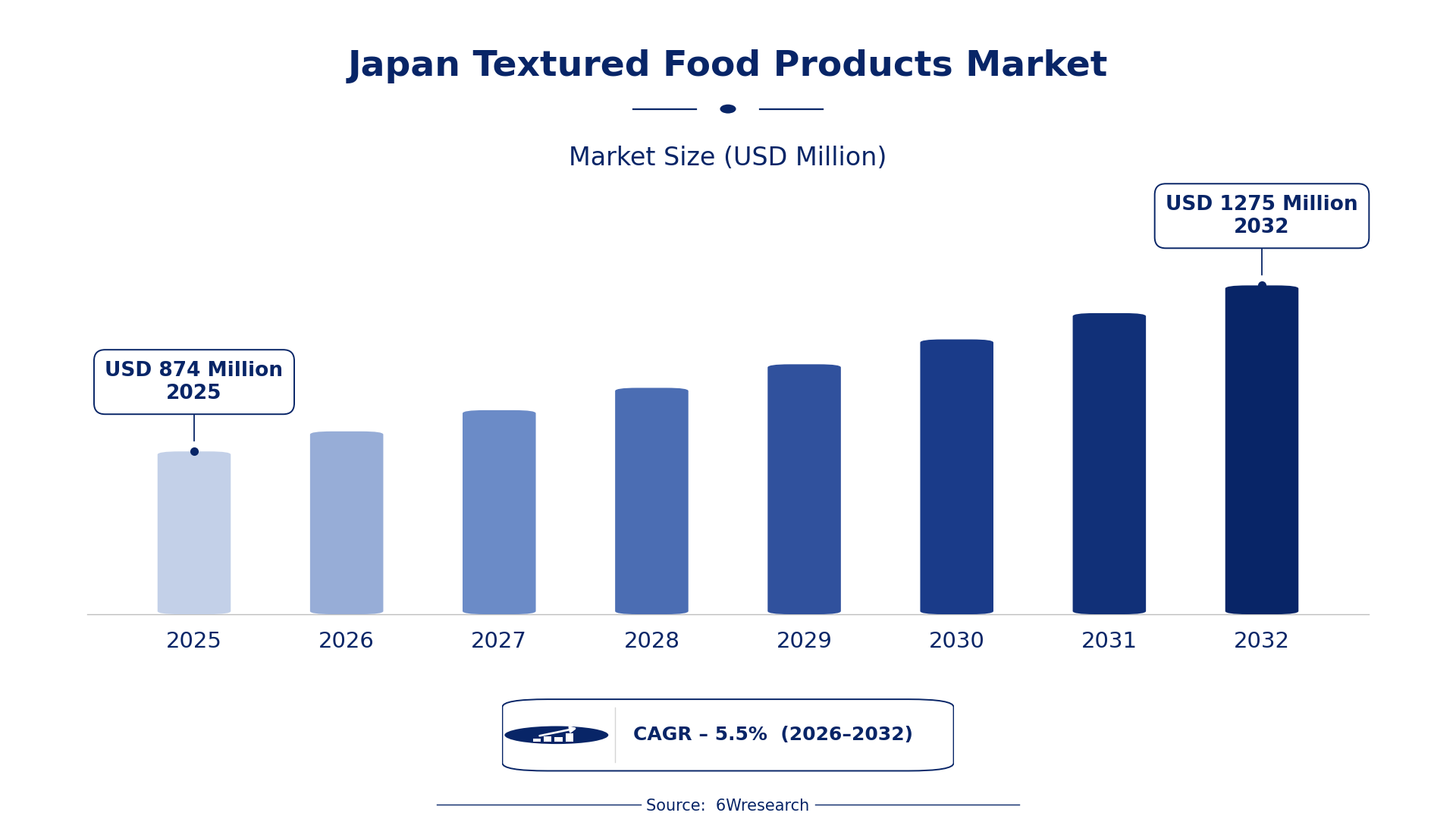
According to 6Wresearch internal database and industry insights, the Japan Textured Food Products Market was valued at USD 874 Million in 2025 and is projected to reach USD 1,275 Million by 2032, growing at a CAGR of approximately 5.5% during 2026–2032.
Japan Textured Food Products Market Highlights
| Report Metric | Details |
| Report Name | Japan Textured Food Products Market (2026-2032) |
| Market Size 2025 | USD 874 Million |
| Market Size 2032 | USD 1,275 Million |
| Absolute Growth 2025–2032 | USD 401 Million |
| CAGR 2026–2032 | 5.5% |
| Peak Annual Growth | 6.4% in 2028 |
| Forecast Period | 2026–2032 |
| Historical Data | 2022–2025 |
| Base Year | 2025 |
| Leading Textured Food Products, 2025 | Textured Vegetable Proteins (40% share) |
| Leading Product Type, 2025 | Meat Alternatives (41% share) |
| Leading Texture Type, 2025 | Textured Protein (40% share) |
| Leading Distribution Channel, 2025 | Retail/Groceries (44% share) |
| Leading End User Industry, 2025 | Vegan/Health Consumers (38% share) |
| Fastest-Growing Textured Food Products | Textured Dairy Products (7.9% CAGR) |
| Fastest-Growing Product Type | Low-fat Cheeses (7.5% CAGR) |
| Fastest-Growing Texture Type | Gelled/Fermetized (7.8% CAGR) |
| Fastest-Growing Distribution Channel | Food Service Suppliers (7.3% CAGR) |
| Fastest-Growing End User Industry | Restaurants/Cafes (7.7% CAGR) |
| Growing Sector | Food & Beverage Industry |
| Key End Users | Vegan Consumers, Health-Conscious Consumers, Food Service Suppliers, Food Processing Companies |
Japan Textured Food Products Market Year-wise Growth Rate and Key Drivers (2022–2032)
This graph illustrates the annual growth rates of the market from 2022 to 2032, highlighting a steady upward trajectory and projected market expansion over the forecast period.
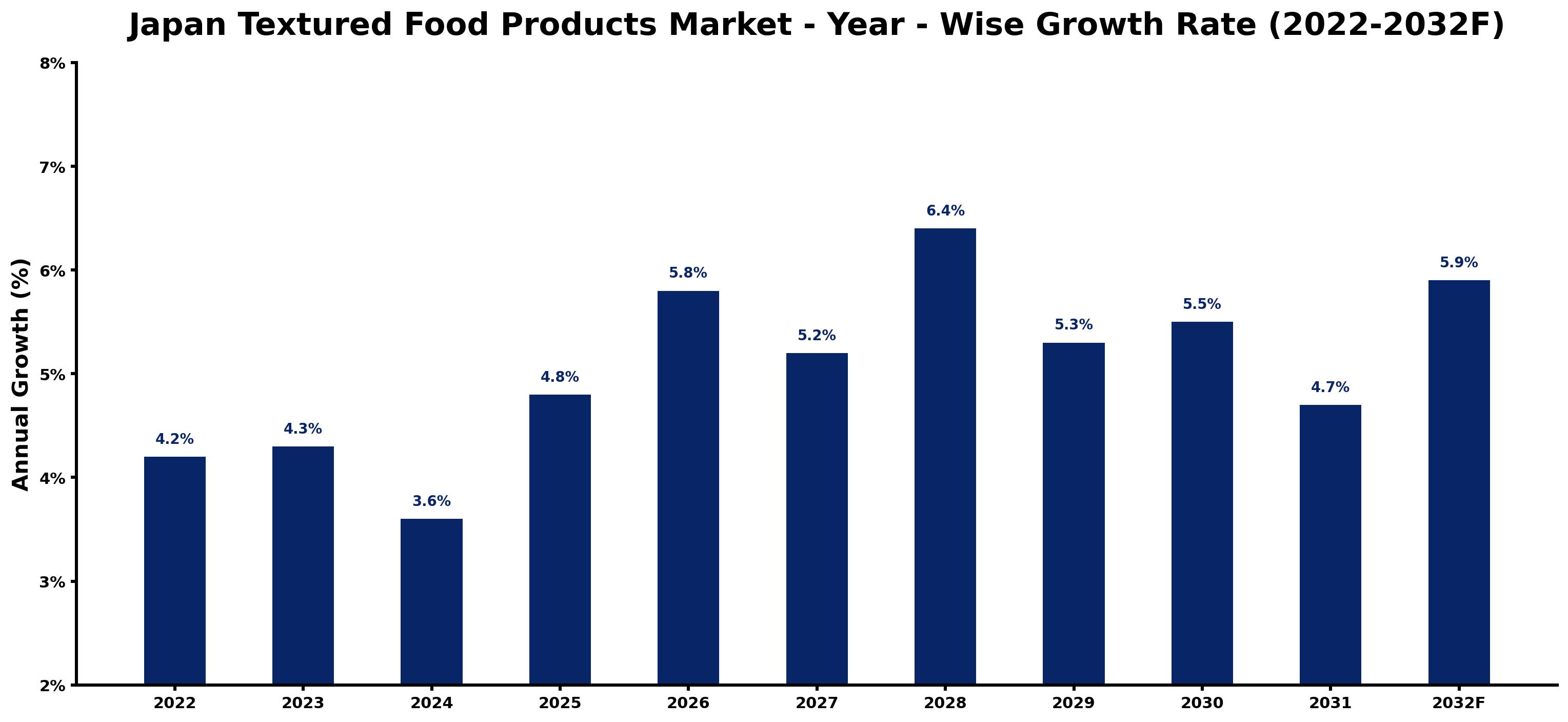
Below, each year's estimated growth is shown next to the factor that most influenced it.
| Year | Estimated Annual Growth (%) | Market Rationale |
| 2022 | 4.2 | Demand remained steady as health-conscious consumers sought alternatives. |
| 2023 | 4.3 | Growth accelerated due to increased awareness of plant-based diets. |
| 2024 | 3.6 | Growth slowed as market saturation began to impact new product launches. |
| 2025 | 4.8 | Demand surged, driven by new product offerings and consumer interest. |
| 2026 | 5.8 | Growth is expected to continue as investments in food technology improve product variety. |
| 2027 | 5.2 | Growth will decelerate slightly as competition intensifies among suppliers. |
| 2028 | 6.4 | Demand is projected to peak with a rise in health-focused consumer purchases. |
| 2029 | 5.3 | Growth will slow as market dynamics begin to stabilise after rapid expansion. |
| 2030 | 5.5 | Demand is expected to increase again as new products enter the market. |
| 2031 | 4.7 | Growth will moderate as consumer preferences begin to shift slightly. |
| 2032 | 5.9 | Demand is projected to rise as the market adapts to evolving dietary trends. |
Note: Market size estimations and growth projections presented in this report are based on 6Wresearch's proprietary forecasting methodology, utilizing the latest available industry data, government publications, and primary research inputs.
Japan Textured Food Products Market Synopsis
Textured food products, derived from plant-based proteins and dairy, serve as meat alternatives and low-fat dairy options. These products cater to a growing population of health-focused individuals, particularly in Japan's food processing sector. The Japan Textured Food Products Market is expanding due to increasing investments in food technology and government initiatives aimed at promoting plant-based diets, with an estimated 10 million vegan and health-conscious consumers driving purchases across various distribution channels. In 2023, the Japanese government launched a program to boost plant-based food consumption, further supporting market growth.
Market Dynamics Impact Analysis (2026–2032)
| Factor | Type | Impact | Primary Segment Affected |
| Growing health consciousness among consumers | Driver | High | Meat Alternatives |
| Increased investment in food technology | Driver | High | Textured Dairy Products |
| Rising demand for low-fat dairy options | Opportunity | High | Low-fat Cheeses |
| Expansion of food service offerings incorporating textured products | Opportunity | High | Food Service Suppliers |
| Market saturation leading to slower growth rates | Restraint | Medium | Textured Vegetable Proteins |
| Competition among suppliers affecting pricing strategies | Restraint | Medium | Textured Dairy Products |
| Rising costs of raw materials impacting production | Challenge | High | Textured Vegetable Proteins |
| Compliance with food safety regulations increasing operational costs | Challenge | High | Textured Vegetable Proteins |
Evaluation of Drivers in Japan Textured Food Products Market (2026–2032)
Demand rests on the following drivers, each shown with the segment it touches most.
| Drivers | Primary Segment Affected | Why It Matters (Evidence) |
| Increased consumer awareness of health benefits | Meat Alternatives | Approximately 10 million individuals in Japan are health-focused consumers, driving demand for meat alternatives. |
| Technological advancements in food production | Textured Dairy Products | Food processing companies are investing heavily in R&D, improving product offerings and attracting more buyers. |
| Government initiatives promoting plant-based diets | Low-fat Cheeses | The government aims to increase plant-based diet adoption by 20% by 2025, boosting demand for low-fat options. |
| Growing popularity of vegan diets among younger consumers | Textured Vegetable Proteins | Urban consumers aged 20-40 are increasingly opting for healthier food choices, leading to higher sales of textured proteins. |
| Expansion of retail channels for textured products | Retail/Groceries | Retail channels account for 60% of textured food product sales, indicating strong consumer access and purchasing. |
Orders keep climbing as consumer interest in health and wellness rises. In 2023, approximately 10 million individuals in Japan identified as vegan or health-focused consumers, increasing demand for meat alternatives. Retail channels are expanding their offerings to cater to this growing demographic, which accounts for 60% of sales. Food processing companies are investing heavily in R&D, with over 30% of processed food products incorporating hydrocolloid mixes.
Evaluation of Restraints in Japan Textured Food Products Market
Several factors work against faster growth; the main ones are summarised below.
| Market Restraint | Primary Segment Affected | Why It Matters (Evidence) |
| Market saturation leading to slower growth rates | Textured Vegetable Proteins | With over 70% of meat alternatives using textured vegetable proteins, new product launches struggle to differentiate themselves. |
| Intense competition affecting pricing strategies | Textured Dairy Products | The increasing number of suppliers has resulted in price wars, affecting profitability for producers. |
| Rising costs of raw materials impacting production | Textured Vegetable Proteins | The national minimum wage rose to JPY 1,055 per hour in October 2024, increasing operational costs for manufacturers. |
| Compliance with food safety regulations increasing operational costs | Textured Dairy Products | HACCP-based hygiene management is mandatory, necessitating additional investments from producers. |
| Limited consumer awareness of new product types | 3D-Printed Textured Foods | As an emerging technology, 3D-printed foods have yet to gain widespread acceptance among consumers. |
Japan Textured Food Products Market Challenges
In 2023, 10 million health-conscious consumers struggled to find suitable textured food products, as a shortage of skilled workers hampers innovation in plant-based options. Many food processing companies face delays in implementing advanced fabrication techniques due to outdated technology, which limits their ability to satisfy changing consumer preferences. Buyers in the food service sector incur rising costs as they compete for limited supplies of popular textured products, forcing them to raise menu prices. Compliance with ISO 22000 standards imposes additional regulatory burdens on producers, extending product development timelines and diminishing their market competitiveness.
Trends in the Japan Textured Food Products Market
Buyers and suppliers in the Japan Textured Food Products Market are adjusting to the following trends.
- Vegan Consumers Prioritising Healthier Options: Vegan and health-focused consumers are increasingly opting for low-fat cheeses, with a notable rise in demand observed in urban areas. In 2023, low-fat cheeses gained popularity among consumers aged 20-40, reflecting a shift towards healthier dietary choices.
- Tokyo as a Hub for Food Innovation: The Tokyo metropolitan area has emerged as a key region for food innovation, particularly in textured food products. The Tokyo Food Tech Expo in 2023 showcased numerous advancements, indicating a thriving market for new food solutions.
- Shift Towards Plant-Based Diets: In 2023, the Japanese government launched a program to promote plant-based food consumption, aiming for a 20% increase by 2025. This initiative is reshaping consumer preferences and driving demand for textured food products.
- Rising Popularity of Food Service Suppliers: Food service suppliers are increasingly incorporating textured food products into their menus to attract health-conscious diners. The food service industry in Japan, valued at over 100 trillion yen, is adapting to changing consumer preferences.
Investment Opportunities in the Japan Textured Food Products Market
The opportunities below stand out in the Japan Textured Food Products Market for new entrants and existing suppliers.
- Investment in Plant-Based Food Production: With a target to increase plant-based diet adoption by 20% by 2025, there is an opportunity for investment in plant-based food production facilities. Food processing companies can capitalise on this trend to meet rising demand.
- Supply of Low-Fat Dairy Alternatives: The growing interest in low-fat dairy options presents an opportunity for suppliers to enter the market. Urban consumers aged 20-40 are particularly interested in healthier alternatives, creating a demand for unique products.
- Expansion of Food Service Offerings: The food service industry is increasingly incorporating textured food products into menus, creating opportunities for suppliers. With the industry valued at over 100 trillion yen, there is potential for growth in this segment.
- Development of Novel Food Fabrication Techniques: Investments in R&D for novel food fabrication techniques are essential, with food processing companies focusing on innovation. This trend is expected to drive demand for unique textured food products.
Government Initiatives in the Japan Textured Food Products Market
The Food Sanitation Act amendment introduced in 2018 mandates HACCP-based hygiene management for food businesses, impacting producers of textured food products. Compliance with this regulation requires investments in quality control systems, ensuring food safety and consumer trust. Additionally, the Food Recycling Law encourages sustainable practices, compelling producers to reduce waste and recycle materials, which aligns with growing consumer demand for environmentally friendly products.
The Ministry of Agriculture, Forestry and Fisheries supports initiatives for sustainable food production, benefiting buyers of textured food products. Programs funded by the ministry aim to improve food safety and promote plant-based diets, making it easier for consumers to access healthier options. This support fosters innovation within the industry, encouraging the adoption of new technologies and practices that meet evolving consumer preferences.
Future Insight of the Japan Textured Food Products Market
Investment in plant-based food technology will surge, driven by government initiatives aimed at promoting healthier diets. By 2032, textured food products will constitute a key component in 40% of new product launches, addressing the increasing demand from health-focused consumers. The Tokyo metropolitan area will solidify its position as a hub for food innovation, attracting incubators that support new product development. As urban consumers show a growing preference for low-fat dairy alternatives, suppliers will need to adapt their offerings to meet these evolving tastes.
Market Segmentation Analysis
Japan Textured Food Products Market report covers a detailed analysis of the following market segments:
By Textured Food Products – Textured Vegetable Proteins Lead, Textured Dairy Products Expected to Grow Fastest
According to Saurav Kr Singh, Senior Research Analyst at 6Wresearch, Textured Vegetable Proteins took 40% of textured food products revenue in 2025, more than any other category. Textured vegetable proteins are extensively used in over 70% of meat alternative products, making them the preferred choice for health-conscious consumers. This high adoption rate is particularly evident in urban areas where demand for plant-based options is surging. Textured Dairy Products are set to record the highest CAGR in this split, 7.9% over 2026–2032. The rising popularity of textured dairy products is driven by a growing segment of health-focused consumers, particularly low-fat cheeses among urban individuals aged 20-40. This demographic shift is expected to further accelerate the demand for healthier dairy alternatives. Suppliers should focus on developing innovative textured dairy options to meet the increasing consumer demand.
By Product Type – Meat Alternatives Lead, Low-fat Cheeses Expected to Grow Fastest
Meat Alternatives accounted for 41% of the market by product type in 2025. Meat alternatives dominate the market due to a significant shift towards healthier eating habits among consumers, particularly in urban regions. This trend is driven by the increasing awareness of health benefits associated with plant-based diets. The quickest growth will come from Low-fat Cheeses, forecast to expand at a CAGR of 7.5% between 2026 and 2032. Low-fat cheeses are rapidly gaining traction, especially among health-conscious consumers, as they seek healthier dairy options. This segment's growth is indicative of a broader trend towards reduced-fat products in the food industry. Suppliers must prioritise the development of low-fat cheese products to capitalise on this growing consumer preference.
By Texture Type – Textured Protein Leads, Gelled/Fermetized Expected to Grow Fastest
With 40% of texture type revenue in 2025, Textured Protein was the largest category. Textured protein serves as a vital component in meat substitutes, appealing to a large base of health-conscious consumers seeking alternatives to traditional meat. This widespread use solidifies its position as the leading texture type in the market. Over 2026–2032, Gelled/Fermetized is expected to post the fastest growth, at a CAGR of 7.8%. Gelled and fermented textures are becoming increasingly popular in specialty food products, reflecting a shift towards unique culinary experiences. This trend indicates a growing consumer interest in diverse food textures and flavours. Suppliers should explore innovations in gelled and fermented products to align with evolving consumer preferences.
By Distribution Channel – Retail/Groceries Lead, Food Service Suppliers Expected to Grow Fastest
Retail/Groceries held 44% of the Japan Textured Food Products Market by distribution channel in 2025. Retail and grocery outlets serve as the primary distribution channels for textured food products, catering directly to consumers' purchasing habits. This channel's dominance is reinforced by the convenience it offers to health-conscious shoppers. Food Service Suppliers are projected to grow fastest, at a CAGR of 7.3% during 2026–2032. Food service suppliers are experiencing rapid growth as restaurants and cafes increasingly incorporate textured food products into their menus. This trend highlights the rising demand for healthier dining options in the food service industry. Suppliers should strengthen partnerships with food service suppliers to enhance market reach and visibility.
By End User Industry – Vegan/Health Consumers Lead, Restaurants/Cafes Expected to Grow Fastest
In 2025, Vegan/Health Consumers led the end user industry split with a 38% share. Vegan and health consumers represent the primary target market for textured food products, driven by a growing awareness of health and sustainability. This demographic's increasing size underscores the importance of catering to their preferences. Restaurants/Cafes are set to record the highest CAGR in this split, 7.7% over 2026–2032. Restaurants and cafes are rapidly adopting textured food products to meet the demand for innovative and healthier menu offerings. This trend indicates a significant shift in the food service industry's approach to consumer preferences. Suppliers must engage with the restaurant sector to ensure their products align with current culinary trends.
Key Attractiveness of the Report
- 10 Years of Market Numbers
- Historical Data Starting from 2022 to 2025
- Base Year 2025
- Forecast Data until 2032
- Key Performance Indicators Impacting the Market
- Major Upcoming Developments and Projects
Key Highlights of the Report:
- Japan Textured Food Products Market Outlook
- Market Size of Japan Textured Food Products Market, 2025
- Forecast of Japan Textured Food Products Market, 2032
- Historical Data and Forecast of Japan Textured Food Products Revenues & Volume for the Period 2022-2032F
- Japan Textured Food Products Market Trend Evolution
- Japan Textured Food Products Market Drivers and Challenges
- Japan Textured Food Products Price Trends
- Japan Textured Food Products Porter's Five Forces
- Japan Textured Food Products Industry Life Cycle
- Historical Data and Forecast of Japan Textured Food Products Market Revenues & Volume By Textured Food Products for the Period 2022-2032F
- Historical Data and Forecast of Japan Textured Food Products Market Revenues & Volume By Textured Vegetable Proteins for the Period 2022-2032F
- Historical Data and Forecast of Japan Textured Food Products Market Revenues & Volume By Textured Dairy Products for the Period 2022-2032F
- Historical Data and Forecast of Japan Textured Food Products Market Revenues & Volume By Textural Enhancers for the Period 2022-2032F
- Historical Data and Forecast of Japan Textured Food Products Market Revenues & Volume By 3D-Printed Textured Foods for the Period 2022-2032F
- Historical Data and Forecast of Japan Textured Food Products Market Revenues & Volume By Product Type for the Period 2022-2032F
- Historical Data and Forecast of Japan Textured Food Products Market Revenues & Volume By Meat Alternatives for the Period 2022-2032F
- Historical Data and Forecast of Japan Textured Food Products Market Revenues & Volume By Low-fat Cheeses for the Period 2022-2032F
- Historical Data and Forecast of Japan Textured Food Products Market Revenues & Volume By Hydrocolloid Mixes for the Period 2022-2032F
- Historical Data and Forecast of Japan Textured Food Products Market Revenues & Volume By Novel Food Fabrication for the Period 2022-2032F
- Historical Data and Forecast of Japan Textured Food Products Market Revenues & Volume By Texture Type for the Period 2022-2032F
- Historical Data and Forecast of Japan Textured Food Products Market Revenues & Volume By Textured Protein for the Period 2022-2032F
- Historical Data and Forecast of Japan Textured Food Products Market Revenues & Volume By Gelled/Fermetized for the Period 2022-2032F
- Historical Data and Forecast of Japan Textured Food Products Market Revenues & Volume By Gums/Stabilizers for the Period 2022-2032F
- Historical Data and Forecast of Japan Textured Food Products Market Revenues & Volume By Layered Food Structures for the Period 2022-2032F
- Historical Data and Forecast of Japan Textured Food Products Market Revenues & Volume By Distribution Channel for the Period 2022-2032F
- Historical Data and Forecast of Japan Textured Food Products Market Revenues & Volume By Retail/Groceries for the Period 2022-2032F
- Historical Data and Forecast of Japan Textured Food Products Market Revenues & Volume By Food Service Suppliers for the Period 2022-2032F
- Historical Data and Forecast of Japan Textured Food Products Market Revenues & Volume By Food Processing for the Period 2022-2032F
- Historical Data and Forecast of Japan Textured Food Products Market Revenues & Volume By Specialty Suppliers for the Period 2022-2032F
- Historical Data and Forecast of Japan Textured Food Products Market Revenues & Volume By End User Industry for the Period 2022-2032F
- Historical Data and Forecast of Japan Textured Food Products Market Revenues & Volume By Vegan/Health Consumers for the Period 2022-2032F
- Historical Data and Forecast of Japan Textured Food Products Market Revenues & Volume By Restaurants/Cafes for the Period 2022-2032F
- Historical Data and Forecast of Japan Textured Food Products Market Revenues & Volume By Food & Beverage Industry for the Period 2022-2032F
- Historical Data and Forecast of Japan Textured Food Products Market Revenues & Volume By Specialty Food Tech for the Period 2022-2032F
- Japan Textured Food Products Import Export Trade Statistics
- Market Opportunity Assessment By Textured Food Products
- Market Opportunity Assessment By Product Type
- Market Opportunity Assessment By Texture Type
- Market Opportunity Assessment By Distribution Channel
- Market Opportunity Assessment By End User Industry
- Japan Textured Food Products Top Companies Market Share
- Japan Textured Food Products Competitive Benchmarking By Technical and Operational Parameters
- Japan Textured Food Products Company Profiles
- Japan Textured Food Products Key Strategic Recommendations
Market Covered
The study includes the following segmentation.
By Textured Food Products
- Textured Vegetable Proteins
- Textured Dairy Products
- Textural Enhancers
- 3D-Printed Textured Foods
By Product Type
- Meat Alternatives
- Low-fat Cheeses
- Hydrocolloid Mixes
- Novel Food Fabrication
By Texture Type
- Textured Protein
- Gelled/Fermetized
- Gums/Stabilizers
- Layered Food Structures
By Distribution Channel
- Retail/Groceries
- Food Service Suppliers
- Food Processing
- Specialty Suppliers
By End User Industry
- Vegan/Health Consumers
- Restaurants/Cafes
- Food & Beverage Industry
- Specialty Food Tech































