Japan Therapeutic Antibodies Market Size & Growth Rate
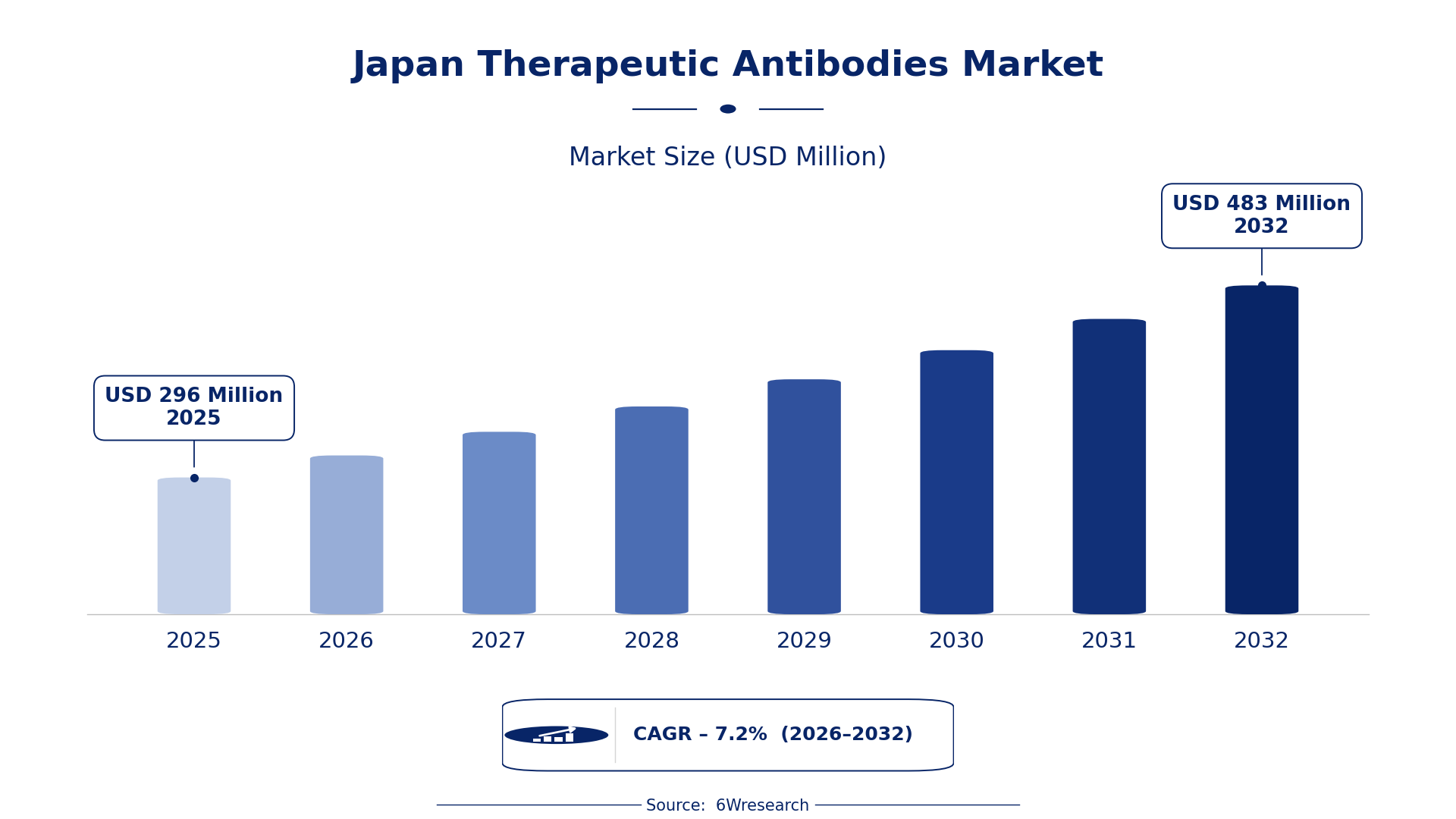
According to 6Wresearch internal database and industry insights, the Japan Therapeutic Antibodies Market was valued at USD 296 Million in 2025 and is projected to reach USD 483 Million by 2032, growing at a CAGR of approximately 7.2% during 2026–2032.
Japan Therapeutic Antibodies Market Highlights
| Report Metric | Details |
| Report Name | Japan Therapeutic Antibodies Market (2026-2032) |
| Market Size 2025 | USD 296 Million |
| Market Size 2032 | USD 483 Million |
| Absolute Growth 2025–2032 | USD 187 Million |
| CAGR 2026–2032 | 7.2% |
| Peak Annual Growth | 8.3% in 2029 |
| Forecast Period | 2026–2032 |
| Historical Data | 2022–2025 |
| Base Year | 2025 |
| Leading Antibody Type, 2025 | Monoclonal Antibodies (36% share) |
| Leading Target Disease, 2025 | Cancer (39% share) |
| Leading Source Type, 2025 | Recombinant (39% share) |
| Leading End User, 2025 | Hospitals (53% share) |
| Fastest-Growing Antibody Type | Bispecific Antibodies (10.2% CAGR) |
| Fastest-Growing Target Disease | Autoimmune Disorders (9.5% CAGR) |
| Fastest-Growing Source Type | Humanized (10.7% CAGR) |
| Fastest-Growing End User | Biotech Companies (9.7% CAGR) |
| Growing Sector | Biotech Companies |
| Key End Users | Hospitals, Biotech Companies, Oncology Clinics, Research Labs |
Japan Therapeutic Antibodies Market Year-wise Growth Rate and Key Drivers (2022–2032)
This graph illustrates the annual growth rates of the market from 2022 to 2032, highlighting a steady upward trajectory and projected market expansion over the forecast period.
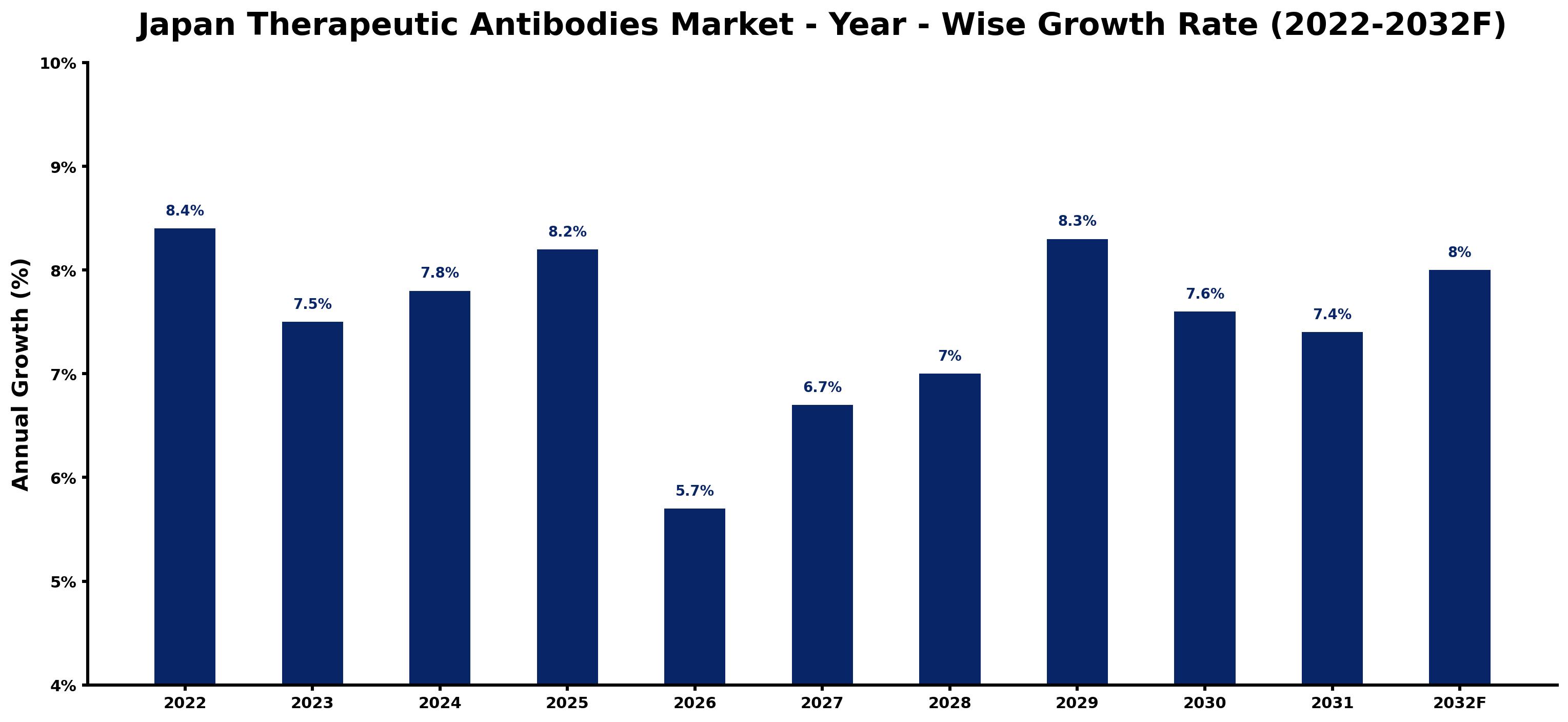
The yearly estimates that follow link every growth rate to its principal driver, so readers can see why the pace changed in each period.
| Year | Estimated Annual Growth (%) | Market Rationale |
| 2022 | 8.4 | The market showed strong demand from hospitals and biotech companies. |
| 2023 | 7.5 | Growth slowed as some healthcare providers adjusted their purchasing strategies. |
| 2024 | 7.8 | Increased clinical trials for new therapies boosted demand for antibodies. |
| 2025 | 8.2 | R&D funding initiatives led to higher investments in therapeutic antibodies. |
| 2026 | 5.7 | Growth slowed as market saturation began to affect new product launches. |
| 2027 | 6.7 | Rising patient populations requiring treatment drove demand higher. |
| 2028 | 7.0 | Increased focus on new therapies is expected to contribute to market expansion. |
| 2029 | 8.3 | The introduction of new monoclonal antibodies will accelerate market growth. |
| 2030 | 7.6 | Growth is projected to slow as competition intensifies among existing products. |
| 2031 | 7.4 | Market consolidation among suppliers will lead to a more stable environment. |
| 2032 | 8.0 | New therapies and rising healthcare expenditures will support growth. |
Note: Market size estimations and growth projections presented in this report are based on 6Wresearch's proprietary forecasting methodology, utilizing the latest available industry data, government publications, and primary research inputs.
Japan Therapeutic Antibodies Market Synopsis
Therapeutic antibodies are biologic drugs derived from living organisms, primarily used to treat various diseases such as cancer and autoimmune disorders. The Japan Therapeutic Antibodies Market is expanding due to strong demand from over 1,200 hospitals and ongoing R&D efforts in biopharmaceuticals. The government aims to increase R&D funding for biopharmaceuticals by 20% by 2025, which will drive innovation and demand in this sector, particularly in oncology and autoimmune treatments.
Market Dynamics Impact Analysis (2026–2032)
| Factor | Type | Impact | Primary Segment Affected |
| Growing patient population requiring antibody therapies | Driver | High | Monoclonal Antibodies |
| Rising number of oncology clinics focusing on advanced treatments | Driver | High | Cancer |
| Increased R&D funding for biopharmaceuticals | Opportunity | High | Biotech Companies |
| Expansion of clinical trials for new therapeutic antibodies | Opportunity | Medium | Hospitals |
| High production costs for therapeutic antibodies | Restraint | High | Recombinant |
| Regulatory hurdles for new product approvals | Restraint | Medium | Antibody-Drug Conjugates |
| Intense competition among suppliers | Challenge | High | Bispecific Antibodies |
| Need for continuous innovation to meet market demands | Challenge | Medium | Polyclonal Antibodies |
Evaluation of Drivers in Japan Therapeutic Antibodies Market (2026–2032)
The table below links each growth driver to the segment it affects and the evidence for it.
| Drivers | Primary Segment Affected | Why It Matters (Evidence) |
| Increasing healthcare expenditure | Cancer | Japan's healthcare expenditure is projected to reach 10 trillion yen by 2025, driving demand for effective treatments. |
| Growing elderly population | Monoclonal Antibodies | The average patient receiving monoclonal antibody therapy is around 65 years old, increasing the demand for these therapies. |
| Expansion of oncology clinics | Oncology Clinics | The number of oncology clinics in Japan exceeds 500, focusing on advanced cancer treatments and requiring more therapeutic antibodies. |
| Rising clinical trials | Antibody-Drug Conjugates | With over 300 ongoing studies in 2023, the demand for new therapies is increasing, reflecting a vibrant research environment. |
| Support from the Japan Biopharmaceuticals Association | Biotech Companies | This association encourages R&D investments in therapeutic antibodies, promoting innovation and development of new therapies. |
Purchasing is picking up as Japan's healthcare expenditure is projected to reach 10 trillion yen by 2025, prompting hospitals to invest more in therapeutic antibodies. The growing elderly population increases demand for these treatments, particularly in oncology. The expansion of oncology clinics drives further purchases of advanced therapies, with over 500 clinics focusing on cancer care. Rising clinical trials, with more than 300 studies currently ongoing, highlight a growing need for innovative antibody therapies, supported by local associations that promote R&D investments.
Evaluation of Restraints in Japan Therapeutic Antibodies Market
Several factors work against faster growth; the main ones are summarised below.
| Market Restraint | Primary Segment Affected | Why It Matters (Evidence) |
| High production costs for therapeutic antibodies | Recombinant | The complex biotechnological processes involved in producing therapeutic antibodies lead to elevated costs, with average production costs exceeding 1 million yen per treatment. |
| Regulatory hurdles for new product approvals | Antibody-Drug Conjugates | Strict regulations from the Ministry of Health, Labour and Welfare can delay market entry for new therapies, impacting timely access for patients. |
| Limited availability of raw materials | Monoclonal Antibodies | The sourcing of high-quality materials for production can constrain supply and increase costs, affecting overall market supply. |
| Market saturation affecting new product launches | Bispecific Antibodies | With many existing therapies, new entrants face challenges in gaining market share, leading to slower growth for new products. |
| Intense competition among suppliers | Polyclonal Antibodies | Numerous players in the market can lead to price wars, impacting profitability and market stability. |
Japan Therapeutic Antibodies Market Challenges
High costs of therapeutic antibodies burden buyers, as the average treatment can exceed 1 million yen per patient, limiting access for many. Supply chain disruptions arise from the intricate biotechnological processes involved, causing delays in product availability for over 1,200 hospitals. A shortage of skilled workers in biopharmaceutical manufacturing prevents suppliers from meeting rising demand, leading to longer lead times for clinics. Slow technology adoption, with only 60% of therapeutic antibodies used for cancer treatment, restricts innovation and increases costs for producers.
Trends in the Japan Therapeutic Antibodies Market
Four trends stand out in the Japan Therapeutic Antibodies Market.
- Rising Focus on Biologics: The Next-Generation Medical Infrastructure Act promotes the use of biologics in treatment, with a target of increasing R&D funding by 20% by 2025. This shift supports the growth of therapeutic antibodies, improving treatment options for patients.
- Increase in Clinical Trials: In 2023, over 300 clinical trials for new therapeutic antibodies are underway, indicating a surge in research activities. This trend reflects the industry's commitment to developing new treatments and improving patient outcomes.
- Expansion of Biotech Hubs: Tokyo and Osaka are emerging as key biotech research hubs, attracting investments in therapeutic antibodies. The concentration of resources in these areas is expected to drive innovation and support the development of new therapies.
- Shift towards Personalized Medicine: Hospitals are increasingly adopting personalized medicine approaches in cancer treatment, with over 60% of therapeutic antibodies used for cancer in 2022. This trend improves treatment efficacy and patient outcomes, catering to individual patient needs.
Investment Opportunities in the Japan Therapeutic Antibodies Market
The following areas offer the clearest openings for investors and suppliers in the Japan Therapeutic Antibodies Market.
- Increased R&D Funding: With a target of 20% increase in R&D funding by 2025, investment opportunities in biopharmaceuticals are expanding. Biotech companies can utilise this funding to develop new therapeutic antibodies, broadening their product offerings.
- Growing Demand from Hospitals: The presence of over 1,200 hospitals in Japan creates a significant demand for therapeutic antibodies. Suppliers can enter this market by partnering with local healthcare providers to meet their needs.
- Emerging Clinical Trials: The ongoing clinical trials present opportunities for new entrants to supply new therapies. Companies can collaborate with research institutions to bring innovative products to market, responding to rising demand.
- Focus on Cancer Treatment: With 60% of therapeutic antibodies used for cancer treatment, there is a clear opportunity for suppliers to focus on oncology-related products. Engaging with oncology clinics can facilitate market entry and growth.
Government Initiatives in the Japan Therapeutic Antibodies Market
The Clinical Trials Act, effective since 2018, has streamlined the rules for clinical research, improving the regulatory framework for therapeutic antibodies. This law complements earlier measures by ensuring transparency and safety in trials, encouraging more research and development in the sector, with over 300 ongoing studies in 2023.
In 2023, the Japan Agency for Medical Research and Development (AMED) allocated 50 billion yen for medical research, supporting therapeutic antibody projects. This agency plays a key role in promoting advancements in the biopharmaceutical sector, ensuring that new therapies reach the market efficiently.
Future Insight of the Japan Therapeutic Antibodies Market
The establishment of new biotech research facilities in Osaka will enhance therapeutic antibody development by 2032. Increased R&D funding by 20% will support the creation of novel treatments. Ongoing clinical trials, with over 300 studies, will introduce a steady stream of new therapies. As Japan's healthcare expenditure approaches 10 trillion yen, the demand for effective antibody therapies will surge, presenting substantial opportunities for both buyers and suppliers.
Market Segmentation Analysis
Japan Therapeutic Antibodies Market report covers a detailed analysis of the following market segments:
By Antibody Type – Monoclonal Antibodies Lead, Bispecific Antibodies Expected to Grow Fastest
According to Saurav Kr Singh, Senior Research Analyst at 6Wresearch, the largest antibody type category in 2025 was Monoclonal Antibodies, at 36% of revenue. Monoclonal antibodies dominate the market owing to their widespread application in cancer treatment, with a strong presence in over 1,200 hospitals across Japan. Their established protocols and proven clinical effectiveness make them the preferred choice for healthcare providers. Bispecific Antibodies are set to record the highest CAGR in this split, 10.2% over 2026–2032. The rapid growth of bispecific antibodies is attributed to their ability to target two different antigens simultaneously, which improves treatment outcomes for complex diseases. With over 300 ongoing clinical trials in 2023, this segment is poised for significant advancements and increased adoption. Suppliers should focus on developing bispecific antibodies to meet the rising demand and enhance their market position.
By Target Disease – Cancer Leads, Autoimmune Disorders Expected to Grow Fastest
Cancer took 39% of target disease revenue in 2025, more than any other category. Cancer is the leading target disease for therapeutic antibodies, accounting for 60% of their usage in Japan, driven by the high prevalence of oncology cases. The focus on advanced cancer treatments in over 500 oncology clinics supports this dominance. Autoimmune Disorders are projected to grow fastest, at a CAGR of 9.5% during 2026–2032. Autoimmune disorders are experiencing the fastest growth due to increasing awareness and diagnosis rates, as well as the ageing population that requires effective therapies. The Japanese government’s push for R&D funding will likely accelerate this trend. Buyers should anticipate a broader range of therapeutic options for autoimmune disorders as research funding increases.
By Source Type – Recombinant Leads, Humanized Expected to Grow Fastest
With 39% of source type revenue in 2025, Recombinant was the largest category. Recombinant antibodies are the predominant source type in the market, as they represent the main production method for therapeutic antibodies, ensuring high quality and effectiveness. This method is widely embraced by hospitals and biotech firms throughout Japan. The quickest growth will come from Humanized, forecast to expand at a CAGR of 10.7% between 2026 and 2032. The rapid rise of humanized antibodies stems from their ability to minimise immunogenicity, making them more compatible for patient therapies. Their growing presence in clinical trials indicates a strong potential for market growth and acceptance. Suppliers should focus on advancing humanized antibody technologies to cater to the increasing demand for safer therapeutic alternatives.
By End User – Hospitals Lead, Biotech Companies Expected to Grow Fastest
In 2025, Hospitals led the end user split with a 53% share. Hospitals are the leading end-users of therapeutic antibodies, utilising them extensively for patient care, especially in oncology. Their established infrastructure and large patient populations provide a robust foundation for ongoing growth in this market. Over 2026–2032, Biotech Companies are expected to post the fastest growth, at a CAGR of 9.7%. Biotech companies are the fastest-growing end-users, driving the development and production of new therapeutic antibodies. The increase in clinical trials indicates a notable rise in innovation and product offerings in this sector. Suppliers should strengthen partnerships with biotech companies to leverage their crucial role in advancing therapeutic antibody solutions.
Key Attractiveness of the Report
- 10 Years of Market Numbers
- Historical Data Starting from 2022 to 2025
- Base Year 2025
- Forecast Data until 2032
- Key Performance Indicators Impacting the Market
- Major Upcoming Developments and Projects
Key Highlights of the Report:
- Japan Therapeutic Antibodies Market Outlook
- Market Size of Japan Therapeutic Antibodies Market, 2025
- Forecast of Japan Therapeutic Antibodies Market, 2032
- Historical Data and Forecast of Japan Therapeutic Antibodies Revenues & Volume for the Period 2022-2032F
- Japan Therapeutic Antibodies Market Trend Evolution
- Japan Therapeutic Antibodies Market Drivers and Challenges
- Japan Therapeutic Antibodies Price Trends
- Japan Therapeutic Antibodies Porter's Five Forces
- Japan Therapeutic Antibodies Industry Life Cycle
- Historical Data and Forecast of Japan Therapeutic Antibodies Market Revenues & Volume By Antibody Type for the Period 2022-2032F
- Historical Data and Forecast of Japan Therapeutic Antibodies Market Revenues & Volume By Monoclonal Antibodies for the Period 2022-2032F
- Historical Data and Forecast of Japan Therapeutic Antibodies Market Revenues & Volume By Bispecific Antibodies for the Period 2022-2032F
- Historical Data and Forecast of Japan Therapeutic Antibodies Market Revenues & Volume By Polyclonal Antibodies for the Period 2022-2032F
- Historical Data and Forecast of Japan Therapeutic Antibodies Market Revenues & Volume By Antibody-Drug Conjugates for the Period 2022-2032F
- Historical Data and Forecast of Japan Therapeutic Antibodies Market Revenues & Volume By Target Disease for the Period 2022-2032F
- Historical Data and Forecast of Japan Therapeutic Antibodies Market Revenues & Volume By Cancer for the Period 2022-2032F
- Historical Data and Forecast of Japan Therapeutic Antibodies Market Revenues & Volume By Autoimmune Disorders for the Period 2022-2032F
- Historical Data and Forecast of Japan Therapeutic Antibodies Market Revenues & Volume By Infectious Diseases for the Period 2022-2032F
- Historical Data and Forecast of Japan Therapeutic Antibodies Market Revenues & Volume By Hematologic Cancers for the Period 2022-2032F
- Historical Data and Forecast of Japan Therapeutic Antibodies Market Revenues & Volume By Source Type for the Period 2022-2032F
- Historical Data and Forecast of Japan Therapeutic Antibodies Market Revenues & Volume By Humanized for the Period 2022-2032F
- Historical Data and Forecast of Japan Therapeutic Antibodies Market Revenues & Volume By Recombinant for the Period 2022-2032F
- Historical Data and Forecast of Japan Therapeutic Antibodies Market Revenues & Volume By Animal-Derived for the Period 2022-2032F
- Historical Data and Forecast of Japan Therapeutic Antibodies Market Revenues & Volume By Hybrid for the Period 2022-2032F
- Historical Data and Forecast of Japan Therapeutic Antibodies Market Revenues & Volume By End User for the Period 2022-2032F
- Historical Data and Forecast of Japan Therapeutic Antibodies Market Revenues & Volume By Hospitals for the Period 2022-2032F
- Historical Data and Forecast of Japan Therapeutic Antibodies Market Revenues & Volume By Biotech Companies for the Period 2022-2032F
- Historical Data and Forecast of Japan Therapeutic Antibodies Market Revenues & Volume By Research Labs for the Period 2022-2032F
- Historical Data and Forecast of Japan Therapeutic Antibodies Market Revenues & Volume By Oncology Clinics for the Period 2022-2032F
- Japan Therapeutic Antibodies Import Export Trade Statistics
- Market Opportunity Assessment By Antibody Type
- Market Opportunity Assessment By Target Disease
- Market Opportunity Assessment By Source Type
- Market Opportunity Assessment By End User
- Japan Therapeutic Antibodies Top Companies Market Share
- Japan Therapeutic Antibodies Competitive Benchmarking By Technical and Operational Parameters
- Japan Therapeutic Antibodies Company Profiles
- Japan Therapeutic Antibodies Key Strategic Recommendations
Market Covered
The study includes the following segmentation.
By Antibody Type
- Monoclonal Antibodies
- Bispecific Antibodies
- Polyclonal Antibodies
- Antibody-Drug Conjugates
By Target Disease
- Cancer
- Autoimmune Disorders
- Infectious Diseases
- Hematologic Cancers
By Source Type
- Humanized
- Recombinant
- Animal-Derived
- Hybrid
By End User
- Hospitals
- Biotech Companies
- Research Labs
- Oncology Clinics































