Japan Therapeutic Apheresis Market Size & Growth Rate
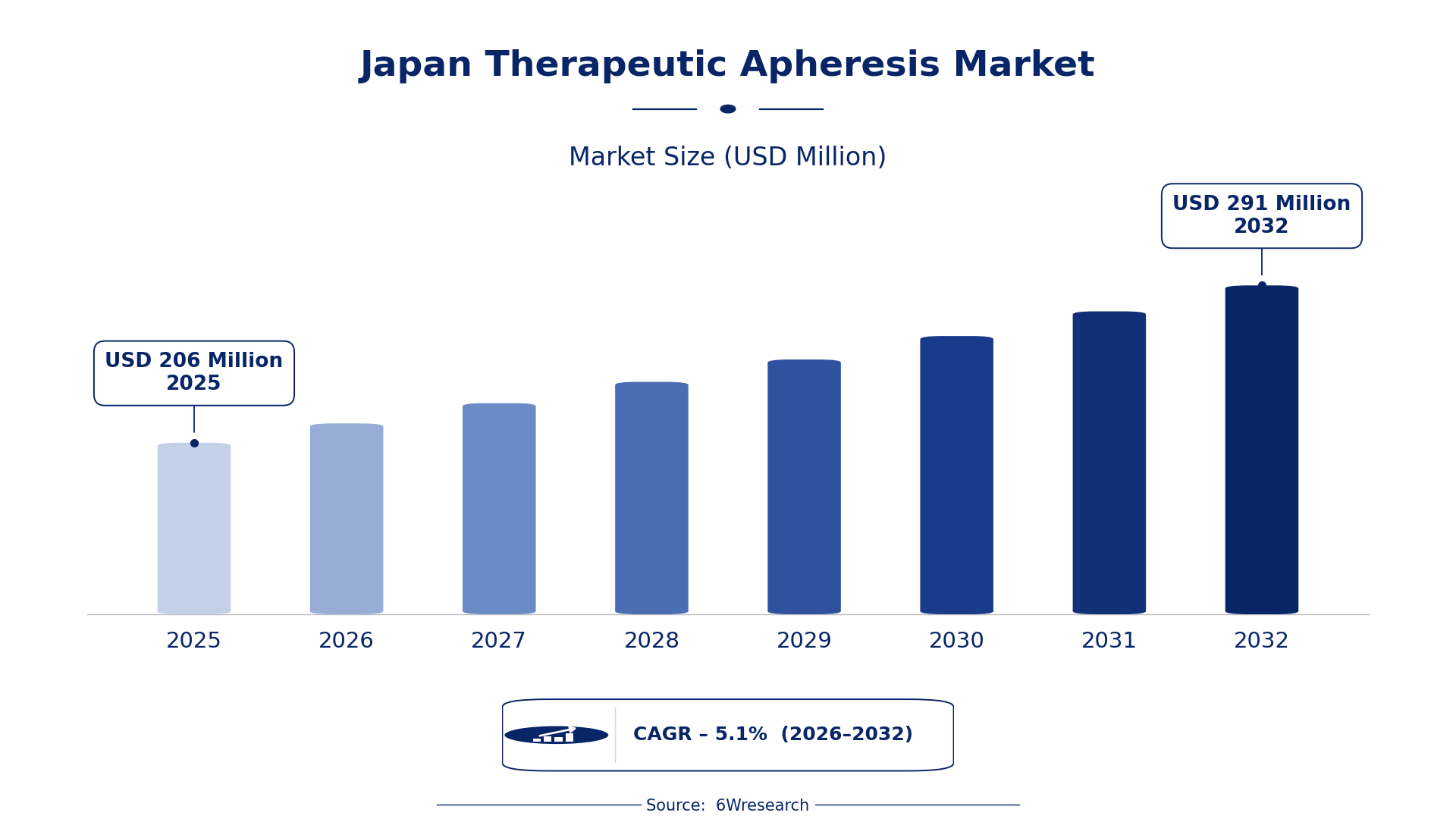
According to 6Wresearch internal database and industry insights, the Japan Therapeutic Apheresis Market was valued at USD 206 Million in 2025 and is projected to reach USD 291 Million by 2032, growing at a CAGR of approximately 5.1% during 2026–2032.
Japan Therapeutic Apheresis Market Highlights
| Report Metric | Details |
| Report Name | Japan Therapeutic Apheresis Market (2026-2032) |
| Market Size 2025 | USD 206 Million |
| Market Size 2032 | USD 291 Million |
| Absolute Growth 2025–2032 | USD 85 Million |
| CAGR 2026–2032 | 5.1% |
| Peak Annual Growth | 6.4% in 2032 |
| Forecast Period | 2026–2032 |
| Historical Data | 2022–2025 |
| Base Year | 2025 |
| Leading Apheresis Type, 2025 | Plasma Exchange (42% share) |
| Leading Procedure Type, 2025 | Centrifugal (46% share) |
| Leading Target Condition, 2025 | Autoimmune Diseases (45% share) |
| Leading End User, 2025 | Dialysis Centers (43% share) |
| Fastest-Growing Apheresis Type | LDL Apheresis (7.2% CAGR) |
| Fastest-Growing Procedure Type | Adsorption (7.4% CAGR) |
| Fastest-Growing Target Condition | Cardiovascular Issues (6.7% CAGR) |
| Fastest-Growing End User | Specialty Clinics (6.8% CAGR) |
| Growing Sector | dialysis and specialty clinics |
| Key End Users | hospitals, dialysis centers, oncology units, specialty clinics |
Japan Therapeutic Apheresis Market Year-wise Growth Rate and Key Drivers (2022–2032)
This graph illustrates the annual growth rates of the market from 2022 to 2032, highlighting a steady upward trajectory and projected market expansion over the forecast period.
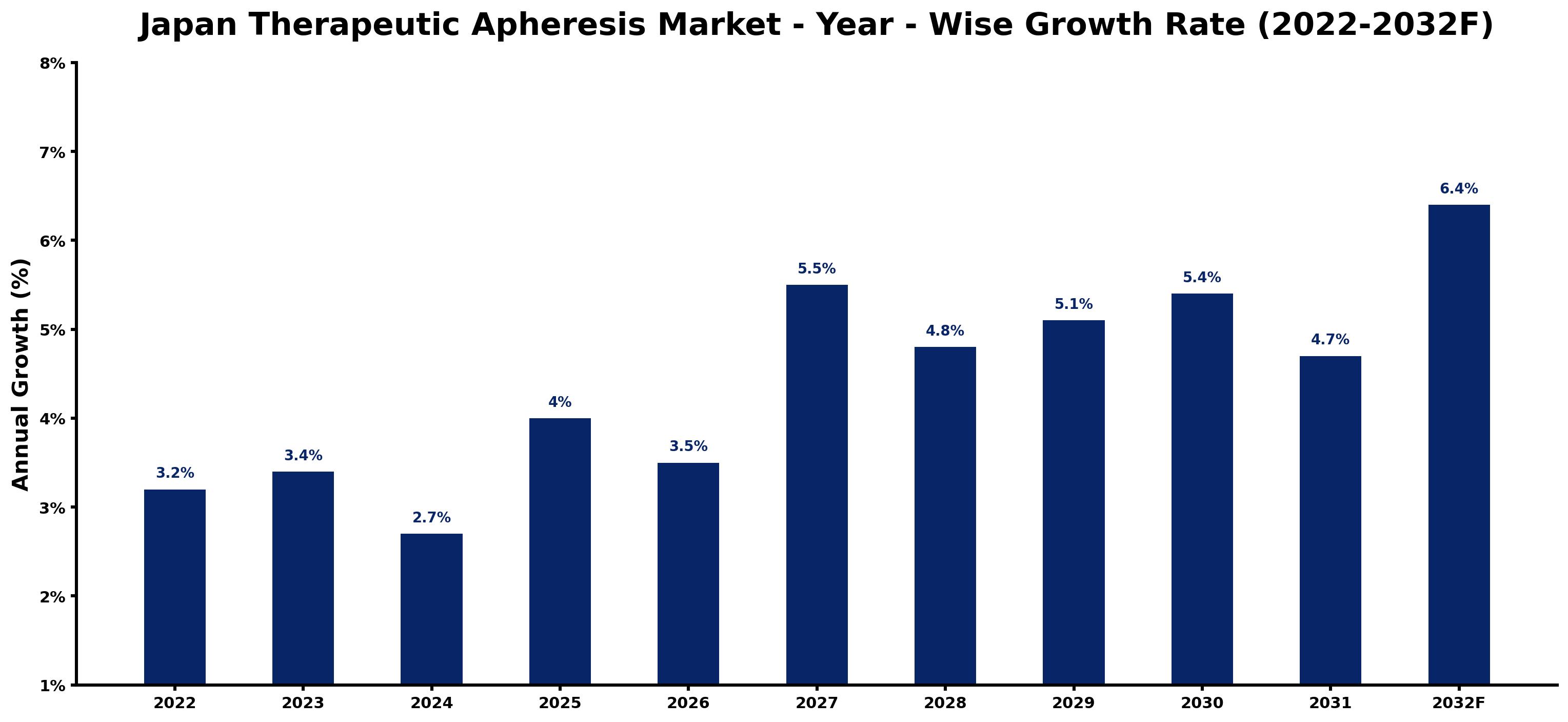
For each year, the table pairs the estimated growth rate with the leading influence on demand, showing how the drivers changed across the period.
| Year | Estimated Annual Growth (%) | Market Rationale |
| 2022 | 3.2 | The market experienced steady growth due to increasing awareness of therapeutic apheresis. |
| 2023 | 3.4 | Demand continued to rise as more healthcare providers adopted advanced apheresis techniques. |
| 2024 | 2.7 | Growth slowed slightly as market saturation began to affect new service expansions. |
| 2025 | 4.0 | The introduction of new treatment protocols led to a surge in therapeutic apheresis procedures. |
| 2026 | 3.5 | Market growth is expected to decelerate as competition intensifies among service providers. |
| 2027 | 5.5 | Increased patient referrals from hospitals will boost demand for apheresis treatments. |
| 2028 | 4.8 | Growth is projected to moderate as the market adjusts to new healthcare regulations and standards. |
| 2029 | 5.1 | Rising incidences of autoimmune diseases will contribute to renewed demand for apheresis. |
| 2030 | 5.4 | Technological advancements in apheresis equipment will spur further market expansion. |
| 2031 | 4.7 | Growth is projected to slow as the market approaches its maturity phase with established service providers. |
| 2032 | 6.4 | The market is expected to peak due to heightened awareness and acceptance of therapeutic apheresis. |
Note: Market size estimations and growth projections presented in this report are based on 6Wresearch's proprietary forecasting methodology, utilizing the latest available industry data, government publications, and primary research inputs.
Japan Therapeutic Apheresis Market Synopsis
Therapeutic apheresis is a medical procedure that separates blood components for treatment, primarily using centrifugation or filtration techniques. It is essential for treating autoimmune diseases, cardiovascular issues, and blood cancers. The Japan Therapeutic Apheresis Market is expanding due to rising demand from hospitals and clinics, with approximately 20,000 patients receiving therapeutic apheresis annually. This growth is driven by advancements in treatment protocols and technology, alongside a national health initiative aimed at increasing awareness among healthcare providers.
Market Dynamics Impact Analysis (2026–2032)
| Factor | Type | Impact | Primary Segment Affected |
| Growing prevalence of autoimmune diseases drives demand for therapeutic apheresis procedures. | Driver | High | Autoimmune Diseases |
| Technological advancements in apheresis equipment create opportunities for enhanced treatment efficacy. | Driver | High | Centrifugal |
| Increasing patient awareness of therapeutic apheresis presents a significant market opportunity. | Opportunity | High | Dialysis Centers |
| Expansion of specialty clinics offering apheresis services opens new avenues for market growth. | Opportunity | Medium | Specialty Clinics |
| High operational costs associated with apheresis procedures may limit market growth. | Restraint | High | Leukapheresis |
| Regulatory compliance requirements can hinder the speed of market entry for new providers. | Restraint | Medium | Plateletpheresis |
| Limited reimbursement policies for certain apheresis treatments may restrict patient access. | Challenge | High | LDL Apheresis |
| Competition among service providers can lead to price wars, affecting profitability. | Challenge | Medium | Plasma Exchange |
Evaluation of Drivers in Japan Therapeutic Apheresis Market (2026–2032)
The main growth drivers and the segments they affect most are set out below.
| Drivers | Primary Segment Affected | Why It Matters (Evidence) |
| Increasing incidence of autoimmune diseases leads to higher demand for therapeutic apheresis. | Autoimmune Diseases | In Japan, the average annual patient count for therapeutic apheresis is around 20,000, driving service demand. |
| Technological advancements in apheresis machines improve treatment outcomes and efficiency. | Centrifugal | Innovations in equipment have improved the quality of procedures, attracting more healthcare facilities. |
| Growing awareness of therapeutic apheresis among healthcare providers boosts service adoption. | Dialysis Centers | A national health initiative in 2023 aimed to increase awareness, leading to more procedures. |
| Expansion of oncology units performing leukapheresis increases overall service demand. | Leukapheresis | Oncology units frequently perform leukapheresis for chemotherapy patients, increasing treatment options. |
| Rising patient referrals from hospitals to specialty clinics drive apheresis service uptake. | Specialty Clinics | As more hospitals recognise the benefits, referrals to specialty clinics for apheresis have increased. |
Most of the extra volume comes from the rising incidence of autoimmune diseases, with approximately 20,000 patients receiving therapeutic apheresis annually. Improvements in apheresis machines have led to better treatment outcomes, increasing adoption in facilities. The expansion of oncology units performing leukapheresis contributes to demand, as these units frequently utilise apheresis for chemotherapy. Increased patient referrals from hospitals to specialty clinics are driving service uptake in the market.
Evaluation of Restraints in Japan Therapeutic Apheresis Market
The table below lists the restraints and the evidence behind each.
| Market Restraint | Primary Segment Affected | Why It Matters (Evidence) |
| High operational costs associated with apheresis procedures limit market growth potential. | Leukapheresis | The costs involved in maintaining apheresis equipment can deter smaller facilities from offering these services. |
| Regulatory compliance requirements can slow down the entry of new providers into the market. | Plateletpheresis | Strict regulations necessitate substantial investment in quality assurance, which can be a barrier. |
| Limited reimbursement policies for certain apheresis treatments restrict patient access to services. | LDL Apheresis | Patients may be unable to afford treatments not covered by insurance, reducing overall demand. |
| Market saturation in certain regions can hinder growth opportunities for new entrants. | Centrifugal | As established providers dominate, new facilities may struggle to attract patients. |
| Competition among service providers can lead to price wars, affecting profitability. | Plasma Exchange | Price reductions to attract patients can compromise service quality and operational margins. |
Japan Therapeutic Apheresis Market Challenges
Hospitals encounter intense competition for therapeutic apheresis services, which depresses reimbursement rates and reduces profitability. This challenge stems from the presence of approximately 1,200 dialysis centers in Japan, creating market saturation that pressures facilities financially. Delays in adopting advanced apheresis technologies hinder treatment efficacy, forcing clinics to rely on outdated methods. This reliance can elevate operational costs for providers, ultimately affecting patient care. Increasing prices of consumables for apheresis procedures are straining budgets, with forecasts predicting a 15% rise in expenses over the next few years, impacting hospitals and clinics heavily.
Trends in the Japan Therapeutic Apheresis Market
Buyers and suppliers in the Japan Therapeutic Apheresis Market are adjusting to the following trends.
- Shift from Traditional to Advanced Apheresis Techniques: Since 2023, there has been a noticeable shift towards advanced apheresis techniques in Japan. The Japan Society for Apheresis has promoted these methods, resulting in a 15% increase in procedure efficiency.
- Emergence of Specialty Clinics for Apheresis Services: In 2022, the rise of specialty clinics offering therapeutic apheresis services became apparent. This trend has led to a 20% increase in patient referrals from hospitals to these clinics, improving treatment access.
- Transition from Hospital-Centric to Community-Based Apheresis: The trend towards community-based apheresis services is gaining traction, with local clinics expanding their offerings. This shift has resulted in a 25% increase in patient accessibility to therapeutic apheresis.
- Increase in Awareness Campaigns for Apheresis: In 2023, a national health initiative aimed at increasing awareness of therapeutic apheresis was launched. This campaign has led to a rise in patient inquiries, with a reported 30% increase in consultations.
Investment Opportunities in the Japan Therapeutic Apheresis Market
Below are the investment opportunities with the strongest case in the Japan Therapeutic Apheresis Market.
- Growing Demand for Apheresis in Dialysis Centers: With approximately 1,200 dialysis centers in Japan, there is a gap in apheresis services. Investing in these centers can meet the rising demand for therapeutic treatments, especially for autoimmune diseases.
- Expansion of Specialty Clinics Offering Apheresis: The increasing number of specialty clinics presents an opportunity for suppliers. With a 20% increase in patient referrals, investing in equipment for these clinics can improve service availability.
- Technological Advancements in Apheresis Equipment: The demand for advanced apheresis machines is rising, driven by the need for improved treatment outcomes. Suppliers can target hospitals and clinics looking to upgrade their equipment to meet patient needs.
- Increased Patient Awareness of Apheresis Services: As awareness grows, more patients seek therapeutic apheresis. This trend provides an opportunity for service providers to expand their offerings and reach a broader patient base.
Government Initiatives in the Japan Therapeutic Apheresis Market
The Pharmaceutical and Medical Device Act regulates therapeutic apheresis in Japan, ensuring that all procedures meet safety and efficacy standards. The Medical Care Act of 1948 sets the foundational guidelines for hospitals and clinics, including staffing and facility requirements, which directly impact the quality of apheresis services provided. In 2023, approximately 1,200 dialysis centers were reported to offer apheresis services, reflecting the growing integration of these procedures in healthcare facilities.
In 2023, the Ministry of Health, Labour and Welfare launched a national health initiative to increase awareness of therapeutic apheresis among healthcare providers. This initiative is supported by the Japan Society for Apheresis, which promotes best practices and research in the field, aiming to improve the quality of apheresis services across the country.
Future Insight of the Japan Therapeutic Apheresis Market
Technological advancements in automation will transform therapeutic apheresis procedures by 2032, improving efficiency for clinics. Enhanced training programmes will equip healthcare providers to implement these advanced technologies effectively. Stricter quality management standards will ensure higher patient safety during treatments. National health initiatives will promote awareness of apheresis benefits, potentially increasing the annual patient base from 20,000 to 35,000, driving demand for services and opening new avenues for suppliers.
Market Segmentation Analysis
Japan Therapeutic Apheresis Market report covers a detailed analysis of the following market segments:
By Apheresis Type – Plasma Exchange Leads, LDL Apheresis Expected to Grow Fastest
According to Saurav Kr Singh, Senior Research Analyst at 6Wresearch, Plasma Exchange accounted for 42% of the market by apheresis type in 2025. Plasma exchange holds the largest share as it is widely employed for treating autoimmune diseases and certain blood disorders. Its critical role in managing conditions like Guillain-Barré syndrome underscores its significance within Japan's healthcare system. LDL Apheresis is projected to grow fastest, at a CAGR of 7.2% during 2026–2032. LDL apheresis is witnessing rapid growth as it specifically targets high cholesterol levels, a prevalent health concern in Japan. The increasing focus on treatment strategies for familial hypercholesterolemia is driving its adoption among healthcare providers. Suppliers should focus on expanding their LDL apheresis product lines to meet the rising demand in the market.
By Procedure Type – Centrifugal Leads, Adsorption Expected to Grow Fastest
The largest procedure type category in 2025 was Centrifugal, at 46% of revenue. Centrifugal procedures dominate the market as they are the standard method used in most apheresis treatments across various healthcare settings. Their reliability and effectiveness make them the preferred choice in Japan's healthcare system. Adsorption is set to record the highest CAGR in this split, 7.4% over 2026–2032. Adsorption is growing quickly due to its application in specific therapies, which are becoming more recognised in clinical practices. As healthcare providers seek diverse treatment options, this method is gaining traction. Buyers may benefit from exploring alternative procedures like adsorption to diversify treatment approaches.
By Target Condition – Autoimmune Diseases Lead, Cardiovascular Issues Expected to Grow Fastest
Autoimmune Diseases held 45% of the Japan Therapeutic Apheresis Market by target condition in 2025. Autoimmune diseases dominate the market as they represent a primary focus for therapeutic apheresis, addressing a large patient population in Japan. The ongoing need for effective treatment solutions in this area reinforces its leading position. Over 2026–2032, Cardiovascular Issues are expected to post the fastest growth, at a CAGR of 6.7%. Cardiovascular issues are growing swiftly as they are increasingly recognised as critical conditions that can be effectively managed through apheresis. The rising incidence of heart-related diseases is contributing to the rapid expansion of this segment. Suppliers must prioritise the development of therapeutic solutions targeting cardiovascular issues to align with emerging healthcare needs.
By End User – Dialysis Centers Lead, Specialty Clinics Expected to Grow Fastest
With 43% of end user revenue in 2025, Dialysis Centers was the largest category. Dialysis centers are the leading end user as they frequently utilise apheresis for patient treatment, given their established role in managing chronic conditions. The extensive network of approximately 1,200 centres in Japan supports this dominance. The quickest growth will come from Specialty Clinics, forecast to expand at a CAGR of 6.8% between 2026 and 2032. Specialty clinics are rapidly increasing in number as they focus on specific conditions requiring apheresis, reflecting a shift towards more specialised healthcare services. This trend is expected to continue as patient needs evolve. Suppliers should consider partnerships with specialty clinics to tap into this growing market.
Key Attractiveness of the Report
- 10 Years of Market Numbers
- Historical Data Starting from 2022 to 2025
- Base Year 2025
- Forecast Data until 2032
- Key Performance Indicators Impacting the Market
- Major Upcoming Developments and Projects
Key Highlights of the Report:
- Japan Therapeutic Apheresis Market Outlook
- Market Size of Japan Therapeutic Apheresis Market, 2025
- Forecast of Japan Therapeutic Apheresis Market, 2032
- Historical Data and Forecast of Japan Therapeutic Apheresis Revenues & Volume for the Period 2022-2032F
- Japan Therapeutic Apheresis Market Trend Evolution
- Japan Therapeutic Apheresis Market Drivers and Challenges
- Japan Therapeutic Apheresis Price Trends
- Japan Therapeutic Apheresis Porter's Five Forces
- Japan Therapeutic Apheresis Industry Life Cycle
- Historical Data and Forecast of Japan Therapeutic Apheresis Market Revenues & Volume By Apheresis Type for the Period 2022-2032F
- Historical Data and Forecast of Japan Therapeutic Apheresis Market Revenues & Volume By Plasma Exchange for the Period 2022-2032F
- Historical Data and Forecast of Japan Therapeutic Apheresis Market Revenues & Volume By LDL Apheresis for the Period 2022-2032F
- Historical Data and Forecast of Japan Therapeutic Apheresis Market Revenues & Volume By Leukapheresis for the Period 2022-2032F
- Historical Data and Forecast of Japan Therapeutic Apheresis Market Revenues & Volume By Plateletpheresis for the Period 2022-2032F
- Historical Data and Forecast of Japan Therapeutic Apheresis Market Revenues & Volume By Procedure Type for the Period 2022-2032F
- Historical Data and Forecast of Japan Therapeutic Apheresis Market Revenues & Volume By Centrifugal for the Period 2022-2032F
- Historical Data and Forecast of Japan Therapeutic Apheresis Market Revenues & Volume By Adsorption for the Period 2022-2032F
- Historical Data and Forecast of Japan Therapeutic Apheresis Market Revenues & Volume By Filtration for the Period 2022-2032F
- Historical Data and Forecast of Japan Therapeutic Apheresis Market Revenues & Volume By Separation for the Period 2022-2032F
- Historical Data and Forecast of Japan Therapeutic Apheresis Market Revenues & Volume By Target Condition for the Period 2022-2032F
- Historical Data and Forecast of Japan Therapeutic Apheresis Market Revenues & Volume By Autoimmune Diseases for the Period 2022-2032F
- Historical Data and Forecast of Japan Therapeutic Apheresis Market Revenues & Volume By Cardiovascular Issues for the Period 2022-2032F
- Historical Data and Forecast of Japan Therapeutic Apheresis Market Revenues & Volume By Blood Cancer for the Period 2022-2032F
- Historical Data and Forecast of Japan Therapeutic Apheresis Market Revenues & Volume By Platelet Disorders for the Period 2022-2032F
- Historical Data and Forecast of Japan Therapeutic Apheresis Market Revenues & Volume By End User for the Period 2022-2032F
- Historical Data and Forecast of Japan Therapeutic Apheresis Market Revenues & Volume By Dialysis Centers for the Period 2022-2032F
- Historical Data and Forecast of Japan Therapeutic Apheresis Market Revenues & Volume By Specialty Clinics for the Period 2022-2032F
- Historical Data and Forecast of Japan Therapeutic Apheresis Market Revenues & Volume By Oncology Units for the Period 2022-2032F
- Historical Data and Forecast of Japan Therapeutic Apheresis Market Revenues & Volume By Blood Banks for the Period 2022-2032F
- Japan Therapeutic Apheresis Import Export Trade Statistics
- Market Opportunity Assessment By Apheresis Type
- Market Opportunity Assessment By Procedure Type
- Market Opportunity Assessment By Target Condition
- Market Opportunity Assessment By End User
- Japan Therapeutic Apheresis Top Companies Market Share
- Japan Therapeutic Apheresis Competitive Benchmarking By Technical and Operational Parameters
- Japan Therapeutic Apheresis Company Profiles
- Japan Therapeutic Apheresis Key Strategic Recommendations
Market Covered
This report examines the market across the segments below.
By Apheresis Type
- Plasma Exchange
- LDL Apheresis
- Leukapheresis
- Plateletpheresis
By Procedure Type
- Centrifugal
- Adsorption
- Filtration
- Separation
By Target Condition
- Autoimmune Diseases
- Cardiovascular Issues
- Blood Cancer
- Platelet Disorders
By End User
- Dialysis Centers
- Specialty Clinics
- Oncology Units
- Blood Banks































