Japan Therapeutics Market Size & Growth Rate
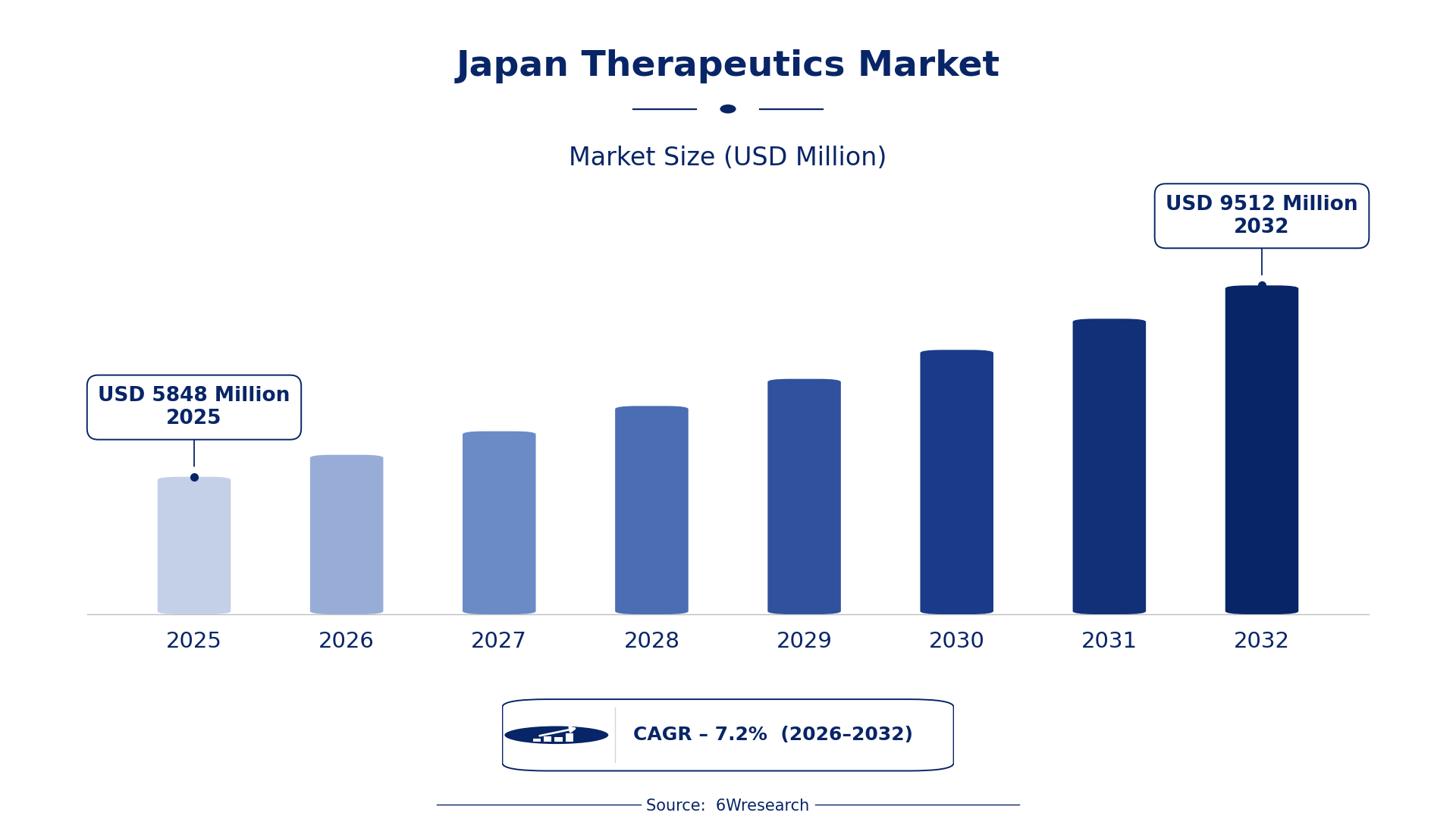
According to 6Wresearch internal database and industry insights, the Japan Therapeutics Market was valued at USD 5,848 Million in 2025 and is projected to reach USD 9,512 Million by 2032, growing at a CAGR of approximately 7.2% during 2026–2032.
Japan Therapeutics Market Highlights
| Report Metric | Details |
| Report Name | Japan Therapeutics Market (2026-2032) |
| Market Size 2025 | USD 5,848 Million |
| Market Size 2032 | USD 9,512 Million |
| Absolute Growth 2025–2032 | USD 3,664 Million |
| CAGR 2026–2032 | 7.2% |
| Peak Annual Growth | 8.9% in 2032 |
| Forecast Period | 2026–2032 |
| Historical Data | 2022–2025 |
| Base Year | 2025 |
| Leading Product Type, 2025 | Biologics (41% share) |
| Leading Disease Category, 2025 | Chronic Illnesses (40% share) |
| Leading Drug Format, 2025 | Injectables (41% share) |
| Leading End User, 2025 | Hospitals (41% share) |
| Fastest-Growing Product Type | Small Molecule Drugs (10.3% CAGR) |
| Fastest-Growing Disease Category | Acute Diseases (9.9% CAGR) |
| Fastest-Growing Drug Format | Oral Tablets (10.4% CAGR) |
| Fastest-Growing End User | Clinics (10.0% CAGR) |
| Growing Sector | Chronic Illness Management |
| Key End Users | Hospitals, Clinics, Research Institutions, Specialty Hospitals |
Japan Therapeutics Market Year-wise Growth Rate and Key Drivers (2022–2032)
This graph illustrates the annual growth rates of the market from 2022 to 2032, highlighting a steady upward trajectory and projected market expansion over the forecast period.
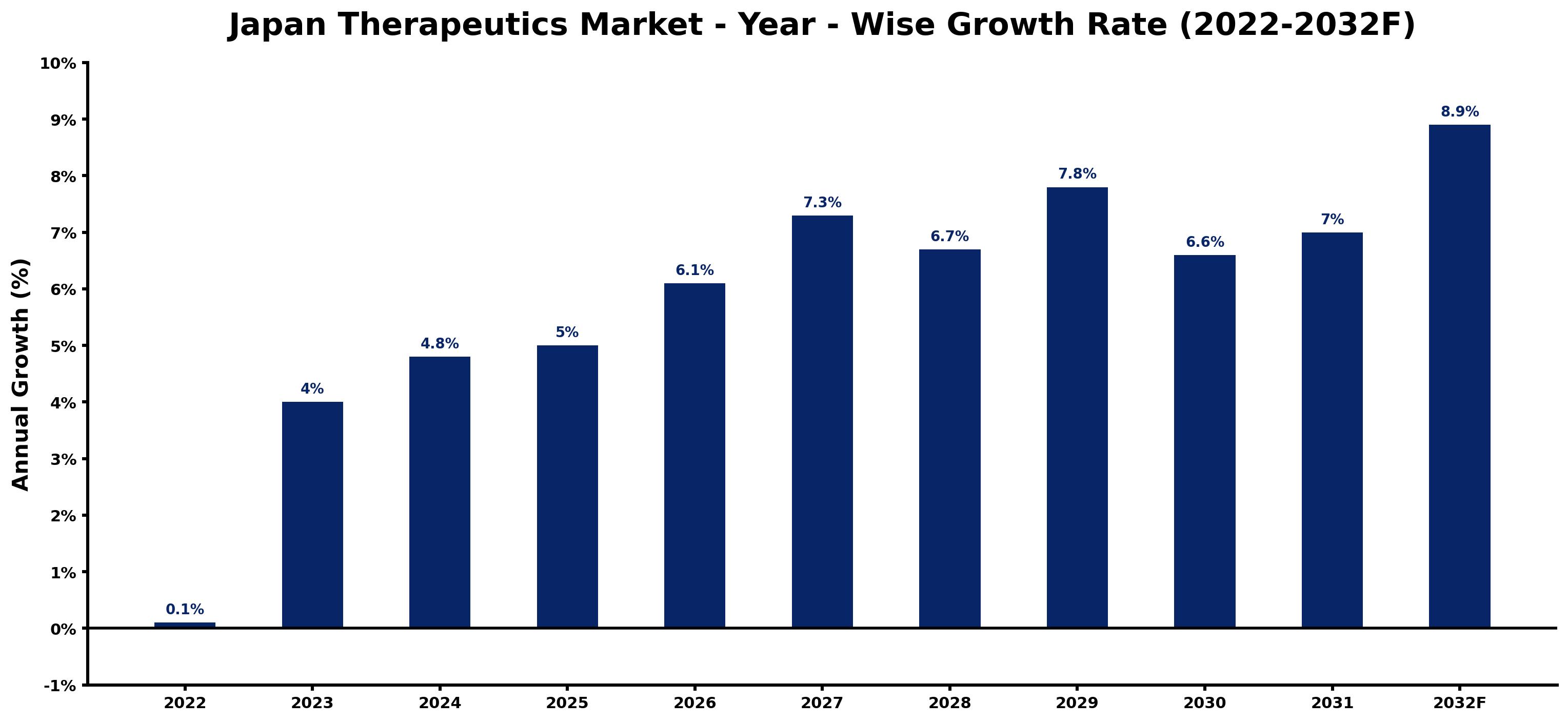
Annual growth estimates for each year appear below with the principal reason behind them, explaining the shifts that set the pace of the market.
| Year | Estimated Annual Growth (%) | Market Rationale |
| 2022 | 0.1 | The market showed minimal growth due to ongoing adjustments in therapeutic approaches. |
| 2023 | 4.0 | Growth accelerated as hospitals increased demand for chronic illness treatments. |
| 2024 | 4.8 | Rising adoption of biologics contributed to further market expansion. |
| 2025 | 5.0 | The market reached a historical peak as new therapies gained approval. |
| 2026 | 6.1 | Demand is expected to rise with advancements in small molecule drug development. |
| 2027 | 7.3 | Growth will continue as healthcare spending increases in response to an aging population. |
| 2028 | 6.7 | A slight slowdown occurs as market saturation begins in certain therapeutic areas. |
| 2029 | 7.8 | Growth is projected to pick up again with new innovations in treatment options. |
| 2030 | 6.6 | Market expansion is expected to moderate as competition intensifies among providers. |
| 2031 | 7.0 | Demand will rise again as healthcare reforms improve access to therapies. |
| 2032 | 8.9 | The market is expected to peak with a surge in advanced therapeutic technologies. |
Note: Market size estimations and growth projections presented in this report are based on 6Wresearch's proprietary forecasting methodology, utilizing the latest available industry data, government publications, and primary research inputs.
Japan Therapeutics Market Synopsis
The Japan Therapeutics Market encompasses a range of treatments, including biologics, small molecule drugs, and RNA therapies, primarily targeting chronic and acute diseases. The market is growing due to an increasing elderly population, with chronic diseases impacting around 60% of this demographic. Hospitals serve as the main purchasers of these therapies, indicating robust domestic demand and investment in drug development. Valued at approximately ¥9 trillion, the market is set for ongoing growth as new therapeutic innovations emerge.
Market Dynamics Impact Analysis (2026–2032)
| Factor | Type | Impact | Primary Segment Affected |
| Increasing prevalence of chronic diseases drives demand for therapeutics. | Driver | High | Chronic Illnesses |
| Advancements in biologics lead to more effective treatments. | Driver | High | Biologics |
| Rising elderly population creates urgent need for therapeutic interventions. | Opportunity | High | Chronic Illnesses |
| Growing interest in small molecule drugs opens new markets. | Opportunity | Medium | Small Molecule Drugs |
| Regulatory hurdles can delay drug approvals and market entry. | Restraint | High | Biologics |
| High development costs limit the number of new therapies introduced. | Restraint | Medium | Small Molecule Drugs |
| Competition among drug manufacturers increases pricing pressure. | Challenge | High | Biologics |
| Technological advancements require continuous investment. | Challenge | Medium | Small Molecule Drugs |
Evaluation of Drivers in Japan Therapeutics Market (2026–2032)
These are the developments adding the most demand over the forecast period.
| Drivers | Primary Segment Affected | Why It Matters (Evidence) |
| Growing elderly demographic increases demand for chronic illness treatments. | Chronic Illnesses | Approximately 60% of the population suffers from chronic diseases, prompting hospitals to invest in therapeutics. |
| Innovations in biologics improve treatment efficacy and patient outcomes. | Biologics | Biologics account for over 30% of the drug market, attracting investment in research. |
| Rising healthcare expenditure supports the adoption of advanced therapies. | Small Molecule Drugs | Health expenditure per capita is around ¥500,000, driving demand for new drug development. |
| Increased clinical trials lead to faster drug approvals. | Chronic Illnesses | Research institutions conduct over 1,000 clinical trials annually, expediting therapeutic innovations. |
| National health insurance coverage expands access to therapeutics. | Hospitals | The National Health Insurance system covers a wide range of therapeutic treatments, boosting hospital purchases. |
Spending rises because the elderly population, approximately 126 million, increasingly requires treatments for chronic diseases. About 60% of this demographic suffers from chronic illnesses, leading hospitals to invest heavily in therapeutics. Health expenditure per capita is around ¥500,000, driving demand for effective therapies. Research institutions conduct over 1,000 clinical trials annually, accelerating drug approvals and expanding treatment options. The National Health Insurance system ensures hospitals have access to various therapies, facilitating necessary purchases.
Evaluation of Restraints in Japan Therapeutics Market
The table below lists the restraints and the evidence behind each.
| Market Restraint | Primary Segment Affected | Why It Matters (Evidence) |
| Regulatory complexities slow down the approval process for new drugs. | Biologics | The Pharmaceuticals and Medical Devices Agency oversees strict regulations, delaying market entry for new therapies. |
| High costs of drug development limit the number of new products launched. | Small Molecule Drugs | With average development costs reaching billions, many potential therapies do not reach the market. |
| Limited awareness of emerging therapies affects patient uptake. | RNA Therapies | Despite advancements, many patients and providers remain unaware of available RNA treatments. |
| Market saturation in certain therapeutic areas leads to intense competition. | Chronic Illnesses | As more therapies enter the market, differentiation becomes challenging for manufacturers. |
| Supply chain disruptions can impact drug availability. | Biologics | Global supply chain issues have caused delays in the delivery of essential therapeutic products. |
Japan Therapeutics Market Challenges
Hospitals encounter heightened competition from local producers, compelling them to spend an additional ¥400,000 per patient on therapeutics, which strains their budgets. A shortage of skilled professionals in advanced therapeutic techniques delays product development for producers, extending timelines by an average of six months. Buyers face lengthy drug approval processes managed by the Pharmaceuticals and Medical Devices Agency, which can delay access to crucial therapies by up to a year. Slow technology adoption in drug manufacturing increases operational costs for suppliers, hindering their capacity to efficiently meet the rising demand for new treatments.
Trends in the Japan Therapeutics Market
The trends below show where the Japan Therapeutics Market is heading.
- Shift from Traditional to Biologic Therapies: Japan is increasingly embracing biologic therapies for chronic illnesses, with biologics representing over 30% of the drug market. This trend indicates a growing preference for targeted treatments that deliver improved efficacy.
- Transition from Injectables to Oral Tablets: The market is shifting from injectables to oral tablets, with oral tablets expected to grow at a CAGR of 10.4%. This change is driven by patient preference for more convenient administration methods.
- Emergence of Advanced RNA Therapies: Advanced RNA therapies are gradually gaining traction. As research advances, more targeted RNA treatments are anticipated to enter the market, broadening therapeutic options for genetic disorders.
- Increased Focus on Patient-Centric Care: Healthcare providers are prioritising patient-centric care, which is raising the demand for therapies that enhance patient outcomes. This trend is reflected in hospitals adapting their services to better meet patient needs.
Investment Opportunities in the Japan Therapeutics Market
The following opportunities in the Japan Therapeutics Market pair current demand with a clear way in.
- Growing Demand for Chronic Disease Management: With chronic diseases affecting around 60% of the population, there is a pressing demand for effective therapies. Hospitals are key buyers, and collaborations with local firms can facilitate market entry.
- Investment in Small Molecule Drug Development: Now presents a prime opportunity to invest in small molecule drugs, which are projected to grow substantially. Specialty hospitals are actively seeking new treatments, creating a significant market opportunity.
- Expansion of Biologic Therapy Offerings: The rising adoption of biologics offers companies a chance to broaden their product lines. Collaborating with research institutions can strengthen development efforts.
- Entry into the Growing Oral Tablet Market: The oral tablet format is becoming increasingly popular, with a projected growth rate of 10.4%. Engaging with clinics can provide access to a wider patient base.
Government Initiatives in the Japan Therapeutics Market
The Next-Generation Medical Infrastructure Act (2017) facilitates the anonymisation of medical data to support research and product development. This builds on existing laws by promoting data use in therapeutic advancements, ultimately improving patient outcomes. The government allocates funds for innovative drug development through the Health and Labour Ministry, backing various medical research projects to ensure new therapies are developed efficiently and effectively.
The Japan Agency for Medical Research and Development (AMED) manages funding for innovative drug development, supporting various medical research projects to ensure that new therapies are developed efficiently and effectively.
Future Insight of the Japan Therapeutics Market
Advancements in artificial intelligence are set to transform drug discovery by 2032, allowing for quicker identification of effective treatments. New quality standards will improve manufacturing processes, ensuring safer and more effective therapeutics. Increased government funding for innovative drug development will equip suppliers with better resources and support. Approximately 1.5 million patients will benefit from biologic therapies annually, underscoring a shift towards advanced treatment options tailored for Japan's ageing population.
Market Segmentation Analysis
Japan Therapeutics Market report covers a detailed analysis of the following market segments:
By Product Type – Biologics Lead, Small Molecule Drugs Expected to Grow Fastest
According to Saurav Kr Singh, Senior Research Analyst at 6Wresearch, Biologics accounted for 41% of the market by product type in 2025. Biologics hold the largest share due to their widespread application in treating various diseases, particularly chronic conditions prevalent in Japan. With a notable number of over 1.5 million patients receiving biologic therapies annually, the demand for these treatments is robust across healthcare facilities. Small Molecule Drugs are set to record the highest CAGR in this split, 10.3% over 2026–2032. The surge in small molecule drugs is attributed to their critical role in managing both chronic and acute conditions, making them indispensable in therapeutic protocols. Their versatility and effectiveness are propelling their rapid adoption in the market. Suppliers should focus on enhancing their small molecule drug portfolios to align with the increasing market demand.
By Disease Category – Chronic Illnesses Lead, Acute Diseases Expected to Grow Fastest
Chronic Illnesses held 40% of the Japan Therapeutics Market by disease category in 2025. Chronic illnesses lead the market as they are a primary focus for therapeutic development in Japan, impacting around 60% of the population. This high prevalence drives ongoing innovation and investment in solutions for chronic disease management. Acute Diseases are projected to grow fastest, at a CAGR of 9.9% during 2026–2032. Acute diseases are experiencing rapid growth due to the increasing necessity for prompt therapeutic interventions, especially in emergency situations. The rising occurrence of acute conditions demands swift treatment options, propelling this segment's expansion. Buyers can expect a broader array of acute treatment options as suppliers react to this increasing demand.
By Drug Format – Injectables Lead, Oral Tablets Expected to Grow Fastest
In 2025, Injectables led the drug format split with a 41% share. Injectables represent the most common format for many therapeutic drugs, particularly in hospitals where they are frequently prescribed. Their efficacy in delivering medications directly into the system makes them a preferred choice among healthcare providers. Over 2026–2032, Oral Tablets are expected to post the fastest growth, at a CAGR of 10.4%. The rise of oral tablets is driven by their ease of administration and widespread prescription for various conditions, appealing to both patients and healthcare professionals. This convenience factor is expected to accelerate their market growth. Suppliers should invest in developing more oral tablet formulations to meet the increasing preference for this drug format.
By End User – Hospitals Lead, Clinics Expected to Grow Fastest
The largest end user category in 2025 was Hospitals, at 41% of revenue. Hospitals are the primary venues for therapeutic administration and patient care, commanding a significant share of the market. With more than 8,000 hospitals in Japan, they play a crucial role in delivering therapeutics to a large patient base. The quickest growth will come from Clinics, forecast to expand at a CAGR of 10.0% between 2026 and 2032. Clinics are experiencing rapid growth as they often serve as the first point of contact for therapeutic treatments, addressing a substantial portion of the population's needs. Their convenience and accessibility are driving an increase in patient visits for therapeutic services. Suppliers should develop targeted strategies to engage clinics effectively and capitalise on this expanding market segment.
Key Attractiveness of the Report
- 10 Years of Market Numbers
- Historical Data Starting from 2022 to 2025
- Base Year 2025
- Forecast Data until 2032
- Key Performance Indicators Impacting the Market
- Major Upcoming Developments and Projects
Key Highlights of the Report:
- Japan Therapeutics Market Outlook
- Market Size of Japan Therapeutics Market, 2025
- Forecast of Japan Therapeutics Market, 2032
- Historical Data and Forecast of Japan Therapeutics Revenues & Volume for the Period 2022-2032F
- Japan Therapeutics Market Trend Evolution
- Japan Therapeutics Market Drivers and Challenges
- Japan Therapeutics Price Trends
- Japan Therapeutics Porter's Five Forces
- Japan Therapeutics Industry Life Cycle
- Historical Data and Forecast of Japan Therapeutics Market Revenues & Volume By Product Type for the Period 2022-2032F
- Historical Data and Forecast of Japan Therapeutics Market Revenues & Volume By Biologics for the Period 2022-2032F
- Historical Data and Forecast of Japan Therapeutics Market Revenues & Volume By Small Molecule Drugs for the Period 2022-2032F
- Historical Data and Forecast of Japan Therapeutics Market Revenues & Volume By RNA Therapies for the Period 2022-2032F
- Historical Data and Forecast of Japan Therapeutics Market Revenues & Volume By Cell-Based Therapies for the Period 2022-2032F
- Historical Data and Forecast of Japan Therapeutics Market Revenues & Volume By Disease Category for the Period 2022-2032F
- Historical Data and Forecast of Japan Therapeutics Market Revenues & Volume By Chronic Illnesses for the Period 2022-2032F
- Historical Data and Forecast of Japan Therapeutics Market Revenues & Volume By Acute Diseases for the Period 2022-2032F
- Historical Data and Forecast of Japan Therapeutics Market Revenues & Volume By Genetic Disorders for the Period 2022-2032F
- Historical Data and Forecast of Japan Therapeutics Market Revenues & Volume By Autoimmune/Oncology for the Period 2022-2032F
- Historical Data and Forecast of Japan Therapeutics Market Revenues & Volume By Drug Format for the Period 2022-2032F
- Historical Data and Forecast of Japan Therapeutics Market Revenues & Volume By Injectables for the Period 2022-2032F
- Historical Data and Forecast of Japan Therapeutics Market Revenues & Volume By Oral Tablets for the Period 2022-2032F
- Historical Data and Forecast of Japan Therapeutics Market Revenues & Volume By IV/Injectable for the Period 2022-2032F
- Historical Data and Forecast of Japan Therapeutics Market Revenues & Volume By Infusions for the Period 2022-2032F
- Historical Data and Forecast of Japan Therapeutics Market Revenues & Volume By End User for the Period 2022-2032F
- Historical Data and Forecast of Japan Therapeutics Market Revenues & Volume By Hospitals for the Period 2022-2032F
- Historical Data and Forecast of Japan Therapeutics Market Revenues & Volume By Clinics for the Period 2022-2032F
- Historical Data and Forecast of Japan Therapeutics Market Revenues & Volume By Research Institutions for the Period 2022-2032F
- Historical Data and Forecast of Japan Therapeutics Market Revenues & Volume By Specialty Hospitals for the Period 2022-2032F
- Japan Therapeutics Import Export Trade Statistics
- Market Opportunity Assessment By Product Type
- Market Opportunity Assessment By Disease Category
- Market Opportunity Assessment By Drug Format
- Market Opportunity Assessment By End User
- Japan Therapeutics Top Companies Market Share
- Japan Therapeutics Competitive Benchmarking By Technical and Operational Parameters
- Japan Therapeutics Company Profiles
- Japan Therapeutics Key Strategic Recommendations
Market Covered
Segments analysed in this report are listed below.
By Product Type
- Biologics
- Small Molecule Drugs
- RNA Therapies
- Cell-Based Therapies
By Disease Category
- Chronic Illnesses
- Acute Diseases
- Genetic Disorders
- Autoimmune/Oncology
By Drug Format
- Injectables
- Oral Tablets
- IV/Injectable
- Infusions
By End User
- Hospitals
- Clinics
- Research Institutions
- Specialty Hospitals































