Japan Thermal Comfort System Market Size & Growth Rate
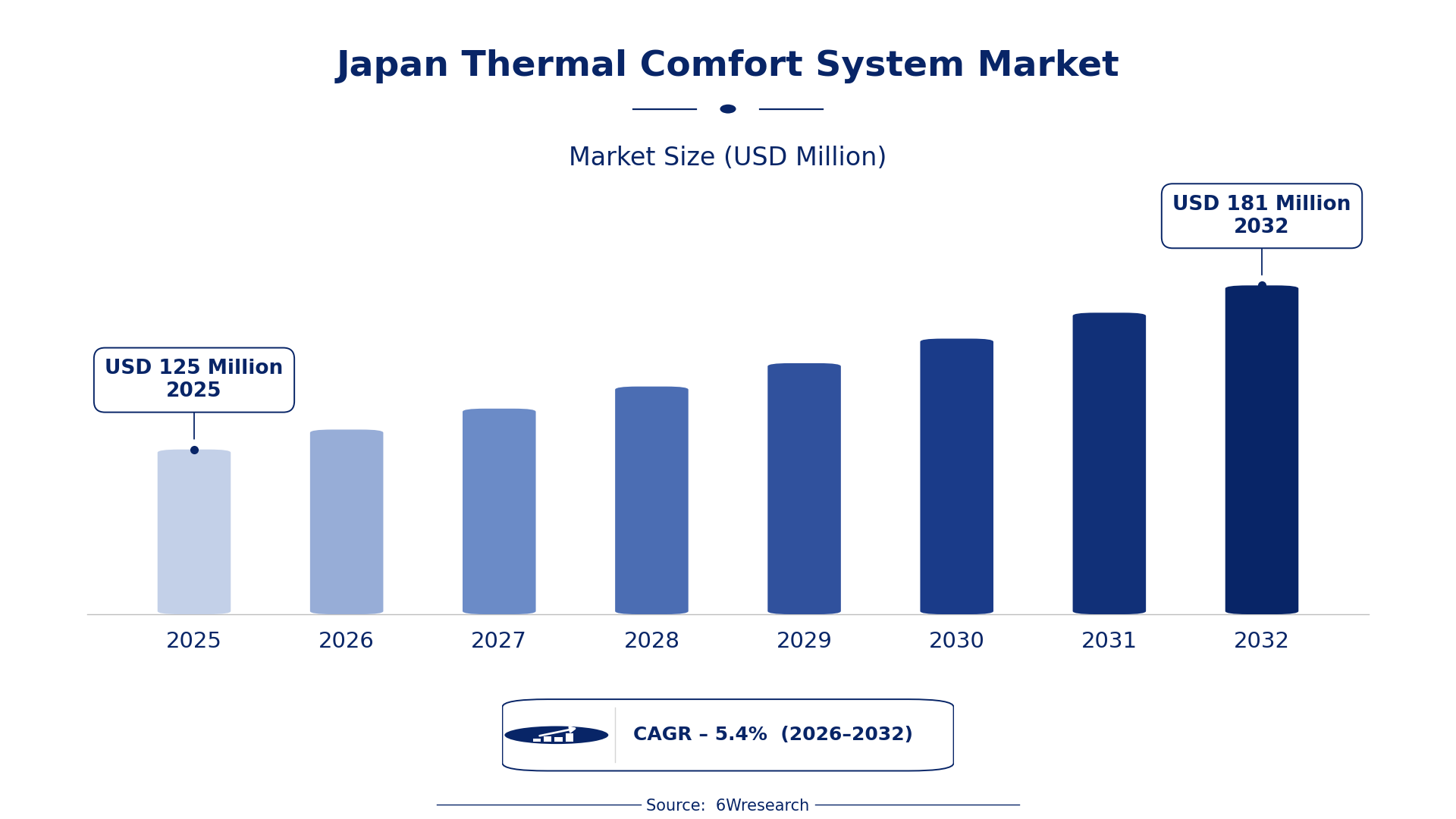
According to 6Wresearch internal database and industry insights, the Japan Thermal Comfort System Market was valued at USD 125 Million in 2025 and is projected to reach USD 181 Million by 2032, growing at a CAGR of approximately 5.4% during 2026–2032.
Japan Thermal Comfort System Market Highlights
| Report Metric | Details |
| Report Name | Japan Thermal Comfort System Market (2026-2032) |
| Market Size 2025 | USD 125 Million |
| Market Size 2032 | USD 181 Million |
| Absolute Growth 2025–2032 | USD 56 Million |
| CAGR 2026–2032 | 5.4% |
| Peak Annual Growth | 6.4% in 2028 |
| Forecast Period | 2026–2032 |
| Historical Data | 2022–2025 |
| Base Year | 2025 |
| Leading System Type, 2025 | Dual-Zone HVAC (42% share) |
| Leading Comfort Function, 2025 | Temperature Control (45% share) |
| Leading Vehicle Class, 2025 | Luxury Vehicles (47% share) |
| Leading End User, 2025 | OEMs (36% share) |
| Fastest-Growing System Type | Rear Cabin Climate Units (7.5% CAGR) |
| Fastest-Growing Comfort Function | Extended Comfort (7.0% CAGR) |
| Fastest-Growing Vehicle Class | EVs (7.1% CAGR) |
| Fastest-Growing End User | Automotive Suppliers (7.3% CAGR) |
| Growing Sector | Automotive Suppliers |
| Key End Users | OEMs, Car Manufacturers, Automotive Suppliers, Smart Mobility Firms |
Japan Thermal Comfort System Market Year-wise Growth Rate and Key Drivers (2022–2032)
This graph illustrates the annual growth rates of the market from 2022 to 2032, highlighting a steady upward trajectory and projected market expansion over the forecast period.
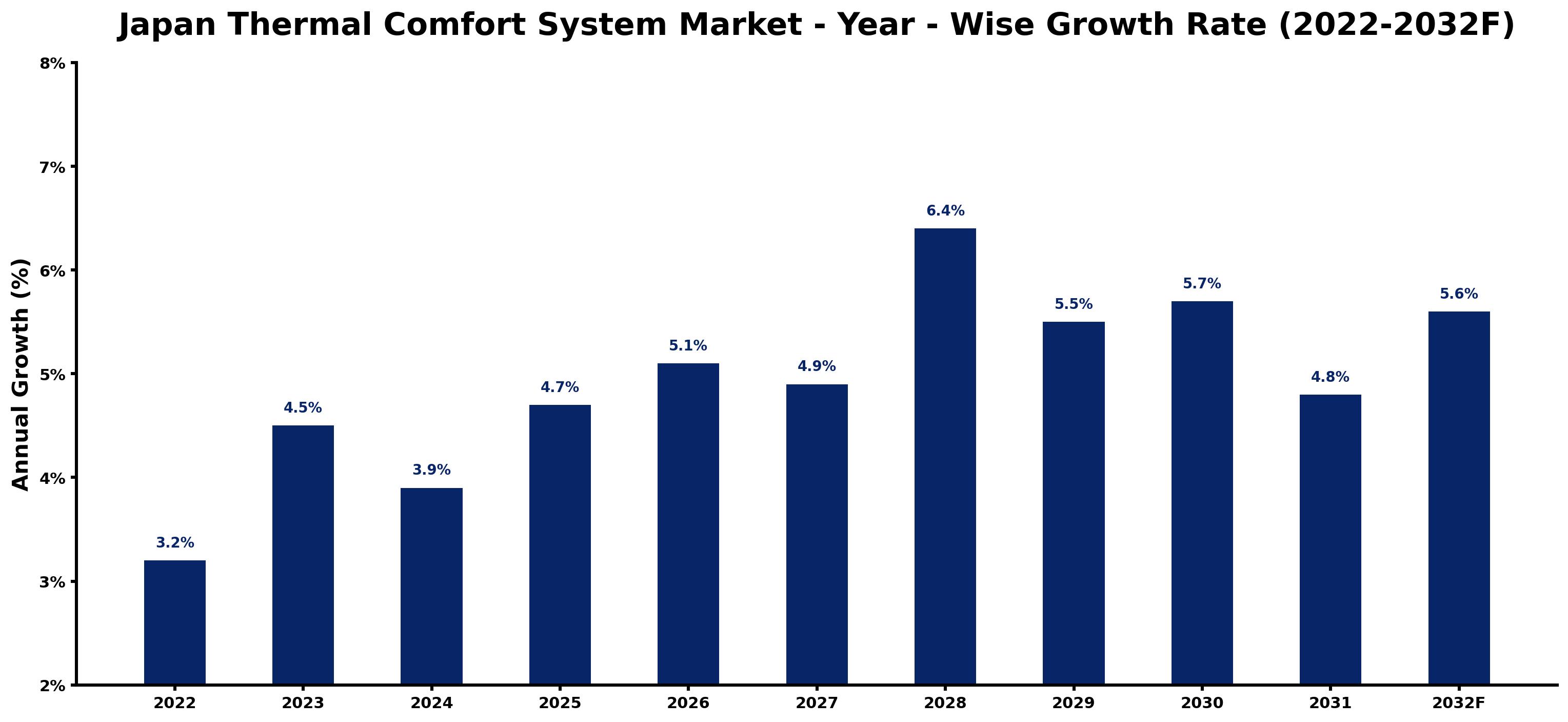
Annual growth estimates for each year appear below with the principal reason behind them, explaining the shifts that set the pace of the market.
| Year | Estimated Annual Growth (%) | Market Rationale |
| 2022 | 3.2 | The automotive sector showed steady demand for comfort systems, reflecting established consumer preferences. |
| 2023 | 4.5 | Growth accelerated due to increased vehicle production and rising consumer expectations for comfort features. |
| 2024 | 3.9 | Demand continued to rise, although at a slower pace as market saturation began to set in. |
| 2025 | 4.7 | The market experienced a resurgence in growth, driven by new technology and features in vehicle design. |
| 2026 | 5.1 | Investment in advanced climate control technologies is expected to boost demand this year. |
| 2027 | 4.9 | A slight slowdown is expected as manufacturers adjust to changing consumer preferences and production capacities. |
| 2028 | 6.4 | The market is projected to peak this year, driven by heightened demand for luxury and comfort features. |
| 2029 | 5.5 | Growth is expected to moderate as manufacturers focus on refining existing technologies rather than introducing new ones. |
| 2030 | 5.7 | Demand is expected to rise again as manufacturers adapt their offerings to meet evolving standards. |
| 2031 | 4.8 | A slowdown is anticipated as the market stabilises after a period of rapid technological advancements. |
| 2032 | 5.6 | Growth is expected to remain strong as the focus on comfort and climate control continues to evolve. |
Note: Market size estimations and growth projections presented in this report are based on 6Wresearch's proprietary forecasting methodology, utilizing the latest available industry data, government publications, and primary research inputs.
Japan Thermal Comfort System Market Synopsis
Thermal Comfort Systems are advanced climate control technologies designed to improve passenger comfort in vehicles, utilising electrical heating elements and sophisticated HVAC systems. The Japan Thermal Comfort System Market is expanding due to increased vehicle production, with 4.5 million units produced in 2022, and a growing preference for luxury vehicles, which account for 20% of total sales. The adoption of climate-controlled seats in luxury vehicles exceeds 60%, indicating strong demand for advanced comfort features. This growth is further supported by government initiatives promoting energy-efficient technologies and innovations showcased at events like the Tokyo Motor Show.
Market Dynamics Impact Analysis (2026–2032)
| Factor | Type | Impact | Primary Segment Affected |
| Increased vehicle production drives demand for thermal comfort systems. | Driver | High | Temperature Control |
| Growing consumer preference for luxury vehicles boosts demand for advanced comfort technologies. | Driver | High | Luxury Vehicles |
| Rising demand for climate-controlled seats presents opportunities for suppliers. | Opportunity | High | Climate-Controlled Seats |
| The government's push for energy-efficient technologies creates demand for innovative comfort systems. | Opportunity | High | Dual-Zone HVAC |
| High competition among automotive suppliers can restrict profit margins. | Restraint | Medium | Automotive Suppliers |
| The complexity of integrating advanced systems can delay production timelines. | Restraint | Medium | Rear Cabin Climate Units |
| Rising costs of raw materials can impact pricing strategies for manufacturers. | Challenge | High | Seat Heating |
| Technological advancements require continuous investment, straining smaller manufacturers. | Challenge | Medium | Climate-Controlled Seats |
Evaluation of Drivers in Japan Thermal Comfort System Market (2026–2032)
The table below links each growth driver to the segment it affects and the evidence for it.
| Drivers | Primary Segment Affected | Why It Matters (Evidence) |
| Increased vehicle production | Temperature Control | Japan's automotive sector, valued at approximately 14 trillion yen, drives demand for thermal comfort systems. |
| Consumer preference for luxury vehicles | Luxury Vehicles | Luxury vehicles account for 20% of total vehicle sales, increasing demand for advanced comfort features. |
| Government initiatives promoting energy efficiency | Dual-Zone HVAC | Support for energy-efficient technologies boosts system adoption among manufacturers. |
| Technological advancements in climate control | Climate-Controlled Seats | The adoption rate of climate-controlled seats in luxury vehicles exceeds 60%, driving further demand. |
| Growing focus on passenger comfort in larger vehicles | Rear Cabin Climate Units | SUVs and vans increasingly incorporate advanced comfort features to improve passenger experience. |
Several shifts outside the market lift sales. The automotive sector's value, approximately 14 trillion yen, fuels demand for thermal comfort systems, particularly in luxury vehicles, which constitute 20% of total sales. Investment in energy-efficient technologies is expected to drive adoption of advanced climate control systems. The growing focus on passenger comfort in SUVs and vans drives demand for enhanced rear cabin units, creating opportunities for suppliers.
Evaluation of Restraints in Japan Thermal Comfort System Market
The following restraints limit how fast demand can grow.
| Market Restraint | Primary Segment Affected | Why It Matters (Evidence) |
| High competition among automotive suppliers | Automotive Suppliers | Intense competition can restrict profit margins, impacting smaller suppliers' ability to invest in innovation. |
| Complex integration of advanced systems | Rear Cabin Climate Units | The complexity of integrating advanced climate control systems can delay production timelines for manufacturers. |
| Rising costs of raw materials | Seat Heating | Increased costs for materials used in thermal comfort systems can lead to higher prices for consumers. |
| Technological advancements require continuous investment | Climate-Controlled Seats | Smaller manufacturers may struggle to keep pace with rapid technological changes, limiting their market share. |
| Market saturation in luxury vehicle features | Luxury Vehicles | As luxury features become standard, differentiation becomes challenging, affecting sales growth. |
Japan Thermal Comfort System Market Challenges
Japan's strict JIS standards on thermal comfort systems create compliance costs that can raise production expenses by up to 15% for manufacturers. Increased competition in the automotive sector pressures suppliers to lower prices, which can restrict investment in advanced comfort technologies and limit options for buyers. Rising material costs, influenced by global supply chain issues, have increased production expenses by around 10%, impacting profit margins for producers. A shortage of skilled technicians in the automotive industry hampers the development of new thermal comfort systems, delaying timely market responses for buyers.
Trends in the Japan Thermal Comfort System Market
Several trends are reshaping the Japan Thermal Comfort System Market; the most important are set out below.
- Shift in Focus to Luxury Vehicle Comfort: Luxury vehicle manufacturers are increasingly prioritising advanced comfort features, with 20% of total vehicle sales in Japan attributed to this segment. The Tokyo Motor Show 2023 showcased innovations in thermal comfort technologies, reflecting this trend.
- Transition to Energy-Efficient Comfort Systems: The Japanese government’s Green Growth Strategy promotes energy-efficient technologies in vehicles, influencing designs of thermal comfort systems. By 2030, the target is to reduce vehicle emissions by 30%, driving innovation in this area.
- Emergence of Climate-Controlled Seats: The adoption of climate-controlled seats is on the rise, especially in luxury vehicles, where over 60% of models feature this technology. This trend reflects changing consumer preferences for personalised comfort in vehicles.
- Growing Demand for Rear Cabin Comfort: There is an increasing focus on improving comfort for rear-seat passengers, particularly in SUVs and vans. This trend is supported by the growing adoption of rear cabin climate units, catering to consumer demands for enhanced comfort.
Investment Opportunities in the Japan Thermal Comfort System Market
Where to invest in the Japan Thermal Comfort System Market: the main openings are set out below.
- Investment in Advanced Climate Control Technologies: With the rising demand for comfort features, suppliers can focus on developing advanced climate control technologies. The luxury vehicle segment, accounting for 20% of sales, presents a lucrative opportunity for investment.
- Expansion of Dual-Zone HVAC Systems: The current trend towards personalised comfort creates an opportunity for suppliers to invest in Dual-Zone HVAC systems. The Tokyo region is a key area for automotive innovation, making it an ideal location for partnerships.
- Development of Climate-Controlled Seats: The increasing adoption of climate-controlled seats in luxury vehicles offers a significant opportunity for manufacturers. Collaborating with automotive suppliers in Japan can facilitate entry into this growing market.
- Enhancement of Rear Cabin Climate Units: As demand for rear passenger comfort increases, there is a need for advanced rear cabin climate units. Focusing on the SUV segment, which is expanding rapidly, can help suppliers meet this demand.
Government Initiatives in the Japan Thermal Comfort System Market
The Electrical Appliance and Material Safety Act regulates the safety of electrical components in thermal comfort systems, ensuring compliance for manufacturers. This law requires rigorous testing to meet safety standards, impacting production timelines and costs for automotive suppliers. The GX Promotion Act supports projects aimed at reducing emissions, encouraging automotive manufacturers to adopt advanced thermal comfort solutions that comply with environmental standards.
The Ministry of Economy, Trade and Industry promotes energy-efficient technologies through various initiatives. The Green Growth Strategy supports projects aimed at reducing emissions, encouraging automotive manufacturers to adopt advanced thermal comfort solutions that comply with environmental standards.
Future Insight of the Japan Thermal Comfort System Market
By 2032, the push for energy-efficient technologies will reshape the thermal comfort system market, prompting suppliers to enhance their product lines. The government's target to reduce vehicle emissions by 30% by 2030 will drive innovations in climate control systems, improving passenger comfort while meeting regulatory standards. The Tokyo Motor Show will showcase emerging technologies, influencing buyer preferences and expectations. With over 60% adoption of climate-controlled seats in luxury vehicles, suppliers will prioritise personalised comfort solutions to satisfy consumer demands.
Market Segmentation Analysis
Japan Thermal Comfort System Market report covers a detailed analysis of the following market segments:
By System Type – Dual-Zone HVAC Leads, Rear Cabin Climate Units Expected to Grow Fastest
According to Saurav Kr Singh, Senior Research Analyst at 6Wresearch, Dual-Zone HVAC took 42% of system type revenue in 2025, more than any other category. The Dual-Zone HVAC system holds the largest share as it allows separate temperature settings for different cabin areas, catering to the diverse preferences of passengers. This system is particularly valued in urban areas like Tokyo, where effective climate control is essential for comfort during commutes. Rear Cabin Climate Units are set to record the highest CAGR in this split, 7.5% over 2026–2032. Rear Cabin Climate Units are experiencing rapid growth as they significantly enhance comfort for rear-seat passengers, reflecting a rising demand in modern vehicle designs. The innovations highlighted at the Tokyo Motor Show demonstrate the increasing consumer interest in these advanced features. Suppliers should focus on developing advanced rear cabin climate solutions to meet the growing consumer demand.
By Comfort Function – Temperature Control Leads, Extended Comfort Expected to Grow Fastest
In 2025, Temperature Control led the comfort function split with a 45% share. Temperature Control is the leading feature in the market, vital for ensuring passenger comfort across varying climates, making it a fundamental component in vehicles. The strong demand for personalised climate settings reinforces its dominant position in the thermal comfort system sector. The quickest growth will come from Extended Comfort, forecast to expand at a CAGR of 7.0% between 2026 and 2032. Extended Comfort is witnessing rapid growth as consumers increasingly seek comprehensive solutions that go beyond basic temperature regulation. This trend is reflected in the rising adoption of features aimed at enhancing overall passenger satisfaction. Manufacturers must prioritise the development of extended comfort features to align with shifting consumer preferences.
By Vehicle Class – Luxury Vehicles Lead, EVs Expected to Grow Fastest
The largest vehicle class category in 2025 was Luxury Vehicles, at 47% of revenue. Luxury Vehicles dominate the market due to the high demand for advanced comfort features that appeal to discerning buyers. This segment's notable contribution, accounting for 20% of total vehicle sales in Japan, highlights the necessity for superior thermal comfort systems. EVs are projected to grow fastest, at a CAGR of 7.1% during 2026–2032. Electric Vehicles are growing at the fastest rate as manufacturers focus on comfort features to enhance user experience and differentiate their products. This trend aligns with the government's push for energy-efficient technologies, further driving demand. Suppliers should adapt their offerings to cater to the expanding EV market while maintaining luxury standards.
By End User – OEMs Lead, Automotive Suppliers Expected to Grow Fastest
With 36% of end user revenue in 2025, OEMs was the largest category. OEMs are the leading end users of thermal comfort technologies, as they are the primary buyers integrating these systems into new vehicles. Their substantial purchasing power and influence in the automotive sector drive the demand for advanced climate control solutions. Over 2026–2032, Automotive Suppliers are expected to post the fastest growth, at a CAGR of 7.3%. Automotive Suppliers are experiencing rapid growth as they increasingly supply components for thermal comfort systems, reflecting the industry's shift towards more complex technologies. Their role is becoming more critical as vehicle designs evolve. Suppliers should strengthen partnerships with automotive suppliers to ensure a steady demand for their thermal comfort technologies.
Key Attractiveness of the Report
- 10 Years of Market Numbers
- Historical Data Starting from 2022 to 2025
- Base Year 2025
- Forecast Data until 2032
- Key Performance Indicators Impacting the Market
- Major Upcoming Developments and Projects
Key Highlights of the Report:
- Japan Thermal Comfort System Market Outlook
- Market Size of Japan Thermal Comfort System Market, 2025
- Forecast of Japan Thermal Comfort System Market, 2032
- Historical Data and Forecast of Japan Thermal Comfort System Revenues & Volume for the Period 2022-2032F
- Japan Thermal Comfort System Market Trend Evolution
- Japan Thermal Comfort System Market Drivers and Challenges
- Japan Thermal Comfort System Price Trends
- Japan Thermal Comfort System Porter's Five Forces
- Japan Thermal Comfort System Industry Life Cycle
- Historical Data and Forecast of Japan Thermal Comfort System Market Revenues & Volume By System Type for the Period 2022-2032F
- Historical Data and Forecast of Japan Thermal Comfort System Market Revenues & Volume By Seat Heating for the Period 2022-2032F
- Historical Data and Forecast of Japan Thermal Comfort System Market Revenues & Volume By Dual-Zone HVAC for the Period 2022-2032F
- Historical Data and Forecast of Japan Thermal Comfort System Market Revenues & Volume By Rear Cabin Climate Units for the Period 2022-2032F
- Historical Data and Forecast of Japan Thermal Comfort System Market Revenues & Volume By Climate-Controlled Seats for the Period 2022-2032F
- Historical Data and Forecast of Japan Thermal Comfort System Market Revenues & Volume By Comfort Function for the Period 2022-2032F
- Historical Data and Forecast of Japan Thermal Comfort System Market Revenues & Volume By Warmth Control for the Period 2022-2032F
- Historical Data and Forecast of Japan Thermal Comfort System Market Revenues & Volume By Temperature Control for the Period 2022-2032F
- Historical Data and Forecast of Japan Thermal Comfort System Market Revenues & Volume By Extended Comfort for the Period 2022-2032F
- Historical Data and Forecast of Japan Thermal Comfort System Market Revenues & Volume By Cooling + Heating for the Period 2022-2032F
- Historical Data and Forecast of Japan Thermal Comfort System Market Revenues & Volume By Vehicle Class for the Period 2022-2032F
- Historical Data and Forecast of Japan Thermal Comfort System Market Revenues & Volume By Luxury Vehicles for the Period 2022-2032F
- Historical Data and Forecast of Japan Thermal Comfort System Market Revenues & Volume By Mid-Segment Cars for the Period 2022-2032F
- Historical Data and Forecast of Japan Thermal Comfort System Market Revenues & Volume By SUVs/Vans for the Period 2022-2032F
- Historical Data and Forecast of Japan Thermal Comfort System Market Revenues & Volume By EVs for the Period 2022-2032F
- Historical Data and Forecast of Japan Thermal Comfort System Market Revenues & Volume By End User for the Period 2022-2032F
- Historical Data and Forecast of Japan Thermal Comfort System Market Revenues & Volume By OEMs for the Period 2022-2032F
- Historical Data and Forecast of Japan Thermal Comfort System Market Revenues & Volume By Car Manufacturers for the Period 2022-2032F
- Historical Data and Forecast of Japan Thermal Comfort System Market Revenues & Volume By Automotive Suppliers for the Period 2022-2032F
- Historical Data and Forecast of Japan Thermal Comfort System Market Revenues & Volume By Smart Mobility Firms for the Period 2022-2032F
- Japan Thermal Comfort System Import Export Trade Statistics
- Market Opportunity Assessment By System Type
- Market Opportunity Assessment By Comfort Function
- Market Opportunity Assessment By Vehicle Class
- Market Opportunity Assessment By End User
- Japan Thermal Comfort System Top Companies Market Share
- Japan Thermal Comfort System Competitive Benchmarking By Technical and Operational Parameters
- Japan Thermal Comfort System Company Profiles
- Japan Thermal Comfort System Key Strategic Recommendations
Market Covered
The following segment groups are covered in the report.
By System Type
- Seat Heating
- Dual-Zone HVAC
- Rear Cabin Climate Units
- Climate-Controlled Seats
By Comfort Function
- Warmth Control
- Temperature Control
- Extended Comfort
- Cooling + Heating
By Vehicle Class
- Luxury Vehicles
- Mid-Segment Cars
- SUVs/Vans
- EVs
By End User
- OEMs
- Car Manufacturers
- Automotive Suppliers
- Smart Mobility Firms































