Japan Thermal Wear Market Size & Growth Rate
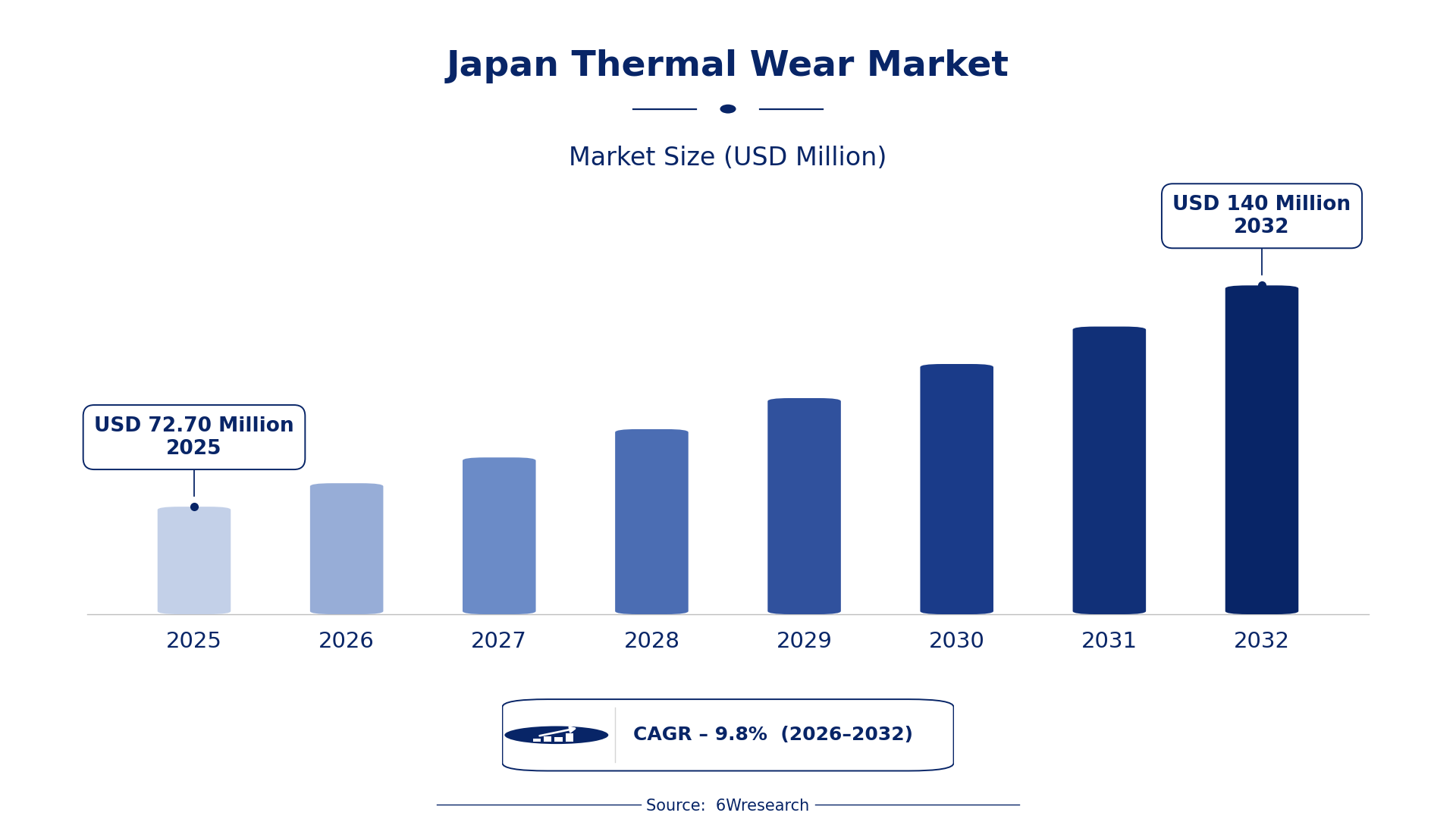
According to 6Wresearch internal database and industry insights, the Japan Thermal Wear Market was valued at USD 72.70 Million in 2025 and is projected to reach USD 140 Million by 2032, growing at a CAGR of approximately 9.8% during 2026–2032.
Japan Thermal Wear Market Highlights
| Report Metric | Details |
| Report Name | Japan Thermal Wear Market (2026-2032) |
| Market Size 2025 | USD 72.70 Million |
| Market Size 2032 | USD 140 Million |
| Absolute Growth 2025–2032 | USD 67.30 Million |
| CAGR 2026–2032 | 9.8% |
| Peak Annual Growth | 10.4% in 2028 |
| Forecast Period | 2026–2032 |
| Historical Data | 2022–2025 |
| Base Year | 2025 |
| Leading Thermal Wear, 2025 | Base Layers (46% share) |
| Leading Product Type, 2025 | Long Johns (39% share) |
| Leading Material Composition, 2025 | Merino Wool/Synthetic Blends (50% share) |
| Leading Distribution Channel, 2025 | Outdoor Gear Retailers (38% share) |
| Leading End User Industry, 2025 | Performance Apparel (51% share) |
| Fastest-Growing Thermal Wear | Heated Clothing (12.6% CAGR) |
| Fastest-Growing Product Type | Battery Heated Jackets (13.6% CAGR) |
| Fastest-Growing Material Composition | Conductive Filament (14.9% CAGR) |
| Fastest-Growing Distribution Channel | Online Apparel Stores (12.9% CAGR) |
| Fastest-Growing End User Industry | Cold Climate Workers (12.7% CAGR) |
| Growing Sector | Performance Apparel |
| Key End Users | Outdoor Enthusiasts, Cold Climate Workers, Athletes, Sporting Goods Retailers |
Japan Thermal Wear Market Year-wise Growth Rate and Key Drivers (2022–2032)
This graph illustrates the annual growth rates of the market from 2022 to 2032, highlighting a steady upward trajectory and projected market expansion over the forecast period.
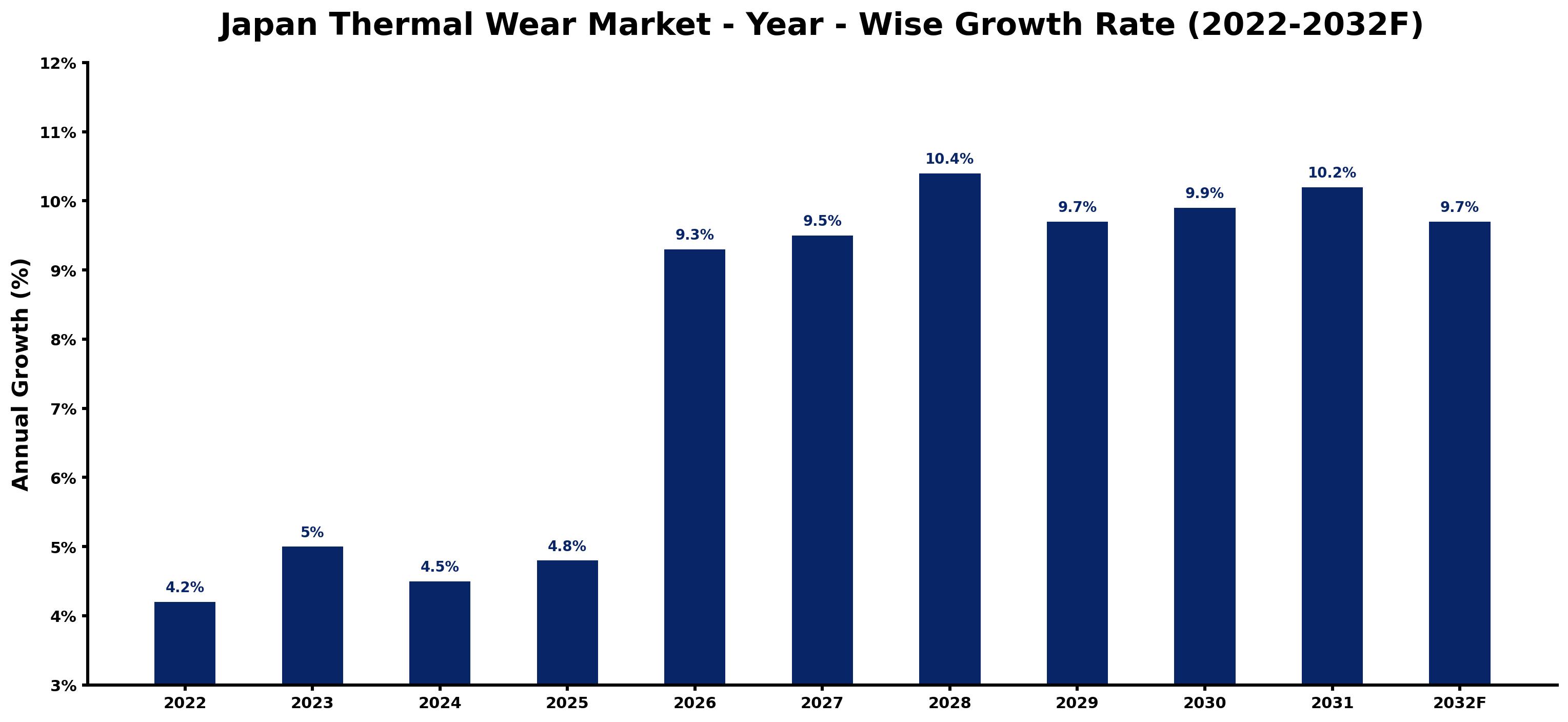
The yearly estimates that follow link every growth rate to its principal driver, so readers can see why the pace changed in each period.
| Year | Estimated Annual Growth (%) | Market Rationale |
| 2022 | 4.2 | The market showed steady demand from outdoor enthusiasts and cold climate workers. |
| 2023 | 5.0 | Growth accelerated due to increased participation in winter sports events across Japan. |
| 2024 | 4.5 | Demand growth slowed slightly as consumers adjusted to spending habits. |
| 2025 | 4.8 | The market experienced renewed interest in thermal wear as temperatures dropped. |
| 2026 | 9.3 | Demand is expected to rise sharply as more consumers seek advanced thermal solutions. |
| 2027 | 9.5 | The growth momentum continues as outdoor activities gain popularity during winter months. |
| 2028 | 10.4 | The peak growth period is driven by innovations in heated clothing and insulation technology. |
| 2029 | 9.7 | Growth is projected to moderate as the market stabilises after rapid expansion. |
| 2030 | 9.9 | Demand is anticipated to rise again with increasing interest in sustainable materials. |
| 2031 | 10.2 | The market is expected to grow steadily as performance apparel becomes more mainstream. |
| 2032 | 9.7 | Growth is projected to slow as market saturation begins to set in. |
Note: Market size estimations and growth projections presented in this report are based on 6Wresearch's proprietary forecasting methodology, utilizing the latest available industry data, government publications, and primary research inputs.
Japan Thermal Wear Market Synopsis
Thermal wear consists of specialised clothing designed to retain body heat, crafted from materials such as wool and synthetic fibres. It caters to outdoor enthusiasts, athletes, and workers in cold climates who need insulation in low temperatures. The Japan Thermal Wear Market is growing, driven by an increasing interest in outdoor activities, particularly in the Tokyo region, which serves as a retail hub. On average, households spend around ¥50,000 annually on outdoor apparel, while advancements in materials and a rise in participation in winter sports events further stimulate demand.
Market Dynamics Impact Analysis (2026–2032)
| Factor | Type | Impact | Primary Segment Affected |
| Increased participation in winter sports events drives demand for thermal wear, particularly among outdoor enthusiasts and athletes. | Driver | High | Performance Apparel |
| The growing trend towards sustainable materials in thermal wear production attracts environmentally conscious consumers, boosting sales. | Driver | High | Merino Wool/Synthetic Blends |
| The demand for battery heated jackets is rising due to their effectiveness in extreme cold, presenting a lucrative opportunity for suppliers. | Opportunity | High | Battery Heated Jackets |
| The increasing popularity of online apparel stores allows for wider distribution and access to thermal wear, creating new market entry points. | Opportunity | High | Online Apparel Stores |
| A shortage of skilled workers in thermal wear production leads to delays and increased operational costs for manufacturers. | Restraint | High | Base Layers |
| Dependence on specific materials like Merino wool can cause supply chain disruptions, affecting production timelines and availability. | Restraint | High | Heated Clothing |
| Rising costs associated with compliance to sustainable practices can strain budgets for thermal wear producers, impacting pricing strategies. | Challenge | Medium | Insulated Gloves |
| Technological gaps in manufacturing processes can hinder production efficiency, leading to increased costs and reduced competitiveness. | Challenge | Medium | Thermal Socks |
Evaluation of Drivers in Japan Thermal Wear Market (2026–2032)
These are the developments adding the most demand over the forecast period.
| Drivers | Primary Segment Affected | Why It Matters (Evidence) |
| Increased participation in winter sports events boosts thermal wear sales. | Performance Apparel | The Tokyo Marathon in 2023 saw a rise in participants wearing thermal apparel due to cold weather. |
| Growing interest in sustainable materials drives innovation in thermal wear. | Heated Clothing | The government aims to reduce textile waste by 50% by 2030, influencing production methods. |
| Rising temperatures in winter months create demand for effective insulation solutions. | Thermal Socks | The average temperature in winter in Hokkaido can drop below -10°C, increasing the need for thermal wear. |
| The popularity of outdoor activities among the population supports thermal wear demand. | Cold Climate Workers | Japan's population is approximately 126 million, with a significant portion engaged in outdoor activities. |
| Online retail channels expand market reach and accessibility for consumers. | Online Apparel Stores | Online apparel stores account for over 30% of thermal wear sales in Japan. |
Most of the extra volume comes from increased participation in winter sports events, leading to a surge in thermal wear sales. The average temperature in winter can drop significantly, increasing the need for effective insulation solutions. The popularity of outdoor activities among Japan's population supports thermal wear demand, with many engaging in winter sports and outdoor adventures.
Evaluation of Restraints in Japan Thermal Wear Market
The table below lists the restraints and the evidence behind each.
| Market Restraint | Primary Segment Affected | Why It Matters (Evidence) |
| Rising production costs due to material sourcing challenges limit profit margins. | Base Layers | Manufacturers face increased costs as raw materials become more expensive, affecting pricing strategies. |
| Compliance with JIS regulations complicates production processes for manufacturers. | Base Layers | Producers must ensure their products meet stringent quality and safety standards, increasing operational complexity. |
| Capacity constraints in production facilities hinder meeting growing demand. | Thermal Socks | Manufacturers may struggle to scale operations quickly enough to satisfy increasing consumer interest. |
| Limited availability of skilled workforce affects production efficiency. | Performance Apparel | The industry faces challenges in recruiting skilled workers, which can slow down production rates. |
| Cost pressures from rising raw material prices affect pricing strategies. | Heated Clothing | As materials become more expensive, manufacturers may need to raise prices, impacting sales. |
Japan Thermal Wear Market Challenges
Producers of thermal wear face challenges due to a shortage of skilled workers, as many young people relocate to urban centres for better opportunities, causing production delays of up to 15%. Technology gaps remain, with numerous manufacturers relying on outdated machinery, which can raise operational costs by 20% for suppliers. Supply chain disruptions occur because of reliance on specific materials like Merino wool, leading to order fulfillment delays for buyers during peak winter seasons. Buyers encounter price fluctuations as the government advocates for sustainable practices, resulting in budgeting challenges for outdoor apparel purchases.
Trends in the Japan Thermal Wear Market
The trends below show where the Japan Thermal Wear Market is heading.
- Shift Towards Sustainable Materials: The Ministry of Economy, Trade and Industry launched a program in 2023 to promote sustainable textile production. This initiative influences manufacturers to adopt eco-friendly practices, aligning with consumer demand for sustainable products.
- Growth of Battery Heated Jackets: Battery heated jackets are gaining popularity among cold climate workers in Japan. This trend reflects a broader shift towards advanced thermal solutions, with sales expected to increase as more workers seek effective heating options.
- Increase in Online Sales Channels: Online apparel stores are becoming a primary distribution channel for thermal wear. Over 30% of thermal wear sales in Japan occur through these platforms, making them essential for reaching a wider audience.
- Expansion of Performance Apparel: The demand for performance apparel is rising as athletes increasingly utilize thermal wear for cold weather activities. The average spending on outdoor apparel per household in Japan is approximately ¥50,000 annually, indicating strong consumer interest.
Investment Opportunities in the Japan Thermal Wear Market
Where to invest in the Japan Thermal Wear Market: the main openings are set out below.
- Rising Demand for Heated Clothing: With the growing trend of battery heated jackets, manufacturers have an opportunity to innovate. The market for heated clothing is expanding, as cold climate workers increasingly seek these solutions.
- Investment in Sustainable Production: As the government aims for a 50% reduction in textile waste by 2030, there is a pressing need for sustainable production methods. Manufacturers can invest in eco-friendly materials and processes to meet this demand.
- Expansion in Online Retailing: The shift towards online shopping offers a promising opportunity for thermal wear suppliers. With over 30% of sales occurring through online apparel stores, entering this channel can broaden market reach.
- Focus on Performance Apparel: The growing interest in performance apparel among athletes presents a chance for growth. Suppliers can target this segment by developing specialised thermal wear that meets the needs of active users.
Government Initiatives in the Japan Thermal Wear Market
The Building Energy Efficiency Act, amended in 2022, requires that all new buildings meet energy standards starting April 2025. This legislation affects thermal wear producers by encouraging the use of energy-efficient materials and designs in their products, aligning with sustainability goals.
The Economic Security Promotion Act supports supply-chain resilience for critical products, including thermal wear. Manufacturers benefit from this policy as it facilitates access to essential materials and resources, ensuring stable production capabilities.
Future Insight of the Japan Thermal Wear Market
Households will increasingly spend on thermal wear, with an average of ¥65,000 projected by 2032, reflecting a rising interest in outdoor activities. Manufacturers will adopt advanced technologies to improve material performance, focusing on insulation and moisture-wicking capabilities. Government initiatives aimed at reducing textile waste will encourage innovation in eco-friendly materials, benefiting suppliers who adapt quickly. Retailers will expand their online offerings, enhancing accessibility for buyers, especially in urban areas.
Market Segmentation Analysis
Japan Thermal Wear Market report covers a detailed analysis of the following market segments:
By Thermal Wear – Base Layers Lead, Heated Clothing Expected to Grow Fastest
According to Saurav Kr Singh, Senior Research Analyst at 6Wresearch, Base Layers accounted for 46% of the market by thermal wear in 2025. Base Layers are essential for warmth, especially in regions like Hokkaido where winter temperatures can drop below -10°C. Their critical role in outdoor activities and usage among cold climate workers solidifies their leading position in the market. Heated Clothing is set to record the highest CAGR in this split, 12.6% over 2026–2032. Heated Clothing is gaining popularity among cold climate workers seeking additional warmth for outdoor tasks. This trend is highlighted by the increasing demand for battery heated jackets, indicating a shift towards more effective thermal solutions. Suppliers should focus on expanding their heated clothing offerings to meet the growing demand from cold climate workers.
By Product Type – Long Johns Lead, Battery Heated Jackets Expected to Grow Fastest
Long Johns held 39% of the Japan Thermal Wear Market by product type in 2025. Long Johns are the market leader as they provide necessary base warmth, particularly valued during Japan's harsh winters. Their widespread adoption is evident, with households spending an average of ¥50,000 annually on outdoor apparel, reinforcing their market dominance. Battery Heated Jackets are projected to grow fastest, at a CAGR of 13.6% during 2026–2032. Battery Heated Jackets are rapidly gaining traction, offering active heating solutions that appeal to cold climate workers. The rising preference for these jackets signals a shift towards advanced thermal wear options. Buyers should consider investing in battery heated jackets to enhance their comfort during winter activities.
By Material Composition – Merino Wool/Synthetic Blends Lead, Conductive Filament Expected to Grow Fastest
In 2025, Merino Wool/Synthetic Blends led the material composition split with a 50% share. Merino Wool/Synthetic Blends are preferred for thermal wear due to their excellent warmth and moisture-wicking properties, making them suitable for Japan's cold climate. Their extensive use across various thermal products underscores their significance in the market. The quickest growth will come from Conductive Filament, forecast to expand at a CAGR of 14.9% between 2026 and 2032. Conductive Filament is emerging as the fastest-growing material, primarily used in heated clothing for cold climate workers. This trend towards advanced materials highlights a demand for more effective thermal solutions. Suppliers should explore investments in conductive filament technologies to address the rising demand for advanced thermal wear.
By Distribution Channel – Outdoor Gear Retailers Lead, Online Apparel Stores Expected to Grow Fastest
The largest distribution channel category in 2025 was Outdoor Gear Retailers, at 38% of revenue. Outdoor Gear Retailers are the leading distribution channel, directly catering to outdoor enthusiasts and offering a wide range of thermal wear. Their concentration in key regions like Tokyo enhances their market position. Over 2026–2032, Online Apparel Stores are expected to post the fastest growth, at a CAGR of 12.9%. Online Apparel Stores are experiencing rapid growth, providing convenient access to thermal wear for consumers, especially during peak winter seasons. This shift towards online shopping reflects changing consumer preferences in retail. Suppliers should strengthen their online presence to capture the expanding market of consumers who prefer online shopping for thermal wear.
By End User Industry – Performance Apparel Leads, Cold Climate Workers Expected to Grow Fastest
With 51% of end user industry revenue in 2025, Performance Apparel was the largest category. Performance Apparel is the leading end user segment, as it directly incorporates thermal wear designed for athletes. The support from organisations such as the Japan Sports Agency further emphasises this segment's importance. Cold Climate Workers are set to record the highest CAGR in this split, 12.7% over 2026–2032. Cold Climate Workers represent the fastest-growing end user group, requiring thermal protection for outdoor tasks in harsh conditions. The increasing number of workers in cold environments highlights the demand for specialised thermal solutions. Suppliers should tailor their products to meet the specific needs of cold climate workers to capitalise on this growing segment.
Key Attractiveness of the Report
- 10 Years of Market Numbers
- Historical Data Starting from 2022 to 2025
- Base Year 2025
- Forecast Data until 2032
- Key Performance Indicators Impacting the Market
- Major Upcoming Developments and Projects
Key Highlights of the Report:
- Japan Thermal Wear Market Outlook
- Market Size of Japan Thermal Wear Market, 2025
- Forecast of Japan Thermal Wear Market, 2032
- Historical Data and Forecast of Japan Thermal Wear Revenues & Volume for the Period 2022-2032F
- Japan Thermal Wear Market Trend Evolution
- Japan Thermal Wear Market Drivers and Challenges
- Japan Thermal Wear Price Trends
- Japan Thermal Wear Porter's Five Forces
- Japan Thermal Wear Industry Life Cycle
- Historical Data and Forecast of Japan Thermal Wear Market Revenues & Volume By Thermal Wear for the Period 2022-2032F
- Historical Data and Forecast of Japan Thermal Wear Market Revenues & Volume By Base Layers for the Period 2022-2032F
- Historical Data and Forecast of Japan Thermal Wear Market Revenues & Volume By Heated Clothing for the Period 2022-2032F
- Historical Data and Forecast of Japan Thermal Wear Market Revenues & Volume By Insulated Gloves for the Period 2022-2032F
- Historical Data and Forecast of Japan Thermal Wear Market Revenues & Volume By Thermal Socks for the Period 2022-2032F
- Historical Data and Forecast of Japan Thermal Wear Market Revenues & Volume By Product Type for the Period 2022-2032F
- Historical Data and Forecast of Japan Thermal Wear Market Revenues & Volume By Long Johns for the Period 2022-2032F
- Historical Data and Forecast of Japan Thermal Wear Market Revenues & Volume By Battery Heated Jackets for the Period 2022-2032F
- Historical Data and Forecast of Japan Thermal Wear Market Revenues & Volume By Thermal Glove Liners for the Period 2022-2032F
- Historical Data and Forecast of Japan Thermal Wear Market Revenues & Volume By Compression Thermal for the Period 2022-2032F
- Historical Data and Forecast of Japan Thermal Wear Market Revenues & Volume By Material Composition for the Period 2022-2032F
- Historical Data and Forecast of Japan Thermal Wear Market Revenues & Volume By Merino Wool/Synthetic Blends for the Period 2022-2032F
- Historical Data and Forecast of Japan Thermal Wear Market Revenues & Volume By Conductive Filament for the Period 2022-2032F
- Historical Data and Forecast of Japan Thermal Wear Market Revenues & Volume By Fleece/Thinsulate for the Period 2022-2032F
- Historical Data and Forecast of Japan Thermal Wear Market Revenues & Volume By Wool/Synthetic Blends for the Period 2022-2032F
- Historical Data and Forecast of Japan Thermal Wear Market Revenues & Volume By Distribution Channel for the Period 2022-2032F
- Historical Data and Forecast of Japan Thermal Wear Market Revenues & Volume By Outdoor Gear Retailers for the Period 2022-2032F
- Historical Data and Forecast of Japan Thermal Wear Market Revenues & Volume By Sporting Goods Retailers for the Period 2022-2032F
- Historical Data and Forecast of Japan Thermal Wear Market Revenues & Volume By Online Apparel Stores for the Period 2022-2032F
- Historical Data and Forecast of Japan Thermal Wear Market Revenues & Volume By E-commerce Platforms for the Period 2022-2032F
- Historical Data and Forecast of Japan Thermal Wear Market Revenues & Volume By End User Industry for the Period 2022-2032F
- Historical Data and Forecast of Japan Thermal Wear Market Revenues & Volume By Performance Apparel for the Period 2022-2032F
- Historical Data and Forecast of Japan Thermal Wear Market Revenues & Volume By Cold Climate Workers for the Period 2022-2032F
- Historical Data and Forecast of Japan Thermal Wear Market Revenues & Volume By Outdoor Enthusiasts for the Period 2022-2032F
- Historical Data and Forecast of Japan Thermal Wear Market Revenues & Volume By Athletes/Outdoor Users for the Period 2022-2032F
- Japan Thermal Wear Import Export Trade Statistics
- Market Opportunity Assessment By Thermal Wear
- Market Opportunity Assessment By Product Type
- Market Opportunity Assessment By Material Composition
- Market Opportunity Assessment By Distribution Channel
- Market Opportunity Assessment By End User Industry
- Japan Thermal Wear Top Companies Market Share
- Japan Thermal Wear Competitive Benchmarking By Technical and Operational Parameters
- Japan Thermal Wear Company Profiles
- Japan Thermal Wear Key Strategic Recommendations
Market Covered
Segments analysed in this report are listed below.
By Thermal Wear
- Base Layers
- Heated Clothing
- Insulated Gloves
- Thermal Socks
By Product Type
- Long Johns
- Battery Heated Jackets
- Thermal Glove Liners
- Compression Thermal
By Material Composition
- Merino Wool/Synthetic Blends
- Conductive Filament
- Fleece/Thinsulate
- Wool/Synthetic Blends
By Distribution Channel
- Outdoor Gear Retailers
- Sporting Goods Retailers
- Online Apparel Stores
- E-commerce Platforms
By End User Industry
- Performance Apparel
- Cold Climate Workers
- Outdoor Enthusiasts
- Athletes/Outdoor Users































