Japan Thrombosis Treatment Market Size & Growth Rate
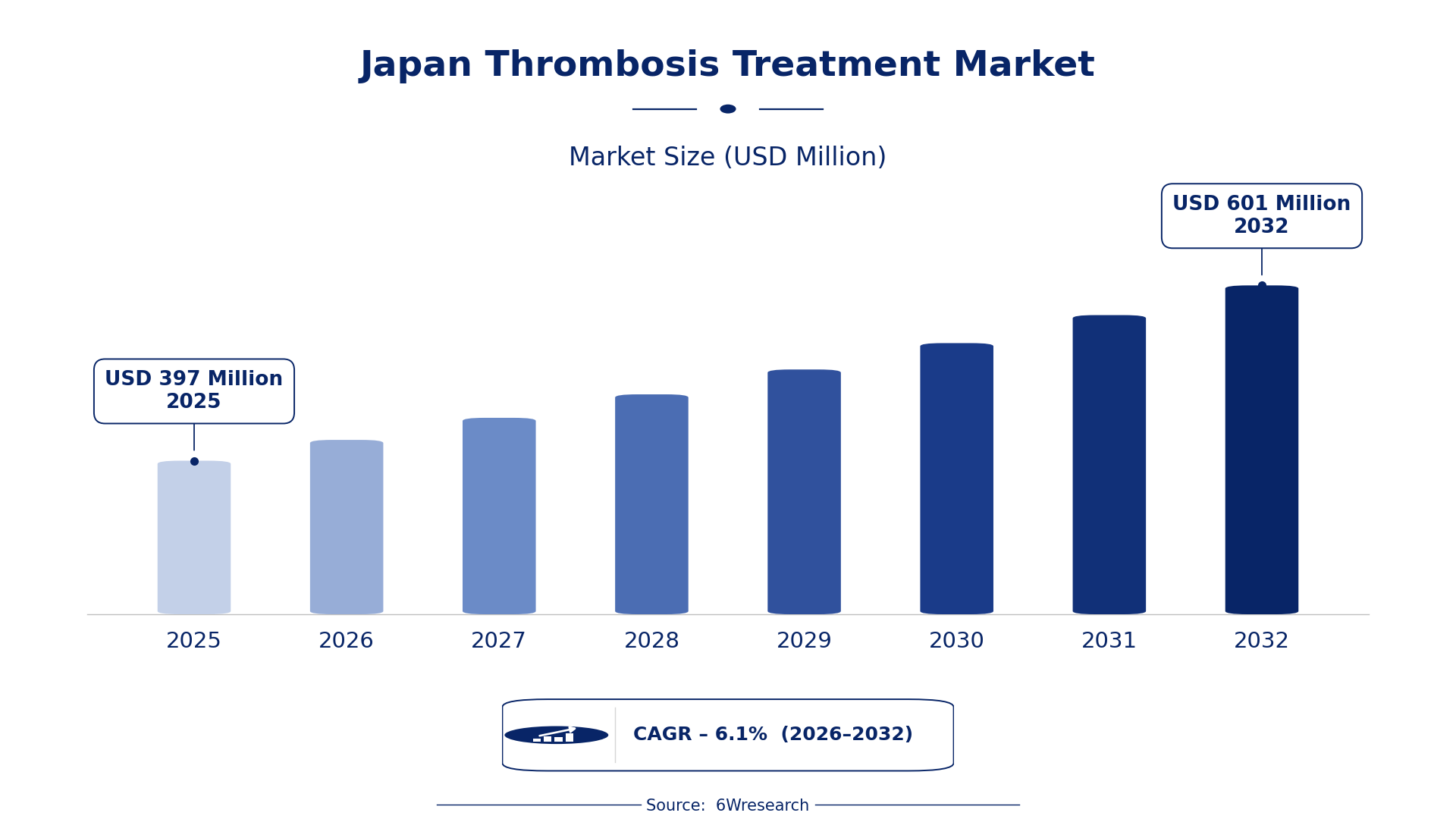
According to 6Wresearch internal database and industry insights, the Japan Thrombosis Treatment Market was valued at USD 397 Million in 2025 and is projected to reach USD 601 Million by 2032, growing at a CAGR of approximately 6.1% during 2026–2032.
Japan Thrombosis Treatment Market Highlights
| Report Metric | Details |
| Report Name | Japan Thrombosis Treatment Market (2026-2032) |
| Market Size 2025 | USD 397 Million |
| Market Size 2032 | USD 601 Million |
| Absolute Growth 2025–2032 | USD 204 Million |
| CAGR 2026–2032 | 6.1% |
| Peak Annual Growth | 7.2% in 2029 |
| Forecast Period | 2026–2032 |
| Historical Data | 2022–2025 |
| Base Year | 2025 |
| Leading Treatment Type, 2025 | Pharmacologic Therapy (51% share) |
| Leading Patient Category, 2025 | Adult Patients (42% share) |
| Leading Delivery Setting, 2025 | Inpatient (39% share) |
| Leading End User, 2025 | Hospitals (36% share) |
| Fastest-Growing Treatment Type | Catheter-Directed Therapy (8.3% CAGR) |
| Fastest-Growing Patient Category | Chronic Cases (7.7% CAGR) |
| Fastest-Growing Delivery Setting | Cath Lab (7.9% CAGR) |
| Fastest-Growing End User | Surgical Centers (8.1% CAGR) |
| Growing Sector | Surgical Centers |
| Key End Users | Hospitals, Surgical Centers, Interventional Radiology, Healthcare Providers |
Japan Thrombosis Treatment Market Year-wise Growth Rate and Key Drivers (2022–2032)
This graph illustrates the annual growth rates of the market from 2022 to 2032, highlighting a steady upward trajectory and projected market expansion over the forecast period.
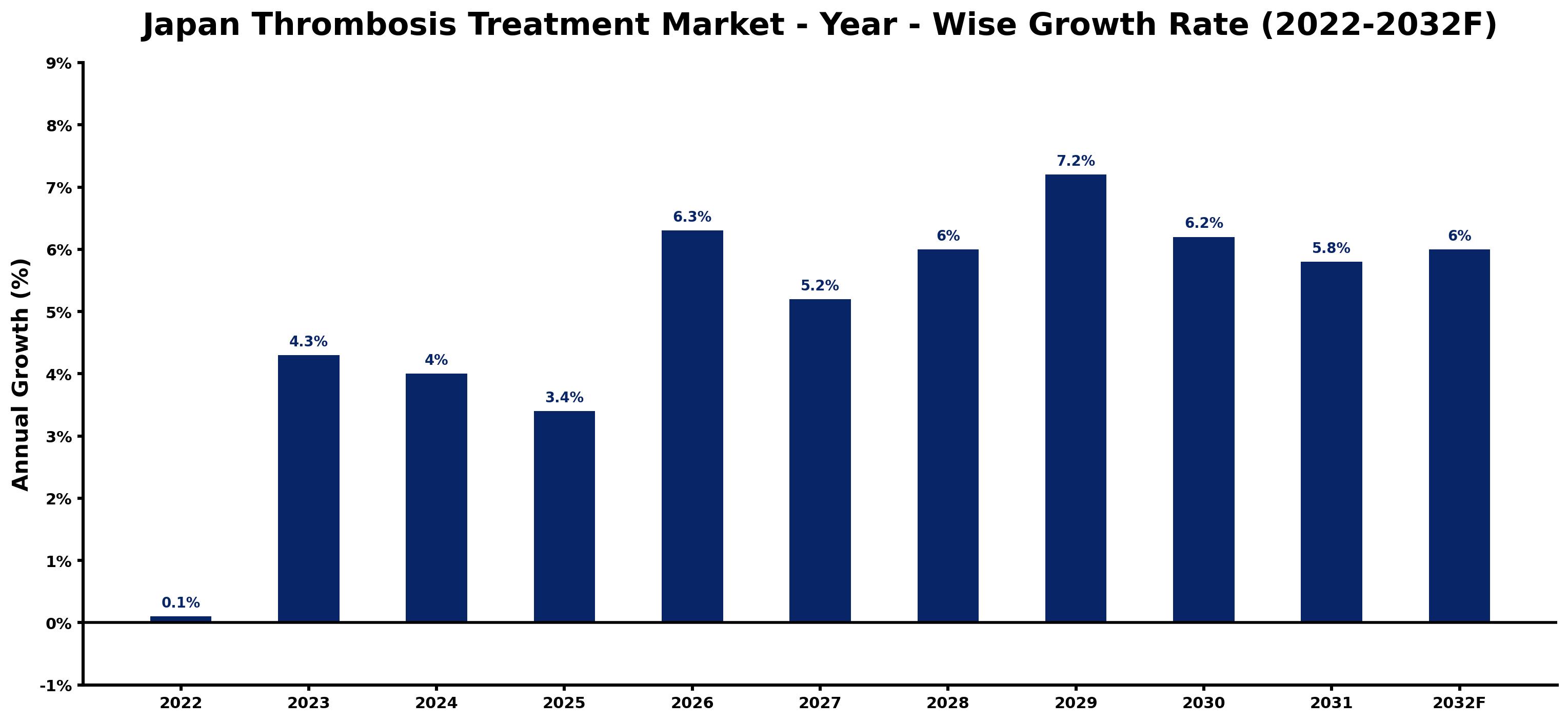
The following figures match every annual growth estimate with the main market development of that year, giving the reasoning behind each rise or slowdown.
| Year | Estimated Annual Growth (%) | Market Rationale |
| 2022 | 0.1 | The market experienced minimal growth due to initial recovery from previous impacts. |
| 2023 | 4.3 | Growth accelerated as healthcare providers increased investments in thrombosis management. |
| 2024 | 4.0 | Growth slowed slightly as hospitals adjusted to new treatment protocols. |
| 2025 | 3.4 | Market expansion continued but at a reduced pace as competition intensified. |
| 2026 | 6.3 | Demand surged with new technologies improving treatment options for patients. |
| 2027 | 5.2 | Growth decelerated as market saturation began to affect purchasing decisions. |
| 2028 | 6.0 | Demand increased again as hospitals expanded their thrombosis treatment capabilities. |
| 2029 | 7.2 | The market peaked with significant investments in advanced surgical technologies. |
| 2030 | 6.2 | Growth slowed as the market adjusted to the peak in demand. |
| 2031 | 5.8 | A further slowdown occurred as hospitals focused on efficiency improvements. |
| 2032 | 6.0 | Growth picked up again with new healthcare initiatives targeting early detection. |
Note: Market size estimations and growth projections presented in this report are based on 6Wresearch's proprietary forecasting methodology, utilizing the latest available industry data, government publications, and primary research inputs.
Japan Thrombosis Treatment Market Synopsis
Thrombosis treatment encompasses medical interventions to manage blood clots, primarily through pharmacological agents and surgical procedures. With over 8 million patients in Japan requiring such treatments, the market is experiencing robust growth. Rising healthcare expenditure, an ageing population, and advancements in treatment technologies, particularly in urban areas like Tokyo with the highest concentration of hospitals treating thrombosis, are key factors in this expansion.
Market Dynamics Impact Analysis (2026–2032)
| Factor | Type | Impact | Primary Segment Affected |
| Increasing healthcare expenditure drives demand for advanced thrombosis treatments. | Driver | High | Pharmacologic Therapy |
| The ageing population leads to higher incidences of thrombosis, boosting treatment needs. | Driver | High | Adult Patients |
| Expansion of surgical centers presents opportunities for enhanced treatment delivery. | Opportunity | High | Surgical Thrombectomy |
| Emerging catheter-directed therapies offer targeted treatment options for patients. | Opportunity | High | Catheter-Directed Therapy |
| High costs of advanced treatments may limit access for some patients. | Restraint | High | Pharmacologic Therapy |
| Limited availability of specialized surgical centers can delay treatment. | Restraint | Medium | Surgical Thrombectomy |
| Competition among healthcare providers can lead to price wars, affecting profitability. | Challenge | Medium | Adult Patients |
| Technological advancements require continuous investment, straining budgets. | Challenge | High | Catheter-Directed Therapy |
Evaluation of Drivers in Japan Thrombosis Treatment Market (2026–2032)
Below are the drivers that matter most for revenue growth, with supporting evidence.
| Drivers | Primary Segment Affected | Why It Matters (Evidence) |
| Rising healthcare expenditure supports investment in thrombosis treatment technologies. | Pharmacologic Therapy | Japan's healthcare expenditure reached approximately 42 trillion yen in 2022, enabling hospitals to adopt advanced therapies. |
| The ageing population increases the prevalence of thrombosis cases, driving demand. | Adult Patients | With an average patient age of around 75 years, the need for effective treatments is critical. |
| Expansion of surgical centers improves access to thrombectomy procedures. | Surgical Thrombectomy | Over 100,000 thrombectomy procedures are performed annually, indicating strong demand for surgical interventions. |
| Technological advancements in catheter-directed therapies improve treatment outcomes. | Catheter-Directed Therapy | Interventional radiology units are expanding in urban areas to address increasing thrombosis cases. |
| Healthcare providers are investing in training for staff to improve treatment protocols. | Chronic Cases | The Ministry of Health, Labour and Welfare oversees protocols that improve treatment effectiveness. |
Buyers are adding capacity as Japan's healthcare expenditure reached approximately 42 trillion yen in 2022, enabling hospitals to invest in advanced thrombosis treatment technologies. The ageing population, with an average patient age of around 75 years, increases the demand for effective management of blood clots. Surgical centers perform over 100,000 thrombectomy procedures annually, reflecting the urgent need for timely interventions. The expansion of interventional radiology units in urban areas addresses the growing number of thrombosis cases, improving treatment accessibility and outcomes. Continuous training for healthcare staff ensures that treatment protocols remain effective and up-to-date, further driving demand in this sector.
Evaluation of Restraints in Japan Thrombosis Treatment Market
These are the pressures that could keep growth below its potential.
| Market Restraint | Primary Segment Affected | Why It Matters (Evidence) |
| High costs of advanced thrombosis treatments limit patient access. | Pharmacologic Therapy | The average length of stay for inpatient thrombosis treatment is 7 days, increasing overall costs. |
| Limited availability of specialized surgical centers can delay treatment. | Surgical Thrombectomy | Japan has approximately 1,500 specialized surgical centers, which may not meet rising demand. |
| Profit margins can shrink due to intense competition among healthcare providers. | Adult Patients | As providers compete for patients, profit margins may shrink, impacting service quality. |
| Technological advancements require continuous investment, straining budgets. | Catheter-Directed Therapy | Hospitals must allocate funds for new equipment and training, limiting resources. |
| Regulatory hurdles can slow the approval of new treatment methods. | Chronic Cases | The JIS T 0301 standard for treatment devices requires rigorous testing, delaying market entry. |
Japan Thrombosis Treatment Market Challenges
Supply shortages of thrombosis treatment devices hinder timely patient care in hospitals, impacting over 8 million patients with cardiovascular diseases. High costs of advanced surgical procedures, averaging 1.5 million yen, restrict access for many elderly patients, leading to untreated conditions. A shortage of skilled professionals in thrombosis management results in longer recovery times, affecting patient satisfaction and outcomes. Complex regulatory protocols can extend approval times for new treatment methods, delaying access to essential therapies for hospitals and clinics.
Trends in the Japan Thrombosis Treatment Market
The shifts below are changing how Japan Thrombosis Treatment Market products are bought and supplied.
- Shift in Treatment Settings for Thrombosis Management: Hospitals are increasingly adopting catheter-directed therapies, particularly in urban areas like Tokyo, where interventional radiology units are expanding. This shift is expected to improve patient outcomes and increase the number of targeted treatments performed annually.
- Emergence of Advanced Surgical Techniques: Since 2023, surgical centers have been implementing new thrombectomy techniques, resulting in over 100,000 procedures performed annually. This trend improves the effectiveness of interventions and addresses the needs of high-risk patients.
- Focus on Early Detection Initiatives: The launch of a new government program in 2023 aims to improve early detection of thrombosis. This initiative is anticipated to reduce the incidence of severe cases and improve overall patient outcomes.
- Increased Investment in Healthcare Infrastructure: The Tokyo region is experiencing substantial investment in healthcare infrastructure, with hospitals expanding their capacities to treat thrombosis. This growth is driven by increasing demand and is projected to improve treatment accessibility.
Investment Opportunities in the Japan Thrombosis Treatment Market
Below are the investment opportunities with the strongest case in the Japan Thrombosis Treatment Market.
- Growing Demand for Catheter-Directed Therapies: With a projected growth rate of 8.3%, catheter-directed therapies present a strong investment opportunity. Surgical centers in urban areas can capitalise on this trend by expanding their treatment offerings.
- Expansion of Surgical Centers: Japan has approximately 1,500 specialised surgical centers, indicating a gap in capacity. Investing in new facilities can meet rising demand for thrombosis treatments, particularly in high-risk areas.
- Investment in Training Programs for Healthcare Providers: The need for skilled professionals in thrombosis treatment is critical, with hospitals focusing on staff training. Partnering with educational institutions can help address this gap and improve treatment outcomes.
- Development of Advanced Pharmacologic Agents: The market for pharmacologic therapies is expanding, driven by the need for effective treatments. Collaborating with research institutions can facilitate the development of innovative solutions.
Government Initiatives in the Japan Thrombosis Treatment Market
The Medical Care Act of 1948 establishes standards for hospitals and clinics, ensuring quality in thrombosis treatment. This law mandates that facilities maintain adequate staffing and resources to manage patient needs effectively. Additionally, the Long-Term Care Insurance Act of 1997 provides funding for nursing care, supporting older patients who require ongoing management of chronic conditions such as thrombosis.
The Ministry of Health, Labour and Welfare oversees the approval of treatment protocols and funding for healthcare initiatives. In 2023, the ministry launched a program to improve early detection of thrombosis, aiming to enhance patient outcomes and reduce the burden on healthcare facilities.
Future Insight of the Japan Thrombosis Treatment Market
The expansion of interventional radiology units will improve access to thrombosis treatments by 2032. A government initiative aimed at early detection will facilitate timely interventions for patients. The adoption of JIS T 0301 standards will ensure better quality in thrombosis treatment devices, benefiting both buyers and suppliers. With surgical centers performing over 100,000 thrombectomy procedures annually, the demand for skilled professionals will drive new training programmes.
Market Segmentation Analysis
Japan Thrombosis Treatment Market report covers a detailed analysis of the following market segments:
By Treatment Type – Pharmacologic Therapy Leads, Catheter-Directed Therapy Expected to Grow Fastest
According to Saurav Kr Singh, Senior Research Analyst at 6Wresearch, in 2025, Pharmacologic Therapy led the treatment type split with a 51% share. Pharmacologic therapy holds the largest share as it is the primary method for managing thrombosis, extensively utilised in Japan's healthcare facilities. This method is crucial for the over 8 million patients suffering from cardiovascular diseases, ensuring effective prevention of complications such as stroke. Catheter-Directed Therapy is set to record the highest CAGR in this split, 8.3% over 2026–2032. Catheter-directed therapy is experiencing rapid growth due to its targeted treatment capabilities, particularly in urban hospitals that are adopting advanced technologies. The expansion of interventional radiology units in these areas significantly contributes to this trend. Suppliers should focus on enhancing catheter-directed therapy solutions to meet the rising demand in urban healthcare environments.
By Patient Category – Adult Patients Lead, Chronic Cases Expected to Grow Fastest
Adult Patients accounted for 42% of the market by patient category in 2025. Adult patients constitute the largest demographic for thrombosis treatment, making up a substantial portion of those requiring intervention. With the average age of treated patients around 75 years, this group faces heightened risks of complications. Chronic Cases are projected to grow fastest, at a CAGR of 7.7% during 2026–2032. Chronic cases are expanding quickly as the need for ongoing management of thrombosis rises among the ageing population. The increasing incidence of cardiovascular diseases drives the demand for continuous care for these patients. Providers must create tailored solutions for chronic cases to ensure effective long-term management and support.
By Delivery Setting – Inpatient Leads, Cath Lab Expected to Grow Fastest
Inpatient took 39% of delivery setting revenue in 2025, more than any other category. Inpatient settings dominate thrombosis treatment, providing the necessary environment for administering complex therapies. The average length of stay of 7 days indicates the need for comprehensive care during patient recovery. The quickest growth will come from Cath Lab, forecast to expand at a CAGR of 7.9% between 2026 and 2032. Cath labs are witnessing the fastest growth as they specialise in catheter-directed therapies, which are increasingly preferred for their effectiveness. The rise in surgical procedures conducted in these facilities is a major factor driving this growth. Suppliers need to invest in cath lab technology and infrastructure to capitalise on this expanding segment.
By End User – Hospitals Lead, Surgical Centers Expected to Grow Fastest
The largest end user category in 2025 was Hospitals, at 36% of revenue. Hospitals are the primary providers of thrombosis treatment, serving a large patient population and equipped with essential resources. Japan's healthcare expenditure of approximately 42 trillion yen highlights the pivotal role hospitals play in managing thrombosis cases. Over 2026–2032, Surgical Centers are expected to post the fastest growth, at a CAGR of 8.1%. Surgical centers are rapidly becoming critical facilities for elective surgical interventions related to thrombosis treatment. The performance of over 100,000 thrombectomy procedures annually underscores their increasing importance in the treatment framework. Suppliers should consider forming partnerships with surgical centers to expand their market presence and improve service offerings.
Key Attractiveness of the Report
- 10 Years of Market Numbers
- Historical Data Starting from 2022 to 2025
- Base Year 2025
- Forecast Data until 2032
- Key Performance Indicators Impacting the Market
- Major Upcoming Developments and Projects
Key Highlights of the Report:
- Japan Thrombosis Treatment Market Outlook
- Market Size of Japan Thrombosis Treatment Market, 2025
- Forecast of Japan Thrombosis Treatment Market, 2032
- Historical Data and Forecast of Japan Thrombosis Treatment Revenues & Volume for the Period 2022-2032F
- Japan Thrombosis Treatment Market Trend Evolution
- Japan Thrombosis Treatment Market Drivers and Challenges
- Japan Thrombosis Treatment Price Trends
- Japan Thrombosis Treatment Porter's Five Forces
- Japan Thrombosis Treatment Industry Life Cycle
- Historical Data and Forecast of Japan Thrombosis Treatment Market Revenues & Volume By Treatment Type for the Period 2022-2032F
- Historical Data and Forecast of Japan Thrombosis Treatment Market Revenues & Volume By Pharmacologic Therapy for the Period 2022-2032F
- Historical Data and Forecast of Japan Thrombosis Treatment Market Revenues & Volume By Surgical Thrombectomy for the Period 2022-2032F
- Historical Data and Forecast of Japan Thrombosis Treatment Market Revenues & Volume By Catheter-Directed Therapy for the Period 2022-2032F
- Historical Data and Forecast of Japan Thrombosis Treatment Market Revenues & Volume By Combined Therapy for the Period 2022-2032F
- Historical Data and Forecast of Japan Thrombosis Treatment Market Revenues & Volume By Patient Category for the Period 2022-2032F
- Historical Data and Forecast of Japan Thrombosis Treatment Market Revenues & Volume By Adult Patients for the Period 2022-2032F
- Historical Data and Forecast of Japan Thrombosis Treatment Market Revenues & Volume By High-Risk Cases for the Period 2022-2032F
- Historical Data and Forecast of Japan Thrombosis Treatment Market Revenues & Volume By Elderly Patients for the Period 2022-2032F
- Historical Data and Forecast of Japan Thrombosis Treatment Market Revenues & Volume By Chronic Cases for the Period 2022-2032F
- Historical Data and Forecast of Japan Thrombosis Treatment Market Revenues & Volume By Delivery Setting for the Period 2022-2032F
- Historical Data and Forecast of Japan Thrombosis Treatment Market Revenues & Volume By Inpatient for the Period 2022-2032F
- Historical Data and Forecast of Japan Thrombosis Treatment Market Revenues & Volume By Operation Theater for the Period 2022-2032F
- Historical Data and Forecast of Japan Thrombosis Treatment Market Revenues & Volume By Cath Lab for the Period 2022-2032F
- Historical Data and Forecast of Japan Thrombosis Treatment Market Revenues & Volume By Long-Term Care Units for the Period 2022-2032F
- Historical Data and Forecast of Japan Thrombosis Treatment Market Revenues & Volume By End User for the Period 2022-2032F
- Historical Data and Forecast of Japan Thrombosis Treatment Market Revenues & Volume By Hospitals for the Period 2022-2032F
- Historical Data and Forecast of Japan Thrombosis Treatment Market Revenues & Volume By Surgical Centers for the Period 2022-2032F
- Historical Data and Forecast of Japan Thrombosis Treatment Market Revenues & Volume By Interventional Radiology for the Period 2022-2032F
- Historical Data and Forecast of Japan Thrombosis Treatment Market Revenues & Volume By Multispecialty Clinics for the Period 2022-2032F
- Japan Thrombosis Treatment Import Export Trade Statistics
- Market Opportunity Assessment By Treatment Type
- Market Opportunity Assessment By Patient Category
- Market Opportunity Assessment By Delivery Setting
- Market Opportunity Assessment By End User
- Japan Thrombosis Treatment Top Companies Market Share
- Japan Thrombosis Treatment Competitive Benchmarking By Technical and Operational Parameters
- Japan Thrombosis Treatment Company Profiles
- Japan Thrombosis Treatment Key Strategic Recommendations
Market Covered
The following segment groups are covered in the report.
By Treatment Type
- Pharmacologic Therapy
- Surgical Thrombectomy
- Catheter-Directed Therapy
- Combined Therapy
By Patient Category
- Adult Patients
- High-Risk Cases
- Elderly Patients
- Chronic Cases
By Delivery Setting
- Inpatient
- Operation Theater
- Cath Lab
- Long-Term Care Units
By End User
- Hospitals
- Surgical Centers
- Interventional Radiology
- Multispecialty Clinics































