Japan Tire Pressure Monitoring Sensor Market Size & Growth Rate
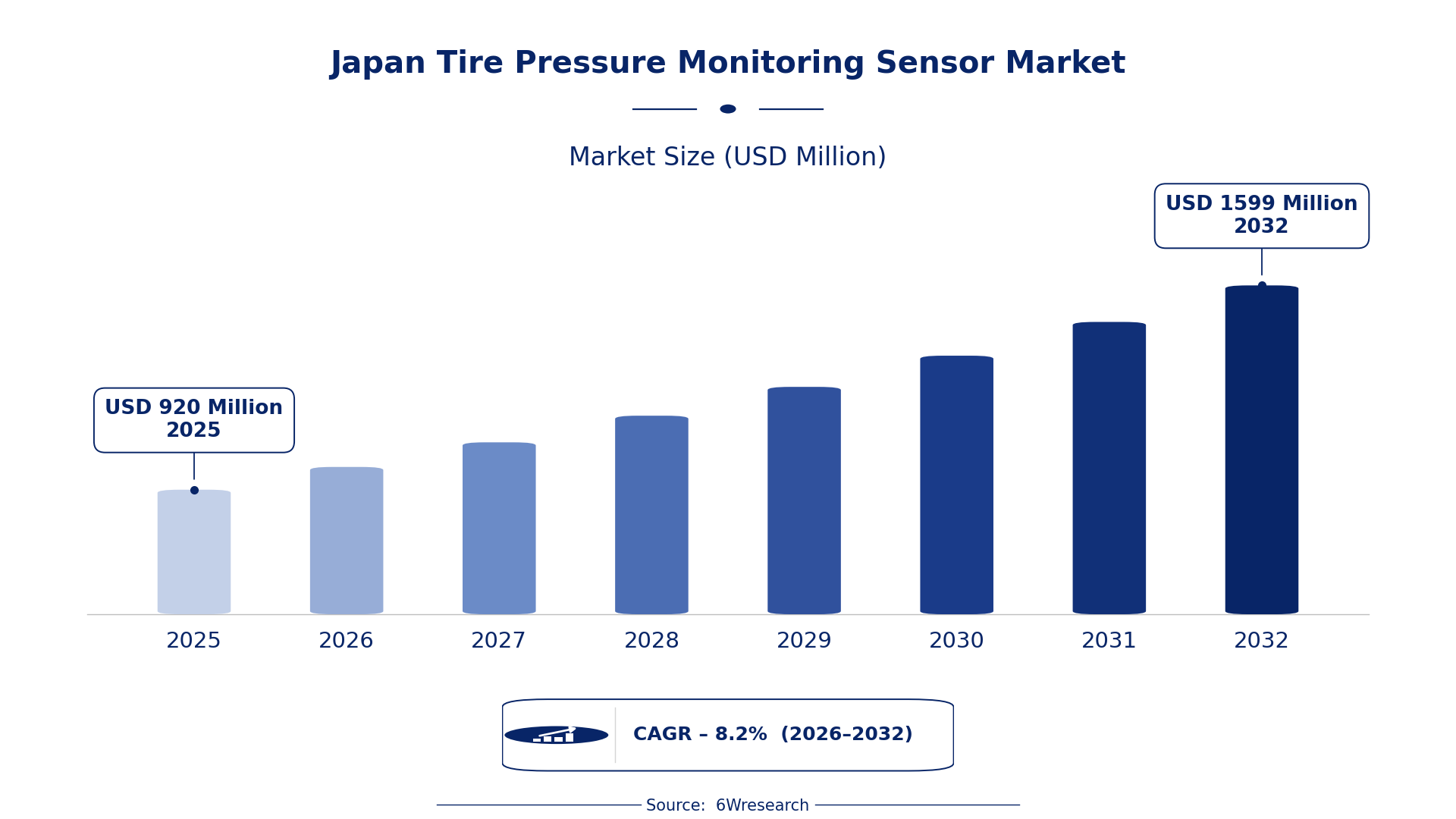
According to 6Wresearch internal database and industry insights, the Japan Tire Pressure Monitoring Sensor Market was valued at USD 920 Million in 2025 and is projected to reach USD 1,599 Million by 2032, growing at a CAGR of approximately 8.2% during 2026–2032.
Japan Tire Pressure Monitoring Sensor Market Highlights
| Report Metric | Details |
| Report Name | Japan Tire Pressure Monitoring Sensor Market (2026-2032) |
| Market Size 2025 | USD 920 Million |
| Market Size 2032 | USD 1,599 Million |
| Absolute Growth 2025–2032 | USD 679 Million |
| CAGR 2026–2032 | 8.2% |
| Peak Annual Growth | 9.0% in 2028 |
| Forecast Period | 2026–2032 |
| Historical Data | 2022–2025 |
| Base Year | 2025 |
| Leading Sensor Type, 2025 | Direct TPMS (50% share) |
| Leading Vehicle Category, 2025 | Passenger Cars (42% share) |
| Leading Technology Type, 2025 | Wireless (54% share) |
| Leading End User, 2025 | OEMs (36% share) |
| Fastest-Growing Sensor Type | Integrated Sensors (12.0% CAGR) |
| Fastest-Growing Vehicle Category | Electric Vehicles (11.1% CAGR) |
| Fastest-Growing Technology Type | IoT-Enabled (11.9% CAGR) |
| Fastest-Growing End User | Smart Vehicle Makers (11.0% CAGR) |
| Growing Sector | automotive safety |
| Key End Users | OEMs, Tire Service Providers, Aftermarket Retailers, Smart Vehicle Makers |
Japan Tire Pressure Monitoring Sensor Market Year-wise Growth Rate and Key Drivers (2022–2032)
This graph illustrates the annual growth rates of the market from 2022 to 2032, highlighting a steady upward trajectory and projected market expansion over the forecast period.
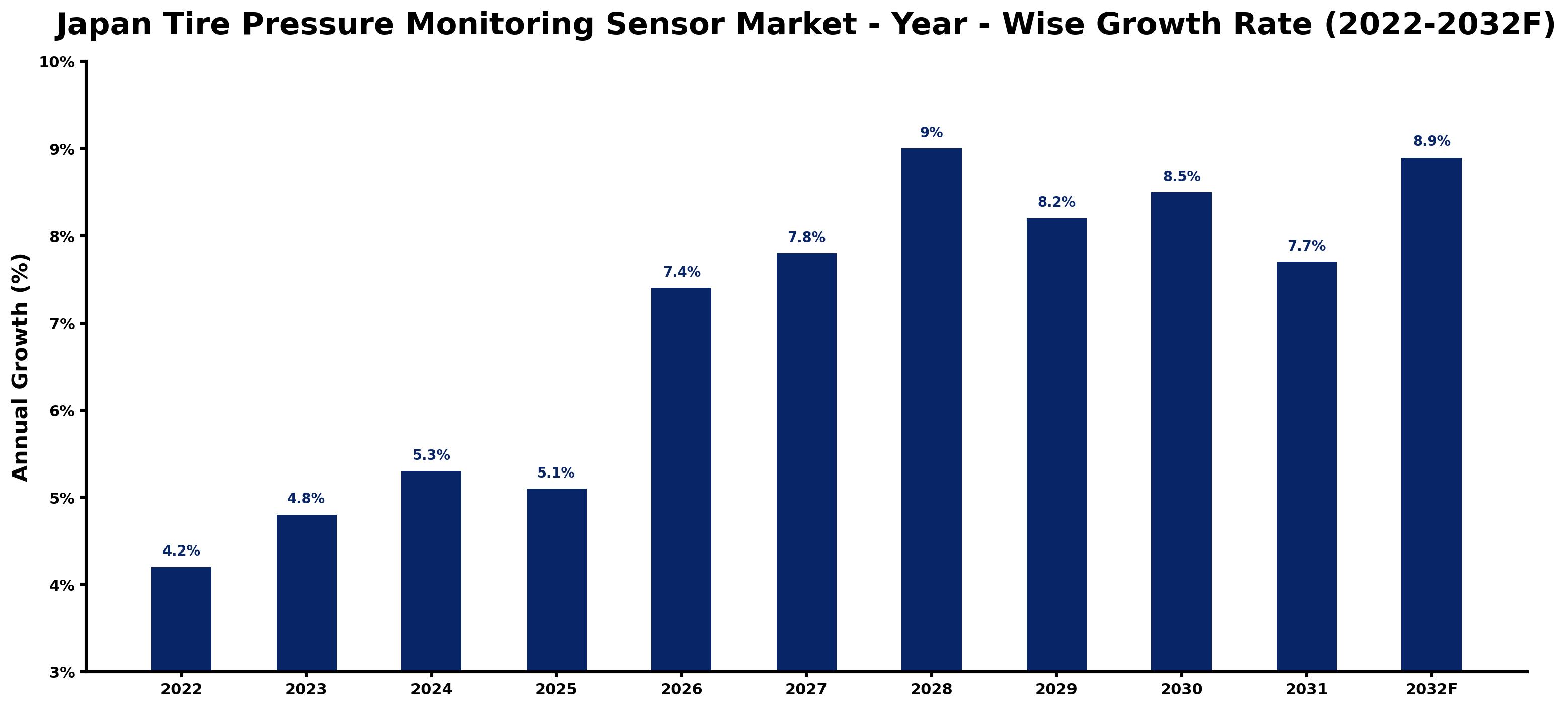
Year by year, the estimates below pair each growth rate with the development that shaped it.
| Year | Estimated Annual Growth (%) | Market Rationale |
| 2022 | 4.2 | The market exhibited steady growth, reflecting ongoing automotive production demands. |
| 2023 | 4.8 | Growth accelerated as consumer awareness of TPMS benefits increased significantly. |
| 2024 | 5.3 | The introduction of new safety regulations drove further market expansion. |
| 2025 | 5.1 | Growth slowed slightly as the market adjusted to previous high rates. |
| 2026 | 7.4 | Demand surged as electric vehicle adoption began to rise rapidly. |
| 2027 | 7.8 | The market continued to grow due to increasing safety standards and technology adoption. |
| 2028 | 9.0 | A peak in growth occurred as innovations in TPMS technology were introduced. |
| 2029 | 8.2 | Growth slowed, but demand remained strong due to ongoing safety concerns. |
| 2030 | 8.5 | Increased investments in smart vehicle technologies spurred market growth. |
| 2031 | 7.7 | A slight slowdown occurred as the market stabilised after rapid expansion. |
| 2032 | 8.9 | Growth accelerated again as consumer awareness of TPMS benefits continued to rise. |
Note: Market size estimations and growth projections presented in this report are based on 6Wresearch's proprietary forecasting methodology, utilizing the latest available industry data, government publications, and primary research inputs.
Japan Tire Pressure Monitoring Sensor Market Synopsis
Japan's automotive sector produced around 8 million vehicles in 2022, creating substantial demand for TPMS. Key drivers of this market include stringent safety regulations requiring direct TPMS in new passenger vehicles and a rising number of electric vehicles, which reached 1 million in 2023, further increasing the need for advanced monitoring solutions.
Market Dynamics Impact Analysis (2026–2032)
| Factor | Type | Impact | Primary Segment Affected |
| Stringent safety regulations mandate TPMS installation in new vehicles, driving demand for Direct TPMS. | Driver | High | Direct TPMS |
| The increasing number of electric vehicles necessitates advanced monitoring systems for safety and efficiency. | Driver | High | Electric Vehicles |
| The average age of vehicles in Japan exceeds 10 years, creating a strong aftermarket for TPMS replacements. | Opportunity | High | Aftermarket Retailers |
| The Tokyo region is a major automotive hub, fostering demand for TPMS in both production and aftermarket services. | Opportunity | Medium | Tire Service Providers |
| The high cost of advanced TPMS technology may limit adoption in some segments. | Restraint | Medium | Integrated Sensors |
| Consumer awareness of TPMS benefits remains moderate, affecting potential market growth. | Restraint | Medium | Passenger Cars |
| Supply chain disruptions can delay the availability of TPMS components, impacting production schedules. | Challenge | High | OEMs |
| Rising competition in the automotive sensor market may lead to price pressures on TPMS manufacturers. | Challenge | Medium | Aftermarket Retailers |
Evaluation of Drivers in Japan Tire Pressure Monitoring Sensor Market (2026–2032)
Key forces behind demand, with the segment each one moves most, are listed below.
| Drivers | Primary Segment Affected | Why It Matters (Evidence) |
| Increasing vehicle production in Japan drives demand for TPMS integration in new models. | Passenger Cars | In 2022, Japan produced about 8 million vehicles, necessitating TPMS installation. |
| The rise in electric vehicle adoption boosts demand for advanced TPMS solutions. | Electric Vehicles | The number of electric vehicles reached 1 million in 2023, increasing TPMS needs. |
| Growing consumer awareness of safety benefits encourages TPMS adoption in older vehicles. | Aftermarket Retailers | 70% of Japanese consumers are aware of TPMS benefits for safety and fuel efficiency. |
| Technological advancements in TPMS are improving functionality and connectivity. | IoT-Enabled | The Japanese automotive industry is expected to invest heavily in smart vehicle technologies. |
| Compliance with JIS standards ensures quality and safety in TPMS production. | Integrated Sensors | JIS standards govern the quality and safety of automotive components, including TPMS. |
A wider customer base explains much of the growth, as the automotive sector produced about 8 million vehicles in 2022, necessitating TPMS integration. The rise in electric vehicle adoption, with 1 million units in 2023, boosts demand for advanced monitoring solutions. Consumer awareness of TPMS benefits is high, with 70% of Japanese consumers recognising its importance for safety and fuel efficiency. Technological advancements in TPMS, including IoT connectivity, are driving innovation within the market. Compliance with JIS standards ensures that manufacturers maintain quality and safety, further supporting demand.
Evaluation of Restraints in Japan Tire Pressure Monitoring Sensor Market
Below are the constraints most often cited by buyers and suppliers, with the segment each affects.
| Market Restraint | Primary Segment Affected | Why It Matters (Evidence) |
| The high cost of advanced TPMS technology may deter some consumers from upgrading their systems. | Integrated Sensors | The average tire pressure monitoring system lifespan is about 5-10 years, influencing replacement cycles. |
| Moderate consumer awareness of TPMS benefits can limit widespread adoption in older vehicles. | Passenger Cars | Many consumers remain unaware of the advantages of upgrading to newer TPMS systems. |
| Supply chain disruptions can impact the availability of TPMS components, delaying production. | OEMs | Global supply chain issues have affected many automotive components, including sensors. |
| Limited aftermarket options for TPMS replacements may restrict consumer choices. | Aftermarket Retailers | The average age of vehicles in Japan is over 10 years, creating a strong aftermarket demand. |
| Competition among TPMS manufacturers may lead to price pressures, affecting profitability. | Integrated Sensors | Increased competition in the automotive sensor market can drive down prices for TPMS products. |
Japan Tire Pressure Monitoring Sensor Market Challenges
A major challenge in the Tire Pressure Monitoring Sensor market is the rapid pace of technological change, compelling producers to invest heavily in R&D to keep pace, which raises costs by up to 20%. Skills shortages in the automotive industry hinder the effective integration of new TPMS technologies, delaying product launches for manufacturers by an average of six months. Buyers face high replacement costs, as the average lifespan of TPMS systems is only 5-10 years, leading to increased maintenance expenses of approximately JPY 10,000 per unit. Supply chain disruptions, particularly in sourcing electronic components, can delay TPMS availability, impacting vehicle manufacturers who depend on timely deliveries for new models.
Trends in the Japan Tire Pressure Monitoring Sensor Market
Below are the shifts with the largest effect on the Japan Tire Pressure Monitoring Sensor Market.
- OEMs Increasing Adoption of Advanced TPMS: There is a growing trend among OEMs to integrate advanced TPMS technology into new vehicle models, with over 90% of new vehicles now equipped with these systems. This shift reflects the industry's commitment to improving vehicle safety and efficiency.
- Shift Towards IoT-Enabled TPMS Solutions: A notable transition is occurring towards IoT-enabled TPMS solutions, with a projected CAGR of 11.9% for this technology type. This trend is driven by the need for improved connectivity and data analytics in smart vehicles.
- Growing Importance of TPMS in Electric Vehicles: The number of electric vehicles in Japan reached 1 million in 2023, highlighting the increasing importance of TPMS for safety and efficiency. This trend underscores the need for advanced monitoring systems in the expanding EV market.
- Rising Consumer Awareness of TPMS Benefits: Awareness of TPMS benefits is increasing, with 70% of Japanese consumers recognising its importance for safety and fuel efficiency. This trend will likely drive further adoption in both new and existing vehicles.
Investment Opportunities in the Japan Tire Pressure Monitoring Sensor Market
The following opportunities in the Japan Tire Pressure Monitoring Sensor Market pair current demand with a clear way in.
- Gap in Aftermarket TPMS Replacement: With an average vehicle age over 10 years, there is a notable gap in the aftermarket for TPMS replacements. Tire service providers can capitalise on this opportunity by offering upgraded solutions to consumers.
- Partnerships with Tire Service Providers: Manufacturers should consider establishing partnerships with tire service providers, as the number of tire service providers in Japan is around 5,000. Collaborating can enhance market reach and service offerings.
- Investment in Smart Vehicle Technologies: The Japanese automotive industry is expected to invest heavily in smart vehicle technologies, creating opportunities for TPMS manufacturers. Investing in IoT-enabled solutions can position companies favourably in the market.
- Focus on the Tokyo Region: The Tokyo region serves as a major hub for automotive manufacturing and TPMS usage, presenting opportunities for local partnerships. Engaging with regional manufacturers can enhance market penetration.
Government Initiatives in the Japan Tire Pressure Monitoring Sensor Market
The Industrial Standardization Act (1949; amended and renamed the Act on Japanese Industrial Standards in 2019) governs JIS product and test standards, ensuring that TPMS systems meet quality and safety requirements. Compliance with these standards is essential for manufacturers to operate in the Japanese market and maintain consumer trust.
The Ministry of Land, Infrastructure, Transport and Tourism oversees the implementation of safety regulations for automotive components, including TPMS. This agency funds initiatives aimed at improving vehicle safety through technology, ensuring that TPMS systems comply with the latest safety standards.
Future Insight of the Japan Tire Pressure Monitoring Sensor Market
The demand for advanced vehicle technologies will reshape the market by 2032, with suppliers expected to adopt smart TPMS solutions that improve operational efficiency. The automotive sector's investment in safety technologies will drive innovation in TPMS design, enhancing overall system reliability. Government initiatives will support eco-friendly vehicle adoption, prompting suppliers to develop solutions that align with sustainability goals. As the number of vehicles produced in Japan reaches about 8 million annually, the integration of TPMS will become standard, ensuring compliance with safety regulations and increasing consumer awareness of vehicle safety.
Market Segmentation Analysis
Japan Tire Pressure Monitoring Sensor Market report covers a detailed analysis of the following market segments:
By Sensor Type – Direct TPMS Leads, Integrated Sensors Expected to Grow Fastest
According to Saurav Kr Singh, Senior Research Analyst at 6Wresearch, the largest sensor type category in 2025 was Direct TPMS, at 50% of revenue. Direct TPMS holds the largest share as it is mandated for new passenger vehicles since 2008, ensuring compliance with safety regulations. This has resulted in its integration in over 90% of new models, reflecting its essential role in vehicle safety. Integrated Sensors are projected to grow fastest, at a CAGR of 12.0% during 2026–2032. Integrated Sensors are experiencing rapid growth as manufacturers seek to combine multiple functionalities into a single unit, improving efficiency. The increasing focus on smart vehicle technologies is a significant factor contributing to this segment's expansion. Suppliers should prioritise the development of integrated sensor solutions to meet evolving market demands.
By Vehicle Category – Passenger Cars Lead, Electric Vehicles Expected to Grow Fastest
With 42% of vehicle category revenue in 2025, Passenger Cars was the largest category. Passenger Cars represent the largest segment of the TPMS market in Japan, supported by the production of approximately 8 million vehicles in 2022. This segment is crucial for ensuring vehicle safety and regulatory compliance, highlighting its importance. Over 2026–2032, Electric Vehicles are expected to post the fastest growth, at a CAGR of 11.1%. Electric Vehicles are witnessing swift growth, with their numbers reaching 1 million in 2023, significantly boosting TPMS demand. The government's initiatives to promote eco-friendly vehicles are further accelerating this trend. Buyers need to acknowledge the increasing importance of TPMS in electric vehicles to ensure safety and compliance with regulations.
By Technology Type – Wireless Leads, IoT-Enabled Expected to Grow Fastest
Wireless took 54% of technology type revenue in 2025, more than any other category. Wireless technology is the predominant method for TPMS communication, favoured for its ease of installation and user-friendly operation. This dominance is reflected in the high adoption rates among vehicles equipped with wireless systems. IoT-Enabled is set to record the highest CAGR in this split, 11.9% over 2026–2032. IoT-Enabled TPMS is experiencing rapid growth as manufacturers integrate connectivity and data analytics into their offerings. This trend is part of a broader shift towards advanced automotive technologies in Japan. Suppliers need to invest in IoT-enabled solutions to stay competitive in the changing automotive market.
By End User – OEMs Lead, Smart Vehicle Makers Expected to Grow Fastest
OEMs held 36% of the Japan Tire Pressure Monitoring Sensor Market by end user in 2025. OEMs are the primary users of TPMS, as they integrate these systems into new vehicle production to comply with safety regulations. Their dominant role is underscored by the high installation rates in new models. The quickest growth will come from Smart Vehicle Makers, forecast to expand at a CAGR of 11.0% between 2026 and 2032. Smart Vehicle Makers are the fastest-growing end user group, as they increasingly integrate TPMS into advanced vehicle systems. This shift reflects the broader trend towards smart technology in the automotive sector. Suppliers should focus on partnerships with smart vehicle manufacturers to capture growth opportunities in this segment.
Key Attractiveness of the Report
- 10 Years of Market Numbers
- Historical Data Starting from 2022 to 2025
- Base Year 2025
- Forecast Data until 2032
- Key Performance Indicators Impacting the Market
- Major Upcoming Developments and Projects
Key Highlights of the Report:
- Japan Tire Pressure Monitoring Sensor Market Outlook
- Market Size of Japan Tire Pressure Monitoring Sensor Market, 2025
- Forecast of Japan Tire Pressure Monitoring Sensor Market, 2032
- Historical Data and Forecast of Japan Tire Pressure Monitoring Sensor Revenues & Volume for the Period 2022-2032F
- Japan Tire Pressure Monitoring Sensor Market Trend Evolution
- Japan Tire Pressure Monitoring Sensor Market Drivers and Challenges
- Japan Tire Pressure Monitoring Sensor Price Trends
- Japan Tire Pressure Monitoring Sensor Porter's Five Forces
- Japan Tire Pressure Monitoring Sensor Industry Life Cycle
- Historical Data and Forecast of Japan Tire Pressure Monitoring Sensor Market Revenues & Volume By Sensor Type for the Period 2022-2032F
- Historical Data and Forecast of Japan Tire Pressure Monitoring Sensor Market Revenues & Volume By Direct TPMS for the Period 2022-2032F
- Historical Data and Forecast of Japan Tire Pressure Monitoring Sensor Market Revenues & Volume By Indirect TPMS for the Period 2022-2032F
- Historical Data and Forecast of Japan Tire Pressure Monitoring Sensor Market Revenues & Volume By Integrated Sensors for the Period 2022-2032F
- Historical Data and Forecast of Japan Tire Pressure Monitoring Sensor Market Revenues & Volume By Standalone Sensors for the Period 2022-2032F
- Historical Data and Forecast of Japan Tire Pressure Monitoring Sensor Market Revenues & Volume By Vehicle Category for the Period 2022-2032F
- Historical Data and Forecast of Japan Tire Pressure Monitoring Sensor Market Revenues & Volume By Passenger Cars for the Period 2022-2032F
- Historical Data and Forecast of Japan Tire Pressure Monitoring Sensor Market Revenues & Volume By Commercial Vehicles for the Period 2022-2032F
- Historical Data and Forecast of Japan Tire Pressure Monitoring Sensor Market Revenues & Volume By Electric Vehicles for the Period 2022-2032F
- Historical Data and Forecast of Japan Tire Pressure Monitoring Sensor Market Revenues & Volume By Heavy-Duty Trucks for the Period 2022-2032F
- Historical Data and Forecast of Japan Tire Pressure Monitoring Sensor Market Revenues & Volume By Technology Type for the Period 2022-2032F
- Historical Data and Forecast of Japan Tire Pressure Monitoring Sensor Market Revenues & Volume By Wireless for the Period 2022-2032F
- Historical Data and Forecast of Japan Tire Pressure Monitoring Sensor Market Revenues & Volume By Wheel Speed Based for the Period 2022-2032F
- Historical Data and Forecast of Japan Tire Pressure Monitoring Sensor Market Revenues & Volume By IoT-Enabled for the Period 2022-2032F
- Historical Data and Forecast of Japan Tire Pressure Monitoring Sensor Market Revenues & Volume By Basic Analog for the Period 2022-2032F
- Historical Data and Forecast of Japan Tire Pressure Monitoring Sensor Market Revenues & Volume By End User for the Period 2022-2032F
- Historical Data and Forecast of Japan Tire Pressure Monitoring Sensor Market Revenues & Volume By OEMs for the Period 2022-2032F
- Historical Data and Forecast of Japan Tire Pressure Monitoring Sensor Market Revenues & Volume By Aftermarket Retailers for the Period 2022-2032F
- Historical Data and Forecast of Japan Tire Pressure Monitoring Sensor Market Revenues & Volume By Smart Vehicle Makers for the Period 2022-2032F
- Historical Data and Forecast of Japan Tire Pressure Monitoring Sensor Market Revenues & Volume By Tire Service Providers for the Period 2022-2032F
- Japan Tire Pressure Monitoring Sensor Import Export Trade Statistics
- Market Opportunity Assessment By Sensor Type
- Market Opportunity Assessment By Vehicle Category
- Market Opportunity Assessment By Technology Type
- Market Opportunity Assessment By End User
- Japan Tire Pressure Monitoring Sensor Top Companies Market Share
- Japan Tire Pressure Monitoring Sensor Competitive Benchmarking By Technical and Operational Parameters
- Japan Tire Pressure Monitoring Sensor Company Profiles
- Japan Tire Pressure Monitoring Sensor Key Strategic Recommendations
Market Covered
This report examines the market across the segments below.
By Sensor Type
- Direct TPMS
- Indirect TPMS
- Integrated Sensors
- Standalone Sensors
By Vehicle Category
- Passenger Cars
- Commercial Vehicles
- Electric Vehicles
- Heavy-Duty Trucks
By Technology Type
- Wireless
- Wheel Speed Based
- IoT-Enabled
- Basic Analog
By End User
- OEMs
- Aftermarket Retailers
- Smart Vehicle Makers
- Tire Service Providers































