Japan Tissue Adhesives Market Size & Growth Rate
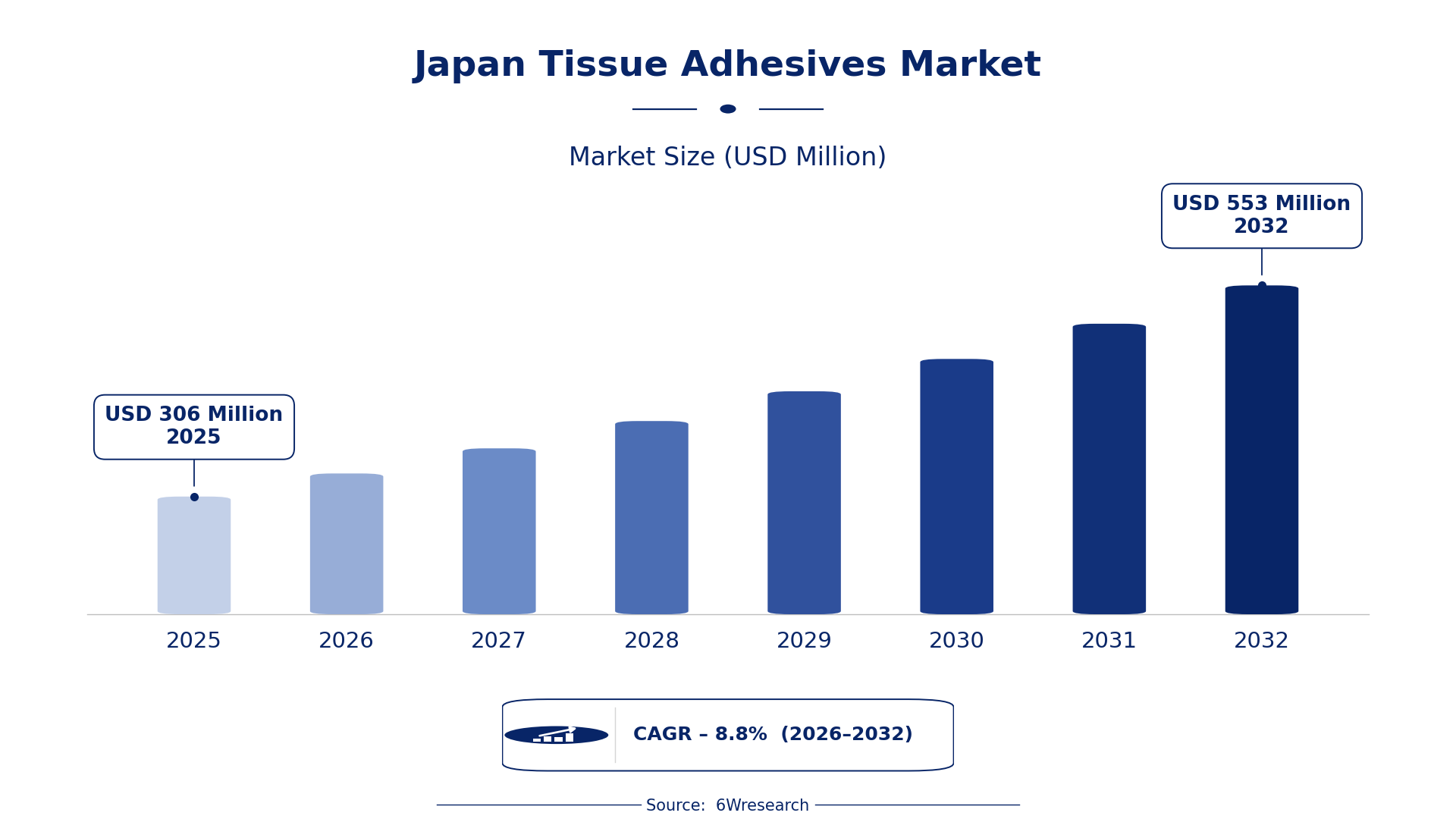
According to 6Wresearch internal database and industry insights, the Japan Tissue Adhesives Market was valued at USD 306 Million in 2025 and is projected to reach USD 553 Million by 2032, growing at a CAGR of approximately 8.8% during 2026–2032.
Japan Tissue Adhesives Market Highlights
| Report Metric | Details |
| Report Name | Japan Tissue Adhesives Market (2026-2032) |
| Market Size 2025 | USD 306 Million |
| Market Size 2032 | USD 553 Million |
| Absolute Growth 2025–2032 | USD 247 Million |
| CAGR 2026–2032 | 8.8% |
| Peak Annual Growth | 9.8% in 2030 |
| Forecast Period | 2026–2032 |
| Historical Data | 2022–2025 |
| Base Year | 2025 |
| Leading Adhesive Type, 2025 | Fibrin Sealants (40% share) |
| Leading Base Material, 2025 | Synthetic Polymer (45% share) |
| Leading Application Field, 2025 | Surgery (General) (41% share) |
| Leading End User, 2025 | Hospitals (37% share) |
| Fastest-Growing Adhesive Type | Collagen-Based (12.3% CAGR) |
| Fastest-Growing Base Material | Natural Proteins (12.6% CAGR) |
| Fastest-Growing Application Field | Orthopedic Procedures (11.8% CAGR) |
| Fastest-Growing End User | Surgical Centers (11.9% CAGR) |
| Growing Sector | Surgery |
| Key End Users | Hospitals, Surgical Centers, Emergency Rooms |
Japan Tissue Adhesives Market Year-wise Growth Rate and Key Drivers (2022–2032)
This graph illustrates the annual growth rates of the market from 2022 to 2032, highlighting a steady upward trajectory and projected market expansion over the forecast period.
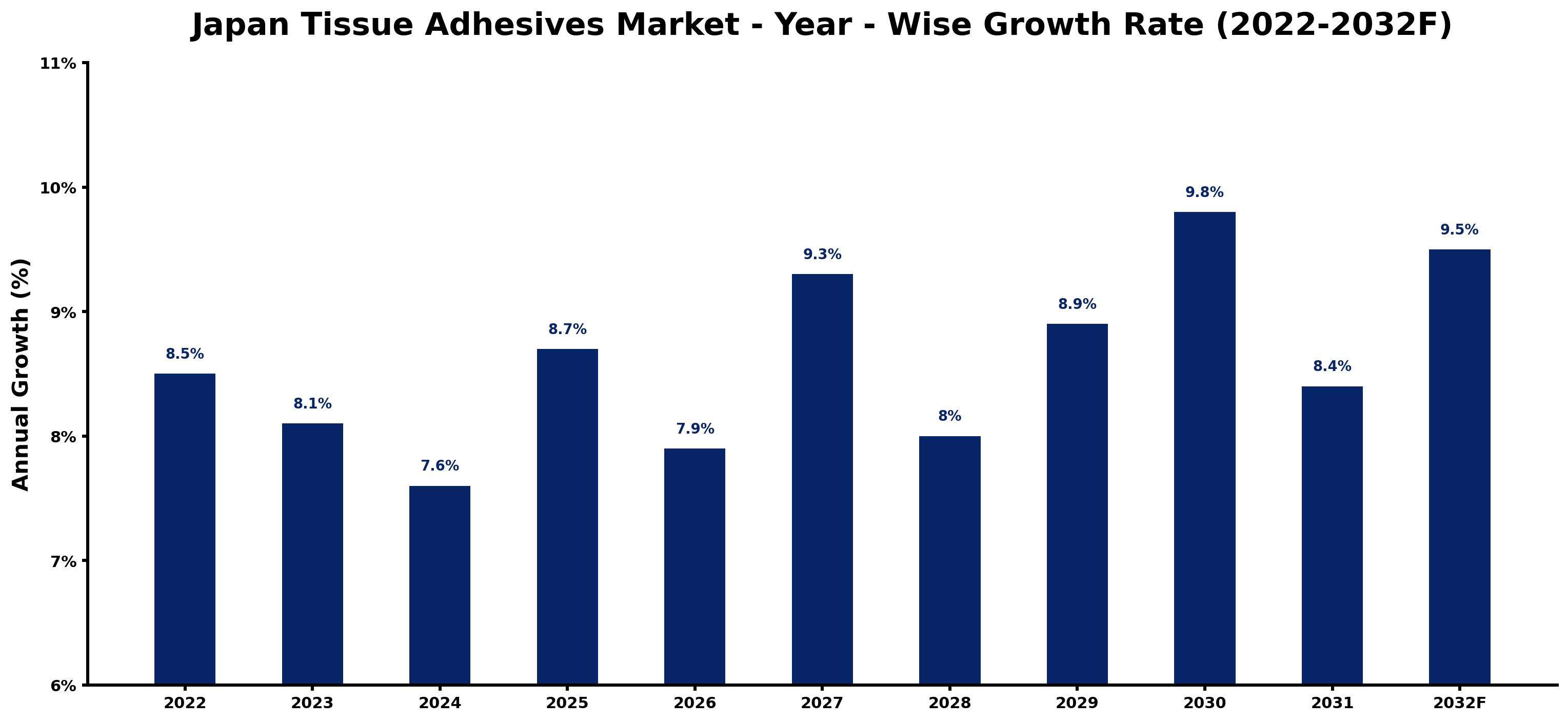
The yearly estimates that follow link every growth rate to its principal driver, so readers can see why the pace changed in each period.
| Year | Estimated Annual Growth (%) | Market Rationale |
| 2022 | 8.5 | The market exhibited strong activity, reflecting ongoing healthcare investments. |
| 2023 | 8.1 | Growth slowed slightly due to market saturation in certain segments. |
| 2024 | 7.6 | Continued demand for surgical procedures contributed to growth, though at a reduced rate. |
| 2025 | 8.7 | Increased adoption of tissue adhesives in hospitals led to faster growth. |
| 2026 | 7.9 | Market growth is expected to slow as hospitals reassess procurement strategies. |
| 2027 | 9.3 | Demand is projected to surge again with advancements in surgical techniques and materials. |
| 2028 | 8.0 | Growth is anticipated to moderate as competition intensifies among suppliers. |
| 2029 | 8.9 | Rising healthcare expenditure is expected to stimulate further demand for tissue adhesives. |
| 2030 | 9.8 | The market is projected to peak as surgical centers expand their use of advanced adhesives. |
| 2031 | 8.4 | Growth is expected to slow as market maturity sets in, but demand remains strong. |
| 2032 | 9.5 | Increased focus on minimally invasive procedures will drive renewed interest in tissue adhesives. |
Note: Market size estimations and growth projections presented in this report are based on 6Wresearch's proprietary forecasting methodology, utilizing the latest available industry data, government publications, and primary research inputs.
Japan Tissue Adhesives Market Synopsis
Tissue adhesives serve as medical adhesives for wound closure and tissue bonding, primarily composed of natural or synthetic polymers. Their primary uses encompass surgical procedures, wound management, and tissue repair, particularly within hospitals and surgical centres. The Japan Tissue Adhesives Market is expanding due to an increase in surgical procedures, with over 1 million surgeries employing these products in 2022. The growing adoption of minimally invasive techniques and advancements in adhesive technology are propelling demand, especially in urban hospitals and surgical centres. Japan's healthcare expenditure reached 42 trillion yen in 2022, further underpinning this growth.
Market Dynamics Impact Analysis (2026–2032)
| Factor | Type | Impact | Primary Segment Affected |
| Rising surgical procedures in hospitals | Driver | High | Surgery (General) |
| High adoption rates of cyanoacrylate adhesives in emergency rooms | Driver | High | Wound Closure |
| Increasing demand for advanced adhesives in surgical centers | Opportunity | High | Surgical Centers |
| Growing interest in collagen-based adhesives for cosmetic surgeries | Opportunity | Medium | Collagen-Based |
| Regulatory scrutiny on medical adhesive approvals | Restraint | Medium | Fibrin Sealants |
| Limited awareness of newer adhesive technologies among healthcare providers | Restraint | Medium | Fibrin Sealants |
| High costs associated with advanced adhesive materials | Challenge | High | Fibrin Sealants |
| Competition from alternative wound closure methods | Challenge | Medium | Wound Closure |
Evaluation of Drivers in Japan Tissue Adhesives Market (2026–2032)
Key forces behind demand, with the segment each one moves most, are listed below.
| Drivers | Primary Segment Affected | Why It Matters (Evidence) |
| Increased surgical procedures drive demand for tissue adhesives. | Surgery (General) | Over 1 million surgical procedures utilized tissue adhesives in 2022, leading to higher purchases. |
| Emergency rooms frequently use cyanoacrylate adhesives for quick wound closure. | Wound Closure | These adhesives were used in over 70% of urgent care situations in 2022, boosting demand. |
| Surgical centers are adopting tissue adhesives for minimally invasive procedures. | Surgical Centers | Projected 20% increase in tissue adhesive use by 2025 supports market growth. |
| Healthcare expenditure growth supports the demand for medical supplies. | Fibrin Sealants | Japan's healthcare expenditure reached 42 trillion yen in 2022, impacting adhesive purchases. |
| Growing interest in collagen-based adhesives for cosmetic applications. | Collagen-Based | These adhesives are increasingly used in cosmetic surgeries, expanding their market. |
Purchasing is picking up as hospitals and surgical centers increasingly adopt tissue adhesives for various procedures. In 2022, over 1 million surgical procedures utilized these products, driving demand. The average healthcare expenditure in Japan reached 42 trillion yen, which supports the purchasing of medical supplies, including tissue adhesives. Surgical centers are projected to increase their use of these adhesives by 20% by 2025, reflecting a growing trend towards minimally invasive techniques. Emergency rooms report high usage rates of cyanoacrylate adhesives, essential for quick wound closure, further driving demand.
Evaluation of Restraints in Japan Tissue Adhesives Market
The main factors holding the market back are set out below.
| Market Restraint | Primary Segment Affected | Why It Matters (Evidence) |
| Regulatory scrutiny can delay product approvals for new adhesives. | Fibrin Sealants | The Ministry of Health, Labour and Welfare oversees strict regulations, impacting time to market. |
| Limited awareness of advanced adhesive technologies among healthcare providers. | Fibrin Sealants | Healthcare professionals may hesitate to adopt newer products, affecting sales. |
| High costs associated with advanced adhesive materials can deter purchases. | Hospitals | Budget constraints in hospitals limit the adoption of premium adhesive options. |
| Competition from alternative wound closure methods can limit market share. | Wound Closure | Traditional sutures and staples remain popular, affecting tissue adhesive sales. |
| Market saturation in certain segments can slow growth rates. | Fibrin Sealants | As adoption stabilizes, growth rates may decline in established areas. |
Japan Tissue Adhesives Market Challenges
In 2022, over 1 million surgical procedures employed tissue adhesives, yet hospitals encounter supply chain disruptions that hinder access to essential products, negatively affecting patient care. Regulatory hurdles complicate the approval process for new adhesives, causing delays for suppliers that can extend up to 18 months, restricting market innovation. Many surgical centres still depend on traditional methods, which can impede efficiency and prolong procedure times for patients. Japan's healthcare expenditure reached 42 trillion yen in 2022, pressuring hospitals to limit their purchasing budgets for advanced products, reducing availability for buyers.
Trends in the Japan Tissue Adhesives Market
The trends below show where the Japan Tissue Adhesives Market is heading.
- Shift towards Minimally Invasive Surgical Techniques: Surgical centres in Japan are increasingly adopting tissue adhesives for minimally invasive procedures, reflecting a broader trend in healthcare. In 2022, this shift contributed to a 20% increase in tissue adhesive usage, improving patient recovery times.
- Emergency Rooms Prioritising Quick Wound Closure: Emergency rooms are focusing on rapid wound closure methods, leading to high usage rates of cyanoacrylate adhesives. In 2022, these adhesives were used in over 70% of urgent care situations, underscoring their importance in emergency medicine.
- Collagen-Based Adhesives Gaining Popularity in Cosmetic Surgery: The use of collagen-based adhesives in cosmetic surgeries is on the rise, with a projected growth rate of 12.3% by 2032. This trend reflects the increasing demand for aesthetic procedures in urban areas, particularly in Tokyo.
- Increased Adoption of ISO 13485 Standards: Healthcare facilities are prioritising compliance with ISO 13485 for medical device quality management. This standard, widely adopted since 2022, ensures that tissue adhesives meet stringent safety and efficacy requirements.
Investment Opportunities in the Japan Tissue Adhesives Market
Where to invest in the Japan Tissue Adhesives Market: the main openings are set out below.
- Hospitals Seeking Advanced Wound Closure Solutions: Hospitals are increasingly looking for advanced tissue adhesives to improve patient outcomes. With over 8,000 hospitals in Japan, the demand for effective solutions is rising, presenting opportunities for suppliers to partner with local healthcare providers.
- Surgical Centers Expanding Offerings: Surgical centres are keen to adopt new adhesive technologies to improve procedural efficiency. Collaborating with local partners can facilitate entry into this growing market segment, as these centres are projected to increase adhesive use significantly.
- Emergency Rooms Needing Quick Closure Products: Emergency rooms require effective wound closure products to handle high patient volumes. Suppliers can target this sector by offering cyanoacrylate adhesives, which are already popular for their rapid application.
- Cosmetic Clinics Adopting New Adhesive Types: Cosmetic clinics are increasingly interested in collagen-based adhesives for aesthetic procedures. Suppliers should consider entering this market through certification and partnerships with clinics to meet growing demand.
Government Initiatives in the Japan Tissue Adhesives Market
The Ministry of Health, Labour and Welfare regulates tissue adhesives, ensuring compliance with safety standards. The NHI drug price standard sets reimbursement prices for these products, impacting their affordability and accessibility in hospitals and clinics. This regulatory framework supports the safe use of tissue adhesives in various medical applications, promoting their adoption in healthcare settings.
Japan's government supports innovation in medical adhesives through funding programs. The National Institute of Health Sciences oversees the approval of new medical adhesives, ensuring that products meet rigorous safety and efficacy standards. In 2022, the government allocated resources to promote research and development in this field, encouraging advancements in adhesive technologies.
Future Insight of the Japan Tissue Adhesives Market
Investment in medical adhesive innovation will increase, driven by government funding programs, creating a surge in demand for advanced tissue adhesives. Surgical centres are projected to increase tissue adhesive use by 20% by 2025, reflecting a shift towards minimally invasive procedures. The adoption of ISO 13485 standards will improve quality management practices, ensuring safer products for buyers. By 2032, advancements in adhesive formulations will likely lead to improved wound management outcomes, benefiting healthcare providers and patients alike.
Market Segmentation Analysis
Japan Tissue Adhesives Market report covers a detailed analysis of the following market segments:
By Adhesive Type – Fibrin Sealants Lead, Collagen-Based Expected to Grow Fastest
According to Saurav Kr Singh, Senior Research Analyst at 6Wresearch, the largest adhesive type category in 2025 was Fibrin Sealants, at 40% of revenue. Fibrin sealants command the largest share as they are essential in over 70% of surgical procedures, providing reliable hemostasis. Their widespread adoption in hospitals and surgical centres underscores their critical importance in surgical practices. The quickest growth will come from Collagen-Based, forecast to expand at a CAGR of 12.3% between 2026 and 2032. Collagen-based adhesives are experiencing rapid growth due to their rising application in cosmetic surgeries, reflecting a trend towards more specialised medical solutions. This increasing focus on aesthetics is likely to drive further demand in this segment. Suppliers should focus on expanding their range of collagen-based adhesives to meet the growing needs of the cosmetic surgery market.
By Base Material – Synthetic Polymer Leads, Natural Proteins Expected to Grow Fastest
Synthetic Polymer took 45% of base material revenue in 2025, more than any other category. Synthetic polymers lead the market owing to their versatility and high performance in various medical applications, making them a staple for manufacturers. Their prevalent use in hospitals reinforces their dominant market position. Natural Proteins are projected to grow fastest, at a CAGR of 12.6% during 2026–2032. Natural proteins are becoming more popular as they are increasingly incorporated into formulations aimed at enhancing biocompatibility. This trend is particularly noticeable in the development of adhesives for sensitive medical applications. Buyers may benefit from considering products that utilise natural proteins to fulfil specific clinical needs.
By Application Field – Surgery (General) Leads, Orthopedic Procedures Expected to Grow Fastest
In 2025, Surgery (General) led the application field split with a 41% share. Surgery (General) is the primary application area for tissue adhesives, with hospitals utilising them extensively for various surgical needs. The high volume of general surgeries performed annually underpins this segment's leading status. Over 2026–2032, Orthopedic Procedures are expected to post the fastest growth, at a CAGR of 11.8%. Orthopedic procedures are seeing a surge in tissue adhesive use, particularly as surgical centres adopt minimally invasive techniques. This growth is expected to continue as more procedures are performed with advanced adhesive technologies. Suppliers should consider targeting the orthopedic sector to align with growing procedural trends.
By End User – Hospitals Lead, Surgical Centers Expected to Grow Fastest
With 37% of end user revenue in 2025, Hospitals was the largest category. Hospitals are the primary end users of tissue adhesives, driven by their involvement in numerous surgical procedures and wound management practices. The high number of hospitals in Japan supports a consistent demand for these products. Surgical Centers are set to record the highest CAGR in this split, 11.9% over 2026–2032. Surgical centres are rapidly adopting tissue adhesives, especially for outpatient surgeries, as they aim to improve procedural efficiency. The anticipated 20% increase in usage by 2025 underscores this upward trend. Suppliers should focus on establishing partnerships with surgical centres to cater to the increasing demand for tissue adhesives.
Key Attractiveness of the Report
- 10 Years of Market Numbers
- Historical Data Starting from 2022 to 2025
- Base Year 2025
- Forecast Data until 2032
- Key Performance Indicators Impacting the Market
- Major Upcoming Developments and Projects
Key Highlights of the Report:
- Japan Tissue Adhesives Market Outlook
- Market Size of Japan Tissue Adhesives Market, 2025
- Forecast of Japan Tissue Adhesives Market, 2032
- Historical Data and Forecast of Japan Tissue Adhesives Revenues & Volume for the Period 2022-2032F
- Japan Tissue Adhesives Market Trend Evolution
- Japan Tissue Adhesives Market Drivers and Challenges
- Japan Tissue Adhesives Price Trends
- Japan Tissue Adhesives Porter's Five Forces
- Japan Tissue Adhesives Industry Life Cycle
- Historical Data and Forecast of Japan Tissue Adhesives Market Revenues & Volume By Adhesive Type for the Period 2022-2032F
- Historical Data and Forecast of Japan Tissue Adhesives Market Revenues & Volume By Fibrin Sealants for the Period 2022-2032F
- Historical Data and Forecast of Japan Tissue Adhesives Market Revenues & Volume By Cyanoacrylate for the Period 2022-2032F
- Historical Data and Forecast of Japan Tissue Adhesives Market Revenues & Volume By Collagen-Based for the Period 2022-2032F
- Historical Data and Forecast of Japan Tissue Adhesives Market Revenues & Volume By PEG-Based Adhesives for the Period 2022-2032F
- Historical Data and Forecast of Japan Tissue Adhesives Market Revenues & Volume By Base Material for the Period 2022-2032F
- Historical Data and Forecast of Japan Tissue Adhesives Market Revenues & Volume By Biological Proteins for the Period 2022-2032F
- Historical Data and Forecast of Japan Tissue Adhesives Market Revenues & Volume By Synthetic Polymer for the Period 2022-2032F
- Historical Data and Forecast of Japan Tissue Adhesives Market Revenues & Volume By Natural Proteins for the Period 2022-2032F
- Historical Data and Forecast of Japan Tissue Adhesives Market Revenues & Volume By Hydrogel Forming for the Period 2022-2032F
- Historical Data and Forecast of Japan Tissue Adhesives Market Revenues & Volume By Application Field for the Period 2022-2032F
- Historical Data and Forecast of Japan Tissue Adhesives Market Revenues & Volume By Surgery (General) for the Period 2022-2032F
- Historical Data and Forecast of Japan Tissue Adhesives Market Revenues & Volume By Wound Closure for the Period 2022-2032F
- Historical Data and Forecast of Japan Tissue Adhesives Market Revenues & Volume By Orthopedic Procedures for the Period 2022-2032F
- Historical Data and Forecast of Japan Tissue Adhesives Market Revenues & Volume By Internal Organs Repair for the Period 2022-2032F
- Historical Data and Forecast of Japan Tissue Adhesives Market Revenues & Volume By End User for the Period 2022-2032F
- Historical Data and Forecast of Japan Tissue Adhesives Market Revenues & Volume By Hospitals for the Period 2022-2032F
- Historical Data and Forecast of Japan Tissue Adhesives Market Revenues & Volume By Emergency Rooms for the Period 2022-2032F
- Historical Data and Forecast of Japan Tissue Adhesives Market Revenues & Volume By Specialty Clinics for the Period 2022-2032F
- Historical Data and Forecast of Japan Tissue Adhesives Market Revenues & Volume By Surgical Centers for the Period 2022-2032F
- Japan Tissue Adhesives Import Export Trade Statistics
- Market Opportunity Assessment By Adhesive Type
- Market Opportunity Assessment By Base Material
- Market Opportunity Assessment By Application Field
- Market Opportunity Assessment By End User
- Japan Tissue Adhesives Top Companies Market Share
- Japan Tissue Adhesives Competitive Benchmarking By Technical and Operational Parameters
- Japan Tissue Adhesives Company Profiles
- Japan Tissue Adhesives Key Strategic Recommendations
Market Covered
Coverage by segment is as follows.
By Adhesive Type
- Fibrin Sealants
- Cyanoacrylate
- Collagen-Based
- PEG-Based Adhesives
By Base Material
- Biological Proteins
- Synthetic Polymer
- Natural Proteins
- Hydrogel Forming
By Application Field
- Surgery (General)
- Wound Closure
- Orthopedic Procedures
- Internal Organs Repair
By End User
- Hospitals
- Emergency Rooms
- Specialty Clinics
- Surgical Centers































