Japan Toddler Nightwear Market Size & Growth Rate
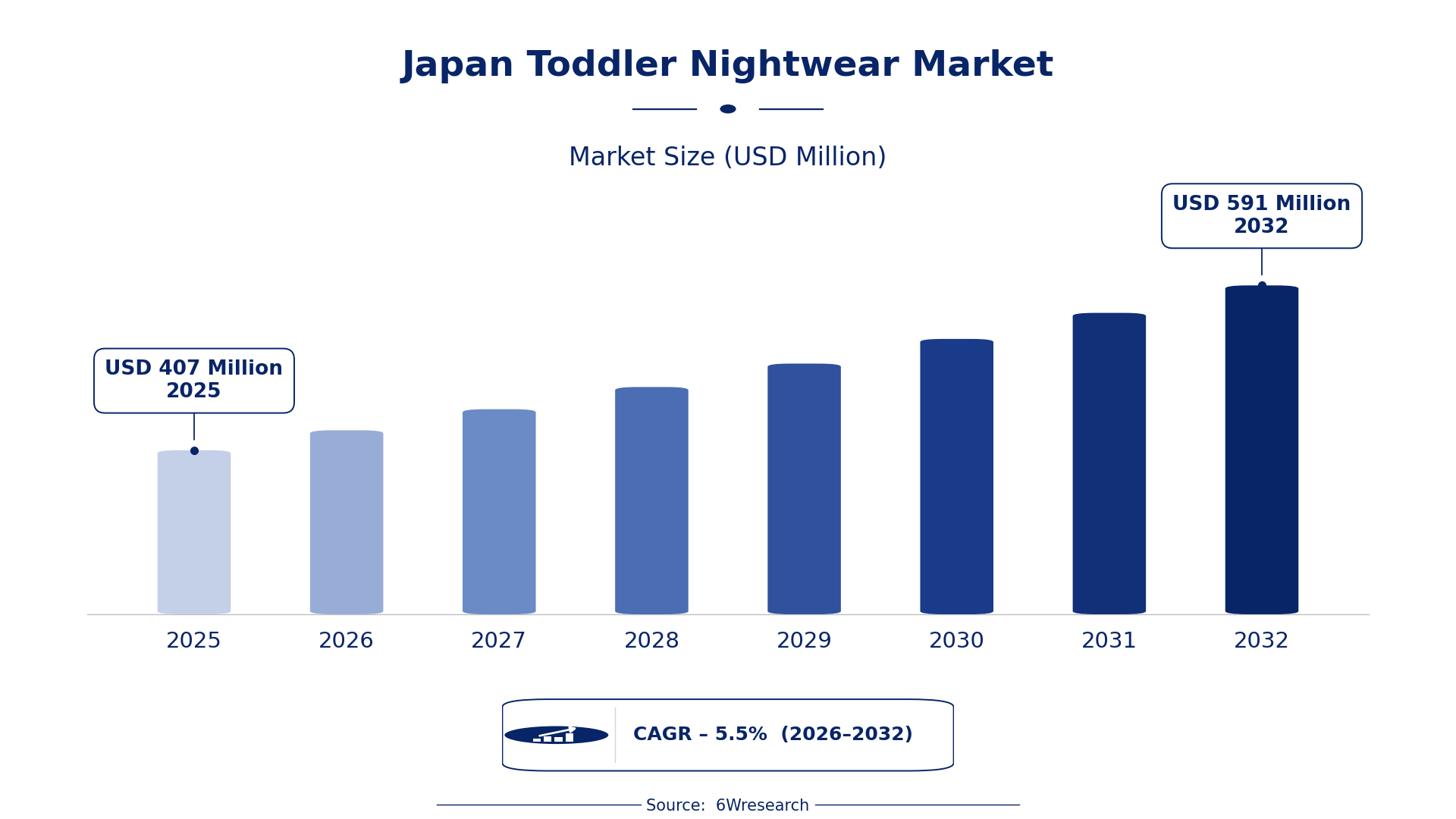
According to 6Wresearch internal database and industry insights, the Japan Toddler Nightwear Market was valued at USD 407 Million in 2025 and is projected to reach USD 591 Million by 2032, growing at a CAGR of approximately 5.5% during 2026–2032.
Japan Toddler Nightwear Market Highlights
| Report Metric | Details |
| Report Name | Japan Toddler Nightwear Market (2026-2032) |
| Market Size 2025 | USD 407 Million |
| Market Size 2032 | USD 591 Million |
| Absolute Growth 2025–2032 | USD 184 Million |
| CAGR 2026–2032 | 5.5% |
| Peak Annual Growth | 6.2% in 2032 |
| Forecast Period | 2026–2032 |
| Historical Data | 2022–2025 |
| Base Year | 2025 |
| Leading Toddler Nightwear, 2025 | Pajama Sets (48% share) |
| Leading Product Type, 2025 | Prints & Solids (38% share) |
| Leading Fabric, 2025 | Cotton/Modal (43% share) |
| Leading Distribution Channel, 2025 | Baby Goods Stores (45% share) |
| Leading End User Industry, 2025 | Infants & Toddlers (50% share) |
| Fastest-Growing Toddler Nightwear | Sleepsacks (7.2% CAGR) |
| Fastest-Growing Product Type | Wearable Blankets (8.1% CAGR) |
| Fastest-Growing Fabric | Fleece/Cotton (7.8% CAGR) |
| Fastest-Growing Distribution Channel | Online Marketplaces (7.4% CAGR) |
| Fastest-Growing End User Industry | New Parents (7.3% CAGR) |
| Growing Sector | Infants & Toddlers |
| Key End Users | New Parents, Nursery Purchases, Infants & Toddlers |
Japan Toddler Nightwear Market Year-wise Growth Rate and Key Drivers (2022–2032)
This graph illustrates the annual growth rates of the market from 2022 to 2032, highlighting a steady upward trajectory and projected market expansion over the forecast period.
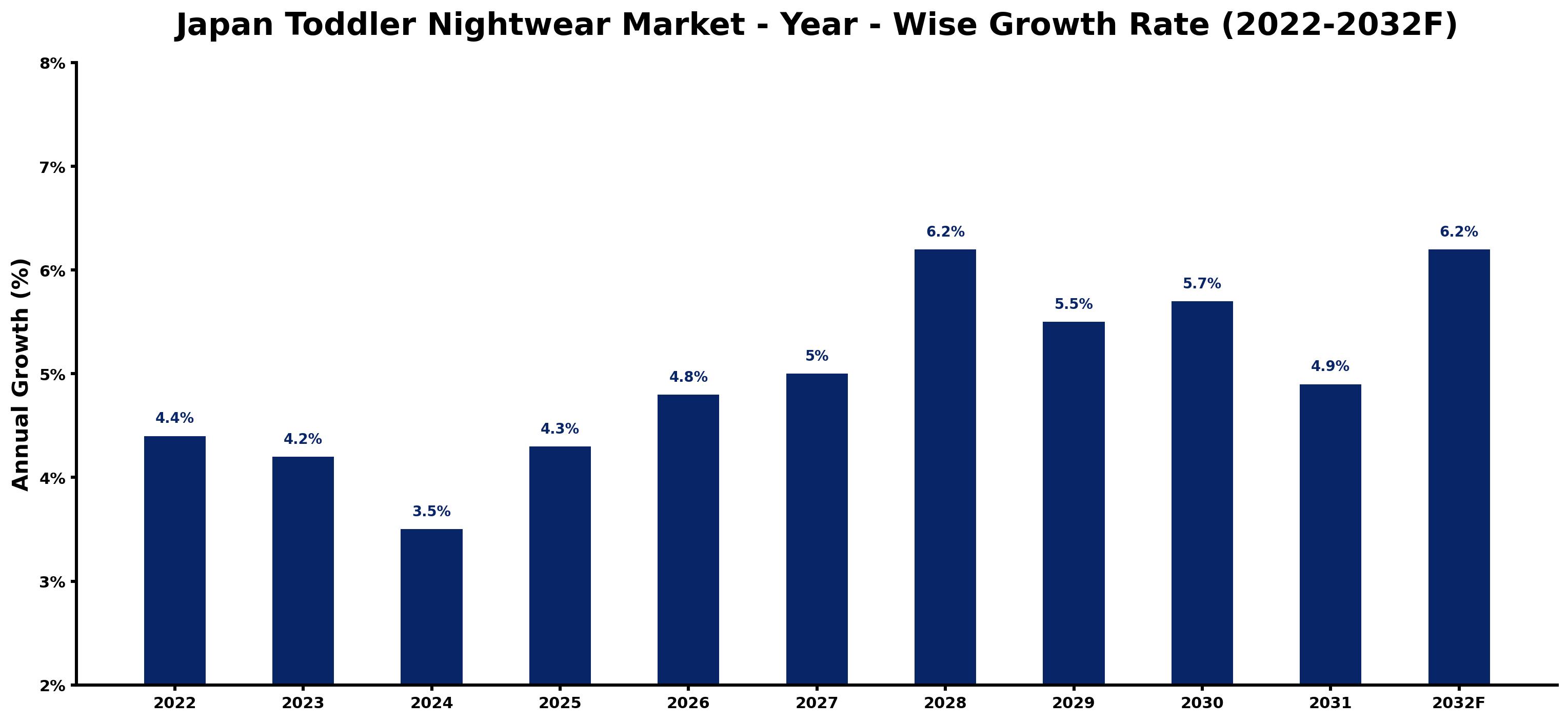
The yearly estimates that follow link every growth rate to its principal driver, so readers can see why the pace changed in each period.
| Year | Estimated Annual Growth (%) | Market Rationale |
| 2022 | 4.4 | The market experienced steady growth, driven by a stable population of infants. |
| 2023 | 4.2 | Growth slowed slightly as consumer spending on children's clothing adjusted to inflation. |
| 2024 | 3.5 | A further slowdown occurred due to cautious spending habits among new parents. |
| 2025 | 4.3 | Growth accelerated as the nursery purchase segment expanded with rising birth rates. |
| 2026 | 4.8 | Demand is expected to increase as online marketplaces gain traction among parents seeking convenience. |
| 2027 | 5.0 | Growth will continue as sustainable fabric options attract environmentally conscious buyers. |
| 2028 | 6.2 | The market is projected to peak with heightened demand for winter nightwear during colder months. |
| 2029 | 5.5 | As the market stabilises, growth is expected to slow after rapid expansion. |
| 2030 | 5.7 | Demand will rise again as new parents seek high-quality nightwear for their children. |
| 2031 | 4.9 | A slight slowdown is projected as market saturation begins to take effect. |
| 2032 | 6.2 | The market is expected to peak again, driven by new designs and sustainability. |
Note: Market size estimations and growth projections presented in this report are based on 6Wresearch's proprietary forecasting methodology, utilizing the latest available industry data, government publications, and primary research inputs.
Japan Toddler Nightwear Market Synopsis
Toddler nightwear includes pajama sets, sleepsacks, and onesies, primarily made from soft, breathable fabrics for comfort. In 2022, Japan's population of infants aged 0-2 was approximately 2.5 million, driving demand for these products. Growth is supported by rising birth rates and the increasing popularity of online marketplaces, which accounted for 30% of sales in 2022.
Market Dynamics Impact Analysis (2026–2032)
| Factor | Type | Impact | Primary Segment Affected |
| Growing preference for organic materials | Driver | High | Pajama Sets |
| Expansion of online retail channels | Driver | High | Sleepsacks |
| Increasing birth rates in urban areas | Opportunity | High | Onesie Nightwear |
| Rising consumer interest in sustainable products | Opportunity | High | Footed Pyjamas |
| High production costs for sustainable fabrics | Restraint | Medium | Pajama Sets |
| Limited availability of certain fabric types | Restraint | Medium | Sleepsacks |
| Compliance with safety standards | Challenge | High | Onesie Nightwear |
| Capacity constraints in production facilities | Challenge | Medium | Footed Pyjamas |
Evaluation of Drivers in Japan Toddler Nightwear Market (2026–2032)
The main growth drivers and the segments they affect most are set out below.
| Drivers | Primary Segment Affected | Why It Matters (Evidence) |
| Rising birth rates | Pajama Sets | The population of infants aged 0-2 in Japan was approximately 2.5 million in 2022, leading to increased demand for nightwear. |
| Shift towards online shopping | Sleepsacks | Online marketplaces accounted for 30% of toddler nightwear sales in 2022, driving convenience for parents. |
| Growing interest in organic materials | Onesie Nightwear | Organic cotton toddler nightwear is gaining popularity, capturing a 15% market share in 2022. |
| Seasonal demand for winter wear | Footed Pyjamas | Sales of footed pyjamas peak during winter months, reflecting the need for warmth. |
| Increased household expenditure on children's clothing | Pajama Sets | The average household expenditure on children's clothing in Japan is approximately 40,000 JPY annually. |
A wider customer base explains much of the growth, as rising birth rates have increased the population of infants aged 0-2 to approximately 2.5 million in 2022. The shift towards online shopping has made purchasing toddler nightwear easier, with online marketplaces accounting for 30% of sales. The growing interest in sustainable options has led to organic cotton nightwear capturing a 15% market share. Seasonal demand for warmer nightwear drives sales of footed pyjamas during colder months, while household expenditure on children's clothing averages around 40,000 JPY annually, supporting market growth.
Evaluation of Restraints in Japan Toddler Nightwear Market
The following restraints limit how fast demand can grow.
| Market Restraint | Primary Segment Affected | Why It Matters (Evidence) |
| High production costs for sustainable fabrics | Pajama Sets | Producers face increased costs when sourcing organic materials, affecting pricing strategies. |
| Limited availability of certain fabric types | Sleepsacks | Supply chain issues have led to shortages of popular fabrics, impacting production schedules. |
| Compliance with safety standards | Onesie Nightwear | Manufacturers must adhere to JIS standards, requiring additional testing and certification. |
| Capacity constraints in production facilities | Footed Pyjamas | Manufacturers struggle to meet rising demand due to limited production capabilities. |
| Market saturation in urban areas | Pajama Sets | Increased competition among retailers has led to price wars, affecting profit margins. |
Japan Toddler Nightwear Market Challenges
Regulatory standards for children's sleepwear impose compliance costs on producers, particularly smaller manufacturers, which can increase retail prices by around 10% for buyers. Limited technology adoption among suppliers restricts the introduction of new designs, resulting in delays that can extend lead times by up to four weeks. Intense competition from imported nightwear, especially lower-priced options, pressures local producers to reduce prices, potentially shrinking profit margins by as much as 15%. Supply chain disruptions in sourcing sustainable materials can delay product availability, forcing retailers to limit stock and potentially miss out on sales during peak seasons like winter.
Trends in the Japan Toddler Nightwear Market
The shifts below are changing how Japan Toddler Nightwear Market products are bought and supplied.
- Shift towards Sustainable Fabrics: The GX Basic Policy aims for JPY 150 trillion in decarbonisation investments, encouraging manufacturers to adopt sustainable practices. This initiative supports the growth of organic cotton nightwear, which has gained a 15% market share.
- Growth of Online Marketplaces: Online marketplaces accounted for 30% of toddler nightwear sales in 2022, reflecting a shift in consumer purchasing behaviour. This trend allows parents to shop conveniently from home, increasing overall sales.
- Increased Demand for Winter Nightwear: Sales of footed pyjamas peak during winter months, indicating a seasonal trend in toddler nightwear. This demand is driven by parents seeking warmth for their children during colder weather.
- Rising Interest in Organic Options: Organic cotton toddler nightwear is becoming increasingly popular, capturing a notable market share. This trend reflects a broader consumer shift towards sustainable and eco-friendly products.
Investment Opportunities in the Japan Toddler Nightwear Market
Investors looking at the Japan Toddler Nightwear Market should consider the following areas.
- Gap in Sustainable Nightwear: With organic cotton nightwear capturing a 15% market share, there is a growing opportunity to invest in sustainable toddler nightwear production. New parents are increasingly seeking eco-friendly options.
- Timing for Nursery Purchases: As birth rates rise in urban areas, the nursery purchase segment is projected to grow. Suppliers can target new parents looking for quality nightwear for their infants.
- Expansion of Online Sales Channels: Online marketplaces are becoming a primary retail channel, accounting for 30% of sales. Collaborating with local partners can improve market entry strategies.
- Investment in Innovative Designs: The demand for unique and functional toddler nightwear is increasing. Suppliers can enter the market by focusing on innovative designs that cater to modern parental preferences.
Government Initiatives in the Japan Toddler Nightwear Market
The introduction of the GX Basic Policy in 2023 aims to stimulate public-private investment in decarbonisation, targeting about JPY 150 trillion over ten years. This policy enhances the existing Industrial Standardization Act, which governs safety and quality standards for children's sleepwear, ensuring that producers invest in sustainable practices while complying with established regulations.
Retailers benefit from the Digital Agency's initiatives, which streamline processes for online sales of toddler nightwear. This agency's efforts in digital transformation facilitate easier access to subsidies for sustainable textile production, allowing baby goods stores to offer eco-friendly options without significant upfront costs, thus appealing to environmentally conscious parents.
Future Insight of the Japan Toddler Nightwear Market
A new subsidy programme for sustainable textile production will encourage suppliers to adopt eco-friendly materials, enhancing their product offerings. By 2032, advancements in online retail platforms will allow buyers to access a wider range of toddler nightwear. The JIS standards will evolve to ensure continued safety and quality in children's sleepwear. With online marketplaces accounting for 30% of toddler nightwear sales in 2022, suppliers must adapt quickly to meet the rising demand from tech-savvy parents.
Market Segmentation Analysis
Japan Toddler Nightwear Market report covers a detailed analysis of the following market segments:
By Toddler Nightwear – Pajama Sets Lead, Sleepsacks Expected to Grow Fastest
According to Saurav Kr Singh, Senior Research Analyst at 6Wresearch, Pajama Sets took 48% of toddler nightwear revenue in 2025, more than any other category. Pajama sets are widely preferred by parents for toddler sleepwear, largely due to their comfort and practicality. With around 2.5 million infants aged 0-2 in Japan, this segment meets the substantial demand for quality sleepwear. Over 2026–2032, Sleepsacks are expected to post the fastest growth, at a CAGR of 7.2%. Sleepsacks are rapidly gaining popularity as they ensure safety and warmth for infants, appealing to parents focused on secure sleep environments. The increasing emphasis on safe sleep practices is driving their adoption among new parents. Suppliers should highlight the advantages of sleepsacks to align with the growing parental interest in safe sleep solutions.
By Product Type – Prints & Solids Lead, Wearable Blankets Expected to Grow Fastest
Prints & Solids accounted for 38% of the market by product type in 2025. Prints and solids are popular as they serve as an aesthetic choice for parents looking to dress their children stylishly. This segment benefits from the high demand for visually appealing toddler nightwear, especially in urban areas. Wearable Blankets are projected to grow fastest, at a CAGR of 8.1% during 2026–2032. Wearable blankets are becoming increasingly popular as they combine comfort with safety, making them an attractive option for parents. The trend towards multifunctional products is driving their rapid growth in the market. Suppliers should consider expanding their offerings to include more wearable blankets to meet changing consumer preferences.
By Fabric – Cotton/Modal Leads, Fleece/Cotton Expected to Grow Fastest
With 43% of fabric revenue in 2025, Cotton/Modal was the largest category. Cotton and modal fabrics are preferred for toddler nightwear due to their soft and breathable qualities, ensuring comfort during sleep. Their widespread use in various products reflects the high consumer demand for comfort in nightwear. Fleece/Cotton is set to record the highest CAGR in this split, 7.8% over 2026–2032. Fleece and cotton blends are gaining popularity as they provide warmth during colder months, appealing to parents in winter. The seasonal demand for warmer fabrics is driving this segment's growth. Manufacturers should explore the development of more fleece and cotton options to cater to seasonal preferences.
By Distribution Channel – Baby Goods Stores Lead, Online Marketplaces Expected to Grow Fastest
The largest distribution channel category in 2025 was Baby Goods Stores, at 45% of revenue. Baby goods stores are the primary retail channel for toddler nightwear, offering a wide selection that meets the needs of parents. Their strong presence in urban centres, particularly in the Tokyo metropolitan area, solidifies their leading market share. The quickest growth will come from Online Marketplaces, forecast to expand at a CAGR of 7.4% between 2026 and 2032. Online marketplaces are rapidly growing as they provide convenience and accessibility for parents purchasing toddler nightwear. This shift towards e-commerce is highlighted by the 30% share of online sales recorded in 2022, reflecting changing shopping habits. Suppliers must enhance their online presence to capture the growing consumer shift towards e-commerce.
By End User Industry – Infants & Toddlers Lead, New Parents Expected to Grow Fastest
Infants & Toddlers held 50% of the Japan Toddler Nightwear Market by end user industry in 2025. Infants and toddlers are the primary end users of toddler nightwear, driving consistent demand for various products designed for their comfort. The large population of young children in Japan ensures a steady market for these items. Over 2026–2032, New Parents are expected to post the fastest growth, at a CAGR of 7.3%. New parents represent a key purchasing demographic, as they often seek out the best options for their children. The increasing birth rates in urban areas are contributing to the growth of this segment. Suppliers should tailor their marketing strategies to effectively reach new parents, who are vital to future sales.
Key Attractiveness of the Report
- 10 Years of Market Numbers
- Historical Data Starting from 2022 to 2025
- Base Year 2025
- Forecast Data until 2032
- Key Performance Indicators Impacting the Market
- Major Upcoming Developments and Projects
Key Highlights of the Report:
- Japan Toddler Nightwear Market Outlook
- Market Size of Japan Toddler Nightwear Market, 2025
- Forecast of Japan Toddler Nightwear Market, 2032
- Historical Data and Forecast of Japan Toddler Nightwear Revenues & Volume for the Period 2022-2032F
- Japan Toddler Nightwear Market Trend Evolution
- Japan Toddler Nightwear Market Drivers and Challenges
- Japan Toddler Nightwear Price Trends
- Japan Toddler Nightwear Porter's Five Forces
- Japan Toddler Nightwear Industry Life Cycle
- Historical Data and Forecast of Japan Toddler Nightwear Market Revenues & Volume By Toddler Nightwear for the Period 2022-2032F
- Historical Data and Forecast of Japan Toddler Nightwear Market Revenues & Volume By Pajama Sets for the Period 2022-2032F
- Historical Data and Forecast of Japan Toddler Nightwear Market Revenues & Volume By Sleepsacks for the Period 2022-2032F
- Historical Data and Forecast of Japan Toddler Nightwear Market Revenues & Volume By Onesie Nightwear for the Period 2022-2032F
- Historical Data and Forecast of Japan Toddler Nightwear Market Revenues & Volume By Footed Pyjamas for the Period 2022-2032F
- Historical Data and Forecast of Japan Toddler Nightwear Market Revenues & Volume By Product Type for the Period 2022-2032F
- Historical Data and Forecast of Japan Toddler Nightwear Market Revenues & Volume By Prints & Solids for the Period 2022-2032F
- Historical Data and Forecast of Japan Toddler Nightwear Market Revenues & Volume By Wearable Blankets for the Period 2022-2032F
- Historical Data and Forecast of Japan Toddler Nightwear Market Revenues & Volume By Zip or Snap for the Period 2022-2032F
- Historical Data and Forecast of Japan Toddler Nightwear Market Revenues & Volume By All-in-One Fit for the Period 2022-2032F
- Historical Data and Forecast of Japan Toddler Nightwear Market Revenues & Volume By Fabric for the Period 2022-2032F
- Historical Data and Forecast of Japan Toddler Nightwear Market Revenues & Volume By Cotton/Modal for the Period 2022-2032F
- Historical Data and Forecast of Japan Toddler Nightwear Market Revenues & Volume By Fleece/Cotton for the Period 2022-2032F
- Historical Data and Forecast of Japan Toddler Nightwear Market Revenues & Volume By Organic Cotton for the Period 2022-2032F
- Historical Data and Forecast of Japan Toddler Nightwear Market Revenues & Volume By Brushed Cotton for the Period 2022-2032F
- Historical Data and Forecast of Japan Toddler Nightwear Market Revenues & Volume By Distribution Channel for the Period 2022-2032F
- Historical Data and Forecast of Japan Toddler Nightwear Market Revenues & Volume By Baby Goods Stores for the Period 2022-2032F
- Historical Data and Forecast of Japan Toddler Nightwear Market Revenues & Volume By Online Marketplaces for the Period 2022-2032F
- Historical Data and Forecast of Japan Toddler Nightwear Market Revenues & Volume By Department Stores for the Period 2022-2032F
- Historical Data and Forecast of Japan Toddler Nightwear Market Revenues & Volume By Specialty Retailers for the Period 2022-2032F
- Historical Data and Forecast of Japan Toddler Nightwear Market Revenues & Volume By End User Industry for the Period 2022-2032F
- Historical Data and Forecast of Japan Toddler Nightwear Market Revenues & Volume By Infants & Toddlers for the Period 2022-2032F
- Historical Data and Forecast of Japan Toddler Nightwear Market Revenues & Volume By New Parents for the Period 2022-2032F
- Historical Data and Forecast of Japan Toddler Nightwear Market Revenues & Volume By Nursery Purchases for the Period 2022-2032F
- Historical Data and Forecast of Japan Toddler Nightwear Market Revenues & Volume By Winter Season Wear for the Period 2022-2032F
- Japan Toddler Nightwear Import Export Trade Statistics
- Market Opportunity Assessment By Toddler Nightwear
- Market Opportunity Assessment By Product Type
- Market Opportunity Assessment By Fabric
- Market Opportunity Assessment By Distribution Channel
- Market Opportunity Assessment By End User Industry
- Japan Toddler Nightwear Top Companies Market Share
- Japan Toddler Nightwear Competitive Benchmarking By Technical and Operational Parameters
- Japan Toddler Nightwear Company Profiles
- Japan Toddler Nightwear Key Strategic Recommendations
Market Covered
Segments analysed in this report are listed below.
By Toddler Nightwear
- Pajama Sets
- Sleepsacks
- Onesie Nightwear
- Footed Pyjamas
By Product Type
- Prints & Solids
- Wearable Blankets
- Zip or Snap
- All-in-One Fit
By Fabric
- Cotton/Modal
- Fleece/Cotton
- Organic Cotton
- Brushed Cotton
By Distribution Channel
- Baby Goods Stores
- Online Marketplaces
- Department Stores
- Specialty Retailers
By End User Industry
- Infants & Toddlers
- New Parents
- Nursery Purchases
- Winter Season Wear































