Japan Tourism Market Growth Rate
According to 6Wresearch internal database and industry insights, the Japan Tourism Market is growing at a compound annual growth rate (CAGR) of 4.10% during the forecast period (2026-2032).
Japan Tourism Market Year-wise Growth Rate and Key Drivers
This graph highlights how the Japan Tourism Market has steadily grown over the past five years, supported by major growth factors.
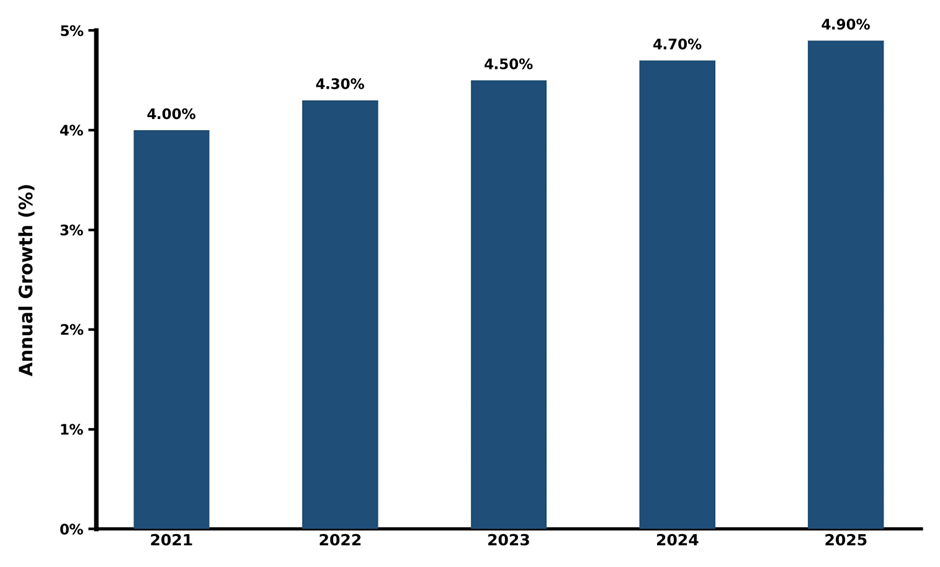
The table below presents the year‑wise growth rates along with the key drivers influencing the market
| Years | Est. Annual Growth in % | Growth Drivers |
| 2021 | 4% | Increasing domestic travel demand driven by local tourism initiatives. |
| 2022 | 4.3% | Increase in international tourist arrivals, especially from neighbouring countries. |
| 2023 | 4.5% | Government programs supporting framework development for tourism. |
| 2024 | 4.7% | Growth in demand for adventure and eco-tourism experiences. |
| 2025 | 4.9% | Expanding medical tourism and wellness travel sectors. |
Topics Covered in the Japan Tourism Market Report
The Japan Tourism Market report thoroughly covers the market by type and purpose. The market report provides an unbiased and detailed analysis of ongoing market trends, opportunities/high-growth areas, and market drivers, which would help stakeholders devise and align their market strategies according to the current and future market dynamics.
Japan Tourism Market Highlights
| Report Name | Japan Tourism Market |
| Forecast period | 2026-2032 |
| CAGR | 4.10% |
| Growing Sector | Medical Tourism |
Japan Tourism Market Synopsis
The Japan Tourism Market is predicted to experience a strong growth fueled by rising domestic tourism demand, increasing international arrivals, and government schemes focused on enhancing tourism framework. Also, the main segments such as adventure tourism, medical tourism, and sea farming are gaining momentum due to growing consumer interest in new and diverse experiences. Additionally, Japan’s unique cultural heritage and innovations in medical facilities are drawing more international tourists looking for wellness and medical treatments, while adventure tourism is capitalizing on the nation’s natural landscapes and outdoor activities.
Evaluation of Growth Drivers in the Japan Tourism Market (2026-2032)
Below mentioned are some growth drivers and their impact on market dynamics:
| Drivers | Primary Segments Affected | Why It Matters |
| Government Initiatives for Tourism | Domestic, International, Adventure | Strengthens tourism infrastructure, improves tourist services, and boosts Japan’s appeal as a global tourist destination. |
| Increase in Medical Tourism | Medical Tourism, Wellness Travel | Improves Japan’s reputation for premium healthcare services, attracting international travellers for medical treatments. |
| Rising Interest in Eco-Tourism | Adventure, Eco-tourism, Sea Farming | Increasing consumer preferred choices for sustainable travel fosters the growth of nature-based tourism. |
| Urban Tourism Growth | Local/Domestic, Business | Cities like Tokyo and Osaka are becoming major business hubs, leading domestic & international tourism. |
| Technological Advancements in Travel | International, Business, Medical | Facilitates easy access to travel bookings, digital tourism experiences, and enhanced logistics for tourists. |
The Japan Tourism Market is expected to grow at a CAGR of 4.10% during the forecast period of 2026-2032. This market’s expansion is largely attributed to government initiatives to improve tourism framework and services, together with a growing interest in diverse tourism options like medical tourism, adventure tourism, and sea farming. Some of Japan's medical sector is gaining attention, along with the growth of eco-tourism and adventure travel opportunities that leverage the country’s natural assets. Furthermore, the technological changes also play a significant role in facilitating better travel experiences, contributing to Japan’s appeal to a global audience.
Evaluation of Restraints in the Japan Tourism Market
Below mentioned are some major restraints and their influence on market dynamics:
| Restraints | Primary Segments Affected | What This Means |
| Limited Regional Access | International, Adventure | Certain remote areas in Japan may be difficult to access, limiting the growth of tourism in those regions. |
| High Travel Costs | Domestic, International | The high cost of traveling to and within Japan may deter budget-conscious tourists, especially during peak seasons. |
| Regulatory Barriers | Medical Tourism, Business | Complex regulations regarding foreign medical treatments and visas can limit growth in medical tourism. |
| Language Barriers | International | Non-Japanese tourists may encounter such challenges in communication, which also restricts their experience and participation. |
| Seasonal Fluctuations | Adventure, Local/Domestic, International | Tourism demand fluctuates with seasons, leading to periods of underutilization of services and attractions. |
Japan Tourism Market Challenges
The Japan Tourism Market encounters challenges such as shortage of access to remote regions, which may restrict the expansion of adventure tourism and regional tourism schemes. Besides, the high travel costs, especially for international tourists, remains a significant barrier to attract a diverse range of travellers. Additionally, the strict regulatory measures concerning medical tourism and business visas could delay the growth of these specialized sectors. Moreover, the language barrier also poses challenges for non-Japanese speaking tourists, which reduces the ease of travel for international visitors.
Japan Tourism Market Trends
Some major trends contributing to the Japan Tourism Market Growth are:
- Rise of Medical Tourism: Japan’s high-quality healthcare services are increasingly appealing to international patients looking for medical treatments, particularly in the fields of wellness and cosmetic surgery.
- Adventure Tourism Surge: This versatility of natural landscapes in Japan are driving the increase in adventure tourism, which includes hiking, skiing, and outdoor exploration.
- Growth in Eco-Tourism: This shift towards sustainable travel is pushing through the demand for eco-friendly tourism experiences, which includes nature-based and conservation-focused activities.
Investment Opportunities in the Japan Tourism Market
Here are some investment opportunities in the Japan Tourism Industry:
- Eco-Friendly and Sustainable Tourism: Development of such eco-tourism offerings and combining sustainability that are into existing tourism services will cater to increase in demand for responsible travel options.
- Adventure and Nature-Based Tourism: Creating some creative adventure tourism packages and outdoor exploration experiences will tap into the growing interest in nature-based vacations.
- Wellness and Spa Resorts: Expansion of the wellness tourism sector by investing in spa resorts, hot springs, and therapeutic centers will attract to health-focused tourists.
Top 5 Leading Players in the Japan Tourism Market
Here are some top companies contributing to the Japan Tourism Market Share:
1. JTB Corporation
| Company Name | JTB Corporation |
|---|---|
| Established Year | 1912 |
| Headquarters | Tokyo, Japan |
| Website | Click Here |
JTB Corporation is one of Japan’s largest travel agencies, offering a wide range of tourism services for both domestic and international travelers. The company provides guided tours, accommodations, and travel packages for business and leisure tourists.
2. Japan National Tourism Organization (JNTO)
| Company Name | Japan National Tourism Organization (JNTO) |
|---|---|
| Established Year | 1964 |
| Headquarters | Tokyo, Japan |
| Website | Click Here |
JNTO is a government-affiliated organization that promotes Japan as a tourism destination globally. It supports tourism marketing, infrastructure development, and services for international visitors.
3. Hoshino Resorts, Inc.
| Company Name | Hoshino Resorts, Inc. |
|---|---|
| Established Year | 1914 |
| Headquarters | Tokyo, Japan |
| Website | Click Here |
Hoshino Resorts operates a range of luxury and eco-tourism resorts across Japan. It focuses on high-end tourism experiences, including wellness and nature-based offerings for international and domestic tourists.
4. ANA Holdings Inc.
| Company Name | ANA Holdings Inc. |
|---|---|
| Established Year | 1952 |
| Headquarters | Tokyo, Japan |
| Website | Click Here |
ANA Holdings, the parent company of All Nippon Airways, plays a significant role in Japan’s international tourism sector by providing air travel services to and from Japan, offering tourists seamless access to the country’s top destinations.
5. Rakuten Travel
| Company Name | Rakuten Travel |
|---|---|
| Established Year | 2001 |
| Headquarters | Tokyo, Japan |
| Website | Click Here |
Rakuten Travel is one of Japan’s largest online travel agencies, offering a variety of services, including hotel bookings, travel packages, and customized tours for both domestic and international travelers.
Government Regulations Introduced in the Japan Tourism Market
According to Japanese government data, Japan’s government plays a significant role in the tourism market through programs such as the Tourism Nation Promotion Act, which also focuses on increasing the international tourist arrivals and improvement on tourism framework. Along with that, the Japan National Tourism Organization (JNTO) is responsible for executing policies that promote Japan as a premier travel destination. Moreover, regulations related to medical tourism, business visas, and environmental sustainability also contribute to the growth of specific tourism segments.
Future Insights of the Japan Tourism Market
The upcoming years for Japan Tourism Market is predicted to see continued growth, led by the increase in international tourist arrivals, government-backed programs, and innovations in specialized tourism sectors such as medical and eco-tourism. Along with that, the market will benefit from Japan’s rich cultural heritage, advanced healthcare facilities, and growing global interest in sustainable and nature-based travel. With continued investment in tourism framework, technology, and services, Japan is poised to solidify its position as a leading tourism destination.
Market Segmentation Analysis
The report offers a comprehensive study of the subsequent market segments and their leading categories.
Local/Domestic to Dominate the Market – By Type
According to Kanak Phartiyal, Senior Research Analyst at 6Wresearch, local/domestic tourism is expected to dominate the Japan Tourism Market Share, driven by growing demand for leisure and business travel within Japan. Cities like Tokyo, Kyoto, and Osaka continue to attract large numbers of domestic travellers, supported by regional tourism initiatives.
Adventure Tourism to Dominate the Market – By Purpose
Adventure tourism is projected to lead the market, with Japan’s natural landscapes offering numerous outdoor activities such as hiking, skiing, and marine exploration. Also, the adventure travel is increasingly popular among both domestic &international tourists looking for unique experiences.
Key attractiveness of the report
- 10 Years Market Numbers.
- Historical Data Starting from 2022 to 2025.
- Base Year: 2025
- Forecast Data until 2032.
- Key Performance Indicators Impacting the Market.
- Major Upcoming Developments and Projects.
Key Highlights of the Report:
- Japan Tourism Market Outlook
- Market Size of Japan Tourism Market, 2025
- Forecast of Japan Tourism Market, 2032
- Historical Data and Forecast of Japan Tourism Revenues & Volume for the Period 2022 - 2032
- Japan Tourism Market Trend Evolution
- Japan Tourism Market Drivers and Challenges
- Japan Tourism Price Trends
- Japan Tourism Porter's Five Forces
- Japan Tourism Industry Life Cycle
- Historical Data and Forecast of Japan Tourism Market Revenues & Volume By Type for the Period 2022 - 2032
- Historical Data and Forecast of Japan Tourism Market Revenues & Volume By Local/domestic for the Period 2022 - 2032
- Historical Data and Forecast of Japan Tourism Market Revenues & Volume By International for the Period 2022 - 2032
- Historical Data and Forecast of Japan Tourism Market Revenues & Volume By Purpose for the Period 2022 - 2032
- Historical Data and Forecast of Japan Tourism Market Revenues & Volume By Adventure for the Period 2022 - 2032
- Historical Data and Forecast of Japan Tourism Market Revenues & Volume By Business for the Period 2022 - 2032
- Historical Data and Forecast of Japan Tourism Market Revenues & Volume By Medical for the Period 2022 - 2032
- Historical Data and Forecast of Japan Tourism Market Revenues & Volume By Sea Farming for the Period 2022 - 2032
- Historical Data and Forecast of Japan Tourism Market Revenues & Volume By Others for the Period 2022 - 2032
- Japan Tourism Import Export Trade Statistics
- Market Opportunity Assessment By Type
- Market Opportunity Assessment By Purpose
- Japan Tourism Top Companies Market Share
- Japan Tourism Competitive Benchmarking By Technical and Operational Parameters
- Japan Tourism Company Profiles
- Japan Tourism Key Strategic Recommendations
Market covered
The report subsequently covers the market by the following segments and subsegments:
By Type
- Local/Domestic
- International
By Purpose
- Adventure
- Business
- Medical
- Sea Farming
- Others






































