Japan Transplant Immunosuppressive Drugs Market Size & Growth Rate
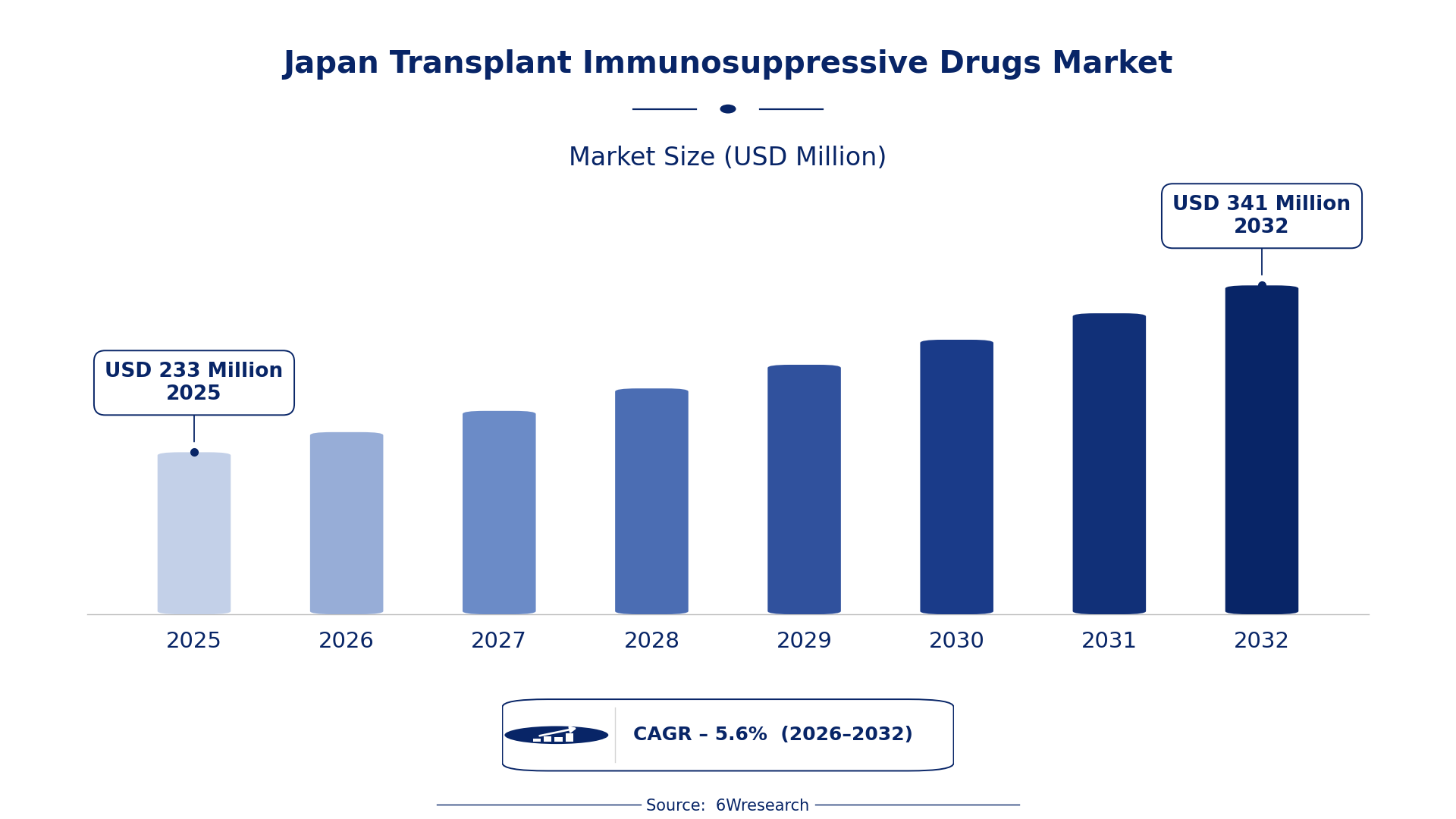
According to 6Wresearch internal database and industry insights, the Japan Transplant Immunosuppressive Drugs Market was valued at USD 233 Million in 2025 and is projected to reach USD 341 Million by 2032, growing at a CAGR of approximately 5.6% during 2026–2032.
Japan Transplant Immunosuppressive Drugs Market Highlights
| Report Metric | Details |
| Report Name | Japan Transplant Immunosuppressive Drugs Market (2026-2032) |
| Market Size 2025 | USD 233 Million |
| Market Size 2032 | USD 341 Million |
| Absolute Growth 2025–2032 | USD 108 Million |
| CAGR 2026–2032 | 5.6% |
| Peak Annual Growth | 6.3% in 2029 |
| Forecast Period | 2026–2032 |
| Historical Data | 2022–2025 |
| Base Year | 2025 |
| Leading Drug Type, 2025 | Calcineurin Inhibitors (47% share) |
| Leading Mechanism, 2025 | T-cell Suppression (35% share) |
| Leading Transplant Type, 2025 | Kidney (31% share) |
| Leading End User, 2025 | Hospitals (42% share) |
| Fastest-Growing Drug Type | mTOR Inhibitors (7.5% CAGR) |
| Fastest-Growing Mechanism | Cell Cycle Control (6.9% CAGR) |
| Fastest-Growing Transplant Type | Liver (7.9% CAGR) |
| Fastest-Growing End User | Transplant Clinics (7.3% CAGR) |
| Growing Sector | Transplant healthcare |
| Key End Users | Hospitals, Transplant Clinics, Organ Banks |
Japan Transplant Immunosuppressive Drugs Market Year-wise Growth Rate and Key Drivers (2022–2032)
This graph illustrates the annual growth rates of the market from 2022 to 2032, highlighting a steady upward trajectory and projected market expansion over the forecast period.
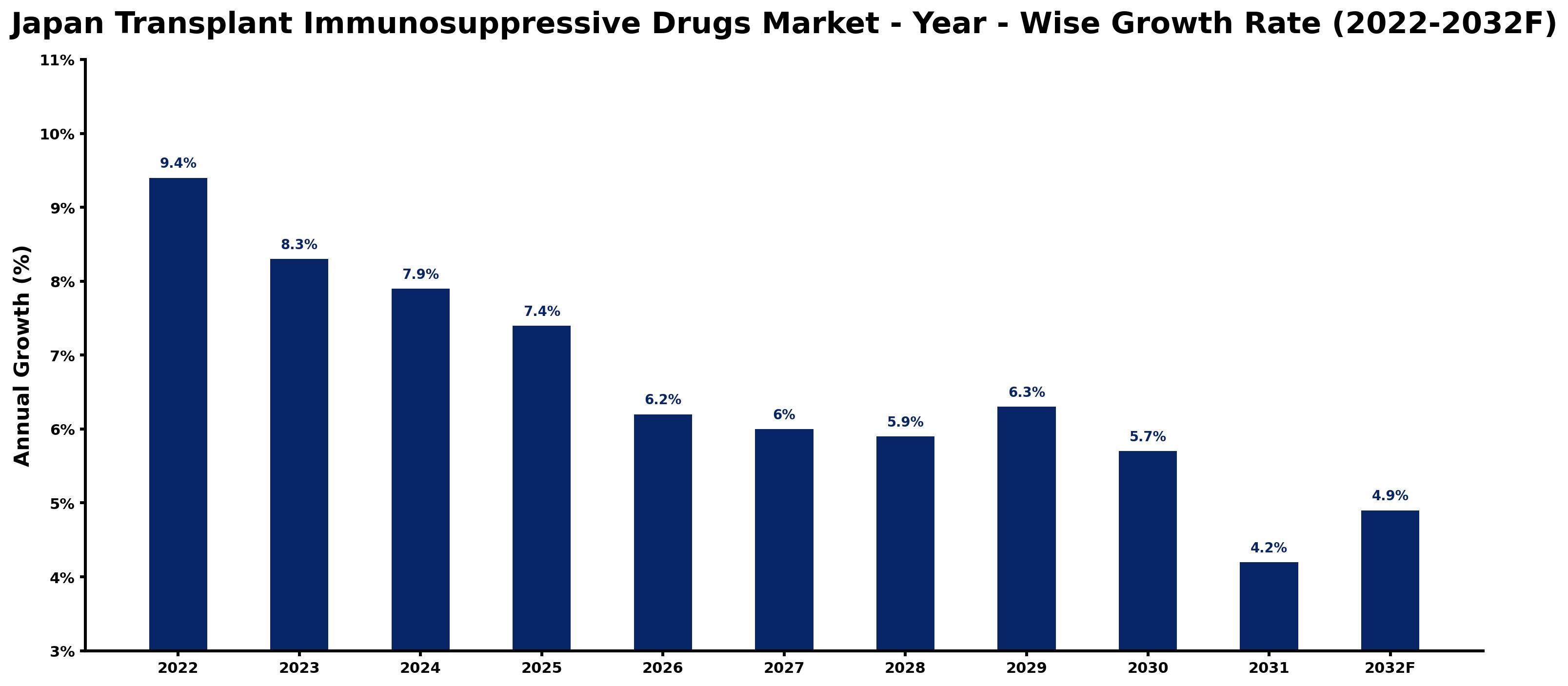
The yearly estimates that follow link every growth rate to its principal driver, so readers can see why the pace changed in each period.
| Year | Estimated Annual Growth (%) | Market Rationale |
| 2022 | 9.4 | The market experienced strong demand due to increased kidney transplants and awareness initiatives. |
| 2023 | 8.3 | Growth slowed as the market adjusted to previous peaks in transplant activity and drug usage. |
| 2024 | 7.9 | Demand continued to rise, supported by ongoing advancements in transplant procedures and therapies. |
| 2025 | 7.4 | Growth decelerated as the market stabilised after a period of rapid expansion and heightened awareness. |
| 2026 | 6.2 | A further slowdown is expected as the market adjusts to new treatment protocols and patient management strategies. |
| 2027 | 6.0 | Demand will remain steady, driven by consistent organ transplant rates and ongoing medical research. |
| 2028 | 5.9 | The market is projected to continue growing, albeit at a slower pace, as new therapies gain acceptance. |
| 2029 | 6.3 | Growth is expected to accelerate again, driven by innovations in immunosuppressive therapies and increased transplant volumes. |
| 2030 | 5.7 | The market will see a slight slowdown as the growth rate normalises following the peak years. |
| 2031 | 4.2 | Demand growth is projected to slow further as market saturation begins to take effect in certain segments. |
| 2032 | 4.9 | A resurgence in growth is anticipated as new therapies are introduced and transplant rates increase. |
Note: Market size estimations and growth projections presented in this report are based on 6Wresearch's proprietary forecasting methodology, utilizing the latest available industry data, government publications, and primary research inputs.
Japan Transplant Immunosuppressive Drugs Market Synopsis
Transplant immunosuppressive drugs are pharmaceuticals designed to prevent organ rejection in transplant patients, synthesized through complex chemical processes. Their primary use is in post-transplant care for kidneys, livers, and hearts. The Japan Transplant Immunosuppressive Drugs Market is expanding due to rising transplant procedures, increased awareness of organ donation, and advancements in therapies. With over 3,000 kidney transplants performed in 2022, hospitals and transplant clinics are key buyers, driving demand for effective treatments.
Market Dynamics Impact Analysis (2026–2032)
| Factor | Type | Impact | Primary Segment Affected |
| Increasing kidney transplant procedures | Driver | High | Calcineurin Inhibitors |
| Growing awareness of organ donation | Driver | High | Monoclonal Antibodies |
| Expansion of transplant clinics | Opportunity | High | Transplant Clinics |
| Rising demand for mTOR inhibitors | Opportunity | Medium | mTOR Inhibitors |
| Strict regulations on drug approvals | Restraint | High | Corticosteroids |
| Limited awareness of transplant options | Restraint | Medium | T-cell Suppression |
| High cost of immunosuppressive therapies | Challenge | High | Calcineurin Inhibitors |
| Complexity in drug administration protocols | Challenge | Medium | Monoclonal Antibodies |
Evaluation of Drivers in Japan Transplant Immunosuppressive Drugs Market (2026–2032)
These are the developments adding the most demand over the forecast period.
| Drivers | Primary Segment Affected | Why It Matters (Evidence) |
| Rising number of kidney transplants | Calcineurin Inhibitors | Approximately 3,000 kidney transplants were performed in Japan in 2022, driving demand for these essential drugs. |
| Increased organ donation awareness campaigns | Monoclonal Antibodies | The 2023 programme launched by the Ministry of Health aims to raise organ donation awareness, boosting drug demand. |
| Growth of specialised transplant clinics | Transplant Clinics | Japan has over 100 transplant centers, expanding access to immunosuppressive therapies for patients. |
| Advancements in mTOR inhibitor therapies | mTOR Inhibitors | The increasing adoption of mTOR inhibitors for long-term transplant success is driving demand in the market. |
| Rising incidence of liver transplants | Corticosteroids | Liver transplants account for about 20% of all organ transplants, leading to higher corticosteroid usage. |
What keeps demand rising is the increasing number of kidney transplants, with approximately 3,000 performed in 2022, which boosts the need for calcineurin inhibitors. The growth of specialised transplant clinics, with over 100 centres in Japan, is expanding access to immunosuppressive drugs. The rising incidence of liver transplants, which account for about 20% of all transplants, also contributes to the demand for corticosteroids. The adoption of mTOR inhibitors for long-term transplant success is increasing their usage.
Evaluation of Restraints in Japan Transplant Immunosuppressive Drugs Market
The following restraints limit how fast demand can grow.
| Market Restraint | Primary Segment Affected | Why It Matters (Evidence) |
| High costs associated with immunosuppressive therapies | Calcineurin Inhibitors | The average cost of immunosuppressive drugs can be prohibitive for many patients, limiting access. |
| Strict regulations on drug approvals | Corticosteroids | Regulatory hurdles can delay the introduction of new therapies, affecting market growth. |
| Limited public awareness of transplant options | T-cell Suppression | Approximately 70% of the population remains unaware of available transplant options, hindering demand for related therapies. |
| Complex administration protocols for immunosuppressants | Monoclonal Antibodies | The complexity of treatment regimens can deter healthcare providers from prescribing these therapies. |
| Market saturation in certain drug segments | mTOR Inhibitors | As more options become available, competition increases, potentially limiting growth for established products. |
Japan Transplant Immunosuppressive Drugs Market Challenges
In 2022, Japan performed approximately 3,000 kidney transplants, yet the average wait time for a kidney transplant is around 3 years, delaying access to critical treatment for buyers. Specialty pharmacies encounter supply issues due to inconsistent availability of immunosuppressive drugs, risking interruptions in patient care. Transplant clinics face heightened competition as they comply with strict protocols set by the Ministry of Health, increasing operational costs for providers. Regulatory challenges arise from the Japanese Society of Transplantation enforcing rigorous standards, complicating compliance for hospitals and clinics and potentially delaying patient access to necessary medications.
Trends in the Japan Transplant Immunosuppressive Drugs Market
The shifts below are changing how Japan Transplant Immunosuppressive Drugs Market products are bought and supplied.
- Shift towards mTOR Inhibitors: In recent years, mTOR inhibitors have gained popularity in transplant protocols, with a projected CAGR of 7.5% from 2026 to 2032. This shift reflects a growing preference for therapies that improve long-term transplant success.
- Increasing focus on organ donation awareness: The 2023 Ministry of Health programme aims to double organ donations by 2025, promoting public engagement. This initiative is expected to raise the number of available organs for transplantation.
- Growth of Transplant Clinics: Transplant clinics are expanding rapidly, with over 100 centres in Japan. This growth is vital for improving patient access to immunosuppressive drugs and enhancing overall transplant success rates.
- Emergence of new immunosuppressive therapies: New therapies are being developed to improve transplant outcomes, with the Japanese transplant community actively participating in international research collaborations. This trend is supported by annual grants exceeding 500 million yen.
Investment Opportunities in the Japan Transplant Immunosuppressive Drugs Market
The following opportunities in the Japan Transplant Immunosuppressive Drugs Market pair current demand with a clear way in.
- Expansion of transplant facilities in Tokyo: With over 100 transplant centres, Tokyo is seeing increased investment in transplant facilities. This growth is driven by a rising number of procedures, supporting the demand for immunosuppressive drugs.
- Investment in mTOR inhibitors: The anticipated CAGR of 7.5% for mTOR inhibitors presents an opportunity for suppliers. Transplant clinics are increasingly adopting these therapies, creating demand for new products.
- Growing demand for monoclonal antibodies: As acute rejection episodes become more common, the need for monoclonal antibodies is rising. Suppliers can enter this market by partnering with transplant clinics to provide these essential drugs.
- Opportunity in patient education: With limited public awareness of transplant options, there is an opportunity to invest in educational programmes. Engaging hospitals and transplant clinics can help bridge this gap.
Government Initiatives in the Japan Transplant Immunosuppressive Drugs Market
The Clinical Trials Act, established in 2017, sets rules for conducting and disclosing clinical research, ensuring transparency in drug development. This law complements the NHI drug price standard, which ensures that reimbursement prices for immunosuppressive drugs are regularly updated, supporting market stability.
The PMDA oversees the approval and safety monitoring of pharmaceuticals, providing essential support to producers and ensuring compliance with regulations. The Japan Organ Transplant Network facilitates organ allocation and donor matching, ensuring that transplant centres have access to necessary organs.
Future Insight of the Japan Transplant Immunosuppressive Drugs Market
By 2032, transplant clinics will adopt advanced technologies to improve patient outcomes and streamline procedures, benefiting buyers seeking timely care. The Japanese government aims to double organ donations by 2025, which will significantly increase the availability of organs for transplant. A new programme by the Ministry of Health to raise organ donation awareness will likely create a more informed public, enhancing participation in donation efforts. Annual grants exceeding 500 million yen for transplant research will drive advancements in immunosuppressive therapies, benefiting suppliers and patients alike.
Market Segmentation Analysis
Japan Transplant Immunosuppressive Drugs Market report covers a detailed analysis of the following market segments:
By Drug Type – Calcineurin Inhibitors Lead, mTOR Inhibitors Expected to Grow Fastest
According to Saurav Kr Singh, Senior Research Analyst at 6Wresearch, with 47% of drug type revenue in 2025, Calcineurin Inhibitors was the largest category. Calcineurin inhibitors are crucial for preventing organ rejection, particularly in kidney transplants, which are the most common in Japan. Their widespread use is highlighted by the approximately 3,000 kidney transplants performed annually, ensuring a dominant market position. Over 2026–2032, mTOR Inhibitors are expected to post the fastest growth, at a CAGR of 7.5%. The growth of mTOR inhibitors is attributed to their effectiveness in promoting long-term transplant success, which is increasingly sought after as transplant numbers rise. This segment's expansion is further supported by ongoing advancements in post-transplant care protocols. Suppliers should prioritise the development of mTOR inhibitors to meet the increasing demand in transplant care.
By Mechanism – T-cell Suppression Leads, Cell Cycle Control Expected to Grow Fastest
In 2025, T-cell Suppression led the mechanism split with a 35% share. T-cell suppression is vital for preventing T-cell mediated rejection, making it a fundamental mechanism in transplant immunosuppressive therapies. Its importance is underscored by the strict adherence to established protocols in transplant centres across Japan, ensuring successful patient outcomes. Cell Cycle Control is set to record the highest CAGR in this split, 6.9% over 2026–2032. Cell cycle control is rapidly gaining prominence due to its effectiveness in managing cellular responses post-transplant, which is crucial for patient recovery. The increasing number of transplant procedures necessitates effective long-term management strategies, driving demand for this mechanism. Buyers should explore therapies that utilise cell cycle control to improve patient outcomes in transplant care.
By Transplant Type – Kidney Leads, Liver Expected to Grow Fastest
Kidney accounted for 31% of the market by transplant type in 2025. Kidney transplants are the most frequently performed organ transplants in Japan, with around 3,000 procedures annually, indicating a strong demand for related immunosuppressive drugs. This frequency highlights the critical role of kidney transplants within the overall transplant framework. The quickest growth will come from Liver, forecast to expand at a CAGR of 7.9% between 2026 and 2032. Liver transplants are experiencing significant growth, primarily due to the urgent need for treatment among patients with liver failure. This segment's importance is reflected in its contribution to approximately 20% of all organ transplants, positioning it for continued expansion. Suppliers should increase their focus on liver transplant therapies to capitalise on the growing demand in this sector.
By End User – Hospitals Lead, Transplant Clinics Expected to Grow Fastest
The largest end user category in 2025 was Hospitals, at 42% of revenue. Hospitals serve as the primary setting for transplant procedures, making them the largest end-user group for immunosuppressive drugs in Japan. Their extensive infrastructure and resources facilitate the high volume of transplant surgeries conducted annually. Transplant Clinics are projected to grow fastest, at a CAGR of 7.3% during 2026–2032. Transplant clinics are rapidly growing as they provide specialised care tailored to the needs of transplant patients, reflecting a shift towards more focused treatment environments. This trend is driven by the increasing number of transplant procedures and the need for dedicated post-operative care. Suppliers should strengthen their partnerships with transplant clinics to better serve the specialised needs of transplant patients.
Key Attractiveness of the Report
- 10 Years of Market Numbers
- Historical Data Starting from 2022 to 2025
- Base Year 2025
- Forecast Data until 2032
- Key Performance Indicators Impacting the Market
- Major Upcoming Developments and Projects
Key Highlights of the Report:
- Japan Transplant Immunosuppressive Drugs Market Outlook
- Market Size of Japan Transplant Immunosuppressive Drugs Market, 2025
- Forecast of Japan Transplant Immunosuppressive Drugs Market, 2032
- Historical Data and Forecast of Japan Transplant Immunosuppressive Drugs Revenues & Volume for the Period 2022-2032F
- Japan Transplant Immunosuppressive Drugs Market Trend Evolution
- Japan Transplant Immunosuppressive Drugs Market Drivers and Challenges
- Japan Transplant Immunosuppressive Drugs Price Trends
- Japan Transplant Immunosuppressive Drugs Porter's Five Forces
- Japan Transplant Immunosuppressive Drugs Industry Life Cycle
- Historical Data and Forecast of Japan Transplant Immunosuppressive Drugs Market Revenues & Volume By Drug Type for the Period 2022-2032F
- Historical Data and Forecast of Japan Transplant Immunosuppressive Drugs Market Revenues & Volume By Calcineurin Inhibitors for the Period 2022-2032F
- Historical Data and Forecast of Japan Transplant Immunosuppressive Drugs Market Revenues & Volume By Corticosteroids for the Period 2022-2032F
- Historical Data and Forecast of Japan Transplant Immunosuppressive Drugs Market Revenues & Volume By mTOR Inhibitors for the Period 2022-2032F
- Historical Data and Forecast of Japan Transplant Immunosuppressive Drugs Market Revenues & Volume By Monoclonal Antibodies for the Period 2022-2032F
- Historical Data and Forecast of Japan Transplant Immunosuppressive Drugs Market Revenues & Volume By Mechanism for the Period 2022-2032F
- Historical Data and Forecast of Japan Transplant Immunosuppressive Drugs Market Revenues & Volume By T-cell Suppression for the Period 2022-2032F
- Historical Data and Forecast of Japan Transplant Immunosuppressive Drugs Market Revenues & Volume By Anti-inflammatory for the Period 2022-2032F
- Historical Data and Forecast of Japan Transplant Immunosuppressive Drugs Market Revenues & Volume By Cell Cycle Control for the Period 2022-2032F
- Historical Data and Forecast of Japan Transplant Immunosuppressive Drugs Market Revenues & Volume By B/T Cell Blockers for the Period 2022-2032F
- Historical Data and Forecast of Japan Transplant Immunosuppressive Drugs Market Revenues & Volume By Transplant Type for the Period 2022-2032F
- Historical Data and Forecast of Japan Transplant Immunosuppressive Drugs Market Revenues & Volume By Kidney, Liver for the Period 2022-2032F
- Historical Data and Forecast of Japan Transplant Immunosuppressive Drugs Market Revenues & Volume By Heart, Lung for the Period 2022-2032F
- Historical Data and Forecast of Japan Transplant Immunosuppressive Drugs Market Revenues & Volume By Pancreas, Intestine for the Period 2022-2032F
- Historical Data and Forecast of Japan Transplant Immunosuppressive Drugs Market Revenues & Volume By Bone Marrow for the Period 2022-2032F
- Historical Data and Forecast of Japan Transplant Immunosuppressive Drugs Market Revenues & Volume By End User for the Period 2022-2032F
- Historical Data and Forecast of Japan Transplant Immunosuppressive Drugs Market Revenues & Volume By Hospitals for the Period 2022-2032F
- Historical Data and Forecast of Japan Transplant Immunosuppressive Drugs Market Revenues & Volume By Transplant Clinics for the Period 2022-2032F
- Historical Data and Forecast of Japan Transplant Immunosuppressive Drugs Market Revenues & Volume By Organ Banks for the Period 2022-2032F
- Historical Data and Forecast of Japan Transplant Immunosuppressive Drugs Market Revenues & Volume By Specialty Pharmacies for the Period 2022-2032F
- Japan Transplant Immunosuppressive Drugs Import Export Trade Statistics
- Market Opportunity Assessment By Drug Type
- Market Opportunity Assessment By Mechanism
- Market Opportunity Assessment By Transplant Type
- Market Opportunity Assessment By End User
- Japan Transplant Immunosuppressive Drugs Top Companies Market Share
- Japan Transplant Immunosuppressive Drugs Competitive Benchmarking By Technical and Operational Parameters
- Japan Transplant Immunosuppressive Drugs Company Profiles
- Japan Transplant Immunosuppressive Drugs Key Strategic Recommendations
Market Covered
This report examines the market across the segments below.
By Drug Type
- Calcineurin Inhibitors
- Corticosteroids
- mTOR Inhibitors
- Monoclonal Antibodies
By Mechanism
- T-cell Suppression
- Anti-inflammatory
- Cell Cycle Control
- B/T Cell Blockers
By Transplant Type
- Kidney
- Liver
- Heart
- Lung
- Pancreas
- Intestine
- Bone Marrow
By End User
- Hospitals
- Transplant Clinics
- Organ Banks
- Specialty Pharmacies































