Japan Transplant Rejection Therapies Market Size & Growth Rate
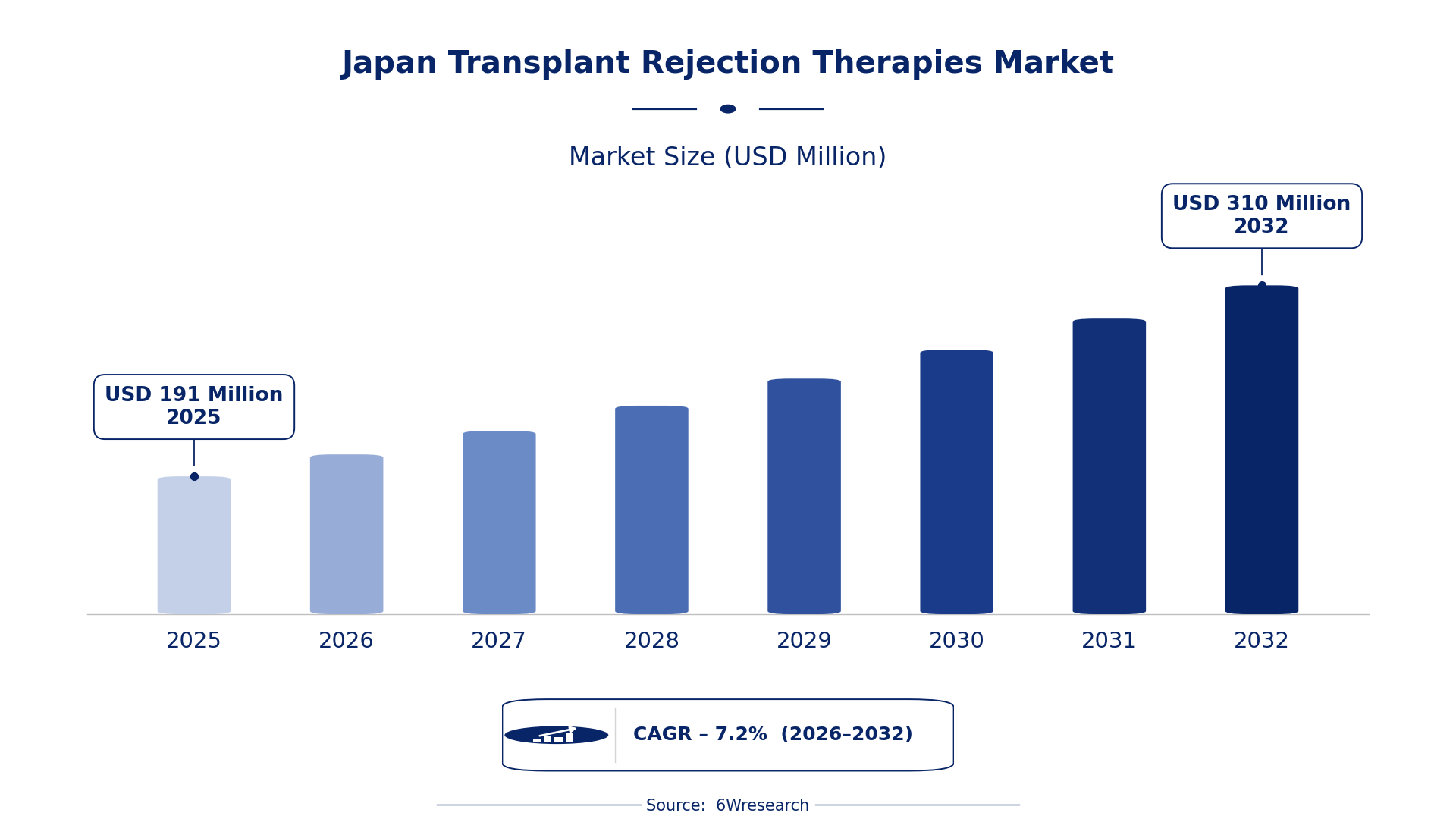
According to 6Wresearch internal database and industry insights, the Japan Transplant Rejection Therapies Market was valued at USD 191 Million in 2025 and is projected to reach USD 310 Million by 2032, growing at a CAGR of approximately 7.2% during 2026–2032.
Japan Transplant Rejection Therapies Market Highlights
| Report Metric | Details |
| Report Name | Japan Transplant Rejection Therapies Market (2026-2032) |
| Market Size 2025 | USD 191 Million |
| Market Size 2032 | USD 310 Million |
| Absolute Growth 2025–2032 | USD 119 Million |
| CAGR 2026–2032 | 7.2% |
| Peak Annual Growth | 8.3% in 2028 |
| Forecast Period | 2026–2032 |
| Historical Data | 2022–2025 |
| Base Year | 2025 |
| Leading Therapy Type, 2025 | Acute Rejection Drugs (40% share) |
| Leading Mechanism, 2025 | Cytokine Inhibitors (38% share) |
| Leading Phase of Rejection, 2025 | Immediate Response (37% share) |
| Leading End User, 2025 | Transplant Hospitals (52% share) |
| Fastest-Growing Therapy Type | Desensitization Therapies (9.5% CAGR) |
| Fastest-Growing Mechanism | Anti-Fibrotic Agents (9.7% CAGR) |
| Fastest-Growing Phase of Rejection | Long-Term Prevention (9.2% CAGR) |
| Fastest-Growing End User | Immunology Clinics (9.8% CAGR) |
| Growing Sector | Transplant Services |
| Key End Users | Transplant Hospitals, Immunology Clinics, Specialty Hospitals, ICU Units |
Japan Transplant Rejection Therapies Market Year-wise Growth Rate and Key Drivers (2022–2032)
This graph illustrates the annual growth rates of the market from 2022 to 2032, highlighting a steady upward trajectory and projected market expansion over the forecast period.
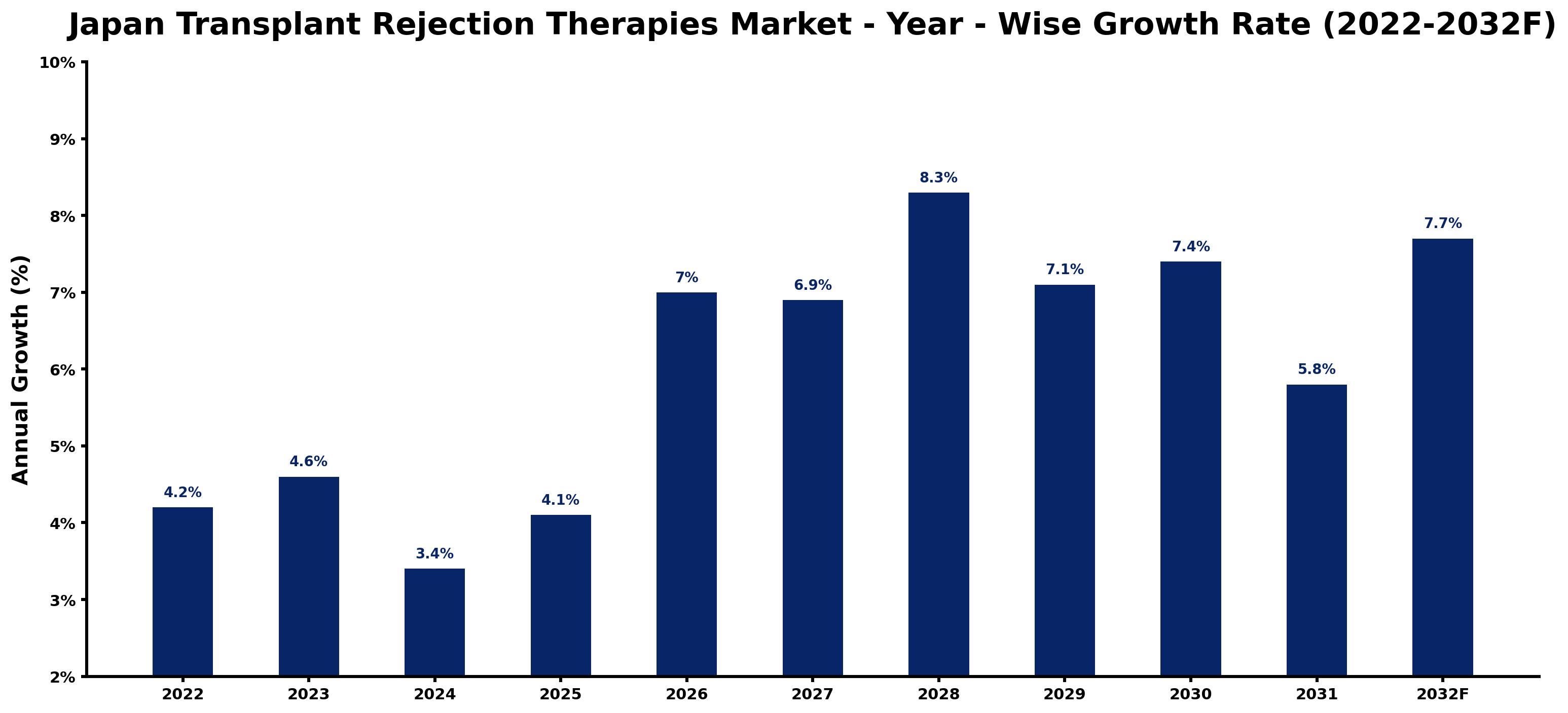
Year by year, the estimates below pair each growth rate with the development that shaped it.
| Year | Estimated Annual Growth (%) | Market Rationale |
| 2022 | 4.2 | The market experienced steady growth, supported by ongoing transplant procedures. |
| 2023 | 4.6 | Growth accelerated due to increased organ transplant surgeries and improved protocols. |
| 2024 | 3.4 | Growth slowed as hospitals adjusted to new transplant guidelines and resource allocations. |
| 2025 | 4.1 | Demand rose again as hospitals expanded transplant services and patient outreach. |
| 2026 | 7.0 | Growth is expected to surge as new therapies enter the market, broadening treatment options. |
| 2027 | 6.9 | Growth is projected to slow slightly as market saturation begins to impact new therapy adoption. |
| 2028 | 8.3 | The peak growth year will be driven by the introduction of advanced immunosuppressive therapies. |
| 2029 | 7.1 | Growth is anticipated to decelerate as the market stabilises with established treatment protocols. |
| 2030 | 7.4 | Demand is expected to increase again due to rising patient numbers and successful transplant outcomes. |
| 2031 | 5.8 | Growth is projected to slow as the market matures and competition intensifies among therapies. |
| 2032 | 7.7 | Demand is expected to rise as new technologies and therapies are adopted. |
Note: Market size estimations and growth projections presented in this report are based on 6Wresearch's proprietary forecasting methodology, utilizing the latest available industry data, government publications, and primary research inputs.
Japan Transplant Rejection Therapies Market Synopsis
Transplant rejection therapies are essential for preventing organ rejection in transplant recipients. These therapies include immunosuppressive agents that inhibit the immune response, necessary for managing acute and chronic rejection. The Japan Transplant Rejection Therapies Market is expanding, driven by approximately 3,000 organ transplants performed annually, with the Tokyo region accounting for a significant portion of these surgeries. The introduction of new therapies and ongoing support from the Ministry of Health, Labour and Welfare are further propelling this growth.
Market Dynamics Impact Analysis (2026–2032)
| Factor | Type | Impact | Primary Segment Affected |
| Increasing organ transplant surgeries drive demand for acute rejection drugs. | Driver | High | Acute Rejection Drugs |
| Growing patient population on immunosuppressive therapy boosts chronic rejection drug usage. | Driver | High | Chronic Rejection Drugs |
| Expansion of transplant hospitals creates opportunities for advanced therapies. | Opportunity | High | Transplant Hospitals |
| Rising awareness of organ donation increases demand for transplant services. | Opportunity | High | Transplant Hospitals |
| High costs of advanced therapies limit access for some patients. | Restraint | Medium | Chronic Rejection Drugs |
| Limited availability of organ donors constrains transplant procedures. | Restraint | High | Acute Rejection Drugs |
| Regulatory hurdles delay the introduction of new therapies. | Challenge | High | Cytokine Inhibitors |
| Competition among therapy providers increases pricing pressures. | Challenge | Medium | Transplant Hospitals |
Evaluation of Drivers in Japan Transplant Rejection Therapies Market (2026–2032)
The factors lifting demand, and the evidence behind each, are summarised below.
| Drivers | Primary Segment Affected | Why It Matters (Evidence) |
| Increased organ transplant surgeries enhance demand for acute rejection drugs. | Acute Rejection Drugs | In 2022, Japan performed approximately 3,000 organ transplants, driving the need for effective therapies. |
| Growing patient numbers on immunosuppressive therapy boost chronic rejection drug usage. | Chronic Rejection Drugs | Over 20,000 patients are reported on immunosuppressive therapy, increasing demand for long-term treatment. |
| Expansion of transplant hospitals creates opportunities for advanced therapies. | Transplant Hospitals | The Tokyo region accounts for over 40% of transplant surgeries, indicating a concentrated demand for therapies. |
| Rising awareness of organ donation increases demand for transplant services. | Transplant Hospitals | The new national strategy launched in 2023 aims to enhance organ donation rates, boosting transplant procedures. |
| Investment in research and development of new therapies drives market growth. | Cytokine Inhibitors | The Japanese government allocated ¥1 billion for transplant research in 2023, supporting innovation in therapies. |
Most of the extra volume comes from the increasing number of organ transplants, which reached around 3,000 annually in 2022. This rise in procedures fuels demand for acute rejection drugs, critical for managing immediate rejection. The number of patients on immunosuppressive therapy has increased significantly, heightening the need for chronic rejection drugs. The Tokyo region illustrates concentrated demand from transplant hospitals. The allocation of ¥1 billion for transplant research in 2023 supports the development of new therapies that improve treatment options.
Evaluation of Restraints in Japan Transplant Rejection Therapies Market
The main factors holding the market back are set out below.
| Market Restraint | Primary Segment Affected | Why It Matters (Evidence) |
| High costs of advanced therapies limit access for some patients. | Chronic Rejection Drugs | The average cost of chronic rejection therapies can exceed ¥1 million annually, making them unaffordable for many. |
| Limited availability of organ donors constrains transplant procedures. | Acute Rejection Drugs | The average wait time for organ transplants in Japan is around 5 years, impacting the number of surgeries. |
| Regulatory hurdles delay the introduction of new therapies. | Cytokine Inhibitors | Strict conduct rules under the Clinical Trials Act slow the approval process for new treatments, extending timelines. |
| Intense competition among therapy providers increases pricing pressures. | Transplant Hospitals | As more therapies enter the market, hospitals face challenges in maintaining profitability and managing costs. |
| Market saturation limits growth potential for existing therapies. | Cytokine Inhibitors | With many established therapies, new entrants struggle to gain market share, impacting innovation. |
Japan Transplant Rejection Therapies Market Challenges
In 2023, transplant hospitals in Japan face fierce competition for organ donations, resulting in longer wait times for patients, averaging around five years. Regulatory compliance with updated clinical guidelines burdens hospitals, diverting resources and delaying therapy implementation by several months. Rising costs of immunosuppressive therapies strain clinics, with some treatments increasing by 15% annually, impacting their budgets. Buyers, particularly patients, encounter financial challenges as out-of-pocket expenses for transplant medications can reach ¥500,000 per year, complicating access to necessary treatments.
Trends in the Japan Transplant Rejection Therapies Market
These developments are changing demand patterns in the Japan Transplant Rejection Therapies Market.
- Shift from Traditional to Advanced Immunosuppressive Therapies: Since 2023, transplant hospitals have increasingly adopted advanced immunosuppressive therapies, improving patient outcomes. This shift is reflected in over 80% of hospitals now utilising acute rejection drugs, which enhances treatment efficacy.
- Transition from Hospital-Centric to Home-Based Care: In 2023, immunology clinics began implementing home-based care for post-transplant patients, reducing hospital visits. This change is driven by a 20% increase in transplant-related admissions, allowing for more efficient patient management.
- Emergence of Personalized Medicine in Transplant Care: The introduction of personalized medicine strategies in 2023 has transformed transplant care. Specialty hospitals are now tailoring therapies to individual patient profiles, which improves long-term success rates.
- Increased Focus on Organ Donation Awareness Campaigns: In 2023, the Japanese government launched initiatives to boost organ donation awareness. These campaigns aim to address the average five-year wait time for transplants, encouraging more donors.
Investment Opportunities in the Japan Transplant Rejection Therapies Market
The openings below show where demand in the Japan Transplant Rejection Therapies Market is visible and how suppliers can enter.
- Supply of Advanced Immunosuppressive Therapies: With the rising number of organ transplants, there is a growing need for advanced immunosuppressive therapies. The Tokyo region's transplant hospitals represent a significant market opportunity, given their high volume of surgeries.
- Investment in Transplant Research Facilities: The Japanese government allocated ¥1 billion for transplant research in 2023, creating opportunities to invest in state-of-the-art facilities. Transplant hospitals can utilise this funding to enhance their capabilities.
- Provision of Home-Based Care Solutions: The shift towards home-based care for post-transplant patients presents a promising opportunity. Immunology clinics can develop tailored solutions to meet the needs of patients, improving their quality of life.
- Development of Desensitization Therapies: With a growing number of patients requiring desensitization therapies, there is a gap in the market. Immunology clinics can invest in developing these therapies to cater to patients with high antibody levels.
Government Initiatives in the Japan Transplant Rejection Therapies Market
The NHI drug price standard, revised regularly by the Ministry of Health, Labour and Welfare, establishes reimbursement prices for transplant rejection therapies. This measure ensures that patients have access to necessary medications while maintaining affordability for healthcare providers. Additionally, the Medical Care Act sets standards for hospitals and clinics, ensuring they meet necessary requirements for transplant procedures and patient care.
The Japan Organ Transplant Network coordinates organ allocation and donor matching, ensuring efficient use of available organs. This agency's efforts are supported by clinical guidelines updated in 2023, which help transplant hospitals adhere to best practices. The network's initiatives aim to streamline the transplant process, ultimately benefiting patients awaiting organ transplants.
Future Insight of the Japan Transplant Rejection Therapies Market
By 2032, hospitals will adopt advanced immunosuppressive therapies, improving patient outcomes and reducing rejection rates. The national strategy to boost organ donation rates will increase organ availability, benefiting patients and healthcare providers. Enhanced funding for transplant research will drive innovations, potentially lowering costs for clinics. Improvements in donor matching by the Japan Organ Transplant Network will streamline allocation, reducing the average wait time for transplants from five years to three.
Market Segmentation Analysis
Japan Transplant Rejection Therapies Market report covers a detailed analysis of the following market segments:
By Therapy Type – Acute Rejection Drugs Lead, Desensitization Therapies Expected to Grow Fastest
According to Saurav Kr Singh, Senior Research Analyst at 6Wresearch, the largest therapy type category in 2025 was Acute Rejection Drugs, at 40% of revenue. Acute rejection drugs hold the largest share due to their critical role in managing immediate rejection, with over 80% of transplant hospitals in Japan relying on them. This high utilisation reflects the essential nature of these therapies in ensuring successful transplant outcomes. Desensitization Therapies are set to record the highest CAGR in this split, 9.5% over 2026–2032. Desensitization therapies are experiencing rapid growth as immunology clinics increasingly adopt them for patients with high antibody levels, addressing a specific need in the transplant community. The focus on improving patient compatibility drives this trend forward. Suppliers should prioritise developing and marketing desensitization therapies to meet the growing demand in immunology clinics.
By Mechanism – Cytokine Inhibitors Lead, Anti-Fibrotic Agents Expected to Grow Fastest
In 2025, Cytokine Inhibitors led the mechanism split with a 38% share. Cytokine inhibitors lead the market due to their effectiveness in targeting inflammatory cytokines, which are critical in preventing transplant rejection. Their established presence in treatment protocols ensures consistent demand from transplant hospitals across Japan. Anti-Fibrotic Agents are projected to grow fastest, at a CAGR of 9.7% during 2026–2032. Anti-fibrotic agents are experiencing rapid growth as their role in reducing fibrosis in transplanted organs becomes more recognised among medical professionals. This increasing awareness is likely to drive their adoption in transplant care. Suppliers should focus on promoting anti-fibrotic agents to meet the growing needs of transplant specialists.
By Phase of Rejection – Immediate Response Leads, Long-Term Prevention Expected to Grow Fastest
Immediate Response accounted for 37% of the market by phase of rejection in 2025. Immediate response therapies are essential for managing acute rejection, which is a critical phase in transplant care. Their necessity is underscored by the fact that they are required for the majority of transplant patients experiencing acute rejection episodes. Over 2026–2032, Long-Term Prevention is expected to post the fastest growth, at a CAGR of 9.2%. Long-term prevention therapies are becoming increasingly important as they are recognised for their role in ensuring transplant longevity, especially among patients at risk of chronic rejection. This shift in focus reflects a broader understanding of transplant care. Suppliers must align their offerings with the growing emphasis on long-term prevention strategies in transplant care.
By End User – Transplant Hospitals Lead, Immunology Clinics Expected to Grow Fastest
Transplant Hospitals took 52% of end user revenue in 2025, more than any other category. Transplant hospitals dominate the market as they are the primary providers of transplant services, performing over 3,000 organ transplants annually. Their central role in the transplant ecosystem ensures a consistent demand for rejection therapies. The quickest growth will come from Immunology Clinics, forecast to expand at a CAGR of 9.8% between 2026 and 2032. Immunology clinics are rapidly increasing their services to offer vital supportive care for transplant patients, responding to a rise in the number of patients requiring immunosuppressive therapy. This growth indicates a shift towards more holistic patient management in the transplant sector. Suppliers should consider developing tailored solutions for immunology clinics to meet the rising demand for supportive therapies in transplant care.
Key Attractiveness of the Report
- 10 Years of Market Numbers
- Historical Data Starting from 2022 to 2025
- Base Year 2025
- Forecast Data until 2032
- Key Performance Indicators Impacting the Market
- Major Upcoming Developments and Projects
Key Highlights of the Report:
- Japan Transplant Rejection Therapies Market Outlook
- Market Size of Japan Transplant Rejection Therapies Market, 2025
- Forecast of Japan Transplant Rejection Therapies Market, 2032
- Historical Data and Forecast of Japan Transplant Rejection Therapies Revenues & Volume for the Period 2022-2032F
- Japan Transplant Rejection Therapies Market Trend Evolution
- Japan Transplant Rejection Therapies Market Drivers and Challenges
- Japan Transplant Rejection Therapies Price Trends
- Japan Transplant Rejection Therapies Porter's Five Forces
- Japan Transplant Rejection Therapies Industry Life Cycle
- Historical Data and Forecast of Japan Transplant Rejection Therapies Market Revenues & Volume By Therapy Type for the Period 2022-2032F
- Historical Data and Forecast of Japan Transplant Rejection Therapies Market Revenues & Volume By Acute Rejection Drugs for the Period 2022-2032F
- Historical Data and Forecast of Japan Transplant Rejection Therapies Market Revenues & Volume By Chronic Rejection Drugs for the Period 2022-2032F
- Historical Data and Forecast of Japan Transplant Rejection Therapies Market Revenues & Volume By Desensitization Therapies for the Period 2022-2032F
- Historical Data and Forecast of Japan Transplant Rejection Therapies Market Revenues & Volume By T-Cell Targeted Therapies for the Period 2022-2032F
- Historical Data and Forecast of Japan Transplant Rejection Therapies Market Revenues & Volume By Mechanism for the Period 2022-2032F
- Historical Data and Forecast of Japan Transplant Rejection Therapies Market Revenues & Volume By Cytokine Inhibitors for the Period 2022-2032F
- Historical Data and Forecast of Japan Transplant Rejection Therapies Market Revenues & Volume By Anti-Fibrotic Agents for the Period 2022-2032F
- Historical Data and Forecast of Japan Transplant Rejection Therapies Market Revenues & Volume By Antibody Reduction for the Period 2022-2032F
- Historical Data and Forecast of Japan Transplant Rejection Therapies Market Revenues & Volume By Immuno-Checkpoint for the Period 2022-2032F
- Historical Data and Forecast of Japan Transplant Rejection Therapies Market Revenues & Volume By Phase of Rejection for the Period 2022-2032F
- Historical Data and Forecast of Japan Transplant Rejection Therapies Market Revenues & Volume By Immediate Response for the Period 2022-2032F
- Historical Data and Forecast of Japan Transplant Rejection Therapies Market Revenues & Volume By Long-Term Prevention for the Period 2022-2032F
- Historical Data and Forecast of Japan Transplant Rejection Therapies Market Revenues & Volume By Before Surgery for the Period 2022-2032F
- Historical Data and Forecast of Japan Transplant Rejection Therapies Market Revenues & Volume By Post-Transplant for the Period 2022-2032F
- Historical Data and Forecast of Japan Transplant Rejection Therapies Market Revenues & Volume By End User for the Period 2022-2032F
- Historical Data and Forecast of Japan Transplant Rejection Therapies Market Revenues & Volume By ICU Units for the Period 2022-2032F
- Historical Data and Forecast of Japan Transplant Rejection Therapies Market Revenues & Volume By Transplant Hospitals for the Period 2022-2032F
- Historical Data and Forecast of Japan Transplant Rejection Therapies Market Revenues & Volume By Immunology Clinics for the Period 2022-2032F
- Historical Data and Forecast of Japan Transplant Rejection Therapies Market Revenues & Volume By Specialty Hospitals for the Period 2022-2032F
- Japan Transplant Rejection Therapies Import Export Trade Statistics
- Market Opportunity Assessment By Therapy Type
- Market Opportunity Assessment By Mechanism
- Market Opportunity Assessment By Phase of Rejection
- Market Opportunity Assessment By End User
- Japan Transplant Rejection Therapies Top Companies Market Share
- Japan Transplant Rejection Therapies Competitive Benchmarking By Technical and Operational Parameters
- Japan Transplant Rejection Therapies Company Profiles
- Japan Transplant Rejection Therapies Key Strategic Recommendations
Market Covered
The following segment groups are covered in the report.
By Therapy Type
- Acute Rejection Drugs
- Chronic Rejection Drugs
- Desensitization Therapies
- T-Cell Targeted Therapies
By Mechanism
- Cytokine Inhibitors
- Anti-Fibrotic Agents
- Antibody Reduction
- Immuno-Checkpoint
By Phase of Rejection
- Immediate Response
- Long-Term Prevention
- Before Surgery
- Post-Transplant
By End User
- ICU Units
- Transplant Hospitals
- Immunology Clinics
- Specialty Hospitals































