Japan Trauma Care Market Size & Growth Rate
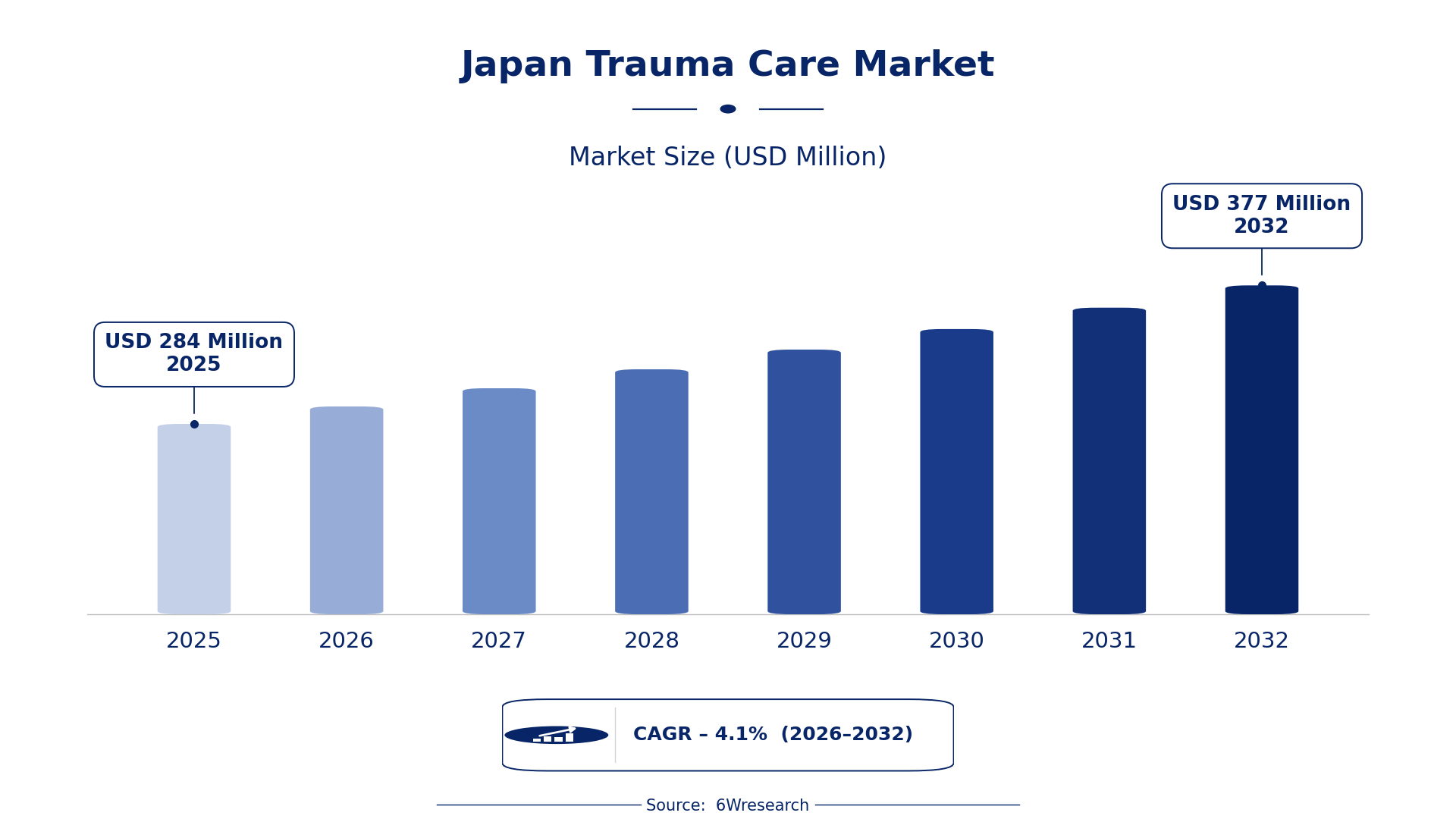
According to 6Wresearch internal database and industry insights, the Japan Trauma Care Market was valued at USD 284 Million in 2025 and is projected to reach USD 377 Million by 2032, growing at a CAGR of approximately 4.1% during 2026–2032.
Japan Trauma Care Market Highlights
| Report Metric | Details |
| Report Name | Japan Trauma Care Market (2026-2032) |
| Market Size 2025 | USD 284 Million |
| Market Size 2032 | USD 377 Million |
| Absolute Growth 2025–2032 | USD 93 Million |
| CAGR 2026–2032 | 4.1% |
| Peak Annual Growth | 4.9% in 2029 |
| Forecast Period | 2026–2032 |
| Historical Data | 2022–2025 |
| Base Year | 2025 |
| Leading Care Type, 2025 | Emergency Trauma Units (41% share) |
| Leading Service Provider, 2025 | Hospitals (38% share) |
| Leading Care Level, 2025 | Acute Response (37% share) |
| Leading End User, 2025 | Patients (43% share) |
| Fastest-Growing Care Type | Pre-Hospital Care (5.7% CAGR) |
| Fastest-Growing Service Provider | Ambulance Services (5.8% CAGR) |
| Fastest-Growing Care Level | On-Site Stabilization (5.3% CAGR) |
| Fastest-Growing End User | EMS Providers (5.4% CAGR) |
| Growing Sector | EMS Providers |
| Key End Users | Patients, EMS Providers, Critical Injury Cases, Recovery Patients |
Japan Trauma Care Market Year-wise Growth Rate and Key Drivers (2022–2032)
This graph illustrates the annual growth rates of the market from 2022 to 2032, highlighting a steady upward trajectory and projected market expansion over the forecast period.
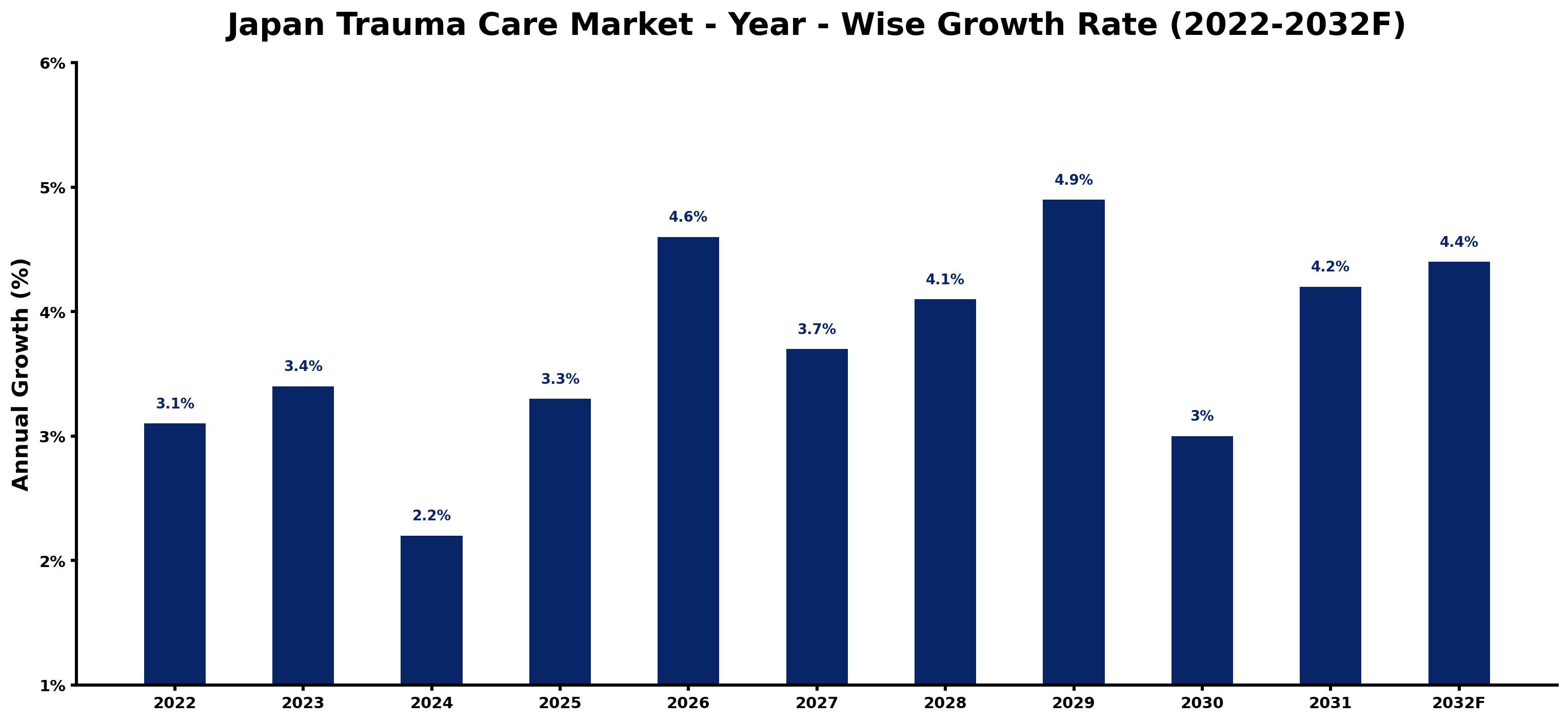
Annual growth estimates for each year appear below with the principal reason behind them, explaining the shifts that set the pace of the market.
| Year | Estimated Annual Growth (%) | Market Rationale |
| 2022 | 3.1 | The market experienced steady growth due to ongoing demand for trauma care services. |
| 2023 | 3.4 | Growth accelerated as emergency medical services expanded their capabilities and response times improved. |
| 2024 | 2.2 | Growth slowed as the market adjusted to previous expansions and resource allocations. |
| 2025 | 3.3 | Demand increased again as hospitals improved their trauma care facilities and services. |
| 2026 | 4.6 | Growth is expected to pick up due to rising investments in trauma care technology and infrastructure. |
| 2027 | 3.7 | A slight slowdown is projected as market conditions stabilise and resources are optimised. |
| 2028 | 4.1 | Growth is expected to resume as awareness campaigns about trauma prevention gain traction across the country. |
| 2029 | 4.9 | The market is projected to peak with increased funding for trauma care initiatives and improved patient outcomes. |
| 2030 | 3.0 | Growth is expected to slow as the market begins to normalise after rapid expansions in previous years. |
| 2031 | 4.2 | Demand is projected to increase again as new trauma care standards are adopted across facilities. |
| 2032 | 4.4 | Growth is expected to remain strong due to ongoing investments in trauma care training and resources. |
Note: Market size estimations and growth projections presented in this report are based on 6Wresearch's proprietary forecasting methodology, utilizing the latest available industry data, government publications, and primary research inputs.
Japan Trauma Care Market Synopsis
Trauma care involves medical services aimed at treating traumatic injuries, including emergency response, surgical procedures, and rehabilitation. In Japan, hospitals and specialized trauma centers are the primary providers of these services. The market is expanding due to factors such as an aging population, increased road accidents, and improved emergency medical services. With over 800 emergency trauma units and a national trauma care program aiming to reduce mortality rates by 20% by 2025, the Japan Trauma Care Market is set for continued growth.
Market Dynamics Impact Analysis (2026–2032)
| Factor | Type | Impact | Primary Segment Affected |
| Aging population increases demand for trauma care services. | Driver | High | Emergency Trauma Units |
| Investment in trauma care technology enhances service delivery. | Driver | High | Trauma Surgery Centers |
| Growing awareness of trauma prevention creates demand for educational programs. | Opportunity | Medium | Post-Trauma Rehab |
| Expansion of trauma care facilities in rural areas addresses service gaps. | Opportunity | High | Pre-Hospital Care |
| Limited funding for trauma care improvements restricts service expansion. | Restraint | High | Hospitals |
| High operational costs for trauma care facilities can deter investment. | Restraint | Medium | Trauma Surgery Centers |
| Shortage of trained emergency medical technicians affects service quality. | Challenge | High | EMS Providers |
| Increasing competition among trauma care facilities pressures pricing. | Challenge | Medium | Ambulance Services |
Evaluation of Drivers in Japan Trauma Care Market (2026–2032)
Key forces behind demand, with the segment each one moves most, are listed below.
| Drivers | Primary Segment Affected | Why It Matters (Evidence) |
| Aging population increases trauma incidents. | Emergency Trauma Units | 29.3% of Japan's population was aged 65 or older in September 2024, leading to higher demand for trauma services. |
| Investment in advanced medical technologies improves care. | Trauma Surgery Centers | Japan's national medical care expenditure was about JPY 46.7 trillion in fiscal 2022, facilitating technology upgrades. |
| Rising road accidents necessitate better emergency response. | Pre-Hospital Care | Emergency medical services in Japan handle over 1 million trauma cases annually, driving demand for pre-hospital care. |
| Increased focus on rehabilitation improves recovery outcomes. | Post-Trauma Rehab | The number of rehabilitation centers specializing in trauma recovery is increasing, supporting patient recovery. |
| Government initiatives promote trauma care standards. | Acute Response | The national trauma care program aims to reduce mortality rates from severe injuries by 20% by 2025. |
Several shifts outside the market lift sales. The aging population, with 29.3% aged 65 or older, drives demand for emergency services, as emergency medical services handle over 1 million trauma cases annually. In 2023, Japan's national medical care expenditure reached approximately JPY 46.7 trillion, enabling hospitals to invest in advanced trauma care technologies.
Evaluation of Restraints in Japan Trauma Care Market
The main factors holding the market back are set out below.
| Market Restraint | Primary Segment Affected | Why It Matters (Evidence) |
| Limited funding restricts service expansion. | Hospitals | In 2023, the government allocated ¥5 billion for trauma care improvement initiatives, which may not cover all needs. |
| High operational costs deter investment in new facilities. | Trauma Surgery Centers | The average length of hospital stay for trauma patients is 10 days, increasing operational expenses. |
| Shortage of trained emergency medical technicians reduces service quality. | EMS Providers | Training capacity for emergency medical technicians is limited, impacting the quality of care provided. |
| Regulatory compliance can be burdensome for facilities. | Ambulance Services | The Medical Care Act sets stringent standards for hospitals and clinics, complicating operational processes. |
| Competition among facilities pressures pricing and service quality. | Emergency Trauma Units | With over 800 emergency trauma units, facilities must differentiate services to attract patients. |
Japan Trauma Care Market Challenges
Buyers of trauma care services encounter rising costs as Japan's national medical care expenditure reached JPY 46.7 trillion in fiscal 2022, affecting hospital budgets. Compliance with regulations from the Ministry of Health, Labour and Welfare causes delays in service delivery for emergency medical services, impeding timely care. Shortages of skilled emergency medical technicians diminish response efficiency, with urban areas averaging an 8-minute ambulance response time, adversely impacting patient outcomes. Limited adoption of advanced technology hampers the integration of modern trauma solutions, prolonging recovery times for those needing urgent interventions.
Trends in the Japan Trauma Care Market
Several trends are reshaping the Japan Trauma Care Market; the most important are set out below.
- Launch of National Trauma Care Awareness Campaign: In 2023, Japan initiated a nationwide campaign to raise awareness about trauma prevention, aiming to reduce incidents. This initiative is expected to influence purchasing decisions among healthcare providers, increasing the need for educational materials.
- Expansion of Trauma Care Facilities in Rural Areas: The government is improving trauma care services in rural areas, focusing on access. This shift is evidenced by the allocation of ¥5 billion for trauma care improvement initiatives in 2023, indicating a growing market opportunity.
- Increased Adoption of ISO 9001 Standards: Trauma care facilities are increasingly adopting ISO 9001 standards to improve service quality. This trend is reflected as more hospitals seek certification, ensuring compliance with international quality benchmarks.
- Growth of Rehabilitation Centers Specializing in Trauma Recovery: The number of rehabilitation centers focusing on trauma recovery is rising, reflecting a commitment to patient care. This trend is supported by the increasing need for long-term recovery services in Japan.
Investment Opportunities in the Japan Trauma Care Market
Several openings in the Japan Trauma Care Market merit attention from investors.
- Hospitals seeking advanced trauma care solutions: Urban hospitals are looking for advanced trauma care technologies to improve service delivery. With over 800 emergency trauma units, there is a strong demand for advanced medical equipment.
- Rural healthcare facilities needing improved trauma services: Rural regions require better trauma care services, particularly in emergency response. The government’s allocation of ¥5 billion for trauma care improvement initiatives presents an opportunity for suppliers.
- Investment in trauma care training programs: With the increasing number of trauma cases, there is a gap in trained emergency medical technicians. Investing in training programs can help meet the demand for skilled professionals in the field.
- Supply of rehabilitation equipment for trauma recovery: Rehabilitation centers are expanding their services, creating a demand for specialized recovery equipment. Suppliers can enter this market by partnering with healthcare facilities to provide necessary resources.
Government Initiatives in the Japan Trauma Care Market
The Medical Care Act, established in 1948, sets essential standards for hospitals and clinics, including staffing and facility requirements. This legislation ensures that trauma care providers maintain high-quality services, which is vital for patient outcomes. In 2023, the government allocated ¥5 billion for trauma care improvement initiatives, benefiting hospitals and emergency services across the country.
The Japan Trauma Society oversees the implementation of trauma care regulations, funding various initiatives. In 2023, the government allocated ¥5 billion for trauma care improvement initiatives, benefiting hospitals and emergency services across the country.
Future Insight of the Japan Trauma Care Market
Emerging technologies will transform trauma care demand, improving service delivery and access for rural populations. By 2032, the national trauma care program aims to reduce mortality rates from severe injuries by 20%, enhancing overall patient outcomes. Increased government funding for trauma care initiatives will strengthen resources for emergency medical services. Adoption of JIS standards for medical devices will elevate the quality and reliability of trauma care equipment, benefiting suppliers and healthcare providers alike.
Market Segmentation Analysis
Japan Trauma Care Market report covers a detailed analysis of the following market segments:
By Care Type – Emergency Trauma Units Lead, Pre-Hospital Care Expected to Grow Fastest
According to Saurav Kr Singh, Senior Research Analyst at 6Wresearch, Emergency Trauma Units held 41% of the Japan Trauma Care Market by care type in 2025. Emergency trauma units are crucial for the immediate care of trauma patients, with over 800 units located across major cities in Japan. Their established infrastructure and essential role in emergency response solidify their leading share in the market. Over 2026–2032, Pre-Hospital Care is expected to post the fastest growth, at a CAGR of 5.7%. Pre-hospital care is rapidly expanding due to the growing emphasis on stabilising patients before hospital arrival, with ambulance services boasting an average response time of 8 minutes in urban areas. This focus on timely intervention will continue to drive demand for pre-hospital services. Suppliers should enhance capabilities in pre-hospital care to meet the rising demand.
By Service Provider – Hospitals Lead, Ambulance Services Expected to Grow Fastest
Hospitals took 38% of service provider revenue in 2025, more than any other category. Hospitals serve as the primary providers of trauma care services, with approximately 1,200 trauma surgery centers operational across Japan. Their extensive infrastructure and comprehensive care offerings reinforce their leading position in the market. Ambulance Services are projected to grow fastest, at a CAGR of 5.8% during 2026–2032. Ambulance services are growing swiftly as they play a vital role in transporting trauma patients, handling over 1 million trauma cases annually. The increasing volume of emergency calls is propelling this segment's growth. Providers must ensure robust support for ambulance services to align with the growing demand for timely trauma care.
By Care Level – Acute Response Leads, On-Site Stabilization Expected to Grow Fastest
With 37% of care level revenue in 2025, Acute Response was the largest category. Acute response is vital for survival, as immediate care significantly influences patient outcomes following traumatic injuries. The emphasis on rapid intervention in trauma cases underscores the importance of this care level in the market. On-Site Stabilization is set to record the highest CAGR in this split, 5.3% over 2026–2032. On-site stabilization is gaining traction as it represents the initial step in trauma management, with new initiatives launched to enhance training for emergency medical technicians. This growing recognition of its significance is driving its rapid growth. Investing in on-site stabilization training will be essential for service providers to improve overall trauma care effectiveness.
By End User – Patients Lead, EMS Providers Expected to Grow Fastest
The largest end user category in 2025 was Patients, at 43% of revenue. Patients are the primary recipients of trauma care services, with the ageing population in Japan heightening the need for effective trauma interventions. Their direct involvement in the care process emphasises their dominant share in the market. The quickest growth will come from EMS Providers, forecast to expand at a CAGR of 5.4% between 2026 and 2032. EMS providers are experiencing accelerated growth as they are integral to delivering emergency care, responding to over 1 million trauma cases each year. Their critical role in the trauma care continuum is propelling this segment forward. Engagement strategies targeting EMS providers will be crucial for suppliers to tap into this growing segment.
Key Attractiveness of the Report
- 10 Years of Market Numbers
- Historical Data Starting from 2022 to 2025
- Base Year 2025
- Forecast Data until 2032
- Key Performance Indicators Impacting the Market
- Major Upcoming Developments and Projects
Key Highlights of the Report:
- Japan Trauma Care Market Outlook
- Market Size of Japan Trauma Care Market, 2025
- Forecast of Japan Trauma Care Market, 2032
- Historical Data and Forecast of Japan Trauma Care Revenues & Volume for the Period 2022-2032F
- Japan Trauma Care Market Trend Evolution
- Japan Trauma Care Market Drivers and Challenges
- Japan Trauma Care Price Trends
- Japan Trauma Care Porter's Five Forces
- Japan Trauma Care Industry Life Cycle
- Historical Data and Forecast of Japan Trauma Care Market Revenues & Volume By Care Type for the Period 2022-2032F
- Historical Data and Forecast of Japan Trauma Care Market Revenues & Volume By Emergency Trauma Units for the Period 2022-2032F
- Historical Data and Forecast of Japan Trauma Care Market Revenues & Volume By Pre-Hospital Care for the Period 2022-2032F
- Historical Data and Forecast of Japan Trauma Care Market Revenues & Volume By Trauma Surgery Centers for the Period 2022-2032F
- Historical Data and Forecast of Japan Trauma Care Market Revenues & Volume By Post-Trauma Rehab for the Period 2022-2032F
- Historical Data and Forecast of Japan Trauma Care Market Revenues & Volume By Service Provider for the Period 2022-2032F
- Historical Data and Forecast of Japan Trauma Care Market Revenues & Volume By Hospitals for the Period 2022-2032F
- Historical Data and Forecast of Japan Trauma Care Market Revenues & Volume By Ambulance Services for the Period 2022-2032F
- Historical Data and Forecast of Japan Trauma Care Market Revenues & Volume By Multispecialty Clinics for the Period 2022-2032F
- Historical Data and Forecast of Japan Trauma Care Market Revenues & Volume By Rehabilitation Centers for the Period 2022-2032F
- Historical Data and Forecast of Japan Trauma Care Market Revenues & Volume By Care Level for the Period 2022-2032F
- Historical Data and Forecast of Japan Trauma Care Market Revenues & Volume By Acute Response for the Period 2022-2032F
- Historical Data and Forecast of Japan Trauma Care Market Revenues & Volume By On-Site Stabilization for the Period 2022-2032F
- Historical Data and Forecast of Japan Trauma Care Market Revenues & Volume By Surgical Treatment for the Period 2022-2032F
- Historical Data and Forecast of Japan Trauma Care Market Revenues & Volume By Long-Term Care for the Period 2022-2032F
- Historical Data and Forecast of Japan Trauma Care Market Revenues & Volume By End User for the Period 2022-2032F
- Historical Data and Forecast of Japan Trauma Care Market Revenues & Volume By Patients for the Period 2022-2032F
- Historical Data and Forecast of Japan Trauma Care Market Revenues & Volume By EMS Providers for the Period 2022-2032F
- Historical Data and Forecast of Japan Trauma Care Market Revenues & Volume By Critical Injury Cases for the Period 2022-2032F
- Historical Data and Forecast of Japan Trauma Care Market Revenues & Volume By Recovery Patients for the Period 2022-2032F
- Japan Trauma Care Import Export Trade Statistics
- Market Opportunity Assessment By Care Type
- Market Opportunity Assessment By Service Provider
- Market Opportunity Assessment By Care Level
- Market Opportunity Assessment By End User
- Japan Trauma Care Top Companies Market Share
- Japan Trauma Care Competitive Benchmarking By Technical and Operational Parameters
- Japan Trauma Care Company Profiles
- Japan Trauma Care Key Strategic Recommendations
Market Covered
This report examines the market across the segments below.
By Care Type
- Emergency Trauma Units
- Pre-Hospital Care
- Trauma Surgery Centers
- Post-Trauma Rehab
By Service Provider
- Hospitals
- Ambulance Services
- Multispecialty Clinics
- Rehabilitation Centers
By Care Level
- Acute Response
- On-Site Stabilization
- Surgical Treatment
- Long-Term Care
By End User
- Patients
- EMS Providers
- Critical Injury Cases
- Recovery Patients































