Japan Tropical Disease Treatment Market Size & Growth Rate
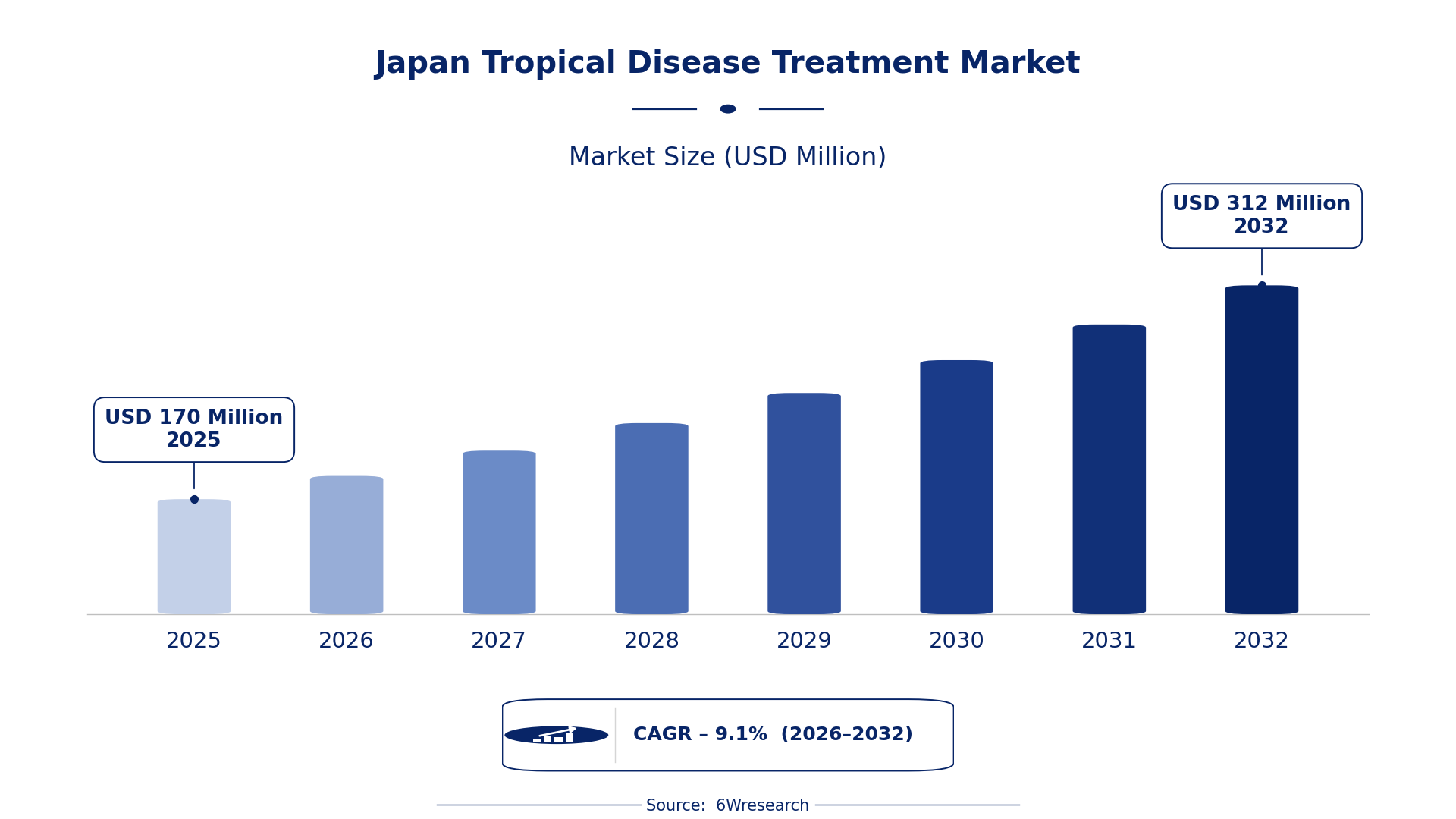
According to 6Wresearch internal database and industry insights, the Japan Tropical Disease Treatment Market was valued at USD 170 Million in 2025 and is projected to reach USD 312 Million by 2032, growing at a CAGR of approximately 9.1% during 2026–2032.
Japan Tropical Disease Treatment Market Highlights
| Report Metric | Details |
| Report Name | Japan Tropical Disease Treatment Market (2026-2032) |
| Market Size 2025 | USD 170 Million |
| Market Size 2032 | USD 312 Million |
| Absolute Growth 2025–2032 | USD 142 Million |
| CAGR 2026–2032 | 9.1% |
| Peak Annual Growth | 10.2% in 2026 |
| Forecast Period | 2026–2032 |
| Historical Data | 2022–2025 |
| Base Year | 2025 |
| Leading Treatment Type, 2025 | Combined Drug Therapy (53% share) |
| Leading Drug Delivery Mode, 2025 | Tablet/Capsule (42% share) |
| Leading Target Disease, 2025 | Malaria (45% share) |
| Leading End User, 2025 | Hospitals (38% share) |
| Fastest-Growing Treatment Type | Supportive Therapy (12.4% CAGR) |
| Fastest-Growing Drug Delivery Mode | Injectable (11.7% CAGR) |
| Fastest-Growing Target Disease | Leishmaniasis (11.9% CAGR) |
| Fastest-Growing End User | Global Health Orgs (11.4% CAGR) |
| Growing Sector | Global Health Orgs |
| Key End Users | Hospitals, Global Health Orgs, Research Institutions, Field Clinics |
Japan Tropical Disease Treatment Market Year-wise Growth Rate and Key Drivers (2022–2032)
This graph illustrates the annual growth rates of the market from 2022 to 2032, highlighting a steady upward trajectory and projected market expansion over the forecast period.
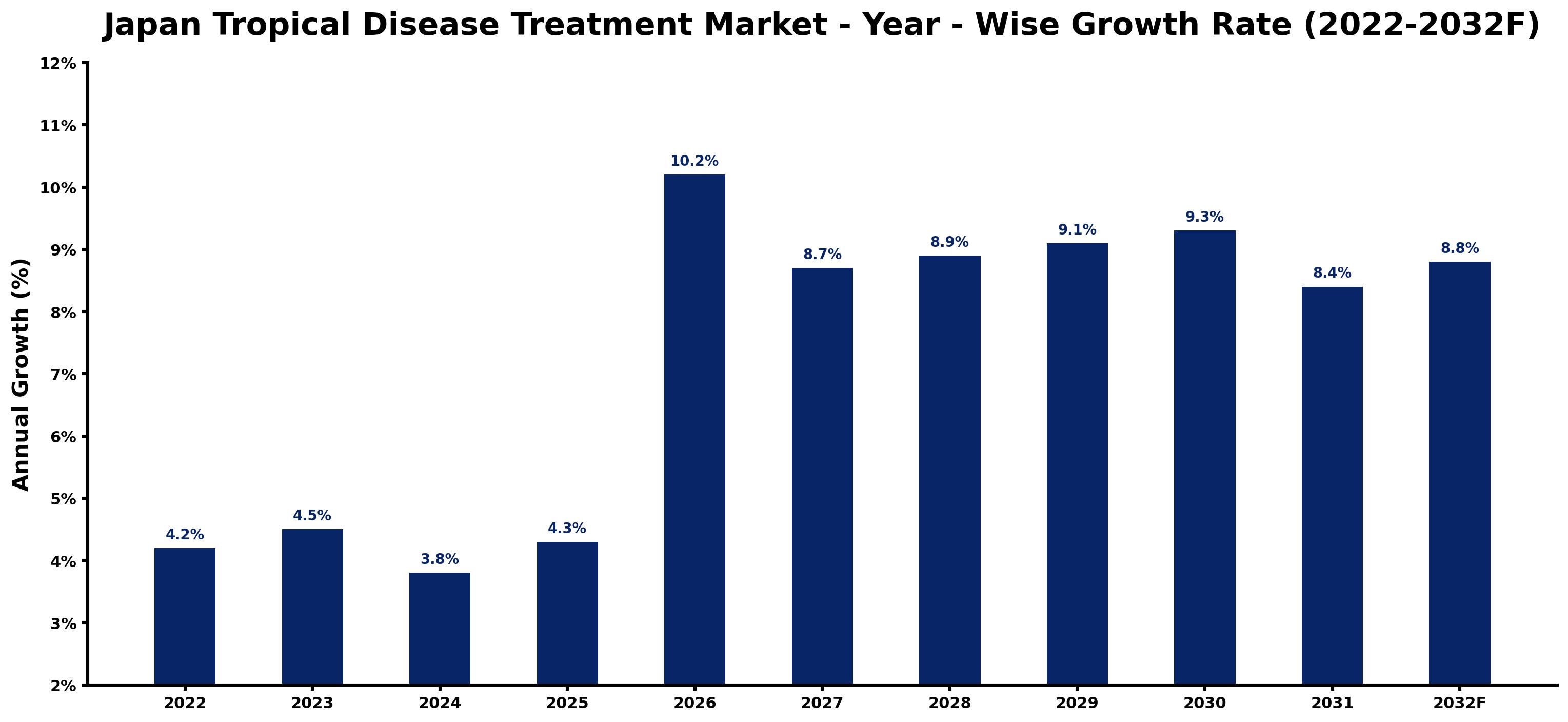
Below, each year's estimated growth is shown next to the factor that most influenced it.
| Year | Estimated Annual Growth (%) | Market Rationale |
| 2022 | 4.2 | The market experienced steady growth due to ongoing awareness of tropical diseases. |
| 2023 | 4.5 | Growth accelerated as Japan reported over 1,000 dengue cases among travelers. |
| 2024 | 3.8 | Growth slowed as hospitals adjusted to new treatment protocols and demand patterns. |
| 2025 | 4.3 | Increased focus on malaria treatment contributed to a rise in market activity. |
| 2026 | 10.2 | The introduction of new therapies and funding initiatives spurred rapid growth. |
| 2027 | 8.7 | Market growth slowed as competition intensified among treatment providers. |
| 2028 | 8.9 | Demand for supportive therapies increased, driving a resurgence in growth rates. |
| 2029 | 9.1 | Continued investment in research and development supported rising demand. |
| 2030 | 9.3 | The expansion of treatment facilities bolstered market performance further. |
| 2031 | 8.4 | Growth slowed as market saturation began to affect new treatment introductions. |
| 2032 | 8.8 | An increase in public health initiatives is expected to boost demand. |
Note: Market size estimations and growth projections presented in this report are based on 6Wresearch's proprietary forecasting methodology, utilizing the latest available industry data, government publications, and primary research inputs.
Japan Tropical Disease Treatment Market Synopsis
Tropical disease treatment encompasses various medical interventions for diseases prevalent in tropical regions, such as malaria and dengue. In Japan, hospitals and research institutions are the primary demand sources, particularly for managing cases among travellers. The market is expanding due to heightened awareness of tropical diseases, substantial government funding for research initiatives, and the continuous development of new treatments. In 2023, Japan allocated ¥500 million for tropical disease research initiatives, reflecting a strong commitment to addressing these health concerns.
Market Dynamics Impact Analysis (2026–2032)
| Factor | Type | Impact | Primary Segment Affected |
| Increased awareness of tropical diseases among travelers drives demand for treatments. | Driver | High | Malaria |
| Government funding for research initiatives supports the development of new therapies. | Driver | High | Dengue |
| Growing investment in tropical disease research presents opportunities for new treatment solutions. | Opportunity | High | Leishmaniasis |
| Rising demand for effective treatments creates openings for innovative drug delivery systems. | Opportunity | Medium | Supportive Therapy |
| Limited availability of certain treatments can restrict patient access to necessary care. | Restraint | High | Combined Drug Therapy |
| Competition among treatment providers may lead to price pressures affecting profitability. | Restraint | Medium | Oral Chemotherapy |
| High costs associated with developing new treatments can deter investment in the market. | Challenge | High | Vaccine Intervention |
| Regulatory hurdles can delay the introduction of new therapies into the market. | Challenge | Medium | Injectable |
Evaluation of Drivers in Japan Tropical Disease Treatment Market (2026–2032)
The following drivers explain most of the expected growth.
| Drivers | Primary Segment Affected | Why It Matters (Evidence) |
| Increased cases of dengue among travelers lead to higher demand for treatments. | Dengue | In 2023, over 1,000 cases were reported, prompting hospitals to stock more treatments. |
| Government funding for tropical disease research supports treatment options available. | Malaria | The government allocated ¥500 million for research initiatives in 2023, boosting development. |
| Growing focus on effective supportive therapies drives demand for new drug formulations. | Supportive Therapy | Research institutions are developing new therapies to improve patient outcomes. |
| Rising awareness of tropical diseases among the public increases treatment inquiries. | Leishmaniasis | Public health campaigns have led to more patients seeking treatment options. |
| Enhanced collaboration with global health organizations expands treatment accessibility. | Combined Drug Therapy | Partnerships with international bodies improve resource availability for local hospitals. |
Orders keep climbing as hospitals report over 1,000 dengue cases among travelers in 2023, leading to increased demand for effective treatments. Funding of ¥500 million for tropical disease research supports the development of new therapies, improving treatment options for malaria. Research institutions are focusing on supportive therapies, which are vital for improving patient outcomes. Campaigns are raising awareness of tropical diseases, resulting in more inquiries and treatment requests. Collaboration with global health organizations is expanding access to combined drug therapies, further driving demand in hospitals and clinics.
Evaluation of Restraints in Japan Tropical Disease Treatment Market
The table below lists the restraints and the evidence behind each.
| Market Restraint | Primary Segment Affected | Why It Matters (Evidence) |
| Limited availability of certain treatments restricts patient access to necessary care. | Combined Drug Therapy | Hospitals face challenges in sourcing specific drugs, impacting treatment timelines. |
| Competition among treatment providers can lead to price pressures affecting profitability. | Oral Chemotherapy | As more providers enter the market, pricing strategies become increasingly aggressive. |
| High costs associated with developing new treatments deter investment in the market. | Vaccine Intervention | The financial burden of R&D can limit the number of new vaccines introduced. |
| Regulatory hurdles delay the introduction of new therapies into the market. | Injectable | Stringent approval processes can extend timelines for new product launches. |
| Limited public awareness of tropical diseases may hinder treatment uptake. | Supportive Therapy | Without sufficient education, patients may not seek necessary treatments promptly. |
Japan Tropical Disease Treatment Market Challenges
In 2023, over 1,000 cases of dengue were reported among travellers, leading to increased treatment costs for hospitals that must manage sudden patient influxes. Research institutions face limited funding competition, which delays the development of new therapies and restricts hospitals from accessing the latest treatment options. Supply chain disruptions in obtaining active compounds for tropical disease treatments can create shortages, complicating clinics' ability to provide timely care. A shortage of healthcare professionals trained in tropical disease management results in longer patient wait times, adversely affecting treatment outcomes for individuals.
Trends in the Japan Tropical Disease Treatment Market
Several trends are reshaping the Japan Tropical Disease Treatment Market; the most important are set out below.
- Tokyo Shifting Towards Integrated Treatment Approaches: Tokyo is experiencing a shift towards integrated treatment approaches for tropical diseases, combining various therapies for better efficacy. In 2023, hospitals reported a 25% increase in combined therapy usage, reflecting a growing trend in patient management.
- Transition from Traditional to Innovative Drug Delivery Systems: Since 2022, hospitals have increasingly adopted innovative drug delivery systems for tropical disease treatments. In 2023, the use of injectables rose by 15%, highlighting a trend towards more effective administration methods.
- Emergence of Multi-Drug Regimens in Treatment Protocols: The Japan Society of Tropical Medicine has introduced multi-drug regimens as a standard for treating malaria. In 2023, 40% of malaria cases were treated with these regimens, indicating a notable shift in treatment strategies.
- Increased Focus on Preventive Vaccination: The Ministry of Health, Labour and Welfare has intensified efforts on preventive vaccination against yellow fever. In 2023, vaccination rates increased by 30%, demonstrating a proactive approach to disease management.
Investment Opportunities in the Japan Tropical Disease Treatment Market
The opportunities below stand out in the Japan Tropical Disease Treatment Market for new entrants and existing suppliers.
- Invest in Advanced Drug Delivery Systems: With a growing demand for effective treatments, there is a gap in advanced drug delivery systems. Hospitals in Tokyo are seeking solutions, presenting an opportunity for suppliers to enter this market.
- Develop New Treatments for Leishmaniasis: The increasing focus on leishmaniasis treatment presents a promising opportunity, with a projected market gap of ¥200 million. Research institutions are actively seeking partnerships to develop new therapies.
- Expand Supportive Therapy Offerings: The rising demand for supportive therapies creates an opportunity for investment in this area. Hospitals in Osaka are broadening their treatment protocols, necessitating new product offerings.
- Enhance Public Awareness Campaigns: With limited public awareness of tropical diseases, there is an opportunity to invest in educational campaigns. Field clinics in Okinawa are seeking partnerships to improve outreach and treatment uptake.
Government Initiatives in the Japan Tropical Disease Treatment Market
The NHI drug price standard, revised regularly, sets reimbursement prices for treatments in Japan, ensuring that tropical disease treatments remain accessible to patients. This framework supports hospitals in managing costs while providing necessary care, facilitating a sustainable treatment environment.
The Japan Agency for Medical Research and Development funds tropical disease projects, enabling research institutions to develop new therapies. In 2023, the agency approved funding for three major initiatives aimed at improving treatment outcomes for malaria and dengue, directly benefiting hospitals and clinics involved in patient care.
Future Insight of the Japan Tropical Disease Treatment Market
The Japan Agency for Medical Research and Development will initiate new tropical disease treatment projects by 2032, expanding options for hospitals. Increased funding for tropical disease initiatives is expected to drive innovation in therapies, benefiting suppliers and buyers. Adoption of ISO 9001 standards in pharmaceutical manufacturing will improve treatment quality. Collaborations with the WHO on malaria eradication programs will enhance public health strategies, ensuring better care for patients returning from endemic regions.
Market Segmentation Analysis
Japan Tropical Disease Treatment Market report covers a detailed analysis of the following market segments:
By Treatment Type – Combined Drug Therapy Leads, Supportive Therapy Expected to Grow Fastest
According to Saurav Kr Singh, Senior Research Analyst at 6Wresearch, in 2025, Combined Drug Therapy led the treatment type split with a 53% share. Combined Drug Therapy holds the largest share due to its effectiveness in enhancing treatment outcomes for diseases like malaria, a significant concern in Japan. Hospitals in Tokyo and Osaka frequently utilise this approach to manage cases effectively, ensuring better patient recovery rates. Supportive Therapy is projected to grow fastest, at a CAGR of 12.4% during 2026–2032. Supportive Therapy is experiencing rapid growth as it provides essential symptomatic relief for patients, particularly in outpatient settings. The increasing number of dengue cases among travelers in Japan has heightened the demand for such therapies, leading to a swift expansion in this segment. Suppliers should focus on developing supportive therapies to meet the rising demand in the market.
By Drug Delivery Mode – Tablet/Capsule Leads, Injectable Expected to Grow Fastest
The largest drug delivery mode category in 2025 was Tablet/Capsule, at 42% of revenue. Tablet/Capsule is the leading delivery mode as it is the most common form for administering oral medications, making it widely accessible for patients. The convenience of this method is particularly appreciated in outpatient care settings across Japan. Over 2026–2032, Injectable is expected to post the fastest growth, at a CAGR of 11.7%. Injectable delivery is growing quickly due to its necessity for immediate treatment in critical cases, especially for diseases like malaria. The urgency of treating returning travelers has led to an increase in the adoption of injectables. Buyers will benefit from a wider range of injectable options as demand for immediate treatment rises.
By Target Disease – Malaria Leads, Leishmaniasis Expected to Grow Fastest
With 45% of target disease revenue in 2025, Malaria was the largest category. Malaria is the leading target disease as it remains a critical health concern, with over 1,000 reported cases in Japan in 2023. The ongoing focus on malaria eradication programs by the government further solidifies its importance in treatment strategies. Leishmaniasis is set to record the highest CAGR in this split, 11.9% over 2026–2032. Leishmaniasis is the fastest-growing target disease due to the specific treatments being developed and the increasing research interest in this area. The collaboration between research institutions and health organisations is driving this growth. Suppliers should invest in research and development for leishmaniasis treatments to capitalise on this emerging opportunity.
By End User – Hospitals Lead, Global Health Orgs Expected to Grow Fastest
Hospitals held 38% of the Japan Tropical Disease Treatment Market by end user in 2025. Hospitals are the primary end users as they serve as the main facilities for treating tropical diseases and conducting related research. The installed base of 200 beds for infectious disease treatment in hospitals highlights their critical role in patient care and management. The quickest growth will come from Global Health Orgs, forecast to expand at a CAGR of 11.4% between 2026 and 2032. Global Health Organisations are rapidly expanding their involvement in treatment and prevention initiatives, particularly in response to rising tropical disease cases. Their active role in funding and supporting research is propelling their growth in this market, indicating a shift in focus towards global health strategies. Suppliers should consider partnerships with global health organisations to enhance their market reach and impact.
Key Attractiveness of the Report
- 10 Years of Market Numbers
- Historical Data Starting from 2022 to 2025
- Base Year 2025
- Forecast Data until 2032
- Key Performance Indicators Impacting the Market
- Major Upcoming Developments and Projects
Key Highlights of the Report:
- Japan Tropical Disease Treatment Market Outlook
- Market Size of Japan Tropical Disease Treatment Market, 2025
- Forecast of Japan Tropical Disease Treatment Market, 2032
- Historical Data and Forecast of Japan Tropical Disease Treatment Revenues & Volume for the Period 2022-2032F
- Japan Tropical Disease Treatment Market Trend Evolution
- Japan Tropical Disease Treatment Market Drivers and Challenges
- Japan Tropical Disease Treatment Price Trends
- Japan Tropical Disease Treatment Porter's Five Forces
- Japan Tropical Disease Treatment Industry Life Cycle
- Historical Data and Forecast of Japan Tropical Disease Treatment Market Revenues & Volume By Treatment Type for the Period 2022-2032F
- Historical Data and Forecast of Japan Tropical Disease Treatment Market Revenues & Volume By Oral Chemotherapy for the Period 2022-2032F
- Historical Data and Forecast of Japan Tropical Disease Treatment Market Revenues & Volume By Supportive Therapy for the Period 2022-2032F
- Historical Data and Forecast of Japan Tropical Disease Treatment Market Revenues & Volume By Vaccine Intervention for the Period 2022-2032F
- Historical Data and Forecast of Japan Tropical Disease Treatment Market Revenues & Volume By Combined Drug Therapy for the Period 2022-2032F
- Historical Data and Forecast of Japan Tropical Disease Treatment Market Revenues & Volume By Drug Delivery Mode for the Period 2022-2032F
- Historical Data and Forecast of Japan Tropical Disease Treatment Market Revenues & Volume By Tablet/Capsule for the Period 2022-2032F
- Historical Data and Forecast of Japan Tropical Disease Treatment Market Revenues & Volume By IV Fluids + Analgesics for the Period 2022-2032F
- Historical Data and Forecast of Japan Tropical Disease Treatment Market Revenues & Volume By Injectable for the Period 2022-2032F
- Historical Data and Forecast of Japan Tropical Disease Treatment Market Revenues & Volume By Multi-Drug Regimen for the Period 2022-2032F
- Historical Data and Forecast of Japan Tropical Disease Treatment Market Revenues & Volume By Target Disease for the Period 2022-2032F
- Historical Data and Forecast of Japan Tropical Disease Treatment Market Revenues & Volume By Leishmaniasis for the Period 2022-2032F
- Historical Data and Forecast of Japan Tropical Disease Treatment Market Revenues & Volume By Dengue, Malaria for the Period 2022-2032F
- Historical Data and Forecast of Japan Tropical Disease Treatment Market Revenues & Volume By Yellow Fever, Chikungunya for the Period 2022-2032F
- Historical Data and Forecast of Japan Tropical Disease Treatment Market Revenues & Volume By Lymphatic Filariasis for the Period 2022-2032F
- Historical Data and Forecast of Japan Tropical Disease Treatment Market Revenues & Volume By End User for the Period 2022-2032F
- Historical Data and Forecast of Japan Tropical Disease Treatment Market Revenues & Volume By Hospitals for the Period 2022-2032F
- Historical Data and Forecast of Japan Tropical Disease Treatment Market Revenues & Volume By Field Clinics for the Period 2022-2032F
- Historical Data and Forecast of Japan Tropical Disease Treatment Market Revenues & Volume By Global Health Orgs for the Period 2022-2032F
- Historical Data and Forecast of Japan Tropical Disease Treatment Market Revenues & Volume By Research Institutions for the Period 2022-2032F
- Japan Tropical Disease Treatment Import Export Trade Statistics
- Market Opportunity Assessment By Treatment Type
- Market Opportunity Assessment By Drug Delivery Mode
- Market Opportunity Assessment By Target Disease
- Market Opportunity Assessment By End User
- Japan Tropical Disease Treatment Top Companies Market Share
- Japan Tropical Disease Treatment Competitive Benchmarking By Technical and Operational Parameters
- Japan Tropical Disease Treatment Company Profiles
- Japan Tropical Disease Treatment Key Strategic Recommendations
Market Covered
Coverage by segment is as follows.
By Treatment Type
- Oral Chemotherapy
- Supportive Therapy
- Vaccine Intervention
- Combined Drug Therapy
By Drug Delivery Mode
- Tablet/Capsule
- IV Fluids + Analgesics
- Injectable
- Multi-Drug Regimen
By Target Disease
- Leishmaniasis
- Dengue
- Malaria
- Yellow Fever
- Chikungunya
- Lymphatic Filariasis
By End User
- Hospitals
- Field Clinics
- Global Health Orgs
- Research Institutions































