Japan Tropical Medicine Market Size & Growth Rate
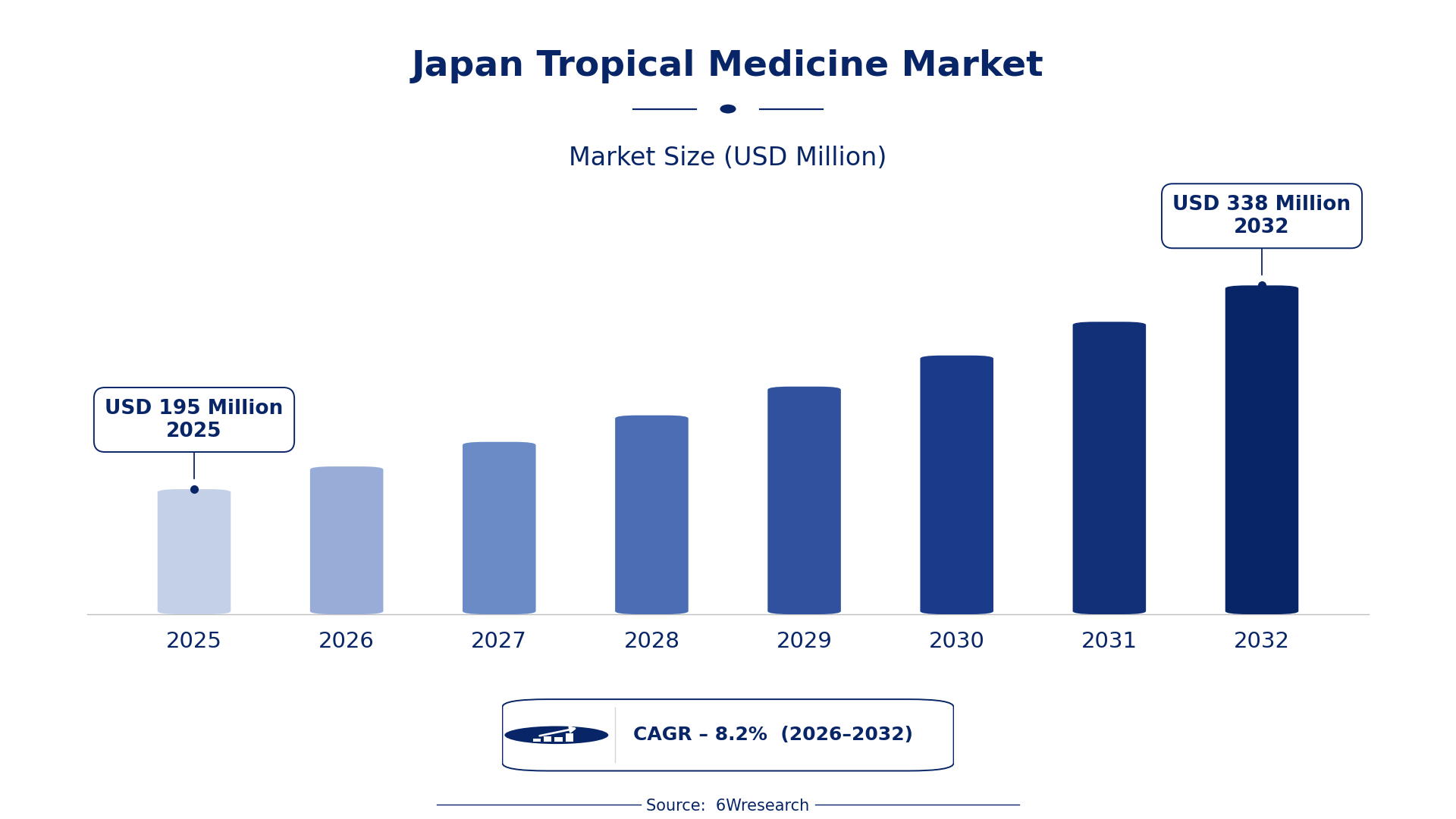
According to 6Wresearch internal database and industry insights, the Japan Tropical Medicine Market was valued at USD 195 Million in 2025 and is projected to reach USD 338 Million by 2032, growing at a CAGR of approximately 8.2% during 2026–2032.
Japan Tropical Medicine Market Highlights
| Report Metric | Details |
| Report Name | Japan Tropical Medicine Market (2026-2032) |
| Market Size 2025 | USD 195 Million |
| Market Size 2032 | USD 338 Million |
| Absolute Growth 2025–2032 | USD 143 Million |
| CAGR 2026–2032 | 8.2% |
| Peak Annual Growth | 9.0% in 2028 |
| Forecast Period | 2026–2032 |
| Historical Data | 2022–2025 |
| Base Year | 2025 |
| Leading Medicine Type, 2025 | Antimalarial Medicines (52% share) |
| Leading Target Disease, 2025 | Malaria (47% share) |
| Leading Distribution Channel, 2025 | NGOs/Government Tenders (41% share) |
| Leading End User, 2025 | Remote Hospitals (34% share) |
| Fastest-Growing Medicine Type | Anti-Leprosy Drugs (11.4% CAGR) |
| Fastest-Growing Target Disease | Leprosy (10.6% CAGR) |
| Fastest-Growing Distribution Channel | Public Health Campaigns (10.4% CAGR) |
| Fastest-Growing End User | Clinics (10.5% CAGR) |
| Growing Sector | Public Health |
| Key End Users | Remote Hospitals, NGOs, Health Departments, Humanitarian Agencies |
Japan Tropical Medicine Market Year-wise Growth Rate and Key Drivers (2022–2032)
This graph illustrates the annual growth rates of the market from 2022 to 2032, highlighting a steady upward trajectory and projected market expansion over the forecast period.
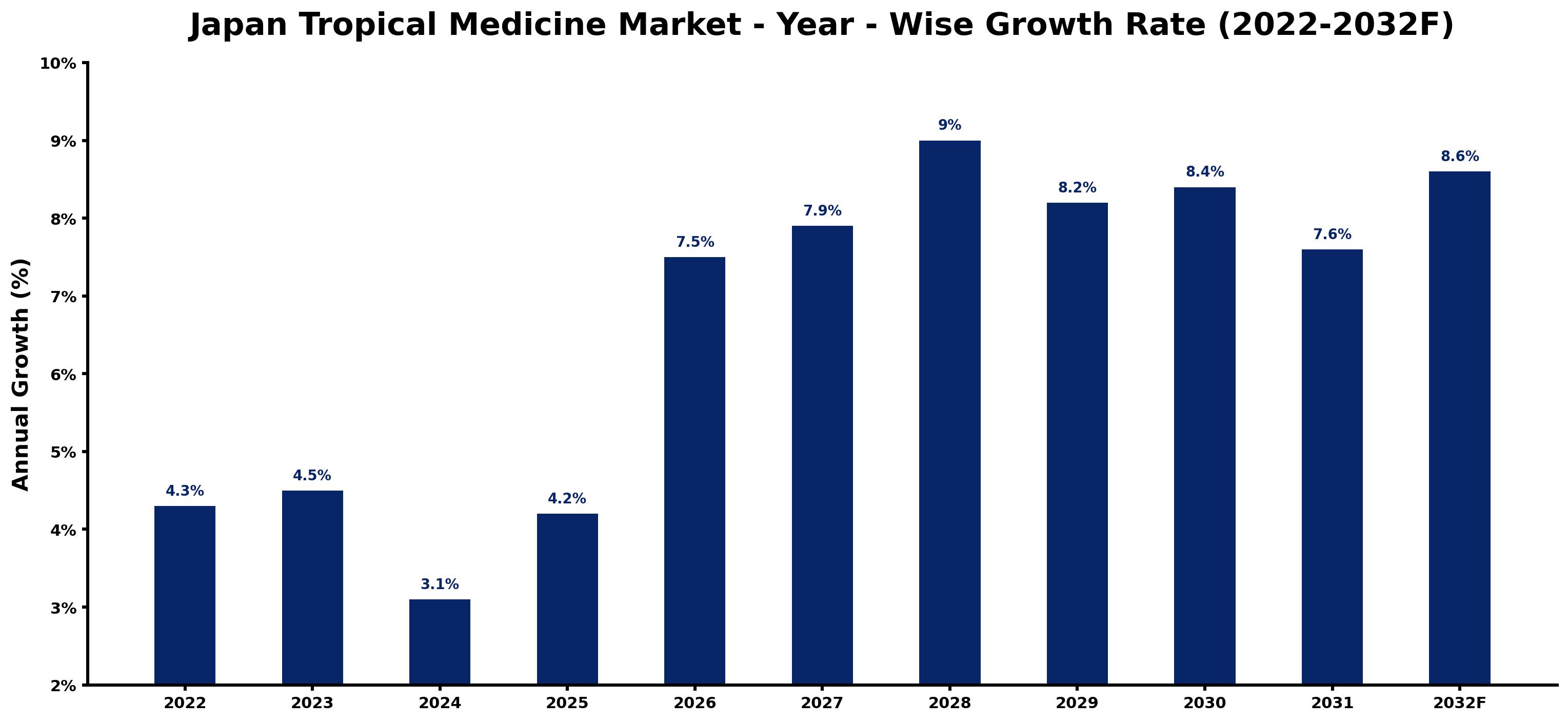
The table below sets out the estimated growth rate for each year and the main factor behind it.
| Year | Estimated Annual Growth (%) | Market Rationale |
| 2022 | 4.3 | The market experienced steady growth due to ongoing healthcare initiatives. |
| 2023 | 4.5 | Demand increased as public health campaigns raised awareness of tropical diseases. |
| 2024 | 3.1 | Growth slowed as the market adjusted to previous high demand levels. |
| 2025 | 4.2 | The rise in malaria cases prompted a faster recovery in medicine procurement. |
| 2026 | 7.5 | Investment in tropical disease research is expected to yield positive results. |
| 2027 | 7.9 | Healthcare providers will expand their offerings, boosting demand for treatments. |
| 2028 | 9.0 | The peak growth will be driven by heightened awareness and emergency responses. |
| 2029 | 8.2 | A slight slowdown is expected as the market stabilises after peak demand. |
| 2030 | 8.4 | Growth will resume as new treatment protocols are adopted widely. |
| 2031 | 7.6 | Demand will continue to grow, albeit at a slower rate than before. |
| 2032 | 8.6 | A resurgence in tropical disease cases is expected to drive further growth. |
Note: Market size estimations and growth projections presented in this report are based on 6Wresearch's proprietary forecasting methodology, utilizing the latest available industry data, government publications, and primary research inputs.
Japan Tropical Medicine Market Synopsis
Tropical medicine focuses on treating diseases prevalent in tropical regions, including malaria, leprosy, and dengue. These treatments are primarily developed through pharmaceutical synthesis and biotechnological processes. The Japan Tropical Medicine Market is expanding due to rising healthcare expenditure, with approximately JPY 46.7 trillion spent in fiscal 2022. Public health campaigns and international collaborations are driving demand, particularly for antimalarial medicines, as Japan reported 1,500 malaria cases in 2022, underscoring the need for effective treatments. The market's growth reflects a commitment to addressing these health concerns.
Market Dynamics Impact Analysis (2026–2032)
| Factor | Type | Impact | Primary Segment Affected |
| Increasing healthcare expenditure | Driver | High | Antimalarial Medicines |
| Rising malaria cases necessitating effective treatments | Driver | High | Malaria |
| Growing awareness of tropical diseases | Opportunity | Medium | Public Health Campaigns |
| Demand for effective leprosy treatments | Opportunity | Medium | Anti-Leprosy Drugs |
| Limited access to tropical medicines in rural areas | Restraint | High | Remote Hospitals |
| Challenges in compliance with international standards | Restraint | Medium | Dengue Management Drugs |
| Rising costs of pharmaceutical development | Challenge | High | Anthelminthic Drugs |
| Capacity constraints in rural healthcare facilities | Challenge | Medium | Remote Hospitals |
Evaluation of Drivers in Japan Tropical Medicine Market (2026–2032)
The table below links each growth driver to the segment it affects and the evidence for it.
| Drivers | Primary Segment Affected | Why It Matters (Evidence) |
| Increased healthcare spending | Antimalarial Medicines | Japan's national medical care expenditure was about JPY 46.7 trillion in fiscal 2022, driving demand for effective treatments. |
| Rising malaria cases | Malaria | In 2022, Japan reported 1,500 malaria cases, leading to heightened demand for antimalarial medicines. |
| Public health campaigns | Public Health Campaigns | Campaigns in 2023 focused on dengue prevention, increasing awareness and demand for related treatments. |
| International collaborations | Anti-Leprosy Drugs | Collaborations with global health organizations are improving the availability of leprosy treatments. |
| Research funding | Dengue Management Drugs | The annual budget for tropical disease research in Japan is approximately 500 million yen, supporting drug development. |
Spending rises because healthcare expenditure in Japan has reached approximately JPY 46.7 trillion in fiscal 2022, facilitating access to tropical medicines. The reported 1,500 malaria cases in 2022 prompted healthcare providers to increase procurement of antimalarial treatments. Public health campaigns in 2023 raised awareness of dengue, resulting in greater demand for management drugs. Collaborations with health organizations are improving access to anti-leprosy drugs, while an annual budget of around 500 million yen for tropical disease research supports ongoing development of effective treatments.
Evaluation of Restraints in Japan Tropical Medicine Market
These restraints slow adoption and weigh on supplier margins.
| Market Restraint | Primary Segment Affected | Why It Matters (Evidence) |
| Limited access to medicines in rural areas | Remote Hospitals | Access to tropical medicines is constrained in rural regions, affecting treatment availability for underserved populations. |
| Compliance with international standards | Dengue Management Drugs | Challenges in meeting ISO 9001 standards can delay the production and distribution of dengue treatments. |
| High costs of pharmaceutical development | Anthelminthic Drugs | Rising costs associated with developing effective anthelminthic treatments can limit market growth. |
| Capacity constraints in healthcare facilities | Remote Hospitals | Limited capacity in remote hospitals can hinder the effective management of tropical diseases. |
| Public awareness gaps | Public Health Campaigns | Insufficient public awareness about tropical diseases can reduce the effectiveness of health campaigns. |
Japan Tropical Medicine Market Challenges
In 2022, Japan reported 1,500 cases of malaria, highlighting supply issues with antimalarial medicines. Limited production capacity and reliance on specific suppliers can delay availability, impacting hospitals that require timely treatments. Regulatory hurdles complicate the approval process for new tropical medicines, causing extended timelines for producers and resulting in stock shortages in clinics. Slow technology adoption in tropical medicine hinders innovation, affecting buyers who depend on advanced treatments for effective disease management. Budget constraints for tropical disease research can restrict funding for essential therapies, limiting access for healthcare providers.
Trends in the Japan Tropical Medicine Market
These developments are changing demand patterns in the Japan Tropical Medicine Market.
- Shift from Traditional to Biotechnological Treatments: Since 2022, Japan has increasingly adopted biotechnological processes for tropical medicine. The use of artemisinin-based therapies has become standard, improving malaria management, with a reported 1,500 malaria cases in 2022.
- Emergence of Public Health Campaigns: Public health campaigns have gained prominence since 2023, focusing on dengue prevention. Approximately 10 million people in urban areas are now targeted, raising awareness and treatment accessibility.
- Increase in International Collaborations: The year 2023 marked a rise in international collaborations to tackle tropical diseases. These partnerships have led to improved access to essential medicines, benefiting health departments across Japan.
- Growing Research Funding for Tropical Diseases: In 2023, Japan allocated approximately 500 million yen for tropical disease research. This funding is expected to accelerate the development of new treatments and improve healthcare responses.
Investment Opportunities in the Japan Tropical Medicine Market
The openings below show where demand in the Japan Tropical Medicine Market is visible and how suppliers can enter.
- Remote Hospitals: Remote hospitals are increasingly in need of effective tropical medicines, with approximately 10 million people at risk for dengue. Collaborating with local health departments can facilitate access to essential treatments.
- NGOs and Government Tenders: NGOs are vital for distributing tropical medicines, particularly in rural areas. Investing in partnerships with these organizations can improve supply chains and treatment access.
- Public Health Campaigns: Public health campaigns are expanding, necessitating more effective treatment options. Suppliers can engage with health departments to provide targeted medicines for dengue management.
- Antimalarial Medicines: The market gap for antimalarial medicines is significant, with rising malaria cases. Establishing joint ventures with local healthcare providers can improve distribution and access.
Government Initiatives in the Japan Tropical Medicine Market
The Next-Generation Medical Infrastructure Act, established in 2017, builds on previous laws by allowing certified bodies to anonymise medical data for research purposes. This measure supports the development of new treatments in tropical medicine, aligning with the Clinical Trials Act that sets standards for conducting and disclosing clinical research.
Health departments actively utilise the Clinical Trials Act to ensure compliance in clinical research for tropical diseases. This framework enables effective management of public health responses, ensuring that treatments meet established standards.
Future Insight of the Japan Tropical Medicine Market
Healthcare providers will experience improved treatment options by 2032 as government initiatives increase funding for tropical disease research. Collaboration with international health organizations will streamline the approval process for new medicines, improving access for hospitals. Advances in biotechnology will lead to more effective treatments, crucial for managing diseases among the 10 million at-risk individuals. By 2032, Japan's national medical care expenditure is projected to reach approximately JPY 50 trillion, ensuring that buyers have access to the latest medical advancements.
Market Segmentation Analysis
Japan Tropical Medicine Market report covers a detailed analysis of the following market segments:
By Medicine Type – Antimalarial Medicines Lead, Anti-Leprosy Drugs Expected to Grow Fastest
According to Saurav Kr Singh, Senior Research Analyst at 6Wresearch, Antimalarial Medicines took 52% of medicine type revenue in 2025, more than any other category. Antimalarial medicines hold the largest share due to their critical role in treating malaria, which was reported in 1,500 cases in Japan in 2022. The established use of artemisinin-based combination therapies further solidifies their dominance in the market. The quickest growth will come from Anti-Leprosy Drugs, forecast to expand at a CAGR of 11.4% between 2026 and 2032. The anti-leprosy drugs segment is growing rapidly as public health campaigns in 2023 have heightened awareness of leprosy symptoms and treatments. This increased focus on leprosy management is likely to drive demand for specific treatments in the coming years. Suppliers should prioritise the development of targeted therapies to align with the growing needs of healthcare providers.
By Target Disease – Malaria Leads, Leprosy Expected to Grow Fastest
In 2025, Malaria led the target disease split with a 47% share. Malaria holds the largest share as it is a critical health issue in Japan, necessitating specific treatments to manage reported cases effectively. The availability of antimalarial medicines, such as artemisinin-based combination therapies, underscores the commitment to addressing this disease within healthcare facilities. Leprosy is projected to grow fastest, at a CAGR of 10.6% during 2026–2032. Leprosy is experiencing rapid growth due to the increasing need for targeted treatments and heightened public health initiatives aimed at awareness and prevention. This focus on leprosy management will likely sustain its growth trajectory in the market. Suppliers must prioritise the availability of effective treatments for leprosy to address the needs of the affected population.
By Distribution Channel – NGOs/Government Tenders Lead, Public Health Campaigns Expected to Grow Fastest
NGOs/Government Tenders accounted for 41% of the market by distribution channel in 2025. NGOs and government tenders dominate the distribution channel as they are essential for procuring tropical medicines for public health initiatives. Their involvement ensures that treatments reach underserved populations, thereby improving overall disease management efforts. Public Health Campaigns are set to record the highest CAGR in this split, 10.4% over 2026–2032. Public health campaigns are emerging as the fastest distribution channel, concentrating on raising awareness and providing direct access to treatments in communities. This trend indicates a growing emphasis on education and prevention strategies in the distribution of tropical medicines. Suppliers should collaborate with public health campaigns to enhance the reach and effectiveness of tropical medicine distribution.
By End User – Remote Hospitals Lead, Clinics Expected to Grow Fastest
Remote Hospitals held 34% of the Japan Tropical Medicine Market by end user in 2025. Remote hospitals lead as the primary end user, catering to underserved populations that require treatment for tropical diseases. Their specific focus on these communities highlights the critical need for accessible healthcare services in remote areas. Over 2026–2032, Clinics are expected to post the fastest growth, at a CAGR of 10.5%. Clinics are the fastest-growing end user segment, as they provide treatment for tropical diseases in urban areas where demand is rising. The increasing patient load, averaging around 50 patients per week, indicates a growing reliance on clinics for effective disease management. Suppliers should target clinics to ensure that urban populations have access to necessary tropical medicines.
Key Attractiveness of the Report
- 10 Years of Market Numbers
- Historical Data Starting from 2022 to 2025
- Base Year 2025
- Forecast Data until 2032
- Key Performance Indicators Impacting the Market
- Major Upcoming Developments and Projects
Key Highlights of the Report:
- Japan Tropical Medicine Market Outlook
- Market Size of Japan Tropical Medicine Market, 2025
- Forecast of Japan Tropical Medicine Market, 2032
- Historical Data and Forecast of Japan Tropical Medicine Revenues & Volume for the Period 2022-2032F
- Japan Tropical Medicine Market Trend Evolution
- Japan Tropical Medicine Market Drivers and Challenges
- Japan Tropical Medicine Price Trends
- Japan Tropical Medicine Porter's Five Forces
- Japan Tropical Medicine Industry Life Cycle
- Historical Data and Forecast of Japan Tropical Medicine Market Revenues & Volume By Medicine Type for the Period 2022-2032F
- Historical Data and Forecast of Japan Tropical Medicine Market Revenues & Volume By Antimalarial Medicines for the Period 2022-2032F
- Historical Data and Forecast of Japan Tropical Medicine Market Revenues & Volume By Anti-Leprosy Drugs for the Period 2022-2032F
- Historical Data and Forecast of Japan Tropical Medicine Market Revenues & Volume By Dengue Management Drugs for the Period 2022-2032F
- Historical Data and Forecast of Japan Tropical Medicine Market Revenues & Volume By Anthelminthic Drugs for the Period 2022-2032F
- Historical Data and Forecast of Japan Tropical Medicine Market Revenues & Volume By Target Disease for the Period 2022-2032F
- Historical Data and Forecast of Japan Tropical Medicine Market Revenues & Volume By Malaria for the Period 2022-2032F
- Historical Data and Forecast of Japan Tropical Medicine Market Revenues & Volume By Leprosy for the Period 2022-2032F
- Historical Data and Forecast of Japan Tropical Medicine Market Revenues & Volume By Dengue Hemorrhagic Fever for the Period 2022-2032F
- Historical Data and Forecast of Japan Tropical Medicine Market Revenues & Volume By Intestinal Parasites for the Period 2022-2032F
- Historical Data and Forecast of Japan Tropical Medicine Market Revenues & Volume By Distribution Channel for the Period 2022-2032F
- Historical Data and Forecast of Japan Tropical Medicine Market Revenues & Volume By NGOs/Government Tenders for the Period 2022-2032F
- Historical Data and Forecast of Japan Tropical Medicine Market Revenues & Volume By Public Health Campaigns for the Period 2022-2032F
- Historical Data and Forecast of Japan Tropical Medicine Market Revenues & Volume By Bulk Hospitals for the Period 2022-2032F
- Historical Data and Forecast of Japan Tropical Medicine Market Revenues & Volume By Rural Pharmacies for the Period 2022-2032F
- Historical Data and Forecast of Japan Tropical Medicine Market Revenues & Volume By End User for the Period 2022-2032F
- Historical Data and Forecast of Japan Tropical Medicine Market Revenues & Volume By Remote Hospitals for the Period 2022-2032F
- Historical Data and Forecast of Japan Tropical Medicine Market Revenues & Volume By Clinics for the Period 2022-2032F
- Historical Data and Forecast of Japan Tropical Medicine Market Revenues & Volume By Health Departments for the Period 2022-2032F
- Historical Data and Forecast of Japan Tropical Medicine Market Revenues & Volume By Humanitarian Agencies for the Period 2022-2032F
- Japan Tropical Medicine Import Export Trade Statistics
- Market Opportunity Assessment By Medicine Type
- Market Opportunity Assessment By Target Disease
- Market Opportunity Assessment By Distribution Channel
- Market Opportunity Assessment By End User
- Japan Tropical Medicine Top Companies Market Share
- Japan Tropical Medicine Competitive Benchmarking By Technical and Operational Parameters
- Japan Tropical Medicine Company Profiles
- Japan Tropical Medicine Key Strategic Recommendations
Market Covered
Segments analysed in this report are listed below.
By Medicine Type
- Antimalarial Medicines
- Anti-Leprosy Drugs
- Dengue Management Drugs
- Anthelminthic Drugs
By Target Disease
- Malaria
- Leprosy
- Dengue Hemorrhagic Fever
- Intestinal Parasites
By Distribution Channel
- NGOs/Government Tenders
- Public Health Campaigns
- Bulk Hospitals
- Rural Pharmacies
By End User
- Remote Hospitals
- Clinics
- Health Departments
- Humanitarian Agencies































