Japan Tropical Plantation Products Market Size & Growth Rate
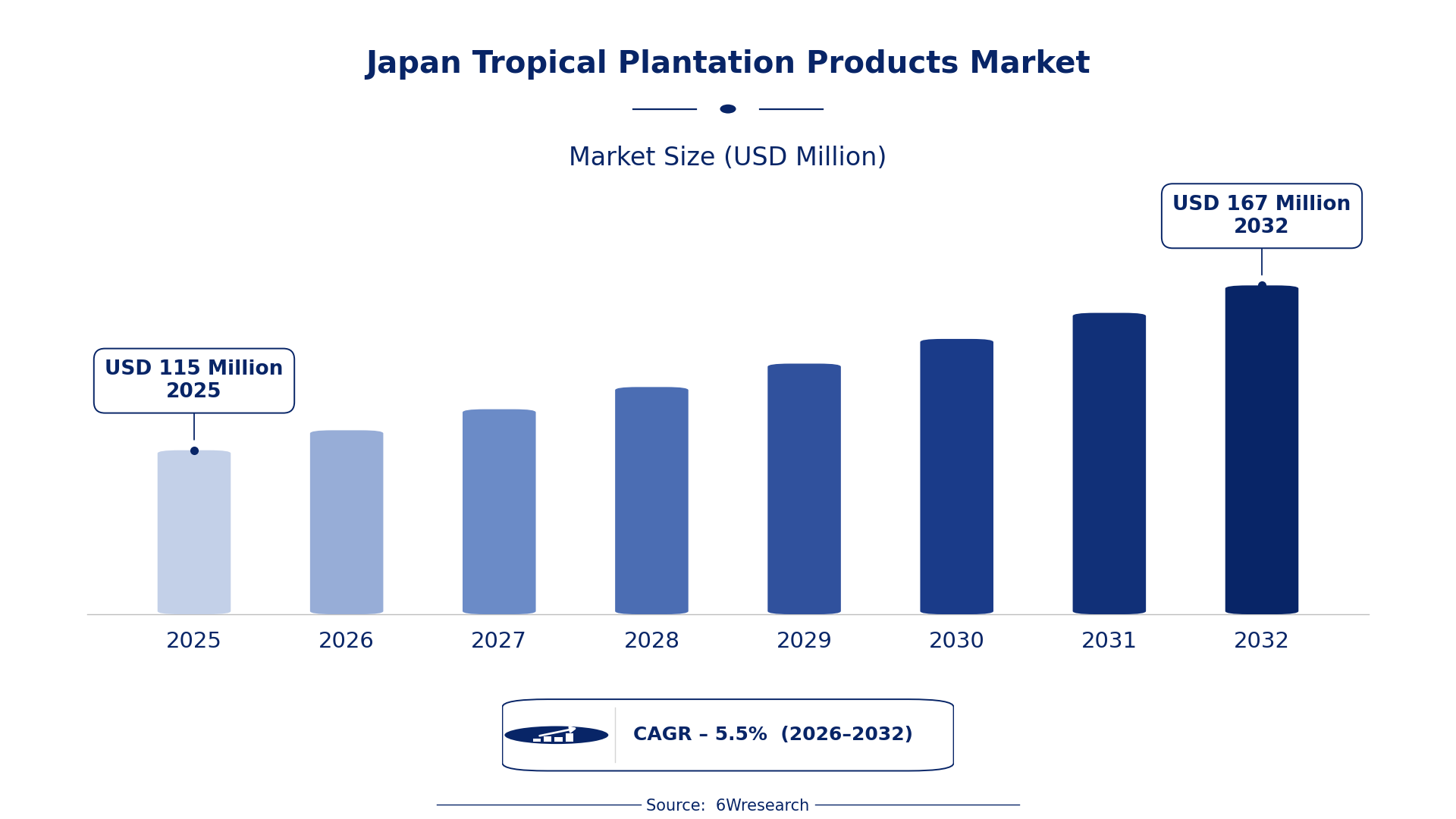
According to 6Wresearch internal database and industry insights, the Japan Tropical Plantation Products Market was valued at USD 115 Million in 2025 and is projected to reach USD 167 Million by 2032, growing at a CAGR of approximately 5.5% during 2026–2032.
Japan Tropical Plantation Products Market Highlights
| Report Metric | Details |
| Report Name | Japan Tropical Plantation Products Market (2026-2032) |
| Market Size 2025 | USD 115 Million |
| Market Size 2032 | USD 167 Million |
| Absolute Growth 2025–2032 | USD 52 Million |
| CAGR 2026–2032 | 5.5% |
| Peak Annual Growth | 6.3% in 2028 |
| Forecast Period | 2026–2032 |
| Historical Data | 2022–2025 |
| Base Year | 2025 |
| Leading Product Type, 2025 | Coffee Beans (46% share) |
| Leading Cultivation Type, 2025 | Shade-Grown / Organic (42% share) |
| Leading Export Use, 2025 | Roasters (33% share) |
| Leading End User, 2025 | Beverage Companies (37% share) |
| Fastest-Growing Product Type | Cocoa (7.7% CAGR) |
| Fastest-Growing Cultivation Type | Plantation-Cultivated (8.1% CAGR) |
| Fastest-Growing Export Use | Chocolate Makers (7.3% CAGR) |
| Fastest-Growing End User | Food Brands (7.1% CAGR) |
| Growing Sector | Food Brands |
| Key End Users | Beverage Companies, Food Brands, F&B Manufacturers, Exporters |
Japan Tropical Plantation Products Market Year-wise Growth Rate and Key Drivers (2022–2032)
This graph illustrates the annual growth rates of the market from 2022 to 2032, highlighting a steady upward trajectory and projected market expansion over the forecast period.
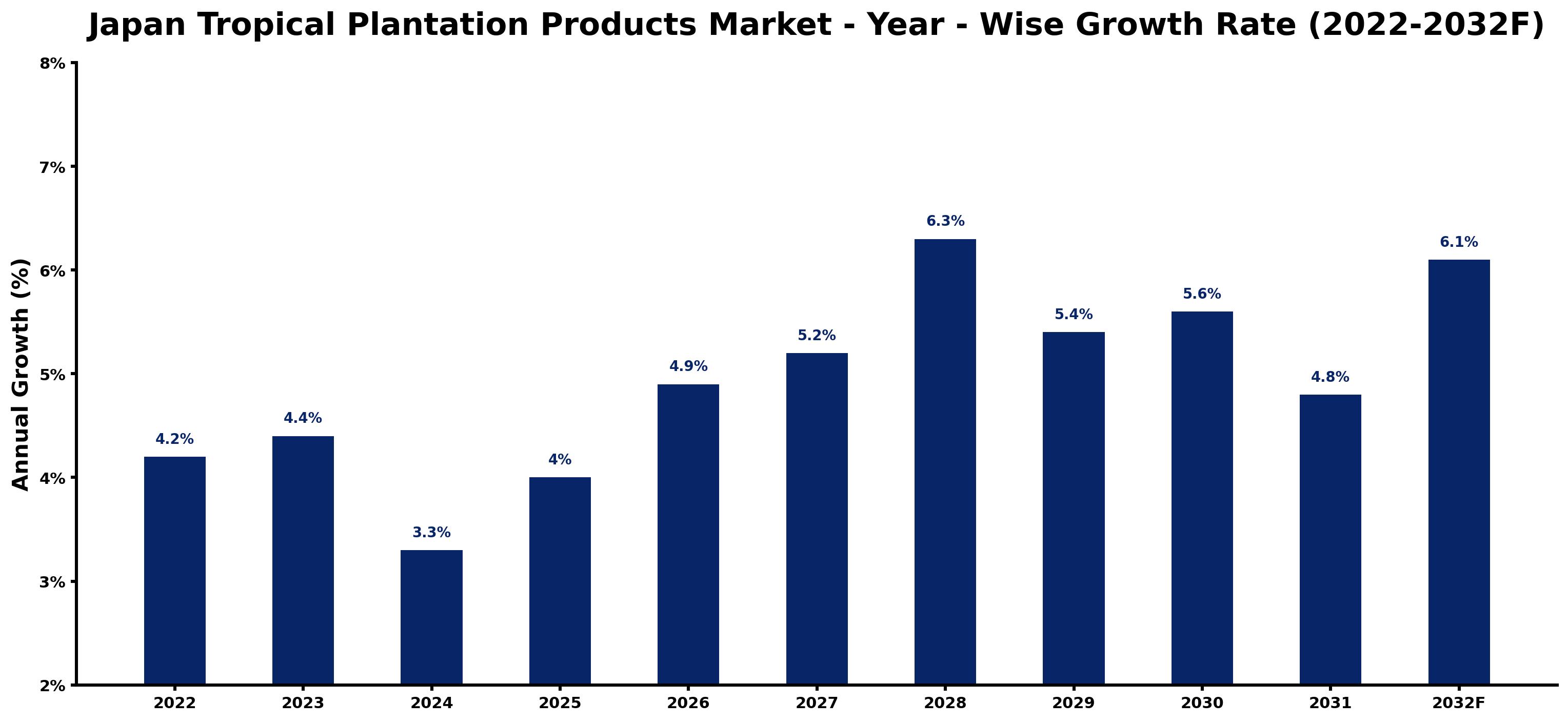
The yearly estimates that follow link every growth rate to its principal driver, so readers can see why the pace changed in each period.
| Year | Estimated Annual Growth (%) | Market Rationale |
| 2022 | 4.2 | The market showed steady demand for tropical products, supported by high coffee consumption. |
| 2023 | 4.4 | Growth accelerated due to increased interest in specialty coffee and cocoa products. |
| 2024 | 3.3 | A slowdown occurred as consumer preferences shifted towards alternative beverages. |
| 2025 | 4.0 | Demand rebounded as beverage companies expanded their product lines with tropical ingredients. |
| 2026 | 4.9 | Growth is expected to continue as organic coffee sales surge among health-conscious consumers. |
| 2027 | 5.2 | Increased cocoa imports will support the rising demand for chocolate products. |
| 2028 | 6.3 | The market is projected to peak with heightened consumer interest in coconut products and health trends. |
| 2029 | 5.4 | Growth is expected to slow as competition intensifies among beverage brands for market share. |
| 2030 | 5.6 | Consumer interest in tropical products will rise again, driven by health trends. |
| 2031 | 4.8 | The market is projected to experience a slowdown as supply chain issues affect product availability. |
| 2032 | 6.1 | Growth is expected to accelerate as new organic farming initiatives take root in the industry. |
Note: Market size estimations and growth projections presented in this report are based on 6Wresearch's proprietary forecasting methodology, utilizing the latest available industry data, government publications, and primary research inputs.
Japan Tropical Plantation Products Market Synopsis
Tropical plantation products include agricultural goods such as coffee beans, cocoa, palm oil, and coconut products, primarily cultivated in tropical climates. Japan's coffee consumption reached 4.3 million 60kg bags in 2022, showcasing strong domestic demand. Key factors driving growth in the Japan Tropical Plantation Products Market include the increasing popularity of specialty coffee, rising organic product sales, and expanding health-conscious consumer preferences, collectively boosting purchases across food and beverage sectors.
Market Dynamics Impact Analysis (2026–2032)
| Factor | Type | Impact | Primary Segment Affected |
| Growing coffee consumption in Japan drives demand for coffee beans. | Driver | High | Coffee Beans |
| Rising health trends increase demand for coconut products. | Driver | High | Coconut Products |
| Growing interest in organic farming creates opportunities for suppliers. | Opportunity | High | Shade-Grown / Organic |
| Expanding beverage companies seek diverse tropical ingredients for new products. | Opportunity | High | Beverage Companies |
| Supply chain disruptions impact the availability of tropical products. | Restraint | Medium | Cocoa |
| High import volumes of palm oil create market saturation risks. | Restraint | Medium | Palm Oil |
| Competition among beverage brands increases pricing pressure. | Challenge | High | Coffee Beans |
| Regulatory compliance costs burden small-scale producers. | Challenge | Medium | Coconut Products |
Evaluation of Drivers in Japan Tropical Plantation Products Market (2026–2032)
The following drivers explain most of the expected growth.
| Drivers | Primary Segment Affected | Why It Matters (Evidence) |
| Increased coffee consumption drives demand for coffee beans. | Coffee Beans | Japan's coffee consumption reached 4.3 million 60kg bags in 2022, prompting roasters to buy more beans. |
| Health trends boost coconut product sales. | Coconut Products | Coconut water consumption has grown by 15% annually since 2020, leading to higher purchases from health-focused brands. |
| Rising organic product demand fuels cocoa imports. | Cocoa | Organic coffee sales increased by 20% since 2021, encouraging chocolate makers to source more cocoa. |
| Beverage companies innovate with tropical ingredients. | Beverage Companies | Japan's food and beverage market is valued at over $200 billion, prompting companies to diversify their offerings. |
| Specialty coffee shops proliferate, driving demand. | Coffee Beans | Over 1,000 specialty coffee shops in Japan as of 2023 create a vibrant market for coffee beans. |
Several shifts outside the market lift sales. Japan's coffee consumption reached 4.3 million 60kg bags in 2022, prompting roasters to buy more beans, influenced by the growing number of specialty coffee shops in the Tokyo region. Health trends have boosted coconut product sales, with coconut water consumption growing by 15% annually since 2020, leading health-focused brands to increase purchases. Organic coffee sales have surged by 20% since 2021, prompting beverage companies to source more tropical ingredients. The food and beverage market, valued at over $200 billion, encourages innovation with tropical products, further driving demand.
Evaluation of Restraints in Japan Tropical Plantation Products Market
The table below lists the restraints and the evidence behind each.
| Market Restraint | Primary Segment Affected | Why It Matters (Evidence) |
| Supply chain disruptions affect product availability. | Cocoa | Increased global demand has led to shipping delays, impacting cocoa supplies for chocolate makers. |
| High import volumes of palm oil create market saturation risks. | Palm Oil | Japan's palm oil imports totaled around 300,000 tons in 2022, resulting in increased competition among suppliers. |
| Regulatory compliance costs burden small-scale producers. | Coconut Products | Producers incur high costs to meet JAS standards for organic labeling, which affects profitability. |
| Market competition pressures pricing strategies. | Coffee Beans | Intense competition among beverage brands forces price reductions, which squeeze margins for suppliers. |
| Consumer preferences shift towards alternative beverages. | Cocoa | The rise of plant-based drinks has diverted some consumer spending away from cocoa products. |
Japan Tropical Plantation Products Market Challenges
Japan's tropical plantation products market faces intense competition from imports, which can cause local producers to experience a 20% drop in prices, undermining their profit margins. Supply chain issues stem from the heavy reliance on imported palm oil, with 300,000 tons imported in 2022, causing delays for food manufacturers in meeting production timelines. Technology adoption lags, particularly in cocoa processing, where outdated methods hinder efficiency, negatively impacting product quality for buyers. Skills shortages in agricultural practices restrict the workforce's capability to cultivate premium crops, affecting the consistency of products available to consumers.
Trends in the Japan Tropical Plantation Products Market
Buyers and suppliers in the Japan Tropical Plantation Products Market are adjusting to the following trends.
- 15% Annual Growth in Coconut Water Consumption: Coconut water consumption in Japan has grown by 15% annually since 2020, reflecting a shift towards health-conscious choices. This trend is seen in health food stores across the country, prompting suppliers to increase their offerings.
- Growing Specialty Coffee Shop Presence: In 2023, the Tokyo region became a major hub for coffee roasting activities, with over 1,000 specialty coffee shops. This proliferation has driven demand for high-quality coffee beans, encouraging roasters to seek diverse sources.
- Rise of Organic Coffee Products: Organic coffee sales in Japan have increased by 20% since 2021, influenced by consumer demand for healthier options. The Japan Coffee Association supports this trend by promoting organic standards and practices.
- Shift Towards Sustainable Palm Oil Practices: The Japan Palm Oil Association is working on sustainable palm oil practices, reflecting a growing awareness of environmental issues. This shift aligns with consumer preferences for ethically sourced products.
Investment Opportunities in the Japan Tropical Plantation Products Market
The following opportunities in the Japan Tropical Plantation Products Market pair current demand with a clear way in.
- Organic Coffee Production: With organic coffee sales increasing by 20% since 2021, there is an opportunity to invest in organic coffee cultivation. Beverage companies are actively seeking organic sources to meet rising consumer demand.
- Coconut Product Expansion: The coconut oil market is projected to grow significantly by 2025, presenting an opportunity for suppliers to invest in production. Health food stores are increasingly featuring coconut products, indicating strong market potential.
- Cocoa Processing Facilities: As cocoa imports reached approximately 100,000 tons in 2022, establishing new processing facilities can meet the growing demand from chocolate makers. This is a timely opportunity for investment in urban areas like Osaka and Tokyo.
- Sustainable Palm Oil Initiatives: With Japan's palm oil imports totaling around 300,000 tons in 2022, there is a growing need for sustainable practices. Collaborating with the Japan Palm Oil Association can facilitate entry into this market.
Government Initiatives in the Japan Tropical Plantation Products Market
The Food Sanitation Act amendment of 2018, now fully applied, mandates HACCP-based hygiene management for food businesses, ensuring food safety standards for tropical plantation products. This regulation requires producers to adhere to strict hygiene protocols, promoting consumer trust in domestic goods.
The Japan Food Safety Commission oversees various initiatives, including funding for sustainable agriculture practices. This agency supports projects that enhance the cultivation and processing of tropical plantation products, ensuring compliance with environmental standards.
Future Insight of the Japan Tropical Plantation Products Market
A new organic tropical agriculture programme will enhance local production capabilities by 2032, benefiting both buyers and suppliers. Advances in processing technology will improve efficiency in coffee roasting facilities throughout the Tokyo region. Consumer demand for organic products will propel growth in the coconut oil market, projected to reach over 100,000 tons by 2025. The Japan Coconut Association will promote the use of coconut products, increasing their availability in health food stores across the country.
Market Segmentation Analysis
Japan Tropical Plantation Products Market report covers a detailed analysis of the following market segments:
By Product Type – Coffee Beans Lead, Cocoa Expected to Grow Fastest
According to Saurav Kr Singh, Senior Research Analyst at 6Wresearch, Coffee Beans took 46% of product type revenue in 2025, more than any other category. Coffee beans dominate Japan's market due to their central role in the beverage culture, with consumption reaching 4.3 million 60kg bags in 2022. The presence of over 1,000 specialty coffee shops illustrates the strong consumer preference for high-quality coffee offerings. The quickest growth will come from Cocoa, forecast to expand at a CAGR of 7.7% between 2026 and 2032. Cocoa is experiencing rapid growth as it is essential for chocolate production, a highly sought-after product in Japan. The annual import figure of approximately 100,000 tons highlights the increasing demand for cocoa as a fundamental ingredient in various confections. Suppliers should focus on enhancing their cocoa product lines to capture the expanding chocolate market.
By Cultivation Type – Shade-Grown / Organic Leads, Plantation-Cultivated Expected to Grow Fastest
Shade-Grown / Organic accounted for 42% of the market by cultivation type in 2025. Shade-grown and organic cultivation methods are preferred by health-conscious consumers, reflecting a shift towards sustainable agricultural practices. The recent programme launched in 2023 to promote organic tropical agriculture underscores this growing consumer trend. Plantation-Cultivated is set to record the highest CAGR in this split, 8.1% over 2026–2032. Plantation-cultivated methods are gaining traction due to their efficiency in large-scale production, meeting the rising demand for tropical products. This cultivation type aligns well with the projected growth of the coconut oil market by 2025. Buyers may increasingly seek suppliers who utilise plantation cultivation to ensure a consistent supply of tropical products.
By Export Use – Roasters Lead, Chocolate Makers Expected to Grow Fastest
The largest export use category in 2025 was Roasters, at 33% of revenue. Roasters are the primary consumers of coffee beans, playing a crucial role in the beverage industry and driving demand for quality beans. The Tokyo region serves as a significant hub for coffee roasting activities, reinforcing the segment's leading position. Chocolate Makers are projected to grow fastest, at a CAGR of 7.3% during 2026–2032. Chocolate makers are rapidly increasing their cocoa usage, which is vital for producing the diverse array of chocolates popular in Japan. The annual cocoa and chocolate events in Tokyo attract thousands, highlighting the strong consumer interest in chocolate products. Suppliers should strengthen their relationships with chocolate makers to take advantage of the growing demand for cocoa.
By End User – Beverage Companies Lead, Food Brands Expected to Grow Fastest
In 2025, Beverage Companies led the end user split with a 37% share. Beverage companies are the largest consumers of coffee and cocoa, integrating these products into their offerings to meet consumer preferences. The food and beverage market in Japan is valued at over $200 billion, showcasing the significance of these companies. Over 2026–2032, Food Brands are expected to post the fastest growth, at a CAGR of 7.1%. Food brands are increasingly incorporating tropical products into their offerings, reflecting changing consumer tastes towards health and wellness. The rise of coconut products in health food stores indicates this growing trend. Suppliers should align their product development with the needs of food brands to capture emerging market opportunities.
Key Attractiveness of the Report
- 10 Years of Market Numbers
- Historical Data Starting from 2022 to 2025
- Base Year 2025
- Forecast Data until 2032
- Key Performance Indicators Impacting the Market
- Major Upcoming Developments and Projects
Key Highlights of the Report:
- Japan Tropical Plantation Products Market Outlook
- Market Size of Japan Tropical Plantation Products Market, 2025
- Forecast of Japan Tropical Plantation Products Market, 2032
- Historical Data and Forecast of Japan Tropical Plantation Products Revenues & Volume for the Period 2022-2032F
- Japan Tropical Plantation Products Market Trend Evolution
- Japan Tropical Plantation Products Market Drivers and Challenges
- Japan Tropical Plantation Products Price Trends
- Japan Tropical Plantation Products Porter's Five Forces
- Japan Tropical Plantation Products Industry Life Cycle
- Historical Data and Forecast of Japan Tropical Plantation Products Market Revenues & Volume By Product Type for the Period 2022-2032F
- Historical Data and Forecast of Japan Tropical Plantation Products Market Revenues & Volume By Coffee Beans for the Period 2022-2032F
- Historical Data and Forecast of Japan Tropical Plantation Products Market Revenues & Volume By Cocoa for the Period 2022-2032F
- Historical Data and Forecast of Japan Tropical Plantation Products Market Revenues & Volume By Palm Oil for the Period 2022-2032F
- Historical Data and Forecast of Japan Tropical Plantation Products Market Revenues & Volume By Coconut Products for the Period 2022-2032F
- Historical Data and Forecast of Japan Tropical Plantation Products Market Revenues & Volume By Cultivation Type for the Period 2022-2032F
- Historical Data and Forecast of Japan Tropical Plantation Products Market Revenues & Volume By Shade-Grown / Organic for the Period 2022-2032F
- Historical Data and Forecast of Japan Tropical Plantation Products Market Revenues & Volume By Plantation-Cultivated for the Period 2022-2032F
- Historical Data and Forecast of Japan Tropical Plantation Products Market Revenues & Volume By Commercial Plantations for the Period 2022-2032F
- Historical Data and Forecast of Japan Tropical Plantation Products Market Revenues & Volume By Coir / Oil / Shell for the Period 2022-2032F
- Historical Data and Forecast of Japan Tropical Plantation Products Market Revenues & Volume By Export Use for the Period 2022-2032F
- Historical Data and Forecast of Japan Tropical Plantation Products Market Revenues & Volume By Roasters for the Period 2022-2032F
- Historical Data and Forecast of Japan Tropical Plantation Products Market Revenues & Volume By Chocolate Makers for the Period 2022-2032F
- Historical Data and Forecast of Japan Tropical Plantation Products Market Revenues & Volume By Industrial Food Use for the Period 2022-2032F
- Historical Data and Forecast of Japan Tropical Plantation Products Market Revenues & Volume By Personal Care / Food for the Period 2022-2032F
- Historical Data and Forecast of Japan Tropical Plantation Products Market Revenues & Volume By End User for the Period 2022-2032F
- Historical Data and Forecast of Japan Tropical Plantation Products Market Revenues & Volume By Beverage Companies for the Period 2022-2032F
- Historical Data and Forecast of Japan Tropical Plantation Products Market Revenues & Volume By Food Brands for the Period 2022-2032F
- Historical Data and Forecast of Japan Tropical Plantation Products Market Revenues & Volume By F&B Manufacturers for the Period 2022-2032F
- Historical Data and Forecast of Japan Tropical Plantation Products Market Revenues & Volume By Exporters for the Period 2022-2032F
- Japan Tropical Plantation Products Import Export Trade Statistics
- Market Opportunity Assessment By Product Type
- Market Opportunity Assessment By Cultivation Type
- Market Opportunity Assessment By Export Use
- Market Opportunity Assessment By End User
- Japan Tropical Plantation Products Top Companies Market Share
- Japan Tropical Plantation Products Competitive Benchmarking By Technical and Operational Parameters
- Japan Tropical Plantation Products Company Profiles
- Japan Tropical Plantation Products Key Strategic Recommendations
Market Covered
The following segment groups are covered in the report.
By Product Type
- Coffee Beans
- Cocoa
- Palm Oil
- Coconut Products
By Cultivation Type
- Shade-Grown / Organic
- Plantation-Cultivated
- Commercial Plantations
- Coir / Oil / Shell
By Export Use
- Roasters
- Chocolate Makers
- Industrial Food Use
- Personal Care / Food
By End User
- Beverage Companies
- Food Brands
- F&B Manufacturers
- Exporters































