Japan Type 2 Diabetes Therapeutics Market Size & Growth Rate
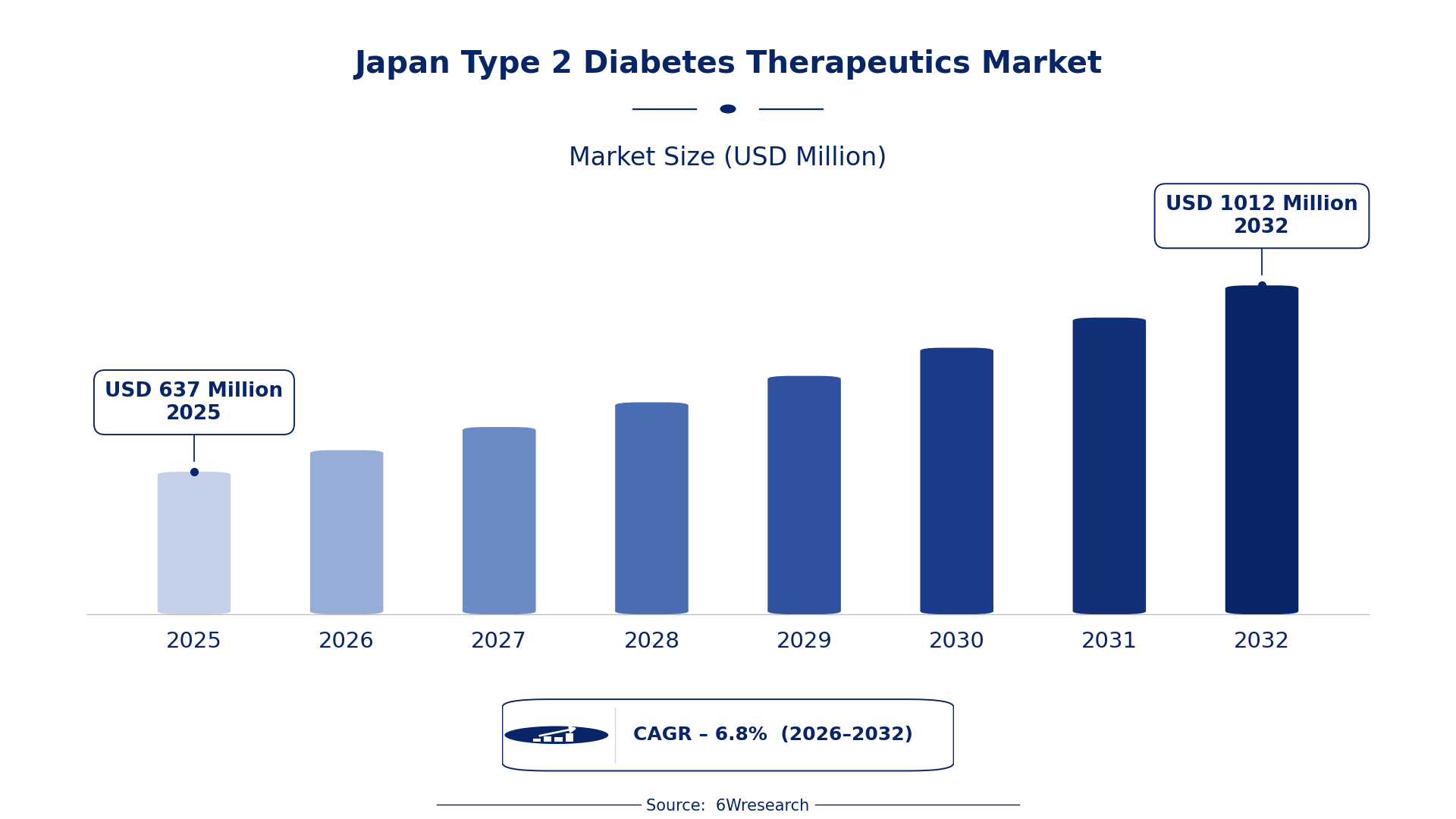
According to 6Wresearch internal database and industry insights, the Japan Type 2 Diabetes Therapeutics Market was valued at USD 637 Million in 2025 and is projected to reach USD 1,012 Million by 2032, growing at a CAGR of approximately 6.8% during 2026–2032.
Japan Type 2 Diabetes Therapeutics Market Highlights
| Report Metric | Details |
| Report Name | Japan Type 2 Diabetes Therapeutics Market (2026-2032) |
| Market Size 2025 | USD 637 Million |
| Market Size 2032 | USD 1,012 Million |
| Absolute Growth 2025–2032 | USD 375 Million |
| CAGR 2026–2032 | 6.8% |
| Peak Annual Growth | 7.7% in 2032 |
| Forecast Period | 2026–2032 |
| Historical Data | 2022–2025 |
| Base Year | 2025 |
| Leading Therapeutic Class, 2025 | Insulin Therapy (46% share) |
| Leading Route of Administration, 2025 | Subcutaneous Injection (45% share) |
| Leading Treatment Goal, 2025 | Blood Sugar Regulation (35% share) |
| Leading End User, 2025 | Hospitals (53% share) |
| Fastest-Growing Therapeutic Class | Oral Hypoglycemics (9.0% CAGR) |
| Fastest-Growing Route of Administration | Oral Tablets (8.8% CAGR) |
| Fastest-Growing Treatment Goal | Glucose Reduction (8.9% CAGR) |
| Fastest-Growing End User | Diabetes Clinics (9.1% CAGR) |
| Growing Sector | diabetes management |
| Key End Users | hospitals, diabetes clinics, specialty centers, retail pharmacies |
Japan Type 2 Diabetes Therapeutics Market Year-wise Growth Rate and Key Drivers (2022–2032)
This graph illustrates the annual growth rates of the market from 2022 to 2032, highlighting a steady upward trajectory and projected market expansion over the forecast period.
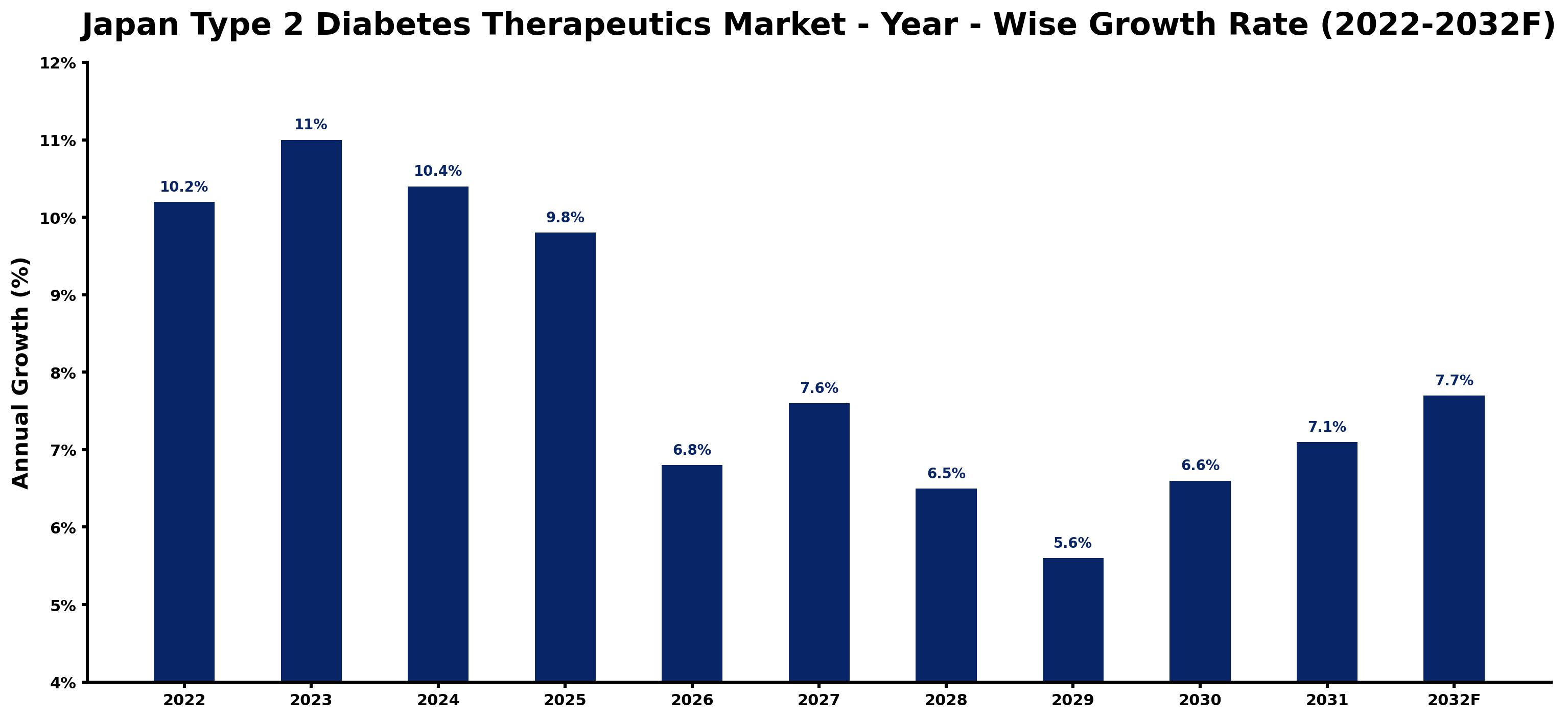
Annual growth estimates for each year appear below with the principal reason behind them, explaining the shifts that set the pace of the market.
| Year | Estimated Annual Growth (%) | Market Rationale |
| 2022 | 10.2 | The market experienced strong demand due to rising diabetes prevalence and healthcare focus. |
| 2023 | 11.0 | Growth accelerated as diabetes management programmes gained traction nationwide. |
| 2024 | 10.4 | Demand continued but at a slower pace as market conditions normalised. |
| 2025 | 9.8 | The market maintained growth, supported by ongoing healthcare investments. |
| 2026 | 6.8 | Growth slowed as market saturation began to affect new prescriptions. |
| 2027 | 7.6 | The market rebounded with increased interest in new therapies. |
| 2028 | 6.5 | A slight slowdown occurred as competition intensified among treatment options. |
| 2029 | 5.6 | Growth decelerated as market conditions stabilised and matured. |
| 2030 | 6.6 | Demand increased again as new diabetes management initiatives were launched. |
| 2031 | 7.1 | The market saw a rise in prescriptions driven by educational programmes. |
| 2032 | 7.7 | Growth peaked with advancements in diabetes therapeutics and technologies. |
Note: Market size estimations and growth projections presented in this report are based on 6Wresearch's proprietary forecasting methodology, utilizing the latest available industry data, government publications, and primary research inputs.
Japan Type 2 Diabetes Therapeutics Market Synopsis
Type 2 Diabetes Therapeutics encompasses medications aimed at managing blood sugar levels for individuals with type 2 diabetes. The Japan Type 2 Diabetes Therapeutics Market is growing due to a high prevalence of diabetes, with around 7 million diagnosed cases. Demand arises from healthcare facilities and domestic users, supported by national measures such as the NHI drug price standard. The rising adoption of GLP-1 agonists, which have experienced a 20% increase in prescriptions, further fuels market growth. The average monthly expenditure on diabetes medications stands at approximately 20,000 yen, underscoring the financial commitment necessary for effective management.
Market Dynamics Impact Analysis (2026–2032)
| Factor | Type | Impact | Primary Segment Affected |
| Rising prevalence of diabetes cases | Driver | High | Insulin Therapy |
| Increased adoption of GLP-1 agonists | Driver | High | GLP-1 Agonists |
| Expansion of diabetes clinics | Opportunity | High | Diabetes Clinics |
| Growing demand for combination therapies | Opportunity | Medium | Combination Therapies |
| Limited awareness of diabetes management | Restraint | Medium | Oral Hypoglycemics |
| High cost of diabetes medications | Restraint | High | Insulin Therapy |
| Competition from alternative therapies | Challenge | High | GLP-1 Agonists |
| Regulatory hurdles for new drug approvals | Challenge | Medium | Combination Therapies |
Evaluation of Drivers in Japan Type 2 Diabetes Therapeutics Market (2026–2032)
The following drivers explain most of the expected growth.
| Drivers | Primary Segment Affected | Why It Matters (Evidence) |
| Increasing diabetes prevalence | Insulin Therapy | Approximately 7 million diagnosed cases in Japan drive demand for insulin therapy among patients. |
| Rising prescriptions of GLP-1 agonists | GLP-1 Agonists | A 20% increase in prescriptions reflects growing acceptance among healthcare providers. |
| Expansion of diabetes clinics | Diabetes Clinics | Over 1,500 registered clinics improve access to diabetes management services. |
| Growing interest in combination therapies | Combination Therapies | Healthcare providers recommend these for effective diabetes management. |
| Increased patient education initiatives | Oral Hypoglycemics | National programmes promote awareness, resulting in higher medication adherence. |
What keeps demand rising is the increasing prevalence of diabetes, with around 7 million diagnosed cases in Japan leading to greater reliance on insulin therapy. The surge in GLP-1 agonist prescriptions, which rose by 20% in 2023, indicates a shift towards more effective treatment options. The proliferation of diabetes clinics nationwide enhances access to essential healthcare services, with over 1,500 registered facilities improving patient care.
Evaluation of Restraints in Japan Type 2 Diabetes Therapeutics Market
The table below lists the restraints and the evidence behind each.
| Market Restraint | Primary Segment Affected | Why It Matters (Evidence) |
| Limited awareness among patients about diabetes management | Oral Hypoglycemics | Many patients lack knowledge about treatment options, resulting in underutilisation of available therapies. |
| High costs associated with diabetes medications | Insulin Therapy | The average monthly expenditure of about 20,000 yen can deter patients from adhering to treatment. |
| Regulatory challenges for new drug approvals | Combination Therapies | Lengthy approval processes can delay the introduction of new therapies into the market. |
| Competition from alternative therapies | GLP-1 Agonists | Emerging treatments may divert attention and resources from established options. |
| Healthcare system limitations in rural areas | Diabetes Clinics | Patients in less accessible regions may struggle to receive timely care and education. |
Japan Type 2 Diabetes Therapeutics Market Challenges
In Japan, 7 million diagnosed cases of type 2 diabetes highlight a critical shortage of skilled healthcare professionals, primarily due to an ageing population, resulting in delays in therapy access for patients. Strict regulations on retail pharmacies restrict their ability to stock a diverse range of medications, causing supply delays for clinics reliant on timely access to treatments. A 20% increase in GLP-1 agonist prescriptions has intensified competition among producers, pushing them into price wars that may compromise quality for buyers. Insulin therapy is prescribed for about 30% of patients, yet many face challenges with adherence due to complex treatment regimens, negatively impacting health outcomes.
Trends in the Japan Type 2 Diabetes Therapeutics Market
These developments are changing demand patterns in the Japan Type 2 Diabetes Therapeutics Market.
- Growing focus on combination therapies: Combination therapies are gaining traction among healthcare providers, as they are increasingly recommended for better diabetes management outcomes. In 2023, the uptake of these therapies rose significantly, reflecting a shift towards more integrated treatment approaches.
- Increased use of diabetes education programmes: Diabetes education is now part of the national health curriculum, improving patient understanding and management of their condition. This initiative aims to raise awareness and promote healthier lifestyle choices among patients.
- Rise of diabetes clinics: The number of diabetes clinics is on the rise, with over 1,500 registered in Japan, enhancing access to specialised care for patients. This growth mirrors the increasing demand for targeted diabetes management services.
- Shift towards GLP-1 Agonists: Healthcare providers are increasingly prescribing GLP-1 agonists for weight management and glucose control, as evidenced by the 20% rise in prescriptions in 2023. This trend reflects a shift towards more effective treatment options.
Investment Opportunities in the Japan Type 2 Diabetes Therapeutics Market
Below are the investment opportunities with the strongest case in the Japan Type 2 Diabetes Therapeutics Market.
- Supply of GLP-1 agonists: With a 20% increase in prescriptions, there is a strong opportunity to supply GLP-1 agonists to healthcare facilities and pharmacies. This demand signals a need for reliable suppliers to meet the growing market.
- Expansion of diabetes clinics: Diabetes clinics are in demand, particularly in urban centres like Tokyo, offering opportunities for partnerships and service expansions. The increasing prevalence of diabetes supports the need for more specialized care facilities.
- Development of combination therapies: Investing in combination therapies presents a chance to meet the growing need for effective diabetes management solutions. This approach aligns with current trends in diabetes treatment.
- Investment in diabetes education programmes: Now is the time to invest in diabetes education initiatives, as the government aims to reduce diabetes prevalence by 10% by 2030, improving patient outcomes and creating a more informed patient base.
Government Initiatives in the Japan Type 2 Diabetes Therapeutics Market
The NHI drug price standard, regularly revised, establishes reimbursement prices for diabetes medications, making them more accessible to patients. The Medical Care Act sets standards for hospitals and clinics, ensuring adequate facilities and staffing for diabetes care. The Clinical Trials Act guarantees that new diabetes therapies undergo rigorous testing before reaching the market, safeguarding patient safety and efficacy.
The Ministry of Health, Labour and Welfare supervises diabetes management initiatives, funding educational programmes and approving diabetes clinics to enhance patient care. The government has made significant investments in diabetes education, aiming to improve patient understanding and management of their condition.
Future Insight of the Japan Type 2 Diabetes Therapeutics Market
The introduction of advanced digital health platforms will transform diabetes management by 2032, enabling real-time monitoring of blood glucose levels and improving patient adherence to treatment plans. Enhanced diabetes education initiatives by the Ministry of Health, Labour and Welfare will raise awareness, leading to healthier lifestyle choices among patients. The government’s goal to reduce diabetes prevalence by 10% by 2030 will stimulate demand for new therapeutic solutions. As combination therapies gain traction, suppliers will need to develop tailored products to meet specific patient requirements.
Market Segmentation Analysis
Japan Type 2 Diabetes Therapeutics Market report covers a detailed analysis of the following market segments:
By Therapeutic Class – Insulin Therapy Leads, Oral Hypoglycemics Expected to Grow Fastest
According to Saurav Kr Singh, Senior Research Analyst at 6Wresearch, the largest therapeutic class category in 2025 was Insulin Therapy, at 46% of revenue. Insulin therapy holds the largest share as it is essential for approximately 30% of diagnosed diabetes patients in Japan who require insulin for blood sugar control. This method is integral to the guidelines established by the Japanese Diabetes Society, ensuring its widespread adoption. Over 2026–2032, Oral Hypoglycemics are expected to post the fastest growth, at a CAGR of 9.0%. Oral hypoglycemics are experiencing rapid growth due to their effectiveness and convenience, with a 20% increase in prescriptions noted in 2023. This surge is further propelled by diabetes education programmes that inform patients about the benefits of oral medications. Suppliers should prioritise the promotion and distribution of oral hypoglycemics to align with patient preferences and market trends.
By Route of Administration – Subcutaneous Injection Leads, Oral Tablets Expected to Grow Fastest
Subcutaneous Injection accounted for 45% of the market by route of administration in 2025. Subcutaneous injection is the most common method for delivering insulin, largely due to its effectiveness in managing blood glucose levels for patients requiring insulin therapy. This route is particularly prevalent in urban centres like Tokyo and Osaka, where diabetes cases are high. Oral Tablets are set to record the highest CAGR in this split, 8.8% over 2026–2032. Oral tablets are experiencing rapid growth, driven by patient preference for non-injection options and the ease of administration. The increasing number of diabetes clinics across Japan facilitates greater access to these oral medications, further boosting their adoption. Suppliers must enhance their distribution strategies for oral tablets to cater to the rising demand from patients seeking more convenient treatment alternatives.
By Treatment Goal – Blood Sugar Regulation Leads, Glucose Reduction Expected to Grow Fastest
With 35% of treatment goal revenue in 2025, Blood Sugar Regulation was the largest category. Blood sugar regulation is the primary focus of diabetes therapeutics, aligning with the average HbA1c target of below 7% set for patients in Japan. This goal is critical for preventing complications associated with diabetes. Glucose Reduction is projected to grow fastest, at a CAGR of 8.9% during 2026–2032. Glucose reduction is emerging as a key objective, reflecting a broader understanding of diabetes management that prioritises immediate blood sugar control. This focus is reinforced by national initiatives aimed at reducing diabetes prevalence. Suppliers should align product offerings with the emphasis on glucose reduction to meet evolving treatment goals.
By End User – Hospitals Lead, Diabetes Clinics Expected to Grow Fastest
In 2025, Hospitals led the end user split with a 53% share. Hospitals serve as the primary end users of diabetes therapeutics, providing essential inpatient care for the millions diagnosed with type 2 diabetes in Japan. Their significant role is underscored by the high number of diabetes cases requiring hospitalisation and comprehensive management. The quickest growth will come from Diabetes Clinics, forecast to expand at a CAGR of 9.1% between 2026 and 2032. Diabetes clinics are rapidly gaining prominence as specialised centres for diabetes management, driven by the increasing prevalence of the condition and the demand for focused care. Government initiatives aimed at enhancing diabetes education further contribute to the growth of these clinics. Suppliers should consider forming strategic partnerships with diabetes clinics to effectively address and support the expanding patient population.
Key Attractiveness of the Report
- 10 Years of Market Numbers
- Historical Data Starting from 2022 to 2025
- Base Year 2025
- Forecast Data until 2032
- Key Performance Indicators Impacting the Market
- Major Upcoming Developments and Projects
Key Highlights of the Report:
- Japan Type 2 Diabetes Therapeutics Market Outlook
- Market Size of Japan Type 2 Diabetes Therapeutics Market, 2025
- Forecast of Japan Type 2 Diabetes Therapeutics Market, 2032
- Historical Data and Forecast of Japan Type 2 Diabetes Therapeutics Revenues & Volume for the Period 2022-2032F
- Japan Type 2 Diabetes Therapeutics Market Trend Evolution
- Japan Type 2 Diabetes Therapeutics Market Drivers and Challenges
- Japan Type 2 Diabetes Therapeutics Price Trends
- Japan Type 2 Diabetes Therapeutics Porter's Five Forces
- Japan Type 2 Diabetes Therapeutics Industry Life Cycle
- Historical Data and Forecast of Japan Type 2 Diabetes Therapeutics Market Revenues & Volume By Therapeutic Class for the Period 2022-2032F
- Historical Data and Forecast of Japan Type 2 Diabetes Therapeutics Market Revenues & Volume By Insulin Therapy for the Period 2022-2032F
- Historical Data and Forecast of Japan Type 2 Diabetes Therapeutics Market Revenues & Volume By Oral Hypoglycemics for the Period 2022-2032F
- Historical Data and Forecast of Japan Type 2 Diabetes Therapeutics Market Revenues & Volume By GLP-1 Agonists for the Period 2022-2032F
- Historical Data and Forecast of Japan Type 2 Diabetes Therapeutics Market Revenues & Volume By Combination Therapies for the Period 2022-2032F
- Historical Data and Forecast of Japan Type 2 Diabetes Therapeutics Market Revenues & Volume By Route of Administration for the Period 2022-2032F
- Historical Data and Forecast of Japan Type 2 Diabetes Therapeutics Market Revenues & Volume By Subcutaneous Injection for the Period 2022-2032F
- Historical Data and Forecast of Japan Type 2 Diabetes Therapeutics Market Revenues & Volume By Oral Tablets for the Period 2022-2032F
- Historical Data and Forecast of Japan Type 2 Diabetes Therapeutics Market Revenues & Volume By Injection for the Period 2022-2032F
- Historical Data and Forecast of Japan Type 2 Diabetes Therapeutics Market Revenues & Volume By Mixed (Oral + Injection) for the Period 2022-2032F
- Historical Data and Forecast of Japan Type 2 Diabetes Therapeutics Market Revenues & Volume By Treatment Goal for the Period 2022-2032F
- Historical Data and Forecast of Japan Type 2 Diabetes Therapeutics Market Revenues & Volume By Blood Sugar Regulation for the Period 2022-2032F
- Historical Data and Forecast of Japan Type 2 Diabetes Therapeutics Market Revenues & Volume By Glucose Reduction for the Period 2022-2032F
- Historical Data and Forecast of Japan Type 2 Diabetes Therapeutics Market Revenues & Volume By Weight & Glucose Control for the Period 2022-2032F
- Historical Data and Forecast of Japan Type 2 Diabetes Therapeutics Market Revenues & Volume By Multi-Target Management for the Period 2022-2032F
- Historical Data and Forecast of Japan Type 2 Diabetes Therapeutics Market Revenues & Volume By End User for the Period 2022-2032F
- Historical Data and Forecast of Japan Type 2 Diabetes Therapeutics Market Revenues & Volume By Hospitals for the Period 2022-2032F
- Historical Data and Forecast of Japan Type 2 Diabetes Therapeutics Market Revenues & Volume By Diabetes Clinics for the Period 2022-2032F
- Historical Data and Forecast of Japan Type 2 Diabetes Therapeutics Market Revenues & Volume By Specialty Centers for the Period 2022-2032F
- Historical Data and Forecast of Japan Type 2 Diabetes Therapeutics Market Revenues & Volume By Retail Pharmacies for the Period 2022-2032F
- Japan Type 2 Diabetes Therapeutics Import Export Trade Statistics
- Market Opportunity Assessment By Therapeutic Class
- Market Opportunity Assessment By Route of Administration
- Market Opportunity Assessment By Treatment Goal
- Market Opportunity Assessment By End User
- Japan Type 2 Diabetes Therapeutics Top Companies Market Share
- Japan Type 2 Diabetes Therapeutics Competitive Benchmarking By Technical and Operational Parameters
- Japan Type 2 Diabetes Therapeutics Company Profiles
- Japan Type 2 Diabetes Therapeutics Key Strategic Recommendations
Market Covered
The report covers the following segments.
By Therapeutic Class
- Insulin Therapy
- Oral Hypoglycemics
- GLP-1 Agonists
- Combination Therapies
By Route of Administration
- Subcutaneous Injection
- Oral Tablets
- Injection
- Mixed (Oral + Injection)
By Treatment Goal
- Blood Sugar Regulation
- Glucose Reduction
- Weight & Glucose Control
- Multi-Target Management
By End User
- Hospitals
- Diabetes Clinics
- Specialty Centers
- Retail Pharmacies































