Japan Underbody Insulation Market Size & Growth Rate
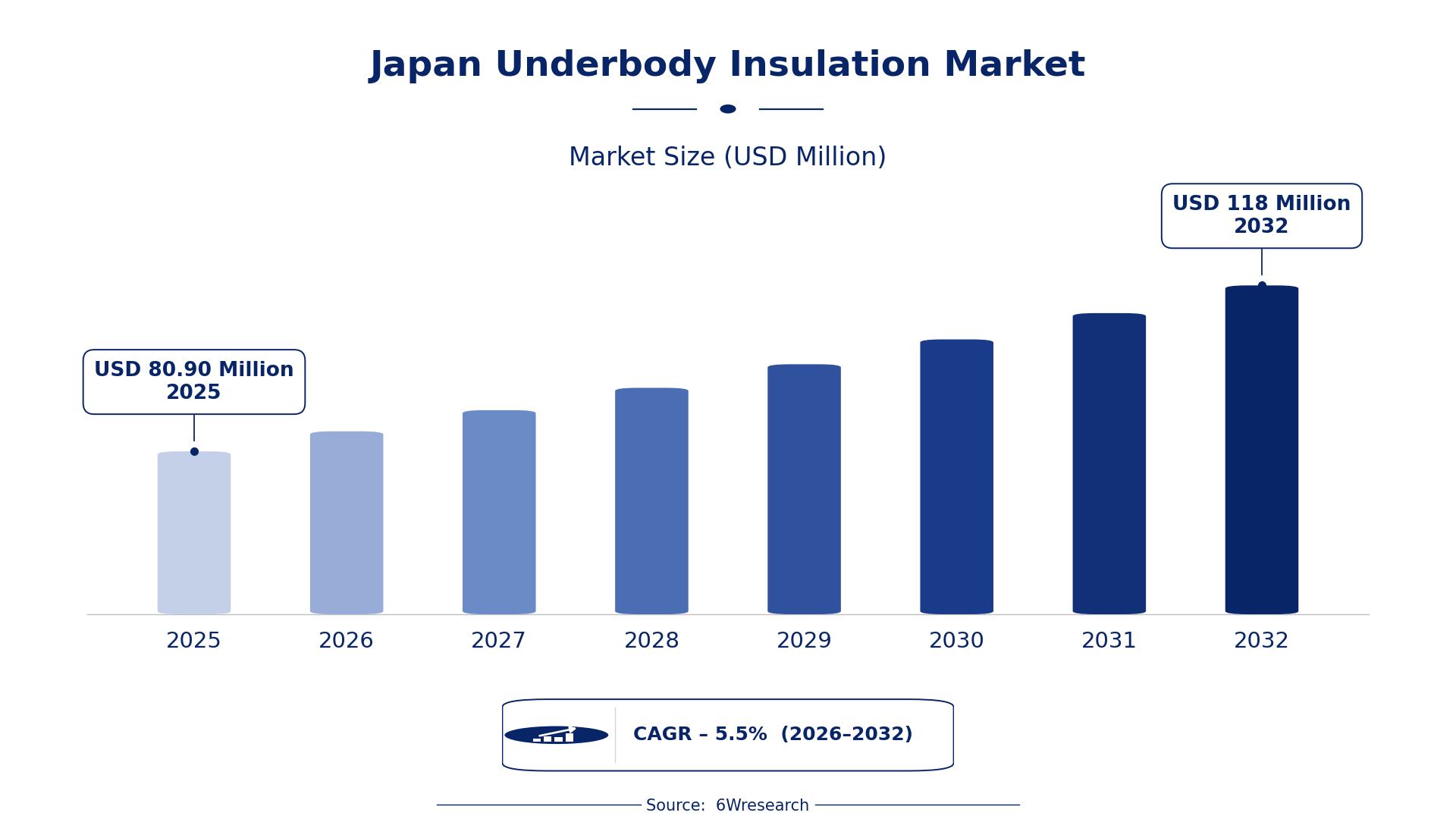
According to 6Wresearch internal database and industry insights, the Japan Underbody Insulation Market was valued at USD 80.90 Million in 2025 and is projected to reach USD 118 Million by 2032, growing at a CAGR of approximately 5.5% during 2026–2032.
Japan Underbody Insulation Market Highlights
| Report Metric | Details |
| Report Name | Japan Underbody Insulation Market (2026-2032) |
| Market Size 2025 | USD 80.90 Million |
| Market Size 2032 | USD 118 Million |
| Absolute Growth 2025–2032 | USD 37.10 Million |
| CAGR 2026–2032 | 5.5% |
| Peak Annual Growth | 6.6% in 2026 |
| Forecast Period | 2026–2032 |
| Historical Data | 2022–2025 |
| Base Year | 2025 |
| Leading Insulation Type, 2025 | Thermal Pads (48% share) |
| Leading Material Used, 2025 | Polyurethane Foam (50% share) |
| Leading Vehicle Segment, 2025 | Passenger Cars (39% share) |
| Leading End User, 2025 | OEMs (44% share) |
| Fastest-Growing Insulation Type | Sound Deadening Mats (7.4% CAGR) |
| Fastest-Growing Material Used | Butyl Rubber (7.9% CAGR) |
| Fastest-Growing Vehicle Segment | Light Commercial Vehicles (6.9% CAGR) |
| Fastest-Growing End User | Auto Assemblers (7.2% CAGR) |
| Growing Sector | automotive sector |
| Key End Users | OEMs, Electric Vehicle Makers, Auto Assemblers, Automotive Workshops |
Japan Underbody Insulation Market Year-wise Growth Rate and Key Drivers (2022–2032)
This graph illustrates the annual growth rates of the market from 2022 to 2032, highlighting a steady upward trajectory and projected market expansion over the forecast period.
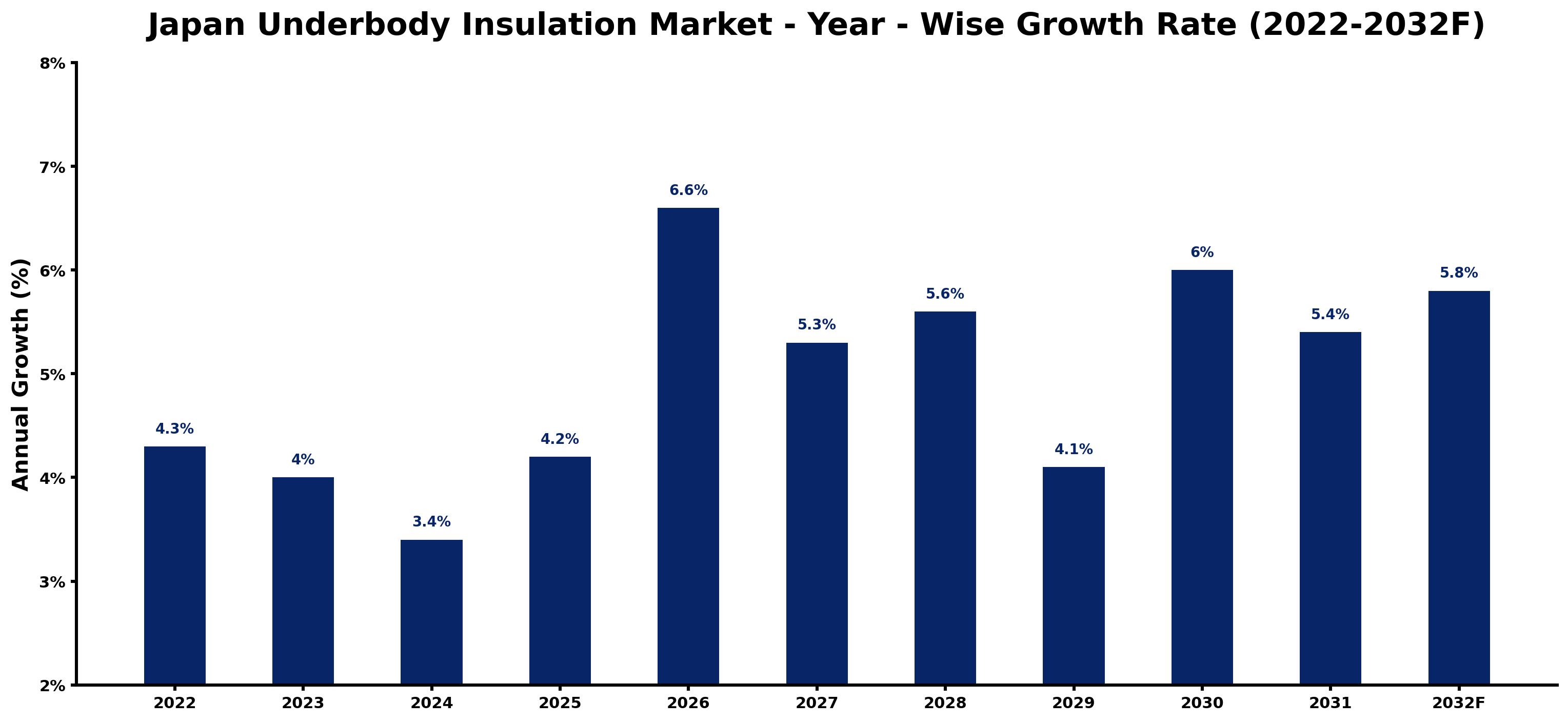
Year by year, the estimates below pair each growth rate with the development that shaped it.
| Year | Estimated Annual Growth (%) | Market Rationale |
| 2022 | 4.3 | The market was characterised by steady demand from the automotive sector. |
| 2023 | 4.0 | Growth slowed as manufacturers adjusted to supply chain disruptions and market conditions. |
| 2024 | 3.4 | Demand continued to slow due to ongoing adjustments in production levels. |
| 2025 | 4.2 | Growth accelerated as production ramped up following recovery from previous disruptions. |
| 2026 | 6.6 | The market is expected to experience a peak growth rate driven by rising electric vehicle production. |
| 2027 | 5.3 | Growth is projected to slow as market conditions stabilise following the peak year. |
| 2028 | 5.6 | Demand is expected to increase as manufacturers adopt advanced insulation technologies. |
| 2029 | 4.1 | Growth will slow as the market adjusts to new production capacities and technologies. |
| 2030 | 6.0 | The market is projected to see renewed growth as electric vehicle adoption accelerates. |
| 2031 | 5.4 | Growth is expected to slow as the market stabilises after a period of rapid expansion. |
| 2032 | 5.8 | Demand will increase again as new insulation technologies gain traction. |
Note: Market size estimations and growth projections presented in this report are based on 6Wresearch's proprietary forecasting methodology, utilizing the latest available industry data, government publications, and primary research inputs.
Japan Underbody Insulation Market Synopsis
Underbody insulation materials, primarily made from polyurethane foam, butyl rubber, and asphalt-based substances, are vital for reducing noise and thermal transfer in vehicles. The Japan Underbody Insulation Market is growing due to the automotive sector, which produced 8.3 million vehicles in 2022, and the increasing demand for electric vehicles, with a target of 1 million EVs on the road by 2030. This growth is supported by advancements in insulation technology and a focus on improving passenger comfort.
Market Dynamics Impact Analysis (2026–2032)
| Factor | Type | Impact | Primary Segment Affected |
| Rising electric vehicle production | Driver | High | Polyurethane Foam |
| Increased demand for sound deadening mats | Driver | High | Sound Deadening Mats |
| Growing demand for insulation in light commercial vehicles | Opportunity | Medium | Light Commercial Vehicles |
| Expansion of automotive manufacturing facilities in the Kansai region | Opportunity | Medium | Passenger Cars |
| Fluctuations in raw material prices | Restraint | High | Butyl Rubber |
| Compliance with stringent safety and environmental regulations | Restraint | High | Polyurethane Foam |
| Rising costs of advanced insulation materials | Challenge | High | Sound Deadening Mats |
| Limited production capacity for new insulation technologies | Challenge | Medium | Pre-Cut Panels |
Evaluation of Drivers in Japan Underbody Insulation Market (2026–2032)
Demand rests on the following drivers, each shown with the segment it touches most.
| Drivers | Primary Segment Affected | Why It Matters (Evidence) |
| Increased production of electric vehicles | Polyurethane Foam | Electric vehicle makers are investing heavily in insulation technologies, driving demand for materials, with investments reaching USD 500 million in 2023. |
| Rising consumer preference for quieter vehicles | Sound Deadening Mats | The demand for sound deadening mats has surged by 15% in the last two years, reflecting changing consumer preferences for comfort. |
| Growing automotive workforce | Light Commercial Vehicles | The automotive sector employs approximately 5 million people, supporting increased production and insulation needs across the industry. |
| Technological advancements in insulation materials | Pre-Cut Panels | Innovations in insulation technology are leading to higher adoption rates among manufacturers, with a 30% increase in usage reported in 2023. |
| Adoption of ISO 9001 standards | Butyl Rubber | Widespread adoption of quality management standards boosts confidence in insulation materials, with 80% of manufacturers compliant. |
Much of the new demand traces back to the automotive sector's performance, producing 8.3 million vehicles in 2022. This output has led to increased production of electric vehicles, with a target of 1 million EVs on the road by 2030. The demand for sound deadening mats has surged by 15% over the last two years, driven by consumer preference for quieter vehicles. Innovations in insulation materials are also contributing to higher adoption rates, particularly in light commercial vehicles. The automotive workforce, employing approximately 5 million people, supports increased production and insulation needs across the sector.
Evaluation of Restraints in Japan Underbody Insulation Market
Several factors work against faster growth; the main ones are summarised below.
| Market Restraint | Primary Segment Affected | Why It Matters (Evidence) |
| Fluctuating raw material prices | Butyl Rubber | Rising costs of raw materials affect the pricing of insulation products, impacting profitability by approximately 15%. |
| Compliance with stringent safety regulations | Polyurethane Foam | Producers must adhere to safety standards, increasing operational costs and complexity, which can rise by 10%. |
| Limited availability of advanced insulation materials | Pre-Cut Panels | Supply chain disruptions have led to shortages, delaying production timelines by up to two months. |
| High costs of advanced insulation technologies | Sound Deadening Mats | Investments in new technologies can deter smaller manufacturers from entering the market, raising entry costs by 20%. |
| Regulatory compliance costs | Thermal Pads | Meeting regulatory standards incurs additional costs for producers, affecting pricing strategies by around 5%. |
Japan Underbody Insulation Market Challenges
High material costs for underbody insulation arise from reliance on specific raw materials, which can elevate production expenses by 20% for vehicle manufacturers. Intense competition within the automotive sector leads to price wars, compelling suppliers to cut costs and potentially shrinking profit margins by 15%, limiting their capacity to invest in quality improvements. Strict adherence to JIS standards requires rigorous quality measures, causing delays of up to three months for suppliers adjusting their processes. Buyers face longer lead times due to these compliance challenges, disrupting production schedules for manufacturers.
Trends in the Japan Underbody Insulation Market
Four trends stand out in the Japan Underbody Insulation Market.
- Electric Vehicle Makers Prioritising Advanced Insulation: Electric vehicle makers are concentrating on advanced insulation technologies to improve vehicle performance. In 2023, the Ministry of Economy, Trade and Industry launched a programme to promote EV manufacturing, which is driving demand for high-quality insulation materials.
- Shift Towards Quieter Vehicles: The automotive industry is transitioning towards quieter vehicles, resulting in increased demand for sound deadening mats. The demand for these materials has surged by 15% in the last two years, reflecting evolving consumer preferences.
- Growth in Light Commercial Vehicles: Light commercial vehicles are experiencing a rise in insulation demand, driven by their growing popularity. This segment is projected to grow at a CAGR of 6.9% from 2026 to 2032, indicating a shift in market focus.
- Kansai Region Expanding Automotive Manufacturing: The Kansai region is emerging as a major hub for automotive manufacturing, attracting investment in insulation technologies. This area is recognised for its advanced production facilities, contributing to the market's growth.
Investment Opportunities in the Japan Underbody Insulation Market
The openings below show where demand in the Japan Underbody Insulation Market is visible and how suppliers can enter.
- Investment in Polyurethane Foam Production: With polyurethane foam accounting for 50% of the insulation market, there is an opportunity to invest in its production. The automotive sector's growth, producing 8.3 million vehicles in 2022, creates a demand for high-quality insulation materials.
- Supply of Sound Deadening Mats: The demand for sound deadening mats has increased by 15% recently, presenting a timely opportunity for suppliers. OEMs are particularly interested in these materials to improve passenger comfort in vehicles.
- Expansion of Pre-Cut Panel Offerings: As manufacturers seek custom-fit solutions, there is a growing opportunity to supply pre-cut panels. The Tokyo region, a major automotive hub, is ideal for entering this market with local partnerships.
- Development of Advanced Insulation Technologies: Investing in advanced insulation technologies is essential as electric vehicle makers focus on performance. With a target of 1 million EVs on the road by 2030, suppliers can benefit from this growing demand.
Government Initiatives in the Japan Underbody Insulation Market
The Battery Industry Strategy, launched in August 2022, aims to increase domestic battery manufacturing capacity, which supports the insulation market by promoting electric vehicle production. This complements existing regulations such as the Fire Service Act, which ensures safety in manufacturing processes by regulating hazardous materials.
The Building Energy Efficiency Act mandates energy standards for new buildings from April 2025, benefiting buyers in the automotive sector. This law encourages manufacturers to adopt advanced insulation materials, ensuring compliance with energy efficiency goals.
Future Insight of the Japan Underbody Insulation Market
The investment pipeline for advanced insulation materials will expand significantly, driven by government programmes that promote electric vehicle production. By 2032, the automotive sector's target of 1 million electric vehicles will create substantial demand for effective underbody insulation solutions. The Tokyo region will emerge as a focal point for innovation as automotive workshops increasingly adopt these materials. Suppliers will need to scale up production capabilities to meet this rising demand, resulting in a shift towards more efficient insulation solutions that will benefit both buyers and suppliers.
Market Segmentation Analysis
Japan Underbody Insulation Market report covers a detailed analysis of the following market segments:
By Insulation Type – Thermal Pads Lead, Sound Deadening Mats Expected to Grow Fastest
According to Saurav Kr Singh, Senior Research Analyst at 6Wresearch, Thermal Pads took 48% of insulation type revenue in 2025, more than any other category. Thermal pads command the largest share due to their essential role in thermal insulation, crucial for maintaining passenger comfort and protecting vehicle components. The production of 8.3 million vehicles in Japan in 2022 has significantly increased the demand for these materials. Over 2026–2032, Sound Deadening Mats are expected to post the fastest growth, at a CAGR of 7.4%. Sound deadening mats are experiencing rapid growth, evidenced by a 15% increase in demand over the last two years, largely due to the heightened focus on passenger comfort. As thermal pads remain vital for overall vehicle performance, their lead is expected to widen further. Suppliers should ensure the availability of thermal pads to meet the ongoing demand from automotive manufacturers.
By Material Used – Polyurethane Foam Leads, Butyl Rubber Expected to Grow Fastest
In 2025, Polyurethane Foam led the material used split with a 50% share. Polyurethane foam holds the largest market share as it is extensively utilised for both thermal and sound insulation, making it a preferred choice among vehicle manufacturers. This material's versatility aligns well with the diverse needs of Japan's automotive production. The quickest growth will come from Butyl Rubber, forecast to expand at a CAGR of 7.9% between 2026 and 2032. Butyl rubber is witnessing rapid growth because of its effectiveness in sound deadening, appealing to manufacturers aiming to enhance passenger comfort. While polyurethane foam remains dominant, the gap between these materials may widen as they fulfil distinct roles. Buyers should consider incorporating butyl rubber into their insulation material selections to address specific sound-dampening needs.
By Vehicle Segment – Passenger Cars Lead, Light Commercial Vehicles Expected to Grow Fastest
The largest vehicle segment category in 2025 was Passenger Cars, at 39% of revenue. Passenger cars dominate the market as they represent the largest segment for insulation, driven by high production volumes and consumer demand for enhanced comfort. The ongoing emphasis on improving passenger experience in these vehicles solidifies their leading position. Light Commercial Vehicles are set to record the highest CAGR in this split, 6.9% over 2026–2032. Light commercial vehicles are rapidly growing as manufacturers respond to changing market demands and focus on improving insulation for these vehicles. This trend indicates a shift in market dynamics, while passenger cars maintain their lead due to their established presence. Suppliers should target light commercial vehicle manufacturers to capitalise on emerging opportunities in this expanding segment.
By End User – OEMs Lead, Auto Assemblers Expected to Grow Fastest
With 44% of end user revenue in 2025, OEMs was the largest category. OEMs are the primary users of insulation materials, integrating these products into their manufacturing processes for new vehicles. Their crucial role in the automotive supply chain ensures a consistent demand for insulation solutions. Auto Assemblers are projected to grow fastest, at a CAGR of 7.2% during 2026–2032. Auto assemblers are increasingly adopting advanced insulation materials to meet production needs, reflecting a shift towards more efficient manufacturing practices. As OEMs continue to lead the market, the growth of auto assemblers will complement their established presence. Suppliers must strengthen relationships with auto assemblers to ensure their products align with the evolving requirements of the automotive industry.
Key Attractiveness of the Report
- 10 Years of Market Numbers
- Historical Data Starting from 2022 to 2025
- Base Year 2025
- Forecast Data until 2032
- Key Performance Indicators Impacting the Market
- Major Upcoming Developments and Projects
Key Highlights of the Report:
- Japan Underbody Insulation Market Outlook
- Market Size of Japan Underbody Insulation Market, 2025
- Forecast of Japan Underbody Insulation Market, 2032
- Historical Data and Forecast of Japan Underbody Insulation Revenues & Volume for the Period 2022-2032F
- Japan Underbody Insulation Market Trend Evolution
- Japan Underbody Insulation Market Drivers and Challenges
- Japan Underbody Insulation Price Trends
- Japan Underbody Insulation Porter's Five Forces
- Japan Underbody Insulation Industry Life Cycle
- Historical Data and Forecast of Japan Underbody Insulation Market Revenues & Volume By Insulation Type for the Period 2022-2032F
- Historical Data and Forecast of Japan Underbody Insulation Market Revenues & Volume By Thermal Pads for the Period 2022-2032F
- Historical Data and Forecast of Japan Underbody Insulation Market Revenues & Volume By Sound Deadening Mats for the Period 2022-2032F
- Historical Data and Forecast of Japan Underbody Insulation Market Revenues & Volume By Spray-On Coatings for the Period 2022-2032F
- Historical Data and Forecast of Japan Underbody Insulation Market Revenues & Volume By Pre-Cut Panels for the Period 2022-2032F
- Historical Data and Forecast of Japan Underbody Insulation Market Revenues & Volume By Material Used for the Period 2022-2032F
- Historical Data and Forecast of Japan Underbody Insulation Market Revenues & Volume By Polyurethane Foam for the Period 2022-2032F
- Historical Data and Forecast of Japan Underbody Insulation Market Revenues & Volume By Butyl Rubber for the Period 2022-2032F
- Historical Data and Forecast of Japan Underbody Insulation Market Revenues & Volume By Asphalt-Based for the Period 2022-2032F
- Historical Data and Forecast of Japan Underbody Insulation Market Revenues & Volume By Felt/Fiber Glass for the Period 2022-2032F
- Historical Data and Forecast of Japan Underbody Insulation Market Revenues & Volume By Vehicle Segment for the Period 2022-2032F
- Historical Data and Forecast of Japan Underbody Insulation Market Revenues & Volume By Passenger Cars for the Period 2022-2032F
- Historical Data and Forecast of Japan Underbody Insulation Market Revenues & Volume By Light Commercial Vehicles for the Period 2022-2032F
- Historical Data and Forecast of Japan Underbody Insulation Market Revenues & Volume By SUVs for the Period 2022-2032F
- Historical Data and Forecast of Japan Underbody Insulation Market Revenues & Volume By EVs for the Period 2022-2032F
- Historical Data and Forecast of Japan Underbody Insulation Market Revenues & Volume By End User for the Period 2022-2032F
- Historical Data and Forecast of Japan Underbody Insulation Market Revenues & Volume By OEMs for the Period 2022-2032F
- Historical Data and Forecast of Japan Underbody Insulation Market Revenues & Volume By Auto Assemblers for the Period 2022-2032F
- Historical Data and Forecast of Japan Underbody Insulation Market Revenues & Volume By Auto Workshops for the Period 2022-2032F
- Historical Data and Forecast of Japan Underbody Insulation Market Revenues & Volume By Electric Vehicle Makers for the Period 2022-2032F
- Japan Underbody Insulation Import Export Trade Statistics
- Market Opportunity Assessment By Insulation Type
- Market Opportunity Assessment By Material Used
- Market Opportunity Assessment By Vehicle Segment
- Market Opportunity Assessment By End User
- Japan Underbody Insulation Top Companies Market Share
- Japan Underbody Insulation Competitive Benchmarking By Technical and Operational Parameters
- Japan Underbody Insulation Company Profiles
- Japan Underbody Insulation Key Strategic Recommendations
Market Covered
The report covers the following segments.
By Insulation Type
- Thermal Pads
- Sound Deadening Mats
- Spray-On Coatings
- Pre-Cut Panels
By Material Used
- Polyurethane Foam
- Butyl Rubber
- Asphalt-Based
- Felt/Fiber Glass
By Vehicle Segment
- Passenger Cars
- Light Commercial Vehicles
- SUVs
- EVs
By End User
- OEMs
- Auto Assemblers
- Auto Workshops
- Electric Vehicle Makers































