Japan Urinary Incontinence Treatment Devices Market Size & Growth Rate
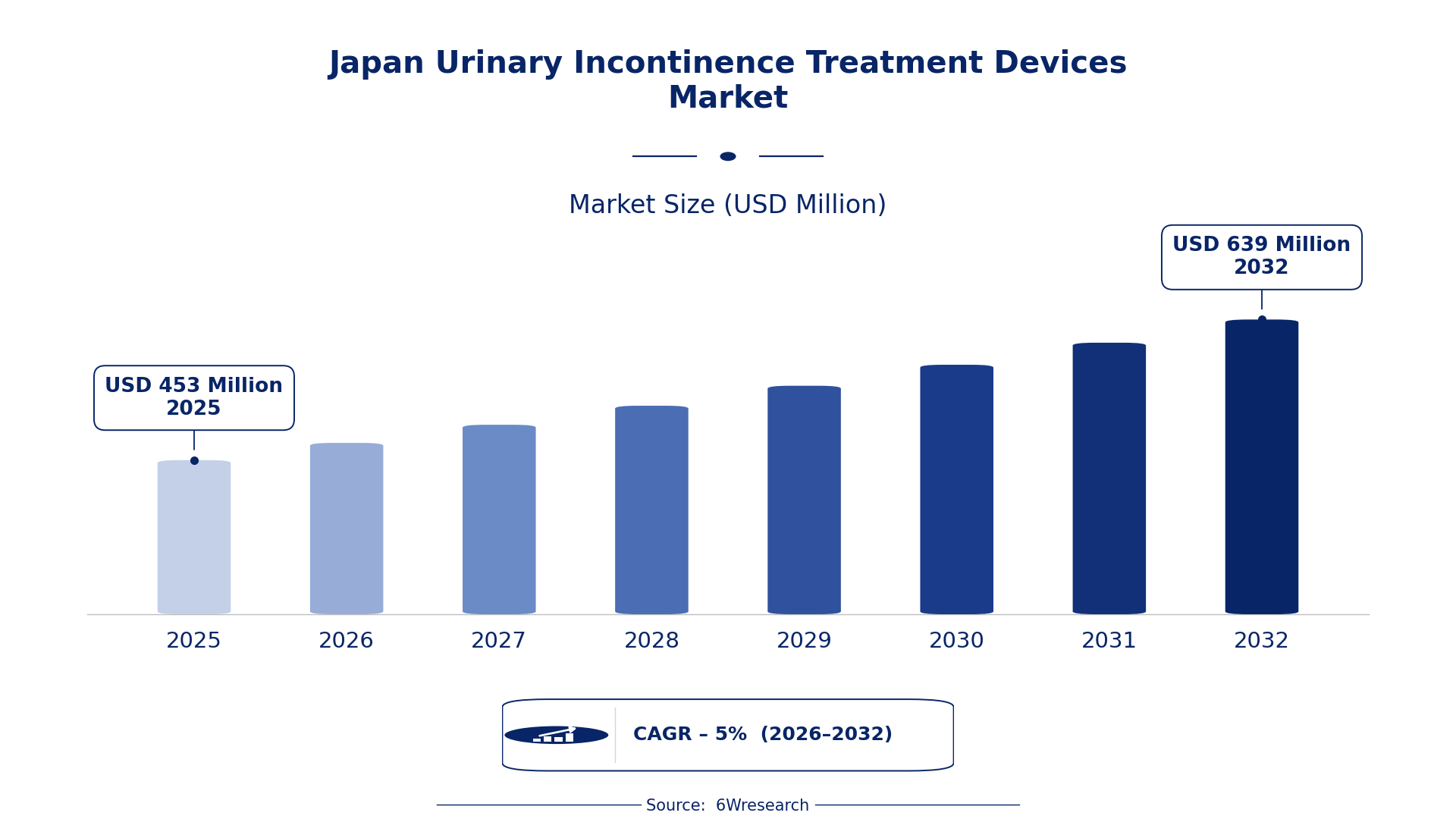
According to 6Wresearch internal database and industry insights, the Japan Urinary Incontinence Treatment Devices Market was valued at USD 453 Million in 2025 and is projected to reach USD 639 Million by 2032, growing at a CAGR of approximately 5% during 2026–2032.
Japan Urinary Incontinence Treatment Devices Market Highlights
| Report Metric | Details |
| Report Name | Japan Urinary Incontinence Treatment Devices Market (2026-2032) |
| Market Size 2025 | USD 453 Million |
| Market Size 2032 | USD 639 Million |
| Absolute Growth 2025–2032 | USD 186 Million |
| CAGR 2026–2032 | 5% |
| Peak Annual Growth | 6.1% in 2027 |
| Forecast Period | 2026–2032 |
| Historical Data | 2022–2025 |
| Base Year | 2025 |
| Leading Type, 2025 | Artificial Urinary Sphincters (41% share) |
| Leading Application, 2025 | Hospitals (53% share) |
| Fastest-Growing Type | Electrical Stimulation Devices (7.0% CAGR) |
| Fastest-Growing Application | Gynecology Clinic (6.5% CAGR) |
| Growing Sector | Healthcare |
| Key End Users | Hospitals, Gynecology Clinics, Ambulatory Surgical Centers, Home Users |
Japan Urinary Incontinence Treatment Devices Market Year-wise Growth Rate and Key Drivers (2022–2032)
This graph illustrates the annual growth rates of the market from 2022 to 2032, highlighting a steady upward trajectory and projected market expansion over the forecast period.
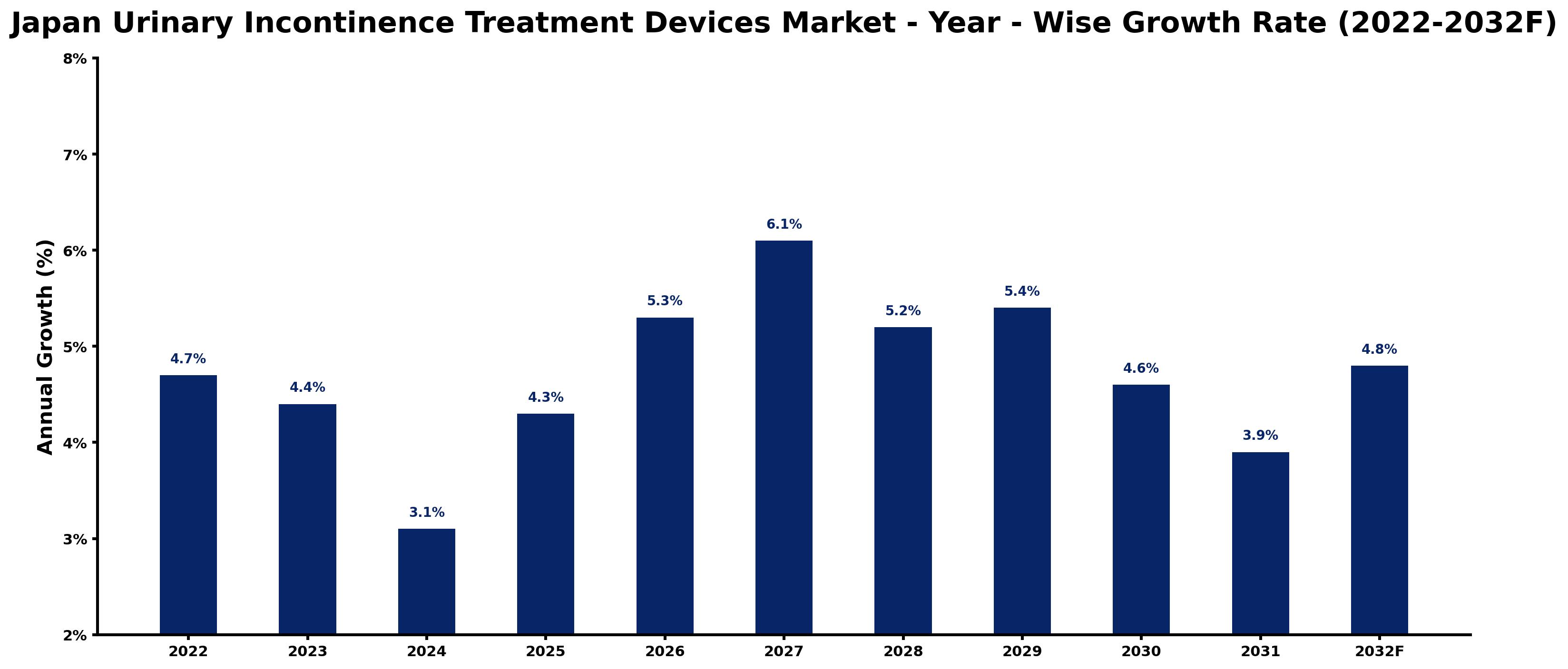
The yearly estimates that follow link every growth rate to its principal driver, so readers can see why the pace changed in each period.
| Year | Estimated Annual Growth (%) | Market Rationale |
| 2022 | 4.7 | The market experienced solid growth due to increased awareness of treatment options. |
| 2023 | 4.4 | Demand growth slowed slightly as healthcare systems adjusted to new conditions. |
| 2024 | 3.1 | Growth continued to decelerate as hospitals faced staffing challenges amid rising patient numbers. |
| 2025 | 4.3 | A recovery in demand occurred as hospitals resumed elective surgeries and outpatient treatments. |
| 2026 | 5.3 | Healthcare infrastructure investments will spur increased adoption of advanced treatment devices. |
| 2027 | 6.1 | The market is projected to peak as technological advancements attract more patients seeking effective solutions. |
| 2028 | 5.2 | Growth is expected to moderate as the market stabilises following the peak in device adoption rates. |
| 2029 | 5.4 | Demand is projected to rise again as more facilities integrate minimally invasive procedures into their offerings. |
| 2030 | 4.6 | Growth is expected to slow slightly as market saturation begins to affect new device sales. |
| 2031 | 3.9 | A further slowdown is projected as competition intensifies among device manufacturers. |
| 2032 | 4.8 | Demand is expected to rise again as new technologies emerge and patient education improves. |
Note: Market size estimations and growth projections presented in this report are based on 6Wresearch's proprietary forecasting methodology, utilizing the latest available industry data, government publications, and primary research inputs.
Japan Urinary Incontinence Treatment Devices Market Synopsis
Urinary incontinence treatment devices manage urinary leakage through mechanical sphincters and electrical stimulation. Approximately 5 million adults in Japan experience this condition, with hospitals being the primary users. The Japan Urinary Incontinence Treatment Devices Market is growing due to an ageing population, rising healthcare expenditure, and technological advancements. Japan's national medical care expenditure was about JPY 46.7 trillion in fiscal 2022, reflecting strong support for healthcare investments, including urinary incontinence treatments.
Market Dynamics Impact Analysis (2026–2032)
| Factor | Type | Impact | Primary Segment Affected |
| Growing elderly population increases demand for urinary incontinence treatment devices. | Driver | High | Artificial Urinary Sphincters |
| Technological advancements in treatment options attract more patients. | Driver | High | Electrical Stimulation Devices |
| Rising prevalence of urinary incontinence among women over 40 creates new market opportunities. | Opportunity | High | Urethral Slings |
| Increased funding for healthcare initiatives enhances treatment accessibility. | Opportunity | Medium | Catheters |
| High costs associated with advanced treatment devices limit accessibility for some patients. | Restraint | High | Artificial Urinary Sphincters |
| Competition among manufacturers can lead to price wars, affecting profitability. | Restraint | Medium | Electrical Stimulation Devices |
| Supply chain disruptions can delay device availability in hospitals. | Challenge | High | Urethral Slings |
| Regulatory hurdles can slow the introduction of new treatment devices. | Challenge | Medium | Catheters |
Evaluation of Drivers in Japan Urinary Incontinence Treatment Devices Market (2026–2032)
The table below links each growth driver to the segment it affects and the evidence for it.
| Drivers | Primary Segment Affected | Why It Matters (Evidence) |
| Increasing number of elderly patients requiring treatment for urinary incontinence. | Artificial Urinary Sphincters | 29.3% of Japan's population was aged 65 or older in September 2024, driving demand for effective solutions. |
| Rising awareness of urinary incontinence treatment options among healthcare providers. | Urethral Slings | The average age of patients receiving treatment is 65 years, highlighting the need for effective solutions. |
| Increased healthcare expenditure supports the purchase of advanced treatment devices. | Catheters | Japan's national medical care expenditure was about JPY 46.7 trillion in fiscal 2022, facilitating device acquisition. |
| Growing emphasis on minimally invasive procedures improves treatment accessibility. | Artificial Urinary Sphincters | Ambulatory surgical centers are increasingly adopting minimally invasive procedures for urinary incontinence. |
| Advancements in medical technology improve treatment options for patients. | Electrical Stimulation Devices | The installed base of urinary incontinence devices in hospitals is estimated at 250,000 units, reflecting growing adoption. |
The strongest pull on demand comes from the growing elderly population, with 29.3% of Japan's population aged 65 or older in September 2024. Awareness of treatment options among healthcare providers is increasing, particularly as the average age of patients receiving treatment is 65 years. Healthcare expenditure supports the purchase of advanced devices, with national medical care expenditure reaching JPY 46.7 trillion in fiscal 2022. Emphasis on minimally invasive procedures improves accessibility, leading to higher demand for effective solutions. Advancements in medical technology are expanding treatment options, driving further demand.
Evaluation of Restraints in Japan Urinary Incontinence Treatment Devices Market
Below are the constraints most often cited by buyers and suppliers, with the segment each affects.
| Market Restraint | Primary Segment Affected | Why It Matters (Evidence) |
| High costs associated with advanced treatment devices limit accessibility for some patients. | Artificial Urinary Sphincters | The average hospital stay for urinary incontinence surgery is 2-3 days, increasing overall treatment costs. |
| Competition among manufacturers can lead to price wars, affecting profitability. | Electrical Stimulation Devices | The installed base of urinary incontinence devices in hospitals is estimated at 250,000 units, intensifying competition. |
| Limited awareness among patients about available treatment options hinders market growth. | Artificial Urinary Sphincters | Approximately 5 million adults in Japan experience urinary incontinence, yet many remain untreated. |
| Regulatory hurdles can slow the introduction of new treatment devices. | Catheters | The PMD Act regulates approval and quality, which can extend the time to market for new devices. |
| Supply chain disruptions can delay device availability in hospitals. | Urethral Slings | Japan had about 8,100 hospitals in 2023, which can face delays in receiving new devices. |
Japan Urinary Incontinence Treatment Devices Market Challenges
Access to urinary incontinence devices remains a major hurdle for buyers, with only 250,000 units installed across Japan's 8,100 hospitals, resulting in extended wait times for patients needing treatment. Competition intensifies as numerous suppliers enter the market, which pressures profit margins for existing distributors. A shortage of skilled professionals in specialised care exists, as the average age of patients is 65, complicating recruitment efforts in clinics and hospitals. Regulatory hurdles from the Pharmaceuticals and Medical Devices Agency can extend approval timelines, delaying device availability for clinics striving to offer timely solutions for patients.
Trends in the Japan Urinary Incontinence Treatment Devices Market
The shifts below are changing how Japan Urinary Incontinence Treatment Devices Market products are bought and supplied.
- Shift towards Minimally Invasive Procedures: Hospitals are increasingly adopting minimally invasive procedures for urinary incontinence treatment, improving patient recovery times. In 2023, the Ministry of Health launched a program to improve access to urinary incontinence treatments, reflecting this shift.
- Emergence of Home Use Devices: Home use devices are gaining traction as patients seek self-management options post-treatment. The average age of patients receiving treatment is 65 years, indicating a growing market for home-based solutions.
- Increased Focus on Female Urinary Health: Gynecology clinics are prioritising the treatment of female urinary incontinence, with a reported prevalence of 30% among women over 40. This focus is driving demand for specialised devices and treatments.
- Adoption of ISO 13485 Standards: The adoption of ISO 13485 standards for quality management systems is becoming essential for manufacturers. Compliance ensures that devices meet regulatory requirements, enhancing market credibility.
Investment Opportunities in the Japan Urinary Incontinence Treatment Devices Market
The following opportunities in the Japan Urinary Incontinence Treatment Devices Market pair current demand with a clear way in.
- Rising Demand for Advanced Treatment Devices: With 5 million adults experiencing urinary incontinence, there is a growing need for advanced treatment devices. Hospitals are key buyers, and investment in effective solutions can meet this demand.
- Expansion of Gynecology Clinics: The increasing number of gynecology clinics presents an opportunity for device suppliers. With over 1,000 clinics in Japan, partnerships can enhance market penetration and device availability.
- Investment in Healthcare Infrastructure: The timing is right for investments in healthcare infrastructure, particularly in urban centres like Tokyo and Osaka. This can facilitate the adoption of new treatment technologies in hospitals.
- Development of Home Use Solutions: The rise in self-management post-treatment creates a demand for home use devices. Suppliers can target this segment by collaborating with healthcare providers for effective solutions.
Government Initiatives in the Japan Urinary Incontinence Treatment Devices Market
The Pharmaceuticals and Medical Devices Agency oversees the approval and monitoring of urinary incontinence treatment devices, ensuring they meet safety and efficacy standards. The PMD Act regulates the manufacture and quality of these devices, impacting producers who must comply with rigorous testing and reporting requirements. This regulatory framework supports the healthcare system by ensuring that only high-quality devices are available for patients, ultimately benefiting buyers seeking reliable treatment options.
In 2023, the Ministry of Health allocated ¥500 million for urinary health initiatives, aiming to improve access to treatments for urinary incontinence. The Japan Agency for Medical Research and Development funds research and development projects that enhance device technology and treatment methods. This funding enables the establishment of new facilities and programmes, increasing the availability of effective solutions for patients across the country.
Future Insight of the Japan Urinary Incontinence Treatment Devices Market
Investment in urinary health initiatives will drive demand, creating a market worth ¥500 million by 2023. By 2032, technological advancements will introduce more effective mechanical sphincters, improving treatment outcomes. New programmes will enhance access to care, resulting in a greater number of facilities specialising in urinary incontinence. As the elderly population expands, the increasing prevalence of urinary incontinence will shift focus towards minimally invasive procedures, shaping strategies for both buyers and suppliers.
Market Segmentation Analysis
Japan Urinary Incontinence Treatment Devices Market report covers a detailed analysis of the following market segments:
By Type – Artificial Urinary Sphincters Lead, Electrical Stimulation Devices Expected to Grow Fastest
According to Sumit Sagar, AM at 6Wresearch, with 41% of type revenue in 2025, Artificial Urinary Sphincters was the largest category. Artificial urinary sphincters maintain the largest share due to their necessity in managing severe cases of incontinence that require surgical intervention. Their widespread use in hospitals, with an estimated installed base of 250,000 units, underscores their importance in effective urinary incontinence management. The quickest growth will come from Electrical Stimulation Devices, forecast to expand at a CAGR of 7.0% between 2026 and 2032. The growth of electrical stimulation devices is propelled by their increasing adoption for neuromuscular stimulation, which aids in bladder control. This trend reflects a broader shift towards minimally invasive treatment options that cater to patient preferences for less invasive solutions. Suppliers should prioritise the development of electrical stimulation devices to align with the rising demand for less invasive treatment alternatives.
By Application – Hospitals Lead, Gynecology Clinic Expected to Grow Fastest
Hospitals accounted for 53% of the market by application in 2025. Hospitals dominate the market as they serve as the primary providers for surgical and outpatient treatments of urinary incontinence. With approximately 8,100 hospitals in Japan, they play a crucial role in delivering comprehensive care for affected patients. Gynecology Clinic is set to record the highest CAGR in this split, 6.5% over 2026–2032. Gynecology clinics are witnessing the fastest growth due to their focus on diagnosing and treating urinary issues that are common among women over 40. This targeted approach is leading to a notable increase in patient visits and treatment adoption within these facilities. Suppliers should prioritise partnerships with gynecology clinics to better meet the rising demand for specialised urinary incontinence treatments.
Key Attractiveness of the Report
- 10 Years of Market Numbers
- Historical Data Starting from 2022 to 2025
- Base Year 2025
- Forecast Data until 2032
- Key Performance Indicators Impacting the Market
- Major Upcoming Developments and Projects
Key Highlights of the Report:
- Japan Urinary Incontinence Treatment Devices Market Outlook
- Market Size of Japan Urinary Incontinence Treatment Devices Market, 2025
- Forecast of Japan Urinary Incontinence Treatment Devices Market, 2032
- Historical Data and Forecast of Japan Urinary Incontinence Treatment Devices Revenues & Volume for the Period 2022-2032
- Japan Urinary Incontinence Treatment Devices Market Trend Evolution
- Japan Urinary Incontinence Treatment Devices Market Drivers and Challenges
- Japan Urinary Incontinence Treatment Devices Price Trends
- Japan Urinary Incontinence Treatment Devices Porter's Five Forces
- Japan Urinary Incontinence Treatment Devices Industry Life Cycle
- Historical Data and Forecast of Japan Urinary Incontinence Treatment Devices Market Revenues & Volume By Type for the Period 2022-2032
- Historical Data and Forecast of Japan Urinary Incontinence Treatment Devices Market Revenues & Volume By Artificial Urinary Sphincters for the Period 2022-2032
- Historical Data and Forecast of Japan Urinary Incontinence Treatment Devices Market Revenues & Volume By Electrical Stimulation Devices for the Period 2022-2032
- Historical Data and Forecast of Japan Urinary Incontinence Treatment Devices Market Revenues & Volume By Urethral Slings for the Period 2022-2032
- Historical Data and Forecast of Japan Urinary Incontinence Treatment Devices Market Revenues & Volume By Catheters for the Period 2022-2032
- Historical Data and Forecast of Japan Urinary Incontinence Treatment Devices Market Revenues & Volume By Application for the Period 2022-2032
- Historical Data and Forecast of Japan Urinary Incontinence Treatment Devices Market Revenues & Volume By Hospitals for the Period 2022-2032
- Historical Data and Forecast of Japan Urinary Incontinence Treatment Devices Market Revenues & Volume By Gynecology Clinic for the Period 2022-2032
- Historical Data and Forecast of Japan Urinary Incontinence Treatment Devices Market Revenues & Volume By Ambulatory Surgical Centers for the Period 2022-2032
- Historical Data and Forecast of Japan Urinary Incontinence Treatment Devices Market Revenues & Volume By Home Use for the Period 2022-2032
- Japan Urinary Incontinence Treatment Devices Import Export Trade Statistics
- Market Opportunity Assessment By Type
- Market Opportunity Assessment By Application
- Japan Urinary Incontinence Treatment Devices Top Companies Market Share
- Japan Urinary Incontinence Treatment Devices Competitive Benchmarking By Technical and Operational Parameters
- Japan Urinary Incontinence Treatment Devices Company Profiles
- Japan Urinary Incontinence Treatment Devices Key Strategic Recommendations
Market Covered
The following segment groups are covered in the report.
By Type
- Artificial Urinary Sphincters
- Electrical Stimulation Devices
- Urethral Slings
- Catheters
By Application
- Hospitals
- Gynecology Clinic
- Ambulatory Surgical Centers
- Home Use































