Japan Urologic Cancer Market Size & Growth Rate
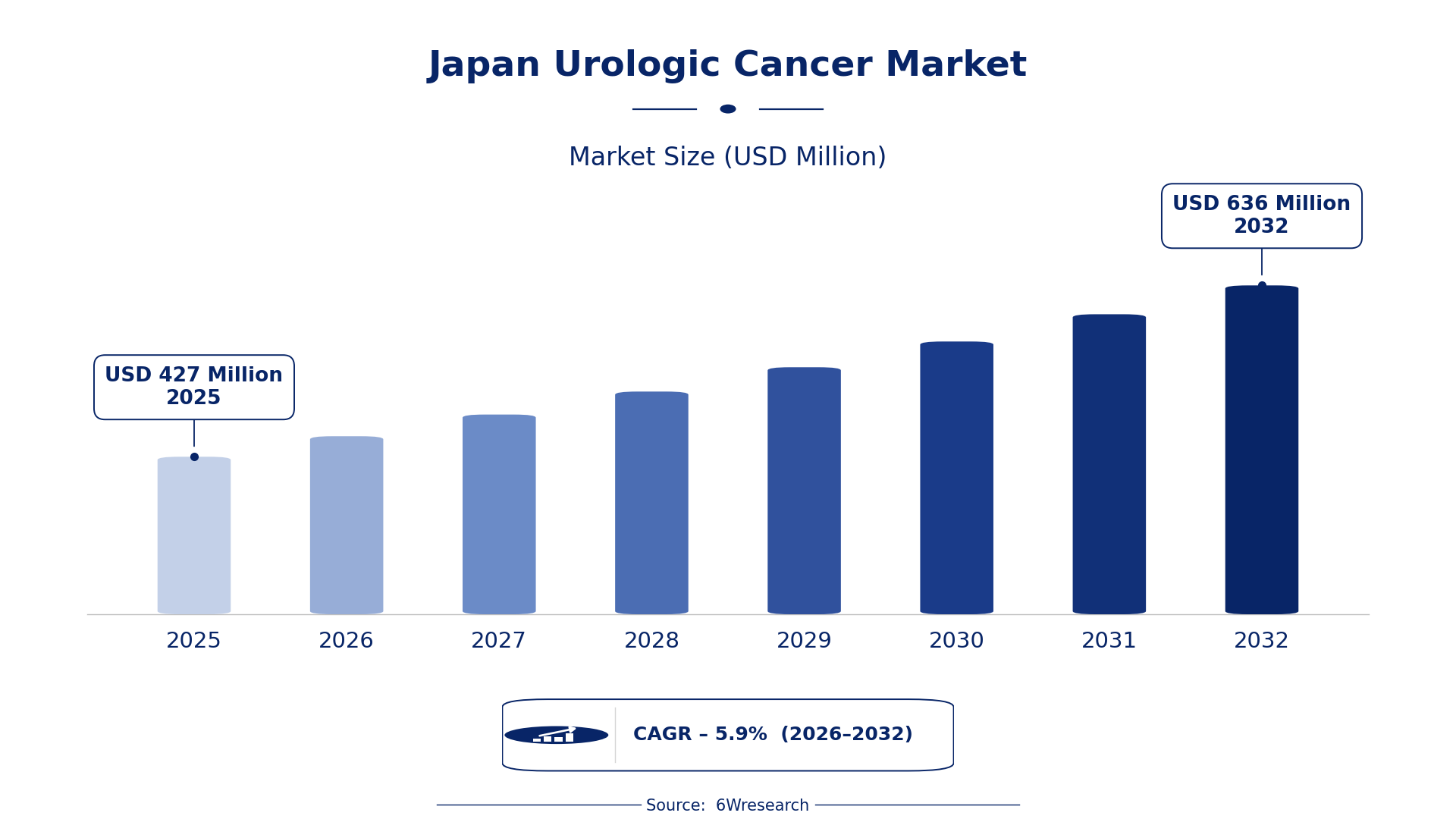
According to 6Wresearch internal database and industry insights, the Japan Urologic Cancer Market was valued at USD 427 Million in 2025 and is projected to reach USD 636 Million by 2032, growing at a CAGR of approximately 5.9% during 2026–2032.
Japan Urologic Cancer Market Highlights
| Report Metric | Details |
| Report Name | Japan Urologic Cancer Market (2026-2032) |
| Market Size 2025 | USD 427 Million |
| Market Size 2032 | USD 636 Million |
| Absolute Growth 2025–2032 | USD 209 Million |
| CAGR 2026–2032 | 5.9% |
| Peak Annual Growth | 7.2% in 2028 |
| Forecast Period | 2026–2032 |
| Historical Data | 2022–2025 |
| Base Year | 2025 |
| Leading Cancer Type, 2025 | Prostate Cancer (38% share) |
| Leading Treatment Type, 2025 | Hormonal Therapy (47% share) |
| Leading Diagnosis Method, 2025 | PSA Testing (46% share) |
| Leading End User, 2025 | Oncology Clinics (44% share) |
| Fastest-Growing Cancer Type | Bladder Cancer (8.3% CAGR) |
| Fastest-Growing Treatment Type | Immunotherapy (8.5% CAGR) |
| Fastest-Growing Diagnosis Method | Cytology + Imaging (8.7% CAGR) |
| Fastest-Growing End User | Hospitals (7.6% CAGR) |
| Growing Sector | Urologic Cancer Treatment |
| Key End Users | Hospitals, Oncology Clinics, Urology Specialists, Cancer Centers |
Japan Urologic Cancer Market Year-wise Growth Rate and Key Drivers (2022–2032)
This graph illustrates the annual growth rates of the market from 2022 to 2032, highlighting a steady upward trajectory and projected market expansion over the forecast period.
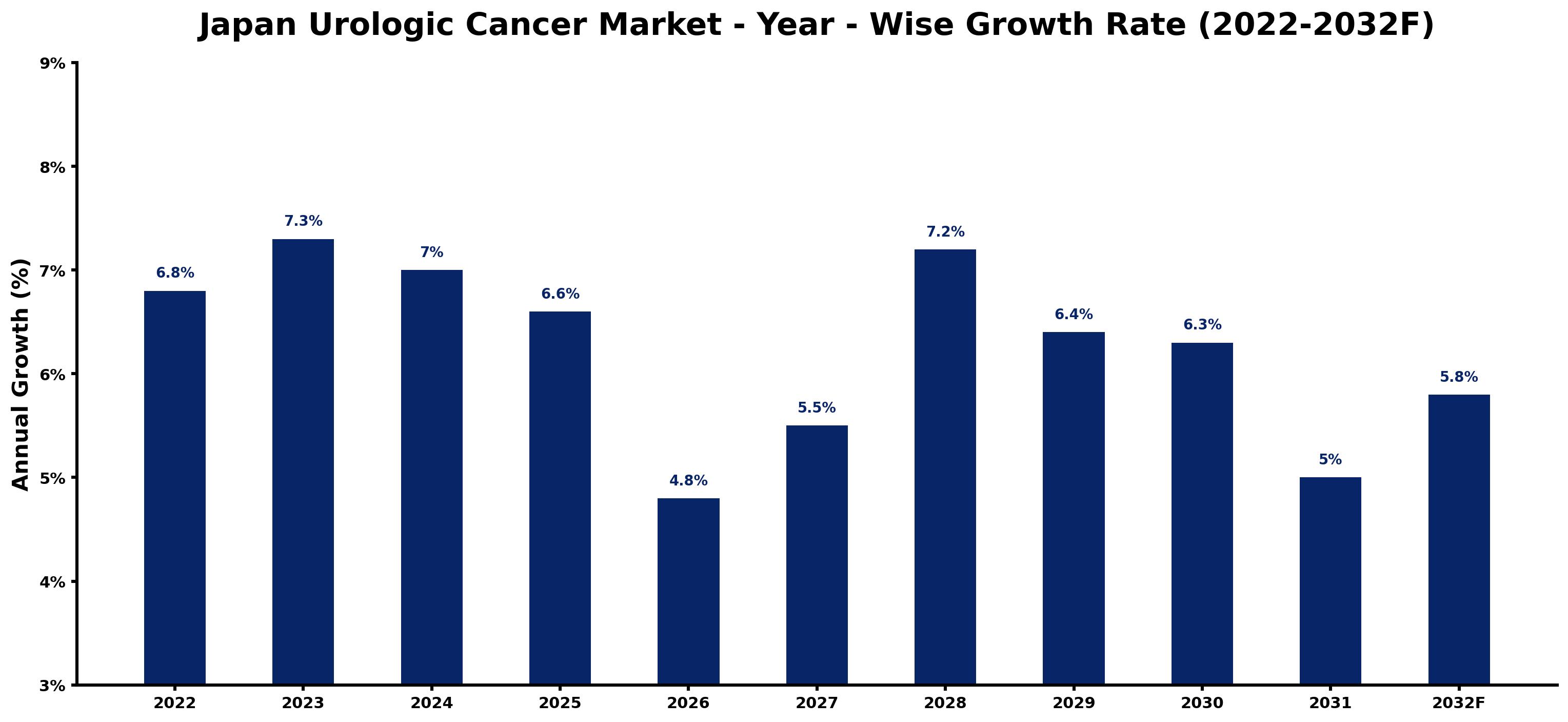
For each year, the table pairs the estimated growth rate with the leading influence on demand, showing how the drivers changed across the period.
| Year | Estimated Annual Growth (%) | Market Rationale |
| 2022 | 6.8 | The market showed steady growth as healthcare providers increased focus on cancer treatment. |
| 2023 | 7.3 | Demand surged due to heightened awareness and early detection initiatives. |
| 2024 | 7.0 | Growth slowed slightly as the market stabilised after a peak in 2023. |
| 2025 | 6.6 | The market continued to grow, but at a reduced rate amid increasing competition. |
| 2026 | 4.8 | A slowdown is expected as market conditions shift towards established treatment options. |
| 2027 | 5.5 | Growth is projected to rebound as new immunotherapy options gain traction in clinical settings. |
| 2028 | 7.2 | Demand is expected to accelerate again, driven by advancements in urologic cancer therapies. |
| 2029 | 6.4 | The market is projected to experience a slowdown as saturation in some treatment areas becomes apparent. |
| 2030 | 6.3 | Growth is anticipated to continue slowing, reflecting a mature market with established practices. |
| 2031 | 5.0 | The market is expected to grow at a lower rate as competition intensifies among treatment modalities. |
| 2032 | 5.8 | Demand is projected to increase again as new screening initiatives target high-risk populations. |
Note: Market size estimations and growth projections presented in this report are based on 6Wresearch's proprietary forecasting methodology, utilizing the latest available industry data, government publications, and primary research inputs.
Japan Urologic Cancer Market Synopsis
Urologic cancer encompasses malignancies that affect the urinary system and male reproductive organs, primarily diagnosed through imaging and biopsies. The Japan Urologic Cancer Market is growing due to an aging population and increasing incidence rates, especially for prostate and bladder cancers. The introduction of advanced treatment options and government initiatives aimed at improving screening and early detection are driving demand. With over 20,000 new bladder cancer cases each year, healthcare providers are focusing on improving patient outcomes through effective therapies and care strategies.
Market Dynamics Impact Analysis (2026–2032)
| Factor | Type | Impact | Primary Segment Affected |
| Rising incidence of prostate cancer among older adults drives demand for diagnosis and treatment. | Driver | High | Prostate Cancer |
| Increased adoption of immunotherapy options enhances treatment efficacy and patient outcomes. | Driver | High | Immunotherapy |
| Emerging cancer screening initiatives create opportunities for diagnostic service providers. | Opportunity | High | PSA Testing |
| Growing demand for advanced treatment modalities opens avenues for investment in cancer care facilities. | Opportunity | High | Oncology Clinics |
| Competition among treatment options may lead to price pressures for healthcare providers. | Restraint | Medium | Chemotherapy |
| Limited access to advanced therapies in rural areas restricts patient options. | Restraint | Medium | Immunotherapy |
| High costs of advanced treatments can deter patients from seeking timely care. | Challenge | High | Hormonal Therapy |
| Inadequate healthcare infrastructure may delay access to necessary treatments. | Challenge | Medium | Urology Specialists |
Evaluation of Drivers in Japan Urologic Cancer Market (2026–2032)
Below are the drivers that matter most for revenue growth, with supporting evidence.
| Drivers | Primary Segment Affected | Why It Matters (Evidence) |
| Increasing incidence of prostate cancer drives demand for diagnostic services and treatment options. | Prostate Cancer | In 2022, prostate cancer accounted for approximately 30% of all cancer diagnoses in Japan. |
| Adoption of immunotherapy is rising, providing new treatment avenues for patients. | Immunotherapy | Since 2021, immunotherapy options have been increasingly adopted in clinical settings. |
| The aging population necessitates more cancer care solutions. | Oncology Clinics | Approximately 80% of hospitals in Japan are equipped to perform urologic cancer surgeries. |
| Government initiatives targeting high-risk populations improve screening efforts. | PSA Testing | The 2023 cancer screening initiative aims to improve early detection rates. |
| Advancements in surgical techniques are improving treatment outcomes for patients. | Surgery + Radiation | The National Cancer Center Japan conducts extensive research on urologic cancers. |
A wider customer base explains much of the growth, as the aging population in Japan increases the incidence of prostate cancer, which accounted for approximately 30% of all cancer diagnoses in 2022. The rising adoption of immunotherapy since 2021 has provided new treatment avenues, improving patient outcomes. Many hospitals are equipped for urologic cancer surgeries, reflecting the growing demand for effective treatment. Improvements in surgical techniques are also leading to better treatment outcomes, resulting in higher patient satisfaction and increased service uptake.
Evaluation of Restraints in Japan Urologic Cancer Market
The main factors holding the market back are set out below.
| Market Restraint | Primary Segment Affected | Why It Matters (Evidence) |
| High costs associated with advanced treatments can deter patients from seeking timely care. | Hormonal Therapy | The average age of diagnosis for prostate cancer is around 70 years, making affordability important. |
| Limited access to advanced therapies in rural areas restricts patient options for treatment. | Immunotherapy | Approximately 80% of hospitals are equipped for surgeries, but rural access remains a challenge. |
| Competition among treatment options may lead to price pressures for healthcare providers. | Chemotherapy | As various treatment modalities emerge, pricing strategies will need to adapt to market conditions. |
| Inadequate healthcare infrastructure may delay access to necessary treatments for patients. | Urology Specialists | The rising prevalence of kidney cancer among older adults highlights the need for improved infrastructure. |
| Stringent regulations on new therapies can slow down market entry for new treatments. | Immunotherapy | The Clinical Trials Act sets strict rules for clinical research, impacting development timelines. |
Japan Urologic Cancer Market Challenges
Producers face outdated diagnostic technologies, which hinder timely cancer detection for hospitals and result in increased patient morbidity. Distributors contend with fierce competition from emerging therapies, forcing them to lower prices, which can limit the availability of critical treatments for buyers. A shortage of skilled healthcare professionals restricts effective patient management, particularly in surgical environments, resulting in longer wait times for clinics. Rising costs of advanced treatment options strain budgets, complicating hospitals' ability to provide adequate care for patients with urologic cancers.
Trends in the Japan Urologic Cancer Market
The shifts below are changing how Japan Urologic Cancer Market products are bought and supplied.
- Shift in Cancer Screening Practices: Japan is experiencing a shift towards more proactive cancer screening practices, particularly with the 2023 initiative targeting high-risk populations. This programme aims to improve early detection rates, ultimately resulting in better patient outcomes and increased demand for diagnostic services.
- Emergence of Immunotherapy as a Standard Treatment: The adoption of immunotherapy options is becoming more prevalent in Japan, with clinical settings increasingly integrating these therapies since 2021. This trend is expected to continue, with an estimated increase in usage over the next five years.
- Focus on Comprehensive Cancer Care Facilities: There is a growing emphasis on comprehensive cancer care facilities, particularly oncology clinics, which are adapting to the rising demand for advanced treatment options. Approximately 80% of hospitals are now equipped to perform urologic cancer surgeries, reflecting this trend.
- Rising Importance of Patient-Centric Approaches: Healthcare providers are increasingly prioritising patient-centric approaches in urologic cancer treatment. This shift is evident in oncology clinics, where patient satisfaction scores have risen due to improved care strategies.
Investment Opportunities in the Japan Urologic Cancer Market
The openings below show where demand in the Japan Urologic Cancer Market is visible and how suppliers can enter.
- Investment in Advanced Diagnostic Facilities: Japan's healthcare sector is ripe for investment in advanced diagnostic facilities, especially given the 2023 cancer screening initiative targeting high-risk populations. With over 20,000 new bladder cancer cases annually, there is a strong demand for improved diagnostic capabilities.
- Expansion of Immunotherapy Treatment Options: The growing adoption of immunotherapy presents opportunities for suppliers of cancer treatment solutions. As hospitals increase their immunotherapy offerings, demand for related products is expected to rise significantly over the next five years.
- Development of Rural Healthcare Infrastructure: Investment in rural healthcare infrastructure is essential to improve access to urologic cancer treatments. With many hospitals equipped for surgeries, expanding services to underserved areas will enhance patient care and outcomes.
- Enhancement of Patient Education Programs: There is an opportunity to improve patient education programs regarding urologic cancer, particularly prostate cancer. As awareness increases, healthcare providers can expect a rise in screening and treatment uptake.
Government Initiatives in the Japan Urologic Cancer Market
The Long-Term Care Insurance Act, effective since 2000, provides funding for nursing care and support services, directly impacting urologic cancer patients by ensuring access to necessary treatment. Additionally, the Next-Generation Medical Infrastructure Act facilitates the anonymisation of medical data, promoting research and development in urologic cancer treatments. This framework supports the improvement of care for patients.
The Pharmaceuticals and Medical Devices Agency (PMDA) reviews pharmaceuticals and medical devices, ensuring safety and efficacy for urologic cancer therapies. The Japan Agency for Medical Research and Development (AMED) funds medical research, including projects focused on new treatment options for urologic cancers, thereby supporting advancements in patient care.
Future Insight of the Japan Urologic Cancer Market
Clinics will experience enhanced diagnostic capabilities by 2032 as advanced imaging technologies become more prevalent. New government screening initiatives will improve early detection rates for high-risk populations. Research efforts from the National Cancer Center Japan will lead to improved treatment protocols, benefiting both buyers and suppliers. The adoption of immunotherapy options will rise, with approximately 40% of treatment plans incorporating these methods, resulting in better patient outcomes.
Market Segmentation Analysis
Japan Urologic Cancer Market report covers a detailed analysis of the following market segments:
By Cancer Type – Prostate Cancer Leads, Bladder Cancer Expected to Grow Fastest
According to Saurav Kr Singh, Senior Research Analyst at 6Wresearch, Prostate Cancer held 38% of the Japan Urologic Cancer Market by cancer type in 2025. Prostate cancer holds the largest market share due to its prevalence, accounting for around 30% of all cancer diagnoses in Japan. The average age of diagnosis at approximately 70 years indicates a significant patient demographic requiring ongoing treatment and management. Bladder Cancer is set to record the highest CAGR in this split, 8.3% over 2026–2032. Bladder cancer is growing rapidly, with over 20,000 new cases annually, which is driving demand for diverse treatment options. Increased awareness and government initiatives targeting high-risk populations are contributing to this surge in cases. This indicates that suppliers must focus on developing innovative treatment solutions for bladder cancer to meet the rising demand.
By Treatment Type – Hormonal Therapy Leads, Immunotherapy Expected to Grow Fastest
With 47% of treatment type revenue in 2025, Hormonal Therapy was the largest category. Hormonal therapy is the leading treatment type as it is widely used in managing prostate cancer, which is prevalent among older men. Its established role in treatment protocols ensures a strong market presence. The quickest growth will come from Immunotherapy, forecast to expand at a CAGR of 8.5% between 2026 and 2032. Immunotherapy is gaining traction as a fast-growing treatment option for various urologic cancers, driven by its increasing adoption in clinical settings since 2021. This trend reflects a shift towards more advanced therapeutic strategies. Buyers will benefit from a broader range of treatment options as immunotherapy becomes more integrated into standard care.
By Diagnosis Method – PSA Testing Leads, Cytology + Imaging Expected to Grow Fastest
The largest diagnosis method category in 2025 was PSA Testing, at 46% of revenue. PSA testing is the dominant diagnosis method, recognised as the standard screening approach for prostate cancer among men over 50 years old. Its widespread implementation in healthcare facilities contributes to its leading position. Cytology + Imaging is projected to grow fastest, at a CAGR of 8.7% during 2026–2032. Cytology and imaging are emerging as the fastest-growing diagnostic methods, essential for accurately diagnosing bladder cancer. The rise in bladder cancer cases necessitates improved diagnostic techniques to ensure timely treatment. Suppliers should invest in advanced diagnostic technologies to meet the increasing demand for effective bladder cancer detection.
By End User – Oncology Clinics Lead, Hospitals Expected to Grow Fastest
Oncology Clinics took 44% of end user revenue in 2025, more than any other category. Oncology clinics are the leading segment as they are specialised facilities dedicated to the treatment of cancer, providing tailored care for urologic cancer patients. Their focused approach in managing cancer cases solidifies their dominant role in the healthcare system. Over 2026–2032, Hospitals are expected to post the fastest growth, at a CAGR of 7.6%. Hospitals are experiencing the fastest growth, serving as comprehensive care institutions that address a broad spectrum of patient needs. The rising incidence of cancer cases requires hospitals to adopt multidisciplinary treatment strategies, which they are well-prepared to implement. This trend highlights the necessity for suppliers to align their offerings with the operational needs of hospitals to effectively engage with the expanding market.
Key Attractiveness of the Report
- 10 Years of Market Numbers
- Historical Data Starting from 2022 to 2025
- Base Year 2025
- Forecast Data until 2032
- Key Performance Indicators Impacting the Market
- Major Upcoming Developments and Projects
Key Highlights of the Report:
- Japan Urologic Cancer Market Outlook
- Market Size of Japan Urologic Cancer Market, 2025
- Forecast of Japan Urologic Cancer Market, 2032
- Historical Data and Forecast of Japan Urologic Cancer Revenues & Volume for the Period 2022-2032F
- Japan Urologic Cancer Market Trend Evolution
- Japan Urologic Cancer Market Drivers and Challenges
- Japan Urologic Cancer Price Trends
- Japan Urologic Cancer Porter's Five Forces
- Japan Urologic Cancer Industry Life Cycle
- Historical Data and Forecast of Japan Urologic Cancer Market Revenues & Volume By Cancer Type for the Period 2022-2032F
- Historical Data and Forecast of Japan Urologic Cancer Market Revenues & Volume By Prostate Cancer for the Period 2022-2032F
- Historical Data and Forecast of Japan Urologic Cancer Market Revenues & Volume By Bladder Cancer for the Period 2022-2032F
- Historical Data and Forecast of Japan Urologic Cancer Market Revenues & Volume By Kidney Cancer for the Period 2022-2032F
- Historical Data and Forecast of Japan Urologic Cancer Market Revenues & Volume By Testicular Cancer for the Period 2022-2032F
- Historical Data and Forecast of Japan Urologic Cancer Market Revenues & Volume By Treatment Type for the Period 2022-2032F
- Historical Data and Forecast of Japan Urologic Cancer Market Revenues & Volume By Hormonal Therapy for the Period 2022-2032F
- Historical Data and Forecast of Japan Urologic Cancer Market Revenues & Volume By Immunotherapy for the Period 2022-2032F
- Historical Data and Forecast of Japan Urologic Cancer Market Revenues & Volume By Chemotherapy for the Period 2022-2032F
- Historical Data and Forecast of Japan Urologic Cancer Market Revenues & Volume By Surgery + Radiation for the Period 2022-2032F
- Historical Data and Forecast of Japan Urologic Cancer Market Revenues & Volume By Diagnosis Method for the Period 2022-2032F
- Historical Data and Forecast of Japan Urologic Cancer Market Revenues & Volume By PSA Testing for the Period 2022-2032F
- Historical Data and Forecast of Japan Urologic Cancer Market Revenues & Volume By Cytology + Imaging for the Period 2022-2032F
- Historical Data and Forecast of Japan Urologic Cancer Market Revenues & Volume By Biopsy for the Period 2022-2032F
- Historical Data and Forecast of Japan Urologic Cancer Market Revenues & Volume By Ultrasound + Markers for the Period 2022-2032F
- Historical Data and Forecast of Japan Urologic Cancer Market Revenues & Volume By End User for the Period 2022-2032F
- Historical Data and Forecast of Japan Urologic Cancer Market Revenues & Volume By Oncology Clinics for the Period 2022-2032F
- Historical Data and Forecast of Japan Urologic Cancer Market Revenues & Volume By Hospitals for the Period 2022-2032F
- Historical Data and Forecast of Japan Urologic Cancer Market Revenues & Volume By Urology Specialists for the Period 2022-2032F
- Historical Data and Forecast of Japan Urologic Cancer Market Revenues & Volume By Cancer Centers for the Period 2022-2032F
- Japan Urologic Cancer Import Export Trade Statistics
- Market Opportunity Assessment By Cancer Type
- Market Opportunity Assessment By Treatment Type
- Market Opportunity Assessment By Diagnosis Method
- Market Opportunity Assessment By End User
- Japan Urologic Cancer Top Companies Market Share
- Japan Urologic Cancer Competitive Benchmarking By Technical and Operational Parameters
- Japan Urologic Cancer Company Profiles
- Japan Urologic Cancer Key Strategic Recommendations
Market Covered
The report covers the following segments.
By Cancer Type
- Prostate Cancer
- Bladder Cancer
- Kidney Cancer
- Testicular Cancer
By Treatment Type
- Hormonal Therapy
- Immunotherapy
- Chemotherapy
- Surgery + Radiation
By Diagnosis Method
- PSA Testing
- Cytology + Imaging
- Biopsy
- Ultrasound + Markers
By End User
- Oncology Clinics
- Hospitals
- Urology Specialists
- Cancer Centers































