Japan Urologic Oncology Market Size & Growth Rate
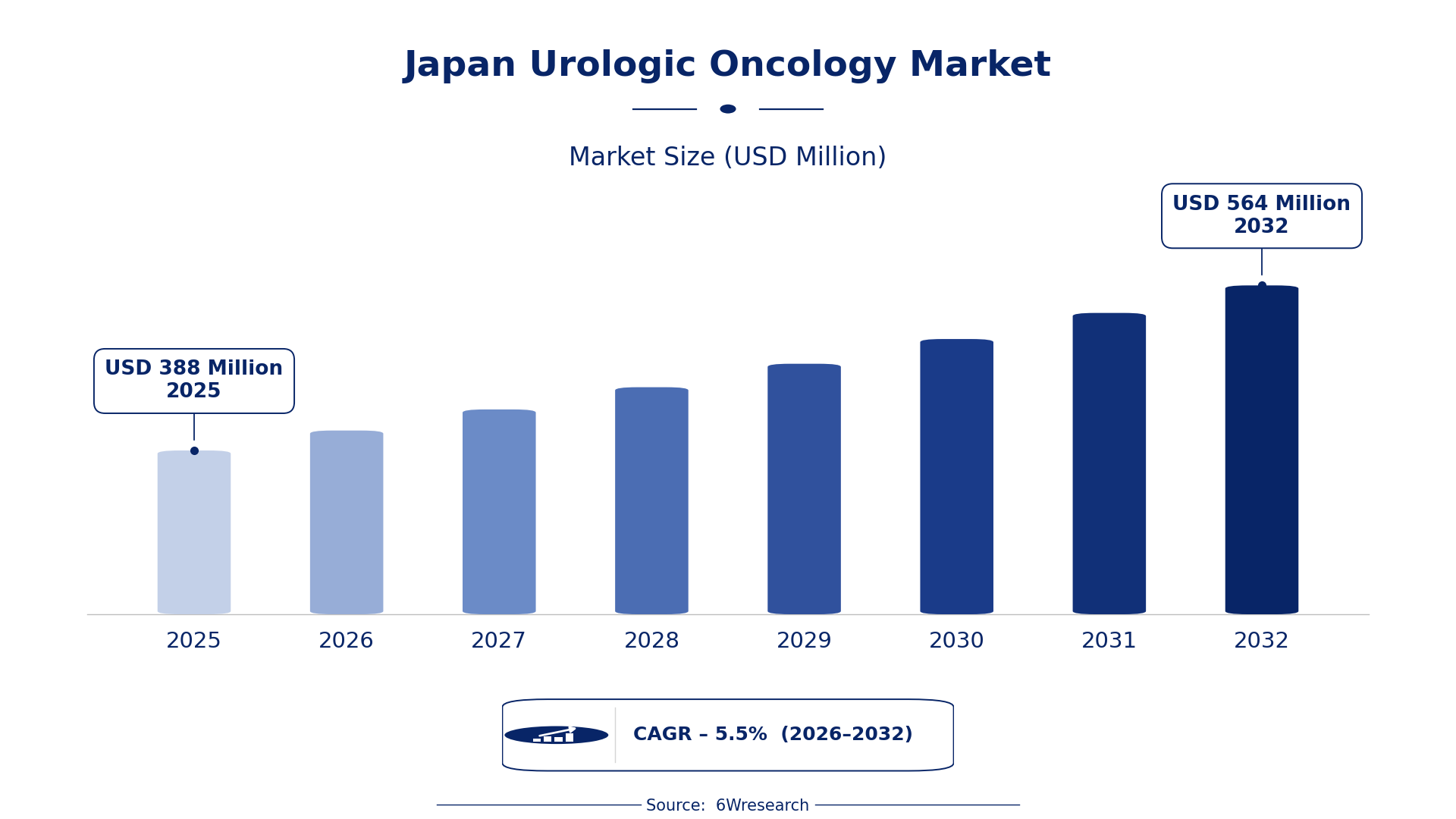
According to 6Wresearch internal database and industry insights, the Japan Urologic Oncology Market was valued at USD 388 Million in 2025 and is projected to reach USD 564 Million by 2032, growing at a CAGR of approximately 5.5% during 2026–2032.
Japan Urologic Oncology Market Highlights
| Report Metric | Details |
| Report Name | Japan Urologic Oncology Market (2026-2032) |
| Market Size 2025 | USD 388 Million |
| Market Size 2032 | USD 564 Million |
| Absolute Growth 2025–2032 | USD 176 Million |
| CAGR 2026–2032 | 5.5% |
| Peak Annual Growth | 6.4% in 2029 |
| Forecast Period | 2026–2032 |
| Historical Data | 2022–2025 |
| Base Year | 2025 |
| Leading Specialty Area, 2025 | Minimally Invasive (46% share) |
| Leading Intervention Method, 2025 | Robotic Surgery (41% share) |
| Leading Technology Used, 2025 | Laparoscopic Systems (41% share) |
| Leading End User, 2025 | Hospitals (49% share) |
| Fastest-Growing Specialty Area | Advanced Imaging (6.9% CAGR) |
| Fastest-Growing Intervention Method | PET/CT Scans (7.9% CAGR) |
| Fastest-Growing Technology Used | AI-Enabled Diagnostics (8.1% CAGR) |
| Fastest-Growing End User | Oncology Centers (7.2% CAGR) |
| Growing Sector | Urologic oncology services |
| Key End Users | Hospitals, Oncology Centers, Cancer Clinics, Urology Units |
Japan Urologic Oncology Market Year-wise Growth Rate and Key Drivers (2022–2032)
This graph illustrates the annual growth rates of the market from 2022 to 2032, highlighting a steady upward trajectory and projected market expansion over the forecast period.
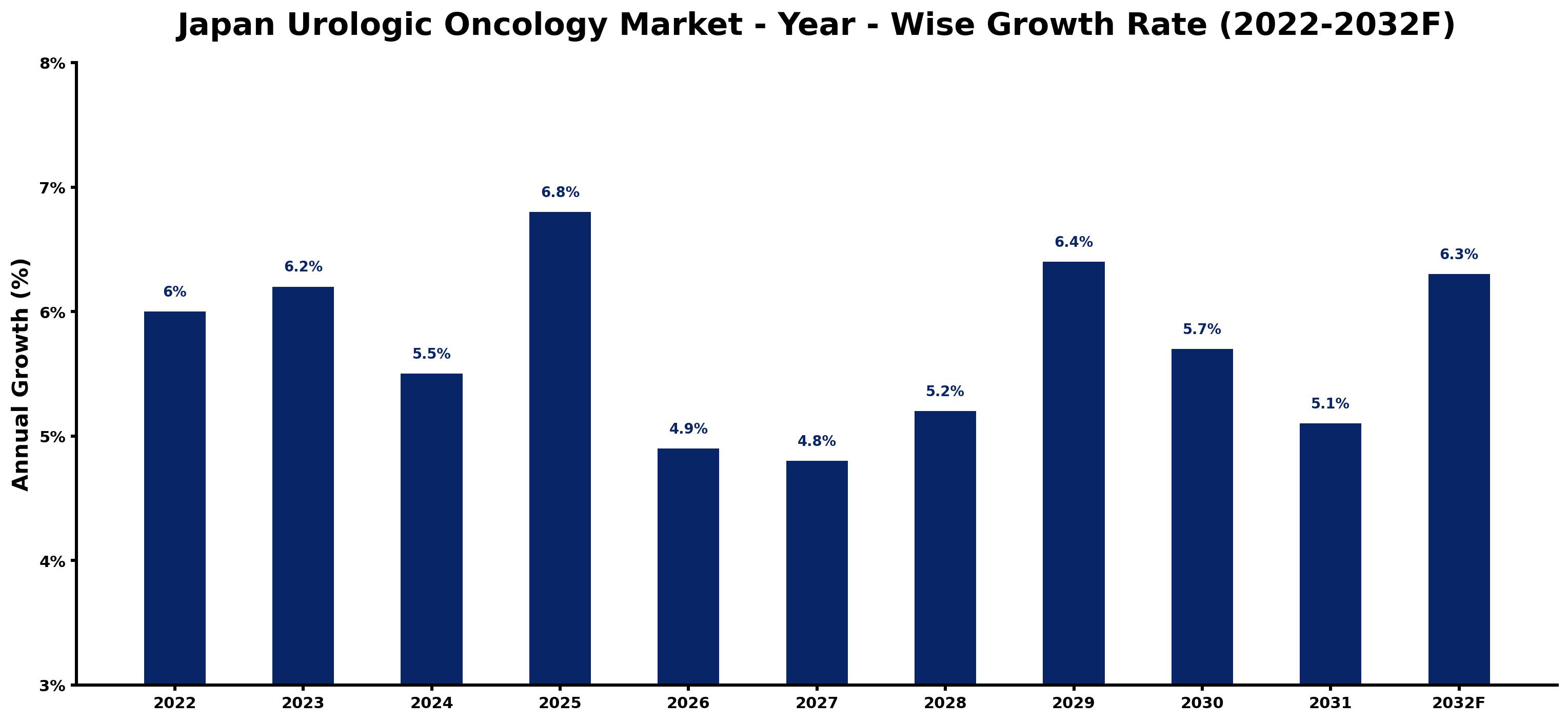
Below, each year's estimated growth is shown next to the factor that most influenced it.
| Year | Estimated Annual Growth (%) | Market Rationale |
| 2022 | 6.0 | The market showed strong activity with a significant number of new prostate cancer cases reported. |
| 2023 | 6.2 | Growth accelerated as healthcare facilities expanded urologic oncology services to meet patient needs. |
| 2024 | 5.5 | A slight slowdown occurred as hospitals adjusted to new treatment protocols and technologies. |
| 2025 | 6.8 | The market peaked with increased adoption of minimally invasive surgical techniques across healthcare facilities. |
| 2026 | 4.9 | Growth is expected to slow as competition among healthcare facilities intensifies, impacting service expansion. |
| 2027 | 4.8 | The market will continue to grow but at a reduced rate due to market saturation in some areas. |
| 2028 | 5.2 | A resurgence in growth is projected as hospitals invest in advanced imaging technologies for better diagnostics. |
| 2029 | 6.4 | Demand is expected to surge again with the introduction of new robotic surgical systems in healthcare facilities. |
| 2030 | 5.7 | Growth will slow as facilities face challenges in integrating emerging technologies effectively into their practices. |
| 2031 | 5.1 | The market will experience a further slowdown as hospitals focus on operational efficiencies and cost management. |
| 2032 | 6.3 | Growth is projected to pick up as oncology centers expand their service offerings to include new therapies. |
Note: Market size estimations and growth projections presented in this report are based on 6Wresearch's proprietary forecasting methodology, utilizing the latest available industry data, government publications, and primary research inputs.
Japan Urologic Oncology Market Synopsis
Urologic oncology focuses on diagnosing and treating cancers of the urinary tract and male reproductive organs, utilising minimally invasive surgery, imaging techniques, and drug therapies. The Japan Urologic Oncology Market is expanding due to increased cancer incidence, particularly prostate cancer, with a substantial number of new cases reported in 2022. Hospitals and specialised clinics are key buyers, responding to the rising need for effective cancer treatments. The market is projected to grow as healthcare facilities invest in advanced technologies and improvements in patient care, supported by initiatives from the Japanese Society of Urology.
Market Dynamics Impact Analysis (2026–2032)
| Factor | Type | Impact | Primary Segment Affected |
| Rising incidence of prostate cancer | Driver | High | Drug Therapy |
| Adoption of minimally invasive surgical techniques | Driver | High | Minimally Invasive |
| Investment in advanced imaging technologies | Opportunity | High | Advanced Imaging |
| Expansion of oncology centers in urban areas | Opportunity | Medium | Oncology Centers |
| High operational costs for advanced technologies | Restraint | High | Robotic Surgery |
| Limited patient access to specialized care | Restraint | Medium | Cancer Clinics |
| Shortage of skilled professionals in urologic oncology | Challenge | High | Urology Units |
| Integration of AI in diagnostics is still developing | Challenge | Medium | AI-Enabled Diagnostics |
Evaluation of Drivers in Japan Urologic Oncology Market (2026–2032)
The following drivers explain most of the expected growth.
| Drivers | Primary Segment Affected | Why It Matters (Evidence) |
| Increase in prostate cancer cases | Drug Therapy | Approximately 120,000 new cases reported in 2022, driving demand for targeted treatments and therapies. |
| Minimally invasive surgeries reduce recovery times | Minimally Invasive | Over 70% of surgeries are minimally invasive, allowing healthcare facilities to treat more patients efficiently. |
| Technological advancements in imaging techniques | Advanced Imaging | The National Cancer Center's focus on advanced imaging is increasing demand for imaging services in hospitals. |
| Robotic surgery improves surgical precision | Robotic Surgery | Hospitals are investing in robotic systems, leading to a projected increase in surgical procedures performed. |
| Growing patient awareness of treatment options | Oncology Centers | Patients are seeking advanced care, resulting in increased visits to specialized oncology facilities. |
Most of the extra volume comes from the rising incidence of prostate cancer, prompting healthcare facilities to significantly expand drug therapy options. The adoption of minimally invasive surgical techniques is widespread, with over 70% of surgeries performed this way, enabling facilities to treat more patients efficiently. Technological advancements in imaging techniques are boosting demand for advanced imaging services, as healthcare providers invest in better diagnostic capabilities. Robotic surgery is gaining traction, as facilities invest in these systems to improve surgical precision and outcomes. Increased patient awareness of treatment options is driving more individuals to seek care at specialised oncology centres, resulting in higher patient throughput.
Evaluation of Restraints in Japan Urologic Oncology Market
The following restraints limit how fast demand can grow.
| Market Restraint | Primary Segment Affected | Why It Matters (Evidence) |
| High costs associated with advanced surgical technologies | Robotic Surgery | The high investment required for robotic systems limits adoption among smaller healthcare facilities. |
| Limited availability of specialized cancer treatment centers | Cancer Clinics | Patients in rural areas face challenges accessing specialized clinics, affecting treatment rates and outcomes. |
| Shortage of trained urologic oncology professionals | Urology Units | The lack of skilled professionals results in longer wait times for patients seeking timely care. |
| Regulatory hurdles for new treatment approvals | Advanced Imaging | Stringent regulations delay the introduction of new imaging technologies in healthcare facilities. |
| Patient reluctance to adopt new therapies | Drug Therapy | Concerns about side effects and efficacy hinder the acceptance of new drug treatments among patients. |
Japan Urologic Oncology Market Challenges
A shortage of skilled urologic oncologists leads to longer wait times for patients, with some waiting up to three months for consultations. Intense competition among hospitals results in price reductions, which can compromise the quality of care for clinics. Rapid advancements in technology often leave staff untrained, causing delays in the adoption of new therapies, which affects producers' ability to meet market demands. Supply chain disruptions for essential medical devices can postpone surgeries, resulting in extended recovery times for patients needing timely treatment.
Trends in the Japan Urologic Oncology Market
Several trends are reshaping the Japan Urologic Oncology Market; the most important are set out below.
- Shift towards Minimally Invasive Procedures: Over 70% of urologic surgeries are now minimally invasive, reflecting a trend towards quicker recovery. Hospitals are adopting these techniques to improve patient throughput and satisfaction.
- Increased Integration of AI in Diagnostics: AI-enabled diagnostics are being integrated into 30% of cancer clinics by 2025, improving accuracy in cancer detection. This shift is enhancing the diagnostic capabilities of healthcare providers.
- Expansion of Oncology Centers in Urban Regions: The Tokyo region has seen a significant rise in oncology centers, with the highest concentration in Japan. This expansion is addressing the increasing need for specialised cancer care and treatment.
- Adoption of Advanced Imaging Technologies: The National Cancer Center's focus on advanced imaging is transforming diagnostic practices. This trend is expected to improve treatment planning and patient outcomes considerably.
Investment Opportunities in the Japan Urologic Oncology Market
The opportunities below stand out in the Japan Urologic Oncology Market for new entrants and existing suppliers.
- Growing Demand for Advanced Imaging: With the increasing number of cancer diagnoses, there is a pressing need for advanced imaging solutions. Oncology centers in urban areas are looking to invest in these technologies to improve diagnostic accuracy and efficiency.
- Investment in Robotic Surgery: The rising demand for precision in surgical procedures presents an opportunity for suppliers of robotic systems. Hospitals are actively seeking partnerships to integrate these technologies into their surgical suites.
- Expansion of Cancer Clinics: The growing patient population necessitates the expansion of cancer clinics, particularly in underserved regions. Investing in new facilities can meet this demand and improve access to care for patients.
- Development of Targeted Drug Therapies: As drug therapy accounts for 40% of treatment protocols, there is an opportunity to develop targeted therapies. Hospitals are keen to adopt these innovations to improve treatment outcomes for patients.
Government Initiatives in the Japan Urologic Oncology Market
The Long-Term Care Insurance Act, enacted in 1997, has provided crucial funding for nursing care and support services, benefiting older patients with urologic cancers. The AI Promotion Act, introduced in 2025, establishes a framework for AI research and development, facilitating the integration of AI in diagnostics and treatment planning for urologic oncology and improving patient care.
The New Robot Strategy promotes the use of robotic technologies in healthcare, allocating funds to improve hospital capabilities. This strategy enables facilities to adopt advanced surgical techniques, ultimately improving patient outcomes and treatment effectiveness.
Future Insight of the Japan Urologic Oncology Market
The rollout of new proton beam therapy facilities will broaden treatment options by 2032. AI-driven diagnostics are projected to improve accuracy in cancer detection, benefiting clinics and patients alike. Increased government funding for cancer research will stimulate innovation in treatment approaches. By 2032, the integration of advanced imaging technologies will enhance patient diagnosis and management, significantly raising care standards for hospitals and their patients.
Market Segmentation Analysis
Japan Urologic Oncology Market report covers a detailed analysis of the following market segments:
By Specialty Area – Minimally Invasive Leads, Advanced Imaging Expected to Grow Fastest
According to Saurav Kr Singh, Senior Research Analyst at 6Wresearch, Minimally Invasive accounted for 46% of the market by specialty area in 2025. Minimally invasive techniques are preferred in Japan for surgeries due to their ability to reduce recovery time and complications. With over 70% of urologic oncology surgeries performed using these methods, hospitals are increasingly adopting them to enhance patient care. The quickest growth will come from Advanced Imaging, forecast to expand at a CAGR of 6.9% between 2026 and 2032. The increasing adoption of advanced imaging technologies is essential for accurate diagnosis and treatment planning. As hospitals upgrade their facilities, the demand for these imaging solutions is expected to rise significantly. Suppliers should focus on enhancing imaging technologies to meet the growing needs of urologic oncology.
By Intervention Method – Robotic Surgery Leads, PET/CT Scans Expected to Grow Fastest
In 2025, Robotic Surgery led the intervention method split with a 41% share. Robotic surgery is widely utilised in Japan for its precision in surgical procedures, making it the leading intervention method in urologic oncology. Its successful outcomes have led to increased usage across numerous healthcare facilities. PET/CT Scans are projected to grow fastest, at a CAGR of 7.9% during 2026–2032. The rising demand for PET/CT scans is attributed to their critical role in staging and monitoring cancer progression. This trend underscores the necessity for more accurate diagnostic tools in cancer treatment. Buyers should consider investing in advanced diagnostic technologies to improve treatment effectiveness.
By Technology Used – Laparoscopic Systems Lead, AI-Enabled Diagnostics Expected to Grow Fastest
Laparoscopic Systems took 41% of technology used revenue in 2025, more than any other category. Laparoscopic systems are frequently employed in minimally invasive surgeries, establishing them as the leading technology in urologic oncology. Their extensive use in hospitals highlights their role in improving surgical efficiency and patient recovery. AI-Enabled Diagnostics are set to record the highest CAGR in this split, 8.1% over 2026–2032. The adoption of AI-enabled diagnostics is on the rise as clinics recognise their value in enhancing cancer diagnosis. This trend indicates a shift towards more precise diagnostic methods in healthcare. Suppliers must prioritise the development of advanced diagnostic tools to align with market trends.
By End User – Hospitals Lead, Oncology Centers Expected to Grow Fastest
The largest end user category in 2025 was Hospitals, at 49% of revenue. Hospitals are the primary providers of urologic oncology services in Japan, solidifying their position as the leading end user in this market. With over 1,000 hospitals offering these services, they are crucial in delivering advanced cancer treatments. Over 2026–2032, Oncology Centers are expected to post the fastest growth, at a CAGR of 7.2%. Oncology centres are experiencing rapid growth as specialised facilities for cancer treatment, driven by the increasing demand for focused care. This expansion reflects the rising incidence of cancer cases and the need for specialised services. Providers should target oncology centres to expand their market presence and address the specific requirements of cancer patients.
Key Attractiveness of the Report
- 10 Years of Market Numbers
- Historical Data Starting from 2022 to 2025
- Base Year 2025
- Forecast Data until 2032
- Key Performance Indicators Impacting the Market
- Major Upcoming Developments and Projects
Key Highlights of the Report:
- Japan Urologic Oncology Market Outlook
- Market Size of Japan Urologic Oncology Market, 2025
- Forecast of Japan Urologic Oncology Market, 2032
- Historical Data and Forecast of Japan Urologic Oncology Revenues & Volume for the Period 2022-2032F
- Japan Urologic Oncology Market Trend Evolution
- Japan Urologic Oncology Market Drivers and Challenges
- Japan Urologic Oncology Price Trends
- Japan Urologic Oncology Porter's Five Forces
- Japan Urologic Oncology Industry Life Cycle
- Historical Data and Forecast of Japan Urologic Oncology Market Revenues & Volume By Specialty Area for the Period 2022-2032F
- Historical Data and Forecast of Japan Urologic Oncology Market Revenues & Volume By Minimally Invasive for the Period 2022-2032F
- Historical Data and Forecast of Japan Urologic Oncology Market Revenues & Volume By Advanced Imaging for the Period 2022-2032F
- Historical Data and Forecast of Japan Urologic Oncology Market Revenues & Volume By Drug Therapy for the Period 2022-2032F
- Historical Data and Forecast of Japan Urologic Oncology Market Revenues & Volume By Radiation Oncology for the Period 2022-2032F
- Historical Data and Forecast of Japan Urologic Oncology Market Revenues & Volume By Intervention Method for the Period 2022-2032F
- Historical Data and Forecast of Japan Urologic Oncology Market Revenues & Volume By Robotic Surgery for the Period 2022-2032F
- Historical Data and Forecast of Japan Urologic Oncology Market Revenues & Volume By PET/CT Scans for the Period 2022-2032F
- Historical Data and Forecast of Japan Urologic Oncology Market Revenues & Volume By Targeted Drugs for the Period 2022-2032F
- Historical Data and Forecast of Japan Urologic Oncology Market Revenues & Volume By External Beam Therapy for the Period 2022-2032F
- Historical Data and Forecast of Japan Urologic Oncology Market Revenues & Volume By Technology Used for the Period 2022-2032F
- Historical Data and Forecast of Japan Urologic Oncology Market Revenues & Volume By Laparoscopic Systems for the Period 2022-2032F
- Historical Data and Forecast of Japan Urologic Oncology Market Revenues & Volume By AI-Enabled Diagnostics for the Period 2022-2032F
- Historical Data and Forecast of Japan Urologic Oncology Market Revenues & Volume By Immuno-oncology Agents for the Period 2022-2032F
- Historical Data and Forecast of Japan Urologic Oncology Market Revenues & Volume By Proton Beam for the Period 2022-2032F
- Historical Data and Forecast of Japan Urologic Oncology Market Revenues & Volume By End User for the Period 2022-2032F
- Historical Data and Forecast of Japan Urologic Oncology Market Revenues & Volume By Hospitals for the Period 2022-2032F
- Historical Data and Forecast of Japan Urologic Oncology Market Revenues & Volume By Oncology Centers for the Period 2022-2032F
- Historical Data and Forecast of Japan Urologic Oncology Market Revenues & Volume By Cancer Clinics for the Period 2022-2032F
- Historical Data and Forecast of Japan Urologic Oncology Market Revenues & Volume By Urology Units for the Period 2022-2032F
- Japan Urologic Oncology Import Export Trade Statistics
- Market Opportunity Assessment By Specialty Area
- Market Opportunity Assessment By Intervention Method
- Market Opportunity Assessment By Technology Used
- Market Opportunity Assessment By End User
- Japan Urologic Oncology Top Companies Market Share
- Japan Urologic Oncology Competitive Benchmarking By Technical and Operational Parameters
- Japan Urologic Oncology Company Profiles
- Japan Urologic Oncology Key Strategic Recommendations
Market Covered
Coverage by segment is as follows.
By Specialty Area
- Minimally Invasive
- Advanced Imaging
- Drug Therapy
- Radiation Oncology
By Intervention Method
- Robotic Surgery
- PET/CT Scans
- Targeted Drugs
- External Beam Therapy
By Technology Used
- Laparoscopic Systems
- AI-Enabled Diagnostics
- Immuno-oncology Agents
- Proton Beam
By End User
- Hospitals
- Oncology Centers
- Cancer Clinics
- Urology Units































