Japan Urological Disorders Market Size & Growth Rate
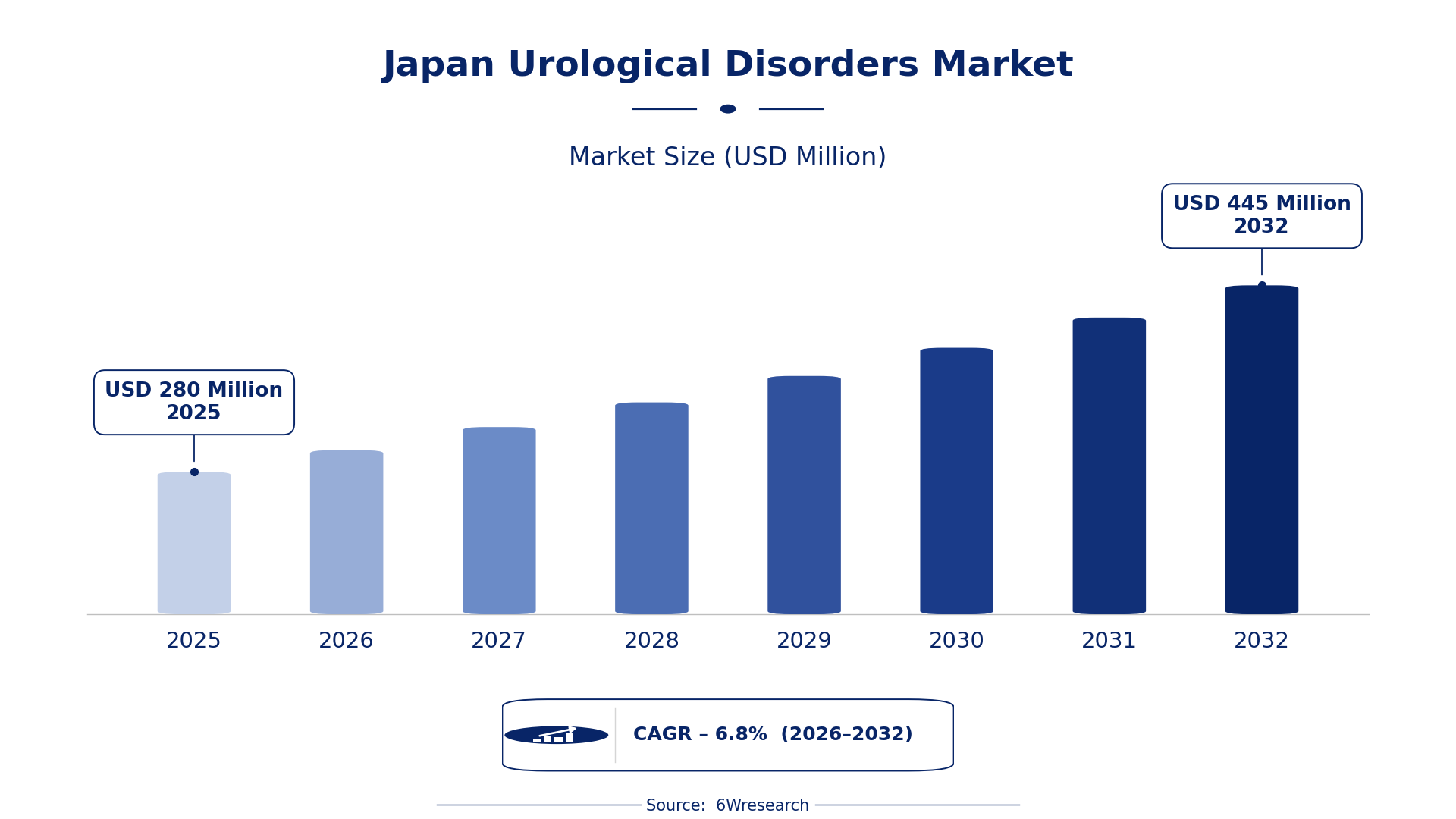
According to 6Wresearch internal database and industry insights, the Japan Urological Disorders Market was valued at USD 280 Million in 2025 and is projected to reach USD 445 Million by 2032, growing at a CAGR of approximately 6.8% during 2026–2032.
Japan Urological Disorders Market Highlights
| Report Metric | Details |
| Report Name | Japan Urological Disorders Market (2026-2032) |
| Market Size 2025 | USD 280 Million |
| Market Size 2032 | USD 445 Million |
| Absolute Growth 2025–2032 | USD 165 Million |
| CAGR 2026–2032 | 6.8% |
| Peak Annual Growth | 7.9% in 2032 |
| Forecast Period | 2026–2032 |
| Historical Data | 2022–2025 |
| Base Year | 2025 |
| Leading Disorder Type, 2025 | Kidney Stones (51% share) |
| Leading Treatment Approach, 2025 | Lithotripsy (41% share) |
| Leading Diagnosis Type, 2025 | Imaging & Labs (34% share) |
| Leading End User, 2025 | Nephrology Clinics (41% share) |
| Fastest-Growing Disorder Type | BPH (9.6% CAGR) |
| Fastest-Growing Treatment Approach | Medication + Surgery (9.3% CAGR) |
| Fastest-Growing Diagnosis Type | PSA (10.1% CAGR) |
| Fastest-Growing End User | Men over 50 (8.9% CAGR) |
| Growing Sector | Urological care |
| Key End Users | Nephrology Clinics, Primary Care, Elderly Patients |
Japan Urological Disorders Market Year-wise Growth Rate and Key Drivers (2022–2032)
This graph illustrates the annual growth rates of the market from 2022 to 2032, highlighting a steady upward trajectory and projected market expansion over the forecast period.
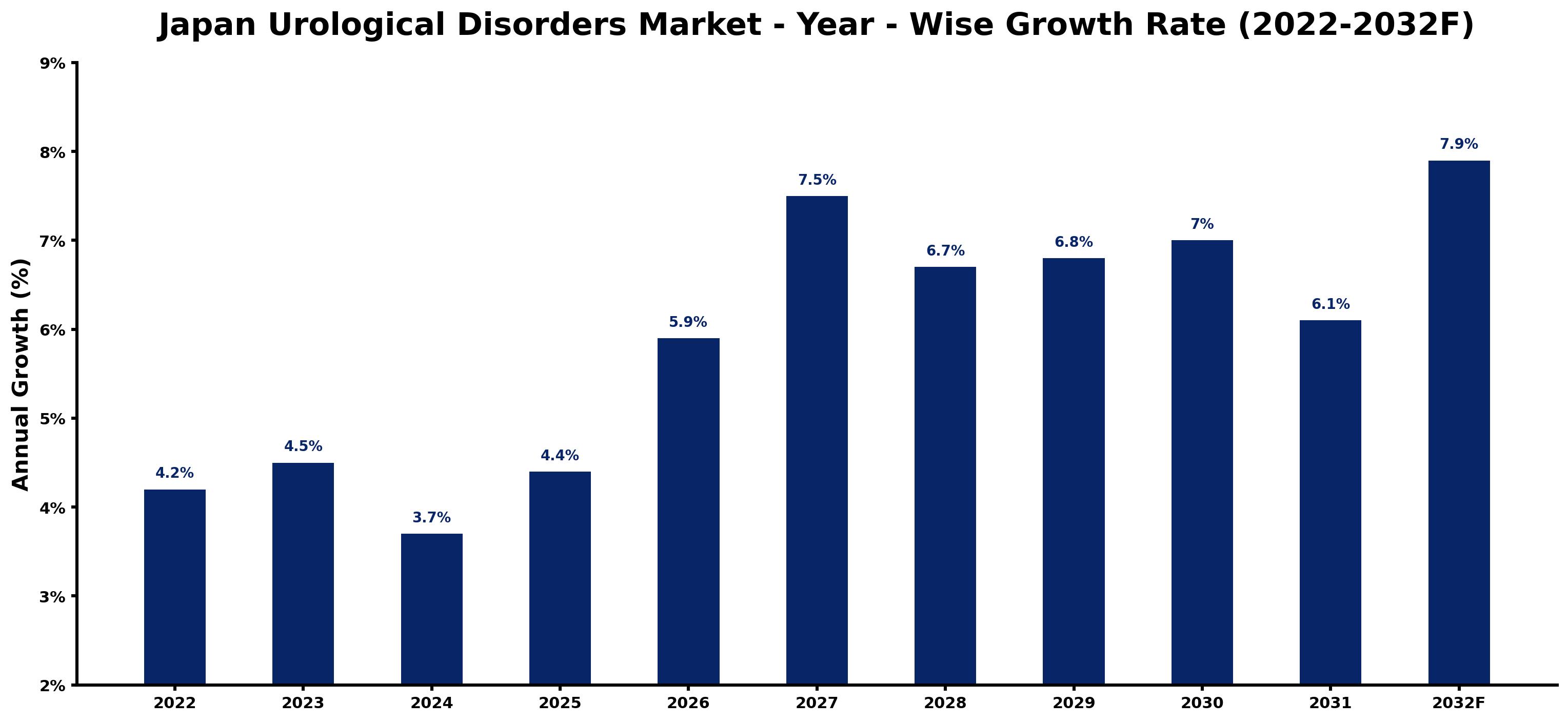
The yearly estimates that follow link every growth rate to its principal driver, so readers can see why the pace changed in each period.
| Year | Estimated Annual Growth (%) | Market Rationale |
| 2022 | 4.2 | The market experienced steady growth due to an aging population. |
| 2023 | 4.5 | Growth accelerated with increased awareness of urological health issues. |
| 2024 | 3.7 | A slight slowdown occurred as healthcare spending stabilised after previous increases. |
| 2025 | 4.4 | Growth resumed as more healthcare facilities adopted advanced treatment technologies. |
| 2026 | 5.9 | The market is expected to expand with rising demand for effective treatment options. |
| 2027 | 7.5 | Growth is projected to surge as new technologies improve patient outcomes. |
| 2028 | 6.7 | A slowdown is anticipated as market adjustments take place following rapid growth. |
| 2029 | 6.8 | The market will continue to grow with increasing awareness of preventive care. |
| 2030 | 7.0 | Growth is expected to remain strong as more patients seek early diagnosis and treatment. |
| 2031 | 6.1 | A slight slowdown will occur as market conditions normalise after previous peaks. |
| 2032 | 7.9 | The market is projected to peak with heightened demand for innovative urological solutions. |
Note: Market size estimations and growth projections presented in this report are based on 6Wresearch's proprietary forecasting methodology, utilizing the latest available industry data, government publications, and primary research inputs.
Japan Urological Disorders Market Synopsis
Urological disorders affect the urinary system and are diagnosed through imaging and lab tests. Treatment includes medication, surgery, and lifestyle changes. The Japan Urological Disorders Market is expanding due to an aging population, with over 30% of men over 50 experiencing BPH symptoms. The healthcare system's support for urological care and awareness campaigns contribute to rising demand, particularly in urban areas like Tokyo and Osaka, where healthcare facilities are concentrated. The prevalence of conditions such as kidney stones and prostatitis further drives the need for effective management solutions.
Market Dynamics Impact Analysis (2026–2032)
| Factor | Type | Impact | Primary Segment Affected |
| Aging population drives demand for urological treatments. | Driver | High | BPH |
| Increased awareness campaigns boost early diagnosis. | Driver | High | Prostatitis |
| Growing prevalence of kidney stones creates treatment opportunities. | Opportunity | High | Kidney Stones |
| Expansion of nephrology clinics in urban areas increases access. | Opportunity | Medium | Nephrology Clinics |
| High treatment costs can limit access for some patients. | Restraint | High | Incontinence |
| Limited availability of specialized healthcare professionals constrains growth. | Restraint | Medium | Lithotripsy |
| Rising operational costs challenge healthcare providers' margins. | Challenge | High | Medication + Surgery |
| Compliance with evolving healthcare regulations adds complexity. | Challenge | Medium | Imaging & Labs |
Evaluation of Drivers in Japan Urological Disorders Market (2026–2032)
The following drivers explain most of the expected growth.
| Drivers | Primary Segment Affected | Why It Matters (Evidence) |
| Aging population increases urological disorder prevalence. | BPH | Over 30% of men over 50 experience BPH symptoms, driving demand for treatment options. |
| Heightened awareness of urological health issues. | Prostatitis | Campaigns by the Japanese Urological Association led to a 15% increase in early detection rates. |
| Rising prevalence of kidney stones necessitates treatment. | Kidney Stones | Approximately 10% of adults in Japan experience kidney stones, increasing lithotripsy procedures to over 1.2 million in 2022. |
| Advancements in imaging technologies improve diagnosis accuracy. | Imaging & Labs | Technologies like MRI and CT scans are widely adopted for precise urological assessments, improving treatment outcomes. |
| Increased funding for research on urological diseases. | Nephrology Clinics | Government programs support research initiatives, expanding service offerings in clinics with significant funding. |
Volumes grow on the back of an aging population, with over 30% of men over 50 experiencing BPH symptoms, leading to increased demand for effective treatments. Awareness campaigns have improved early detection rates for prostatitis, prompting more patients to seek care. The prevalence of kidney stones, affecting around 10% of adults, drives the number of lithotripsy procedures performed, which exceeded 1.2 million in 2022. Improved imaging technologies have enhanced diagnostic accuracy, resulting in more targeted treatments. Research funding for urological diseases supports the development of new therapies in nephrology clinics, further boosting market growth.
Evaluation of Restraints in Japan Urological Disorders Market
The table below lists the restraints and the evidence behind each.
| Market Restraint | Primary Segment Affected | Why It Matters (Evidence) |
| High treatment costs limit patient access to necessary care. | Incontinence | Costs associated with devices and therapies can deter patients from seeking treatment. |
| Shortage of trained professionals affects service delivery. | Lithotripsy | Limited availability of specialists can delay treatment for patients requiring lithotripsy. |
| Regulatory compliance adds complexity to treatment protocols. | Medication + Surgery | Healthcare providers must navigate evolving regulations, impacting operational efficiency. |
| Limited awareness in rural areas restricts early diagnosis. | Prostatitis | Patients in less populated regions may not seek timely care, worsening outcomes. |
| Insurance coverage limitations can restrict treatment options. | Kidney Stones | Not all procedures may be covered, leading to financial barriers for patients. |
Japan Urological Disorders Market Challenges
A critical obstacle is the complex regulatory environment surrounding urological treatments, which can delay approvals for new therapies and hinder timely patient care for hospitals. Technological disparities persist, as not all healthcare facilities have access to advanced imaging technologies, leading to varied diagnostic accuracy and impacting treatment decisions for patients. Skills shortages are pronounced in urban nephrology clinics, where the demand for trained professionals exceeds supply, causing longer wait times for patients needing specialised care. Competition intensifies as over 30% of men over 50 experience BPH symptoms, compelling providers to innovate and improve service offerings to attract buyers.
Trends in the Japan Urological Disorders Market
Several trends are reshaping the Japan Urological Disorders Market; the most important are set out below.
- Elderly Patients Prioritised in Urological Care: Healthcare providers are increasingly focusing on elderly patients, who represent a large portion of urological disorder cases. In 2022, approximately 30% of elderly patients sought treatment for incontinence, highlighting the need for targeted care.
- Shift towards Advanced Imaging Techniques: The adoption of advanced imaging technologies is transforming diagnosis in urology. In 2023, imaging accounted for 34% of diagnostic procedures, improving accuracy and patient outcomes.
- Campaigns for Urological Health Awareness: The Ministry of Health's 2023 campaign aimed at improving urological health awareness has led to increased patient engagement. The initiative resulted in a 15% rise in early diagnosis rates for prostate disorders.
- Focus on Behavioral Therapies for Incontinence: Behavioral therapies for managing incontinence have gained traction, with a growing number of clinics implementing these approaches. Approximately 30% of elderly patients are now receiving behavioral interventions.
Investment Opportunities in the Japan Urological Disorders Market
The following areas offer the clearest openings for investors and suppliers in the Japan Urological Disorders Market.
- Growing Demand for BPH Treatments: With over 30% of men over 50 experiencing BPH symptoms, there is a pressing need for effective treatments. Nephrology clinics in urban areas are ideal for supplying advanced therapies.
- Expansion of Nephrology Clinics: The concentration of nephrology clinics in urban areas presents an opportunity for investment. With a growing patient base, these clinics require additional resources and solutions.
- Investment in Imaging Technologies: The increasing reliance on imaging for accurate diagnosis creates a demand for advanced imaging solutions. Facilities in metropolitan regions are actively seeking to upgrade their diagnostic equipment.
- Research Funding for Urological Diseases: Government support for research on urological diseases is at an all-time high, with significant funding available. This presents opportunities for partnerships with research institutions to develop new treatments.
Government Initiatives in the Japan Urological Disorders Market
The Ministry of Health's 2023 campaign aims to enhance urological health awareness, building on the Water Supply Act (1957) and the Sewerage Act (1958) that established foundational standards for public health. This initiative encourages healthcare facilities to implement better practices in urological care, ensuring that patients receive timely and effective treatments, particularly in urban centres where demand is high.
In 2022, the government allocated approximately 10 billion yen to support research on urological diseases through the Ministry of Health, Labour and Welfare. This funding is intended to advance clinical trials and improve treatment protocols, enabling healthcare providers to offer more effective solutions for patients suffering from urological disorders.
Future Insight of the Japan Urological Disorders Market
Urologists will increasingly adopt advanced imaging technologies by 2032, improving diagnostic accuracy for various urological conditions. Government programmes will boost research funding, facilitating breakthroughs in treatment protocols. The implementation of ISO 9001 standards will raise care quality across healthcare facilities, benefiting both buyers and suppliers. In 2022, over 1.2 million lithotripsy procedures were performed, indicating a growing demand for effective treatment options and highlighting the need for continuous improvement in service delivery.
Market Segmentation Analysis
Japan Urological Disorders Market report covers a detailed analysis of the following market segments:
By Disorder Type – Kidney Stones Lead, BPH Expected to Grow Fastest
According to Saurav Kr Singh, Senior Research Analyst at 6Wresearch, with 51% of disorder type revenue in 2025, Kidney Stones was the largest category. Kidney stones are a common concern in Japan, with over 1.2 million lithotripsy procedures performed in 2022. This high volume indicates a well-established treatment framework and the availability of specialised facilities dedicated to managing this condition effectively. BPH is projected to grow fastest, at a CAGR of 9.6% during 2026–2032. The prevalence of BPH symptoms in over 30% of men aged 50 and above significantly contributes to the rapid growth of this segment. As awareness and screening practices improve, the demand for effective treatments will continue to rise. Suppliers must focus on developing targeted solutions for the aging male population to capitalise on this growing market.
By Treatment Approach – Lithotripsy Leads, Medication + Surgery Expected to Grow Fastest
The largest treatment approach category in 2025 was Lithotripsy, at 41% of revenue. Lithotripsy is the primary method for treating kidney stones, widely employed across healthcare facilities in Japan. Its proven effectiveness and high utilisation rates ensure a robust market presence within the treatment landscape. Medication + Surgery is set to record the highest CAGR in this split, 9.3% over 2026–2032. The combination of medication and surgery is gaining traction due to its effectiveness in addressing various urological disorders. As treatment protocols evolve, this approach is expected to see increased adoption among healthcare providers. Healthcare providers should consider expanding their offerings in medication and surgical options to meet the rising demand.
By Diagnosis Type – Imaging & Labs Lead, PSA Expected to Grow Fastest
In 2025, Imaging & Labs led the diagnosis type split with a 34% share. Imaging and laboratory tests play a crucial role in accurately diagnosing urological conditions, forming the backbone of clinical evaluations in Japan. The reliance on advanced imaging technologies highlights their essential function in the diagnostic process. Over 2026–2032, PSA is expected to post the fastest growth, at a CAGR of 10.1%. The PSA test is becoming increasingly important for prostate health screening, particularly for men over 50. With rising awareness and clinical guidelines recommending early testing, this segment is poised for rapid growth. Diagnostic service providers should enhance their capabilities in PSA testing to align with the growing emphasis on early detection.
By End User – Nephrology Clinics Lead, Men over 50 Expected to Grow Fastest
Nephrology Clinics took 41% of end user revenue in 2025, more than any other category. Nephrology clinics are specialised facilities focusing on kidney-related issues, making them pivotal in the treatment landscape for urological disorders. Their concentration in urban areas like Tokyo and Osaka ensures high accessibility for patients seeking care. The quickest growth will come from Men over 50, forecast to expand at a CAGR of 8.9% between 2026 and 2032. Men over 50 represent a significant demographic affected by BPH and prostate disorders, driving demand for tailored healthcare services. As this population continues to grow, the need for targeted interventions will increase. Providers should strategically target services towards men over 50 to effectively address the specific needs of this demographic.
Key Attractiveness of the Report
- 10 Years of Market Numbers
- Historical Data Starting from 2022 to 2025
- Base Year 2025
- Forecast Data until 2032
- Key Performance Indicators Impacting the Market
- Major Upcoming Developments and Projects
Key Highlights of the Report:
- Japan Urological Disorders Market Outlook
- Market Size of Japan Urological Disorders Market, 2025
- Forecast of Japan Urological Disorders Market, 2032
- Historical Data and Forecast of Japan Urological Disorders Revenues & Volume for the Period 2022-2032F
- Japan Urological Disorders Market Trend Evolution
- Japan Urological Disorders Market Drivers and Challenges
- Japan Urological Disorders Price Trends
- Japan Urological Disorders Porter's Five Forces
- Japan Urological Disorders Industry Life Cycle
- Historical Data and Forecast of Japan Urological Disorders Market Revenues & Volume By Disorder Type for the Period 2022-2032F
- Historical Data and Forecast of Japan Urological Disorders Market Revenues & Volume By Kidney Stones for the Period 2022-2032F
- Historical Data and Forecast of Japan Urological Disorders Market Revenues & Volume By BPH for the Period 2022-2032F
- Historical Data and Forecast of Japan Urological Disorders Market Revenues & Volume By Prostatitis for the Period 2022-2032F
- Historical Data and Forecast of Japan Urological Disorders Market Revenues & Volume By Incontinence for the Period 2022-2032F
- Historical Data and Forecast of Japan Urological Disorders Market Revenues & Volume By Treatment Approach for the Period 2022-2032F
- Historical Data and Forecast of Japan Urological Disorders Market Revenues & Volume By Lithotripsy for the Period 2022-2032F
- Historical Data and Forecast of Japan Urological Disorders Market Revenues & Volume By Medication + Surgery for the Period 2022-2032F
- Historical Data and Forecast of Japan Urological Disorders Market Revenues & Volume By Antibiotic Treatment for the Period 2022-2032F
- Historical Data and Forecast of Japan Urological Disorders Market Revenues & Volume By Behavioral + Devices for the Period 2022-2032F
- Historical Data and Forecast of Japan Urological Disorders Market Revenues & Volume By Diagnosis Type for the Period 2022-2032F
- Historical Data and Forecast of Japan Urological Disorders Market Revenues & Volume By Imaging & Labs for the Period 2022-2032F
- Historical Data and Forecast of Japan Urological Disorders Market Revenues & Volume By PSA, DRE for the Period 2022-2032F
- Historical Data and Forecast of Japan Urological Disorders Market Revenues & Volume By Culture & Exam for the Period 2022-2032F
- Historical Data and Forecast of Japan Urological Disorders Market Revenues & Volume By Clinical History for the Period 2022-2032F
- Historical Data and Forecast of Japan Urological Disorders Market Revenues & Volume By End User for the Period 2022-2032F
- Historical Data and Forecast of Japan Urological Disorders Market Revenues & Volume By Nephrology Clinics for the Period 2022-2032F
- Historical Data and Forecast of Japan Urological Disorders Market Revenues & Volume By Men over 50 for the Period 2022-2032F
- Historical Data and Forecast of Japan Urological Disorders Market Revenues & Volume By Primary Care for the Period 2022-2032F
- Historical Data and Forecast of Japan Urological Disorders Market Revenues & Volume By Elderly Patients for the Period 2022-2032F
- Japan Urological Disorders Import Export Trade Statistics
- Market Opportunity Assessment By Disorder Type
- Market Opportunity Assessment By Treatment Approach
- Market Opportunity Assessment By Diagnosis Type
- Market Opportunity Assessment By End User
- Japan Urological Disorders Top Companies Market Share
- Japan Urological Disorders Competitive Benchmarking By Technical and Operational Parameters
- Japan Urological Disorders Company Profiles
- Japan Urological Disorders Key Strategic Recommendations
Market Covered
The report covers the following segments.
By Disorder Type
- Kidney Stones
- BPH
- Prostatitis
- Incontinence
By Treatment Approach
- Lithotripsy
- Medication + Surgery
- Antibiotic Treatment
- Behavioral + Devices
By Diagnosis Type
- Imaging & Labs
- PSA
- DRE
- Culture & Exam
- Clinical History
By End User
- Nephrology Clinics
- Men over 50
- Primary Care
- Elderly Patients































