Japan UV Protection Film Market Size & Growth Rate
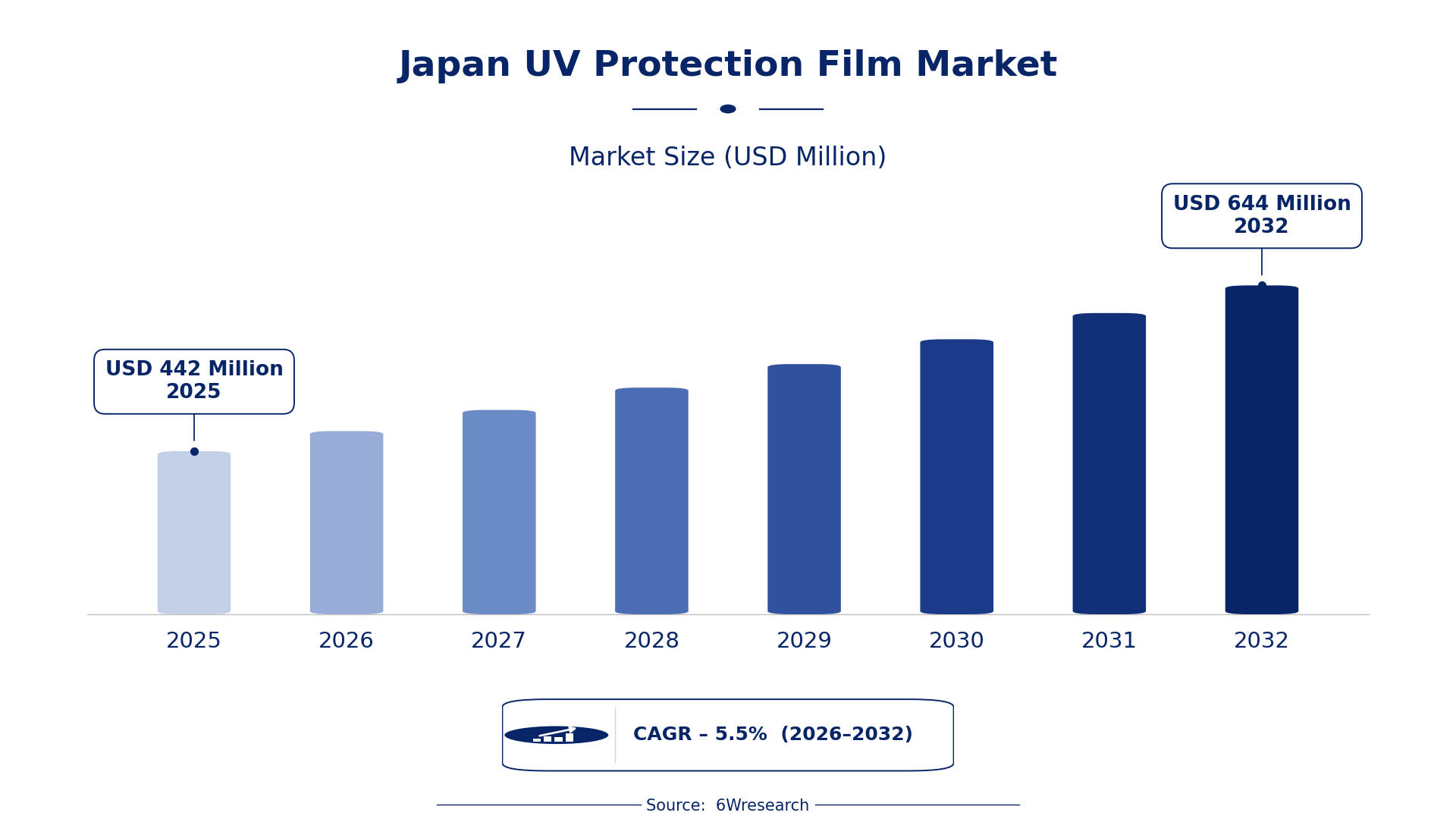
According to 6Wresearch internal database and industry insights, the Japan UV Protection Film Market was valued at USD 442 Million in 2025 and is projected to reach USD 644 Million by 2032, growing at a CAGR of approximately 5.5% during 2026–2032.
Japan UV Protection Film Market Highlights
| Report Metric | Details |
| Report Name | Japan UV Protection Film Market (2026-2032) |
| Market Size 2025 | USD 442 Million |
| Market Size 2032 | USD 644 Million |
| Absolute Growth 2025–2032 | USD 202 Million |
| CAGR 2026–2032 | 5.5% |
| Peak Annual Growth | 6.6% in 2028 |
| Forecast Period | 2026–2032 |
| Historical Data | 2022–2025 |
| Base Year | 2025 |
| Leading Film Type, 2025 | Window Tint Films (39% share) |
| Leading Substrate Material, 2025 | PET (47% share) |
| Leading Application, 2025 | Automotive (43% share) |
| Leading End User, 2025 | Vehicle Owners (36% share) |
| Fastest-Growing Film Type | Architectural Films (7.8% CAGR) |
| Fastest-Growing Substrate Material | Polyester (7.4% CAGR) |
| Fastest-Growing Application | Building Glass (7.1% CAGR) |
| Fastest-Growing End User | Property Developers (7.2% CAGR) |
| Growing Sector | construction |
| Key End Users | vehicle owners, property developers, energy consultants |
Japan UV Protection Film Market Year-wise Growth Rate and Key Drivers (2022–2032)
This graph illustrates the annual growth rates of the market from 2022 to 2032, highlighting a steady upward trajectory and projected market expansion over the forecast period.
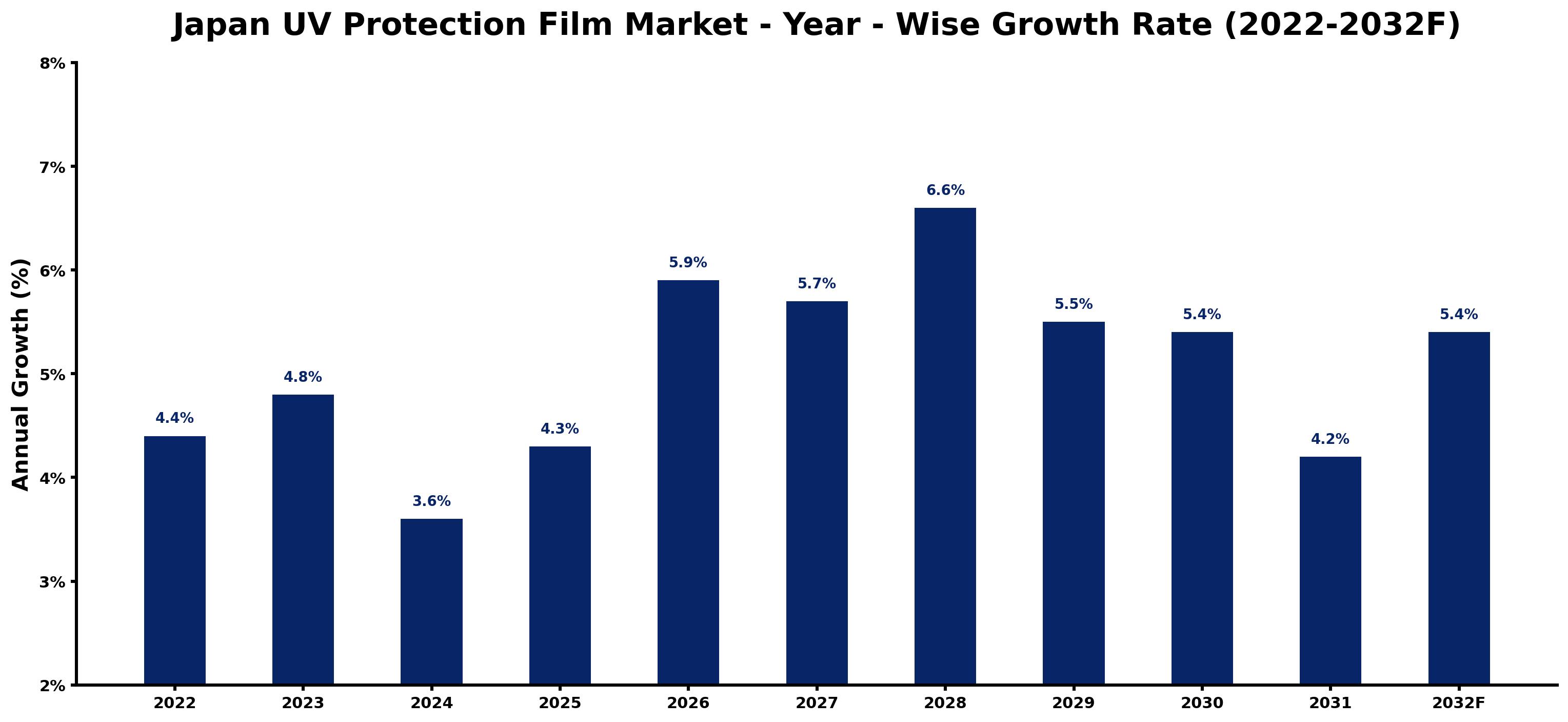
The following figures match every annual growth estimate with the main market development of that year, giving the reasoning behind each rise or slowdown.
| Year | Estimated Annual Growth (%) | Market Rationale |
| 2022 | 4.4 | The market experienced steady growth, driven by increasing awareness of UV protection. |
| 2023 | 4.8 | Demand accelerated as consumers sought comfort and energy efficiency in vehicles. |
| 2024 | 3.6 | Growth slowed slightly due to market saturation in urban areas. |
| 2025 | 4.3 | A resurgence in demand occurred as vehicle registrations increased. |
| 2026 | 5.9 | The market is expected to see a boost from rising investments in energy-efficient building technologies. |
| 2027 | 5.7 | Growth is projected to slow again as competition intensifies among manufacturers. |
| 2028 | 6.6 | The peak growth year is attributed to heightened awareness of UV-related health risks. |
| 2029 | 5.5 | Demand is expected to moderate as market maturity begins to set in. |
| 2030 | 5.4 | Growth will continue to slow as consumers become more selective in their purchases. |
| 2031 | 4.2 | The market is projected to experience another slowdown as new entrants increase competition. |
| 2032 | 5.4 | Demand is expected to rise again as urban development projects gain momentum. |
Note: Market size estimations and growth projections presented in this report are based on 6Wresearch's proprietary forecasting methodology, utilizing the latest available industry data, government publications, and primary research inputs.
Japan UV Protection Film Market Synopsis
UV Protection Film is a specialised polymer film designed to block harmful ultraviolet rays, primarily used in automotive and architectural applications. In Japan, the market is thriving due to growth in the automotive sector, which boasts over 5 million registered vehicles, and the construction industry's emphasis on energy efficiency. The Tokyo metropolitan area leads in demand, driven by high sunlight exposure and energy conservation goals. As awareness of UV protection rises, the market is poised for expansion, supported by substantial investments in energy-efficient technologies and government initiatives targeting a 30% reduction in energy consumption by 2030.
Market Dynamics Impact Analysis (2026–2032)
| Factor | Type | Impact | Primary Segment Affected |
| Growing automotive registrations drive demand for Window Tint Films. | Driver | High | Window Tint Films |
| Increasing energy efficiency initiatives boost the use of Architectural Films. | Driver | High | Architectural Films |
| Rising urban development projects create opportunities for energy-efficient building solutions. | Opportunity | High | Architectural Films |
| The focus on sustainability opens avenues for eco-friendly UV protection solutions. | Opportunity | Medium | Solar Control Films |
| Market saturation in urban areas limits growth potential for certain segments. | Restraint | High | Window Tint Films |
| Intense competition among manufacturers pressures pricing strategies. | Restraint | Medium | Architectural Films |
| High production costs for quality films restrict market entry for new players. | Challenge | High | Display Protection Films |
| Technological advancements require continuous investment to stay competitive. | Challenge | Medium | Solar Control Films |
Evaluation of Drivers in Japan UV Protection Film Market (2026–2032)
These are the developments adding the most demand over the forecast period.
| Drivers | Primary Segment Affected | Why It Matters (Evidence) |
| Increasing vehicle registrations lead to higher demand for Window Tint Films. | Window Tint Films | As of 2023, over 5 million registered vehicles in Japan are utilising these films. |
| Energy efficiency initiatives stimulate demand for Architectural Films. | Architectural Films | The construction sector, valued at over 10 trillion yen, drives this demand. |
| Rising temperatures in urban areas boost the need for Solar Control Films. | Solar Control Films | The average summer temperature in Tokyo can exceed 30°C, increasing demand. |
| Awareness of UV-related health risks promotes the use of UV Protection Films. | Window Tint Films | Consumers are increasingly prioritising comfort and protection in their vehicles. |
| Government energy conservation targets encourage the adoption of UV films. | Architectural Films | The government aims to reduce energy consumption in buildings by 30% by 2030. |
Buyers are adding capacity as vehicle registrations in Japan exceed 5 million, driving demand for Window Tint Films. Urban areas experience rising temperatures, with averages above 30°C in summer, prompting the need for Solar Control Films. Growing awareness of UV-related health risks is leading consumers to prioritise UV Protection Films for comfort.
Evaluation of Restraints in Japan UV Protection Film Market
The main factors holding the market back are set out below.
| Market Restraint | Primary Segment Affected | Why It Matters (Evidence) |
| Market saturation in urban areas limits growth potential for Window Tint Films. | Window Tint Films | High competition and established products reduce the incentive for new purchases. |
| Intense competition among manufacturers pressures pricing strategies in Architectural Films. | Architectural Films | This leads to reduced profit margins and challenges for maintaining quality. |
| High production costs for quality films restrict market entry for new players in Display Protection Films. | Display Protection Films | The need for advanced technology and materials increases initial investment. |
| Technological advancements require continuous investment to stay competitive in Solar Control Films. | Solar Control Films | Keeping up with innovations demands considerable resources from manufacturers. |
| Consumer price sensitivity affects purchasing decisions in Window Tint Films. | Window Tint Films | Economic fluctuations can lead to reduced spending on non-essential upgrades. |
Japan UV Protection Film Market Challenges
Over 5 million registered vehicles in Japan create a demand for Window Tint Films, yet strict JIS regulations complicate compliance for producers, delaying product launches and increasing costs for automotive buyers. High sunlight exposure in the Tokyo metropolitan area drives demand for UV Protection Films, compelling suppliers to meet the needs of commercial spaces, which can lead to shortages and inflated prices. Limited availability of advanced UV films forces many buyers to adjust project budgets by up to 15%. Slow adoption of new production technologies restricts innovation, leaving buyers with outdated options that do not meet modern standards.
Trends in the Japan UV Protection Film Market
Buyers and suppliers in the Japan UV Protection Film Market are adjusting to the following trends.
- Shift in Demand Towards Energy-Efficient Buildings: The Tokyo metropolitan area increasingly prioritises energy-efficient building technologies, with Architectural Films seeing a rise in usage. The construction sector's value exceeds 10 trillion yen, highlighting this trend.
- Transition from Basic UV Protection to Advanced Solutions: Since 2023, there has been a notable shift towards more advanced UV Protection Films that offer durability and performance. This change is reflected in the growing adoption of Solar Control Films in commercial spaces.
- Vehicle Owners Emphasising Comfort and Protection: In recent years, vehicle owners are prioritising comfort and UV protection in their cars. As of 2023, over 5 million registered vehicles in Japan are utilising Window Tint Films.
- Architectural Films Gaining Traction in Urban Developments: Since 2022, Architectural Films have become essential in urban developments, aligning with energy conservation goals. The Japanese government's target to reduce energy consumption by 30% by 2030 supports this trend.
Investment Opportunities in the Japan UV Protection Film Market
Below are the investment opportunities with the strongest case in the Japan UV Protection Film Market.
- Urban Development Projects in Tokyo: Tokyo's ongoing urban development projects present opportunities for suppliers of Architectural Films, with the construction sector valued at over 10 trillion yen. Collaborating with property developers can facilitate market entry.
- Growing Demand for Energy-Efficient Solutions: The current emphasis on sustainability creates a demand for eco-friendly UV protection solutions. Property developers are increasingly seeking these products to meet energy efficiency standards.
- Increased Awareness of UV Protection: As awareness of UV-related health risks rises, there is a growing opportunity to supply advanced Window Tint Films. Targeting vehicle owners can lead to substantial market growth.
- Government Support for Energy Efficiency: The government's target to reduce energy consumption by 30% by 2030 encourages investments in UV films. Suppliers can engage with construction firms to provide compliant solutions.
Government Initiatives in the Japan UV Protection Film Market
Producers of UV Protection Films must comply with the Building Energy Efficiency Act, amended in 2022, which mandates that all new buildings meet specific energy standards from April 2025. This law aligns with Japan's commitment to reducing energy consumption in buildings by 30% by 2030, promoting the use of energy-efficient materials, including UV films.
The Ministry of Land, Infrastructure, Transport and Tourism supports initiatives that promote energy-efficient building practices, providing funding for projects that incorporate UV Protection Films. The agency's funding efforts aim to improve energy performance in commercial spaces, ensuring compliance with national energy conservation goals.
Future Insight of the Japan UV Protection Film Market
By 2032, the investment pipeline for energy-efficient building technologies will grow significantly, creating heightened demand for UV Protection Films in urban settings. The Japanese government's target to reduce energy consumption by 30% will drive suppliers to improve their product offerings in line with regulatory standards. The Tokyo International Film Festival will continue to showcase advancements in film technology, encouraging suppliers to innovate. As energy efficiency programmes expand, buyers will benefit from improved building performance and reduced operational costs, making UV films a necessity in new construction projects.
Market Segmentation Analysis
Japan UV Protection Film Market report covers a detailed analysis of the following market segments:
By Film Type – Window Tint Films Lead, Architectural Films Expected to Grow Fastest
According to Prakhar Dixit, Senior Research Analyst at 6Wresearch, in 2025, Window Tint Films led the film type split with a 39% share. Window Tint Films dominate the market due to their widespread application among vehicle owners seeking UV protection and privacy. The high number of over 5 million registered vehicles in Japan, particularly in urban settings, significantly contributes to this demand. Over 2026–2032, Architectural Films are expected to post the fastest growth, at a CAGR of 7.8%. Architectural Films are experiencing rapid growth as the focus on energy efficiency in building designs intensifies. Investments following the Tokyo 2020 Olympics have accelerated the adoption of these films in construction projects, further driving their popularity. Suppliers must enhance their product offerings for architectural applications to seize the expanding market opportunities.
By Substrate Material – PET Leads, Polyester Expected to Grow Fastest
PET took 47% of substrate material revenue in 2025, more than any other category. PET is the leading substrate material in Japan's UV Protection Film market, primarily due to its durability and effectiveness in blocking UV rays. Its widespread use in film production aligns with industry standards and consumer preferences for quality. The quickest growth will come from Polyester, forecast to expand at a CAGR of 7.4% between 2026 and 2032. Polyester is gaining traction as a substrate material, driven by its potential for cost-effective production. As manufacturers seek alternatives, the demand for polyester in specific applications is expected to rise. Suppliers may explore diversifying their substrate offerings to meet the evolving preferences of manufacturers.
By Application – Automotive Leads, Building Glass Expected to Grow Fastest
Automotive held 43% of the Japan UV Protection Film Market by application in 2025. The automotive sector is the leading application for UV Protection Films, as vehicle owners prioritise comfort and UV shielding. The substantial vehicle population in Japan heavily influences market dynamics, making this application vital. Building Glass is projected to grow fastest, at a CAGR of 7.1% during 2026–2032. Building Glass applications are growing quickly due to increased awareness of energy efficiency in construction. The push for sustainable building practices is encouraging property developers to adopt UV films for enhanced performance. Buyers in the construction sector should consider UV films essential for achieving energy-efficient building solutions.
By End User – Vehicle Owners Lead, Property Developers Expected to Grow Fastest
The largest end user category in 2025 was Vehicle Owners, at 36% of revenue. Vehicle Owners constitute the largest end-user group for UV Protection Films, aiming to improve their driving experience through enhanced comfort and protection. This group's significant presence in urban areas supports the segment's leading position. Property Developers are set to record the highest CAGR in this split, 7.2% over 2026–2032. Property Developers are the fastest-growing end-user segment, motivated by the demand for energy-efficient building solutions. Government initiatives promoting eco-friendly practices are driving developers to invest in UV films. Suppliers should focus on property developers to capitalise on the increasing demand for energy-efficient construction materials.
Key Attractiveness of the Report
- 10 Years of Market Numbers
- Historical Data Starting from 2022 to 2025
- Base Year 2025
- Forecast Data until 2032
- Key Performance Indicators Impacting the Market
- Major Upcoming Developments and Projects
Key Highlights of the Report:
- Japan UV Protection Film Market Outlook
- Market Size of Japan UV Protection Film Market, 2025
- Forecast of Japan UV Protection Film Market, 2032
- Historical Data and Forecast of Japan UV Protection Film Revenues & Volume for the Period 2022-2032F
- Japan UV Protection Film Market Trend Evolution
- Japan UV Protection Film Market Drivers and Challenges
- Japan UV Protection Film Price Trends
- Japan UV Protection Film Porter's Five Forces
- Japan UV Protection Film Industry Life Cycle
- Historical Data and Forecast of Japan UV Protection Film Market Revenues & Volume By Film Type for the Period 2022-2032F
- Historical Data and Forecast of Japan UV Protection Film Market Revenues & Volume By Window Tint Films for the Period 2022-2032F
- Historical Data and Forecast of Japan UV Protection Film Market Revenues & Volume By Architectural Films for the Period 2022-2032F
- Historical Data and Forecast of Japan UV Protection Film Market Revenues & Volume By Display Protection Films for the Period 2022-2032F
- Historical Data and Forecast of Japan UV Protection Film Market Revenues & Volume By Solar Control Films for the Period 2022-2032F
- Historical Data and Forecast of Japan UV Protection Film Market Revenues & Volume By Substrate Material for the Period 2022-2032F
- Historical Data and Forecast of Japan UV Protection Film Market Revenues & Volume By PET for the Period 2022-2032F
- Historical Data and Forecast of Japan UV Protection Film Market Revenues & Volume By Polyester for the Period 2022-2032F
- Historical Data and Forecast of Japan UV Protection Film Market Revenues & Volume By Polyurethane for the Period 2022-2032F
- Historical Data and Forecast of Japan UV Protection Film Market Revenues & Volume By Multilayer Laminate for the Period 2022-2032F
- Historical Data and Forecast of Japan UV Protection Film Market Revenues & Volume By Application for the Period 2022-2032F
- Historical Data and Forecast of Japan UV Protection Film Market Revenues & Volume By Automotive for the Period 2022-2032F
- Historical Data and Forecast of Japan UV Protection Film Market Revenues & Volume By Building Glass for the Period 2022-2032F
- Historical Data and Forecast of Japan UV Protection Film Market Revenues & Volume By Consumer Electronics for the Period 2022-2032F
- Historical Data and Forecast of Japan UV Protection Film Market Revenues & Volume By Commercial Spaces for the Period 2022-2032F
- Historical Data and Forecast of Japan UV Protection Film Market Revenues & Volume By End User for the Period 2022-2032F
- Historical Data and Forecast of Japan UV Protection Film Market Revenues & Volume By Vehicle Owners for the Period 2022-2032F
- Historical Data and Forecast of Japan UV Protection Film Market Revenues & Volume By Property Developers for the Period 2022-2032F
- Historical Data and Forecast of Japan UV Protection Film Market Revenues & Volume By Smartphone OEMs for the Period 2022-2032F
- Historical Data and Forecast of Japan UV Protection Film Market Revenues & Volume By Energy Consultants for the Period 2022-2032F
- Japan UV Protection Film Import Export Trade Statistics
- Market Opportunity Assessment By Film Type
- Market Opportunity Assessment By Substrate Material
- Market Opportunity Assessment By Application
- Market Opportunity Assessment By End User
- Japan UV Protection Film Top Companies Market Share
- Japan UV Protection Film Competitive Benchmarking By Technical and Operational Parameters
- Japan UV Protection Film Company Profiles
- Japan UV Protection Film Key Strategic Recommendations
Market Covered
Segments analysed in this report are listed below.
By Film Type
- Window Tint Films
- Architectural Films
- Display Protection Films
- Solar Control Films
By Substrate Material
- PET
- Polyester
- Polyurethane
- Multilayer Laminate
By Application
- Automotive
- Building Glass
- Consumer Electronics
- Commercial Spaces
By End User
- Vehicle Owners
- Property Developers
- Smartphone OEMs
- Energy Consultants































