Japan Vascular Disease Market Size & Growth Rate
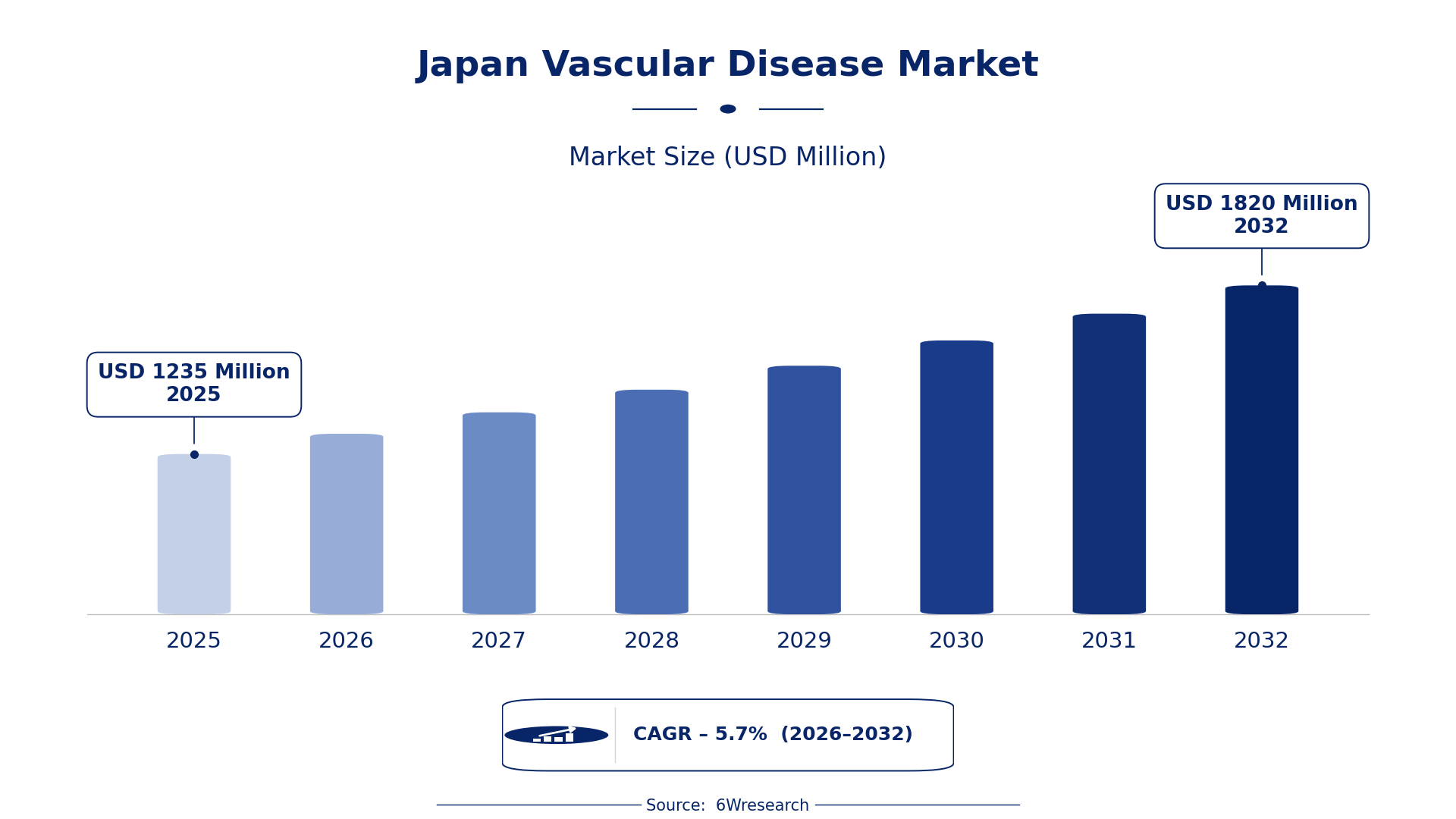
According to 6Wresearch internal database and industry insights, the Japan Vascular Disease Market was valued at USD 1,235 Million in 2025 and is projected to reach USD 1,820 Million by 2032, growing at a CAGR of approximately 5.7% during 2026–2032.
Japan Vascular Disease Market Highlights
| Report Metric | Details |
| Report Name | Japan Vascular Disease Market (2026-2032) |
| Market Size 2025 | USD 1,235 Million |
| Market Size 2032 | USD 1,820 Million |
| Absolute Growth 2025–2032 | USD 585 Million |
| CAGR 2026–2032 | 5.7% |
| Peak Annual Growth | 6.2% in 2030 |
| Forecast Period | 2026–2032 |
| Historical Data | 2022–2025 |
| Base Year | 2025 |
| Leading Disease Type, 2025 | Peripheral Artery Disease (37% share) |
| Leading Diagnosis Method, 2025 | ABI/Ultrasound (42% share) |
| Leading Treatment Approach, 2025 | Angioplasty/Stenting (47% share) |
| Leading End User, 2025 | Hospitals (46% share) |
| Fastest-Growing Disease Type | Aneurysms (7.8% CAGR) |
| Fastest-Growing Diagnosis Method | CT/MRI (8.4% CAGR) |
| Fastest-Growing Treatment Approach | Graft Implant (7.4% CAGR) |
| Fastest-Growing End User | Surgical Units (7.1% CAGR) |
| Growing Sector | Healthcare |
| Key End Users | Hospitals, Surgical Units, Clinics, Cardiology Centers |
Japan Vascular Disease Market Year-wise Growth Rate and Key Drivers (2022–2032)
This graph illustrates the annual growth rates of the market from 2022 to 2032, highlighting a steady upward trajectory and projected market expansion over the forecast period.
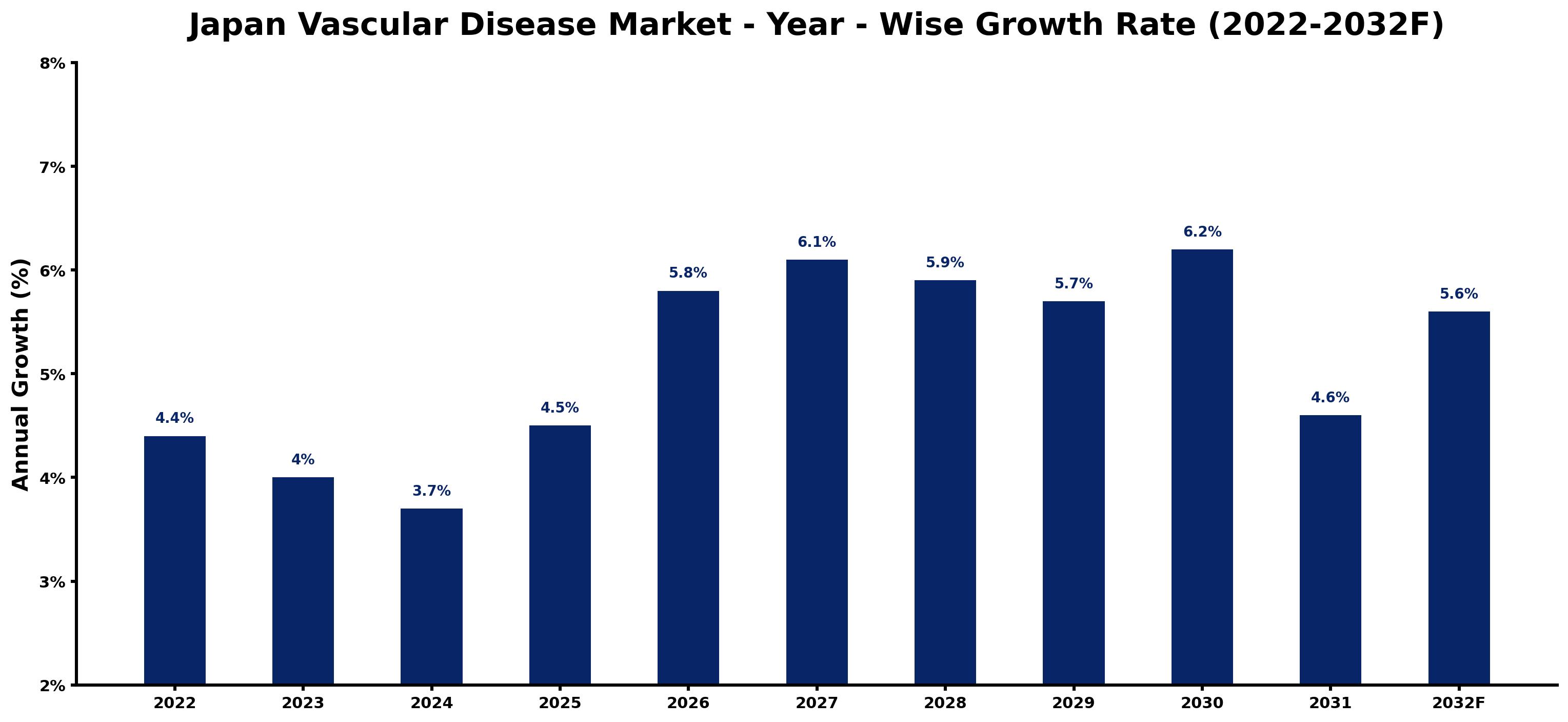
The yearly estimates that follow link every growth rate to its principal driver, so readers can see why the pace changed in each period.
| Year | Estimated Annual Growth (%) | Market Rationale |
| 2022 | 4.4 | The market showed steady growth, reflecting ongoing healthcare investments. |
| 2023 | 4.0 | Growth slowed due to a slight decrease in healthcare funding initiatives. |
| 2024 | 3.7 | Market expansion continued at a slower pace, influenced by rising treatment costs. |
| 2025 | 4.5 | Growth accelerated as hospitals increased vascular disease interventions. |
| 2026 | 5.8 | Demand is expected to rise as advanced diagnostic technologies gain traction in clinics. |
| 2027 | 6.1 | Market growth will continue, driven by rising patient awareness and education. |
| 2028 | 5.9 | A slight slowdown is projected, attributed to market saturation in certain areas. |
| 2029 | 5.7 | Growth will moderate as competition intensifies among treatment providers. |
| 2030 | 6.2 | The market is expected to peak, driven by increased surgical interventions for vascular diseases. |
| 2031 | 4.6 | Growth will slow as the market begins to stabilise after rapid expansion. |
| 2032 | 5.6 | Demand is projected to rise as new treatment facilities come online. |
Note: Market size estimations and growth projections presented in this report are based on 6Wresearch's proprietary forecasting methodology, utilizing the latest available industry data, government publications, and primary research inputs.
Japan Vascular Disease Market Synopsis
Vascular disease encompasses conditions affecting blood vessels, diagnosed through imaging technologies and treated via various medical procedures. In Japan, the Tokyo metropolitan area serves as a hub for advanced vascular treatment centres, reflecting rising investment in healthcare. The Japan Vascular Disease Market is expanding due to an increasing patient population, with approximately 1.2 million diagnosed with peripheral artery disease, and heightened demand for advanced treatment methods and diagnostic technologies, supported by a national programme aimed at improving vascular disease awareness.
Market Dynamics Impact Analysis (2026–2032)
| Factor | Type | Impact | Primary Segment Affected |
| Increasing prevalence of vascular diseases drives demand for diagnostic and treatment services. | Driver | High | Peripheral Artery Disease |
| Investment in advanced medical technologies enhances treatment options for patients. | Driver | High | Angioplasty/Stenting |
| Growing number of surgical units creates opportunities for new treatment methods. | Opportunity | High | Surgical Units |
| Rising patient awareness leads to increased demand for vascular disease management. | Opportunity | Medium | Hospitals |
| High treatment costs may limit access to necessary procedures for some patients. | Restraint | High | Venous Thromboembolism |
| Limited availability of specialized healthcare professionals can hinder treatment delivery. | Restraint | Medium | Aneurysms |
| Competition among treatment providers may drive down prices, affecting profitability. | Challenge | High | Cardiology Centers |
| Technological advancements require continuous investment, posing a financial challenge. | Challenge | Medium | ABI/Ultrasound |
Evaluation of Drivers in Japan Vascular Disease Market (2026–2032)
Key forces behind demand, with the segment each one moves most, are listed below.
| Drivers | Primary Segment Affected | Why It Matters (Evidence) |
| Rising patient numbers for vascular diseases increase demand for treatments. | Peripheral Artery Disease | Approximately 1.2 million patients diagnosed with peripheral artery disease require ongoing care. |
| Investment in advanced imaging technologies improves diagnostic capabilities. | CT/MRI | CT and MRI scans are performed in over 70% of vascular disease cases in hospitals. |
| Growing awareness of vascular diseases leads to more patients seeking treatment. | Angioplasty/Stenting | Promoting best practices increases patient engagement and treatment uptake. |
| Increased funding for surgical units improves treatment access and quality. | Surgical Units | Annual investment in vascular disease research in Japan exceeds 10 billion yen. |
| Technological advancements in treatment methods attract more patients. | Graft Implant | Graft implants are increasingly used in surgical procedures for vascular repair. |
Volumes grow on the back of rising patient numbers, with approximately 1.2 million diagnosed with peripheral artery disease, leading to increased demand for treatments in hospitals. The annual investment in vascular disease research in Japan exceeds 10 billion yen, improving the quality of care. Advanced imaging technologies, such as CT and MRI, are performed in over 70% of vascular disease cases, enhancing diagnostic accuracy. Consequently, hospitals are seeing a rise in patients seeking angioplasty and stenting procedures.
Evaluation of Restraints in Japan Vascular Disease Market
Below are the constraints most often cited by buyers and suppliers, with the segment each affects.
| Market Restraint | Primary Segment Affected | Why It Matters (Evidence) |
| High treatment costs may limit access to necessary procedures for patients. | Venous Thromboembolism | Over 500,000 patients receive anticoagulation therapy annually, but costs can be prohibitive. |
| Limited availability of specialized healthcare professionals can hinder treatment delivery. | Aneurysms | Cardiology centers report high volumes of surgeries, but staffing shortages can delay care. |
| Market saturation in certain areas may lead to increased competition and reduced profitability. | Peripheral Artery Disease | As more facilities offer similar services, differentiation becomes essential. |
| Regulatory hurdles can slow the introduction of new treatment technologies. | ABI/Ultrasound | Compliance with ISO 13485 standards for medical devices can be time-consuming. |
| Patient reluctance to seek treatment may limit market growth. | Angioplasty/Stenting | Cultural attitudes towards surgery can deter patients from pursuing necessary interventions. |
Japan Vascular Disease Market Challenges
A major obstacle stems from intense competition among treatment centres in the Tokyo metropolitan area, compelling smaller facilities to struggle for patient retention. Regulatory requirements, especially compliance with ISO 13485, hinder suppliers from launching new medical devices quickly, causing delays for hospitals that need updated technologies. Limited access to endarterectomy procedures at over 300 hospitals results in supply constraints for buyers, leading to longer wait times for essential surgeries. High annual investments in vascular disease research exceeding 10 billion yen impose financial pressure on hospitals, limiting their ability to implement advanced treatment methods.
Trends in the Japan Vascular Disease Market
Several trends are reshaping the Japan Vascular Disease Market; the most important are set out below.
- Growing Focus on Patient Education: Healthcare providers are increasingly prioritising patient education to improve treatment outcomes. In Japan, initiatives led by the Japanese Society of Vascular Surgery aim to enhance patient engagement, leading to better management of vascular health.
- Shift Towards Advanced Imaging Techniques: There is a noticeable transition from traditional imaging methods to advanced techniques like CT and MRI. These methods are now used in over 70% of vascular disease cases in Japan, enhancing diagnostic precision.
- Expansion of Surgical Units in Urban Areas: The Tokyo metropolitan area is experiencing the establishment of new surgical units to cater to the rising demand for vascular procedures. This expansion is driven by the high volume of surgeries performed in the region.
- Increased Investment in Research and Development: The Japanese government has committed over 10 billion yen annually to vascular disease research. This funding supports innovation in treatment methods and diagnostic technologies, benefiting patients nationwide.
Investment Opportunities in the Japan Vascular Disease Market
Where to invest in the Japan Vascular Disease Market: the main openings are set out below.
- Expansion of Surgical Units in Urban Areas: The Tokyo metropolitan area presents opportunities for new surgical units, with a high volume of vascular surgeries reported. This trend is driven by the increasing patient population, with over 1.2 million diagnosed with peripheral artery disease.
- Investment in Advanced Diagnostic Technologies: The demand for CT and MRI imaging is growing, with over 70% of cases utilising these methods. Investing in these technologies can improve service offerings in hospitals and clinics.
- Growing Need for Patient Education Programs: With rising patient awareness, there is an opportunity to develop educational programs. Hospitals can partner with the Japanese Society of Vascular Surgery to implement these initiatives, improving patient outcomes.
- Development of New Treatment Solutions: The market gap for graft implants is significant, with rising demand for surgical interventions. Investing in research and development can lead to new solutions that address this need.
Government Initiatives in the Japan Vascular Disease Market
The GX Basic Policy, adopted in 2023, aims to boost public-private investment in healthcare, building on the Medical Care Act of 1948, which sets standards for hospitals and clinics. This new policy encourages further advancements in vascular disease management by increasing funding and resources for treatment facilities.
In 2023, the Japanese government launched a programme to improve vascular disease awareness, overseen by the Ministry of Health, Labour and Welfare. This initiative aims to educate the public, with a target of reaching over 1 million individuals by 2025, thereby increasing early diagnosis and treatment rates.
Future Insight of the Japan Vascular Disease Market
New advanced surgical units will emerge by 2032, increasing hospitals' capacity for complex vascular procedures. The national registry for vascular disease treatments will enhance data collection, facilitating improved treatment standardisation and patient outcomes. Increased investment in research and development will spur innovation in treatment methods and diagnostic technologies. By 2030, the government's target to reduce vascular disease-related mortality by 20% will promote a stronger emphasis on preventative care strategies.
Market Segmentation Analysis
Japan Vascular Disease Market report covers a detailed analysis of the following market segments:
By Disease Type – Peripheral Artery Disease Leads, Aneurysms Expected to Grow Fastest
According to Saurav Kr Singh, Senior Research Analyst at 6Wresearch, the largest disease type category in 2025 was Peripheral Artery Disease, at 37% of revenue. Peripheral artery disease holds the largest share due to its high prevalence, with approximately 1.2 million patients diagnosed in Japan. This condition is commonly treated in hospitals and clinics, making it a focal point for vascular disease management. Aneurysms are set to record the highest CAGR in this split, 7.8% over 2026–2032. Aneurysms are experiencing rapid growth as surgical intervention is often required, reflecting the increasing number of surgeries reported by cardiology centers. This trend indicates a rising awareness and urgency in addressing aneurysm cases. Suppliers should focus on enhancing their offerings for aneurysm treatments to capitalise on this growing demand.
By Diagnosis Method – ABI/Ultrasound Leads, CT/MRI Expected to Grow Fastest
ABI/Ultrasound accounted for 42% of the market by diagnosis method in 2025. ABI/Ultrasound is the leading method for diagnosis as it is widely used for the initial assessment of vascular conditions in over 90% of clinics. Its accessibility and effectiveness contribute to its dominant position in the market. The quickest growth will come from CT/MRI, forecast to expand at a CAGR of 8.4% between 2026 and 2032. CT/MRI is growing rapidly due to its essential role in providing detailed imaging of vascular structures, with over 70% of vascular disease cases requiring these advanced diagnostic methods. This shift highlights the need for improved imaging technologies. Buyers will benefit from investing in advanced imaging technologies to ensure accurate diagnosis and treatment planning.
By Treatment Approach – Angioplasty/Stenting Leads, Graft Implant Expected to Grow Fastest
In 2025, Angioplasty/Stenting led the treatment approach split with a 47% share. Angioplasty/Stenting is the most utilised treatment approach, commonly performed to treat narrowed arteries in hospitals across Japan. Its effectiveness in restoring blood flow makes it a preferred choice among healthcare providers. Over 2026–2032, Graft Implant is expected to post the fastest growth, at a CAGR of 7.4%. Graft Implant procedures are growing swiftly as they are increasingly used in surgical procedures for vascular repair, reflecting advancements in surgical techniques and materials. This growth indicates a shift towards more complex treatment options. Suppliers should prioritise the development of graft implant technologies to meet the rising demand in surgical interventions.
By End User – Hospitals Lead, Surgical Units Expected to Grow Fastest
With 46% of end user revenue in 2025, Hospitals was the largest category. Hospitals dominate the end-user segment as they serve as the primary setting for both diagnosis and treatment of vascular diseases. The concentration of advanced treatment facilities in urban areas further solidifies their leading position. Surgical Units are projected to grow fastest, at a CAGR of 7.1% during 2026–2032. Surgical Units are experiencing the fastest growth due to their specialised focus on vascular surgeries, which are increasingly performed in dedicated environments. This trend underscores the importance of specialised care in improving patient outcomes. Providers should consider partnerships with surgical units to enhance their service offerings and meet the specific needs of vascular surgery.
Key Attractiveness of the Report
- 10 Years of Market Numbers
- Historical Data Starting from 2022 to 2025
- Base Year 2025
- Forecast Data until 2032
- Key Performance Indicators Impacting the Market
- Major Upcoming Developments and Projects
Key Highlights of the Report:
- Japan Vascular Disease Market Outlook
- Market Size of Japan Vascular Disease Market, 2025
- Forecast of Japan Vascular Disease Market, 2032
- Historical Data and Forecast of Japan Vascular Disease Revenues & Volume for the Period 2022-2032F
- Japan Vascular Disease Market Trend Evolution
- Japan Vascular Disease Market Drivers and Challenges
- Japan Vascular Disease Price Trends
- Japan Vascular Disease Porter's Five Forces
- Japan Vascular Disease Industry Life Cycle
- Historical Data and Forecast of Japan Vascular Disease Market Revenues & Volume By Disease Type for the Period 2022-2032F
- Historical Data and Forecast of Japan Vascular Disease Market Revenues & Volume By Peripheral Artery Disease for the Period 2022-2032F
- Historical Data and Forecast of Japan Vascular Disease Market Revenues & Volume By Aneurysms for the Period 2022-2032F
- Historical Data and Forecast of Japan Vascular Disease Market Revenues & Volume By Venous Thromboembolism for the Period 2022-2032F
- Historical Data and Forecast of Japan Vascular Disease Market Revenues & Volume By Carotid Artery Disease for the Period 2022-2032F
- Historical Data and Forecast of Japan Vascular Disease Market Revenues & Volume By Diagnosis Method for the Period 2022-2032F
- Historical Data and Forecast of Japan Vascular Disease Market Revenues & Volume By ABI/Ultrasound for the Period 2022-2032F
- Historical Data and Forecast of Japan Vascular Disease Market Revenues & Volume By CT/MRI for the Period 2022-2032F
- Historical Data and Forecast of Japan Vascular Disease Market Revenues & Volume By D-dimer Test for the Period 2022-2032F
- Historical Data and Forecast of Japan Vascular Disease Market Revenues & Volume By Doppler Ultrasound for the Period 2022-2032F
- Historical Data and Forecast of Japan Vascular Disease Market Revenues & Volume By Treatment Approach for the Period 2022-2032F
- Historical Data and Forecast of Japan Vascular Disease Market Revenues & Volume By Angioplasty/Stenting for the Period 2022-2032F
- Historical Data and Forecast of Japan Vascular Disease Market Revenues & Volume By Graft Implant for the Period 2022-2032F
- Historical Data and Forecast of Japan Vascular Disease Market Revenues & Volume By Anticoagulation Therapy for the Period 2022-2032F
- Historical Data and Forecast of Japan Vascular Disease Market Revenues & Volume By Endarterectomy/Stents for the Period 2022-2032F
- Historical Data and Forecast of Japan Vascular Disease Market Revenues & Volume By End User for the Period 2022-2032F
- Historical Data and Forecast of Japan Vascular Disease Market Revenues & Volume By Hospitals for the Period 2022-2032F
- Historical Data and Forecast of Japan Vascular Disease Market Revenues & Volume By Surgical Units for the Period 2022-2032F
- Historical Data and Forecast of Japan Vascular Disease Market Revenues & Volume By Clinics for the Period 2022-2032F
- Historical Data and Forecast of Japan Vascular Disease Market Revenues & Volume By Cardiology Centers for the Period 2022-2032F
- Japan Vascular Disease Import Export Trade Statistics
- Market Opportunity Assessment By Disease Type
- Market Opportunity Assessment By Diagnosis Method
- Market Opportunity Assessment By Treatment Approach
- Market Opportunity Assessment By End User
- Japan Vascular Disease Top Companies Market Share
- Japan Vascular Disease Competitive Benchmarking By Technical and Operational Parameters
- Japan Vascular Disease Company Profiles
- Japan Vascular Disease Key Strategic Recommendations
Market Covered
Segments analysed in this report are listed below.
By Disease Type
- Peripheral Artery Disease
- Aneurysms
- Venous Thromboembolism
- Carotid Artery Disease
By Diagnosis Method
- ABI/Ultrasound
- CT/MRI
- D-dimer Test
- Doppler Ultrasound
By Treatment Approach
- Angioplasty/Stenting
- Graft Implant
- Anticoagulation Therapy
- Endarterectomy/Stents
By End User
- Hospitals
- Surgical Units
- Clinics
- Cardiology Centers































