Japan Vascular Malformation Market Size & Growth Rate
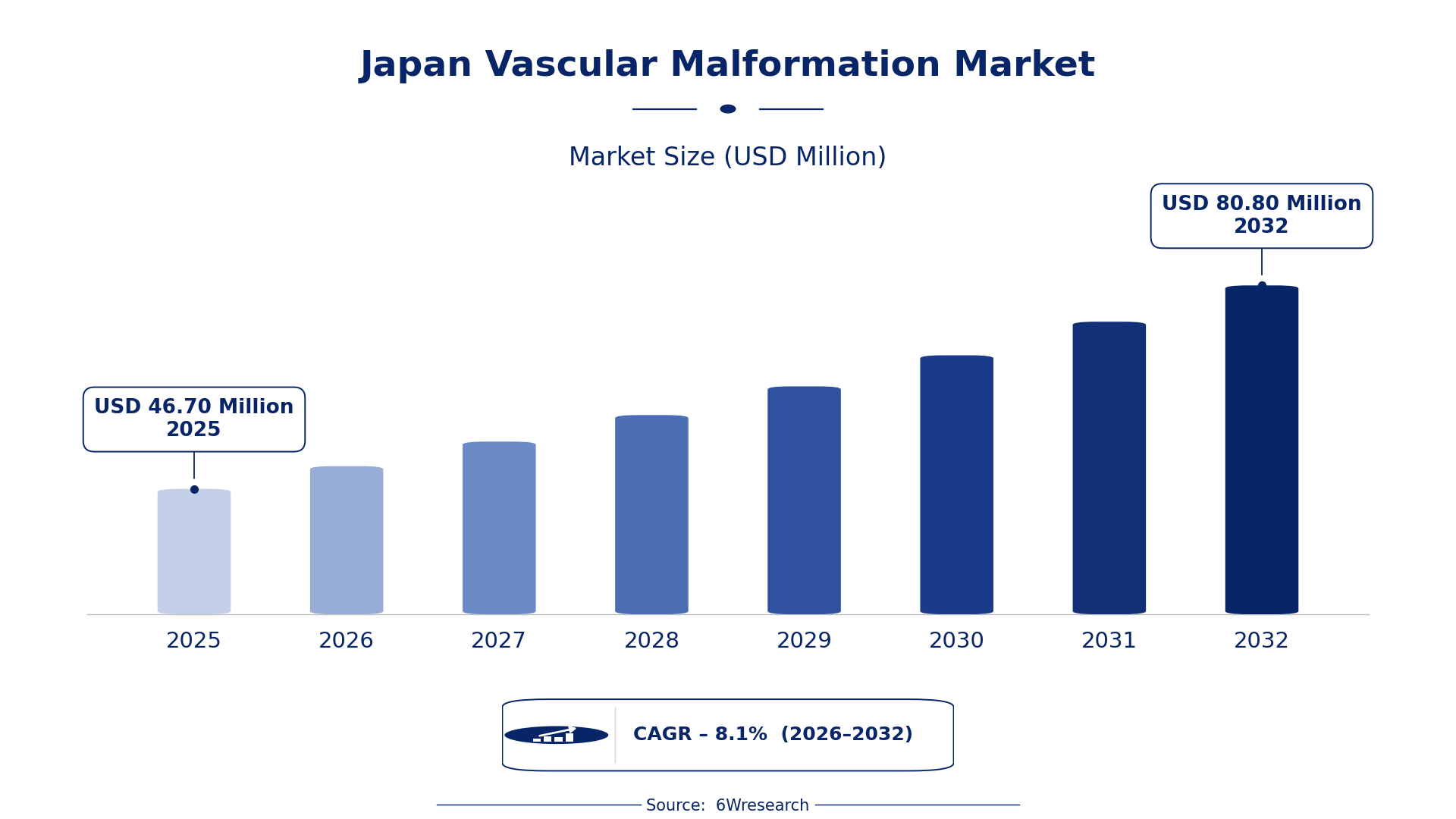
According to 6Wresearch internal database and industry insights, the Japan Vascular Malformation Market was valued at USD 46.70 Million in 2025 and is projected to reach USD 80.80 Million by 2032, growing at a CAGR of approximately 8.1% during 2026–2032.
Japan Vascular Malformation Market Highlights
| Report Metric | Details |
| Report Name | Japan Vascular Malformation Market (2026-2032) |
| Market Size 2025 | USD 46.70 Million |
| Market Size 2032 | USD 80.80 Million |
| Absolute Growth 2025–2032 | USD 34.10 Million |
| CAGR 2026–2032 | 8.1% |
| Peak Annual Growth | 9.2% in 2032 |
| Forecast Period | 2026–2032 |
| Historical Data | 2022–2025 |
| Base Year | 2025 |
| Leading Malformation Type, 2025 | Arteriovenous Malformation (40% share) |
| Leading Diagnosis Tool, 2025 | MRI/Angiography (48% share) |
| Leading Treatment Approach, 2025 | Embolization/Surgery (48% share) |
| Leading End User, 2025 | Specialty Hospitals (45% share) |
| Fastest-Growing Malformation Type | Venous Malformations (11.4% CAGR) |
| Fastest-Growing Diagnosis Tool | Doppler/CT (11.5% CAGR) |
| Fastest-Growing Treatment Approach | Sclerotherapy (10.9% CAGR) |
| Fastest-Growing End User | Clinics (10.7% CAGR) |
| Growing Sector | Healthcare |
| Key End Users | Specialty Hospitals, Clinics, Pediatric Centers, Dermatology Clinics |
Japan Vascular Malformation Market Year-wise Growth Rate and Key Drivers (2022–2032)
This graph illustrates the annual growth rates of the market from 2022 to 2032, highlighting a steady upward trajectory and projected market expansion over the forecast period.
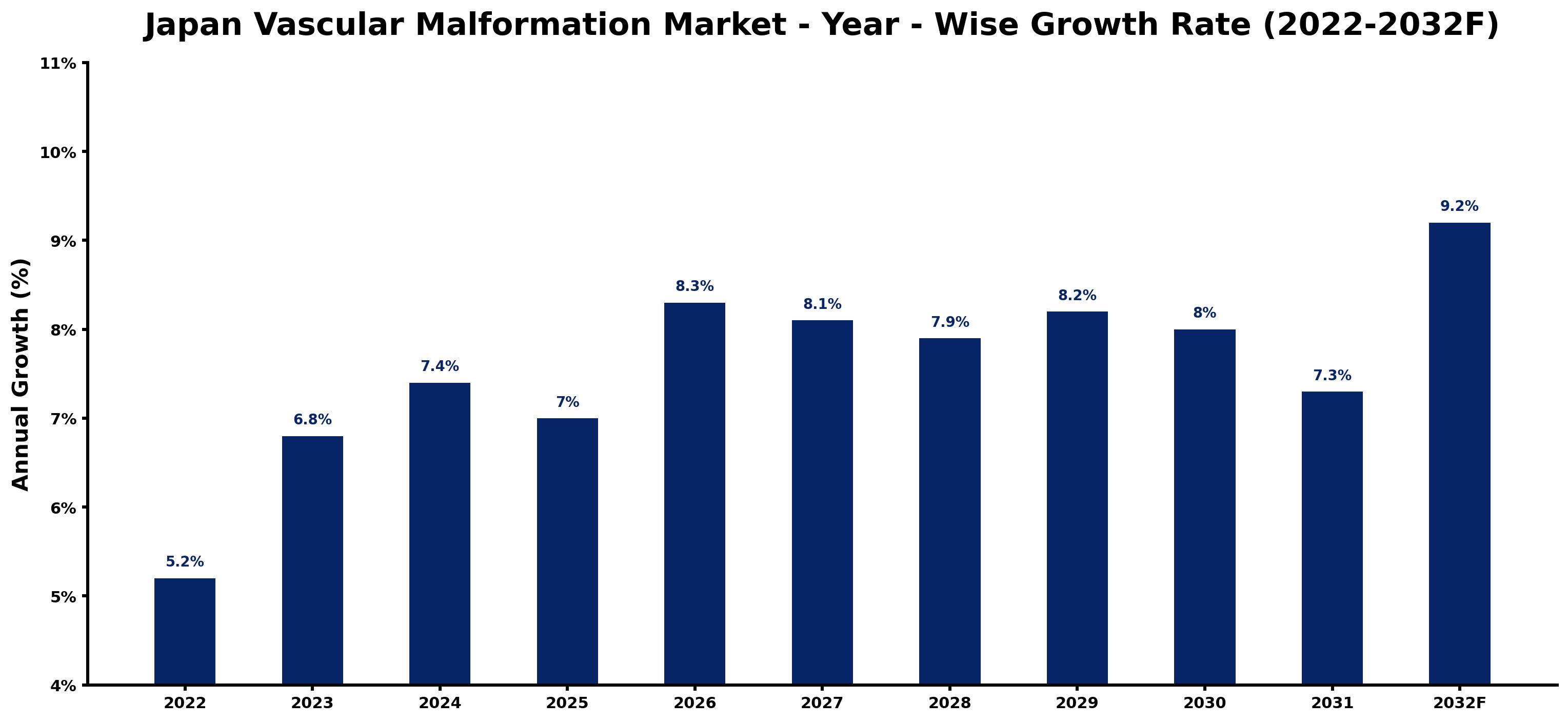
Below, each year's estimated growth is shown next to the factor that most influenced it.
| Year | Estimated Annual Growth (%) | Market Rationale |
| 2022 | 5.2 | The market exhibited steady activity with a notable number of cases reported. |
| 2023 | 6.8 | Demand surged as awareness of vascular malformations increased among healthcare providers. |
| 2024 | 7.4 | Growth accelerated due to improved treatment protocols and technology adoption. |
| 2025 | 7.0 | Market growth slowed as the focus shifted to treatment efficiency. |
| 2026 | 8.3 | Demand is expected to rise with advancements in imaging techniques and surgical methods. |
| 2027 | 8.1 | Patient referrals to specialty hospitals will continue to drive market growth. |
| 2028 | 7.9 | Growth is projected to slow slightly as treatment capacities are tested by rising patient numbers. |
| 2029 | 8.2 | A renewed interest in vascular surgery will lead to faster growth in treatment options. |
| 2030 | 8.0 | Demand is expected to decelerate as the market stabilises after previous rapid expansions. |
| 2031 | 7.3 | The market will experience a slowdown as competition intensifies among treatment facilities. |
| 2032 | 9.2 | Growth is projected to peak due to heightened public awareness and improved healthcare access. |
Note: Market size estimations and growth projections presented in this report are based on 6Wresearch's proprietary forecasting methodology, utilizing the latest available industry data, government publications, and primary research inputs.
Japan Vascular Malformation Market Synopsis
Vascular malformations are abnormal connections between blood vessels, lymphatic vessels, or capillaries, diagnosed using imaging techniques like MRI. The Japan Vascular Malformation Market is growing, driven by an ageing population and the prevalence of conditions requiring specialised treatment. In 2023, approximately 1,200 cases of arteriovenous malformations were reported, highlighting the urgent need for effective management strategies. Key factors include advancements in diagnostic tools and increased investments in healthcare facilities to improve treatment options.
Market Dynamics Impact Analysis (2026–2032)
| Factor | Type | Impact | Primary Segment Affected |
| Rising incidence of vascular malformations among the aging population | Driver | High | Arteriovenous Malformation |
| Technological advancements in imaging and treatment methods | Driver | High | MRI/Angiography |
| Growing demand for minimally invasive treatment options | Opportunity | High | Sclerotherapy |
| Expansion of specialty hospitals equipped for vascular surgeries | Opportunity | High | Specialty Hospitals |
| Limited access to specialized treatment facilities in rural areas | Restraint | Medium | Venous Malformations |
| High costs associated with advanced treatment procedures | Restraint | High | Embolization/Surgery |
| Regulatory compliance challenges for new treatment methods | Challenge | High | Laser/Surgical Removal |
| Shortage of trained medical professionals in vascular surgery | Challenge | Medium | Pediatric Centers |
Evaluation of Drivers in Japan Vascular Malformation Market (2026–2032)
The main growth drivers and the segments they affect most are set out below.
| Drivers | Primary Segment Affected | Why It Matters (Evidence) |
| Increased patient awareness of vascular conditions | Venous Malformations | This awareness has led to higher patient referrals to treatment facilities, with over 500 clinics performing sclerotherapy annually. |
| Technological advancements in MRI and angiography | MRI/Angiography | These advancements improve diagnostic accuracy, contributing to over 70% of diagnoses in vascular malformations. |
| Growing preference for non-invasive treatment options | Sclerotherapy | As the primary treatment method, it is performed in over 500 clinics nationwide, attracting more patients. |
| Expansion of specialty hospitals for vascular treatments | Specialty Hospitals | With 300 specialty hospitals available, treatment accessibility has improved for patients. |
| Increased funding for vascular research initiatives | Capillary Malformations | Government support for research has led to innovative treatment options, improving patient outcomes. |
Behind the steady rise in orders sits an increasing awareness of vascular malformations, leading to more patients seeking treatment. In 2023, over 1,200 cases of arteriovenous malformations were reported, prompting healthcare providers to improve diagnostic capabilities. The adoption of MRI technology, used in over 70% of diagnoses, has improved treatment accuracy. The expansion of specialty hospitals, with 300 equipped for vascular surgeries, has made treatment more accessible. Funding for research is also growing, driving innovation in treatment methods for conditions like capillary malformations.
Evaluation of Restraints in Japan Vascular Malformation Market
These are the pressures that could keep growth below its potential.
| Market Restraint | Primary Segment Affected | Why It Matters (Evidence) |
| Limited availability of specialized treatment centers in rural areas | Venous Malformations | Patients in rural regions face challenges accessing specialized care, resulting in delayed treatments. |
| High costs associated with advanced surgical procedures | Embolization/Surgery | The average cost of embolization procedures is approximately ¥500,000, which can deter patients. |
| Regulatory hurdles for new treatment methods | Laser/Surgical Removal | Compliance with evolving regulations can slow the introduction of new treatment options. |
| Shortage of trained professionals in vascular surgery | Pediatric Centers | The lack of specialists can limit treatment availability for pediatric patients with vascular conditions. |
| Inconsistent patient insurance coverage for treatments | Sclerotherapy | Variability in insurance policies can affect patient access to necessary treatments. |
Japan Vascular Malformation Market Challenges
High treatment costs present a major obstacle, with embolization procedures averaging ¥500,000, which restricts access for many patients. Competition is fierce among specialty hospitals in Tokyo and Osaka, where 60% of treatments occur, leading to pricing pressures that can compromise service quality. A shortage of skilled professionals in advanced imaging techniques, particularly MRI, results in diagnostic inaccuracies, causing delays in treatment for patients who experience an average wait time of 3 months. Buyers face challenges with awareness, as the recent Ministry of Health program to improve understanding of vascular malformations has not effectively reached all demographics.
Trends in the Japan Vascular Malformation Market
These developments are changing demand patterns in the Japan Vascular Malformation Market.
- Increased Focus on Pediatric Vascular Conditions: Pediatric centres are prioritising vascular conditions, utilising Doppler ultrasound in over 80% of assessments. This trend began in 2023, improving early diagnosis and treatment for children.
- Expansion of Specialty Hospitals for Vascular Treatments: The number of specialty hospitals equipped for vascular surgeries has increased, reaching 300 in 2023. This growth improves patient access to specialised care across Japan.
- Growing Adoption of Advanced Imaging Techniques: Tokyo and Osaka are leading in the use of MRI for vascular malformation diagnoses, with MRI/Angiography accounting for 48% of diagnostic tools in 2025. This shift improves treatment planning.
- Shift in Treatment Approaches to Minimally Invasive Techniques: Specialty hospitals are increasingly adopting minimally invasive procedures for vascular malformations, with sclerotherapy becoming a primary treatment method. In 2023, over 500 clinics performed sclerotherapy, reflecting this trend.
Investment Opportunities in the Japan Vascular Malformation Market
The openings below show where demand in the Japan Vascular Malformation Market is visible and how suppliers can enter.
- Development of New Specialty Hospitals in Rural Areas: With a growing elderly population and a reported 1,200 cases in 2023, there is a demand for specialty hospitals in rural areas. Investing in these facilities can improve access to care.
- Supply of Advanced Imaging Equipment: As MRI remains the standard for vascular malformation diagnosis, supplying advanced MRI machines can meet the needs of over 70% of diagnostic cases in Japan, particularly in urban centres.
- Partnerships with Clinics for Sclerotherapy Services: With sclerotherapy being performed in over 500 clinics annually, establishing partnerships can improve service delivery and patient access to this treatment option.
- Investment in Training Programs for Medical Professionals: The increasing demand for trained professionals in vascular surgery presents an opportunity to invest in training programs, addressing the shortage and improving patient care.
Government Initiatives in the Japan Vascular Malformation Market
The Medical Care Act (1948) establishes standards for hospitals and clinics, ensuring adequate facilities and staffing for vascular malformation treatments. This law directly impacts buyers by ensuring that treatment centres meet necessary quality standards, facilitating better patient outcomes. The Long-Term Care Insurance Act (1997) further supports older patients by funding nursing care and support services, improving access to treatment for this demographic.
The Ministry of Health oversees the implementation of the Medical Care Act, ensuring compliance among healthcare providers. This agency also funds initiatives to improve vascular malformation awareness, supporting programs that educate patients and providers alike, thus improving treatment access and quality across Japan.
Future Insight of the Japan Vascular Malformation Market
Patients will benefit from increased awareness initiatives from the Ministry of Health, likely improving early diagnosis rates. By 2032, advancements in imaging technologies, such as refined MRI protocols, will streamline diagnosis processes and reduce wait times. The integration of new treatment methodologies across more facilities will broaden options for managing vascular malformations, improving accessibility. Continued government funding for research will drive further innovations in treatment, ultimately enhancing patient satisfaction and care quality.
Market Segmentation Analysis
Japan Vascular Malformation Market report covers a detailed analysis of the following market segments:
By Malformation Type – Arteriovenous Malformation Leads, Venous Malformations Expected to Grow Fastest
According to Saurav Kr Singh, Senior Research Analyst at 6Wresearch, Arteriovenous Malformation held 40% of the Japan Vascular Malformation Market by malformation type in 2025. Arteriovenous malformations are a prominent category, with approximately 1,200 cases reported in Japan in 2023. Their treatment often necessitates surgical interventions, highlighting the focus of specialized facilities in major cities such as Tokyo and Osaka. Venous Malformations are set to record the highest CAGR in this split, 11.4% over 2026–2032. The rising occurrence of venous malformations is evident in various vascular treatment procedures, contributing to their swift growth. The annual performance of sclerotherapy in over 500 clinics indicates a growing demand for effective treatment solutions. This trend suggests that suppliers should align their strategies to meet the increasing needs for venous malformation treatments.
By Diagnosis Tool – MRI/Angiography Leads, Doppler/CT Expected to Grow Fastest
With 48% of diagnosis tool revenue in 2025, MRI/Angiography was the largest category. MRI and angiography are essential for accurate diagnosis, used in over 70% of cases involving vascular malformations in Japan. Their critical role in established treatment protocols ensures consistent demand from specialty hospitals and clinics. Over 2026–2032, Doppler/CT is expected to post the fastest growth, at a CAGR of 11.5%. Doppler and CT imaging techniques are becoming more popular due to their effectiveness in assessing blood flow, especially in paediatric centres where Doppler ultrasound is utilised in over 80% of cases. This trend indicates a shift towards more precise diagnostic methods in vascular care. Buyers should consider investing in advanced imaging technologies to stay competitive in the changing diagnostic environment.
By Treatment Approach – Embolization/Surgery Leads, Sclerotherapy Expected to Grow Fastest
Embolization/Surgery took 48% of treatment approach revenue in 2025, more than any other category. Embolization and surgery remain the primary treatment methods for vascular malformations, reflecting their effectiveness in addressing complex cases. The established protocols in specialty hospitals underscore their importance in the treatment hierarchy. Sclerotherapy is projected to grow fastest, at a CAGR of 10.9% during 2026–2032. Sclerotherapy is increasingly common for specific malformations, with its application expanding across numerous clinics nationwide. This trend is likely to continue as more practitioners adopt this less invasive approach to treatment. Suppliers should consider developing sclerotherapy products to meet the rising demand in the treatment market.
By End User – Specialty Hospitals Lead, Clinics Expected to Grow Fastest
Specialty Hospitals accounted for 45% of the market by end user in 2025. Specialty hospitals serve as the primary care providers for complex vascular malformation cases, accounting for 60% of treatments in Japan. Their advanced capabilities and resources make them essential in managing intricate cases effectively. The quickest growth will come from Clinics, forecast to expand at a CAGR of 10.7% between 2026 and 2032. Clinics are often the first point of contact for patients seeking treatment for vascular malformations, leading to their rapid growth in service provision. The increasing number of clinics performing sclerotherapy indicates a shift towards more accessible treatment options for patients. Suppliers should target clinics to expand their market reach and cater to the growing demand for vascular treatment services.
Key Attractiveness of the Report
- 10 Years of Market Numbers
- Historical Data Starting from 2022 to 2025
- Base Year 2025
- Forecast Data until 2032
- Key Performance Indicators Impacting the Market
- Major Upcoming Developments and Projects
Key Highlights of the Report:
- Japan Vascular Malformation Market Outlook
- Market Size of Japan Vascular Malformation Market, 2025
- Forecast of Japan Vascular Malformation Market, 2032
- Historical Data and Forecast of Japan Vascular Malformation Revenues & Volume for the Period 2022-2032F
- Japan Vascular Malformation Market Trend Evolution
- Japan Vascular Malformation Market Drivers and Challenges
- Japan Vascular Malformation Price Trends
- Japan Vascular Malformation Porter's Five Forces
- Japan Vascular Malformation Industry Life Cycle
- Historical Data and Forecast of Japan Vascular Malformation Market Revenues & Volume By Malformation Type for the Period 2022-2032F
- Historical Data and Forecast of Japan Vascular Malformation Market Revenues & Volume By Arteriovenous Malformation for the Period 2022-2032F
- Historical Data and Forecast of Japan Vascular Malformation Market Revenues & Volume By Venous Malformations for the Period 2022-2032F
- Historical Data and Forecast of Japan Vascular Malformation Market Revenues & Volume By Lymphatic Malformations for the Period 2022-2032F
- Historical Data and Forecast of Japan Vascular Malformation Market Revenues & Volume By Capillary Malformations for the Period 2022-2032F
- Historical Data and Forecast of Japan Vascular Malformation Market Revenues & Volume By Diagnosis Tool for the Period 2022-2032F
- Historical Data and Forecast of Japan Vascular Malformation Market Revenues & Volume By MRI/Angiography for the Period 2022-2032F
- Historical Data and Forecast of Japan Vascular Malformation Market Revenues & Volume By Doppler/CT for the Period 2022-2032F
- Historical Data and Forecast of Japan Vascular Malformation Market Revenues & Volume By Ultrasound/Imaging for the Period 2022-2032F
- Historical Data and Forecast of Japan Vascular Malformation Market Revenues & Volume By Physical Examination for the Period 2022-2032F
- Historical Data and Forecast of Japan Vascular Malformation Market Revenues & Volume By Treatment Approach for the Period 2022-2032F
- Historical Data and Forecast of Japan Vascular Malformation Market Revenues & Volume By Embolization/Surgery for the Period 2022-2032F
- Historical Data and Forecast of Japan Vascular Malformation Market Revenues & Volume By Sclerotherapy for the Period 2022-2032F
- Historical Data and Forecast of Japan Vascular Malformation Market Revenues & Volume By Laser/Surgical Removal for the Period 2022-2032F
- Historical Data and Forecast of Japan Vascular Malformation Market Revenues & Volume By Laser Therapy for the Period 2022-2032F
- Historical Data and Forecast of Japan Vascular Malformation Market Revenues & Volume By End User for the Period 2022-2032F
- Historical Data and Forecast of Japan Vascular Malformation Market Revenues & Volume By Specialty Hospitals for the Period 2022-2032F
- Historical Data and Forecast of Japan Vascular Malformation Market Revenues & Volume By Clinics for the Period 2022-2032F
- Historical Data and Forecast of Japan Vascular Malformation Market Revenues & Volume By Pediatric Centers for the Period 2022-2032F
- Historical Data and Forecast of Japan Vascular Malformation Market Revenues & Volume By Dermatology Clinics for the Period 2022-2032F
- Japan Vascular Malformation Import Export Trade Statistics
- Market Opportunity Assessment By Malformation Type
- Market Opportunity Assessment By Diagnosis Tool
- Market Opportunity Assessment By Treatment Approach
- Market Opportunity Assessment By End User
- Japan Vascular Malformation Top Companies Market Share
- Japan Vascular Malformation Competitive Benchmarking By Technical and Operational Parameters
- Japan Vascular Malformation Company Profiles
- Japan Vascular Malformation Key Strategic Recommendations
Market Covered
The study includes the following segmentation.
By Malformation Type
- Arteriovenous Malformation
- Venous Malformations
- Lymphatic Malformations
- Capillary Malformations
By Diagnosis Tool
- MRI/Angiography
- Doppler/CT
- Ultrasound/Imaging
- Physical Examination
By Treatment Approach
- Embolization/Surgery
- Sclerotherapy
- Laser/Surgical Removal
- Laser Therapy
By End User
- Specialty Hospitals
- Clinics
- Pediatric Centers
- Dermatology Clinics































