Japan Vascular Regeneration Market Size & Growth Rate
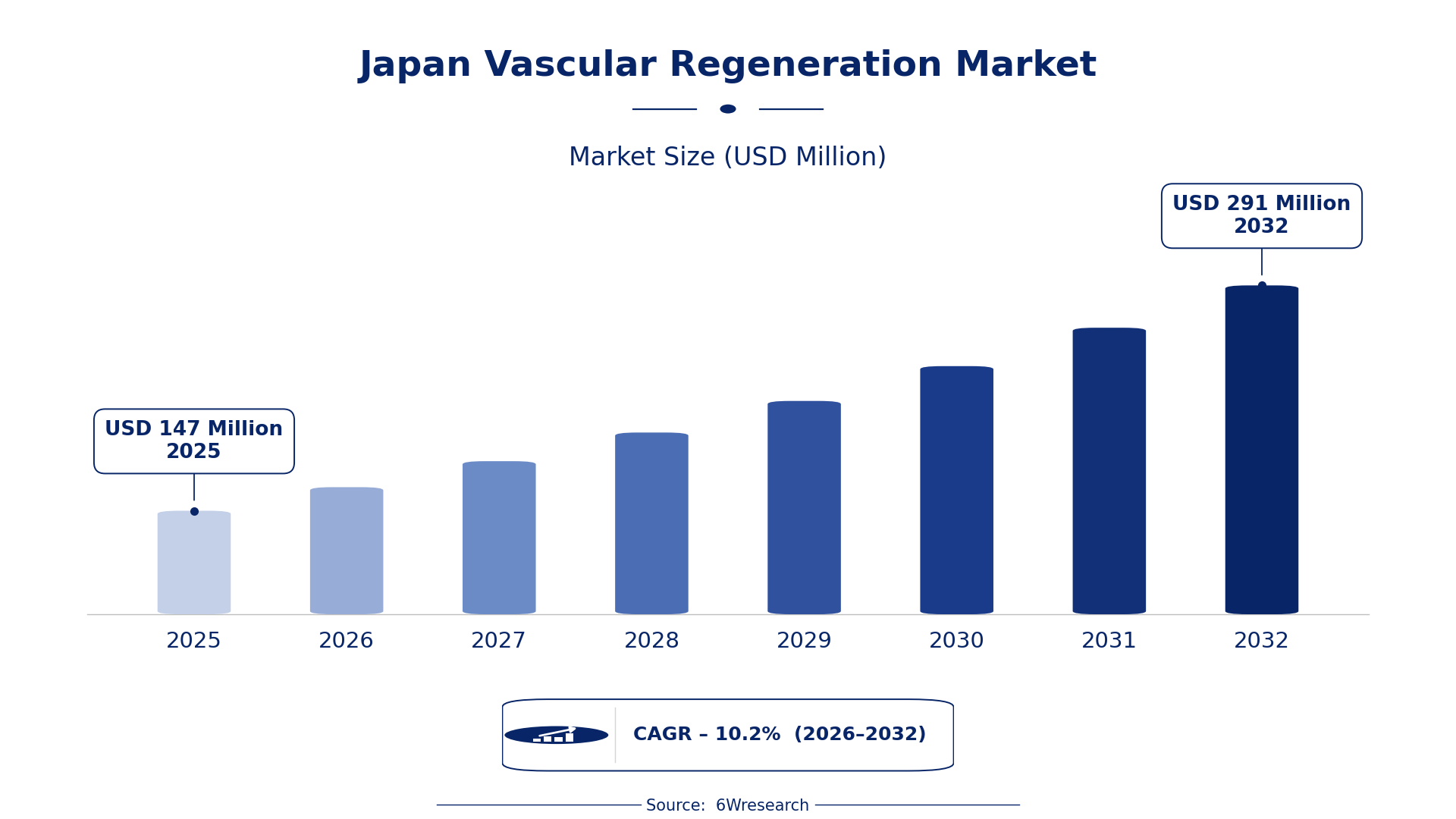
According to 6Wresearch internal database and industry insights, the Japan Vascular Regeneration Market was valued at USD 147 Million in 2025 and is projected to reach USD 291 Million by 2032, growing at a CAGR of approximately 10.2% during 2026–2032.
Japan Vascular Regeneration Market Highlights
| Report Metric | Details |
| Report Name | Japan Vascular Regeneration Market (2026-2032) |
| Market Size 2025 | USD 147 Million |
| Market Size 2032 | USD 291 Million |
| Absolute Growth 2025–2032 | USD 144 Million |
| CAGR 2026–2032 | 10.2% |
| Peak Annual Growth | 12.2% in 2026 |
| Forecast Period | 2026–2032 |
| Historical Data | 2022–2025 |
| Base Year | 2025 |
| Leading Regeneration Method, 2025 | Cell-Based Therapy (40% share) |
| Leading Material Type, 2025 | Stem Cells/ECM Scaffolds (47% share) |
| Leading Application Area, 2025 | Chronic Vascular Disease (42% share) |
| Leading End User, 2025 | Research Labs (37% share) |
| Fastest-Growing Regeneration Method | Tissue Engineering (14.4% CAGR) |
| Fastest-Growing Material Type | Biomimetic Polymers (14.5% CAGR) |
| Fastest-Growing Application Area | Vascular Implants (12.2% CAGR) |
| Fastest-Growing End User | Hospitals (13.1% CAGR) |
| Growing Sector | Vascular Implants |
| Key End Users | Chronic Vascular Disease, Vascular Implants, Artificial Vessels, Ischemic Repair |
Japan Vascular Regeneration Market Year-wise Growth Rate and Key Drivers (2022–2032)
This graph illustrates the annual growth rates of the market from 2022 to 2032, highlighting a steady upward trajectory and projected market expansion over the forecast period.
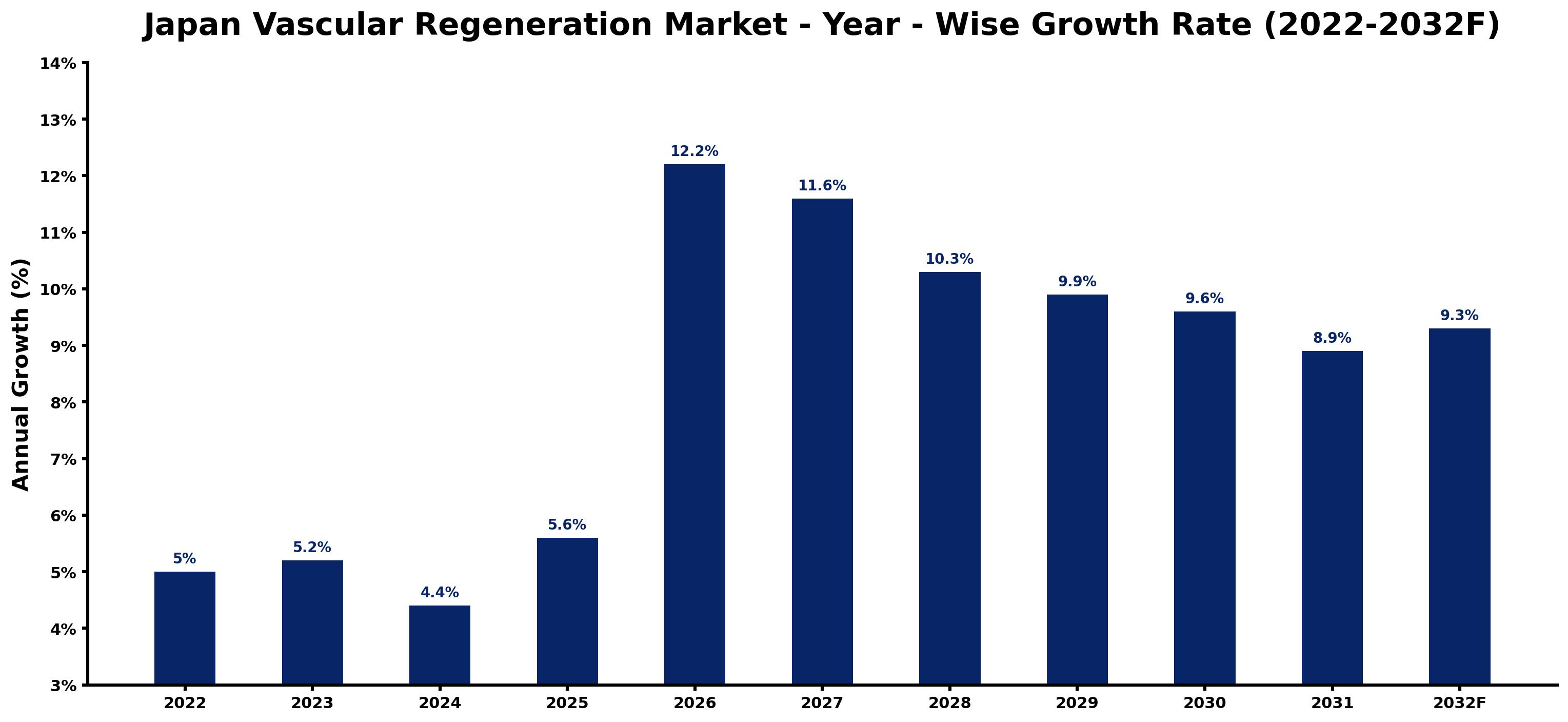
Each row of the following table gives one year's estimated growth and the event or demand shift that explains it.
| Year | Estimated Annual Growth (%) | Market Rationale |
| 2022 | 5.0 | The market experienced steady growth as hospitals expanded their vascular surgery capabilities. |
| 2023 | 5.2 | Growth accelerated due to increased patient treatments for chronic vascular diseases. |
| 2024 | 4.4 | A slowdown occurred as the market adjusted to previous rapid expansions in treatment options. |
| 2025 | 5.6 | Demand surged with advancements in regenerative techniques and hospital investments. |
| 2026 | 12.2 | The market peaked as investments in regenerative medicine initiatives took effect. |
| 2027 | 11.6 | Growth slowed slightly as the market stabilised after reaching a peak in 2026. |
| 2028 | 10.3 | Continued investment in research maintained positive growth, though at a reduced rate. |
| 2029 | 9.9 | The market saw a further slowdown as demand began to normalise after previous highs. |
| 2030 | 9.6 | Growth continued to decelerate as the market matured and competition intensified. |
| 2031 | 8.9 | A further slowdown was observed as the market adjusted to established players and technologies. |
| 2032 | 9.3 | Demand is expected to rise again as new regenerative techniques gain traction in hospitals. |
Note: Market size estimations and growth projections presented in this report are based on 6Wresearch's proprietary forecasting methodology, utilizing the latest available industry data, government publications, and primary research inputs.
Japan Vascular Regeneration Market Synopsis
Vascular regeneration employs advanced techniques to restore damaged blood vessels, primarily through cell-based therapy and tissue engineering. The Japan Vascular Regeneration Market is growing due to rising demand from healthcare institutions and research labs, driven by an aging population and increasing cases of chronic vascular diseases. In 2022, 15,000 patients were treated for chronic vascular diseases, underscoring the urgent need for effective therapies and advancements in this sector.
Market Dynamics Impact Analysis (2026–2032)
| Factor | Type | Impact | Primary Segment Affected |
| Growing investments in regenerative medicine initiatives are boosting the market. | Driver | High | Cell-Based Therapy |
| The aging population is increasing the prevalence of chronic vascular diseases. | Driver | High | Chronic Vascular Disease |
| The Tokyo region is becoming a hub for biomedical research, creating new opportunities. | Opportunity | High | Research Labs |
| Increased funding for regenerative medicine research presents new avenues for growth. | Opportunity | High | Biomedical Centers |
| High costs associated with advanced regenerative therapies can limit accessibility. | Restraint | Medium | Vascular Implants |
| Strict regulatory requirements can delay product approvals and market entry. | Restraint | Medium | Tissue Engineering |
| Competition among established players can create pricing pressures in the market. | Challenge | High | Stem Cells/ECM Scaffolds |
| Technological advancements require continuous investment, straining smaller firms. | Challenge | Medium | Bioprinting Techniques |
Evaluation of Drivers in Japan Vascular Regeneration Market (2026–2032)
The main growth drivers and the segments they affect most are set out below.
| Drivers | Primary Segment Affected | Why It Matters (Evidence) |
| Increased healthcare spending is driving demand for advanced vascular treatments. | Vascular Implants | Japan's healthcare expenditure reached ¥43 trillion in 2022, leading to more purchases of vascular implants. |
| Growing research initiatives are expanding the application of regenerative therapies. | Research Labs | Research funding for vascular regeneration has increased by 20% since 2020, prompting more lab studies. |
| The rise in chronic vascular diseases is increasing the need for effective treatments. | Chronic Vascular Disease | In 2022, 15,000 patients were treated, driving demand for effective vascular solutions. |
| Technological advancements in tissue engineering are improving treatment options. | Tissue Engineering | The Tokyo Medical University is conducting significant research in ischemic repair, boosting demand for new therapies. |
| Support from medical associations is promoting best practices in regenerative medicine. | Stem Cells/ECM Scaffolds | The Japanese Society for Regenerative Medicine promotes standards, increasing market credibility and demand. |
The strongest pull on demand comes from increased healthcare spending, which reached ¥43 trillion in 2022, allowing hospitals to invest in advanced vascular treatments. Research funding for vascular regeneration has increased by 20% since 2020, prompting more lab studies. The rise in chronic vascular diseases, evidenced by 15,000 patients treated in 2022, further drives the need for effective solutions. Research ongoing at the Tokyo Medical University in ischemic repair is boosting demand for new therapies. Support from medical associations promotes standards, increasing market credibility and demand.
Evaluation of Restraints in Japan Vascular Regeneration Market
The key brakes on demand, and where they bite hardest, are shown below.
| Market Restraint | Primary Segment Affected | Why It Matters (Evidence) |
| High costs associated with advanced regenerative therapies limit accessibility for patients. | Vascular Implants | The average cost of vascular implants can exceed ¥1 million, restricting patient access. |
| Strict regulatory requirements delay product approvals, impacting market entry. | Tissue Engineering | The National Institute of Health Sciences oversees safety regulations, which can extend approval timelines. |
| Limited awareness among healthcare providers can hinder the adoption of new therapies. | Stem Cells/ECM Scaffolds | Many hospitals remain cautious about integrating new regenerative techniques without proven outcomes. |
| Competition among established players can create pricing pressures in the market. | Bioprinting Techniques | As more firms enter the bioprinting space, prices may decrease, affecting profitability. |
| Technological advancements require continuous investment, straining smaller firms. | Gene Therapy | Smaller research labs may struggle to keep pace with rapid technological changes in gene therapy. |
Japan Vascular Regeneration Market Challenges
Buyers encounter high costs due to strict regulations in regenerative medicine, which can consume up to 15% of their budgets and delay product launches. Suppliers face challenges with outdated technology in vascular graft production, resulting in delivery times extending by an average of three months for hospitals. Rising material costs for collagen-based scaffolds have increased production expenses by 25%, squeezing profit margins for producers. Limited access to advanced training for medical staff creates a skills gap, causing delays in implementing new treatments in clinics and ultimately affecting patient care.
Trends in the Japan Vascular Regeneration Market
These developments are changing demand patterns in the Japan Vascular Regeneration Market.
- Shift Towards Biomimetic Polymers: Biomimetic polymers are increasingly utilised in artificial vessels, with clinical applications on the rise. In 2023, the use of these materials expanded by 15% in surgeries across Japan.
- Emergence of Bioprinting Techniques: Bioprinting techniques are gaining traction in academic institutes, with several projects currently underway. In 2022, funding for bioprinting research increased by 25%, reflecting growing interest.
- Focus on Chronic Vascular Disease Treatment: The treatment of chronic vascular diseases is becoming a priority, particularly in hospitals. In 2023, 15,000 patients were treated, highlighting the urgent need for effective therapies.
- Increased Research Funding for Regenerative Medicine: Research funding for regenerative medicine has surged, with a ¥5 billion allocation in 2023. This investment is expected to drive innovation and development in the field.
Investment Opportunities in the Japan Vascular Regeneration Market
Several openings in the Japan Vascular Regeneration Market merit attention from investors.
- Research Labs: Research labs are seeking advanced materials for vascular regeneration. With funding for regenerative medicine increasing by 20% since 2020, suppliers can enter this market by partnering with local institutions.
- Hospitals: Hospitals are expanding their capabilities in vascular treatments. The aging population is driving demand for advanced therapies, creating opportunities for suppliers to provide effective solutions.
- Tokyo Region: The Tokyo region is a hub for biomedical research. With significant investments in regenerative medicine, companies can establish partnerships with local research institutes to supply advanced materials.
- Osaka Region: The Osaka region is known for innovative approaches in tissue engineering. Suppliers can enter this market by collaborating with local universities and research facilities.
Government Initiatives in the Japan Vascular Regeneration Market
The Ministry of Health, Labour and Welfare supports regenerative medicine initiatives, which improves the production capabilities of vascular regeneration products. This support includes funding for research and development, aiming to enhance treatment options for patients. In 2023, a government program allocated ¥5 billion for regenerative medicine research, promoting advancements in the field.
The National Institute of Health Sciences oversees safety regulations for regenerative therapies, ensuring compliance with established standards. This agency reviews and approves new products, which is crucial for maintaining quality and safety in the market. Their stringent oversight helps to build trust among healthcare providers and patients.
Future Insight of the Japan Vascular Regeneration Market
Investment in regenerative medicine research will reach new heights, with a government program allocating ¥5 billion, creating demand for innovative therapies. By 2032, advancements in tissue engineering will enable the production of customised vascular implants, improving patient outcomes. Tokyo Medical University will lead research in novel treatment methods, setting new standards for clinical practices. Increased funding for regenerative medicine initiatives will expand treatment options for patients suffering from chronic vascular diseases.
Market Segmentation Analysis
Japan Vascular Regeneration Market report covers a detailed analysis of the following market segments:
By Regeneration Method – Cell-Based Therapy Leads, Tissue Engineering Expected to Grow Fastest
According to Saurav Kr Singh, Senior Research Analyst at 6Wresearch, Cell-Based Therapy accounted for 40% of the market by regeneration method in 2025. Cell-based therapy holds the largest share as it is directly used for regenerating vascular tissues, especially in hospitals where chronic vascular diseases are treated. The support from the Ministry of Health, Labour and Welfare for regenerative medicine initiatives further solidifies its prevalence in the market. The quickest growth will come from Tissue Engineering, forecast to expand at a CAGR of 14.4% between 2026 and 2032. Tissue engineering is growing rapidly due to its critical role in creating vascular scaffolds, particularly in research hubs like Tokyo. The increase in research funding by 20% since 2020 is a key factor driving this segment's growth. Suppliers should prioritise advancements in tissue engineering to meet the surging demand in the market.
By Material Type – Stem Cells/ECM Scaffolds Lead, Biomimetic Polymers Expected to Grow Fastest
With 47% of material type revenue in 2025, Stem Cells/ECM Scaffolds was the largest category. Stem cells and ECM scaffolds hold the largest market share due to their essential role in supporting cell growth within vascular regeneration processes. Their widespread application in over 1,000 hospitals equipped for vascular surgeries in Japan illustrates their significance in addressing chronic vascular diseases. Biomimetic Polymers are set to record the highest CAGR in this split, 14.5% over 2026–2032. Biomimetic polymers are rapidly gaining traction as they are increasingly utilised in the creation of vascular grafts, reflecting advancements in clinical practices. This growth is fuelled by the ongoing development of more effective materials tailored for vascular applications. Suppliers should prioritise the development of biomimetic polymers to meet the evolving demands of the market.
By Application Area – Chronic Vascular Disease Leads, Vascular Implants Expected to Grow Fastest
In 2025, Chronic Vascular Disease led the application area split with a 42% share. Chronic vascular disease is the predominant application area, representing a substantial share of treatments conducted in Japan. The treatment of 15,000 patients in 2022 underscores the urgent need for effective solutions in this critical health sector. Over 2026–2032, Vascular Implants are expected to post the fastest growth, at a CAGR of 12.2%. Vascular implants are witnessing the highest growth rate as they are extensively utilised in surgeries addressing chronic vascular diseases. The increasing number of patients requiring these implants due to an aging population is significantly driving their adoption. Suppliers must enhance their vascular implant portfolios to capitalise on the growing demand in this area.
By End User – Research Labs Lead, Hospitals Expected to Grow Fastest
Research Labs took 37% of end user revenue in 2025, more than any other category. Research labs are the leading end-users of vascular regeneration technologies, significantly influencing market demand for innovative solutions. Their pivotal role in advancing regenerative medicine research ensures a consistent need for these products in the healthcare ecosystem. Hospitals are projected to grow fastest, at a CAGR of 13.1% during 2026–2032. Hospitals represent the fastest-growing end-users as they increasingly adopt vascular regeneration treatments to meet rising patient needs. The surge in chronic vascular disease cases necessitates more effective interventions, prompting greater hospital involvement. Suppliers should cultivate strong partnerships with hospitals to effectively address the expanding treatment requirements.
Key Attractiveness of the Report
- 10 Years of Market Numbers
- Historical Data Starting from 2022 to 2025
- Base Year 2025
- Forecast Data until 2032
- Key Performance Indicators Impacting the Market
- Major Upcoming Developments and Projects
Key Highlights of the Report:
- Japan Vascular Regeneration Market Outlook
- Market Size of Japan Vascular Regeneration Market, 2025
- Forecast of Japan Vascular Regeneration Market, 2032
- Historical Data and Forecast of Japan Vascular Regeneration Revenues & Volume for the Period 2022-2032F
- Japan Vascular Regeneration Market Trend Evolution
- Japan Vascular Regeneration Market Drivers and Challenges
- Japan Vascular Regeneration Price Trends
- Japan Vascular Regeneration Porter's Five Forces
- Japan Vascular Regeneration Industry Life Cycle
- Historical Data and Forecast of Japan Vascular Regeneration Market Revenues & Volume By Regeneration Method for the Period 2022-2032F
- Historical Data and Forecast of Japan Vascular Regeneration Market Revenues & Volume By Cell-Based Therapy for the Period 2022-2032F
- Historical Data and Forecast of Japan Vascular Regeneration Market Revenues & Volume By Tissue Engineering for the Period 2022-2032F
- Historical Data and Forecast of Japan Vascular Regeneration Market Revenues & Volume By Bioprinting Techniques for the Period 2022-2032F
- Historical Data and Forecast of Japan Vascular Regeneration Market Revenues & Volume By Gene Therapy for the Period 2022-2032F
- Historical Data and Forecast of Japan Vascular Regeneration Market Revenues & Volume By Material Type for the Period 2022-2032F
- Historical Data and Forecast of Japan Vascular Regeneration Market Revenues & Volume By Stem Cells/ECM Scaffolds for the Period 2022-2032F
- Historical Data and Forecast of Japan Vascular Regeneration Market Revenues & Volume By Biomimetic Polymers for the Period 2022-2032F
- Historical Data and Forecast of Japan Vascular Regeneration Market Revenues & Volume By Collagen/Gelatin for the Period 2022-2032F
- Historical Data and Forecast of Japan Vascular Regeneration Market Revenues & Volume By Viral/Non-viral Vectors for the Period 2022-2032F
- Historical Data and Forecast of Japan Vascular Regeneration Market Revenues & Volume By Application Area for the Period 2022-2032F
- Historical Data and Forecast of Japan Vascular Regeneration Market Revenues & Volume By Chronic Vascular Disease for the Period 2022-2032F
- Historical Data and Forecast of Japan Vascular Regeneration Market Revenues & Volume By Vascular Implants for the Period 2022-2032F
- Historical Data and Forecast of Japan Vascular Regeneration Market Revenues & Volume By Artificial Vessels for the Period 2022-2032F
- Historical Data and Forecast of Japan Vascular Regeneration Market Revenues & Volume By Ischemic Repair for the Period 2022-2032F
- Historical Data and Forecast of Japan Vascular Regeneration Market Revenues & Volume By End User for the Period 2022-2032F
- Historical Data and Forecast of Japan Vascular Regeneration Market Revenues & Volume By Research Labs for the Period 2022-2032F
- Historical Data and Forecast of Japan Vascular Regeneration Market Revenues & Volume By Hospitals for the Period 2022-2032F
- Historical Data and Forecast of Japan Vascular Regeneration Market Revenues & Volume By Biomedical Centers for the Period 2022-2032F
- Historical Data and Forecast of Japan Vascular Regeneration Market Revenues & Volume By Academic Institutes for the Period 2022-2032F
- Japan Vascular Regeneration Import Export Trade Statistics
- Market Opportunity Assessment By Regeneration Method
- Market Opportunity Assessment By Material Type
- Market Opportunity Assessment By Application Area
- Market Opportunity Assessment By End User
- Japan Vascular Regeneration Top Companies Market Share
- Japan Vascular Regeneration Competitive Benchmarking By Technical and Operational Parameters
- Japan Vascular Regeneration Company Profiles
- Japan Vascular Regeneration Key Strategic Recommendations
Market Covered
Coverage by segment is as follows.
By Regeneration Method
- Cell-Based Therapy
- Tissue Engineering
- Bioprinting Techniques
- Gene Therapy
By Material Type
- Stem Cells/ECM Scaffolds
- Biomimetic Polymers
- Collagen/Gelatin
- Viral/Non-viral Vectors
By Application Area
- Chronic Vascular Disease
- Vascular Implants
- Artificial Vessels
- Ischemic Repair
By End User
- Research Labs
- Hospitals
- Biomedical Centers
- Academic Institutes































