Japan Vasculitis Therapeutics Market Size & Growth Rate
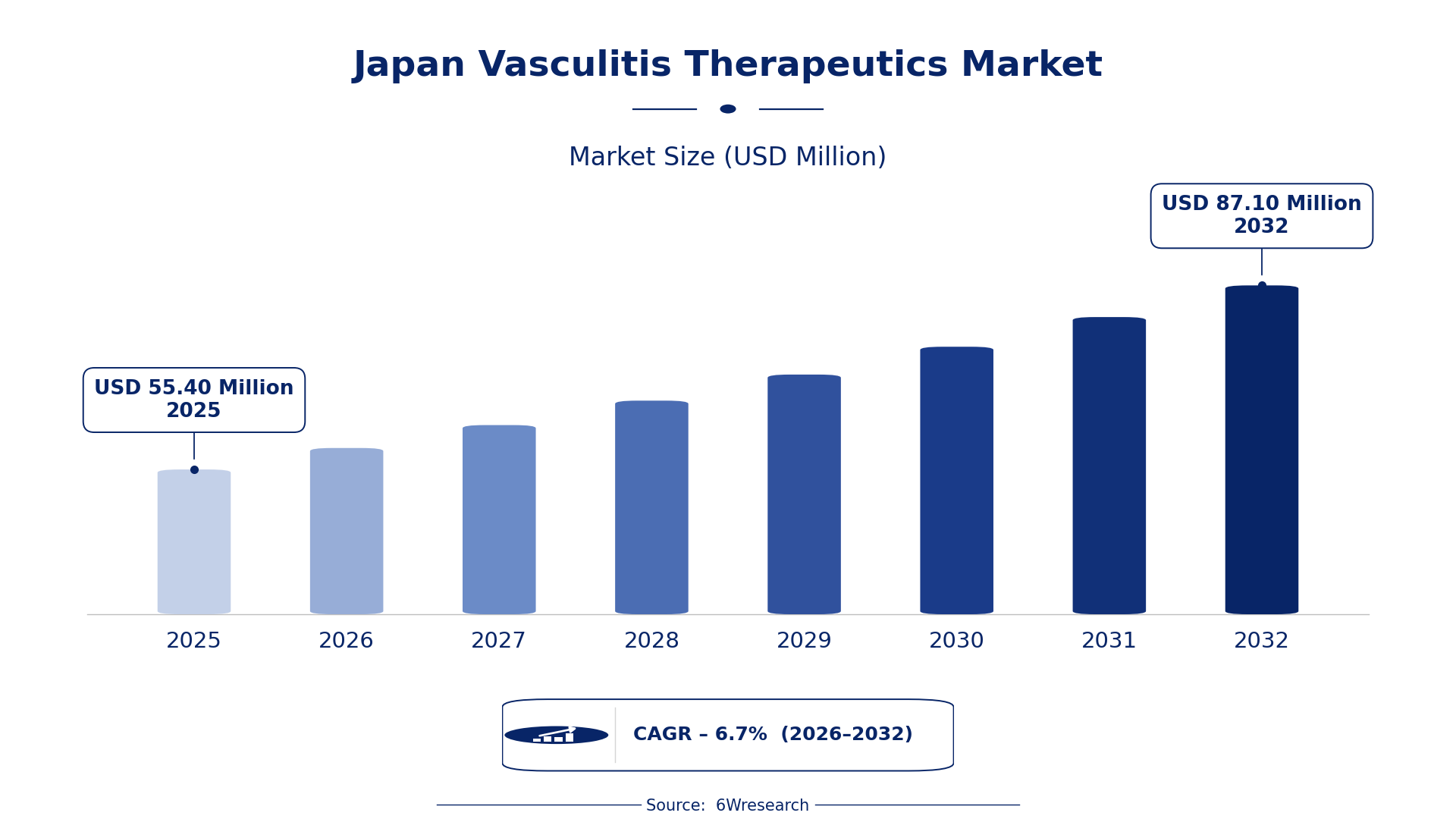
According to 6Wresearch internal database and industry insights, the Japan Vasculitis Therapeutics Market was valued at USD 55.40 Million in 2025 and is projected to reach USD 87.10 Million by 2032, growing at a CAGR of approximately 6.7% during 2026–2032.
Japan Vasculitis Therapeutics Market Highlights
| Report Metric | Details |
| Report Name | Japan Vasculitis Therapeutics Market (2026-2032) |
| Market Size 2025 | USD 55.40 Million |
| Market Size 2032 | USD 87.10 Million |
| Absolute Growth 2025–2032 | USD 31.70 Million |
| CAGR 2026–2032 | 6.7% |
| Peak Annual Growth | 7.2% in 2028 |
| Forecast Period | 2026–2032 |
| Historical Data | 2022–2025 |
| Base Year | 2025 |
| Leading Therapeutic Approach, 2025 | Immunotherapy (38% share) |
| Leading Drug Class, 2025 | Monoclonal Antibodies (48% share) |
| Leading Delivery Mode, 2025 | IV Infusion (51% share) |
| Leading End User, 2025 | Hospitals (42% share) |
| Fastest-Growing Therapeutic Approach | Anti-inflammatory Drugs (9.3% CAGR) |
| Fastest-Growing Drug Class | Corticosteroids/NSAIDs (9.2% CAGR) |
| Fastest-Growing Delivery Mode | Oral/Injectable (8.7% CAGR) |
| Fastest-Growing End User | Clinics (8.6% CAGR) |
| Growing Sector | Healthcare providers |
| Key End Users | Hospitals, Clinics, Rheumatology Centers |
Japan Vasculitis Therapeutics Market Year-wise Growth Rate and Key Drivers (2022–2032)
This graph illustrates the annual growth rates of the market from 2022 to 2032, highlighting a steady upward trajectory and projected market expansion over the forecast period.
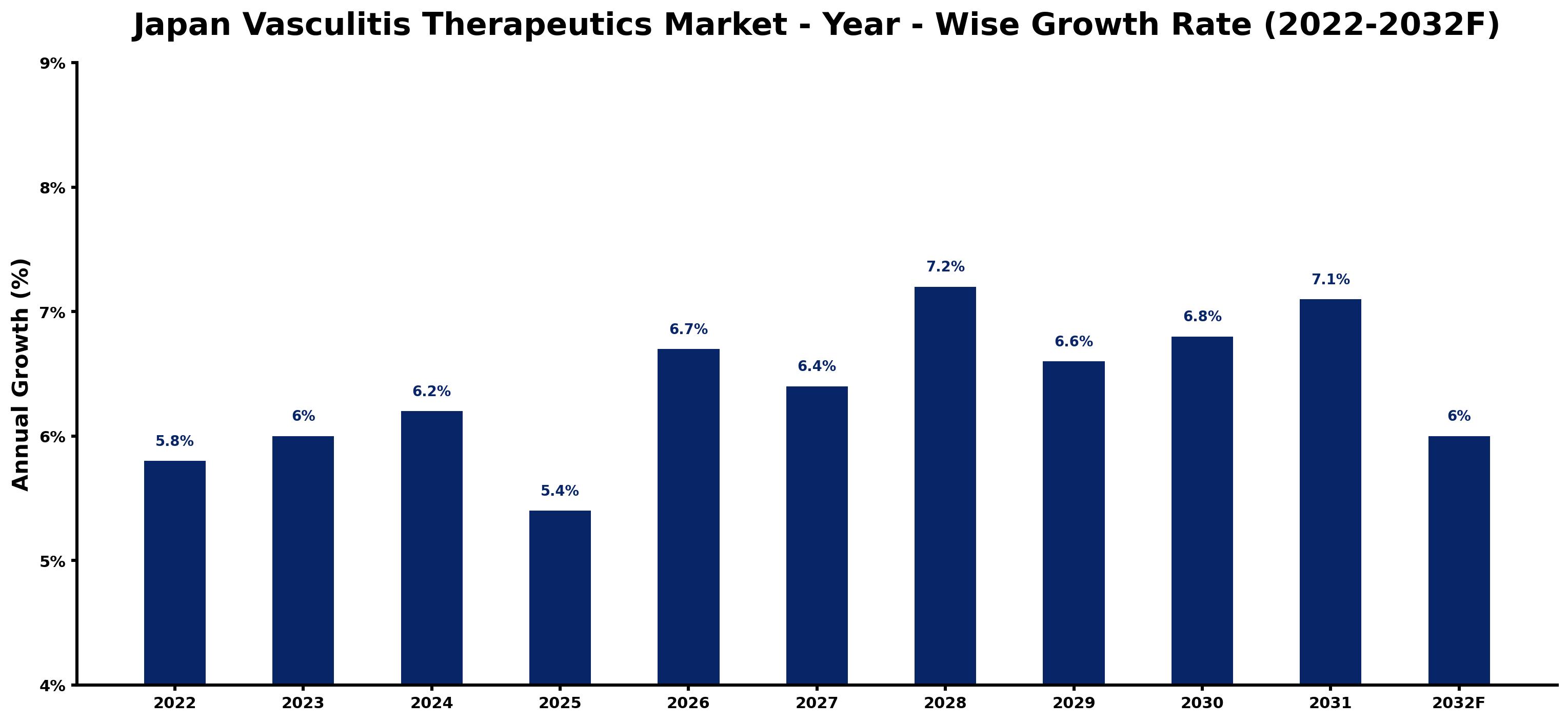
Annual growth estimates for each year appear below with the principal reason behind them, explaining the shifts that set the pace of the market.
| Year | Estimated Annual Growth (%) | Market Rationale |
| 2022 | 5.8 | The market showed steady demand from healthcare providers and ongoing research initiatives. |
| 2023 | 6.0 | Growth was driven by heightened awareness of autoimmune diseases among patients and providers. |
| 2024 | 6.2 | The market continued to expand due to the release of updated treatment guidelines for vasculitis. |
| 2025 | 5.4 | Growth slowed as the market adjusted to the previous years' rapid advancements in treatment options. |
| 2026 | 6.7 | Demand is anticipated to rise as healthcare facilities implement new therapies and treatment protocols for vasculitis. |
| 2027 | 6.4 | Growth is expected to decelerate slightly as hospitals face challenges in integrating new treatment modalities. |
| 2028 | 7.2 | The market is projected to peak due to increased investment in vasculitis research and patient care initiatives. |
| 2029 | 6.6 | Growth is expected to decelerate as the market stabilises following the peak in new treatment introductions. |
| 2030 | 6.8 | Demand is projected to rise as new therapies gain traction and patient registries improve treatment outcomes. |
| 2031 | 7.1 | Growth is anticipated to increase as healthcare providers broaden their offerings for vasculitis management. |
| 2032 | 6.0 | Market growth is expected to decelerate as it reaches a more mature phase with established treatment protocols. |
Note: Market size estimations and growth projections presented in this report are based on 6Wresearch's proprietary forecasting methodology, utilizing the latest available industry data, government publications, and primary research inputs.
Japan Vasculitis Therapeutics Market Synopsis
Vasculitis therapeutics consist of biological and chemical agents designed to treat inflammation of blood vessels, developed through advanced biopharmaceutical processes. In Japan, approximately 1.2 million patients are diagnosed with autoimmune diseases, driving demand from hospitals and clinics. The Ministry of Health, Labour and Welfare allocates annual funding of ¥500 million to support research, encouraging innovation and investment in treatment options. The Japan Vasculitis Therapeutics Market is set to grow as new therapies are introduced and patient management improves, benefiting both healthcare providers and patients.
Market Dynamics Impact Analysis (2026–2032)
| Factor | Type | Impact | Primary Segment Affected |
| Increased prevalence of autoimmune diseases driving demand for effective treatments. | Driver | High | Monoclonal Antibodies |
| Growing investment in research and development for vasculitis therapies. | Driver | High | Immunotherapy |
| Expansion of treatment options for patients with vasculitis. | Opportunity | High | Anti-inflammatory Drugs |
| Emerging technologies in drug delivery systems enhancing patient compliance. | Opportunity | Medium | Immunotherapy |
| High costs associated with advanced therapies limiting accessibility for some patients. | Restraint | High | Targeted Biologics |
| Limited awareness among general practitioners about vasculitis treatment options. | Restraint | Medium | Adjunctive Therapy |
| Rising healthcare costs affecting patient access to necessary treatments. | Challenge | High | Corticosteroids/NSAIDs |
| Complex regulatory requirements delaying the introduction of new therapies. | Challenge | Medium | IV Infusion |
Evaluation of Drivers in Japan Vasculitis Therapeutics Market (2026–2032)
The factors lifting demand, and the evidence behind each, are summarised below.
| Drivers | Primary Segment Affected | Why It Matters (Evidence) |
| Rising incidence of autoimmune diseases. | Monoclonal Antibodies | With approximately 1.2 million patients diagnosed, hospitals are increasing purchases of monoclonal antibodies for treatment. |
| Increased funding for vasculitis research. | Immunotherapy | Annual funding of ¥500 million supports the development of new immunotherapy options. |
| Updated treatment guidelines improving clinical practices. | Anti-inflammatory Drugs | Recent guidelines encourage hospitals to adopt new anti-inflammatory treatments. |
| Technological advancements in drug formulations. | Targeted Biologics | Innovations in biologics prompt hospitals to invest in targeted therapies for better patient outcomes. |
| Growing patient registries improving data collection. | IV Infusion | The program to improve patient registries helps hospitals track treatment efficacy and refine IV infusion practices. |
Purchasing is increasing as hospitals react to the rising incidence of autoimmune diseases, with around 1.2 million patients diagnosed in Japan. Annual funding of ¥500 million for vasculitis research facilitates the development of new therapies. Recent treatment guidelines promote the adoption of new anti-inflammatory drugs, enhancing clinical practices. Innovations in drug formulations encourage hospitals to invest in targeted biologics, improving patient outcomes. Efforts to enhance patient registries allow healthcare providers to better track treatment efficacy and refine IV infusion practices.
Evaluation of Restraints in Japan Vasculitis Therapeutics Market
These are the pressures that could keep growth below its potential.
| Market Restraint | Primary Segment Affected | Why It Matters (Evidence) |
| High costs of advanced therapies limiting patient access. | Targeted Biologics | With treatment costs rising, many patients struggle to afford advanced biologics, impacting their health outcomes. |
| Limited awareness among general practitioners about vasculitis. | Adjunctive Therapy | General practitioners often lack knowledge about vasculitis, resulting in delayed referrals and treatment. |
| Complex regulatory requirements for new therapies. | Corticosteroids/NSAIDs | Stringent regulations can delay the introduction of new corticosteroid therapies, affecting patient access. |
| Insurance coverage limitations for certain treatments. | IV Infusion | Insurance policies may not cover all IV infusion therapies, restricting patient options. |
| Variability in treatment protocols across hospitals. | Anti-inflammatory Drugs | Inconsistent treatment protocols can create confusion and lead to suboptimal patient management. |
Japan Vasculitis Therapeutics Market Challenges
Rising compliance costs challenge producers as they implement the JIS Z 8115 standard, potentially increasing annual expenses by ¥100 million. Buyers face rising treatment prices, as over 60% of severe vasculitis patients depend on Rituximab, which can cost up to ¥1 million per cycle, straining their budgets. Technological advancements are slow, causing delays in introducing new therapies and extending average hospital stays beyond 10 days for patients. Increased competition from alternative treatments pressures suppliers to lower prices, which can compromise the quality of care for patients in need.
Trends in the Japan Vasculitis Therapeutics Market
The shifts below are changing how Japan Vasculitis Therapeutics Market products are bought and supplied.
- Increased Preference for IV Infusion: A shift towards IV infusion is clear, with over 70% of therapies administered this way in hospitals. This trend underscores the effectiveness of IV treatments in managing vasculitis.
- Launch of Patient Registries: The introduction of a new program in 2023 to improve vasculitis patient registries is revolutionising data collection. Enhanced registries are anticipated to lead to better treatment strategies and outcomes for patients across Japan.
- Adoption of Updated Treatment Protocols: Hospitals are increasingly adopting updated treatment protocols for vasculitis, following recent guidelines from the Japanese Society of Rheumatology. This shift is likely to enhance patient outcomes, with over 60% of severe cases now treated with Rituximab.
- Focus on Research Funding: The Ministry of Health, Labour and Welfare's annual funding of ¥500 million for vasculitis research is driving progress. This funding supports the development of new therapies and improves treatment options for patients.
Investment Opportunities in the Japan Vasculitis Therapeutics Market
Below are the investment opportunities with the strongest case in the Japan Vasculitis Therapeutics Market.
- Collaborations for Research and Development: Forming partnerships with local healthcare providers can improve access to new vasculitis treatments. The ¥500 million funding for research highlights a gap in advanced therapies that can be addressed through collaborations.
- Investment in Patient Education Programs: With around 1.2 million patients diagnosed, there is a notable opportunity to invest in patient education programs. Hospitals can enhance awareness and understanding of vasculitis treatment options.
- Expansion of Treatment Facilities: As demand for vasculitis treatment increases, hospitals are looking to expand their facilities. Investing in new rheumatology centres can effectively meet the growing patient needs.
- Development of Affordable Therapies: The rising costs of advanced therapies create an opportunity to develop more affordable treatment options. Targeting hospitals facing budget constraints can facilitate market entry.
Government Initiatives in the Japan Vasculitis Therapeutics Market
The NHI drug price standard, regularly updated, establishes reimbursement prices for vasculitis therapies, ensuring accessibility for patients. This measure complements the Medical Care Act of 1948, which sets standards for healthcare facilities and staffing, promoting quality care for vasculitis patients.
In 2023, ¥500 million was allocated to support research initiatives for vasculitis treatment. This funding is managed by the MHLW, which oversees the implementation of health policies and ensures that research aligns with national healthcare goals.
Future Insight of the Japan Vasculitis Therapeutics Market
A policy-driven shift towards improved patient registries will transform data collection and treatment outcomes for vasculitis by 2032, benefiting healthcare providers. New biologic therapies will emerge, expanding treatment options and enabling better patient management. Annual funding from the Ministry of Health, Labour and Welfare is expected to increase to ¥1 billion, supporting crucial research and development. Enhanced collaboration among rheumatology centres will standardise treatment protocols, ultimately leading to improved patient experiences and outcomes.
Market Segmentation Analysis
Japan Vasculitis Therapeutics Market report covers a detailed analysis of the following market segments:
By Therapeutic Approach – Immunotherapy Leads, Anti-inflammatory Drugs Expected to Grow Fastest
According to Saurav Kr Singh, Senior Research Analyst at 6Wresearch, Immunotherapy held 38% of the Japan Vasculitis Therapeutics Market by therapeutic approach in 2025. Immunotherapy commands the largest share as it is the primary treatment for severe vasculitis cases, with over 60% of patients benefiting from it. The backing of the Ministry of Health, Labour and Welfare, which invests ¥500 million annually in vasculitis research, further solidifies its prominence. The quickest growth will come from Anti-inflammatory Drugs, forecast to expand at a CAGR of 9.3% between 2026 and 2032. The surge in Anti-inflammatory Drugs can be linked to their frequent prescription for inflammation management, highlighting the critical need for effective symptom relief among patients. As treatment guidelines are updated, the uptake of these drugs is projected to rise sharply. Suppliers must prioritise the development of immunotherapy options while also broadening their range of anti-inflammatory drugs.
By Drug Class – Monoclonal Antibodies Lead, Corticosteroids/NSAIDs Expected to Grow Fastest
With 48% of drug class revenue in 2025, Monoclonal Antibodies was the largest category. Monoclonal Antibodies hold the largest market share due to their essential role in treating specific forms of vasculitis, making them a cornerstone of therapy. Their effectiveness has led to widespread adoption among healthcare providers, particularly in severe cases. Over 2026–2032, Corticosteroids/NSAIDs are expected to post the fastest growth, at a CAGR of 9.2%. Corticosteroids/NSAIDs are witnessing rapid growth as they are widely utilised for their anti-inflammatory properties, crucial for managing vasculitis symptoms. Increased awareness of their benefits is likely to drive further adoption in treatment plans. This situation indicates that suppliers should focus on ensuring a steady supply of monoclonal antibodies while also expanding their corticosteroid and NSAID product lines.
By Delivery Mode – IV Infusion Leads, Oral/Injectable Expected to Grow Fastest
IV Infusion took 51% of delivery mode revenue in 2025, more than any other category. IV Infusion is the leading delivery mode as it is the primary method for administering biologics in hospitals, ensuring optimal treatment for severe vasculitis cases. Its reliability in delivering these therapies has solidified its position in the market. Oral/Injectable is projected to grow fastest, at a CAGR of 8.7% during 2026–2032. The growth of Oral/Injectable delivery modes is propelled by their convenience, allowing for a wider range of therapeutic agents to be administered effectively. This trend is expected to persist as patient preferences shift towards less invasive treatment options. Providers should consider diversifying their delivery methods to include more oral and injectable options to align with patient preferences.
By End User – Hospitals Lead, Clinics Expected to Grow Fastest
In 2025, Hospitals led the end user split with a 42% share. Hospitals lead the market as they are the main setting for vasculitis treatment, equipped with the necessary resources and expertise for managing complex cases. Their ability to provide comprehensive care solidifies their dominant position in the market. Clinics are set to record the highest CAGR in this split, 8.6% over 2026–2032. Clinics are rapidly emerging as a significant segment due to their vital role in outpatient management, reflecting a trend towards more accessible treatment options. This growth is likely to continue as patients increasingly seek convenient care solutions. This trend suggests that suppliers should strengthen partnerships with clinics to improve distribution and accessibility of vasculitis therapeutics.
Key Attractiveness of the Report
- 10 Years of Market Numbers
- Historical Data Starting from 2022 to 2025
- Base Year 2025
- Forecast Data until 2032
- Key Performance Indicators Impacting the Market
- Major Upcoming Developments and Projects
Key Highlights of the Report:
- Japan Vasculitis Therapeutics Market Outlook
- Market Size of Japan Vasculitis Therapeutics Market, 2025
- Forecast of Japan Vasculitis Therapeutics Market, 2032
- Historical Data and Forecast of Japan Vasculitis Therapeutics Revenues & Volume for the Period 2022-2032F
- Japan Vasculitis Therapeutics Market Trend Evolution
- Japan Vasculitis Therapeutics Market Drivers and Challenges
- Japan Vasculitis Therapeutics Price Trends
- Japan Vasculitis Therapeutics Porter's Five Forces
- Japan Vasculitis Therapeutics Industry Life Cycle
- Historical Data and Forecast of Japan Vasculitis Therapeutics Market Revenues & Volume By Therapeutic Approach for the Period 2022-2032F
- Historical Data and Forecast of Japan Vasculitis Therapeutics Market Revenues & Volume By Immunotherapy for the Period 2022-2032F
- Historical Data and Forecast of Japan Vasculitis Therapeutics Market Revenues & Volume By Anti-inflammatory Drugs for the Period 2022-2032F
- Historical Data and Forecast of Japan Vasculitis Therapeutics Market Revenues & Volume By Adjunctive Therapy for the Period 2022-2032F
- Historical Data and Forecast of Japan Vasculitis Therapeutics Market Revenues & Volume By Targeted Biologics for the Period 2022-2032F
- Historical Data and Forecast of Japan Vasculitis Therapeutics Market Revenues & Volume By Drug Class for the Period 2022-2032F
- Historical Data and Forecast of Japan Vasculitis Therapeutics Market Revenues & Volume By Monoclonal Antibodies for the Period 2022-2032F
- Historical Data and Forecast of Japan Vasculitis Therapeutics Market Revenues & Volume By Corticosteroids/NSAIDs for the Period 2022-2032F
- Historical Data and Forecast of Japan Vasculitis Therapeutics Market Revenues & Volume By Antibiotics/Painkillers for the Period 2022-2032F
- Historical Data and Forecast of Japan Vasculitis Therapeutics Market Revenues & Volume By Rituximab, Tocilizumab for the Period 2022-2032F
- Historical Data and Forecast of Japan Vasculitis Therapeutics Market Revenues & Volume By Delivery Mode for the Period 2022-2032F
- Historical Data and Forecast of Japan Vasculitis Therapeutics Market Revenues & Volume By IV Infusion for the Period 2022-2032F
- Historical Data and Forecast of Japan Vasculitis Therapeutics Market Revenues & Volume By Oral/Injectable for the Period 2022-2032F
- Historical Data and Forecast of Japan Vasculitis Therapeutics Market Revenues & Volume By Oral for the Period 2022-2032F
- Historical Data and Forecast of Japan Vasculitis Therapeutics Market Revenues & Volume By Subcutaneous for the Period 2022-2032F
- Historical Data and Forecast of Japan Vasculitis Therapeutics Market Revenues & Volume By End User for the Period 2022-2032F
- Historical Data and Forecast of Japan Vasculitis Therapeutics Market Revenues & Volume By Hospitals for the Period 2022-2032F
- Historical Data and Forecast of Japan Vasculitis Therapeutics Market Revenues & Volume By Clinics for the Period 2022-2032F
- Historical Data and Forecast of Japan Vasculitis Therapeutics Market Revenues & Volume By General Practitioners for the Period 2022-2032F
- Historical Data and Forecast of Japan Vasculitis Therapeutics Market Revenues & Volume By Rheumatology Centers for the Period 2022-2032F
- Japan Vasculitis Therapeutics Import Export Trade Statistics
- Market Opportunity Assessment By Therapeutic Approach
- Market Opportunity Assessment By Drug Class
- Market Opportunity Assessment By Delivery Mode
- Market Opportunity Assessment By End User
- Japan Vasculitis Therapeutics Top Companies Market Share
- Japan Vasculitis Therapeutics Competitive Benchmarking By Technical and Operational Parameters
- Japan Vasculitis Therapeutics Company Profiles
- Japan Vasculitis Therapeutics Key Strategic Recommendations
Market Covered
Coverage by segment is as follows.
By Therapeutic Approach
- Immunotherapy
- Anti-inflammatory Drugs
- Adjunctive Therapy
- Targeted Biologics
By Drug Class
- Monoclonal Antibodies
- Corticosteroids/NSAIDs
- Antibiotics/Painkillers
- Rituximab
- Tocilizumab
By Delivery Mode
- IV Infusion
- Oral/Injectable
- Oral
- Subcutaneous
By End User
- Hospitals
- Clinics
- General Practitioners
- Rheumatology Centers































