Japan Vegan Apparel Market Size & Growth Rate
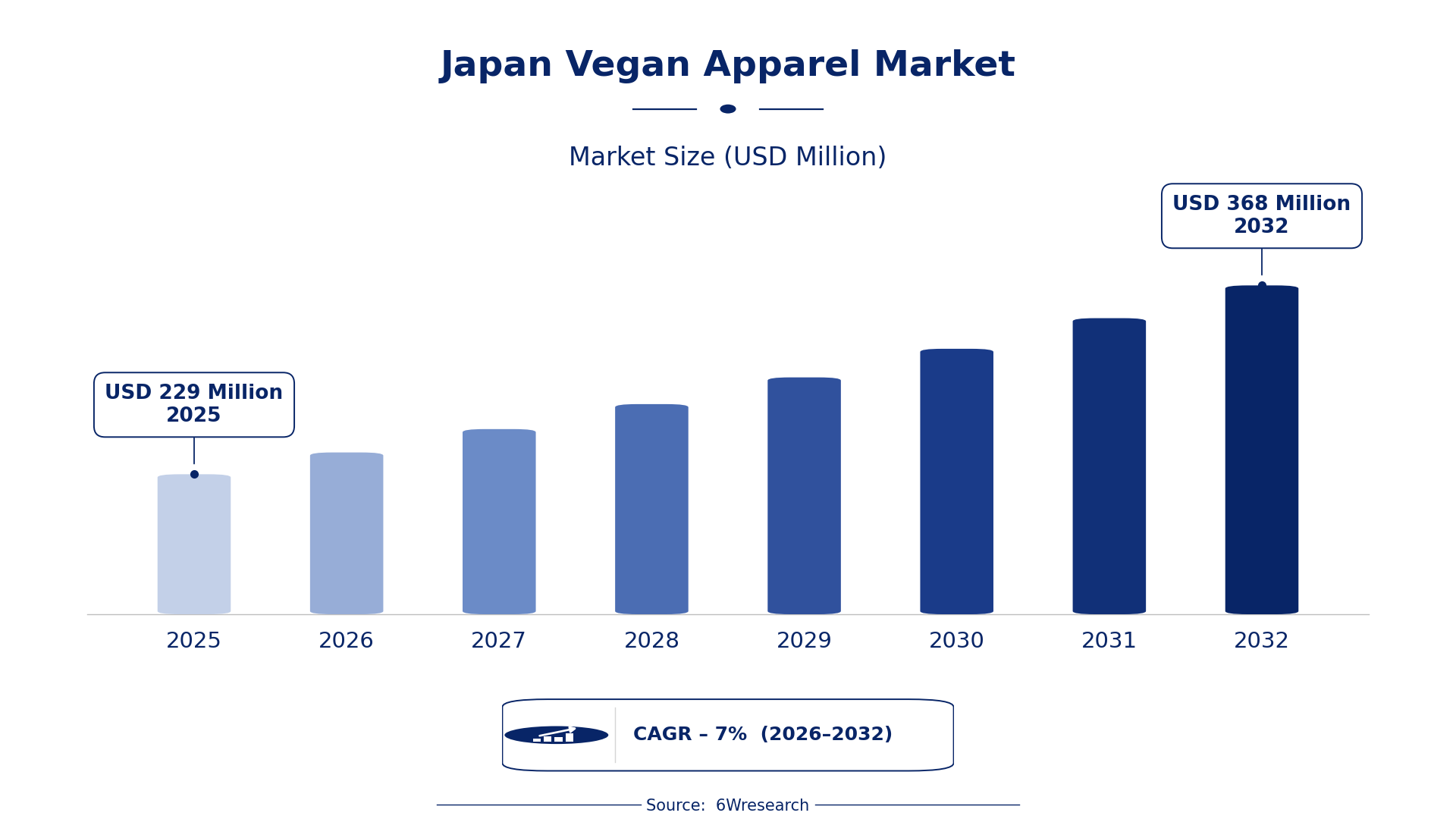
According to 6Wresearch internal database and industry insights, the Japan Vegan Apparel Market was valued at USD 229 Million in 2025 and is projected to reach USD 368 Million by 2032, growing at a CAGR of approximately 7% during 2026–2032.
Japan Vegan Apparel Market Highlights
| Report Metric | Details |
| Report Name | Japan Vegan Apparel Market (2026-2032) |
| Market Size 2025 | USD 229 Million |
| Market Size 2032 | USD 368 Million |
| Absolute Growth 2025–2032 | USD 139 Million |
| CAGR 2026–2032 | 7% |
| Peak Annual Growth | 11.9% in 2028 |
| Forecast Period | 2026–2032 |
| Historical Data | 2022–2025 |
| Base Year | 2025 |
| Leading Product Type, 2025 | Jackets (48% share) |
| Leading Material Source, 2025 | Recycled Polyester (37% share) |
| Leading Sales Channel, 2025 | Online Stores (45% share) |
| Leading End User, 2025 | Eco-conscious Consumers (35% share) |
| Fastest-Growing Product Type | Bags (9.5% CAGR) |
| Fastest-Growing Material Source | Plant-Based Leather (9.7% CAGR) |
| Fastest-Growing Sales Channel | E-commerce (8.9% CAGR) |
| Fastest-Growing End User | Ethical Buyers (9.1% CAGR) |
| Growing Sector | sustainable fashion |
| Key End Users | eco-conscious consumers, ethical buyers, vegan population |
Japan Vegan Apparel Market Year-wise Growth Rate and Key Drivers (2022–2032)
This graph illustrates the annual growth rates of the market from 2022 to 2032, highlighting a steady upward trajectory and projected market expansion over the forecast period.
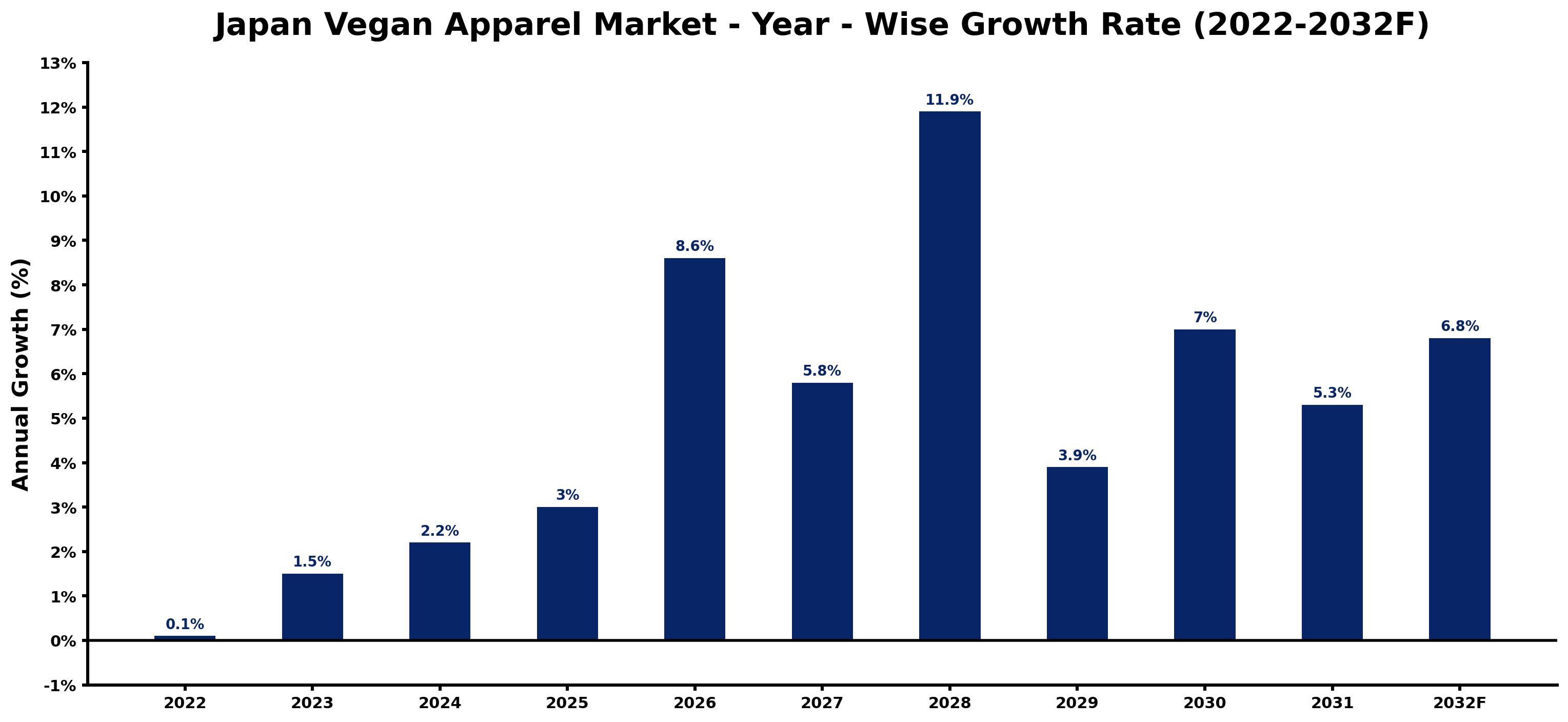
Each row of the following table gives one year's estimated growth and the event or demand shift that explains it.
| Year | Estimated Annual Growth (%) | Market Rationale |
| 2022 | 0.1 | The market saw minimal growth as awareness of vegan apparel began to rise among consumers. |
| 2023 | 1.5 | Consumer interest in vegan apparel increased significantly, reflecting a shift towards sustainable fashion choices. |
| 2024 | 2.2 | The market continued to gain traction as more brands introduced vegan options, appealing to eco-conscious buyers. |
| 2025 | 3.0 | Growth accelerated as the vegan population expanded, driving demand for sustainable clothing alternatives. |
| 2026 | 8.6 | The market experienced a substantial rise in demand due to increased investments in sustainable fashion initiatives. |
| 2027 | 5.8 | Growth slowed as the market began to stabilise after rapid expansion in previous years. |
| 2028 | 11.9 | A peak in growth occurred as innovative materials gained popularity among consumers seeking ethical fashion. |
| 2029 | 3.9 | The market growth rate slowed as consumer preferences began to normalise after a period of rapid change. |
| 2030 | 7.0 | Demand increased again as e-commerce platforms expanded their offerings of vegan apparel. |
| 2031 | 5.3 | Growth slowed slightly as the market matured and competition intensified among retailers. |
| 2032 | 6.8 | The market is expected to continue growing steadily as awareness of sustainable fashion remains high. |
Note: Market size estimations and growth projections presented in this report are based on 6Wresearch's proprietary forecasting methodology, utilizing the latest available industry data, government publications, and primary research inputs.
Japan Vegan Apparel Market Synopsis
Vegan apparel encompasses clothing crafted without animal-derived materials, using alternatives such as plant-based leathers and recycled fabrics. The market is growing as eco-conscious consumers rise, with around 1.5 million individuals in Japan identifying as vegan in 2023. Increased interest in sustainable fashion and government initiatives advocating eco-friendly practices are boosting demand, especially in urban centres like Tokyo, where fashion retailers are increasingly offering vegan options.
Market Dynamics Impact Analysis (2026–2032)
| Factor | Type | Impact | Primary Segment Affected |
| Rising consumer awareness of sustainability | Driver | High | Eco-conscious Consumers |
| Increased availability of innovative materials | Driver | High | Recycled Polyester |
| Growing interest in ethical fashion | Opportunity | High | Fashion Retailers |
| Expansion of e-commerce platforms | Opportunity | High | Online Stores |
| Limited options in certain categories | Restraint | Medium | Belts & Accessories |
| Higher production costs for sustainable materials | Restraint | Medium | Plant-Based Leather |
| Competition from traditional apparel brands | Challenge | High | Jackets |
| Consumer price sensitivity affecting purchasing decisions | Challenge | Medium | Shoes |
Evaluation of Drivers in Japan Vegan Apparel Market (2026–2032)
Demand rests on the following drivers, each shown with the segment it touches most.
| Drivers | Primary Segment Affected | Why It Matters (Evidence) |
| Increased consumer awareness of sustainability | Eco-conscious Consumers | Approximately 30% of consumers reported interest in vegan apparel, driving demand for sustainable clothing options. |
| Growing availability of new materials | Recycled Polyester | The use of recycled polyester is increasing, aligning with sustainability goals and attracting eco-conscious buyers. |
| Expansion of e-commerce platforms | Online Stores | E-commerce sales of vegan apparel are projected to increase, providing consumers with greater access to products. |
| Rising interest in ethical fashion | Fashion Retailers | Fashion retailers are incorporating more vegan options in response to the increasing demand from consumers. |
| Government initiatives promoting sustainable fashion | Plant-Based Leather | Government programmes encourage the use of eco-friendly materials, boosting demand for plant-based leather. |
Much of the new demand traces back to the increasing consumer awareness of sustainability, with over 30% of consumers in Japan expressing interest in vegan apparel. The availability of new materials, such as recycled polyester, is also rising, particularly in sustainable clothing, which aligns with eco-friendly goals. E-commerce platforms are expanding their offerings, leading to a projected increase in vegan apparel sales. Retailers are responding to the growing interest in ethical fashion by incorporating more vegan options into their collections, reflecting changing consumer habits. The rise in eco-conscious consumers is expected to drive further demand for sustainable clothing alternatives.
Evaluation of Restraints in Japan Vegan Apparel Market
These are the pressures that could keep growth below its potential.
| Market Restraint | Primary Segment Affected | Why It Matters (Evidence) |
| Limited options in certain categories | Belts & Accessories | The availability of vegan belts and accessories remains restricted, limiting consumer choices in this segment. |
| Higher production costs for sustainable materials | Plant-Based Leather | Producers face higher costs when sourcing sustainable materials, which may deter some buyers from purchasing. |
| Competition from traditional apparel brands | Jackets | Traditional brands are increasingly offering their own sustainable lines, intensifying competition in the vegan apparel market. |
| Consumer price sensitivity affecting purchasing decisions | Shoes | Some consumers may hesitate to purchase higher-priced vegan footwear, impacting overall sales. |
| Niche market appeal of certain materials | Cork/Cotton Canvas | Cork and cotton canvas remain niche materials, limiting their broader market appeal. |
Japan Vegan Apparel Market Challenges
Tokyo's specialty boutiques face challenges with unreliable supply chains for plant-based leather, resulting in delays that can extend lead times by three months for retailers. Competition from traditional apparel brands remains intense, as they leverage established supply networks, making it challenging for vegan apparel producers to gain market presence. Buyers encounter higher prices for vegan clothing, with some items costing up to 25% more than conventional options, which may deter eco-conscious consumers. Technology adoption is slow; many producers lack access to advanced sustainable materials, limiting their ability to meet the needs of over 30% of consumers interested in vegan apparel.
Trends in the Japan Vegan Apparel Market
Several trends are reshaping the Japan Vegan Apparel Market; the most important are set out below.
- Shift towards E-commerce for Vegan Apparel: The trend towards online shopping has accelerated, with e-commerce anticipated to grow. In 2023, online stores represented 45% of vegan apparel sales, reflecting changing consumer habits.
- Increase in Plant-Based Leather Adoption: The adoption of plant-based leather is increasing, with several new brands emerging in 2023. This material is gaining popularity, catering to the rising demand for cruelty-free alternatives.
- Growth of Eco-Conscious Fashion Initiatives: In 2023, the Ministry of the Environment initiated programmes to promote sustainable fashion practices. This has led to heightened awareness and interest in eco-friendly apparel among consumers.
- Emergence of Specialty Boutiques: Specialty boutiques in urban areas are broadening their vegan product offerings, reflecting a growing consumer interest. In 2023, these boutiques experienced a rise in vegan apparel sales, catering to niche markets.
Investment Opportunities in the Japan Vegan Apparel Market
The openings below show where demand in the Japan Vegan Apparel Market is visible and how suppliers can enter.
- Supply of Recycled Polyester: With the growing need for sustainable clothing, there is an opportunity to supply recycled polyester. In 2023, the market for this material is expanding, particularly among fashion retailers.
- Investment in E-commerce Platforms: The e-commerce sector is projected to grow, presenting an opportunity for investment in online stores. This is particularly relevant for urban areas where consumer interest in vegan apparel is high.
- Development of Plant-Based Leather Products: The demand for plant-based leather is increasing, creating opportunities for suppliers to develop new products. This aligns with the growing interest in cruelty-free fashion alternatives.
- Expansion of Fashion Retailers' Vegan Offerings: Fashion retailers are increasingly incorporating vegan options, presenting opportunities for suppliers to meet this demand. In 2023, many retailers are expanding their sustainable fashion lines.
Government Initiatives in the Japan Vegan Apparel Market
The Plastic Resource Circulation Act, established in 2021, promotes the reduction, reuse, and recycling of plastics in Japan. This law complements existing regulations by encouraging fashion producers to adopt sustainable practices and materials in their production processes. In 2023, the government allocated funding for projects that support sustainable practices in the fashion industry, benefiting producers who implement eco-friendly materials.
The Ministry of the Environment and METI oversee the implementation of the Plastic Resource Circulation Act. They provide funding for projects that promote sustainable practices in the fashion industry, benefiting producers who adopt eco-friendly materials. In 2023, they approved several initiatives aimed at increasing the use of sustainable materials in fashion production.
Future Insight of the Japan Vegan Apparel Market
The investment pipeline for sustainable materials will expand, creating a surge in demand for alternatives like recycled polyester and plant-based leathers. By 2032, e-commerce sales of vegan apparel are projected to rise significantly, improving accessibility for consumers. Government programmes will further encourage the use of eco-friendly materials in fashion production, prompting suppliers to innovate. The Japan Sustainable Apparel Association will continue to drive adherence to sustainability standards, shaping the future of the market.
Market Segmentation Analysis
Japan Vegan Apparel Market report covers a detailed analysis of the following market segments:
By Product Type – Jackets Lead, Bags Expected to Grow Fastest
According to Saurav Kr Singh, Senior Research Analyst at 6Wresearch, Jackets accounted for 48% of the market by product type in 2025. Jackets command the largest share as they are in high demand for sustainable outerwear among eco-conscious consumers. In urban areas like Tokyo, the increasing focus on sustainable fashion has led to a greater preference for jackets made from recycled materials. Bags are set to record the highest CAGR in this split, 9.5% over 2026–2032. Bags are experiencing rapid growth due to a rising preference for eco-friendly accessories that resonate with consumer values. The emergence of new brands dedicated to sustainable bag options has significantly accelerated this trend. Suppliers should prioritise expanding their vegan bag offerings to align with the growing consumer interest.
By Material Source – Recycled Polyester Leads, Plant-Based Leather Expected to Grow Fastest
In 2025, Recycled Polyester led the material source split with a 37% share. Recycled Polyester leads the market because it is widely utilised in sustainable clothing, appealing to environmentally conscious buyers. Its application across various apparel types, particularly in jackets, solidifies its dominant market position. Plant-Based Leather is projected to grow fastest, at a CAGR of 9.7% during 2026–2032. Plant-Based Leather is witnessing the fastest growth as it serves as a popular alternative to traditional leather, attracting consumers seeking cruelty-free options. The rise of new brands focused on plant-based materials is driving this segment forward. Buyers can expect a broader range of products made from plant-based materials as demand continues to escalate.
By Sales Channel – Online Stores Lead, E-commerce Expected to Grow Fastest
Online Stores took 45% of sales channel revenue in 2025, more than any other category. Online Stores represent the primary channel for vegan apparel sales, effectively catering to the growing number of eco-conscious consumers seeking sustainable options. The convenience and accessibility of online shopping have made it the preferred choice for many buyers. The quickest growth will come from E-commerce, forecast to expand at a CAGR of 8.9% between 2026 and 2032. E-commerce is rapidly emerging as the dominant sales platform for vegan products, propelled by increasing consumer interest in online shopping. The anticipated growth in e-commerce sales indicates a significant shift in purchasing behaviour towards digital platforms. Suppliers must strengthen their online presence to effectively capture the expanding e-commerce market for vegan apparel.
By End User – Eco-conscious Consumers Lead, Ethical Buyers Expected to Grow Fastest
Eco-conscious Consumers held 35% of the Japan Vegan Apparel Market by end user in 2025. Eco-conscious Consumers represent the primary target demographic for vegan apparel, reflecting a strong commitment to sustainability in their purchasing decisions. Their growing numbers and influence in the market underscore the importance of catering to this group. Over 2026–2032, Ethical Buyers are expected to post the fastest growth, at a CAGR of 9.1%. Ethical Buyers are the fastest-growing segment as they prioritise sustainability in their purchases, driving demand for vegan apparel. This trend highlights a broader shift towards ethical consumption among consumers, indicating a potential for continued growth. Suppliers should tailor their marketing strategies to appeal specifically to ethical buyers to capitalise on this growing segment.
Key Attractiveness of the Report
- 10 Years of Market Numbers
- Historical Data Starting from 2022 to 2025
- Base Year 2025
- Forecast Data until 2032
- Key Performance Indicators Impacting the Market
- Major Upcoming Developments and Projects
Key Highlights of the Report:
- Japan Vegan Apparel Market Outlook
- Market Size of Japan Vegan Apparel Market, 2025
- Forecast of Japan Vegan Apparel Market, 2032
- Historical Data and Forecast of Japan Vegan Apparel Revenues & Volume for the Period 2022-2032F
- Japan Vegan Apparel Market Trend Evolution
- Japan Vegan Apparel Market Drivers and Challenges
- Japan Vegan Apparel Price Trends
- Japan Vegan Apparel Porter's Five Forces
- Japan Vegan Apparel Industry Life Cycle
- Historical Data and Forecast of Japan Vegan Apparel Market Revenues & Volume By Product Type for the Period 2022-2032F
- Historical Data and Forecast of Japan Vegan Apparel Market Revenues & Volume By Jackets for the Period 2022-2032F
- Historical Data and Forecast of Japan Vegan Apparel Market Revenues & Volume By Shoes for the Period 2022-2032F
- Historical Data and Forecast of Japan Vegan Apparel Market Revenues & Volume By Bags for the Period 2022-2032F
- Historical Data and Forecast of Japan Vegan Apparel Market Revenues & Volume By Belts & Accessories for the Period 2022-2032F
- Historical Data and Forecast of Japan Vegan Apparel Market Revenues & Volume By Material Source for the Period 2022-2032F
- Historical Data and Forecast of Japan Vegan Apparel Market Revenues & Volume By Recycled Polyester for the Period 2022-2032F
- Historical Data and Forecast of Japan Vegan Apparel Market Revenues & Volume By Plant-Based Leather for the Period 2022-2032F
- Historical Data and Forecast of Japan Vegan Apparel Market Revenues & Volume By Cork/Cotton Canvas for the Period 2022-2032F
- Historical Data and Forecast of Japan Vegan Apparel Market Revenues & Volume By PU-Based Faux Leather for the Period 2022-2032F
- Historical Data and Forecast of Japan Vegan Apparel Market Revenues & Volume By Sales Channel for the Period 2022-2032F
- Historical Data and Forecast of Japan Vegan Apparel Market Revenues & Volume By Online Stores for the Period 2022-2032F
- Historical Data and Forecast of Japan Vegan Apparel Market Revenues & Volume By Fashion Retailers for the Period 2022-2032F
- Historical Data and Forecast of Japan Vegan Apparel Market Revenues & Volume By Specialty Boutiques for the Period 2022-2032F
- Historical Data and Forecast of Japan Vegan Apparel Market Revenues & Volume By E-commerce for the Period 2022-2032F
- Historical Data and Forecast of Japan Vegan Apparel Market Revenues & Volume By End User for the Period 2022-2032F
- Historical Data and Forecast of Japan Vegan Apparel Market Revenues & Volume By Eco-conscious Consumers for the Period 2022-2032F
- Historical Data and Forecast of Japan Vegan Apparel Market Revenues & Volume By Vegan Population for the Period 2022-2032F
- Historical Data and Forecast of Japan Vegan Apparel Market Revenues & Volume By Ethical Buyers for the Period 2022-2032F
- Historical Data and Forecast of Japan Vegan Apparel Market Revenues & Volume By Sustainable Brands for the Period 2022-2032F
- Japan Vegan Apparel Import Export Trade Statistics
- Market Opportunity Assessment By Product Type
- Market Opportunity Assessment By Material Source
- Market Opportunity Assessment By Sales Channel
- Market Opportunity Assessment By End User
- Japan Vegan Apparel Top Companies Market Share
- Japan Vegan Apparel Competitive Benchmarking By Technical and Operational Parameters
- Japan Vegan Apparel Company Profiles
- Japan Vegan Apparel Key Strategic Recommendations
Market Covered
The report covers the following segments.
By Product Type
- Jackets
- Shoes
- Bags
- Belts & Accessories
By Material Source
- Recycled Polyester
- Plant-Based Leather
- Cork/Cotton Canvas
- PU-Based Faux Leather
By Sales Channel
- Online Stores
- Fashion Retailers
- Specialty Boutiques
- E-commerce
By End User
- Eco-conscious Consumers
- Vegan Population
- Ethical Buyers
- Sustainable Brands































