Japan Vintage Furniture Market Size & Growth Rate
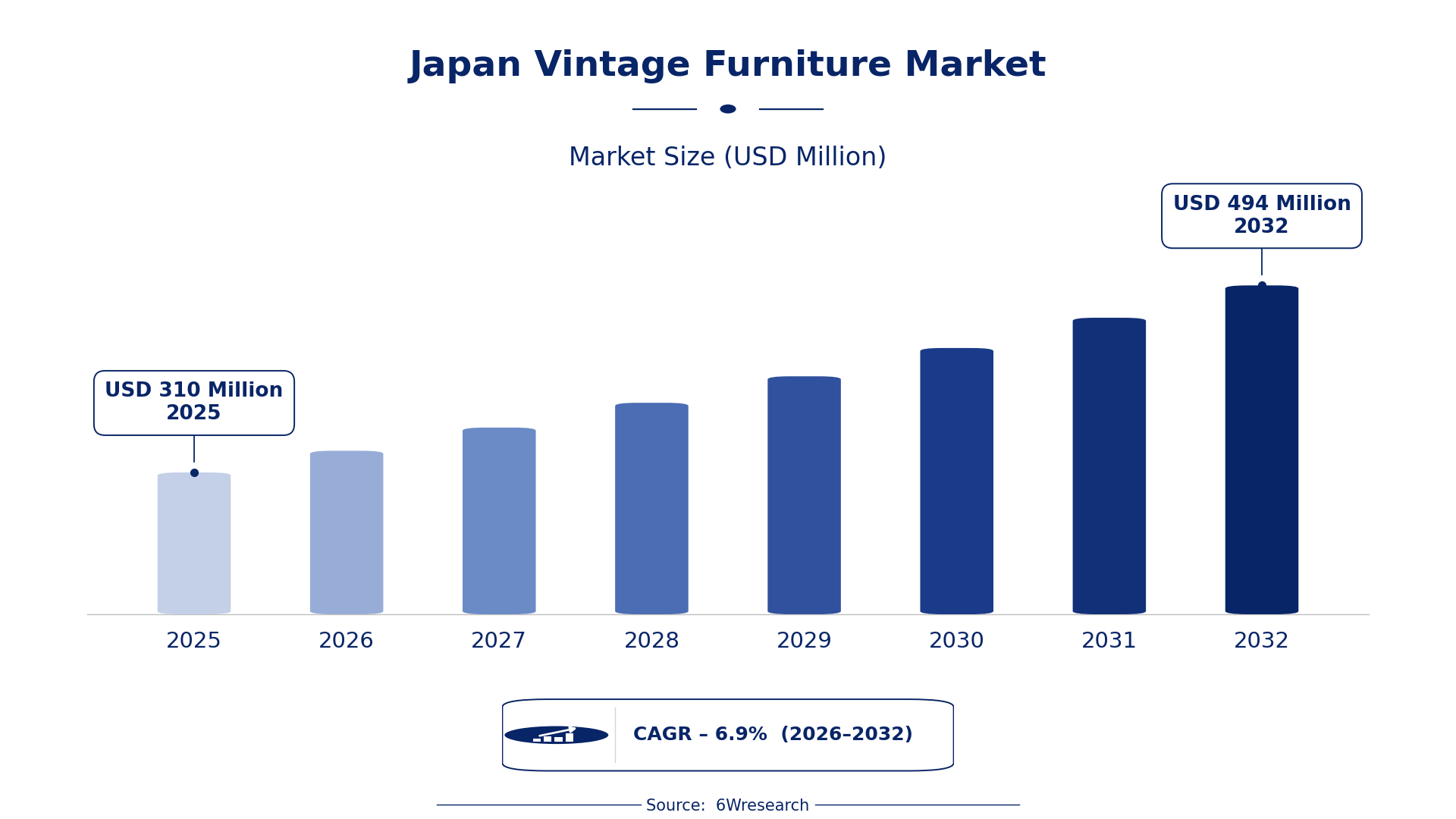
According to 6Wresearch internal database and industry insights, the Japan Vintage Furniture Market was valued at USD 310 Million in 2025 and is projected to reach USD 494 Million by 2032, growing at a CAGR of approximately 6.9% during 2026–2032.
Japan Vintage Furniture Market Highlights
| Report Metric | Details |
| Report Name | Japan Vintage Furniture Market (2026-2032) |
| Market Size 2025 | USD 310 Million |
| Market Size 2032 | USD 494 Million |
| Absolute Growth 2025–2032 | USD 184 Million |
| CAGR 2026–2032 | 6.9% |
| Peak Annual Growth | 7.6% in 2029 |
| Forecast Period | 2026–2032 |
| Historical Data | 2022–2025 |
| Base Year | 2025 |
| Leading Furniture Type, 2025 | Vintage Sofas (44% share) |
| Leading Material Type, 2025 | Teak Wood (38% share) |
| Leading Distribution Channel, 2025 | Showrooms (53% share) |
| Leading End User, 2025 | Homeowners (41% share) |
| Fastest-Growing Furniture Type | Antique Chairs (9.4% CAGR) |
| Fastest-Growing Material Type | Mahogany (9.9% CAGR) |
| Fastest-Growing Distribution Channel | Online Furniture Stores (8.9% CAGR) |
| Fastest-Growing End User | Hotels & Resorts (8.8% CAGR) |
| Growing Sector | Home decoration |
| Key End Users | Homeowners, Hotels & Resorts, Restaurants, Heritage Properties |
Japan Vintage Furniture Market Year-wise Growth Rate and Key Drivers (2022–2032)
This graph illustrates the annual growth rates of the market from 2022 to 2032, highlighting a steady upward trajectory and projected market expansion over the forecast period.
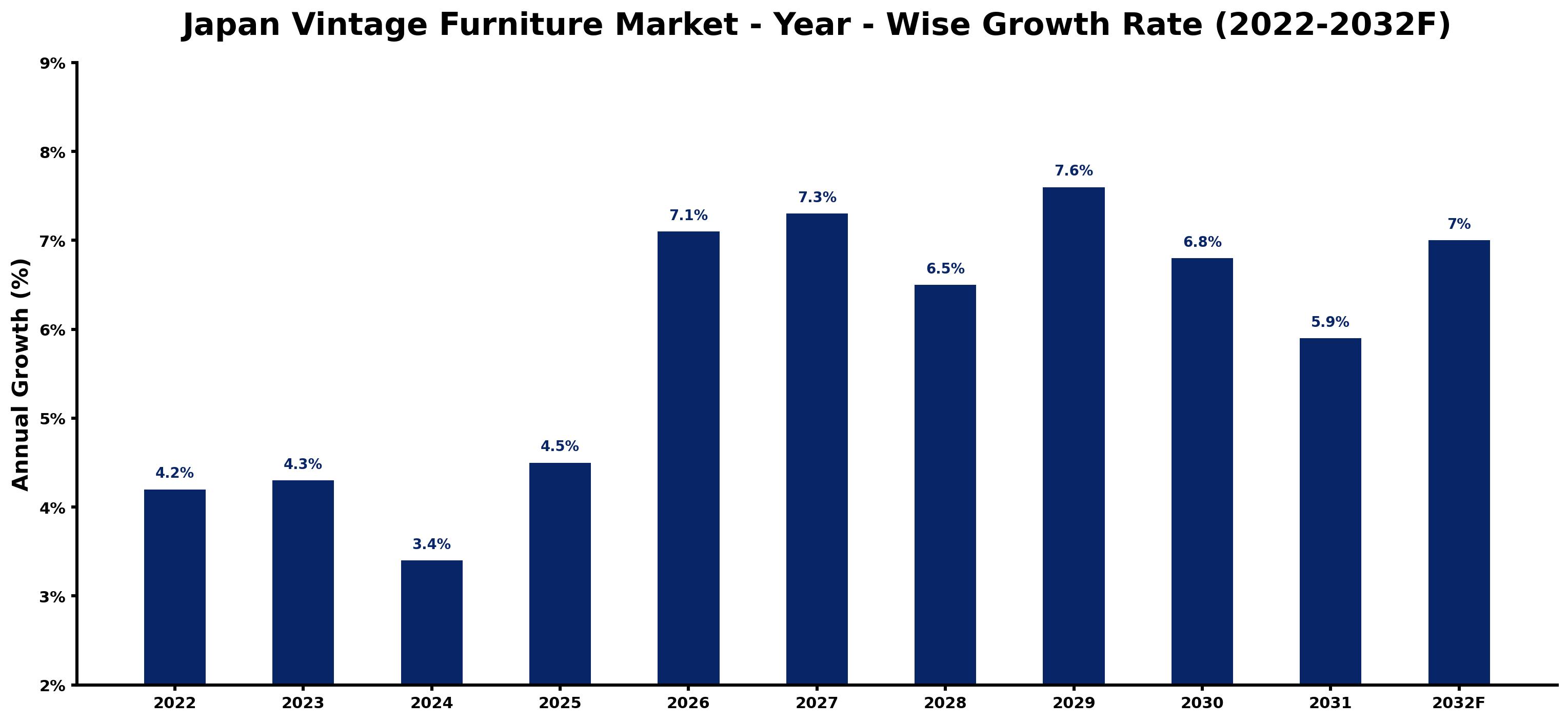
The following figures match every annual growth estimate with the main market development of that year, giving the reasoning behind each rise or slowdown.
| Year | Estimated Annual Growth (%) | Market Rationale |
| 2022 | 4.2 | The market experienced steady demand from homeowners and heritage properties. |
| 2023 | 4.3 | Interest in vintage items grew, particularly in urban areas like Tokyo and Osaka. |
| 2024 | 3.4 | Demand slowed as consumers became more selective in their purchases. |
| 2025 | 4.5 | Sales increased due to a rise in vintage furniture fairs and local artisans. |
| 2026 | 7.1 | A surge in online sales is expected as digital platforms gain popularity. |
| 2027 | 7.3 | Continued interest in sustainable living will boost purchases of reclaimed wood items. |
| 2028 | 6.5 | Growth is projected to slow as supply chain issues affect availability of key items. |
| 2029 | 7.6 | The peak growth year will be driven by heightened consumer interest in unique decor. |
| 2030 | 6.8 | Market growth is expected to slow as competition intensifies among vintage dealers. |
| 2031 | 5.9 | The market will continue to grow, supported by increased investments in restoration. |
| 2032 | 7.0 | Demand is projected to rise as hotels and restaurants seek vintage pieces for ambiance. |
Note: Market size estimations and growth projections presented in this report are based on 6Wresearch's proprietary forecasting methodology, utilizing the latest available industry data, government publications, and primary research inputs.
Japan Vintage Furniture Market Synopsis
Vintage furniture in Japan encompasses pre-owned or antique items that reflect historical craftsmanship. The Japan Vintage Furniture Market thrives due to a rich tradition dating back to the Edo period, with urban areas like Tokyo and Osaka showing heightened demand. Growth is driven by homeowners, heritage properties, and an increasing interest from hotels and restaurants seeking unique decor. Online sales surged by 25% in 2023, highlighting the shift towards digital purchasing platforms and the rising trend of sustainable living, supported by local government grants for restoration projects.
Market Dynamics Impact Analysis (2026–2032)
| Factor | Type | Impact | Primary Segment Affected |
| Growing interest in sustainable living drives demand for reclaimed wood furniture. | Driver | High | Reclaimed Wood |
| Rising online sales platforms enhance accessibility for buyers. | Driver | High | Online Furniture Stores |
| Increased investment in restoration projects creates opportunities for suppliers. | Opportunity | High | Antique Chairs |
| Heritage properties require vintage furniture for authenticity, expanding market reach. | Opportunity | Medium | Classic Cabinets |
| Supply chain issues limit availability of key vintage items. | Restraint | High | Vintage Sofas |
| High restoration costs may deter some buyers from making purchases. | Restraint | Medium | Antique Chairs |
| Intense competition among dealers can lead to pricing pressures. | Challenge | High | Showrooms |
| Shifts in consumer preferences may affect demand for specific styles. | Challenge | Medium | Retro Coffee Tables |
Evaluation of Drivers in Japan Vintage Furniture Market (2026–2032)
The factors lifting demand, and the evidence behind each, are summarised below.
| Drivers | Primary Segment Affected | Why It Matters (Evidence) |
| Increased interest in sustainable living. | Reclaimed Wood | This trend encourages consumers to seek vintage pieces made from reclaimed materials, boosting sales. |
| Surge in online shopping for vintage items. | Online Furniture Stores | The 25% increase in online sales in 2023 indicates a shift in consumer purchasing behaviour. |
| Growing number of vintage furniture fairs. | Vintage Sofas | These events increase market visibility and attract buyers, enhancing sales opportunities. |
| Investment in restoration supported by local government grants. | Antique Chairs | This funding facilitates restoration projects, making vintage furniture more appealing to buyers. |
| Rising popularity of mid-century modern styles. | Retro Coffee Tables | This trend drives demand for specific vintage pieces that fit contemporary aesthetics. |
Several shifts outside the market lift sales. The 25% increase in online sales in 2023 reflects changing consumer preferences towards digital purchasing. Interest in sustainable living drives demand for reclaimed wood furniture, appealing to environmentally conscious buyers. The growing number of vintage furniture fairs showcases local artisans, further boosting market visibility. The popularity of mid-century modern styles influences consumer choices, leading to higher demand for specific vintage pieces.
Evaluation of Restraints in Japan Vintage Furniture Market
The following restraints limit how fast demand can grow.
| Market Restraint | Primary Segment Affected | Why It Matters (Evidence) |
| Supply chain disruptions limit the availability of vintage items. | Vintage Sofas | This issue affects dealers' ability to meet consumer demand, resulting in potential lost sales. |
| High restoration costs deter buyers from investing in vintage pieces. | Antique Chairs | Increased expenses can create hesitation among potential customers, impacting overall sales. |
| Intense competition among dealers leads to pricing pressures. | Showrooms | This competition reduces profit margins for sellers, affecting their sustainability. |
| Shifts in consumer preferences may affect demand for specific styles. | Retro Coffee Tables | This variability creates uncertainty for dealers regarding inventory management. |
| Limited awareness of vintage furniture benefits among younger consumers. | Classic Cabinets | This lack of knowledge hinders market growth as potential buyers remain uninformed. |
Japan Vintage Furniture Market Challenges
Japan's vintage furniture market struggles with limited supply as the number of antique dealers declines, forcing producers to source items from further away, which increases lead times. Producers rely on traditional restoration techniques, resulting in slower processes that delay availability for buyers seeking unique pieces. Restoration costs can escalate to ¥200,000 for antique chairs, making it difficult for producers to maintain competitive pricing. Buyers face higher prices and reduced selection, with average costs for vintage dining sets around ¥150,000, which may deter potential purchases.
Trends in the Japan Vintage Furniture Market
Four trends stand out in the Japan Vintage Furniture Market.
- Transition to Digital Purchasing: A notable increase in online sales of vintage furniture by 25% in 2023 underscores a shift in consumer behaviour. Buyers are increasingly opting for digital platforms for convenience and variety, prompting suppliers to enhance their online presence.
- Rising Focus on Sustainability: A growing emphasis on sustainability is reshaping consumer preferences as buyers seek reclaimed wood furniture. The Tokyo Metropolitan Government promotes this trend, encouraging eco-friendly options that influence purchasing decisions.
- Surge in Vintage Furniture Fairs: The number of vintage furniture fairs in Japan has increased, showcasing local artisans and their work. This trend boosts market visibility and attracts a diverse audience interested in unique vintage items.
- Popularity of Mid-Century Modern Styles: The rising popularity of mid-century modern styles is influencing consumer preferences in vintage furniture. This trend is particularly pronounced in urban areas, where cafes and homes are increasingly incorporating retro coffee tables into their decor.
Investment Opportunities in the Japan Vintage Furniture Market
The following opportunities in the Japan Vintage Furniture Market pair current demand with a clear way in.
- Homeowners Seeking Unique Decor: Homeowners are increasingly interested in vintage furniture for unique home decoration. With the market projected to grow, suppliers can tap into this demand by collaborating with local artisans.
- Entry through Online Platforms: Online furniture stores are a growing channel for vintage items, presenting an opportunity for suppliers. Establishing partnerships with these platforms can facilitate access to a broader customer base, especially among younger buyers.
- Investment in Restoration Services: The demand for antique chairs is rising, driven by homeowners looking for authentic pieces. Suppliers can invest in restoration services to meet this need, particularly in urban centres like Tokyo.
- Focus on Heritage Properties: Heritage properties require vintage furniture for authenticity, creating opportunities for specialized suppliers. By targeting this market segment, businesses can improve their offerings and establish strong relationships with property owners.
Government Initiatives in the Japan Vintage Furniture Market
The Industrial Standardization Act, amended in 2019, governs product and test standards for vintage furniture. This law ensures that items meet specific quality criteria, which is essential for buyers seeking authenticity and reliability in their purchases. Compliance with these standards is vital for producers and dealers to maintain market credibility.
The Japan Antique Dealers Association regulates the trade of antique furniture, ensuring that buyers receive genuine products. This association also provides resources and support for dealers, facilitating compliance with industry standards. By adhering to these regulations, buyers can trust the authenticity of the vintage items they purchase.
Future Insight of the Japan Vintage Furniture Market
By 2032, a shift towards sustainability will drive increased investment in vintage furniture restoration, improving the appeal of eco-friendly practices. Producers will adopt new techniques to enhance efficiency, allowing for quicker turnaround times. Online sales will continue to grow, with a 25% increase in 2023 indicating a strong trend towards digital marketplaces. Vintage furniture fairs will thrive, showcasing local artisans and strengthening direct connections between buyers and unique items.
Market Segmentation Analysis
Japan Vintage Furniture Market report covers a detailed analysis of the following market segments:
By Furniture Type – Vintage Sofas Lead, Antique Chairs Expected to Grow Fastest
According to Saurav Kr Singh, Senior Research Analyst at 6Wresearch, Vintage Sofas took 44% of furniture type revenue in 2025, more than any other category. Vintage sofas dominate the market as they are highly sought after in urban areas like Tokyo and Osaka, appealing to a wide range of buyers. Their versatility in both home and commercial decor further cements their leading position in consumer preferences. Antique Chairs are projected to grow fastest, at a CAGR of 9.4% during 2026–2032. Antique chairs are witnessing rapid growth due to their rising popularity in residential and commercial settings, with restoration projects making them more desirable. This trend is particularly strong in urban locales where vintage aesthetics are increasingly valued. Suppliers should focus on antique chairs to meet the growing demand from various consumer segments.
By Material Type – Teak Wood Leads, Mahogany Expected to Grow Fastest
In 2025, Teak Wood led the material type split with a 38% share. Teak wood dominates the vintage furniture market because of its durability and aesthetic qualities, making it a top choice for consumers seeking long-lasting pieces. Its established reputation ensures consistent demand across various furniture types. Over 2026–2032, Mahogany is expected to post the fastest growth, at a CAGR of 9.9%. Mahogany is seeing the fastest growth as it is highly sought after for its rich colour and premium quality, appealing to buyers looking for distinguished vintage items. This trend reflects a growing preference for high-quality materials in furniture selections. Buyers should focus on acquiring more mahogany pieces to meet the rising demand for premium vintage furniture.
By Distribution Channel – Showrooms Lead, Online Furniture Stores Expected to Grow Fastest
The largest distribution channel category in 2025 was Showrooms, at 53% of revenue. Showrooms are the primary sales channel for vintage furniture, providing customers with the chance to physically engage with a diverse selection of items. Their established presence in major urban areas allows them to effectively cater to vintage furniture enthusiasts. Online Furniture Stores are set to record the highest CAGR in this split, 8.9% over 2026–2032. Online furniture stores are experiencing substantial growth as a preferred platform for purchasing vintage items, with online sales increasing by 25% in 2023. This shift reflects a notable change in consumer preferences towards convenience and accessibility in shopping. Suppliers must strengthen their online presence to capture the expanding market of consumers who prefer online purchases.
By End User – Homeowners Lead, Hotels & Resorts Expected to Grow Fastest
Homeowners held 41% of the Japan Vintage Furniture Market by end user in 2025. Homeowners constitute the largest consumer group for vintage furniture, motivated by a desire for unique decor that reflects their personal style. Their strong purchasing power and interest in home decoration ensure a steady demand for vintage items. The quickest growth will come from Hotels & Resorts, forecast to expand at a CAGR of 8.8% between 2026 and 2032. Hotels and resorts are increasingly incorporating vintage pieces to create distinctive atmospheres, contributing to their rapid growth in the market. This trend signals a shift towards unique decor in the hospitality sector, appealing to a wider audience. Suppliers should target hotels and resorts to broaden their market reach and tap into this expanding segment.
Key Attractiveness of the Report
- 10 Years of Market Numbers
- Historical Data Starting from 2022 to 2025
- Base Year 2025
- Forecast Data until 2032
- Key Performance Indicators Impacting the Market
- Major Upcoming Developments and Projects
Key Highlights of the Report:
- Japan Vintage Furniture Market Outlook
- Market Size of Japan Vintage Furniture Market, 2025
- Forecast of Japan Vintage Furniture Market, 2032
- Historical Data and Forecast of Japan Vintage Furniture Revenues & Volume for the Period 2022-2032F
- Japan Vintage Furniture Market Trend Evolution
- Japan Vintage Furniture Market Drivers and Challenges
- Japan Vintage Furniture Price Trends
- Japan Vintage Furniture Porter's Five Forces
- Japan Vintage Furniture Industry Life Cycle
- Historical Data and Forecast of Japan Vintage Furniture Market Revenues & Volume By Furniture Type for the Period 2022-2032F
- Historical Data and Forecast of Japan Vintage Furniture Market Revenues & Volume By Vintage Sofas for the Period 2022-2032F
- Historical Data and Forecast of Japan Vintage Furniture Market Revenues & Volume By Antique Chairs for the Period 2022-2032F
- Historical Data and Forecast of Japan Vintage Furniture Market Revenues & Volume By Retro Coffee Tables for the Period 2022-2032F
- Historical Data and Forecast of Japan Vintage Furniture Market Revenues & Volume By Classic Cabinets for the Period 2022-2032F
- Historical Data and Forecast of Japan Vintage Furniture Market Revenues & Volume By Material Type for the Period 2022-2032F
- Historical Data and Forecast of Japan Vintage Furniture Market Revenues & Volume By Teak Wood for the Period 2022-2032F
- Historical Data and Forecast of Japan Vintage Furniture Market Revenues & Volume By Mahogany for the Period 2022-2032F
- Historical Data and Forecast of Japan Vintage Furniture Market Revenues & Volume By Reclaimed Wood for the Period 2022-2032F
- Historical Data and Forecast of Japan Vintage Furniture Market Revenues & Volume By Oak for the Period 2022-2032F
- Historical Data and Forecast of Japan Vintage Furniture Market Revenues & Volume By Distribution Channel for the Period 2022-2032F
- Historical Data and Forecast of Japan Vintage Furniture Market Revenues & Volume By Showrooms for the Period 2022-2032F
- Historical Data and Forecast of Japan Vintage Furniture Market Revenues & Volume By Online Furniture Stores for the Period 2022-2032F
- Historical Data and Forecast of Japan Vintage Furniture Market Revenues & Volume By Boutique Stores for the Period 2022-2032F
- Historical Data and Forecast of Japan Vintage Furniture Market Revenues & Volume By Specialty Suppliers for the Period 2022-2032F
- Historical Data and Forecast of Japan Vintage Furniture Market Revenues & Volume By End User for the Period 2022-2032F
- Historical Data and Forecast of Japan Vintage Furniture Market Revenues & Volume By Homeowners for the Period 2022-2032F
- Historical Data and Forecast of Japan Vintage Furniture Market Revenues & Volume By Hotels & Resorts for the Period 2022-2032F
- Historical Data and Forecast of Japan Vintage Furniture Market Revenues & Volume By Restaurants for the Period 2022-2032F
- Historical Data and Forecast of Japan Vintage Furniture Market Revenues & Volume By Heritage Properties for the Period 2022-2032F
- Japan Vintage Furniture Import Export Trade Statistics
- Market Opportunity Assessment By Furniture Type
- Market Opportunity Assessment By Material Type
- Market Opportunity Assessment By Distribution Channel
- Market Opportunity Assessment By End User
- Japan Vintage Furniture Top Companies Market Share
- Japan Vintage Furniture Competitive Benchmarking By Technical and Operational Parameters
- Japan Vintage Furniture Company Profiles
- Japan Vintage Furniture Key Strategic Recommendations
Market Covered
Coverage by segment is as follows.
By Furniture Type
- Vintage Sofas
- Antique Chairs
- Retro Coffee Tables
- Classic Cabinets
By Material Type
- Teak Wood
- Mahogany
- Reclaimed Wood
- Oak
By Distribution Channel
- Showrooms
- Online Furniture Stores
- Boutique Stores
- Specialty Suppliers
By End User
- Homeowners
- Hotels & Resorts
- Restaurants
- Heritage Properties































