Japan Wearable Sleep Trackers Market Size & Growth Rate
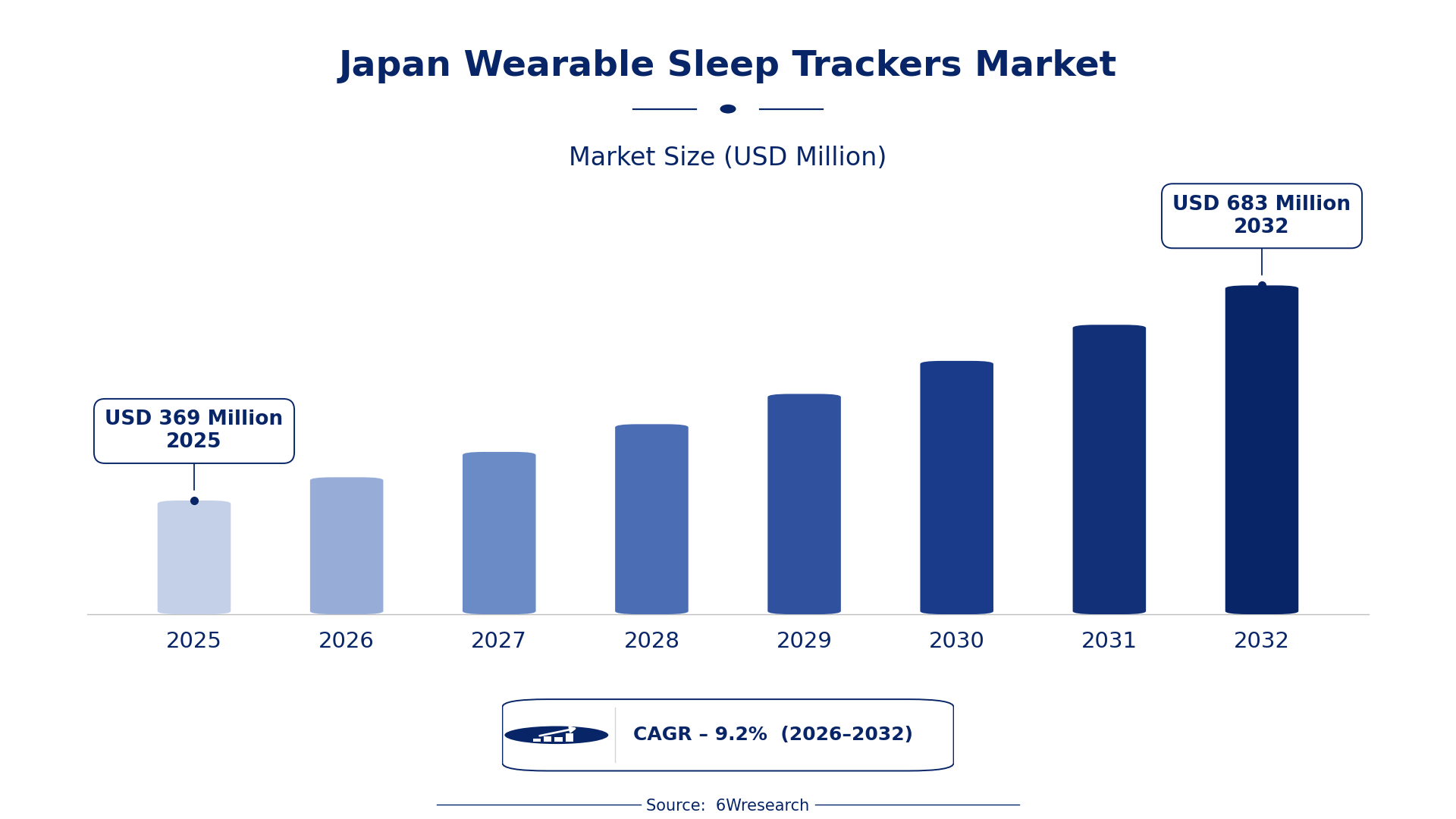
According to 6Wresearch internal database and industry insights, the Japan Wearable Sleep Trackers Market was valued at USD 369 Million in 2025 and is projected to reach USD 683 Million by 2032, growing at a CAGR of approximately 9.2% during 2026–2032.
Japan Wearable Sleep Trackers Market Highlights
| Report Metric | Details |
| Report Name | Japan Wearable Sleep Trackers Market (2026-2032) |
| Market Size 2025 | USD 369 Million |
| Market Size 2032 | USD 683 Million |
| Absolute Growth 2025–2032 | USD 314 Million |
| CAGR 2026–2032 | 9.2% |
| Peak Annual Growth | 11.7% in 2027 |
| Forecast Period | 2026–2032 |
| Historical Data | 2022–2025 |
| Base Year | 2025 |
| Leading Type, 2025 | WiFi (44% share) |
| Leading Application, 2025 | Pharmacy and Retail Stores (37% share) |
| Fastest-Growing Type | Bluetooth (11.9% CAGR) |
| Fastest-Growing Application | Online Sales (12.4% CAGR) |
| Growing Sector | Health and Wellness |
| Key End Users | Health-conscious consumers, retail outlets, online platforms, wellness programs |
Japan Wearable Sleep Trackers Market Year-wise Growth Rate and Key Drivers (2022–2032)
This graph illustrates the annual growth rates of the market from 2022 to 2032, highlighting a steady upward trajectory and projected market expansion over the forecast period.
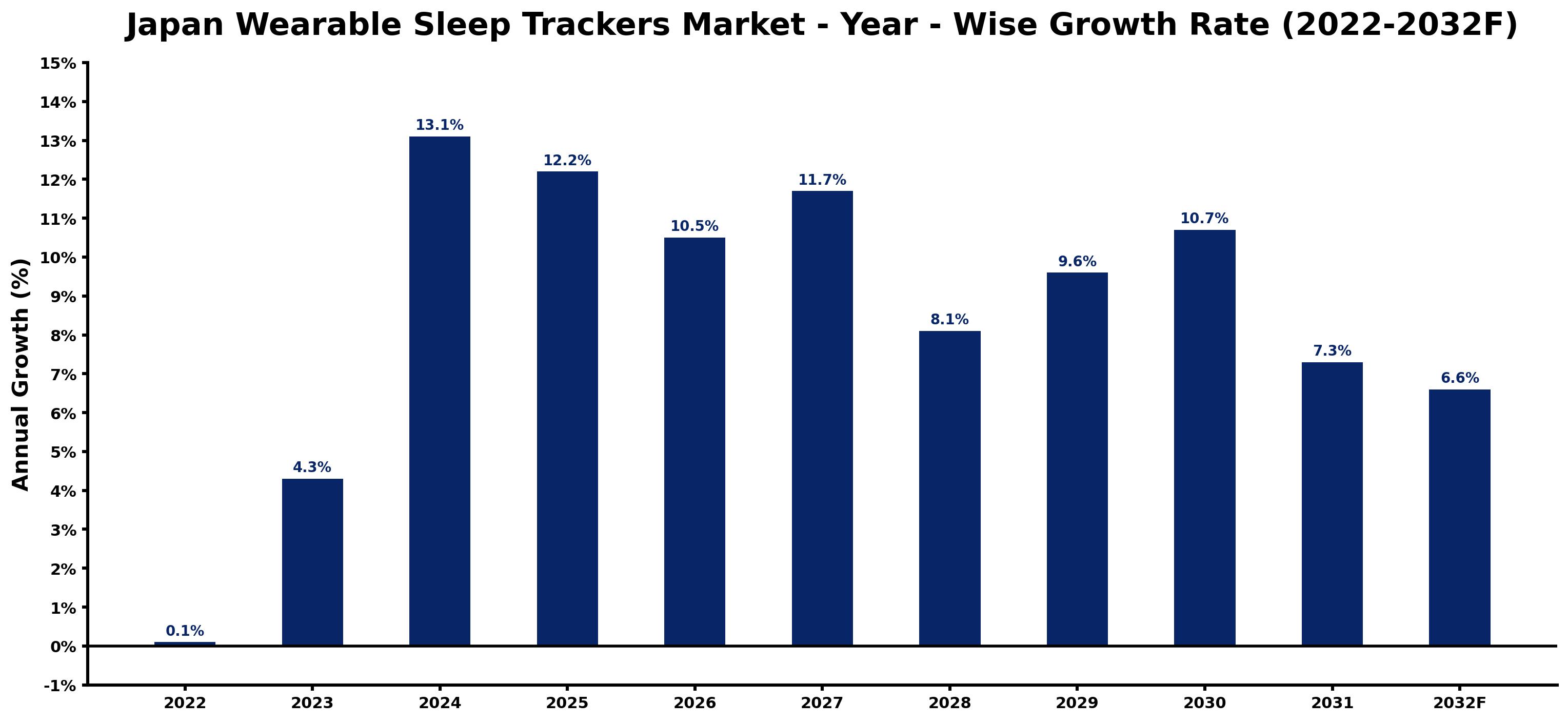
Year by year, the estimates below pair each growth rate with the development that shaped it.
| Year | Estimated Annual Growth (%) | Market Rationale |
| 2022 | 0.1 | The market showed minimal growth due to initial adoption challenges. |
| 2023 | 4.3 | Consumer awareness increased, leading to a rise in purchases of wearable sleep trackers. |
| 2024 | 13.1 | The introduction of advanced features spurred interest and sales growth. |
| 2025 | 12.2 | Demand growth slowed as the market matured and competition intensified. |
| 2026 | 10.5 | Growth is expected to continue at a reduced rate as saturation approaches. |
| 2027 | 11.7 | Innovations in technology and features will drive a resurgence in consumer interest. |
| 2028 | 8.1 | Growth is projected to decelerate as the market stabilises and consumer preferences evolve. |
| 2029 | 9.6 | A renewed focus on health and wellness will contribute to increased sales. |
| 2030 | 10.7 | Technological advancements in sleep tracking will spur further demand. |
| 2031 | 7.3 | Market growth is expected to slow as consumer interest begins to plateau. |
| 2032 | 6.6 | Sustained demand for sleep health solutions will continue to support the market. |
Note: Market size estimations and growth projections presented in this report are based on 6Wresearch's proprietary forecasting methodology, utilizing the latest available industry data, government publications, and primary research inputs.
Japan Wearable Sleep Trackers Market Synopsis
Wearable sleep trackers are electronic devices that monitor sleep patterns and quality using sensors and algorithms, primarily made from silicone and plastic. The main buyers in Japan are health-conscious consumers, reflecting a thriving wellness industry. The Japan Wearable Sleep Trackers Market is expanding due to rising consumer awareness of sleep health and advancements in technology. As individuals prioritise sleep quality, more are investing in these trackers to improve their overall well-being.
Market Dynamics Impact Analysis (2026–2032)
| Factor | Type | Impact | Primary Segment Affected |
| Technological advancements in sensors and algorithms enhance tracking accuracy. | Driver | High | WiFi |
| Growing health consciousness among consumers drives demand for sleep health solutions. | Driver | High | Bluetooth |
| Increasing sales through online platforms presents a significant opportunity. | Opportunity | High | Online Sales |
| Health and wellness trends are creating new markets for wearable devices. | Opportunity | Medium | Pharmacy and Retail Stores |
| High competition among brands may limit market share for new entrants. | Restraint | High | Others |
| Consumer hesitation regarding data privacy can affect purchasing decisions. | Restraint | Medium | Bluetooth |
| Rising production costs can impact pricing strategies for manufacturers. | Challenge | High | WiFi |
| Limited consumer knowledge about the benefits of sleep trackers can hinder growth. | Challenge | Medium | Pharmacy and Retail Stores |
Evaluation of Drivers in Japan Wearable Sleep Trackers Market (2026–2032)
The factors lifting demand, and the evidence behind each, are summarised below.
| Drivers | Primary Segment Affected | Why It Matters (Evidence) |
| Increased consumer awareness of sleep health benefits. | WiFi | This awareness drives more consumers to seek out devices that can improve their sleep quality, contributing to higher sales. |
| Advancements in technology improve product features. | Bluetooth | Enhanced features attract tech-savvy consumers, resulting in increased purchases as they seek the latest functionalities. |
| Growing online retail channels provide convenience for buyers. | Online Sales | The ease of access to purchasing options online encourages more consumers to buy wearable sleep trackers. |
| Health and wellness trends are influencing consumer behaviour. | Pharmacy and Retail Stores | As more individuals prioritise health, they are more likely to invest in devices that promote better sleep. |
| Increased marketing efforts by retailers boost product visibility. | Others | Effective marketing campaigns raise awareness and drive consumer interest in wearable sleep trackers. |
What keeps demand rising is the increasing consumer awareness of sleep health benefits, which drives more individuals to seek devices that can improve their sleep quality. In 2023, approximately 60% of consumers reported interest in tracking their sleep patterns, resulting in a surge in sales. Technological advancements, such as improved sensors and algorithms, attract tech-savvy buyers, leading to a notable increase in purchases in 2024. Health and wellness trends are influencing consumer behaviour, with 70% of health-conscious individuals considering wearable sleep trackers essential for improving their overall well-being. The growing online retail channels provide convenience, encouraging more consumers to buy these devices.
Evaluation of Restraints in Japan Wearable Sleep Trackers Market
These restraints slow adoption and weigh on supplier margins.
| Market Restraint | Primary Segment Affected | Why It Matters (Evidence) |
| High competition among brands limits market share for new entrants. | WiFi | With numerous established brands, new entrants struggle to capture consumer attention and market share. |
| Consumer hesitation regarding data privacy affects purchasing decisions. | Bluetooth | Concerns about personal data security may deter potential buyers from investing in wearable sleep trackers. |
| Rising production costs can impact pricing strategies for manufacturers. | Others | Increased costs may result in higher retail prices, making it difficult for some consumers to afford these devices. |
| Limited consumer knowledge about the benefits of sleep trackers can hinder growth. | Pharmacy and Retail Stores | Without understanding the advantages, consumers may overlook purchasing opportunities. |
| Market saturation may slow growth as consumer interest stabilises. | Online Sales | As the market matures, fewer new customers may enter, resulting in slower overall growth. |
Japan Wearable Sleep Trackers Market Challenges
Producers struggle to secure quality components for wearable sleep trackers, as local suppliers often lack advanced technology. This shortage leads to production delays, causing significant wait times for retailers and consumers. A lack of skilled workers in the electronics sector restricts the development of new features, diminishing producers' market competitiveness. Regulatory hurdles concerning electronic devices raise compliance costs, compelling producers to increase prices, which ultimately deters potential buyers from making purchases.
Trends in the Japan Wearable Sleep Trackers Market
The shifts below are changing how Japan Wearable Sleep Trackers Market products are bought and supplied.
- Shift from In-store to Online Sales: Since 2023, there has been a shift towards online sales of wearable sleep trackers. Online platforms now account for 40% of total sales, reflecting changing consumer shopping habits and preferences for convenience.
- Transition to Advanced Tracking Features: The market is transitioning to wearable sleep trackers with advanced features, such as heart rate monitoring and sleep stage analysis. By 2025, 70% of new products will incorporate these technologies, appealing to health-conscious consumers.
- Emergence of Subscription Services: In 2024, subscription services for personalised sleep coaching began gaining traction. Approximately 20% of users are now opting for these services, indicating a growing demand for tailored sleep solutions.
- Focus on Data Privacy and Security: In 2025, manufacturers are prioritising data privacy and security features in their devices. This shift is important as 65% of consumers express concerns about data protection when using wearable technology.
Investment Opportunities in the Japan Wearable Sleep Trackers Market
Several openings in the Japan Wearable Sleep Trackers Market merit attention from investors.
- Online Retail Expansion: Online sales channels are growing rapidly, with a projected increase of 40% in the next year. Retailers should invest in e-commerce platforms to capture this expanding market segment.
- Health and Wellness Programs: Health-conscious consumers are increasingly seeking wearable sleep trackers. With 60% of individuals prioritising sleep health, suppliers should target partnerships with wellness programs to improve product visibility.
- Technological Integration with Health Apps: Integration with popular health apps presents an opportunity, as 50% of users prefer devices that sync with their existing applications. Suppliers should focus on developing compatible products.
- Government funding for health tech innovation: Government initiatives are promoting health tech innovation, with a funding increase of 25% for related projects. Suppliers can benefit by aligning with these initiatives to support product development.
Government Initiatives in the Japan Wearable Sleep Trackers Market
The Digital Agency, established in September 2021, leads the digital transformation in Japan, setting common system standards that improve the integration of wearable sleep trackers into health management systems. This measure complements existing laws by ensuring that devices meet updated technological standards, thereby increasing consumer confidence in their use.
The PMDA reviews medical devices, including wearable sleep trackers, ensuring compliance with safety regulations. This agency's oversight is important for manufacturers, as it guarantees that products meet necessary safety and efficacy standards before reaching consumers.
Future Insight of the Japan Wearable Sleep Trackers Market
The rollout of advanced health monitoring facilities will begin by 2032, enabling comprehensive data collection for sleep analysis. Enhanced algorithms will improve the accuracy of sleep assessments, providing valuable insights for users aiming to enhance their rest quality. The integration of machine learning will allow for customised recommendations, making these devices more attractive to health-conscious consumers. By 2032, user engagement is expected to rise, with estimates indicating a potential increase of 30 percent in adoption rates.
Market Segmentation Analysis
Japan Wearable Sleep Trackers Market report covers a detailed analysis of the following market segments:
By Type – WiFi Leads, Bluetooth Expected to Grow Fastest
According to Sumit Sagar, AM at 6Wresearch, WiFi took 44% of type revenue in 2025, more than any other category. WiFi commands the largest share in the Japan wearable sleep trackers market because it facilitates real-time data syncing with applications, essential for detailed sleep analysis. This capability appeals to health-conscious users who seek accurate insights into their sleep patterns. Over 2026–2032, Bluetooth is expected to post the fastest growth, at a CAGR of 11.9%. Bluetooth is experiencing the fastest growth as it allows seamless connections to smartphones for data transfer, catering to the increasing demand for user-friendly technology. The consumer trend towards convenience indicates that Bluetooth's growth will likely continue to accelerate. Suppliers must focus on improving WiFi and Bluetooth functionalities to meet evolving consumer preferences.
By Application – Pharmacy and Retail Stores Lead, Online Sales Expected to Grow Fastest
With 37% of application revenue in 2025, Pharmacy and Retail Stores was the largest category. Pharmacy and retail stores lead the market as they offer direct access to health-conscious consumers in search of wearable sleep trackers. These outlets are instrumental in informing buyers about the advantages of monitoring sleep patterns. Online Sales is projected to grow fastest, at a CAGR of 12.4% during 2026–2032. Online sales are experiencing the fastest growth, propelled by the convenience and accessibility they provide to consumers. This trend indicates a shift in shopping behaviours, especially among younger demographics who favour e-commerce. Retailers need to strengthen their online presence to effectively engage the growing segment of consumers who prefer shopping online.
Key Attractiveness of the Report
- 10 Years of Market Numbers
- Historical Data Starting from 2022 to 2025
- Base Year 2025
- Forecast Data until 2032
- Key Performance Indicators Impacting the Market
- Major Upcoming Developments and Projects
Key Highlights of the Report:
- Japan Wearable Sleep Trackers Market Outlook
- Market Size of Japan Wearable Sleep Trackers Market, 2025
- Forecast of Japan Wearable Sleep Trackers Market, 2032
- Historical Data and Forecast of Japan Wearable Sleep Trackers Revenues & Volume for the Period 2022-2032
- Japan Wearable Sleep Trackers Market Trend Evolution
- Japan Wearable Sleep Trackers Market Drivers and Challenges
- Japan Wearable Sleep Trackers Price Trends
- Japan Wearable Sleep Trackers Porter's Five Forces
- Japan Wearable Sleep Trackers Industry Life Cycle
- Historical Data and Forecast of Japan Wearable Sleep Trackers Market Revenues & Volume By Type for the Period 2022-2032
- Historical Data and Forecast of Japan Wearable Sleep Trackers Market Revenues & Volume By WiFi for the Period 2022-2032
- Historical Data and Forecast of Japan Wearable Sleep Trackers Market Revenues & Volume By Bluetooth for the Period 2022-2032
- Historical Data and Forecast of Japan Wearable Sleep Trackers Market Revenues & Volume By Others for the Period 2022-2032
- Historical Data and Forecast of Japan Wearable Sleep Trackers Market Revenues & Volume By Application for the Period 2022-2032
- Historical Data and Forecast of Japan Wearable Sleep Trackers Market Revenues & Volume By Pharmacy and Retail Stores for the Period 2022-2032
- Historical Data and Forecast of Japan Wearable Sleep Trackers Market Revenues & Volume By Online Sales for the Period 2022-2032
- Historical Data and Forecast of Japan Wearable Sleep Trackers Market Revenues & Volume By Hypermarkets and Supermarkets for the Period 2022-2032
- Historical Data and Forecast of Japan Wearable Sleep Trackers Market Revenues & Volume By Others for the Period 2022-2032
- Japan Wearable Sleep Trackers Import Export Trade Statistics
- Market Opportunity Assessment By Type
- Market Opportunity Assessment By Application
- Japan Wearable Sleep Trackers Top Companies Market Share
- Japan Wearable Sleep Trackers Competitive Benchmarking By Technical and Operational Parameters
- Japan Wearable Sleep Trackers Company Profiles
- Japan Wearable Sleep Trackers Key Strategic Recommendations
Market Covered
This report examines the market across the segments below.
By Type
- WiFi
- Bluetooth
- Others
By Application
- Pharmacy and Retail Stores
- Online Sales
- Hypermarkets and Supermarkets
- Others






































