Japan Wellness Product Market Size & Growth Rate
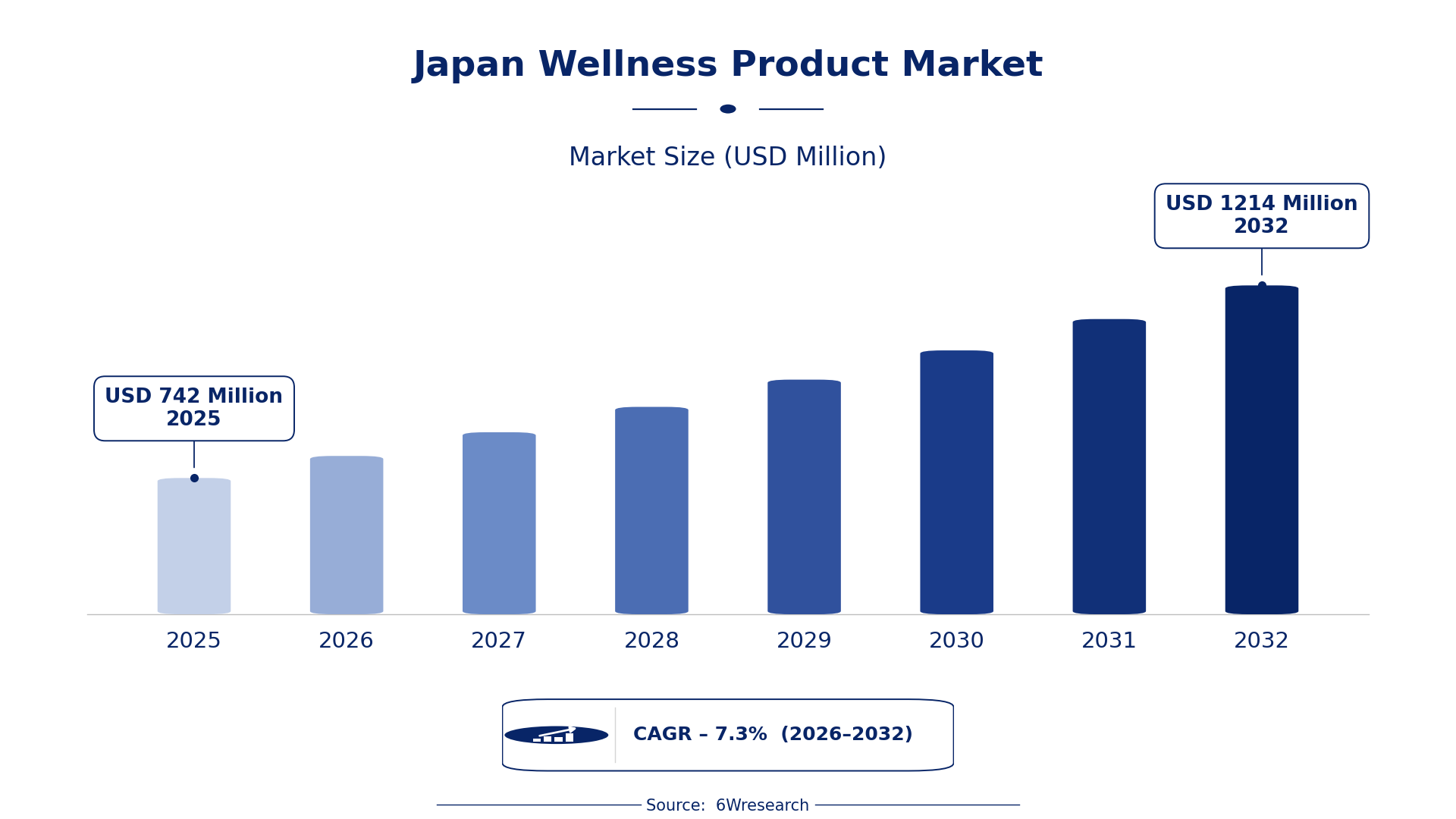
According to 6Wresearch internal database and industry insights, the Japan Wellness Product Market was valued at USD 742 Million in 2025 and is projected to reach USD 1,214 Million by 2032, growing at a CAGR of approximately 7.3% during 2026–2032.
Japan Wellness Product Market Highlights
| Report Metric | Details |
| Report Name | Japan Wellness Product Market (2026-2032) |
| Market Size 2025 | USD 742 Million |
| Market Size 2032 | USD 1,214 Million |
| Absolute Growth 2025–2032 | USD 472 Million |
| CAGR 2026–2032 | 7.3% |
| Peak Annual Growth | 8.1% in 2032 |
| Forecast Period | 2026–2032 |
| Historical Data | 2022–2025 |
| Base Year | 2025 |
| Leading Product Category, 2025 | Organic Supplements (37% share) |
| Leading Form Type, 2025 | Capsules (34% share) |
| Leading Distribution Channel, 2025 | Pharmacies (35% share) |
| Leading Consumer Type, 2025 | Elderly (51% share) |
| Fastest-Growing Product Category | Aromatherapy Oils (10.4% CAGR) |
| Fastest-Growing Form Type | Liquid Bottles (10.3% CAGR) |
| Fastest-Growing Distribution Channel | Online Platforms (9.5% CAGR) |
| Fastest-Growing Consumer Type | Yoga Practitioners (9.9% CAGR) |
| Growing Sector | health and wellness |
| Key End Users | Elderly, Yoga Practitioners, Athletes, Health-conscious Adults |
Japan Wellness Product Market Year-wise Growth Rate and Key Drivers (2022–2032)
This graph illustrates the annual growth rates of the market from 2022 to 2032, highlighting a steady upward trajectory and projected market expansion over the forecast period.
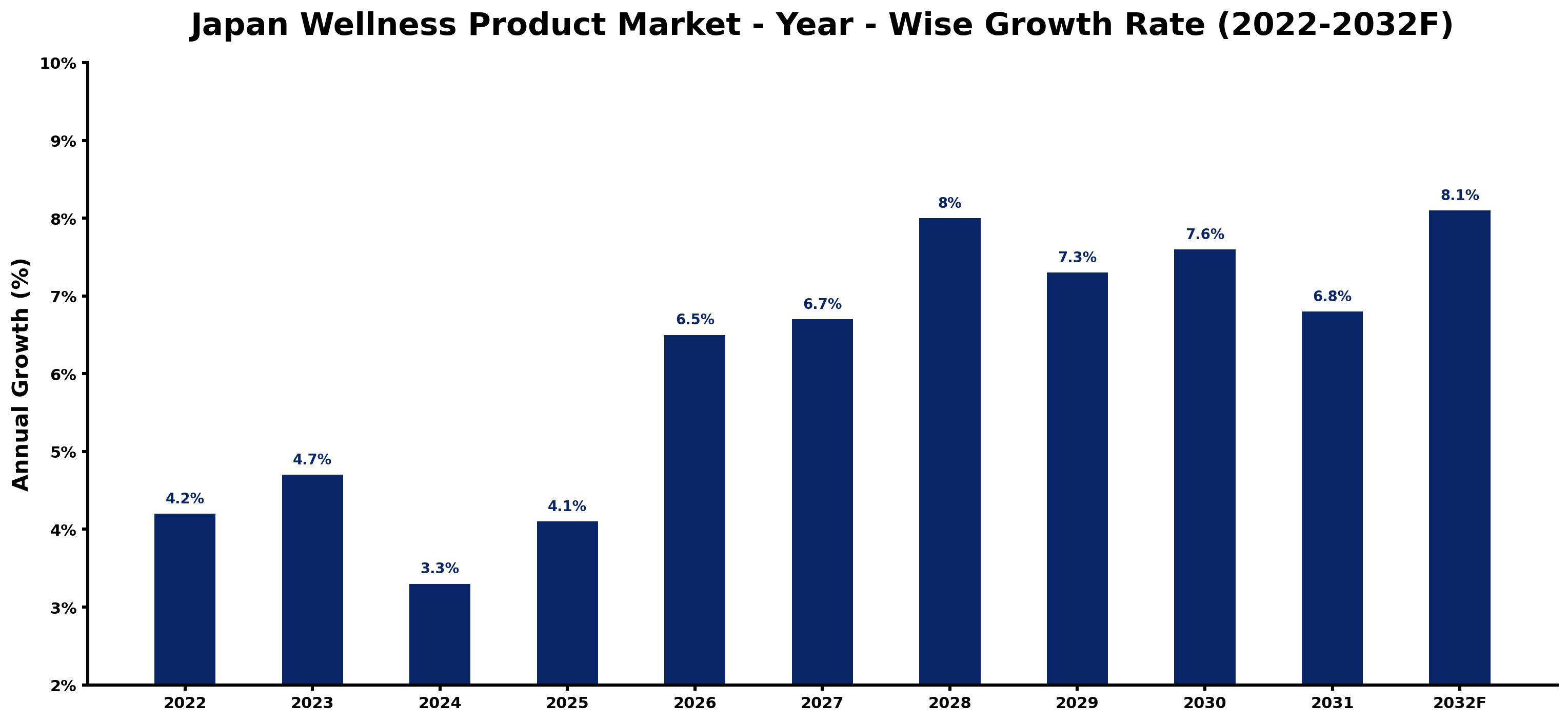
The following figures match every annual growth estimate with the main market development of that year, giving the reasoning behind each rise or slowdown.
| Year | Estimated Annual Growth (%) | Market Rationale |
| 2022 | 4.2 | The market experienced moderate growth as consumers began prioritising wellness products. |
| 2023 | 4.7 | Growth accelerated due to increased consumer awareness of health benefits and product availability. |
| 2024 | 3.3 | A slowdown occurred as market saturation began to affect growth rates. |
| 2025 | 4.1 | Demand rose again as consumers sought more convenient wellness solutions. |
| 2026 | 6.5 | The market is projected to grow faster with rising health consciousness among consumers. |
| 2027 | 6.7 | Continued interest in wellness products is anticipated to drive steady growth in the sector. |
| 2028 | 8.0 | A surge in demand is expected as new product innovations emerge. |
| 2029 | 7.3 | Growth is projected to slow slightly as competition intensifies in the market. |
| 2030 | 7.6 | An increase in health-focused initiatives is expected to boost market growth. |
| 2031 | 6.8 | The market is likely to see a slowdown as it stabilises after rapid growth. |
| 2032 | 8.1 | Demand is expected to peak as consumers increasingly adopt wellness lifestyles. |
Note: Market size estimations and growth projections presented in this report are based on 6Wresearch's proprietary forecasting methodology, utilizing the latest available industry data, government publications, and primary research inputs.
Japan Wellness Product Market Synopsis
Wellness products in Japan include organic supplements, aromatherapy oils, herbal teas, and protein powders, all designed to improve health and well-being. The Japan Wellness Product Market is valued at approximately 1.5 trillion yen in 2023, reflecting a shift towards healthier lifestyles. Rising consumer interest in health and wellness is driven by individual users and retail channels, evidenced by the estimated 1.2 million yoga practitioners in the country.
Market Dynamics Impact Analysis (2026–2032)
| Factor | Type | Impact | Primary Segment Affected |
| Increased health awareness among consumers | Driver | High | Organic Supplements |
| The rise of online sales platforms | Driver | High | Online Platforms |
| Growing demand for natural and organic products | Opportunity | High | Aromatherapy Oils |
| Expansion of wellness centres and fitness facilities | Opportunity | Medium | Fitness Stores |
| Market saturation leading to intense competition | Restraint | High | Protein Powders |
| Regulatory compliance costs for producers | Restraint | Medium | Herbal Teas |
| Changing consumer preferences towards convenience | Challenge | High | Liquid Bottles |
| Supply chain disruptions affecting product availability | Challenge | Medium | Capsules |
Evaluation of Drivers in Japan Wellness Product Market (2026–2032)
Below are the drivers that matter most for revenue growth, with supporting evidence.
| Drivers | Primary Segment Affected | Why It Matters (Evidence) |
| Rising health consciousness among consumers | Organic Supplements | This trend leads to increased purchases as consumers seek nutritional support for better health. |
| Growth in e-commerce platforms | Online Platforms | The convenience of online shopping encourages more consumers to buy wellness products, with a 20% increase in online sales recently. |
| Increased interest in holistic health practices | Aromatherapy Oils | More wellness centres adopting aromatherapy drives demand for these products, with over 500 centres using them. |
| Higher participation in fitness activities | Protein Powders | Athletes and fitness enthusiasts are purchasing more protein powders to improve performance, with a 15% increase in sales reported in fitness stores. |
| Cultural shift towards preventive health measures | Herbal Teas | Traditional consumption of herbal teas is rising as people seek natural health benefits, with over 300 varieties available. |
Volumes grow on the back of rising health consciousness, with 1.2 million yoga practitioners in Japan driving demand for wellness products. Urban areas like Tokyo and Osaka see a growing preference for organic supplements, as consumers prioritise nutritional support. Recent online sales of wellness products surged by 20%, reflecting a shift towards convenience. Fitness stores report a 15% increase in protein powder sales in 2023, as athletes focus on performance. The traditional consumption of herbal teas remains strong, appealing to health-conscious consumers seeking natural remedies.
Evaluation of Restraints in Japan Wellness Product Market
These are the pressures that could keep growth below its potential.
| Market Restraint | Primary Segment Affected | Why It Matters (Evidence) |
| Intense competition among wellness brands | Protein Powders | This leads to price wars, affecting profit margins for suppliers. |
| High costs associated with regulatory compliance | Herbal Teas | Producers must invest in quality assurance to meet standards, impacting pricing. |
| Market saturation in urban areas | Organic Supplements | This limits growth potential as consumer choices become overwhelming. |
| Supply chain disruptions due to global events | Liquid Bottles | These disruptions can delay product availability, affecting sales. |
| Changing consumer preferences towards convenience | Capsules | This shift may lead to decreased demand for traditional supplement forms. |
Japan Wellness Product Market Challenges
Producers struggle with outdated technology, which hampers their ability to streamline production and leads to delays in product availability for buyers. High production costs arise from stringent regulations, inflating prices by approximately 20%, which can deter consumers from making purchases. A lack of skilled workers in the wellness sector extends the time-to-market for new products by an average of six months, frustrating buyers eager for timely solutions. Supply chain disruptions in sourcing natural ingredients create inconsistent product availability, forcing retailers to hold larger inventories and limiting consumer access.
Trends in the Japan Wellness Product Market
The following changes are redrawing the Japan Wellness Product Market.
- Health Japan 21 Initiative: The Health Japan 21 initiative promotes healthier lifestyles, encouraging consumers to adopt wellness products. This has led to a notable increase in organic supplement sales, which are popular in urban regions, contributing to the market's growth.
- Shift towards Online Shopping: Consumers are increasingly opting for online platforms to purchase wellness products, with online sales rising by 20% recently. This trend reflects a growing preference for convenience and variety, reshaping retail dynamics.
- Rise of Aromatherapy in Wellness Centers: Aromatherapy oils are being integrated into over 500 wellness centres across Japan, highlighting a shift towards holistic health practices. This trend is driving demand for essential oils and related products, expanding market opportunities.
- Growth in Fitness Participation: The number of fitness enthusiasts is rising, with a 15% increase in protein powder sales reported in fitness stores. This trend indicates a growing focus on health and performance among consumers, creating new demand.
Investment Opportunities in the Japan Wellness Product Market
The following opportunities in the Japan Wellness Product Market pair current demand with a clear way in.
- Fitness Stores Expansion: Fitness stores are expanding their product lines to include more wellness items, reflecting a growing consumer interest in health. This presents an opportunity for suppliers to target this market segment, especially with a 15% increase in protein powder sales.
- Online Platforms for Wellness Products: With online sales increasing by 20%, there is a clear opportunity to invest in e-commerce strategies. Retailers can strengthen their online presence to reach health-conscious consumers effectively, tapping into a growing market.
- Aromatherapy Oil Demand: The rise in wellness centres adopting aromatherapy presents an opportunity for suppliers of essential oils. This growing market segment is expected to expand further as holistic health practices gain popularity, driving demand.
- Organic Supplements in Urban Areas: Urban areas like Tokyo and Osaka show a gap in organic supplement offerings. Suppliers can enter this market by partnering with local retailers to meet rising consumer demand, addressing the trend towards healthier lifestyles.
Government Initiatives in the Japan Wellness Product Market
The Waste Management and Public Cleansing Act regulates the treatment and disposal of industrial and municipal waste, impacting wellness product producers by ensuring compliance with environmental standards. Additionally, the Ministry of Health, Labour and Welfare oversees regulations that ensure dietary supplements meet safety and quality standards, benefiting consumers and promoting trust in products. These regulations require producers to adhere to strict guidelines, enhancing product credibility in the market.
The Long-Term Care Insurance Act funds support services for older individuals, impacting the wellness product sector by increasing demand for health-related products among the elderly population. The Tokyo Metropolitan Government supports wellness initiatives through community programs that promote health education, with funding allocated for various health-focused projects aimed at improving public health and encouraging the adoption of wellness products among residents.
Future Insight of the Japan Wellness Product Market
Advancements in digital marketing will reshape how wellness products reach consumers, facilitating better engagement and increasing sales. By 2032, the Health Japan 21 initiative will broaden its scope, promoting wellness education and raising consumer awareness. The implementation of ISO 22000 standards will guarantee product safety, fostering trust among buyers. With online sales of wellness products rising by 20% in the last year, suppliers will be encouraged to innovate and diversify their offerings to meet the growing demand.
Market Segmentation Analysis
Japan Wellness Product Market report covers a detailed analysis of the following market segments:
By Product Category – Organic Supplements Lead, Aromatherapy Oils Expected to Grow Fastest
According to Saurav Kr Singh, Senior Research Analyst at 6Wresearch, in 2025, Organic Supplements led the product category split with a 37% share. Organic supplements dominate the market as they are widely used for nutritional support and health enhancement among health-conscious consumers in urban areas. Their popularity is particularly pronounced in regions like Tokyo and Osaka, where the focus on wellness is strong. Aromatherapy Oils are projected to grow fastest, at a CAGR of 10.4% during 2026–2032. Aromatherapy oils are experiencing rapid growth, with over 500 wellness centres incorporating them for relaxation and therapeutic benefits. This trend indicates a rising consumer interest in holistic health practices and self-care routines, which will likely continue to expand. Suppliers should consider diversifying their offerings to include more aromatherapy products to meet the growing demand.
By Form Type – Capsules Lead, Liquid Bottles Expected to Grow Fastest
Capsules accounted for 34% of the market by form type in 2025. Capsules are the leading form for dietary supplements, appreciated for their convenience and straightforward consumption. This format appeals to consumers who seek effective and easy solutions for nutritional intake, contributing to their market dominance. Liquid Bottles are set to record the highest CAGR in this split, 10.3% over 2026–2032. Liquid bottles are gaining popularity due to their ease of consumption, particularly among those preferring quick and accessible options. This trend indicates a potential for suppliers to innovate in product packaging and formulation to meet consumer preferences. Suppliers may need to develop more liquid formulations to align with the increasing consumer demand for convenient supplement options.
By Distribution Channel – Pharmacies Lead, Online Platforms Expected to Grow Fastest
With 35% of distribution channel revenue in 2025, Pharmacies was the largest category. Pharmacies lead the distribution channel due to their significant share of wellness product sales, providing established trust and accessibility for consumers. They serve as a primary source for health-related products, making them a vital channel for suppliers. The quickest growth will come from Online Platforms, forecast to expand at a CAGR of 9.5% between 2026 and 2032. Online platforms are growing rapidly, evidenced by a 20% increase in sales over the past year, reflecting consumer preferences for convenience and a broader selection. This shift suggests that suppliers must adapt to the changing purchasing behaviours towards digital channels. Suppliers should strengthen their online presence to capitalise on the increasing trend of online purchases in the wellness product market.
By Consumer Type – Elderly Leads, Yoga Practitioners Expected to Grow Fastest
The largest consumer type category in 2025 was Elderly, at 51% of revenue. The elderly represent a substantial consumer group for wellness products, driven by their focus on health maintenance and disease prevention. This demographic's needs are increasingly being recognised by product developers and marketers. Over 2026–2032, Yoga Practitioners are expected to post the fastest growth, at a CAGR of 9.9%. Yoga practitioners are emerging as a fast-growing consumer segment, actively seeking wellness products to support their holistic health practices. Their engagement with wellness products indicates a broader trend towards integrated health solutions. Suppliers should tailor their marketing strategies to address the specific needs of yoga practitioners, who are increasingly influential in the wellness market.
Key Attractiveness of the Report
- 10 Years of Market Numbers
- Historical Data Starting from 2022 to 2025
- Base Year 2025
- Forecast Data until 2032
- Key Performance Indicators Impacting the Market
- Major Upcoming Developments and Projects
Key Highlights of the Report:
- Japan Wellness Product Market Outlook
- Market Size of Japan Wellness Product Market, 2025
- Forecast of Japan Wellness Product Market, 2032
- Historical Data and Forecast of Japan Wellness Product Revenues & Volume for the Period 2022-2032F
- Japan Wellness Product Market Trend Evolution
- Japan Wellness Product Market Drivers and Challenges
- Japan Wellness Product Price Trends
- Japan Wellness Product Porter's Five Forces
- Japan Wellness Product Industry Life Cycle
- Historical Data and Forecast of Japan Wellness Product Market Revenues & Volume By Product Category for the Period 2022-2032F
- Historical Data and Forecast of Japan Wellness Product Market Revenues & Volume By Organic Supplements for the Period 2022-2032F
- Historical Data and Forecast of Japan Wellness Product Market Revenues & Volume By Aromatherapy Oils for the Period 2022-2032F
- Historical Data and Forecast of Japan Wellness Product Market Revenues & Volume By Herbal Teas for the Period 2022-2032F
- Historical Data and Forecast of Japan Wellness Product Market Revenues & Volume By Protein Powders for the Period 2022-2032F
- Historical Data and Forecast of Japan Wellness Product Market Revenues & Volume By Form Type for the Period 2022-2032F
- Historical Data and Forecast of Japan Wellness Product Market Revenues & Volume By Capsules for the Period 2022-2032F
- Historical Data and Forecast of Japan Wellness Product Market Revenues & Volume By Liquid Bottles for the Period 2022-2032F
- Historical Data and Forecast of Japan Wellness Product Market Revenues & Volume By Tea Bags for the Period 2022-2032F
- Historical Data and Forecast of Japan Wellness Product Market Revenues & Volume By Powder for the Period 2022-2032F
- Historical Data and Forecast of Japan Wellness Product Market Revenues & Volume By Distribution Channel for the Period 2022-2032F
- Historical Data and Forecast of Japan Wellness Product Market Revenues & Volume By Pharmacies for the Period 2022-2032F
- Historical Data and Forecast of Japan Wellness Product Market Revenues & Volume By Online Platforms for the Period 2022-2032F
- Historical Data and Forecast of Japan Wellness Product Market Revenues & Volume By Retail Stores for the Period 2022-2032F
- Historical Data and Forecast of Japan Wellness Product Market Revenues & Volume By Fitness Stores for the Period 2022-2032F
- Historical Data and Forecast of Japan Wellness Product Market Revenues & Volume By Consumer Type for the Period 2022-2032F
- Historical Data and Forecast of Japan Wellness Product Market Revenues & Volume By Elderly for the Period 2022-2032F
- Historical Data and Forecast of Japan Wellness Product Market Revenues & Volume By Yoga Practitioners for the Period 2022-2032F
- Historical Data and Forecast of Japan Wellness Product Market Revenues & Volume By Adults for the Period 2022-2032F
- Historical Data and Forecast of Japan Wellness Product Market Revenues & Volume By Athletes for the Period 2022-2032F
- Japan Wellness Product Import Export Trade Statistics
- Market Opportunity Assessment By Product Category
- Market Opportunity Assessment By Form Type
- Market Opportunity Assessment By Distribution Channel
- Market Opportunity Assessment By Consumer Type
- Japan Wellness Product Top Companies Market Share
- Japan Wellness Product Competitive Benchmarking By Technical and Operational Parameters
- Japan Wellness Product Company Profiles
- Japan Wellness Product Key Strategic Recommendations
Market Covered
The study includes the following segmentation.
By Product Category
- Organic Supplements
- Aromatherapy Oils
- Herbal Teas
- Protein Powders
By Form Type
- Capsules
- Liquid Bottles
- Tea Bags
- Powder
By Distribution Channel
- Pharmacies
- Online Platforms
- Retail Stores
- Fitness Stores
By Consumer Type
- Elderly
- Yoga Practitioners
- Adults
- Athletes































