Japan Whole Grain Market Size & Growth Rate
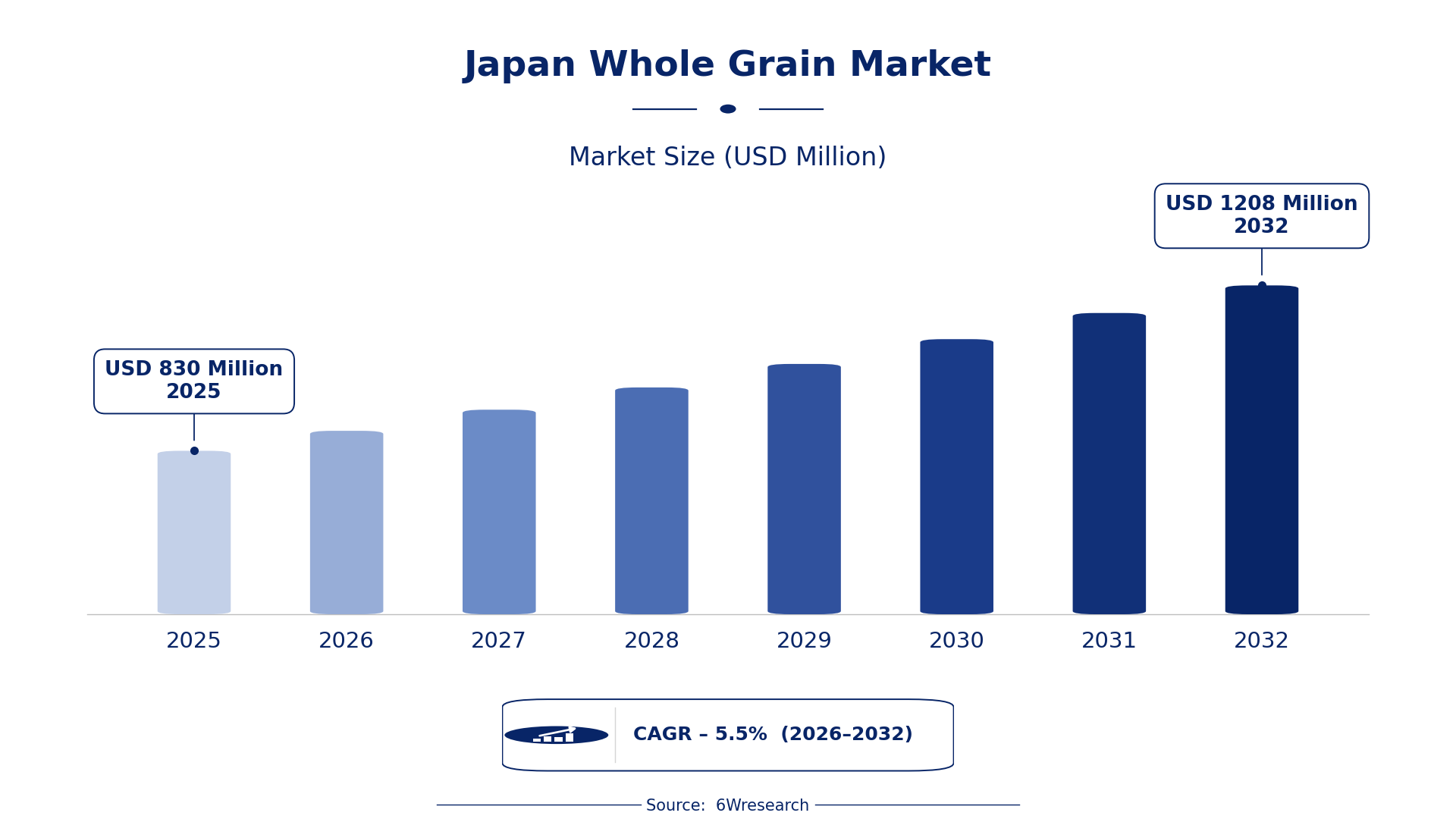
According to 6Wresearch internal database and industry insights, the Japan Whole Grain Market was valued at USD 830 Million in 2025 and is projected to reach USD 1,208 Million by 2032, growing at a CAGR of approximately 5.5% during 2026–2032.
Japan Whole Grain Market Highlights
| Report Metric | Details |
| Report Name | Japan Whole Grain Market (2026-2032) |
| Market Size 2025 | USD 830 Million |
| Market Size 2032 | USD 1,208 Million |
| Absolute Growth 2025–2032 | USD 378 Million |
| CAGR 2026–2032 | 5.5% |
| Peak Annual Growth | 6.7% in 2032 |
| Forecast Period | 2026–2032 |
| Historical Data | 2022–2025 |
| Base Year | 2025 |
| Leading Grain Type, 2025 | Brown Rice (39% share) |
| Leading Form Type, 2025 | Raw (35% share) |
| Leading Distribution Channel, 2025 | Supermarkets (35% share) |
| Leading End User, 2025 | Households (51% share) |
| Fastest-Growing Grain Type | Whole Wheat (7.8% CAGR) |
| Fastest-Growing Form Type | Flour (8.2% CAGR) |
| Fastest-Growing Distribution Channel | Online Stores (7.4% CAGR) |
| Fastest-Growing End User | Bakeries (7.2% CAGR) |
| Growing Sector | Bakeries |
| Key End Users | Households, Bakeries, Restaurants, Fitness Enthusiasts |
Japan Whole Grain Market Year-wise Growth Rate and Key Drivers (2022–2032)
This graph illustrates the annual growth rates of the market from 2022 to 2032, highlighting a steady upward trajectory and projected market expansion over the forecast period.
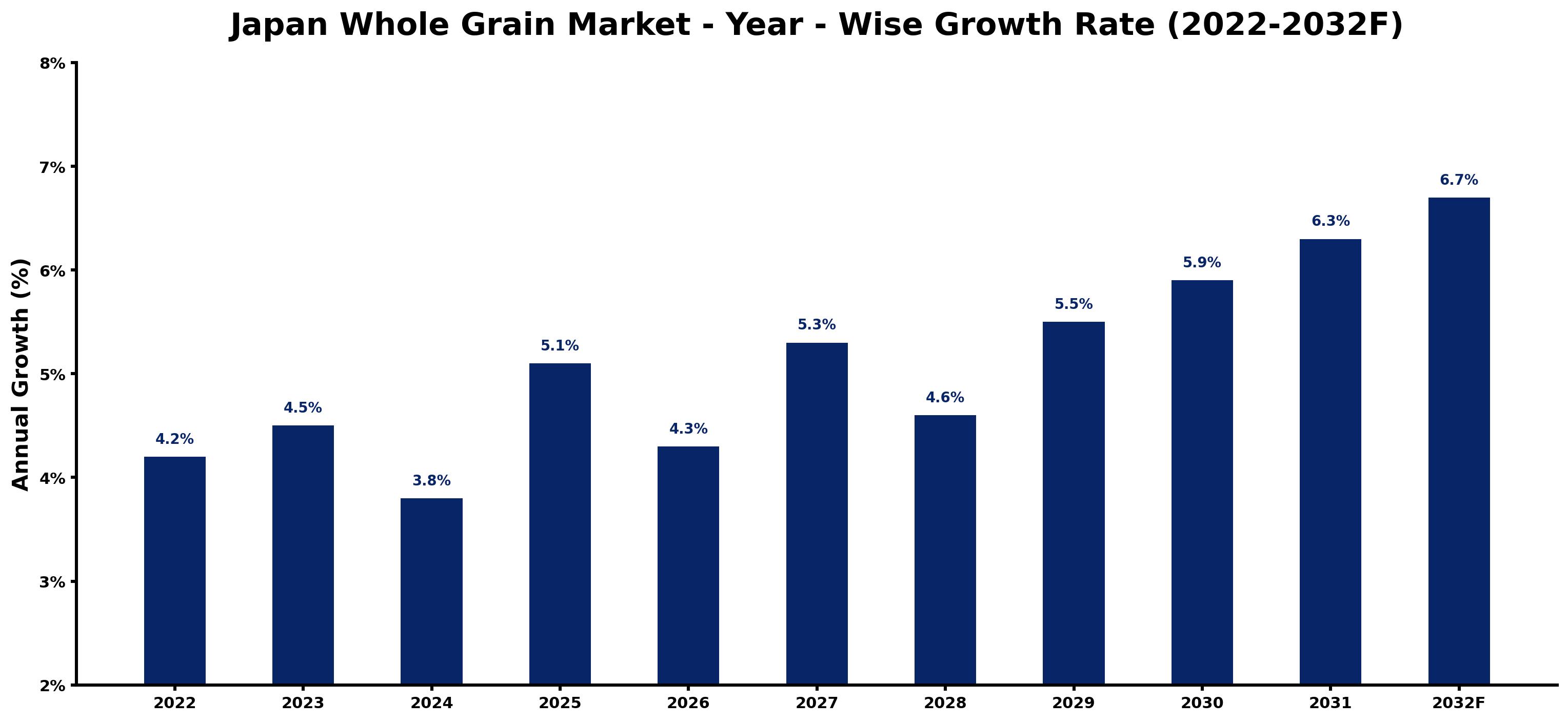
The table below sets out the estimated growth rate for each year and the main factor behind it.
| Year | Estimated Annual Growth (%) | Market Rationale |
| 2022 | 4.2 | Consumer awareness of health benefits drove steady demand for whole grains. |
| 2023 | 4.5 | Health initiatives launched this year increased whole grain consumption among the population. |
| 2024 | 3.8 | The market experienced slower growth as consumer preferences shifted slightly. |
| 2025 | 5.1 | Whole grain flour gained popularity, leading to a rise in demand. |
| 2026 | 4.3 | Market growth is expected to slow as consumers become more selective about whole grain products. |
| 2027 | 5.3 | Increased health consciousness will lead to a resurgence in whole grain purchases. |
| 2028 | 4.6 | The market is projected to see slower growth as competition among suppliers intensifies. |
| 2029 | 5.5 | Growing interest in health foods is expected to boost demand for whole grain products. |
| 2030 | 5.9 | Consumer spending on whole grains will continue to rise, supporting market growth. |
| 2031 | 6.3 | Health campaigns will further encourage whole grain consumption, driving demand. |
| 2032 | 6.7 | The market is projected to peak as awareness of whole grain benefits reaches new heights. |
Note: Market size estimations and growth projections presented in this report are based on 6Wresearch's proprietary forecasting methodology, utilizing the latest available industry data, government publications, and primary research inputs.
Japan Whole Grain Market Synopsis
Whole grain products, derived from cereal grains that retain all parts of the seed, are minimally processed to preserve nutritional value. Their primary uses include food consumption and health benefits related to dietary fibre. The Japan Whole Grain Market is experiencing growth driven by increased consumer awareness and health initiatives. With a population of approximately 125 million, the demand for whole grains is supported by rising health consciousness and government promotion of whole grain consumption through dietary guidelines and health campaigns. In 2023, a health initiative was launched to increase whole grain awareness among consumers, resulting in a 20% increase in offerings in specialty health stores.
Market Dynamics Impact Analysis (2026–2032)
| Factor | Type | Impact | Primary Segment Affected |
| Increasing health consciousness among consumers | Driver | High | Whole Wheat |
| Rising availability of whole grain products in supermarkets | Driver | High | Raw |
| Growing interest in health foods among urban populations | Opportunity | High | Quinoa |
| Expansion of online sales channels for health products | Opportunity | Medium | Online Stores |
| Competition from refined grain products | Restraint | High | Brown Rice |
| Limited consumer knowledge about whole grain benefits | Restraint | Medium | Flour |
| Supply chain disruptions affecting product availability | Challenge | High | Cereal |
| Fluctuating prices of raw materials impacting costs | Challenge | Medium | Packed Seeds |
Evaluation of Drivers in Japan Whole Grain Market (2026–2032)
The main growth drivers and the segments they affect most are set out below.
| Drivers | Primary Segment Affected | Why It Matters (Evidence) |
| Health benefits associated with whole grains | Whole Wheat | Whole wheat products are linked to improved health, leading households to purchase more for nutritious meals. |
| Increased availability of whole grain products | Raw | Supermarkets reported a 20% increase in whole grain product offerings, encouraging consumers to buy more. |
| Rising consumer interest in health foods | Quinoa | Health stores in urban areas noted a growing interest in quinoa, prompting more purchases among health-conscious buyers. |
| Expansion of online shopping for health products | Online Stores | The growth of online sales channels has made it easier for consumers to access whole grain options. |
| Government health initiatives promoting whole grains | Flour | Public health campaigns have increased awareness, resulting in higher demand for whole grain flour. |
Volumes grow on the back of increased consumer awareness of health benefits, with approximately 10% of food budgets spent on grains. The Tokyo metropolitan area has seen a rise in health-conscious consumers, further driving demand. Online sales channels have expanded, facilitating easier access to whole grain products for consumers. Supermarkets reported a 20% increase in whole grain product offerings, making these products more accessible to buyers.
Evaluation of Restraints in Japan Whole Grain Market
The key brakes on demand, and where they bite hardest, are shown below.
| Market Restraint | Primary Segment Affected | Why It Matters (Evidence) |
| Competition from refined grain products | Brown Rice | Refined grains are often preferred for their taste and texture, limiting brown rice's market share. |
| Limited consumer knowledge about whole grain benefits | Flour | Many consumers remain unaware of the nutritional advantages of whole grains, impacting sales. |
| Supply chain disruptions affecting product availability | Cereal | Recent supply chain issues have led to inconsistent availability of whole grain cereals in stores. |
| Fluctuating prices of raw materials impacting costs | Packed Seeds | Price volatility in raw materials can lead to higher costs for whole grain products. |
| Consumer preferences shifting towards convenience foods | Whole Wheat | The growing trend for convenience foods can detract from whole wheat product sales. |
Japan Whole Grain Market Challenges
High prices for whole grain products deter buyers, with the average Japanese household spending about 10% of their food budget on grains. Limited competition among local producers results in inflated costs, forcing buyers to pay more for essential items. Slow technology adoption in processing leads to outdated methods, causing delays that increase prices for consumers. Skills gaps in the workforce restrict the production of high-quality whole grain products, delaying supply to meet the rising demand from health-conscious segments.
Trends in the Japan Whole Grain Market
The trends below show where the Japan Whole Grain Market is heading.
- Health-Conscious Consumers Prioritising Whole Grains: Health-conscious consumers are increasingly prioritising whole grain products in their diets, with a 20% rise in offerings in specialty health stores in 2023. This shift encourages suppliers to expand their whole grain ranges.
- Urban Areas Seeing Increased Whole Grain Awareness: In urban areas, public health campaigns have raised awareness about whole grains, leading to a 10% increase in whole grain consumption among city dwellers. This trend prompts retailers to stock more whole grain options.
- Shift Towards Online Shopping for Whole Grains: Online stores are becoming a preferred shopping channel for whole grain products, with a 7.4% CAGR projected through 2032. This shift compels suppliers to improve their online presence.
- Rise of Whole Grain Ingredients in Food Products: Food manufacturers are increasingly incorporating whole grains into their products, responding to consumer demand for healthier options. The trend is clear as whole grain cereals gain popularity in major supermarkets.
Investment Opportunities in the Japan Whole Grain Market
The following areas offer the clearest openings for investors and suppliers in the Japan Whole Grain Market.
- Tokyo Metropolitan Area: The Tokyo metropolitan area is experiencing a surge in demand for whole grain products, with a 20% increase in health store offerings in 2023. Suppliers can enter this market by partnering with local health stores.
- Health-Conscious Consumers: Health-conscious consumers are increasingly seeking whole grain options, creating opportunities for suppliers to introduce new products. Collaborating with specialty health stores can facilitate market entry.
- Online Retail Expansion: The rise of online shopping for whole grains presents an opportunity for suppliers to invest in e-commerce platforms. Establishing partnerships with online retailers can improve product visibility and reach.
- Government Health Campaigns: Government health campaigns promoting whole grain consumption are creating a favourable environment for suppliers. Engaging in these campaigns can help increase brand awareness and drive sales.
Government Initiatives in the Japan Whole Grain Market
The Food Sanitation Act amendment (2018, fully applied June 2021) mandates HACCP-based hygiene management for food businesses, ensuring that whole grain producers adhere to strict safety standards. This regulation helps maintain product quality and consumer trust, benefiting both producers and buyers. The amendment also requires regular inspections and compliance checks, enhancing food safety across the industry.
The Japan Health Promotion Foundation supports various health initiatives, including those promoting whole grains. In 2023, a health initiative was launched to increase whole grain awareness among consumers, encouraging healthier eating habits and benefiting suppliers of whole grain products. The initiative aims to reach approximately 10 million individuals, fostering a greater understanding of the nutritional advantages of whole grains.
Future Insight of the Japan Whole Grain Market
Investment in modern processing facilities will create new production capabilities, responding to growing consumer demand. Public health campaigns will raise awareness of whole grain benefits, encouraging higher consumption rates. The implementation of ISO 22000 standards will ensure food safety and quality, benefiting both suppliers and consumers. By 2032, health initiatives are expected to increase whole grain product offerings in major supermarkets by 20%, reflecting a shift towards healthier eating habits.
Market Segmentation Analysis
Japan Whole Grain Market report covers a detailed analysis of the following market segments:
By Grain Type – Brown Rice Leads, Whole Wheat Expected to Grow Fastest
According to Saurav Kr Singh, Senior Research Analyst at 6Wresearch, in 2025, Brown Rice led the grain type split with a 39% share. Brown rice commands the largest share because of its deep-rooted role in traditional Japanese meals and health-conscious diets. Its frequent use in various health foods and dishes across the nation highlights its popularity. Whole Wheat is set to record the highest CAGR in this split, 7.8% over 2026–2032. Whole wheat is rapidly gaining traction as it becomes vital for baking and cooking, especially in urban centres where health trends are prominent. The surge in whole wheat product availability in supermarkets is propelling this growth. Suppliers should prioritise expanding whole wheat offerings to satisfy the rising consumer demand.
By Form Type – Raw Leads, Flour Expected to Grow Fastest
With 35% of form type revenue in 2025, Raw was the largest category. Raw whole grains dominate the market as they are essential for cooking and meal preparation in many households. Their versatility allows them to be incorporated into a variety of traditional and modern dishes, making them a staple in Japanese cuisine. Over 2026–2032, Flour is expected to post the fastest growth, at a CAGR of 8.2%. Flour is witnessing the highest growth rate, largely due to its widespread use in baking and cooking across households and bakeries. The increase in home baking activities, particularly during recent health initiatives, has notably boosted flour consumption. Suppliers should focus on maintaining a reliable supply of flour to meet the rising demand from home bakers.
By Distribution Channel – Supermarkets Lead, Online Stores Expected to Grow Fastest
Supermarkets held 35% of the Japan Whole Grain Market by distribution channel in 2025. Supermarkets serve as the primary distribution channel, offering easy access to whole grain products for a large segment of the population. Their extensive network ensures that consumers can conveniently find whole grains in their local areas. Online Stores are projected to grow fastest, at a CAGR of 7.4% during 2026–2032. Online stores are rapidly expanding as a distribution channel, driven by the increasing interest in health products among consumers. The convenience of purchasing online is attracting a growing number of health-conscious buyers. Suppliers need to strengthen their online marketing strategies to effectively reach the expanding base of health-oriented consumers.
By End User – Households Lead, Bakeries Expected to Grow Fastest
The largest end user category in 2025 was Households, at 51% of revenue. Households constitute the largest end user segment, as they primarily purchase whole grains for daily cooking needs. The emphasis on healthful eating within average households significantly fuels the demand for these products. The quickest growth will come from Bakeries, forecast to expand at a CAGR of 7.2% between 2026 and 2032. Bakeries are emerging as the fastest-growing end user segment, with a rising need for flour to meet consumer preferences for freshly baked goods. The trend towards artisanal baking is driving this increased demand. Suppliers should prioritise building relationships with bakeries to cater to the growing interest in whole grain flour.
Key Attractiveness of the Report
- 10 Years of Market Numbers
- Historical Data Starting from 2022 to 2025
- Base Year 2025
- Forecast Data until 2032
- Key Performance Indicators Impacting the Market
- Major Upcoming Developments and Projects
Key Highlights of the Report:
- Japan Whole Grain Market Outlook
- Market Size of Japan Whole Grain Market, 2025
- Forecast of Japan Whole Grain Market, 2032
- Historical Data and Forecast of Japan Whole Grain Revenues & Volume for the Period 2022-2032F
- Japan Whole Grain Market Trend Evolution
- Japan Whole Grain Market Drivers and Challenges
- Japan Whole Grain Price Trends
- Japan Whole Grain Porter's Five Forces
- Japan Whole Grain Industry Life Cycle
- Historical Data and Forecast of Japan Whole Grain Market Revenues & Volume By Grain Type for the Period 2022-2032F
- Historical Data and Forecast of Japan Whole Grain Market Revenues & Volume By Brown Rice for the Period 2022-2032F
- Historical Data and Forecast of Japan Whole Grain Market Revenues & Volume By Whole Wheat for the Period 2022-2032F
- Historical Data and Forecast of Japan Whole Grain Market Revenues & Volume By Barley for the Period 2022-2032F
- Historical Data and Forecast of Japan Whole Grain Market Revenues & Volume By Quinoa for the Period 2022-2032F
- Historical Data and Forecast of Japan Whole Grain Market Revenues & Volume By Form Type for the Period 2022-2032F
- Historical Data and Forecast of Japan Whole Grain Market Revenues & Volume By Raw for the Period 2022-2032F
- Historical Data and Forecast of Japan Whole Grain Market Revenues & Volume By Flour for the Period 2022-2032F
- Historical Data and Forecast of Japan Whole Grain Market Revenues & Volume By Cereal for the Period 2022-2032F
- Historical Data and Forecast of Japan Whole Grain Market Revenues & Volume By Packed Seeds for the Period 2022-2032F
- Historical Data and Forecast of Japan Whole Grain Market Revenues & Volume By Distribution Channel for the Period 2022-2032F
- Historical Data and Forecast of Japan Whole Grain Market Revenues & Volume By Supermarkets for the Period 2022-2032F
- Historical Data and Forecast of Japan Whole Grain Market Revenues & Volume By Online Stores for the Period 2022-2032F
- Historical Data and Forecast of Japan Whole Grain Market Revenues & Volume By Retail Chains for the Period 2022-2032F
- Historical Data and Forecast of Japan Whole Grain Market Revenues & Volume By Specialty Health Stores for the Period 2022-2032F
- Historical Data and Forecast of Japan Whole Grain Market Revenues & Volume By End User for the Period 2022-2032F
- Historical Data and Forecast of Japan Whole Grain Market Revenues & Volume By Households for the Period 2022-2032F
- Historical Data and Forecast of Japan Whole Grain Market Revenues & Volume By Bakeries for the Period 2022-2032F
- Historical Data and Forecast of Japan Whole Grain Market Revenues & Volume By Restaurants for the Period 2022-2032F
- Historical Data and Forecast of Japan Whole Grain Market Revenues & Volume By Fitness Enthusiasts for the Period 2022-2032F
- Japan Whole Grain Import Export Trade Statistics
- Market Opportunity Assessment By Grain Type
- Market Opportunity Assessment By Form Type
- Market Opportunity Assessment By Distribution Channel
- Market Opportunity Assessment By End User
- Japan Whole Grain Top Companies Market Share
- Japan Whole Grain Competitive Benchmarking By Technical and Operational Parameters
- Japan Whole Grain Company Profiles
- Japan Whole Grain Key Strategic Recommendations
Market Covered
The study includes the following segmentation.
By Grain Type
- Brown Rice
- Whole Wheat
- Barley
- Quinoa
By Form Type
- Raw
- Flour
- Cereal
- Packed Seeds
By Distribution Channel
- Supermarkets
- Online Stores
- Retail Chains
- Specialty Health Stores
By End User
- Households
- Bakeries
- Restaurants
- Fitness Enthusiasts































