Japan Zero-Calorie Sweeteners Market Size & Growth Rate
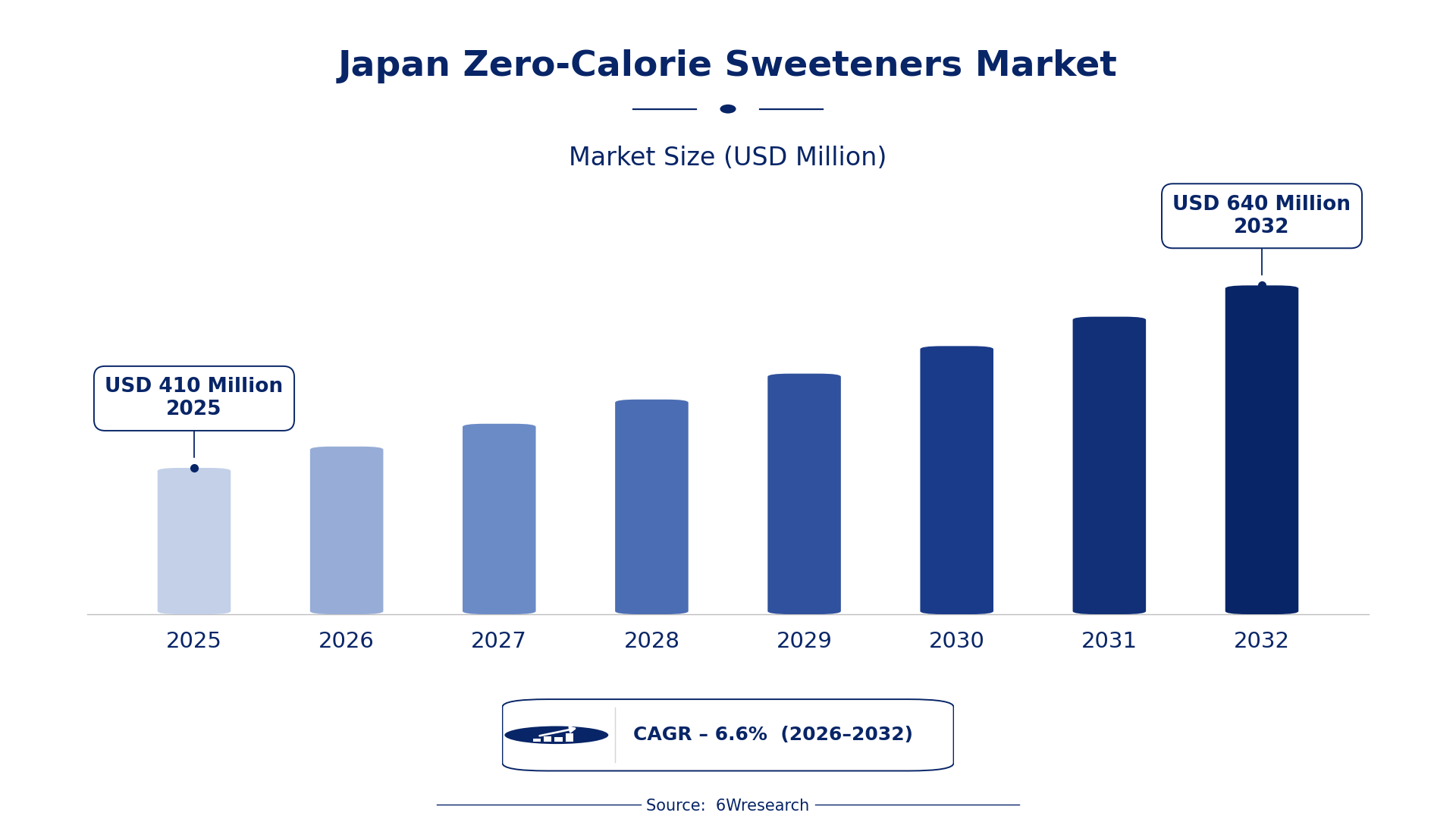
According to 6Wresearch internal database and industry insights, the Japan Zero-Calorie Sweeteners Market was valued at USD 410 Million in 2025 and is projected to reach USD 640 Million by 2032, growing at a CAGR of approximately 6.6% during 2026–2032.
Japan Zero-Calorie Sweeteners Market Highlights
| Report Metric | Details |
| Report Name | Japan Zero-Calorie Sweeteners Market (2026-2032) |
| Market Size 2025 | USD 410 Million |
| Market Size 2032 | USD 640 Million |
| Absolute Growth 2025–2032 | USD 230 Million |
| CAGR 2026–2032 | 6.6% |
| Peak Annual Growth | 7.7% in 2029 |
| Forecast Period | 2026–2032 |
| Historical Data | 2022–2025 |
| Base Year | 2025 |
| Leading Sweetener Type, 2025 | Aspartame (43% share) |
| Leading Source, 2025 | Natural Plant (36% share) |
| Leading Distribution Channel, 2025 | Retail Grocery Chains (48% share) |
| Leading End User, 2025 | Beverage Manufacturers (38% share) |
| Fastest-Growing Sweetener Type | Stevia (9.5% CAGR) |
| Fastest-Growing Distribution Channel | Online Health Platforms (8.9% CAGR) |
| Fastest-Growing End User | Nutraceutical Companies (8.7% CAGR) |
| Growing Sector | health food |
| Key End Users | beverage manufacturers, packaged food brands, nutraceutical companies |
Japan Zero-Calorie Sweeteners Market Year-wise Growth Rate and Key Drivers (2022–2032)
This graph illustrates the annual growth rates of the market from 2022 to 2032, highlighting a steady upward trajectory and projected market expansion over the forecast period.
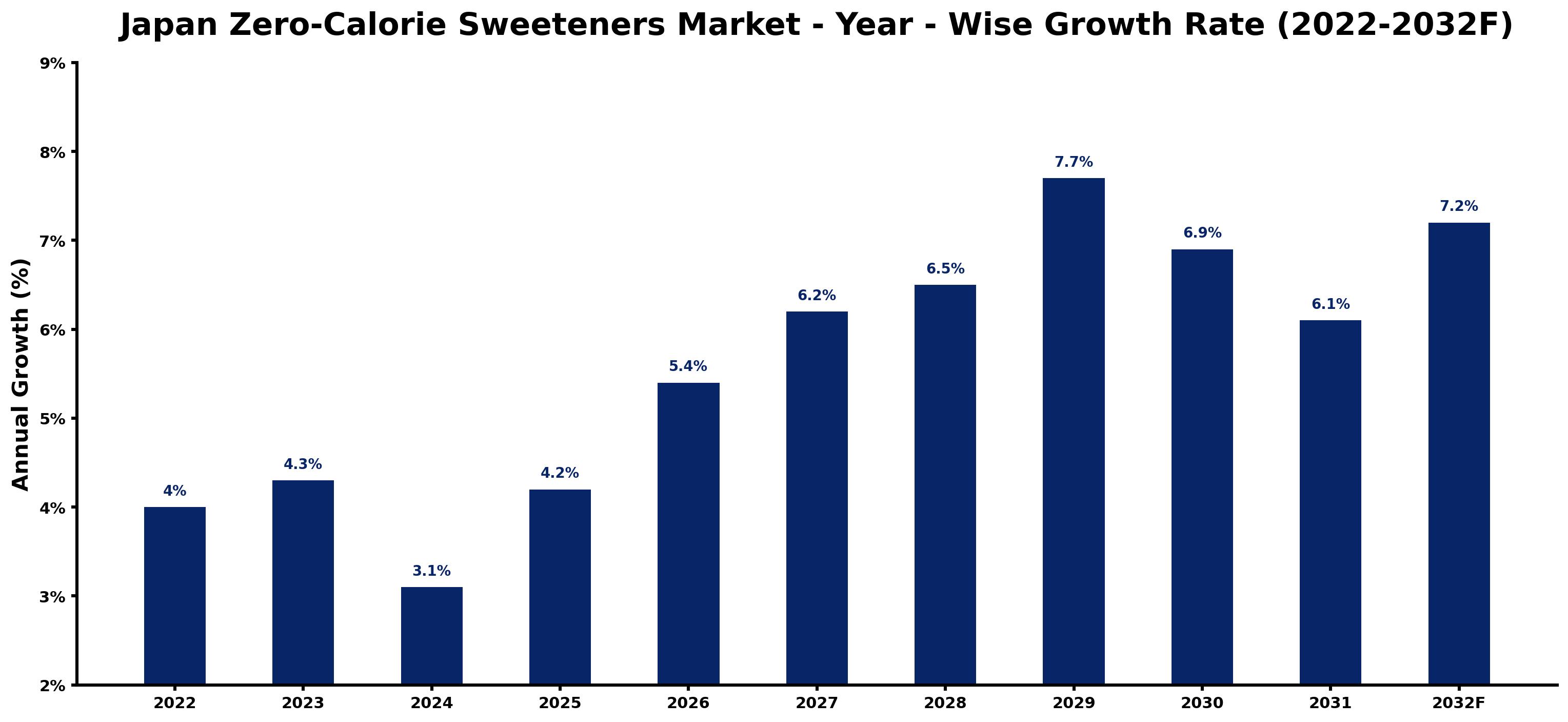
Below, each year's estimated growth is shown next to the factor that most influenced it.
| Year | Estimated Annual Growth (%) | Market Rationale |
| 2022 | 4.0 | The market showed steady growth, reflecting increasing health consciousness among consumers. |
| 2023 | 4.3 | Growth accelerated as health food trends gained traction, boosting demand for sweeteners. |
| 2024 | 3.1 | A slowdown occurred due to market saturation in certain segments, yet demand remained positive. |
| 2025 | 4.2 | Growth resumed as consumer preferences shifted towards low-calorie options in various products. |
| 2026 | 5.4 | An increase in health-focused initiatives is likely to stimulate further demand for sweeteners. |
| 2027 | 6.2 | Growing awareness of dietary choices is likely to support market growth. |
| 2028 | 6.5 | Continued consumer interest in wellness will sustain the upward trend in demand. |
| 2029 | 7.7 | A peak in growth is anticipated as innovative products attract more health-conscious buyers. |
| 2030 | 6.9 | Market growth will moderate slightly due to increased competition among sweetener types. |
| 2031 | 6.1 | A further slowdown is anticipated as market dynamics stabilise with established products. |
| 2032 | 7.2 | Growth will accelerate again as new health campaigns promote low-calorie diets. |
Note: Market size estimations and growth projections presented in this report are based on 6Wresearch's proprietary forecasting methodology, utilizing the latest available industry data, government publications, and primary research inputs.
Japan Zero-Calorie Sweeteners Market Synopsis
Zero-calorie sweeteners serve as sugar substitutes that provide sweetness without calories, derived from both natural and synthetic sources. Their primary applications include enhancing the flavour of beverages and packaged foods, catering especially to diabetic consumers. The Japan Zero-Calorie Sweeteners Market is expanding, driven by rising health consciousness and a health food market projected to reach 1 trillion yen by 2025. Increased demand from beverage manufacturers and health food stores contributes to this growth, as consumers increasingly seek healthier alternatives.
Market Dynamics Impact Analysis (2026–2032)
| Factor | Type | Impact | Primary Segment Affected |
| Rising health consciousness among consumers drives demand for low-calorie options. | Driver | High | Natural Plant |
| The increasing popularity of health food products creates opportunities for sweetener suppliers. | Opportunity | High | Nutraceutical Companies |
| Regulatory scrutiny on food safety can limit the introduction of new sweeteners. | Restraint | Medium | Synthetic |
| The growing trend of online shopping boosts demand for sweeteners via e-commerce platforms. | Opportunity | Medium | Online Health Platforms |
| Consumer scepticism regarding artificial ingredients can hinder market growth. | Restraint | High | Sucralose |
| Limited awareness of the benefits of certain sweeteners can restrict market penetration. | Restraint | Medium | Stevia |
| Logistical challenges can delay product availability for manufacturers. | Challenge | Medium | Erythritol |
| Intense competition among sweetener types may lead to price wars affecting margins. | Challenge | High | Aspartame |
Evaluation of Drivers in Japan Zero-Calorie Sweeteners Market (2026–2032)
The main growth drivers and the segments they affect most are set out below.
| Drivers | Primary Segment Affected | Why It Matters (Evidence) |
| Increased health awareness | Natural Plant | Health-conscious consumers are seeking natural alternatives, with natural sweeteners accounting for approximately 30% of the market share. |
| Rising demand for sugar alternatives | Aspartame | With over 50% of diet beverages containing aspartame, beverage manufacturers are increasingly incorporating it into their products. |
| Growing popularity of low-calorie diets | Sucralose | Sucralose's stability in high-temperature cooking makes it a preferred choice for health-focused food products. |
| Surge in online shopping | Online Health Platforms | Retail grocery chains report a 20% increase in zero-calorie sweetener sales, reflecting health-conscious consumer preferences. |
| Expansion of health food market | Nutraceutical Companies | Japan's health food market is projected to reach 1 trillion yen by 2025, increasing demand for sweeteners. |
A wider customer base explains much of the growth, as health-conscious consumers increasingly seek natural alternatives. Natural sweeteners now account for approximately 30% of the market share, reflecting rising awareness of healthy dietary choices. Beverage manufacturers are incorporating aspartame into over 50% of diet beverages, indicating a shift towards low-calorie options. The health food market is expected to reach 1 trillion yen by 2025, further stimulating interest in sweeteners. Increased sales through online platforms underscore the growing demand for these products.
Evaluation of Restraints in Japan Zero-Calorie Sweeteners Market
The main factors holding the market back are set out below.
| Market Restraint | Primary Segment Affected | Why It Matters (Evidence) |
| Regulatory scrutiny on food safety limits new product introductions. | Synthetic | Under the Food Sanitation Act, sweeteners must meet strict safety standards, delaying market entry. |
| Consumer scepticism regarding artificial sweeteners can hinder acceptance. | Sucralose | Negative perceptions about artificial ingredients can reduce demand among health-conscious buyers. |
| Logistical challenges can delay product availability for manufacturers. | Erythritol | Supply chain disruptions can impact the timely delivery of sweeteners to retailers. |
| Limited awareness of benefits restricts market penetration. | Stevia | Consumers may not fully understand the advantages of stevia over traditional sweeteners. |
| Intense competition among sweetener types may lead to price wars affecting margins. | Aspartame | As new entrants emerge, established players may reduce prices to maintain market share. |
Japan Zero-Calorie Sweeteners Market Challenges
Retail grocery chains report a 20% increase in zero-calorie sweetener sales, yet technology limitations restrict the variety of sweeteners available, delaying product launches for suppliers. A shortage of skilled professionals in food technology hampers innovation, costing producers market share as consumers look for diverse options. Supply chain disruptions affect the availability of essential ingredients, leading to delays that hinder buyers' ability to fulfil orders. Stringent regulations from the Ministry of Health, Labour and Welfare increase operational costs for suppliers, ultimately raising prices for consumers seeking affordable alternatives.
Trends in the Japan Zero-Calorie Sweeteners Market
The shifts below are changing how Japan Zero-Calorie Sweeteners Market products are bought and supplied.
- Rise in Natural Sweetener Adoption: Retail grocery chains report a 20% increase in zero-calorie sweetener sales, reflecting a shift towards natural options. This trend is fuelled by health-conscious consumers seeking alternatives to sugar.
- Shift Towards E-Commerce for Sweeteners: Online health platforms are experiencing a surge in demand for natural sweeteners, with sales increasing markedly. This change reflects consumer preferences for convenient shopping options.
- Increased Focus on Health Initiatives: In 2023, the government launched a health initiative promoting low-calorie diets, encouraging consumers to reduce sugar intake. This campaign is likely to boost demand for zero-calorie sweeteners.
- Growth of Health Food Market: Japan's health food market is expected to reach 1 trillion yen by 2025, driving demand for zero-calorie sweeteners. This growth presents opportunities for suppliers to expand their offerings.
Investment Opportunities in the Japan Zero-Calorie Sweeteners Market
Where to invest in the Japan Zero-Calorie Sweeteners Market: the main openings are set out below.
- Supply Natural Sweeteners: Natural sweeteners are gaining popularity, with a projected market share of 30%. Suppliers can target health food stores to meet this demand and establish partnerships for distribution.
- Invest in E-Commerce Platforms: With online health platforms seeing increased demand, investing in digital sales channels is essential. This shift allows suppliers to reach health-conscious consumers effectively.
- Target Beverage Manufacturers: Beverage manufacturers are major users of sweeteners, with over 50% of diet beverages containing aspartame. Suppliers can focus on this segment to drive growth.
- Capitalize on Health Initiatives: The government's health initiative promoting low-calorie diets presents a timely opportunity for suppliers. Engaging with health food brands can facilitate entry into this expanding market.
Government Initiatives in the Japan Zero-Calorie Sweeteners Market
The Food Sanitation Act amendment in 2018 mandates HACCP-based hygiene management for food businesses, ensuring safety in sweetener production. This law, enforced by the Ministry of Health, Labour and Welfare, requires manufacturers to adhere to strict safety protocols, building consumer trust in zero-calorie sweeteners. Additionally, the Food Recycling Law of 2000 promotes the recycling of food waste into feed and fertiliser, indirectly benefiting sweetener producers by encouraging sustainable practices.
The Japan Dietetic Association's endorsement of certain sweeteners for diabetics supports health-conscious consumers. This endorsement, along with guidelines from the Japan Food Additives Association, ensures that producers meet safety standards and can effectively market their products. The Ministry of Health, Labour and Welfare oversees these regulations, ensuring compliance and promoting safe sweetener use.
Future Insight of the Japan Zero-Calorie Sweeteners Market
Health-conscious consumers will increasingly prefer zero-calorie sweeteners as government health initiatives promote low-calorie diets. The health food market is projected to reach 1 trillion yen by 2025, creating new opportunities for suppliers. Advances in extraction methods will enable producers to develop a broader range of sweeteners, catering to consumer preferences for natural options. Enhanced distribution networks in urban areas will improve product access, ensuring that buyers can easily obtain the latest sweetener innovations.
Market Segmentation Analysis
Japan Zero-Calorie Sweeteners Market report covers a detailed analysis of the following market segments:
By Sweetener Type – Aspartame Leads, Stevia Expected to Grow Fastest
According to Saurav Kr Singh, Senior Research Analyst at 6Wresearch, in 2025, Aspartame led the sweetener type split with a 43% share. Aspartame commands the largest share as it is a key ingredient in over 50% of diet beverages, making it a staple for manufacturers focused on low-calorie options. Its established use in various products solidifies its position among buyers prioritising calorie reduction. Over 2026–2032, Stevia is expected to post the fastest growth, at a CAGR of 9.5%. Stevia is rapidly gaining traction due to a shift towards natural sweeteners, with a marked increase in its application in health food products. This growth is expected to continue as consumers increasingly favour natural alternatives over synthetic options. Suppliers must prioritise the development of natural sweeteners to align with consumer preferences for healthier choices.
By Source – Natural Plant Leads and Records the Fastest Growth
With 36% of source revenue in 2025, Natural Plant was the largest category. Natural Plant sources dominate the market as they appeal to consumers looking for healthier, more natural options in their diets. This preference is reflected in the increasing sales of products derived from plants, such as Stevia and others. The same category is also set to grow fastest, at a CAGR of 9.6% during 2026–2032. The growth of Natural Plant sources is propelled by the rising consumer awareness of health and wellness, leading to a surge in demand for products that are perceived as healthier. This trend is expected to strengthen as more health initiatives promote natural ingredients. Buyers will benefit from a wider range of natural sweetener options as suppliers expand their product lines.
By Distribution Channel – Retail Grocery Chains Lead, Online Health Platforms Expected to Grow Fastest
Retail Grocery Chains accounted for 48% of the market by distribution channel in 2025. Retail Grocery Chains hold a substantial share due to their wide-ranging selection of zero-calorie sweeteners, catering to the general consumer market. Their extensive presence across Japan ensures that these products are readily available to a diverse customer base. Online Health Platforms are set to record the highest CAGR in this split, 8.9% over 2026–2032. Online Health Platforms are rapidly expanding as they cater specifically to health-conscious consumers seeking convenient access to a variety of sweeteners. The shift towards online shopping is significantly contributing to the growth of this segment. Suppliers need to focus on enhancing online sales strategies to effectively tap into the increasing demand from health-oriented consumers.
By End User – Beverage Manufacturers Lead, Nutraceutical Companies Expected to Grow Fastest
Beverage Manufacturers took 38% of end user revenue in 2025, more than any other category. Beverage Manufacturers dominate the market as they are the primary users of zero-calorie sweeteners in low-calorie beverage production. Their ongoing need for these sweeteners creates a strong and stable market for suppliers. Nutraceutical Companies are projected to grow fastest, at a CAGR of 8.7% during 2026–2032. Nutraceutical Companies are increasingly incorporating zero-calorie sweeteners into their health-oriented products, driven by a rising consumer focus on wellness. This trend is expected to accelerate as health consciousness continues to grow. Suppliers should aim to build partnerships with nutraceutical companies to capitalise on the surging demand for sweeteners in health-related applications.
Key Attractiveness of the Report
- 10 Years of Market Numbers
- Historical Data Starting from 2022 to 2025
- Base Year 2025
- Forecast Data until 2032
- Key Performance Indicators Impacting the Market
- Major Upcoming Developments and Projects
Key Highlights of the Report:
- Japan Zero-Calorie Sweeteners Market Outlook
- Market Size of Japan Zero-Calorie Sweeteners Market, 2025
- Forecast of Japan Zero-Calorie Sweeteners Market, 2032
- Historical Data and Forecast of Japan Zero-Calorie Sweeteners Revenues & Volume for the Period 2022-2032F
- Japan Zero-Calorie Sweeteners Market Trend Evolution
- Japan Zero-Calorie Sweeteners Market Drivers and Challenges
- Japan Zero-Calorie Sweeteners Price Trends
- Japan Zero-Calorie Sweeteners Porter's Five Forces
- Japan Zero-Calorie Sweeteners Industry Life Cycle
- Historical Data and Forecast of Japan Zero-Calorie Sweeteners Market Revenues & Volume By Sweetener Type for the Period 2022-2032F
- Historical Data and Forecast of Japan Zero-Calorie Sweeteners Market Revenues & Volume By Stevia for the Period 2022-2032F
- Historical Data and Forecast of Japan Zero-Calorie Sweeteners Market Revenues & Volume By Aspartame for the Period 2022-2032F
- Historical Data and Forecast of Japan Zero-Calorie Sweeteners Market Revenues & Volume By Sucralose for the Period 2022-2032F
- Historical Data and Forecast of Japan Zero-Calorie Sweeteners Market Revenues & Volume By Monk Fruit for the Period 2022-2032F
- Historical Data and Forecast of Japan Zero-Calorie Sweeteners Market Revenues & Volume By Erythritol for the Period 2022-2032F
- Historical Data and Forecast of Japan Zero-Calorie Sweeteners Market Revenues & Volume By Source for the Period 2022-2032F
- Historical Data and Forecast of Japan Zero-Calorie Sweeteners Market Revenues & Volume By Natural Plant for the Period 2022-2032F
- Historical Data and Forecast of Japan Zero-Calorie Sweeteners Market Revenues & Volume By Synthetic for the Period 2022-2032F
- Historical Data and Forecast of Japan Zero-Calorie Sweeteners Market Revenues & Volume By Chlorinated Sugar for the Period 2022-2032F
- Historical Data and Forecast of Japan Zero-Calorie Sweeteners Market Revenues & Volume By Fruit-Based for the Period 2022-2032F
- Historical Data and Forecast of Japan Zero-Calorie Sweeteners Market Revenues & Volume By Sugar Alcohol for the Period 2022-2032F
- Historical Data and Forecast of Japan Zero-Calorie Sweeteners Market Revenues & Volume By Distribution Channel for the Period 2022-2032F
- Historical Data and Forecast of Japan Zero-Calorie Sweeteners Market Revenues & Volume By Health Food Stores for the Period 2022-2032F
- Historical Data and Forecast of Japan Zero-Calorie Sweeteners Market Revenues & Volume By Online Health Platforms for the Period 2022-2032F
- Historical Data and Forecast of Japan Zero-Calorie Sweeteners Market Revenues & Volume By Retail Grocery Chains for the Period 2022-2032F
- Historical Data and Forecast of Japan Zero-Calorie Sweeteners Market Revenues & Volume By Specialty Nutrition Stores for the Period 2022-2032F
- Historical Data and Forecast of Japan Zero-Calorie Sweeteners Market Revenues & Volume By B2B Ingredient Suppliers for the Period 2022-2032F
- Historical Data and Forecast of Japan Zero-Calorie Sweeteners Market Revenues & Volume By End User for the Period 2022-2032F
- Historical Data and Forecast of Japan Zero-Calorie Sweeteners Market Revenues & Volume By Beverage Manufacturers for the Period 2022-2032F
- Historical Data and Forecast of Japan Zero-Calorie Sweeteners Market Revenues & Volume By Packaged Food Brands for the Period 2022-2032F
- Historical Data and Forecast of Japan Zero-Calorie Sweeteners Market Revenues & Volume By Confectionery Producers for the Period 2022-2032F
- Historical Data and Forecast of Japan Zero-Calorie Sweeteners Market Revenues & Volume By Diabetic Product Makers for the Period 2022-2032F
- Historical Data and Forecast of Japan Zero-Calorie Sweeteners Market Revenues & Volume By Nutraceutical Companies for the Period 2022-2032F
- Japan Zero-Calorie Sweeteners Import Export Trade Statistics
- Market Opportunity Assessment By Sweetener Type
- Market Opportunity Assessment By Source
- Market Opportunity Assessment By Distribution Channel
- Market Opportunity Assessment By End User
- Japan Zero-Calorie Sweeteners Top Companies Market Share
- Japan Zero-Calorie Sweeteners Competitive Benchmarking By Technical and Operational Parameters
- Japan Zero-Calorie Sweeteners Company Profiles
- Japan Zero-Calorie Sweeteners Key Strategic Recommendations
Market Covered
Coverage by segment is as follows.
By Sweetener Type
- Stevia
- Aspartame
- Sucralose
- Monk Fruit
- Erythritol
By Source
- Natural Plant
- Synthetic
- Chlorinated Sugar
- Fruit-Based
- Sugar Alcohol
By Distribution Channel
- Health Food Stores
- Online Health Platforms
- Retail Grocery Chains
- Specialty Nutrition Stores
- B2B Ingredient Suppliers
By End User
- Beverage Manufacturers
- Packaged Food Brands
- Confectionery Producers
- Diabetic Product Makers
- Nutraceutical Companies































