Japan Zoological Parks Market Size & Growth Rate
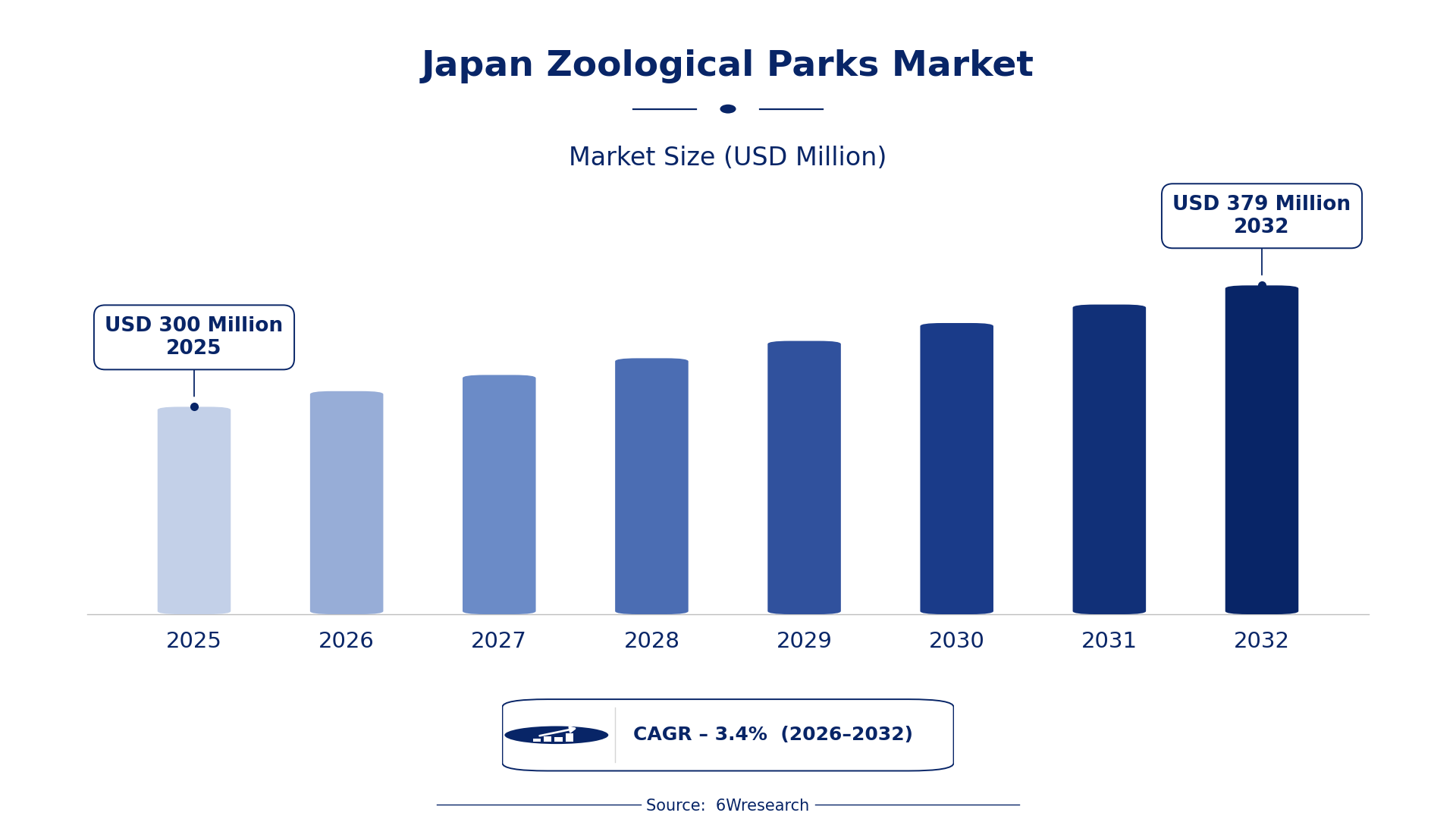
According to 6Wresearch internal database and industry insights, the Japan Zoological Parks Market was valued at USD 300 Million in 2025 and is projected to reach USD 379 Million by 2032, growing at a CAGR of approximately 3.4% during 2026–2032.
Japan Zoological Parks Market Highlights
| Report Metric | Details |
| Report Name | Japan Zoological Parks Market (2026-2032) |
| Market Size 2025 | USD 300 Million |
| Market Size 2032 | USD 379 Million |
| Absolute Growth 2025–2032 | USD 79 Million |
| CAGR 2026–2032 | 3.4% |
| Peak Annual Growth | 4.6% in 2032 |
| Forecast Period | 2026–2032 |
| Historical Data | 2022–2025 |
| Base Year | 2025 |
| Leading Park Type, 2025 | Wildlife Safari Parks (43% share) |
| Leading Facility Focus, 2025 | Endangered Species (47% share) |
| Leading Revenue Source, 2025 | Entry Tickets (42% share) |
| Leading End User, 2025 | Tourists (49% share) |
| Fastest-Growing Park Type | Urban Zoos (4.9% CAGR) |
| Fastest-Growing Facility Focus | Educational Displays (4.7% CAGR) |
| Fastest-Growing Revenue Source | Merchandise Sales (5.1% CAGR) |
| Fastest-Growing End User | Families (4.5% CAGR) |
| Growing Sector | Families |
| Key End Users | Tourists, Families, School Groups, Environmental NGOs |
Japan Zoological Parks Market Year-wise Growth Rate and Key Drivers (2022–2032)
This graph illustrates the annual growth rates of the market from 2022 to 2032, highlighting a steady upward trajectory and projected market expansion over the forecast period.
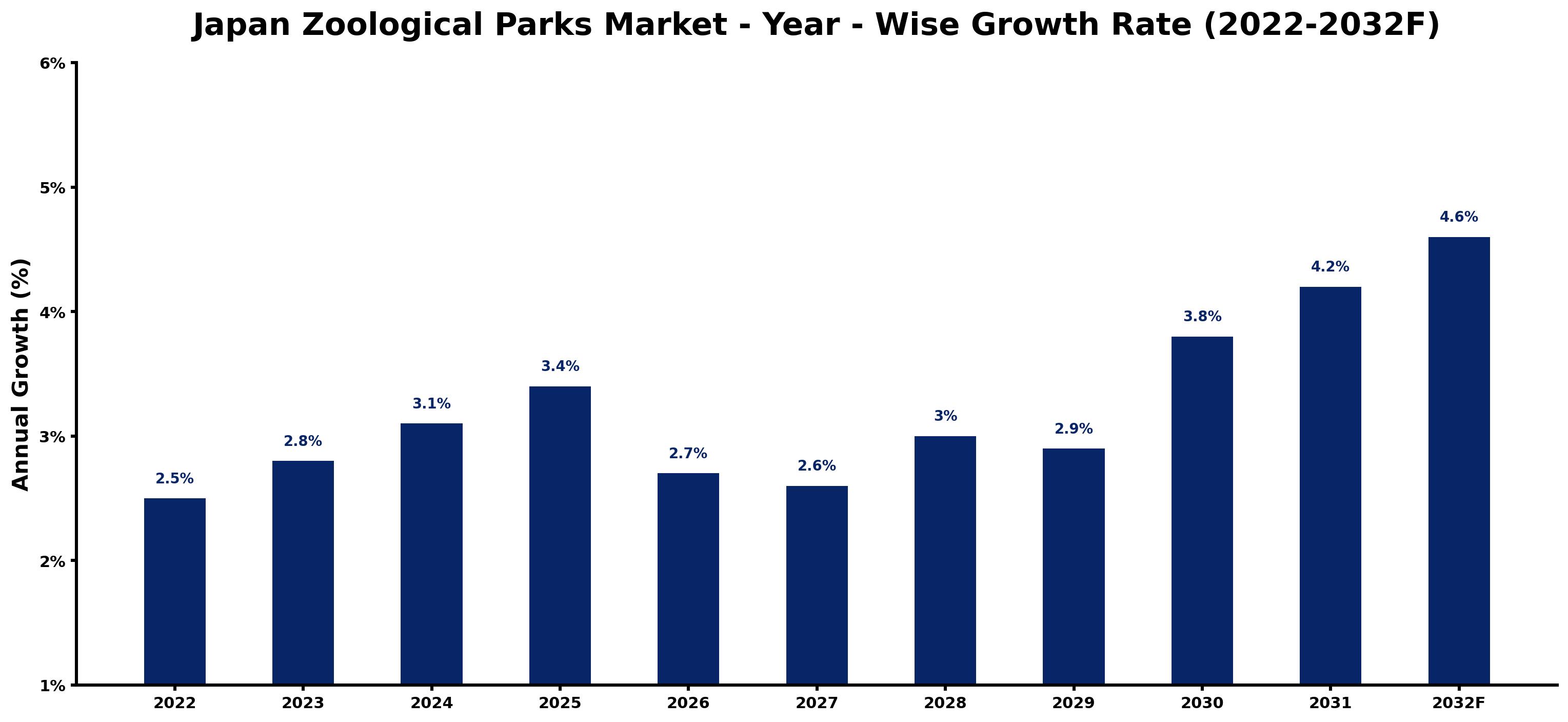
The table below sets out the estimated growth rate for each year and the main factor behind it.
| Year | Estimated Annual Growth (%) | Market Rationale |
| 2022 | 2.5 | Visitor numbers were stable, reflecting ongoing interest in wildlife conservation and education. |
| 2023 | 2.8 | Increased educational programs attracted more school groups to zoological parks across the country. |
| 2024 | 3.1 | The introduction of new animal exhibits drew in larger crowds, boosting overall attendance. |
| 2025 | 3.4 | Visitor engagement rose due to marketing efforts and community outreach initiatives. |
| 2026 | 2.7 | Growth slowed as competition from alternative recreational activities increased in urban areas. |
| 2027 | 2.6 | A slight slowdown in growth was noted as new attractions took time to develop. |
| 2028 | 3.0 | Visitor interest surged again with the launch of new immersive experiences in parks. |
| 2029 | 2.9 | Growth slowed slightly as the novelty of recent attractions began to wear off. |
| 2030 | 3.8 | Increased family memberships contributed to a rise in attendance figures. |
| 2031 | 4.2 | Visitor numbers increased due to successful promotional campaigns targeting local tourists. |
| 2032 | 4.6 | The market peaked as conservation efforts and educational programs gained wider recognition. |
Note: Market size estimations and growth projections presented in this report are based on 6Wresearch's proprietary forecasting methodology, utilizing the latest available industry data, government publications, and primary research inputs.
Japan Zoological Parks Market Synopsis
Zoological parks in Japan function as important centres for public education and wildlife conservation, showcasing a variety of animal species for public enjoyment. With more than 40 major parks, the Japan Zoological Parks Market benefits from domestic tourists and educational institutions. Continued investment in educational programmes and immersive experiences is propelling growth, with visitor numbers anticipated to surpass 5 million each year. The market is expected to expand from USD 300 million in 2025 to USD 379 million by 2032, reflecting a strong dedication to conservation and education.
Market Dynamics Impact Analysis (2026–2032)
| Factor | Type | Impact | Primary Segment Affected |
| Growing interest in wildlife conservation and education | Driver | High | Urban Zoos |
| Increase in family memberships and local visits | Driver | High | Entry Tickets |
| Expansion of educational programs in schools | Opportunity | Medium | Educational Displays |
| Investment in new attractions and immersive experiences | Opportunity | High | Wildlife Safari Parks |
| Limited funding for conservation initiatives | Restraint | High | Conservation Parks |
| Competition from alternative recreational activities | Restraint | Medium | Aquatic Zoos |
| High operational costs for maintaining animal welfare standards | Challenge | High | Endangered Species |
| Regulatory compliance requirements for animal care | Challenge | Medium | Breeding Programs |
Evaluation of Drivers in Japan Zoological Parks Market (2026–2032)
Demand rests on the following drivers, each shown with the segment it touches most.
| Drivers | Primary Segment Affected | Why It Matters (Evidence) |
| Increased public interest in wildlife conservation | Wildlife Safari Parks | Visitor numbers are rising as more people seek immersive wildlife experiences, with parks reporting attendance growth of over 5 million visitors in 2022. |
| Expansion of educational programs | Educational Displays | Zoos are reaching over 1 million school children annually, driving demand for educational visits and resources. |
| Investment in new animal exhibits | Urban Zoos | New attractions are generating excitement, leading to higher visitor numbers and increased ticket sales. |
| Government funding for conservation initiatives | Conservation Parks | The government allocates funding for wildlife conservation, supporting parks focused on endangered species. |
| Growth in family memberships | Entry Tickets | Family memberships are increasingly popular, with discounts attracting local residents and increasing attendance. |
Purchasing is picking up as public interest in wildlife conservation rises, with parks reporting over 5 million visitors in 2022. New animal exhibits have attracted more visitors, with urban zoos seeing attendance growth of over 10%. Family memberships are increasingly popular, contributing to revenue streams and overall attendance figures.
Evaluation of Restraints in Japan Zoological Parks Market
The key brakes on demand, and where they bite hardest, are shown below.
| Market Restraint | Primary Segment Affected | Why It Matters (Evidence) |
| Limited funding for conservation initiatives | Conservation Parks | Many parks struggle with funding, limiting their ability to expand conservation efforts and maintain facilities. |
| High operational costs for animal care | Endangered Species | Maintaining animal welfare standards incurs high costs, impacting overall profitability for parks. |
| Competition from alternative recreational activities | Aquatic Zoos | Urban areas offer various entertainment options, drawing potential visitors away from zoological parks. |
| Regulatory compliance requirements for animal care | Breeding Programs | Strict regulations increase operational complexity and costs, making it challenging for parks to maintain breeding programs. |
| Seasonal fluctuations in visitor numbers | Urban Zoos | Visitor numbers tend to drop during off-peak seasons, affecting revenue stability for urban zoos. |
Japan Zoological Parks Market Challenges
Visitor engagement is hindered by a shortage of trained staff, as educational institutions do not prioritise zoological training. This leads to a lack of knowledgeable guides, costing parks potential revenue from increased visitor satisfaction. Many parks still depend on outdated systems for visitor management, resulting in longer wait times and possibly reducing annual attendance by 10%. Regulatory hurdles complicate the implementation of new animal welfare standards, causing delays in compliance that may result in fines for parks. Buyers face rising entry fees as parks struggle to maintain operations amid these challenges, affecting family budgets.
Trends in the Japan Zoological Parks Market
These developments are changing demand patterns in the Japan Zoological Parks Market.
- Shift from Traditional to Interactive Exhibits: In 2023, many zoos began replacing traditional animal displays with interactive exhibits, increasing visitor engagement. Urban zoos have reported a 15% increase in attendance due to these changes.
- Rise in Family Memberships: Family memberships have gained popularity, with a reported 20% growth in sales in 2022. This trend reflects a shift towards more affordable family outings in urban areas.
- Focus on Conservation Education: The Japan Association of Zoos and Aquariums has initiated efforts to improve biodiversity education, reaching over 1 million school children annually. This focus is driving more educational visits to parks.
- Expansion of Aquatic Zoos: Aquatic zoos are becoming more popular, particularly in coastal regions, with several new facilities opening in 2023. This trend is driven by the growing public interest in marine life conservation.
Investment Opportunities in the Japan Zoological Parks Market
Below are the investment opportunities with the strongest case in the Japan Zoological Parks Market.
- Growing Demand for Educational Programs: With over 1 million school children visiting annually, there is a gap in educational resources. Suppliers of educational materials can partner with urban zoos to improve learning experiences.
- Investment in Interactive Exhibits: As visitor engagement increases, zoos are looking to invest in interactive exhibits. Suppliers of technology and design services can enter this market by collaborating with facilities.
- Expansion of Family-Oriented Offerings: Family memberships are on the rise, with a reported 20% growth in 2022. Zoos can improve family experiences by offering bundled ticket packages and discounts.
- Development of Conservation Programs: The government allocates funding for wildlife conservation initiatives, creating opportunities for parks to improve their programs. Collaborating with environmental NGOs can boost conservation efforts.
Government Initiatives in the Japan Zoological Parks Market
The Next-Generation Medical Infrastructure Act (2017) has introduced measures that improve biodiversity education in zoological parks, building on existing legislation. This law requires parks to implement educational programmes that promote conservation awareness among visitors and school groups.
The Ministry of the Environment plays a key role in approving funding for wildlife conservation programmes. This agency allocates resources to support initiatives that improve animal welfare and educational outreach in zoological parks.
Future Insight of the Japan Zoological Parks Market
Investment in new educational programmes will drive demand for zoological parks, creating opportunities for suppliers of educational materials and interactive exhibits. By 2032, parks will increasingly adopt advanced visitor management technologies to streamline operations and improve the guest experience. Government initiatives will support biodiversity education, expanding outreach to schools and increasing annual attendance to over 6 million. New conservation standards will elevate animal welfare practices, attracting wildlife enthusiasts and boosting park reputations.
Market Segmentation Analysis
Japan Zoological Parks Market report covers a detailed analysis of the following market segments:
By Park Type – Wildlife Safari Parks Lead, Urban Zoos Expected to Grow Fastest
According to Saurav Kr Singh, Senior Research Analyst at 6Wresearch, Wildlife Safari Parks accounted for 43% of the market by park type in 2025. Wildlife Safari Parks attract a large number of visitors due to their immersive experiences with animals, appealing to families and tourists seeking adventure. Their unique offerings, such as close encounters with wildlife in rural areas, ensure a robust and loyal visitor base. The quickest growth will come from Urban Zoos, forecast to expand at a CAGR of 4.9% between 2026 and 2032. Urban Zoos are rapidly gaining popularity as they serve essential educational and recreational roles in densely populated cities. The growing focus on biodiversity education and school visits is drawing more families to these urban attractions, further boosting their appeal. Suppliers should enhance visitor experiences in urban settings to capture the expanding family market.
By Facility Focus – Endangered Species Lead, Educational Displays Expected to Grow Fastest
With 47% of facility focus revenue in 2025, Endangered Species was the largest category. Endangered Species exhibits play a vital role in conservation, drawing in visitors who are passionate about wildlife preservation. Their involvement in educational initiatives ensures a consistent stream of visitors interested in animal welfare and conservation efforts. Over 2026–2032, Educational Displays are expected to post the fastest growth, at a CAGR of 4.7%. Educational Displays are becoming increasingly popular as they provide critical information and raise awareness among visitors. The trend of educational programs in zoos, reaching over 1 million school children annually, is propelling this segment's growth. Buyers will benefit from enhanced educational content that aligns with public interest in conservation.
By Revenue Source – Entry Tickets Lead, Merchandise Sales Expected to Grow Fastest
Entry Tickets took 42% of revenue source revenue in 2025, more than any other category. Entry Tickets represent the primary revenue source for zoological parks, constituting a significant portion of their income. Consistent visitor numbers, such as over 5 million reported in 2022, underscore the importance of this revenue stream. Merchandise Sales is set to record the highest CAGR in this split, 5.1% over 2026–2032. Merchandise Sales are experiencing growth as parks broaden their offerings to include souvenirs and educational materials. With merchandise accounting for about 15% of total revenue for urban zoos, this segment is becoming increasingly profitable. Suppliers should develop merchandise that complements educational themes of zoos to maximise revenue potential.
By End User – Tourists Lead, Families Expected to Grow Fastest
Tourists held 49% of the Japan Zoological Parks Market by end user in 2025. Tourists serve as a key source of visitors and revenue for zoological parks, particularly in major cities like Tokyo. The influx of domestic tourists during peak seasons solidifies their dominant role in the market. Families are projected to grow fastest, at a CAGR of 4.5% during 2026–2032. Families are emerging as the fastest-growing segment, driven by targeted marketing and family-friendly initiatives at zoos. The rise in family memberships and local discounts is encouraging more families to visit regularly. Suppliers must tailor offerings to appeal to families, enhancing the overall experience for this important demographic.
Key Attractiveness of the Report
- 10 Years of Market Numbers
- Historical Data Starting from 2022 to 2025
- Base Year 2025
- Forecast Data until 2032
- Key Performance Indicators Impacting the Market
- Major Upcoming Developments and Projects
Key Highlights of the Report:
- Japan Zoological Parks Market Outlook
- Market Size of Japan Zoological Parks Market, 2025
- Forecast of Japan Zoological Parks Market, 2032
- Historical Data and Forecast of Japan Zoological Parks Revenues & Volume for the Period 2022-2032F
- Japan Zoological Parks Market Trend Evolution
- Japan Zoological Parks Market Drivers and Challenges
- Japan Zoological Parks Price Trends
- Japan Zoological Parks Porter's Five Forces
- Japan Zoological Parks Industry Life Cycle
- Historical Data and Forecast of Japan Zoological Parks Market Revenues & Volume By Park Type for the Period 2022-2032F
- Historical Data and Forecast of Japan Zoological Parks Market Revenues & Volume By Wildlife Safari Parks for the Period 2022-2032F
- Historical Data and Forecast of Japan Zoological Parks Market Revenues & Volume By Urban Zoos for the Period 2022-2032F
- Historical Data and Forecast of Japan Zoological Parks Market Revenues & Volume By Aquatic Zoos for the Period 2022-2032F
- Historical Data and Forecast of Japan Zoological Parks Market Revenues & Volume By Thematic Zoos for the Period 2022-2032F
- Historical Data and Forecast of Japan Zoological Parks Market Revenues & Volume By Conservation Parks for the Period 2022-2032F
- Historical Data and Forecast of Japan Zoological Parks Market Revenues & Volume By Facility Focus for the Period 2022-2032F
- Historical Data and Forecast of Japan Zoological Parks Market Revenues & Volume By Endangered Species for the Period 2022-2032F
- Historical Data and Forecast of Japan Zoological Parks Market Revenues & Volume By Educational Displays for the Period 2022-2032F
- Historical Data and Forecast of Japan Zoological Parks Market Revenues & Volume By Marine Life for the Period 2022-2032F
- Historical Data and Forecast of Japan Zoological Parks Market Revenues & Volume By Specific Biomes for the Period 2022-2032F
- Historical Data and Forecast of Japan Zoological Parks Market Revenues & Volume By Breeding Programs for the Period 2022-2032F
- Historical Data and Forecast of Japan Zoological Parks Market Revenues & Volume By Revenue Source for the Period 2022-2032F
- Historical Data and Forecast of Japan Zoological Parks Market Revenues & Volume By Entry Tickets for the Period 2022-2032F
- Historical Data and Forecast of Japan Zoological Parks Market Revenues & Volume By Merchandise Sales for the Period 2022-2032F
- Historical Data and Forecast of Japan Zoological Parks Market Revenues & Volume By Memberships for the Period 2022-2032F
- Historical Data and Forecast of Japan Zoological Parks Market Revenues & Volume By Sponsorships for the Period 2022-2032F
- Historical Data and Forecast of Japan Zoological Parks Market Revenues & Volume By Government Funding for the Period 2022-2032F
- Historical Data and Forecast of Japan Zoological Parks Market Revenues & Volume By End User for the Period 2022-2032F
- Historical Data and Forecast of Japan Zoological Parks Market Revenues & Volume By Tourists for the Period 2022-2032F
- Historical Data and Forecast of Japan Zoological Parks Market Revenues & Volume By Families for the Period 2022-2032F
- Historical Data and Forecast of Japan Zoological Parks Market Revenues & Volume By School Groups for the Period 2022-2032F
- Historical Data and Forecast of Japan Zoological Parks Market Revenues & Volume By Environmental NGOs for the Period 2022-2032F
- Historical Data and Forecast of Japan Zoological Parks Market Revenues & Volume By Wildlife Conservationists for the Period 2022-2032F
- Japan Zoological Parks Import Export Trade Statistics
- Market Opportunity Assessment By Park Type
- Market Opportunity Assessment By Facility Focus
- Market Opportunity Assessment By Revenue Source
- Market Opportunity Assessment By End User
- Japan Zoological Parks Top Companies Market Share
- Japan Zoological Parks Competitive Benchmarking By Technical and Operational Parameters
- Japan Zoological Parks Company Profiles
- Japan Zoological Parks Key Strategic Recommendations
Market Covered
This report examines the market across the segments below.
By Park Type
- Wildlife Safari Parks
- Urban Zoos
- Aquatic Zoos
- Thematic Zoos
- Conservation Parks
By Facility Focus
- Endangered Species
- Educational Displays
- Marine Life
- Specific Biomes
- Breeding Programs
By Revenue Source
- Entry Tickets
- Merchandise Sales
- Memberships
- Sponsorships
- Government Funding
By End User
- Tourists
- Families
- School Groups
- Environmental NGOs
- Wildlife Conservationists































