Jordan Castor Oil Market Size Growth Rate
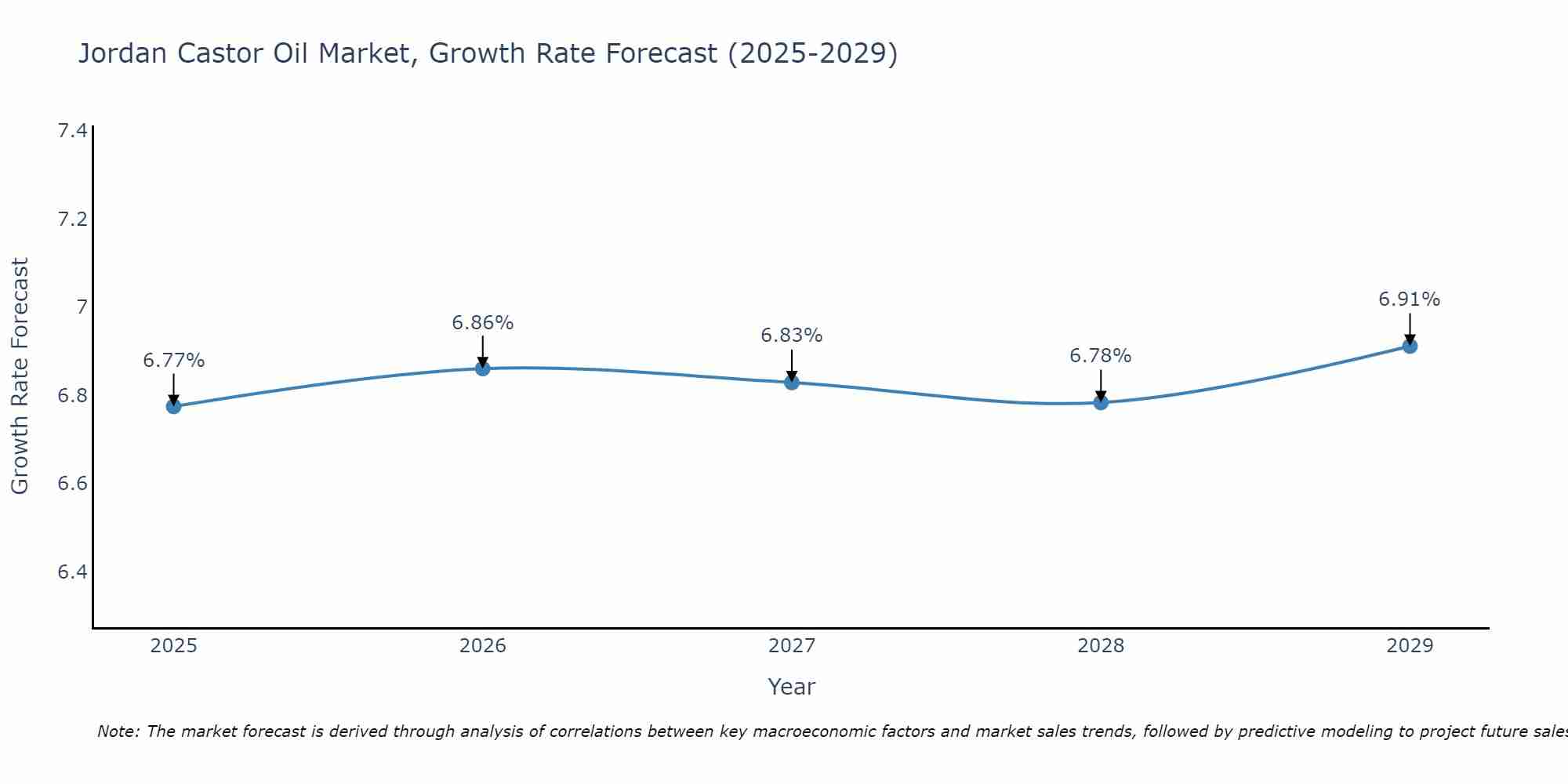
The Jordan Castor Oil Market is projected to witness mixed growth rate patterns during 2025 to 2029. Commencing at 6.77% in 2025, growth builds up to 6.91% by 2029.
Castor Oil Market: Jordan vs Top 5 Major Economies in 2027 (Middle East)
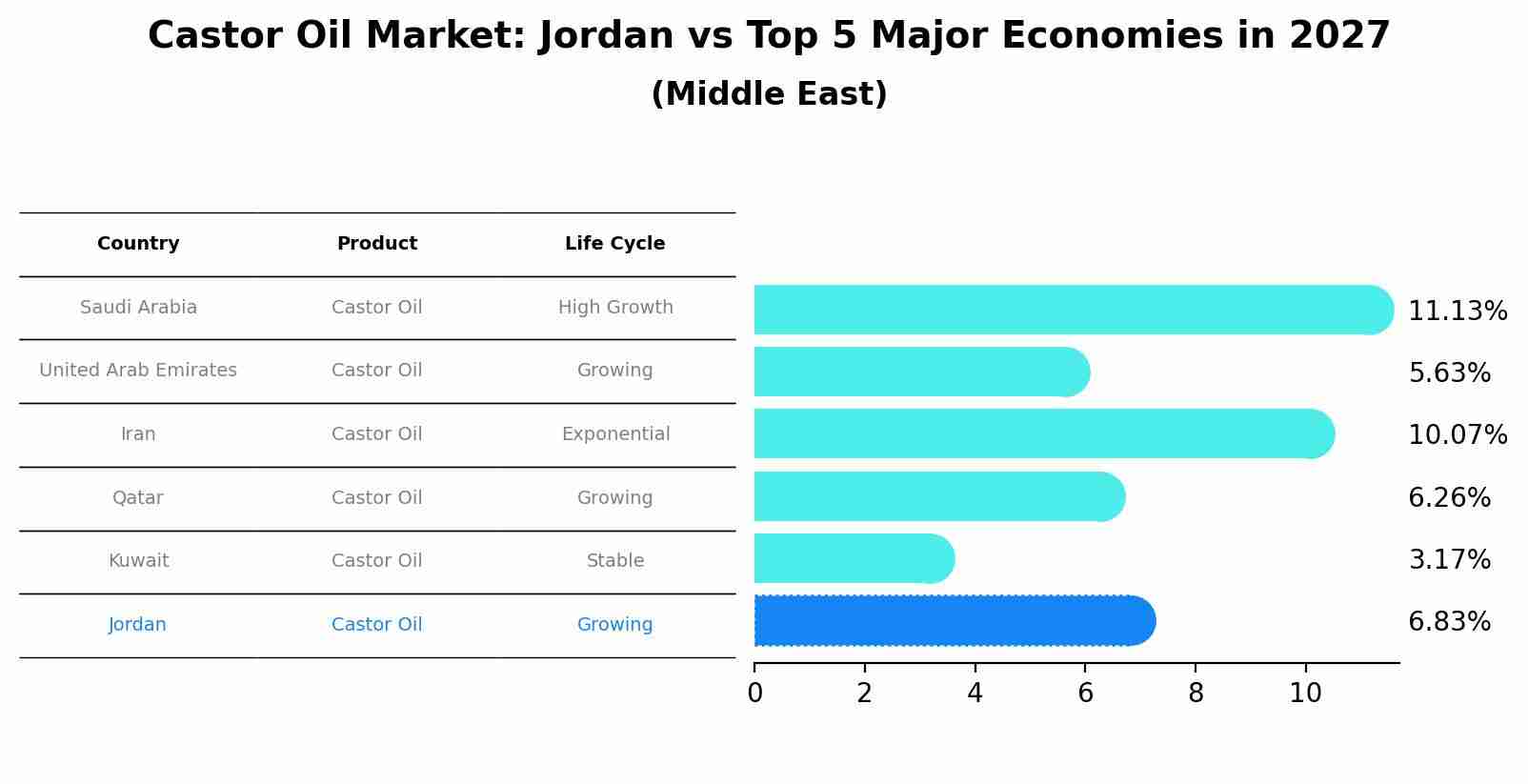
The Castor Oil market in Jordan is projected to grow at a growing growth rate of 6.83% by 2027, within the Middle East region led by Saudi Arabia, along with other countries like United Arab Emirates, Iran, Qatar and Kuwait, collectively shaping a dynamic and evolving market environment driven by innovation and increasing adoption of emerging technologies.
Jordan Castor Oil Market Overview
The castor oil market in Jordan is expanding due to the growing awareness of its health benefits and its wide usage in cosmetics, pharmaceuticals, and industrial applications. Jordan favorable climatic conditions for castor cultivation further contribute to market growth.
Drivers of the market
The Castor Oil Market in Jordan is driven by its diverse applications across various industries such as pharmaceuticals, cosmetics, and lubricants. Castor oil is widely used in the pharmaceutical industry for its medicinal properties and as an ingredient in various medications and health supplements. In the cosmetics industry, castor oil is used in skincare and haircare products due to its moisturizing and nourishing properties. Additionally, the industrial applications of castor oil as a lubricant and hydraulic fluid further contribute to the growth of the market in Jordan.
Challenges of the market
Challenges in the Jordan castor oil market include limited agricultural production of castor seeds and high dependency on imports. This dependency makes the market susceptible to global price volatility and supply chain interruptions. Additionally, there is a lack of local processing facilities, which increases production costs and limits market growth. Efforts to develop the market are further hampered by insufficient research and development to improve crop yields and oil extraction techniques.
Government Policy of the market
The castor oil market in Jordan is supported by agricultural policies that aim to enhance the production of non-traditional crops. The government provides subsidies and technical assistance to farmers to cultivate castor beans, which are processed into castor oil. There are initiatives to improve processing techniques and market access, ensuring that castor oil products meet international standards. Export policies are designed to help Jordan producers tap into global markets.
Key Highlights of the Report:
- Jordan Castor Oil Market Outlook
- Market Size of Jordan Castor Oil Market, 2024
- Forecast of Jordan Castor Oil Market, 2031
- Historical Data and Forecast of Jordan Castor Oil Revenues & Volume for the Period 2021-2031
- Jordan Castor Oil Market Trend Evolution
- Jordan Castor Oil Market Drivers and Challenges
- Jordan Castor Oil Price Trends
- Jordan Castor Oil Porter's Five Forces
- Jordan Castor Oil Industry Life Cycle
- Historical Data and Forecast of Jordan Castor Oil Market Revenues & Volume By End Use for the Period 2021-2031
- Historical Data and Forecast of Jordan Castor Oil Market Revenues & Volume By Pharmaceuticals for the Period 2021-2031
- Historical Data and Forecast of Jordan Castor Oil Market Revenues & Volume By Lubricants for the Period 2021-2031
- Historical Data and Forecast of Jordan Castor Oil Market Revenues & Volume By Paints for the Period 2021-2031
- Historical Data and Forecast of Jordan Castor Oil Market Revenues & Volume By Soaps for the Period 2021-2031
- Historical Data and Forecast of Jordan Castor Oil Market Revenues & Volume By Others for the Period 2021-2031
- Jordan Castor Oil Import Export Trade Statistics
- Market Opportunity Assessment By End Use
- Jordan Castor Oil Top Companies Market Share
- Jordan Castor Oil Competitive Benchmarking By Technical and Operational Parameters
- Jordan Castor Oil Company Profiles
- Jordan Castor Oil Key Strategic Recommendations






































