Kazakhstan Electric Ac Motors Market: Import Trend Analysis
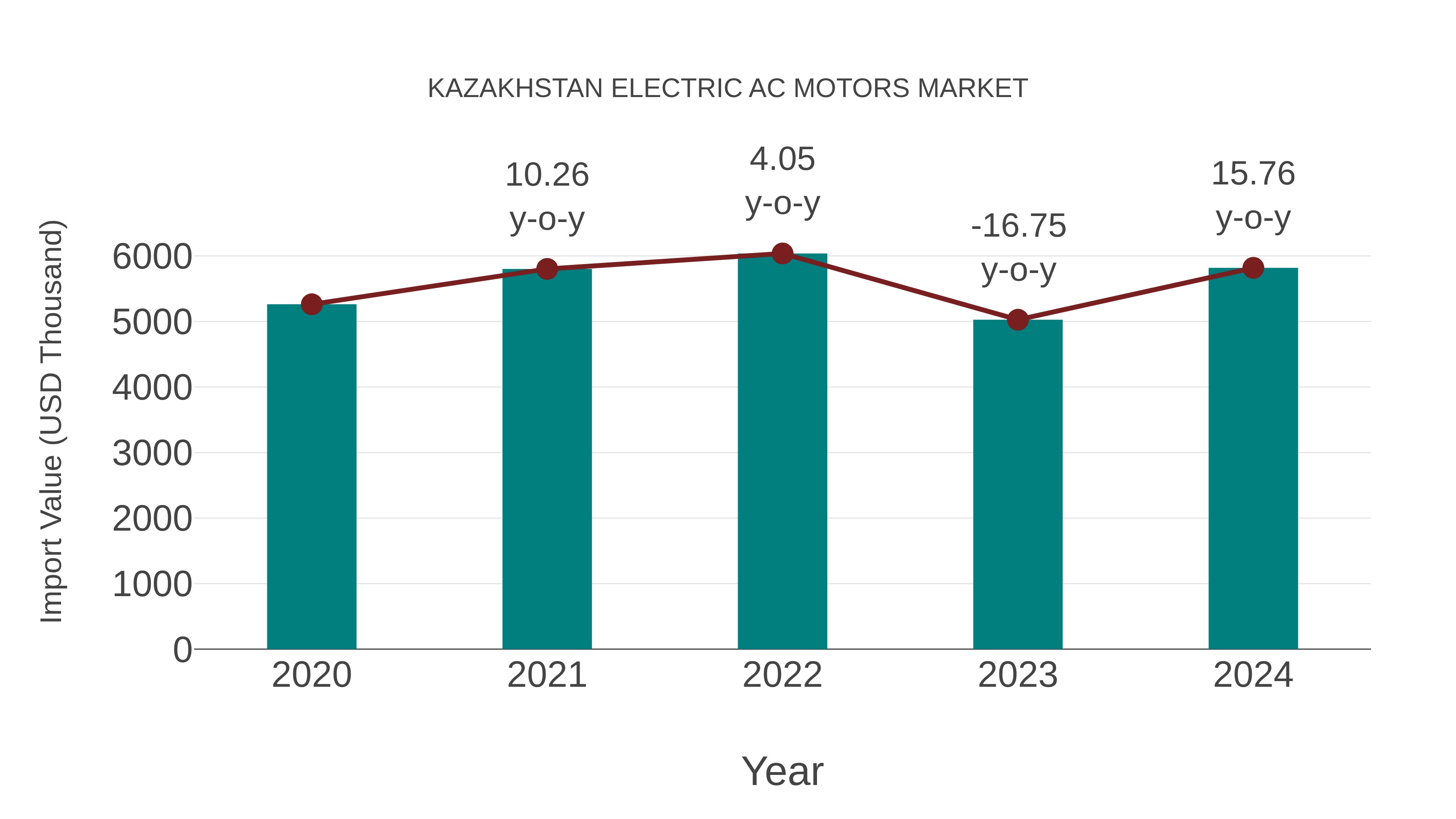
In the Kazakhstan electric AC motors market, the import trend showed a notable growth rate of 15.76% from 2023 to 2024. The compound annual growth rate (CAGR) for the period of 2020 to 2024 stood at 2.54%. This import momentum can be attributed to increased industrial activities and infrastructure projects, driving demand for electric AC motors in the country.
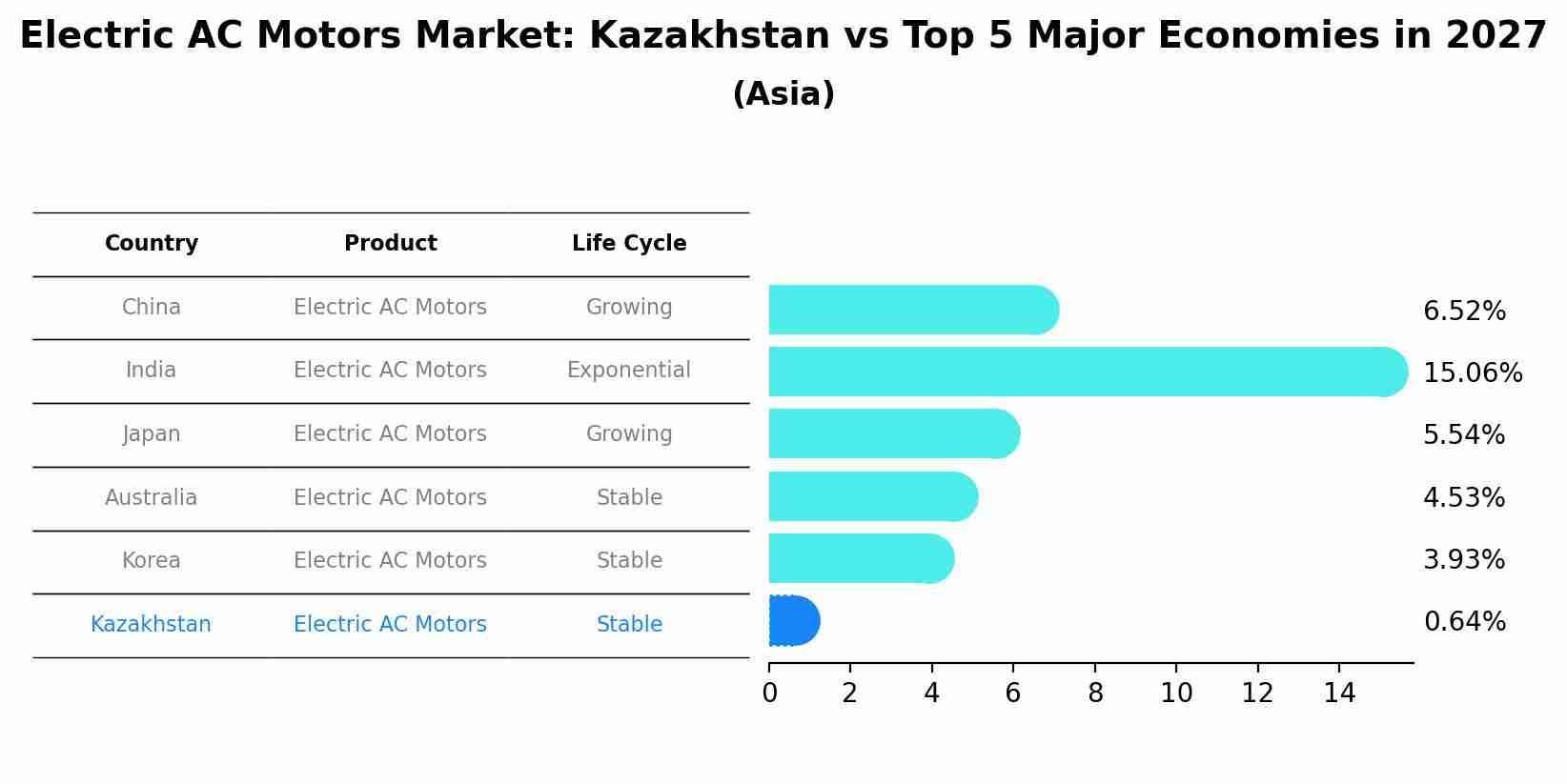
Electric AC Motors Market: Kazakhstan vs Top 5 Major Economies in 2027 (Asia)
In the Asia region, the Electric AC Motors market in Kazakhstan is projected to expand at a stable growth rate of 0.64% by 2027. The largest economy is China, followed by India, Japan, Australia and South Korea.
Kazakhstan Electric AC Motors Market Overview
The electric AC motors market in Kazakhstan is experiencing steady growth due to increasing industrialization and infrastructure development in the country. Key factors driving the market include the rising demand for energy-efficient motors, government initiatives promoting the use of electric motors, and the growing adoption of automation in various industries. The market is characterized by the presence of both domestic and international manufacturers offering a wide range of products to cater to diverse industry needs. With a focus on improving energy efficiency and reducing carbon emissions, there is a growing trend towards the adoption of electric AC motors in various sectors including manufacturing, automotive, and construction. Overall, the Kazakhstan Electric AC Motors Market presents opportunities for further growth and innovation in the coming years.
Kazakhstan Electric AC Motors Market Trends
The Kazakhstan Electric AC Motors Market is experiencing a growing demand for energy-efficient and environmentally friendly motor solutions. With an increasing focus on sustainability and energy conservation, there is a noticeable shift towards the adoption of high-efficiency AC motors in various industries such as manufacturing, mining, and agriculture. Additionally, the implementation of smart technologies and automation in industrial processes is driving the need for advanced AC motors with improved performance and control capabilities. Market players are also investing in research and development to introduce innovative motor designs that offer higher efficiency, reliability, and reduced maintenance requirements. Overall, the market is witnessing a trend towards the integration of modern technologies to meet the evolving needs of industries while ensuring sustainable practices are followed.
Kazakhstan Electric AC Motors Market Challenges
In the Kazakhstan Electric AC Motors Market, some key challenges include the limited availability of skilled professionals with expertise in motor technologies, which can hinder the adoption of advanced motor systems. Another challenge is the reliance on imported components and technologies, leading to higher costs and potential supply chain disruptions. Additionally, the market may face regulatory barriers or inconsistencies in standards, impacting the smooth introduction and integration of electric AC motors. Lastly, the overall economic and political environment in Kazakhstan can influence investment decisions and market growth, posing challenges for companies operating in the electric AC motors sector. Addressing these challenges will be crucial to unlocking the full potential of the Kazakhstan Electric AC Motors Market and promoting sustainable growth in the industry.
Kazakhstan Electric AC Motors Market Investment Opportunities
The Kazakhstan Electric AC Motors Market presents promising investment opportunities due to the country`s focus on industrial development and energy efficiency. With the growing demand for electric motors in various sectors such as manufacturing, mining, and agriculture, investing in the production, distribution, or servicing of electric AC motors could yield significant returns. Additionally, Kazakhstan`s government initiatives to modernize infrastructure and promote renewable energy sources further support the potential for growth in the electric motor market. Investors can explore partnerships with local manufacturers, technology transfer agreements, or setting up distribution networks to capitalize on the expanding market for electric AC motors in Kazakhstan.
Kazakhstan Electric AC Motors Market Government Policy
Government policies related to the Kazakhstan Electric AC Motors Market include regulations aimed at promoting energy efficiency and reducing carbon emissions. The government has introduced incentives and subsidies for the adoption of electric motors with high energy efficiency ratings, in line with global sustainability goals. Additionally, there are initiatives to increase local manufacturing of electric motors to reduce reliance on imports and boost domestic production capacity. The government also focuses on promoting research and development in the electric motor industry to drive innovation and technological advancements. Overall, the policies aim to enhance the competitiveness of the Kazakhstan Electric AC Motors Market, support environmental sustainability, and contribute to the country`s economic development goals.
Kazakhstan Electric AC Motors Market Future Outlook
The Kazakhstan Electric AC Motors market is expected to witness steady growth in the coming years due to the increasing industrialization and infrastructure development in the country. The demand for energy-efficient electric motors is likely to rise as industries focus on sustainability and reducing operating costs. Additionally, government initiatives promoting renewable energy sources and the adoption of electric vehicles are expected to drive the market further. Technological advancements in motor design and manufacturing processes will also play a significant role in shaping the market landscape. Overall, the Kazakhstan Electric AC Motors market is poised for growth, with opportunities for market players to leverage the evolving trends and meet the growing demand for efficient and sustainable motor solutions.
Key Highlights of the Report:
- Kazakhstan Electric AC Motors Market Outlook
- Market Size of Kazakhstan Electric AC Motors Market, 2021
- Forecast of Kazakhstan Electric AC Motors Market, 2031
- Historical Data and Forecast of Kazakhstan Electric AC Motors Revenues & Volume for the Period 2018 - 2031
- Kazakhstan Electric AC Motors Market Trend Evolution
- Kazakhstan Electric AC Motors Market Drivers and Challenges
- Kazakhstan Electric AC Motors Price Trends
- Kazakhstan Electric AC Motors Porter's Five Forces
- Kazakhstan Electric AC Motors Industry Life Cycle
- Historical Data and Forecast of Kazakhstan Electric AC Motors Market Revenues & Volume By Type for the Period 2018 - 2031
- Historical Data and Forecast of Kazakhstan Electric AC Motors Market Revenues & Volume By Synchronous AC Motors for the Period 2018 - 2031
- Historical Data and Forecast of Kazakhstan Electric AC Motors Market Revenues & Volume By Induction AC Motors for the Period 2018 - 2031
- Historical Data and Forecast of Kazakhstan Electric AC Motors Market Revenues & Volume By Voltage for the Period 2018 - 2031
- Historical Data and Forecast of Kazakhstan Electric AC Motors Market Revenues & Volume By Integral HP Output for the Period 2018 - 2031
- Historical Data and Forecast of Kazakhstan Electric AC Motors Market Revenues & Volume By Fractional HP Output for the Period 2018 - 2031
- Historical Data and Forecast of Kazakhstan Electric AC Motors Market Revenues & Volume By End-Use for the Period 2018 - 2031
- Historical Data and Forecast of Kazakhstan Electric AC Motors Market Revenues & Volume By Industrial Machinery for the Period 2018 - 2031
- Historical Data and Forecast of Kazakhstan Electric AC Motors Market Revenues & Volume By Motor Vehicles for the Period 2018 - 2031
- Historical Data and Forecast of Kazakhstan Electric AC Motors Market Revenues & Volume By HVAC Equipment for the Period 2018 - 2031
- Historical Data and Forecast of Kazakhstan Electric AC Motors Market Revenues & Volume By Aerospace & Transportation for the Period 2018 - 2031
- Historical Data and Forecast of Kazakhstan Electric AC Motors Market Revenues & Volume By Household Appliances for the Period 2018 - 2031
- Historical Data and Forecast of Kazakhstan Electric AC Motors Market Revenues & Volume By Others for the Period 2018 - 2031
- Kazakhstan Electric AC Motors Import Export Trade Statistics
- Market Opportunity Assessment By Type
- Market Opportunity Assessment By Voltage
- Market Opportunity Assessment By End-Use
- Kazakhstan Electric AC Motors Top Companies Market Share
- Kazakhstan Electric AC Motors Competitive Benchmarking By Technical and Operational Parameters
- Kazakhstan Electric AC Motors Company Profiles
- Kazakhstan Electric AC Motors Key Strategic Recommendations






































