Kazakhstan Musical Instrument Market Size Growth Rate
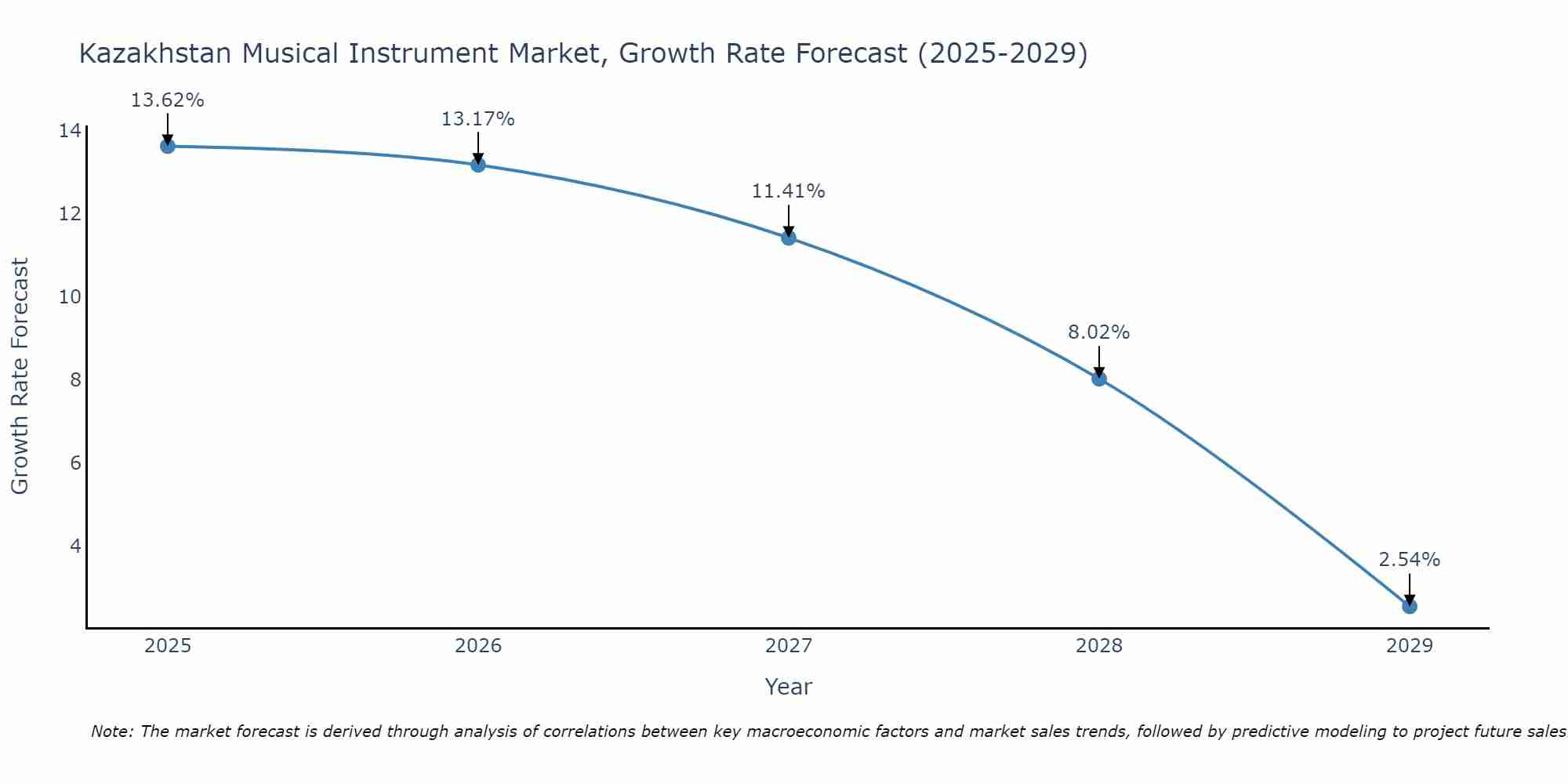
The Kazakhstan Musical Instrument Market could see a tapering of growth rates over 2025 to 2029. Beginning strongly at 13.62% in 2025, growth softens to 2.54% in 2029.
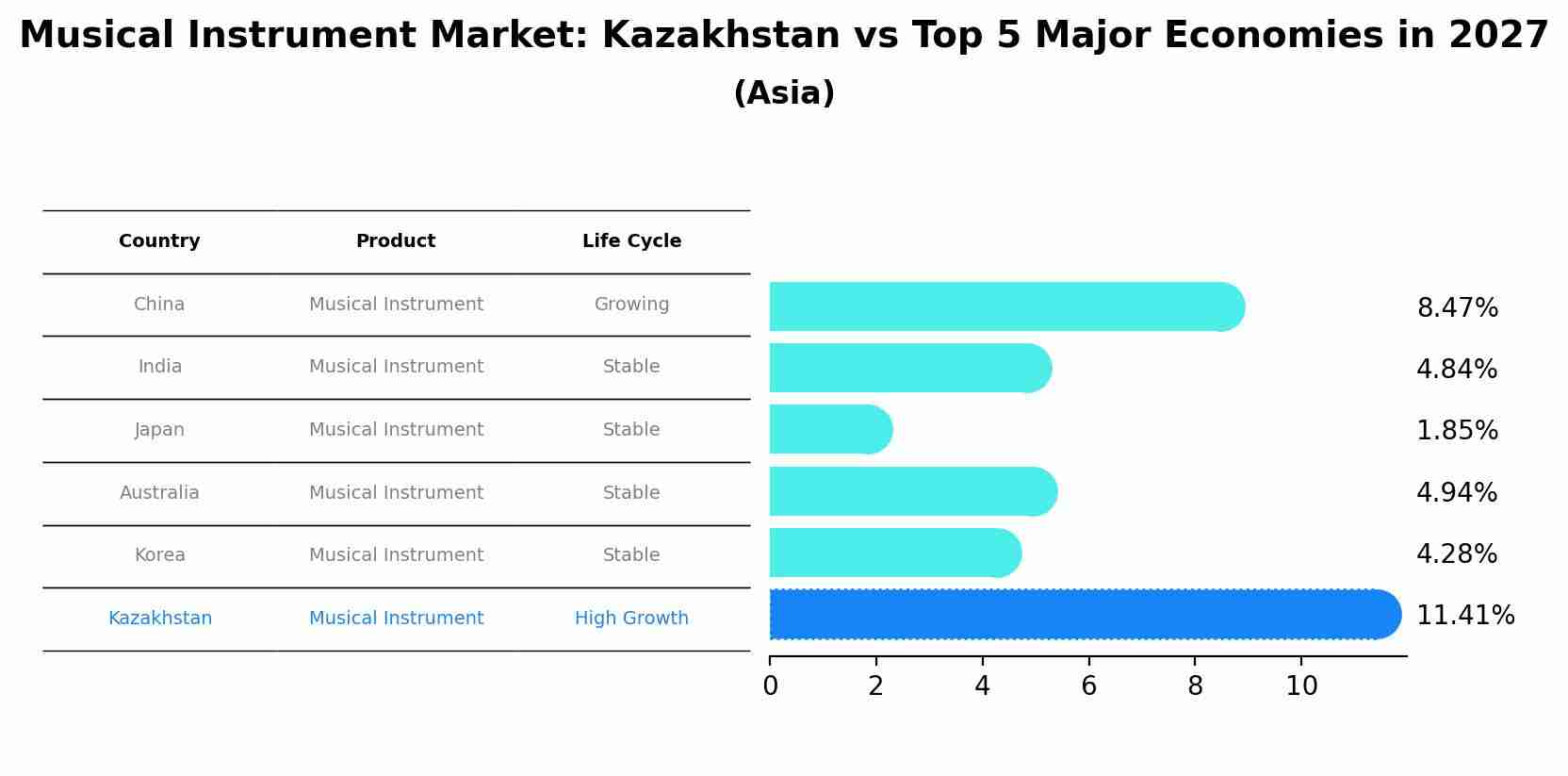
Musical Instrument Market: Kazakhstan vs Top 5 Major Economies in 2027 (Asia)
In the Asia region, the Musical Instrument market in Kazakhstan is projected to expand at a high growth rate of 11.41% by 2027. The largest economy is China, followed by India, Japan, Australia and South Korea.
Kazakhstan Musical Instrument Market Overview
In Kazakhstan, the musical instrument market is experiencing robust growth, driven by the rising popularity of music education and cultural events. Increasing disposable incomes and a growing interest in music among the younger population are contributing to market expansion.
Drivers of the market
The cultural significance of music in Kazakhstan and the growing interest in music education drive the demand for musical instruments in the country. Schools, music academies, and amateur musicians contribute to the steady growth of the musical instrument market. Additionally, the influence of Western music styles and the emergence of local music talents fuel the demand for a wide range of instruments, from traditional to contemporary.
Challenges of the market
The musical instrument market in Kazakhstan faces challenges related to high import costs and limited local production capabilities. There is also a lack of music education and awareness, which affects the demand for musical instruments. Economic constraints and competition from digital music alternatives further complicate the market dynamics.
Government Policy of the market
Musical instruments are essential tools for artistic expression and cultural heritage preservation. Kazakhstan government implements policies to support the production, distribution, and promotion of musical instruments to foster a thriving music industry. Emphasis is placed on supporting local artisans and manufacturers, promoting music education in schools, and facilitating access to instruments for aspiring musicians. Regulatory frameworks encompass quality standards, import/export regulations, and consumer protection measures to ensure the availability of safe and high-quality musical instruments in the market.
Key Highlights of the Report:
- Kazakhstan Musical Instrument Market Outlook
- Market Size of Kazakhstan Musical Instrument Market, 2024
- Forecast of Kazakhstan Musical Instrument Market, 2031
- Historical Data and Forecast of Kazakhstan Musical Instrument Revenues & Volume for the Period 2018 - 2031
- Kazakhstan Musical Instrument Market Trend Evolution
- Kazakhstan Musical Instrument Market Drivers and Challenges
- Kazakhstan Musical Instrument Price Trends
- Kazakhstan Musical Instrument Porter's Five Forces
- Kazakhstan Musical Instrument Industry Life Cycle
- Historical Data and Forecast of Kazakhstan Musical Instrument Market Revenues & Volume By Product for the Period 2018 - 2031
- Historical Data and Forecast of Kazakhstan Musical Instrument Market Revenues & Volume By String Instruments for the Period 2018 - 2031
- Historical Data and Forecast of Kazakhstan Musical Instrument Market Revenues & Volume By Pianos And Keyboards for the Period 2018 - 2031
- Historical Data and Forecast of Kazakhstan Musical Instrument Market Revenues & Volume By Drums And Percussion Instruments for the Period 2018 - 2031
- Historical Data and Forecast of Kazakhstan Musical Instrument Market Revenues & Volume By Others for the Period 2018 - 2031
- Kazakhstan Musical Instrument Import Export Trade Statistics
- Market Opportunity Assessment By Product
- Kazakhstan Musical Instrument Top Companies Market Share
- Kazakhstan Musical Instrument Competitive Benchmarking By Technical and Operational Parameters
- Kazakhstan Musical Instrument Company Profiles
- Kazakhstan Musical Instrument Key Strategic Recommendations






































